Rome did not build its empire through one perfect military system. It adapted, borrowed from ancient battles, recovered and, at awkward intervals, suffered disasters so severe that another state might have disappeared altogether. Roman history is full of brilliant victories, but its real character is often clearest in what happened after defeat.
This ranking weighs historical consequence more heavily than raw numbers. Army sizes and casualty totals from antiquity are notoriously uncertain. Ancient writers could be careful observers, patriotic storytellers, political advocates and enthusiastic users of suspiciously round numbers, sometimes all in the same paragraph. Where the evidence is disputed, the figures below are presented as broad estimates or as ancient claims rather than modern certainties.
The list covers the Roman Republic and Empire, including civil wars and major sieges. It ranks battles by their effect on Roman territory, government, military practice and long-term survival.
The Largest Roman Battles at a Glance
| Rank and battle | Date and result | Scale and significance |
|---|---|---|
| 25. Mons Graupius | c. AD 83 Roman victory | Perhaps 25,000 to 40,000. High point of Agricola’s northern campaigns |
| 24. Medway | AD 43 Roman victory | Possibly 60,000 or more. Broke resistance to the Claudian invasion |
| 23. Watling Street | AD 60 or 61 Roman victory | Perhaps 80,000 to 120,000. Ended Boudica’s revolt |
| 22. Masada | AD 72 to 74 Roman victory | Around 9,000 besiegers and fewer than 1,000 defenders. Closed the revolt’s final major episode |
| 21. Jerusalem | AD 70 Roman victory | Tens of thousands plus civilians. Ended with the destruction of the Second Temple |
| 20. Colline Gate | 82 BC Sullan victory | Perhaps 80,000. Made Sulla master of Rome |
| 19. Gergovia | 52 BC Gallic victory | Perhaps 35,000 to 50,000. Caesar’s most serious reverse in Gaul |
| 18. Sabis | 57 BC Roman victory | Perhaps 70,000 to 90,000. Broke the Nervii and secured northern Gaul |
| 17. Arausio | 105 BC Cimbrian victory | Possibly more than 120,000. One of the Republic’s worst disasters |
| 16. Carrhae | 53 BC Parthian victory | Around 50,000. Exposed the limits of Roman power in the east |
| 15. Cynoscephalae | 197 BC Roman victory | Around 50,000 to 60,000. Showed legionary flexibility against the phalanx |
| 14. Magnesia | 190 BC Roman-allied victory | Perhaps 80,000 to 100,000. Broke Seleucid power in Asia Minor |
| 13. Pydna | 168 BC Roman victory | Around 70,000. Ended the Macedonian monarchy |
| 12. Metaurus | 207 BC Roman victory | Perhaps 60,000 to 80,000. Prevented Hasdrubal joining Hannibal |
| 11. Ilipa | 206 BC Roman victory | Perhaps 95,000 to 120,000. Ended Carthaginian dominance in Iberia |
| 10. Lake Trasimene | 217 BC Carthaginian victory | Around 55,000 to 65,000. Destroyed a consular army in a vast ambush |
| 9. Trebia | 218 BC Carthaginian victory | Around 70,000 to 85,000. Established Hannibal in Italy |
| 8. Alesia | 52 BC Roman victory | At least 100,000. Crushed coordinated Gallic resistance |
| 7. Pharsalus | 48 BC Caesarian victory | Around 60,000 to 75,000. Destroyed Pompey’s civil-war position |
| 6. Philippi | 42 BC Triumviral victory | Perhaps 160,000 to 200,000. Ended the republican cause as a major armed force |
| 5. Adrianople | AD 378 Gothic victory | Perhaps 40,000 to 60,000. Killed an emperor and shattered the eastern field army |
| 4. Zama | 202 BC Roman victory | Around 70,000 to 80,000. Ended the Second Punic War |
| 3. Teutoburg Forest | AD 9 Germanic victory | Perhaps 35,000 to 45,000. Destroyed three legions and reshaped Rhine strategy |
| 2. Cannae | 216 BC Carthaginian victory | Around 125,000 to 140,000. Rome’s most famous battlefield catastrophe |
| 1. Actium | 31 BC Octavian’s victory | More than 400 warships. Cleared Octavian’s path to sole rule |
25. Battle of Mons Graupius, c. 83 CE

Agricola’s army defeated a large Caledonian force somewhere in northern Britain. Tacitus gives the enemy leader Calgacus a magnificent speech condemning Roman imperialism, including the celebrated line: “They make a desert and call it peace.” It is one of the finest anti-Roman speeches in Latin literature, though Tacitus composed it rather than transcribing Calgacus from the hillside.
- Commanders: Gnaeus Julius Agricola and, in Tacitus’ account, Calgacus
- Forces: Tacitus claims 30,000 Caledonians; Agricola may have had roughly 17,000 to 20,000 men
- Arms: Auxiliary spears, Gladius and other swords, bows and cavalry against Caledonian spears, shields and swords
- Consequence: The victory advertised Roman reach, but did not secure permanent control of the Highlands
Mons Graupius mattered as imperial theatre as much as conquest. Rome won the battle. Geography declined to surrender.
24. Battle of the Medway, 43 CE
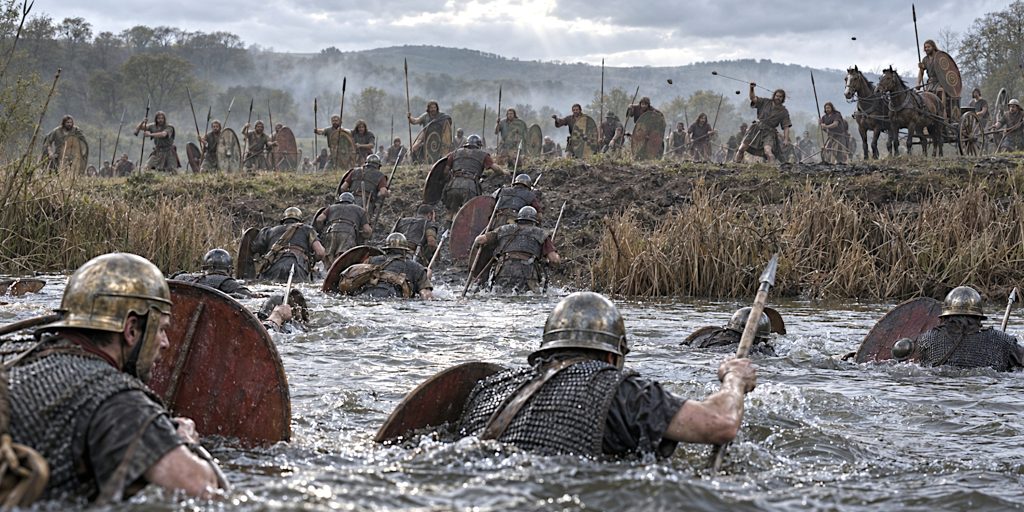
The first major clash of the Claudian invasion lasted two days and involved a difficult river crossing. Cassius Dio describes Batavian auxiliaries swimming the river in armour and attacking British chariot horses, disrupting the defenders before the legions forced their way across.
- Commanders: Aulus Plautius, with Vespasian and other legionary commanders, against British leaders probably including Togodumnus and Caratacus
- Forces: Four Roman legions with auxiliaries, conventionally estimated near 40,000; the British total is unknown
- Arms: Pila, shields, swords and artillery against spears, shields, swords and chariots
- Consequence: Opened the route towards the Thames and the submission of south-eastern kingdoms
The British figure of 100,000 sometimes repeated online has no secure basis. Ancient Britain supplied resistance in abundance, but not a convenient payroll.
23. Battle of Watling Street, 60 or 61 CE
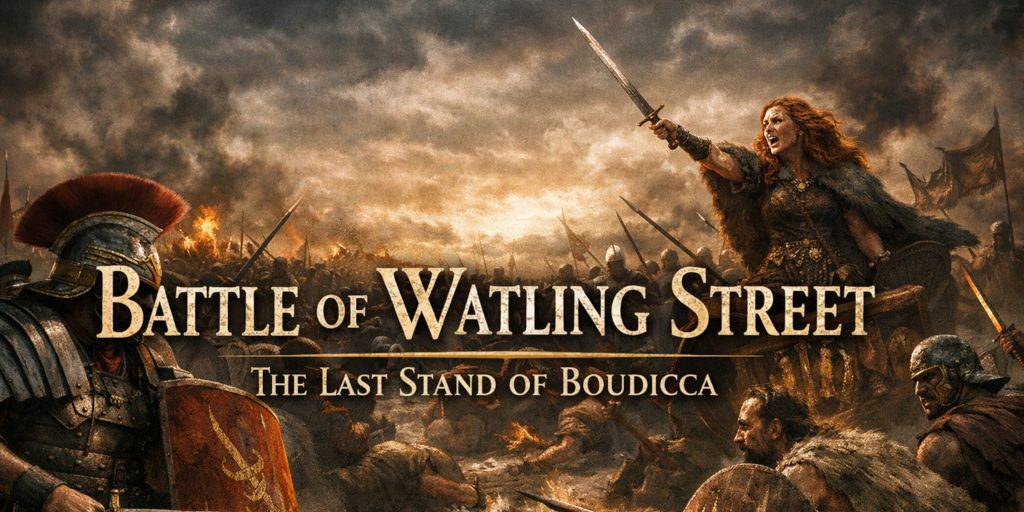
Suetonius Paulinus chose a narrow position with woodland behind him, denying Boudica’s larger army the space to envelop his line. Tacitus says the Romans launched their pila and advanced in a wedge. The wagons placed behind the Britons then obstructed retreat, turning defeat into slaughter.
- Commanders: Suetonius Paulinus and Boudicca
- Forces: About 10,000 Romans according to Tacitus; British numbers are unknown, despite his claim of 80,000 dead
- Arms: Roman pila, swords and close-order shields against British spears, swords and light missiles
- Consequence: Preserved Roman rule in Britain after the destruction of Camulodunum, Londinium and Verulamium
Tacitus has Boudica declare that she was fighting “as one of the people” to avenge lost freedom and personal abuse. The wording is literary, but the grievances behind it were very real.
22. Siege of Masada, 72 to 73 or 73 to 74 CE

The Roman siege works at Masada remain among the clearest physical traces of imperial warfare. Legion X Fretensis and its auxiliaries surrounded the plateau with a wall, built camps and raised an enormous assault ramp on the western side.
- Commanders: Lucius Flavius Silva against Eleazar ben Yair
- Forces: Often estimated at 8,000 to 9,000 Roman troops and labourers; Josephus lists 967 people inside
- Arms: Ballistae, siege towers and a ram against missiles and improvised defences
- Consequence: Removed the last prominent rebel stronghold, though organised resistance elsewhere had already been crushed
Josephus’ account of a mass suicide is famous, powerful and debated. Archaeology confirms the siege with unusual clarity, but does not neatly verify every element of his final-night narrative.
21. Siege of Jerusalem, 70 CE

Titus’ forces fought through successive defensive walls while famine and factional conflict consumed the city. The Temple was burned during the final assault. Josephus claimed that 1.1 million people died and 97,000 were enslaved, totals modern historians generally regard as grossly inflated.
- Commanders: Titus against a divided defence led principally by John of Gischala and Simon bar Giora
- Forces: Four legions, auxiliaries and allied troops, probably 60,000 to 80,000 in total; the number of defenders and civilians is uncertain
- Arms: Rams, towers, artillery, swords and pila amid brutal street fighting
- Consequence: Destroyed the Second Temple and transformed the religious and political history of Judaea
The relief on the Arch of Titus, showing the Temple menorah carried in triumph, turned conquest into permanent state propaganda. Rome rarely allowed a victory to go unbranded.
20. Battle of the Colline Gate, 82 BCE
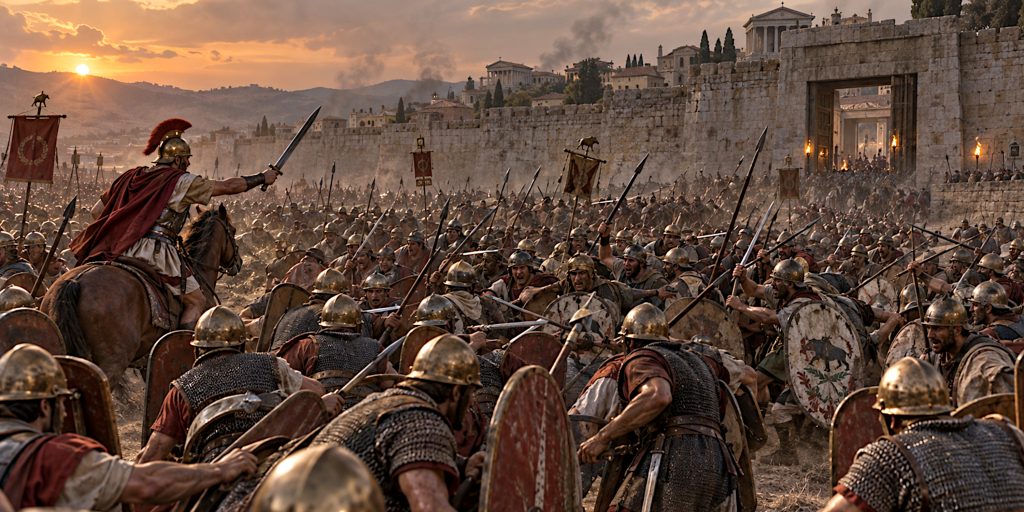
Fought just outside Rome, the Colline Gate decided the final stage of Sulla’s civil war. Sulla’s left wing was driven back towards the city, while Marcus Licinius Crassus succeeded on the right. By the following day the coalition opposing Sulla had collapsed.
- Commanders: Lucius Cornelius Sulla and Crassus against Pontius Telesinus and other Marian-Samnite leaders
- Forces: Ancient accounts suggest roughly 40,000 on each side, but precision is impossible
- Arms: Italian and Roman infantry equipped in broadly similar fashion with shields, pila or spears and swords
- Consequence: Enabled Sulla to impose his dictatorship, proscriptions and constitutional settlement
This was less Rome against an external enemy than Rome finishing an argument with itself using several armies.
19. Battle of Gergovia, 52 BCE
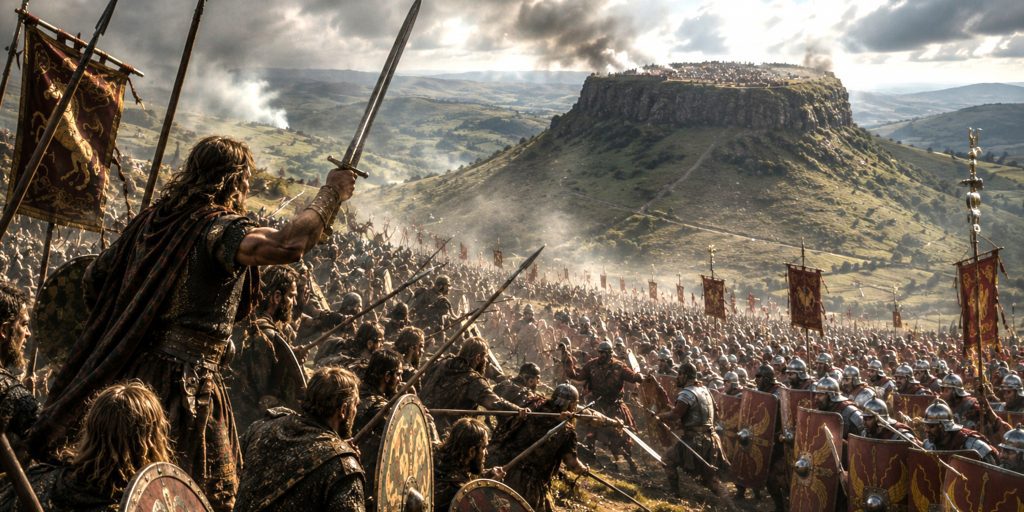
Caesar failed to take the hilltop stronghold of Gergovia after an operation intended to seize advantageous ground became an uncontrolled assault. In his own account, troops pushed beyond their orders and were counter-attacked by Vercingetorix.
- Commanders: Julius Caesar and Vercingetorix
- Forces: Caesar had several legions available; reliable Gallic numbers do not survive
- Arms: Roman pila, shields and swords against Gallic spears, shields, swords and cavalry
- Consequence: Encouraged further revolt and exposed Caesar’s vulnerability before Alesia
Caesar reported 46 centurions and nearly 700 soldiers killed. His willingness to admit a defeat is useful, although he distributes responsibility with the careful touch of a politician writing his own performance review.
18. Battle of the Sabis, 57 BCE
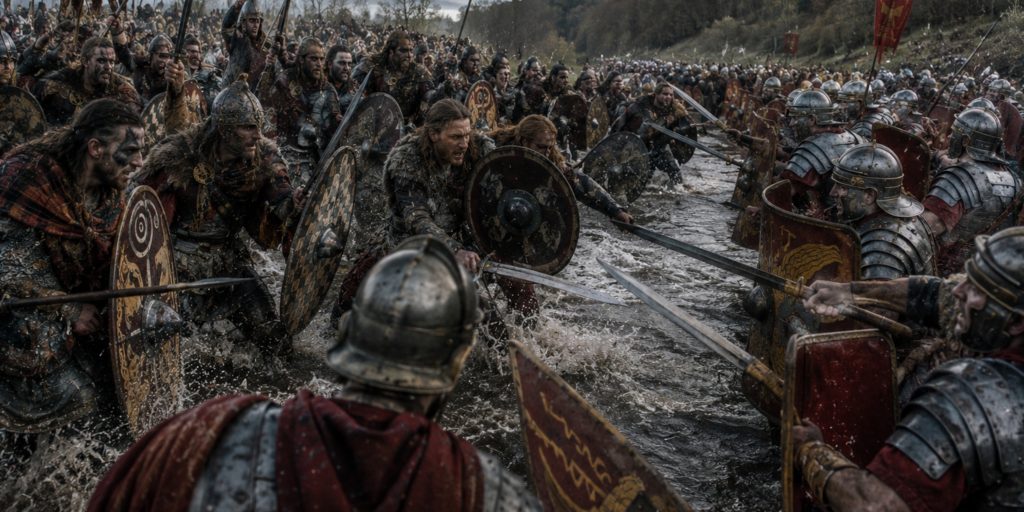
The Nervii attacked while Caesar’s men were constructing their camp, producing a confused battle in which some Roman units barely formed a line. Caesar portrays himself taking a shield and moving to the threatened sector before reinforcements stabilised the field.
- Commanders: Julius Caesar against Boduognatus
- Forces: Eight Roman legions were present or approaching; Caesar’s vast tribal totals are doubtful
- Arms: Roman pila and short swords against spears, shields and swords
- Consequence: Broke the military power of the Nervii and secured Roman ascendancy in Belgic Gaul
The battle is valuable because it shows the legion under pressure rather than on a parade ground. Discipline mattered, but so did centurions, local initiative and the arrival of troops at a helpful moment.
17. Battle of Arausio, 105 BCE

Two Roman armies were destroyed near Arausio by the Cimbri and their allies. Hostility between the consul Gnaeus Mallius Maximus and the proconsul Quintus Servilius Caepio prevented effective coordination.
- Commanders: Mallius and Caepio against Cimbrian leaders including Boiorix
- Forces: Perhaps 60,000 to 80,000 Roman and allied combatants; ancient casualty claims rise much higher
- Arms: Republican infantry equipment against a varied confederate force using spears, shields and swords
- Consequence: Created panic in Italy and intensified pressure for experienced military leadership
Arausio is often said to have caused the Marian reforms. That is too tidy. Military change was gradual, and Gaius Marius had already begun his exceptional run of consulships. The disaster strengthened his political position and made reform more urgent, which is significant enough without giving one battle magical administrative powers.
16. Battle of Carrhae, 53 BCE
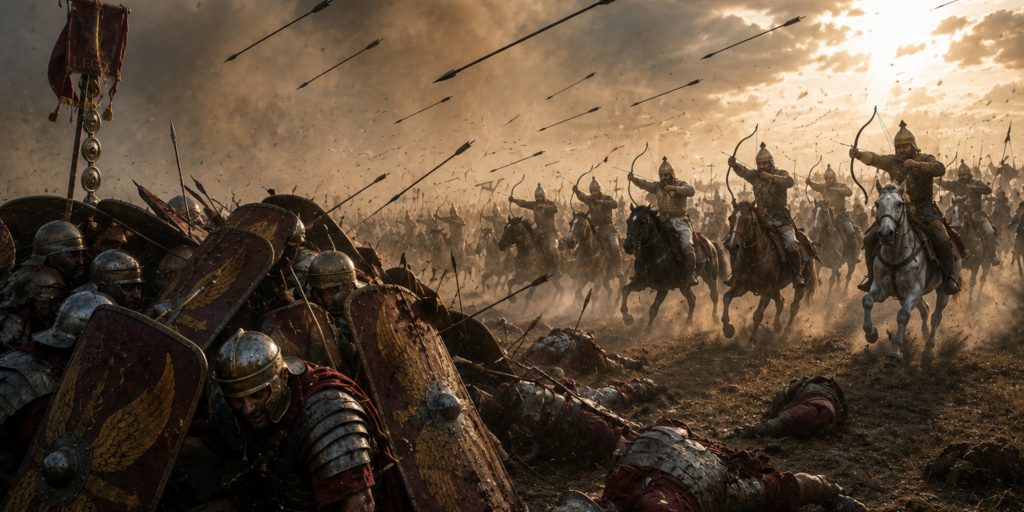
Crassus led a large army into Mesopotamia and met a much smaller Parthian force built around horse archers and armoured cataphracts. The Romans formed defensive squares, but sustained archery, mobility and resupply prevented them from bringing the enemy to a decisive infantry engagement.
- Commanders: Marcus Licinius Crassus against Surena
- Forces: Roughly 40,000 Romans and allies against about 10,000 Parthian cavalry in Plutarch’s account
- Arms: Roman pila, swords and shields against composite bows and long cataphract lances
- Consequence: Killed Crassus, damaged Roman prestige and deepened the political imbalance between Caesar and Pompey
Plutarch says the Parthians used drums that produced a “deep and terrifying roar”. The psychological effect accompanied a tactical system that Crassus had no convincing answer for.
15. Battle of Cynoscephalae, 197 BCE

On broken, misty ground in Thessaly, the Roman legion defeated Philip V’s Macedonian phalanx. Part of the phalanx drove the Roman left back, but its other wing was not properly deployed. Roman units exploited the gap and attacked from the flank and rear.
- Commanders: Titus Quinctius Flamininus and Philip V
- Forces: Approximately 25,000 to 30,000 on each side
- Arms: Roman pila, scuta and swords against Macedonian sarissae and smaller shields
- Consequence: Ended Macedonian dominance in Greece and confirmed Rome as the decisive power in the region
The lesson was not simply that legion always beats phalanx. On suitable level ground a formed phalanx remained terrifying. Cynoscephalae showed what happened when terrain and incomplete deployment deprived it of that condition.
14. Battle of Magnesia, 190 BCE
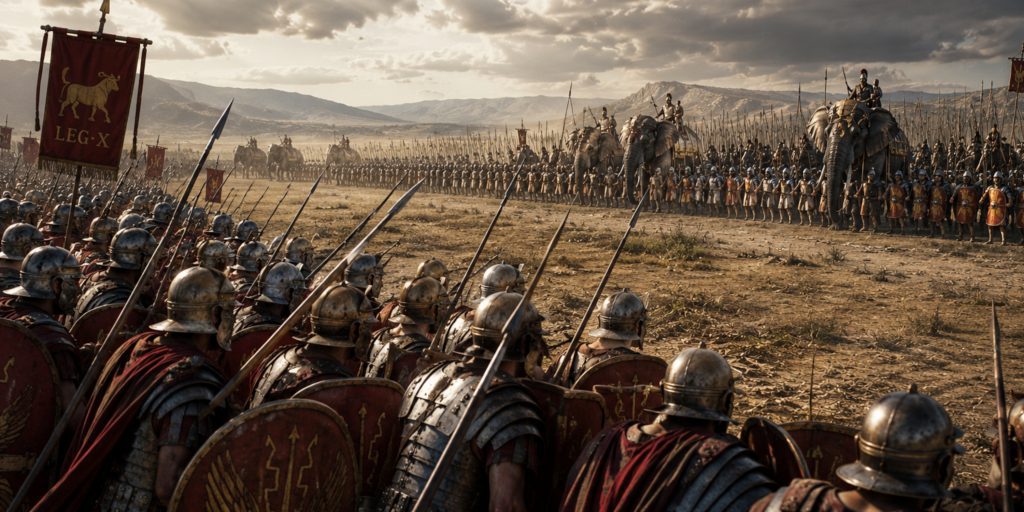
The Roman-led army and its Pergamene allies defeated Antiochus III’s much larger Seleucid host near Magnesia ad Sipylum. Seleucid chariots were disrupted, cavalry success drew Antiochus away from the critical centre, and the phalanx was isolated.
- Commanders: Lucius Cornelius Scipio and Eumenes II against Antiochus III
- Forces: Ancient accounts suggest about 30,000 Roman-allied troops against 70,000 or more Seleucids, though the latter figure is disputed
- Arms: Legionary infantry, Pergamene cavalry and missiles against phalangites, cataphracts, chariots and elephants
- Consequence: The Treaty of Apamea stripped the Seleucids of territory in Asia Minor and imposed a heavy indemnity
Magnesia was one of those battles where the Seleucid order of battle reads splendidly until everyone has to manoeuvre at the same time.
13. Battle of Pydna, 168 BCE

The Macedonian phalanx initially forced the Romans back. As it advanced over uneven ground, gaps opened between its units. Roman soldiers entered those gaps, where their shields and swords were far more effective than the unwieldy sarissa.
- Commanders: Lucius Aemilius Paullus and King Perseus
- Forces: Perhaps 30,000 to 40,000 Romans and allies against around 40,000 Macedonians
- Arms: Roman pila, scuta and swords against sarissae, cavalry and lighter infantry
- Consequence: Ended the Antigonid monarchy and divided Macedonia into four republics under Roman control
Plutarch has Paullus admit that the sight of the advancing sarissae filled him with “amazement and alarm”. Roman victory did not require Romans to pretend the opposition looked harmless.
12. Battle of the Metaurus, 207 BCE

Hasdrubal Barca marched from Iberia to reinforce his brother Hannibal. The consul Gaius Claudius Nero secretly transferred troops north to join Marcus Livius Salinator, concentrating Roman strength before Hasdrubal understood the danger.
- Commanders: Nero and Livius against Hasdrubal Barca
- Forces: Probably more than 40,000 Romans and allies against perhaps 30,000 Carthaginian and allied troops
- Arms: Roman heavy infantry and cavalry against Iberian and African infantry, Gauls, cavalry and elephants
- Consequence: Ended the best chance of uniting the two Barcid armies in Italy
Hasdrubal died in the fighting. His severed head was later thrown into Hannibal’s camp, a Roman dispatch method with very little room for misinterpretation.
11. Battle of Ilipa, 206 BCE
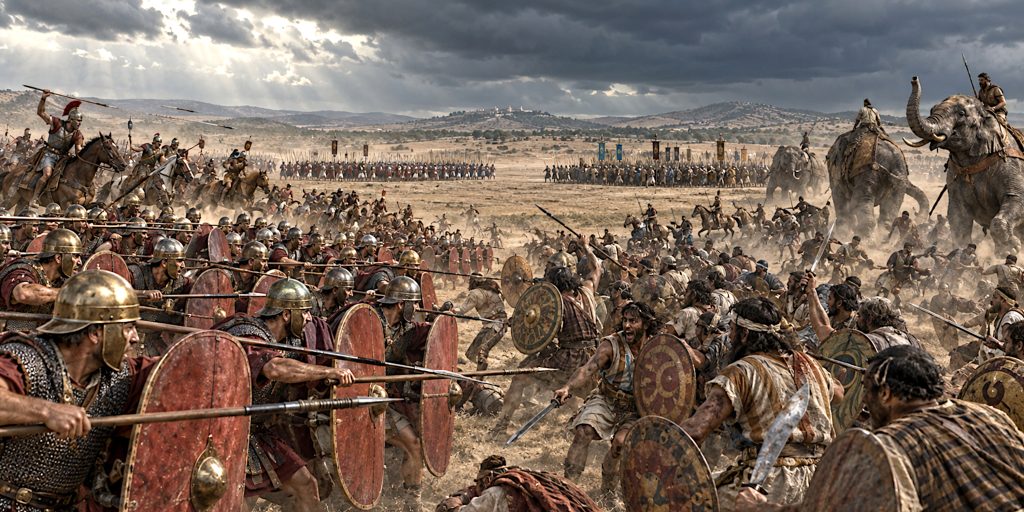
Scipio Africanus reversed his usual deployment, placing Roman legionaries on the wings and Iberian allies in the centre. He advanced early, catching the Carthaginians before they had eaten and forcing their weaker wings into combat with his best troops.
- Commanders: Scipio Africanus against Hasdrubal Gisco and Mago Barca
- Forces: Polybius gives Scipio about 45,000 infantry and 3,000 cavalry; Livy assigns the Carthaginians a much larger total, which remains debated
- Arms: Roman and Iberian swords, pila, spears, cavalry and elephants
- Consequence: Destroyed Carthaginian field power in Iberia and supplied Rome with the strategic base for invading Africa
Ilipa was not won by a single theatrical trick. Scipio used altered deployment, timing, cavalry pressure and controlled refusal of the centre. Very inconsiderate of him to make the answer more complicated than “better swords”.
10. Battle of Lake Trasimene, 217 BCE
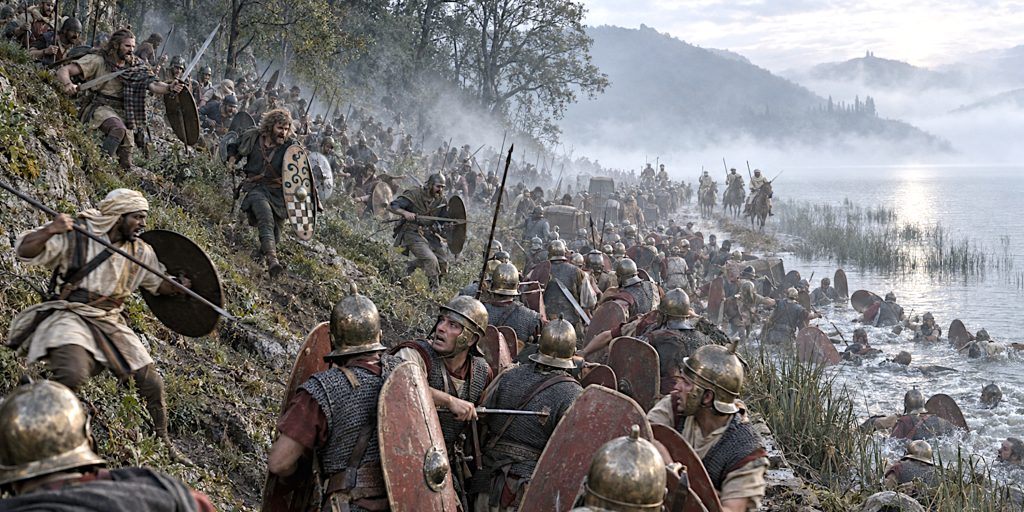
Hannibal drew the consul Gaius Flaminius along the shore of Lake Trasimene into a confined corridor. Carthaginian troops concealed on the surrounding heights attacked the Roman column before it could form a coherent battle line.
- Commanders: Hannibal and Gaius Flaminius
- Forces: Perhaps 25,000 to 30,000 Romans against roughly 40,000 to 50,000 in Hannibal’s army
- Arms: Roman shields, pila and swords against African heavy infantry, Gallic and Iberian warriors, cavalry and missile troops
- Consequence: Destroyed a consular army and left Rome facing an invasion without an immediate field response
Polybius describes Flaminius as killed in the confusion while many Romans were driven into the lake. It remains one of the largest and most complete ambushes in military history.
9. Battle of the Trebia, 218 BCE
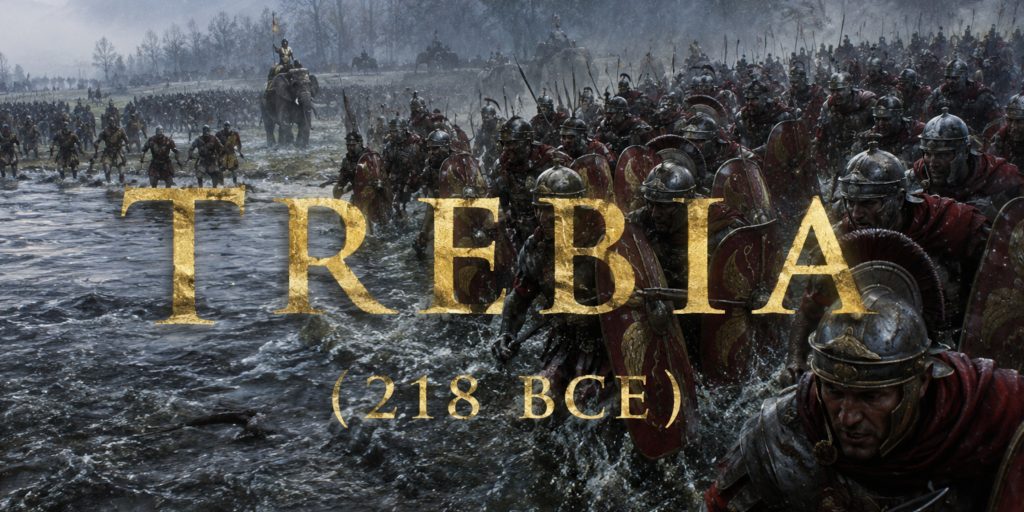
Hannibal provoked Tiberius Sempronius Longus into crossing the icy Trebia before his men had eaten. The Romans pushed through Hannibal’s centre, but superior cavalry and a concealed force under Mago attacked their flanks and rear.
- Commanders: Hannibal and Sempronius Longus
- Forces: Around 40,000 Romans and allies against perhaps 30,000 to 40,000 Carthaginian troops
- Arms: Roman pila, shields and swords against cavalry, slingers, spearmen, swordsmen and elephants
- Consequence: Gave Hannibal control of northern Italy and encouraged Gallic support
The battle combined weather, hunger, deception and envelopment. Sempronius contributed the impatience, which was thoughtful of him.
8. Siege and Battle of Alesia, 52 BCE

Caesar trapped Vercingetorix inside Alesia, then built an inner line facing the town and an outer line against a Gallic relief army. The Romans had to resist attacks from both directions while defending miles of fortification.
- Commanders: Julius Caesar and Vercingetorix, with several leaders commanding the relief force
- Forces: Caesar probably had 50,000 to 70,000 troops. His claim of 250,000 in the relief army is widely doubted
- Arms: Roman artillery, pila, swords, cavalry and field fortifications against Gallic cavalry, spears, swords and shields
- Consequence: Broke the largest coordinated revolt of the Gallic Wars and secured Caesar’s political reputation
Caesar reports Vercingetorix telling his council that he had taken up war “not for his own necessities, but for the common liberty”. As with Caesar’s other speeches, this is filtered through the victorious author, but it catches the scale of what was being lost.
7. Battle of Pharsalus, 48 BCE
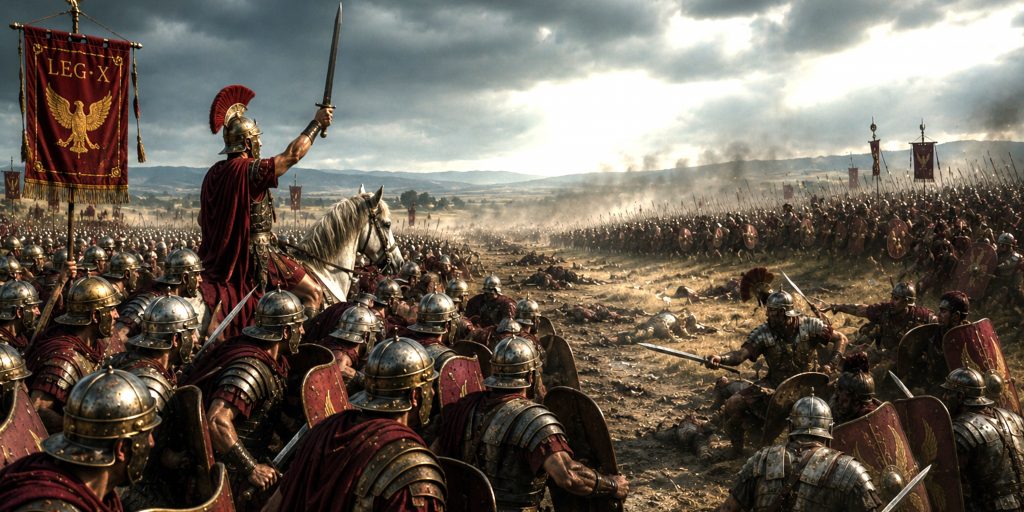
Pompey massed his cavalry against Caesar’s weaker right. Caesar placed an additional line of selected cohorts behind his cavalry. When Pompey’s horsemen drove Caesar’s cavalry back, the hidden line counter-attacked and exposed the flank of Pompey’s infantry.
- Commanders: Julius Caesar and Pompey the Great
- Forces: Caesar claimed about 22,000 infantry against Pompey’s 45,000, with Pompey enjoying a large cavalry advantage
- Arms: Nearly identical Roman legionary equipment on both sides
- Consequence: Destroyed Pompey’s army, drove him to Egypt and left Caesar dominant in the Roman world
Caesar says he ordered his soldiers to spare fellow citizens after victory. The wider civil war suggests that Roman mercy, like Roman constitutional government, was experiencing a difficult period.
6. Battles of Philippi, 42 BCE
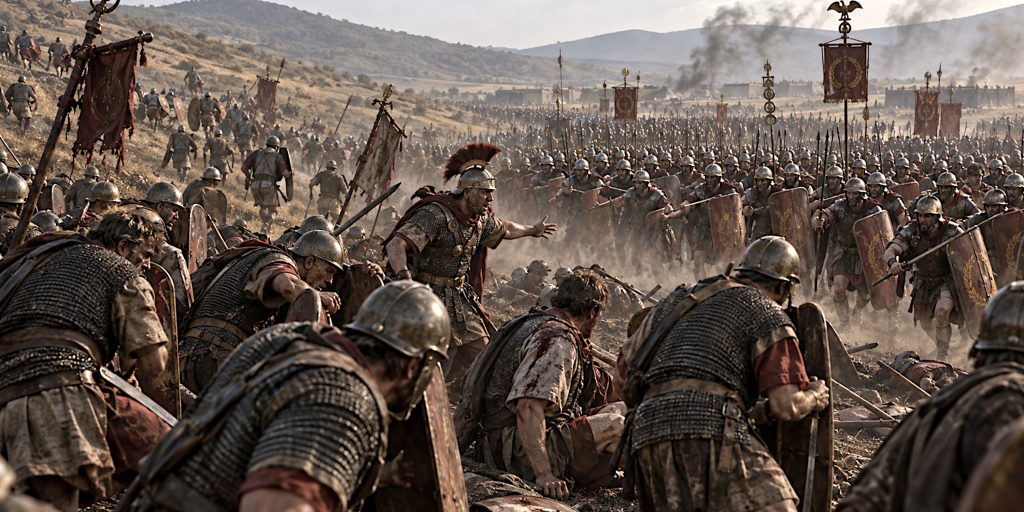
Philippi was a pair of enormous engagements rather than one neat afternoon. Antony and Octavian faced Brutus and Cassius in Macedonia. The first battle was confused and indecisive, but Cassius killed himself after mistakenly believing Brutus had also been defeated. The second ended with Brutus’ army broken.
- Commanders: Mark Antony and Octavian against Brutus and Cassius
- Forces: Possibly close to 40 legions across both coalitions, although many were understrength
- Arms: Legionary swords, pila, shields, artillery and cavalry on both sides
- Consequence: Eliminated the last major republican army and divided control of the Roman world between the victors
Plutarch records Brutus’ final reflection that he had found virtue to be “but a name” enslaved to fortune. The precise words are uncertain, but the despair is entirely appropriate to a cause collapsing amid Roman civil slaughter.
5. Battle of Adrianople, 378 CE
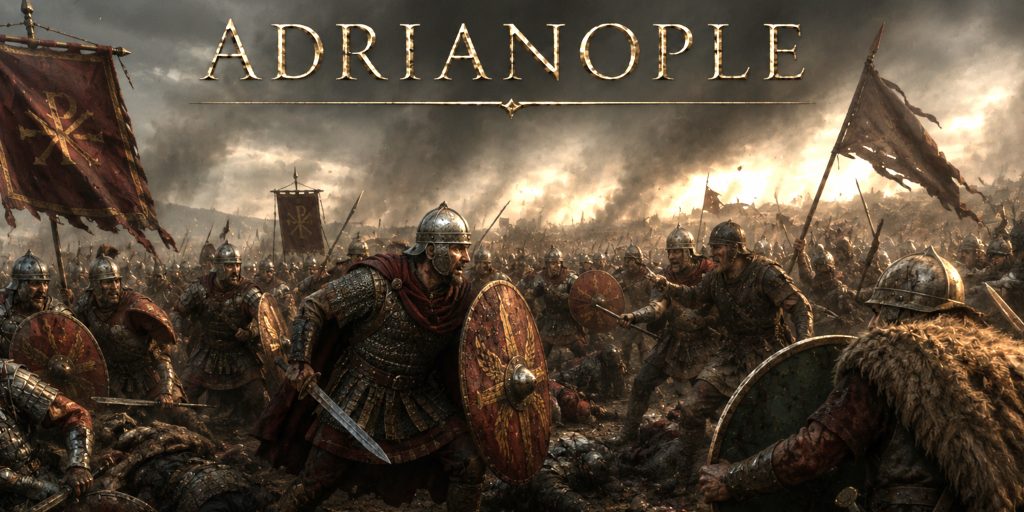
Emperor Valens attacked a Gothic force near Adrianople without waiting for western reinforcements. Heat, a long approach march, poor reconnaissance and confused negotiation preceded the fighting. Gothic cavalry returned to the field and struck Roman flanks while the packed infantry struggled to manoeuvre.
- Commanders: Emperor Valens against Fritigern and other Gothic leaders
- Forces: Estimates vary widely, often placing each army between 20,000 and 30,000
- Arms: Late Roman swords, spears, shields, bows and cavalry against Gothic infantry and cavalry
- Consequence: Killed Valens, destroyed much of the eastern field army and forced the empire towards negotiated settlement with Gothic groups
Adrianople did not by itself cause the fall of Rome, nor did it prove that infantry had suddenly become obsolete. It revealed a severe crisis in command, intelligence and imperial handling of displaced peoples. Ammianus Marcellinus compared the disaster to Cannae, which was not a compliment lightly offered.
4. Battle of Zama, 202 BCE
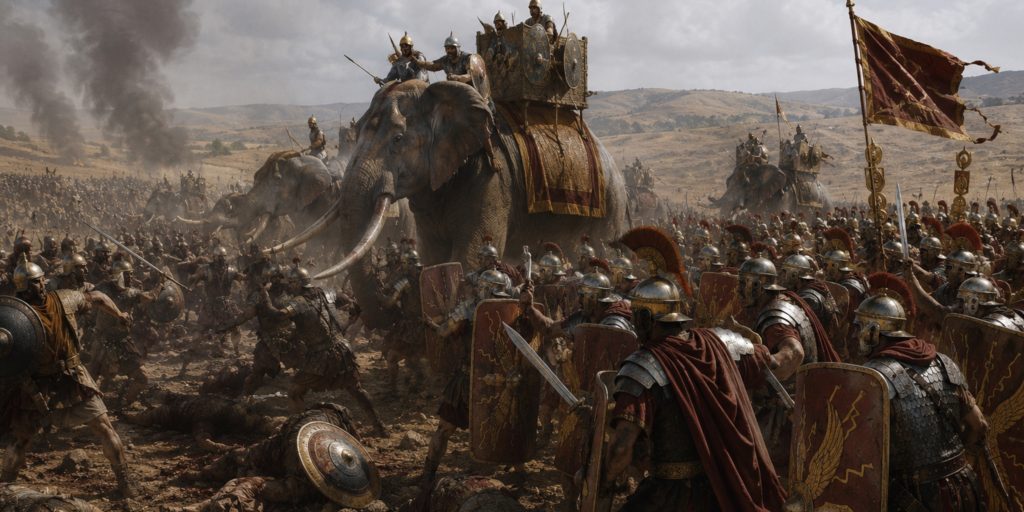
At Zama, Scipio Africanus defeated Hannibal in the final major battle of the Second Punic War. Scipio arranged lanes through his formation to channel the Carthaginian elephants, while Roman and Numidian cavalry eventually returned to strike Hannibal’s rear.
- Commanders: Scipio Africanus and Hannibal
- Forces: Roughly 30,000 to 35,000 on each side, though ancient totals vary
- Arms: Roman and Carthaginian infantry swords and spears, Numidian cavalry and Carthaginian elephants
- Consequence: Forced Carthage to surrender its fleet, pay a vast indemnity and accept restrictions on warfare
Polybius called the contest one between two exceptionally able generals. The result did not instantly create the Roman Empire, but it removed Rome’s only Mediterranean rival with comparable resources and ambition.
3. Battle of the Teutoburg Forest, 9 CE
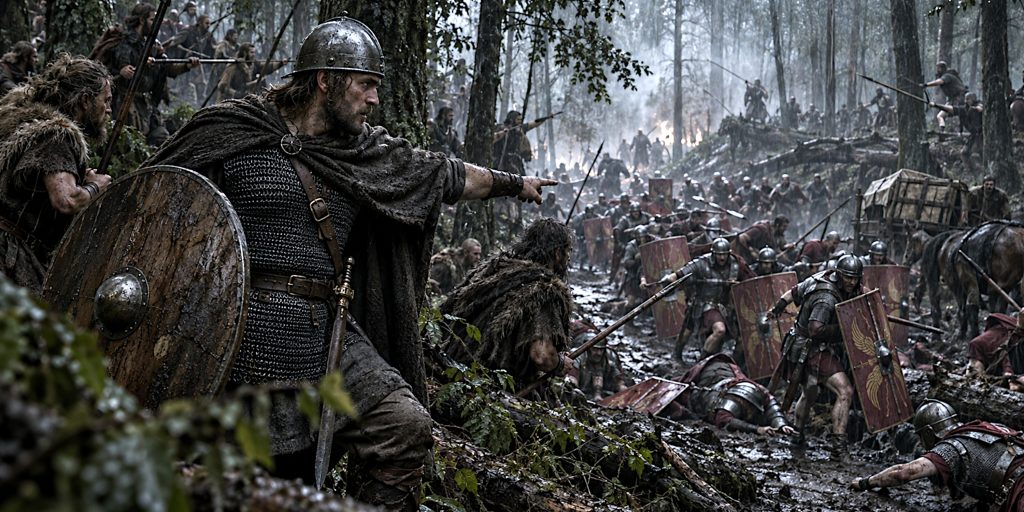
Arminius, an auxiliary commander and Roman citizen, led Varus and three legions into difficult country before coordinating attacks by Germanic groups. Rain, woodland, broken terrain and an extended marching column prevented the Romans from forming their usual battle order.
- Commanders: Publius Quinctilius Varus and Arminius
- Forces: Legions XVII, XVIII and XIX with auxiliaries and civilians, perhaps 20,000 to 25,000 people; Germanic numbers are unknown
- Arms: Roman swords, pila and shields against spears, shields and mixed close-combat weapons
- Consequence: Destroyed three legions and helped shift permanent Roman strategy towards the Rhine frontier
Suetonius says Augustus cried, “Quinctilius Varus, give me back my legions!” The line may have been polished in transmission, but Rome’s reaction was real. Germanicus later campaigned east of the Rhine, so the battle did not stop Roman armies crossing the river. It did help end plans for routine provincial rule as far as the Elbe.
2. Battle of Cannae, 216 BCE
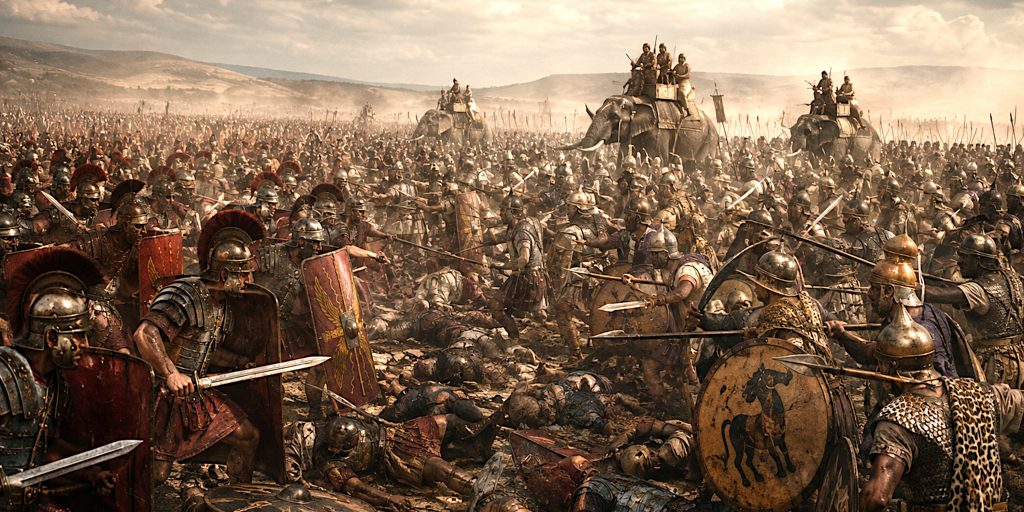
Hannibal placed his Iberian and Gallic infantry in a projecting centre, with experienced African infantry set back on both wings. As the Roman mass pushed forward, the centre yielded in a controlled curve. Carthaginian cavalry cleared the Roman horse and attacked from behind while the African infantry turned inward.
- Commanders: Hannibal against the consuls Lucius Aemilius Paullus and Gaius Terentius Varro
- Forces: Roughly 80,000 Romans and allies against about 50,000 in Hannibal’s army, with variations between Polybius and Livy
- Arms: Roman and allied swords, pila and shields against African spearmen, Iberian swordsmen, Gauls, slingers and powerful cavalry
- Consequence: Destroyed the largest army Rome had yet assembled and triggered defections among several Italian allies
Livy gives Rome more than 48,000 dead, while Polybius gives a higher figure. Plutarch preserves the rebuke supposedly delivered to Hannibal after he declined an immediate march on Rome: “You know how to win a victory, Hannibal, but not how to use one.” Cannae was a tactical masterpiece, yet Rome refused peace, raised new armies and continued the war. That refusal is the other half of the story.
1. Battle of Actium, 31 BCE
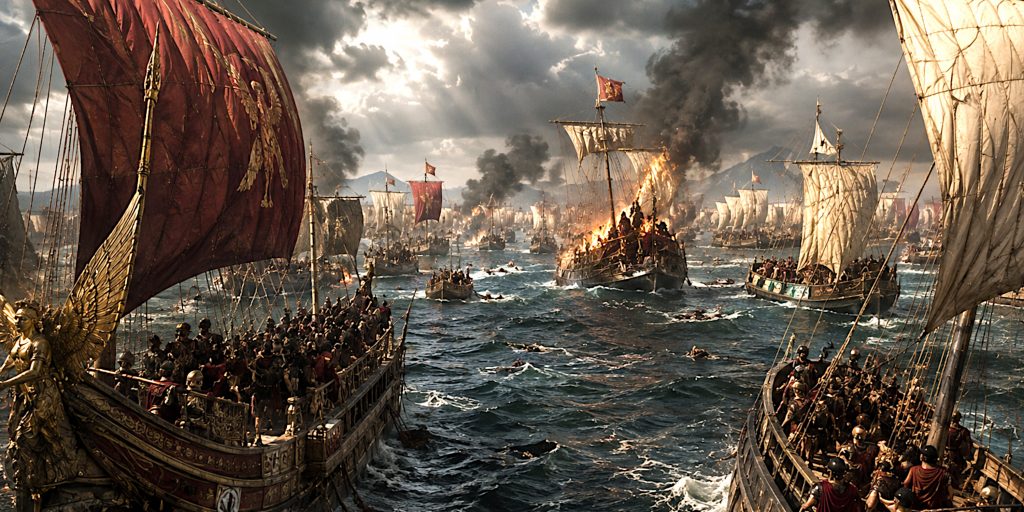
Actium was a naval battle fought off western Greece between Octavian’s forces, directed at sea by Marcus Agrippa, and the coalition of Mark Antony and Cleopatra VII. Agrippa’s earlier operations had weakened Antony’s supply position. During the battle Cleopatra’s squadron broke through and sailed south, followed by Antony, while much of their fleet remained trapped.
- Commanders: Marcus Agrippa for Octavian against Mark Antony and Cleopatra
- Forces: Ancient totals are difficult to reconcile, but more than 400 warships and tens of thousands of crew and troops were involved
- Arms: Ramming, boarding, artillery, missiles and heavy marines; Octavian’s smaller vessels had greater mobility
- Consequence: Left Octavian without a viable rival and led to the annexation of Egypt and the Augustan political settlement
Actium ranks first because it altered the structure of Roman government. Cannae was bloodier and Teutoburg more shocking, but neither made one man master of the Mediterranean world. Octavian returned as the sole victor, became Augustus and constructed a monarchy that carefully avoided calling itself one. Rome had always admired tradition, especially when renaming a revolution.
Which Roman Battle Was the Largest?
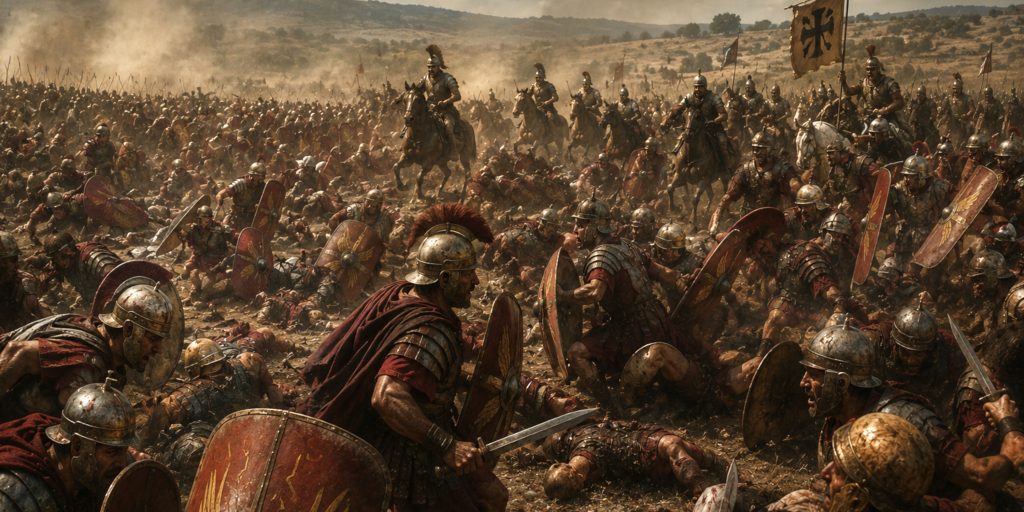
There is no single secure answer because ancient armies were not counted with modern precision and the word “largest” can mean several things.
- Largest Roman land army in a single battle: Cannae is the strongest candidate, with roughly 80,000 Roman and allied troops engaged.
- Largest Roman civil-war confrontation: Philippi probably involved the greatest combined number of legionaries, perhaps approaching 200,000 people once cavalry and supporting personnel are considered.
- Largest naval confrontation: Actium involved several hundred warships and enormous numbers of rowers, sailors, marines and soldiers.
- Largest siege operation: Jerusalem and Alesia each involved vast military and civilian populations, but their totals are especially uncertain.
Claims that Alesia involved more than 300,000 people or that more than 100,000 died at Arausio come from ancient literary traditions, not dependable headcounts. They remain evidence for how later writers understood the scale of those events, but should not be treated like audited returns.
What These Battles Reveal About Roman Warfare
The legion was formidable, but it was never invincible. Romans lost when commanders divided armies, ignored intelligence, accepted unsuitable terrain or faced opponents whose mobility they could not answer. Arausio, Carrhae, Cannae, Teutoburg and Adrianople were not minor mishaps around the edges of an otherwise spotless system.
Rome’s greatest advantage was institutional endurance. It could recruit again, absorb allied methods, change commanders and continue wars after appalling losses. That resilience depended on manpower, taxation, political coercion and alliances as much as battlefield discipline.
The weapons also changed across the centuries. A Republican soldier at Cannae did not carry precisely the same kit as a late Roman infantryman at Adrianople. “The Roman gladius” is useful shorthand, but Roman armies used different sword forms, spears, armour and tactical organisations across more than a thousand years.
There is a final caution. Most surviving narratives were written by Greeks and Romans, often long after the events. The defeated appear through hostile or imperial eyes, and speeches are literary compositions rather than transcripts. Those sources are indispensable, but they work best when read beside archaeology, inscriptions, landscape and a healthy suspicion of any ancient author who has counted exactly 100,000 enemy dead.
Ancient Sources and Further Reading
- Polybius, Histories, especially Books 3, 10, 15, 18 and 21
- Livy, History of Rome, especially Books 21 to 30 and 37 to 45
- Julius Caesar, Gallic War and Civil War
- Tacitus, Agricola and Annals
- Cassius Dio, Roman History
- Josephus, The Jewish War
- Plutarch, Lives, including Fabius Maximus, Crassus, Caesar, Brutus and Aemilius Paullus
- Ammianus Marcellinus, Res Gestae, Book 31
- Adrian Goldsworthy, The Complete Roman Army
- Philip Sabin, Lost Battles: Reconstructing the Great Clashes of the Ancient World
- J. E. Lendon, Soldiers and Ghosts: A History of Battle in Classical Antiquity