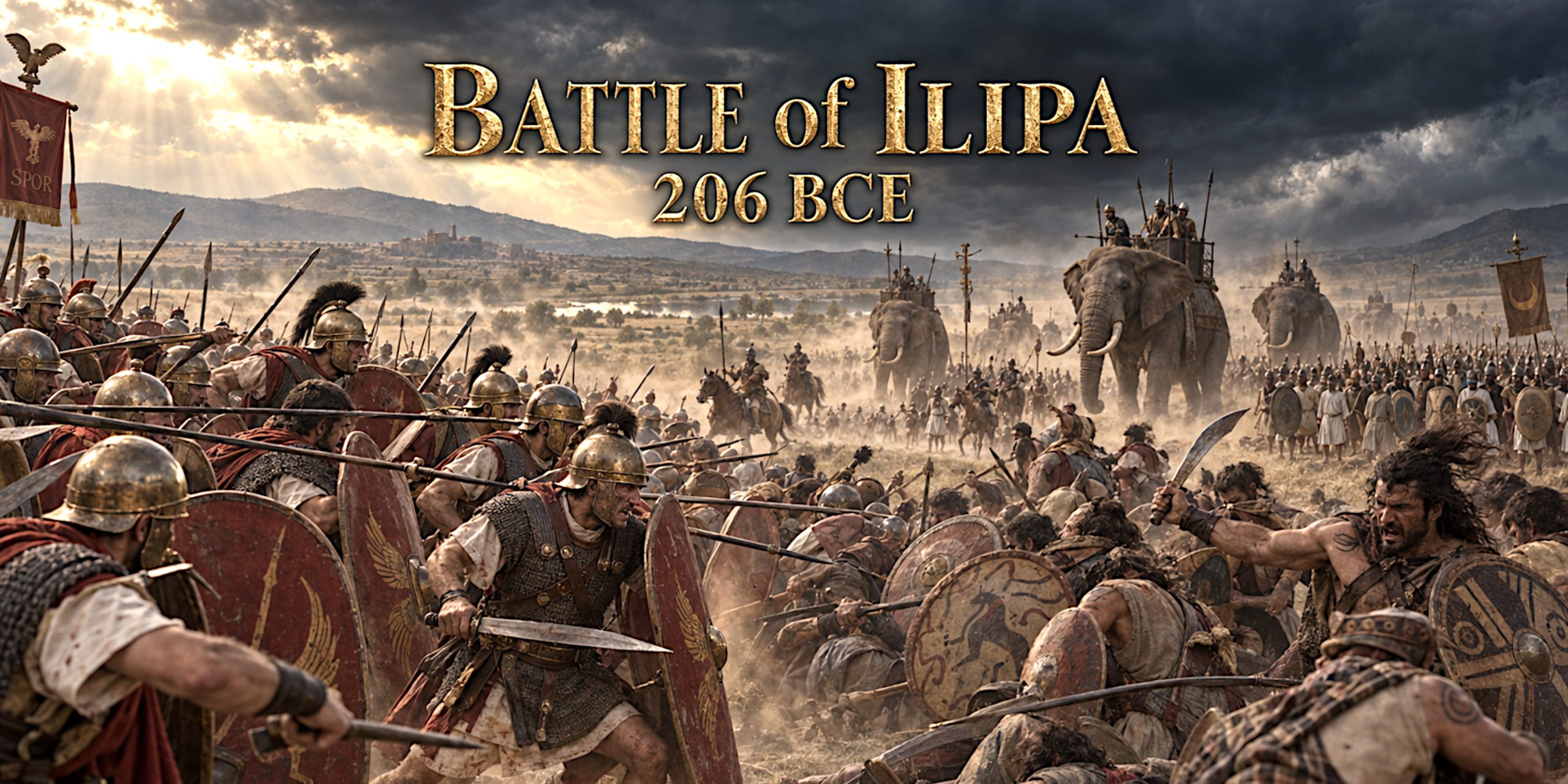
The Battle of Ilipa in 206 BCE broke Carthaginian power in Iberia and established Publius Cornelius Scipio as one of Rome’s most formidable commanders. Facing a larger army led by Hasdrubal Gisco and Mago Barca, Scipio used repetition, deception and an unusually aggressive deployment to attack the weakest parts of the Carthaginian line.
Ilipa is sometimes presented as a perfect tactical performance, as though Scipio moved pieces across a board while everyone else politely waited. The reality was less tidy. Thousands of Iberian troops fought on both sides, elephants became unpredictable once the fighting began, and bad weather may have prevented the Roman victory from becoming an outright annihilation.
What makes Ilipa particularly interesting is that Scipio did not win through one inspired gesture. He spent several days teaching his opponents what to expect, then punished them for believing him.
Battle of Ilipa at a Glance
| Detail | Information |
|---|---|
| Date | 206 BCE |
| Conflict | Second Punic War |
| Location | Traditionally identified near Ilipa, modern Alcalá del Río, north of Seville |
| Roman commander | Publius Cornelius Scipio |
| Carthaginian commanders | Hasdrubal Gisco and Mago Barca |
| Roman strength | Around 45,000 infantry and 3,000 cavalry according to Polybius |
| Carthaginian strength | Around 70,000 infantry, 4,000 cavalry and 32 elephants according to Polybius |
| Result | Decisive Roman victory |
| Strategic consequence | Collapse of Carthaginian military power in Iberia |
Ancient figures should always be treated with caution. Polybius gives Scipio approximately 48,000 men and the Carthaginians approximately 74,000, while Livy preserves different totals. The precise numbers cannot be independently verified, but the accounts agree that Scipio faced the larger force.
Why Was Ilipa Important?
Iberia was central to the Carthaginian war effort. Its mines, ports, agricultural wealth and soldiers had supported the Barcid expansion and helped make Hannibal’s invasion of Italy possible.
Following Roman victories at New Carthage and Baecula, Carthaginian control was weakened but not yet destroyed. Hasdrubal Gisco and Mago Barca therefore assembled a large army in southern Iberia. Their aim was to stop Scipio before Rome could turn a successful campaign into permanent control.
For Scipio, Ilipa offered both an opportunity and a serious danger. A decisive victory could remove Carthage from the peninsula. A defeat might undo everything achieved since his arrival in 210 BCE.
There was also the uncomfortable matter of Scipio’s Iberian allies. They provided essential manpower, but Rome had already learnt how quickly local alliances could change. Scipio’s father and uncle had been killed in Iberia after allied troops deserted them. He had excellent reasons to value Iberian support without building his entire battle plan upon its continued enthusiasm.
The Road to Battle
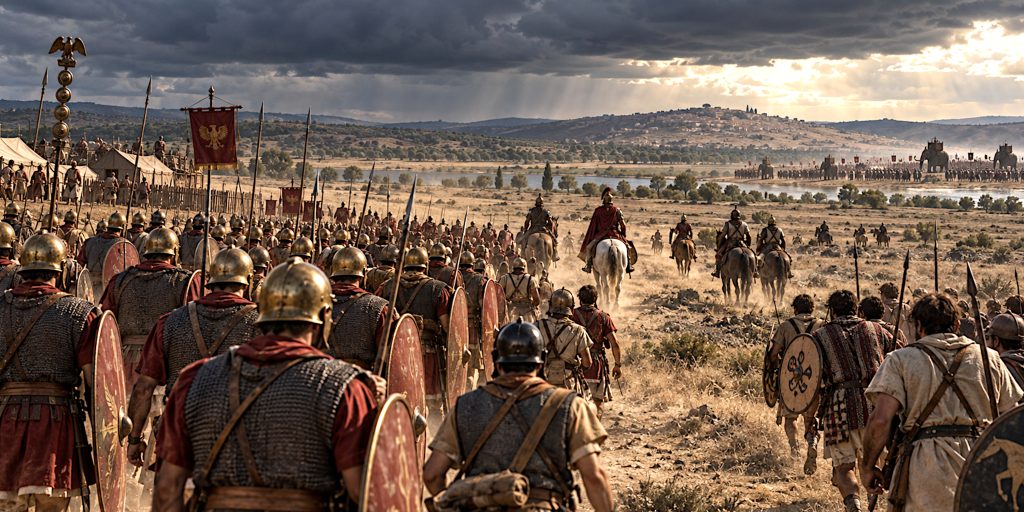
By 206 BCE, Carthage still controlled territory in the south and retained access to important ports, particularly Gades. Hasdrubal Gisco raised troops among Carthaginian possessions and allied Iberian communities, while Mago Barca remained an active and dangerous subordinate commander.
The combined Carthaginian army gathered near Ilipa, identified by Polybius under that name and called Silpia by Livy. The traditional location is close to modern Alcalá del Río on the River Guadalquivir, although the precise battlefield has not been securely located.
When Scipio approached and began constructing his camp, Mago and the Numidian prince Masinissa launched a cavalry attack. Scipio had anticipated the move and concealed Roman cavalry nearby. The ambush drove the attackers back and gave Scipio an early psychological advantage.
This preliminary clash mattered. It warned the Carthaginians that Scipio was difficult to surprise, while giving the Romans confidence before confronting a numerically superior army.
Forces
Our figures come from ancient literary sources rather than surviving military records. They offer a useful indication of scale, but not an exact headcount.
| Army | Infantry | Cavalry | Elephants | Estimated total |
|---|---|---|---|---|
| Roman and allied army | Around 45,000 | Around 3,000 | None recorded | Around 48,000 |
| Carthaginian and allied army | Around 70,000 | Around 4,000 | 32 | Around 74,000 |
Livy gives the Carthaginian army 50,000 infantry and 4,500 cavalry, while acknowledging that other accounts claimed 70,000 infantry. This disagreement is a useful reminder that ancient historians were not working from audited spreadsheets.
Roman army
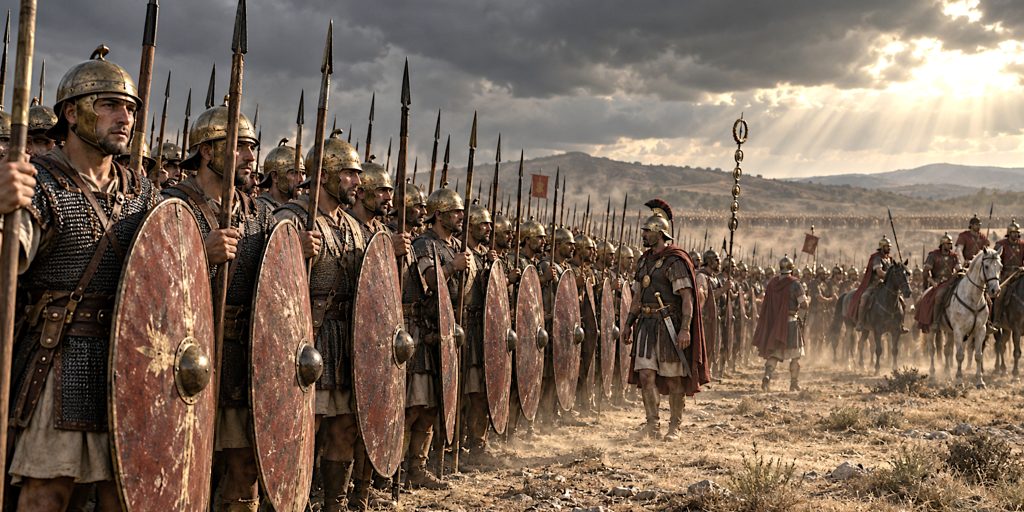
Scipio’s force probably included:
- Roman legionaries
- Italian allied infantry
- Roman and Italian cavalry
- Iberian allied infantry
- Iberian cavalry
- Velites and other light troops
- Locally recruited skirmishers
Carthaginian army
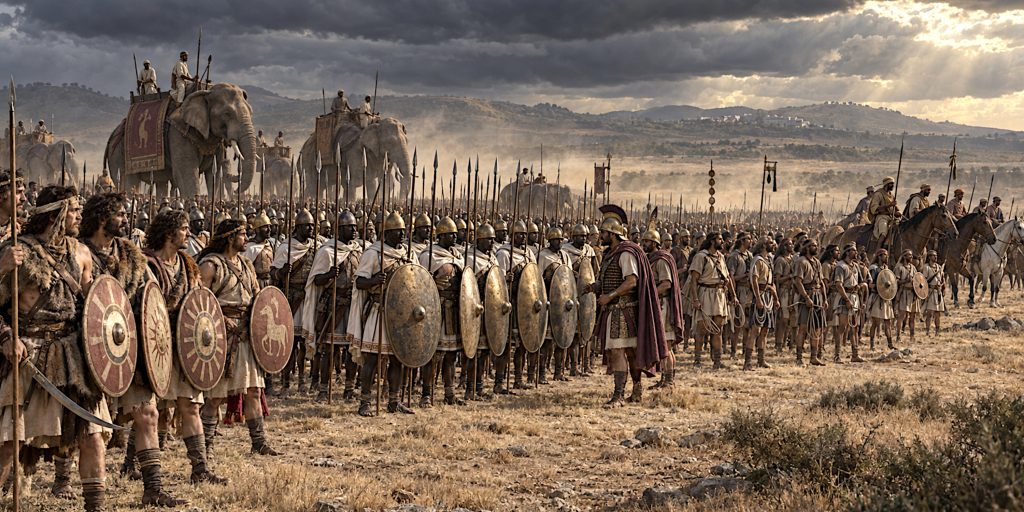
Hasdrubal and Mago commanded a more varied coalition:
- African heavy infantry
- Carthaginian or Punic infantry
- Iberian infantry
- Celtiberian warriors and mercenaries
- Numidian cavalry
- Iberian cavalry
- Balearic slingers
- African and Iberian light infantry
- War elephants
The Carthaginian army was large, but size brought problems. Its contingents differed in equipment, language, fighting style and loyalty. Hasdrubal needed to coordinate them while facing a Roman commander who had already spent years studying Carthaginian methods.
Leaders and Troop Composition
| Leader | Allegiance | Role at Ilipa | Military significance |
|---|---|---|---|
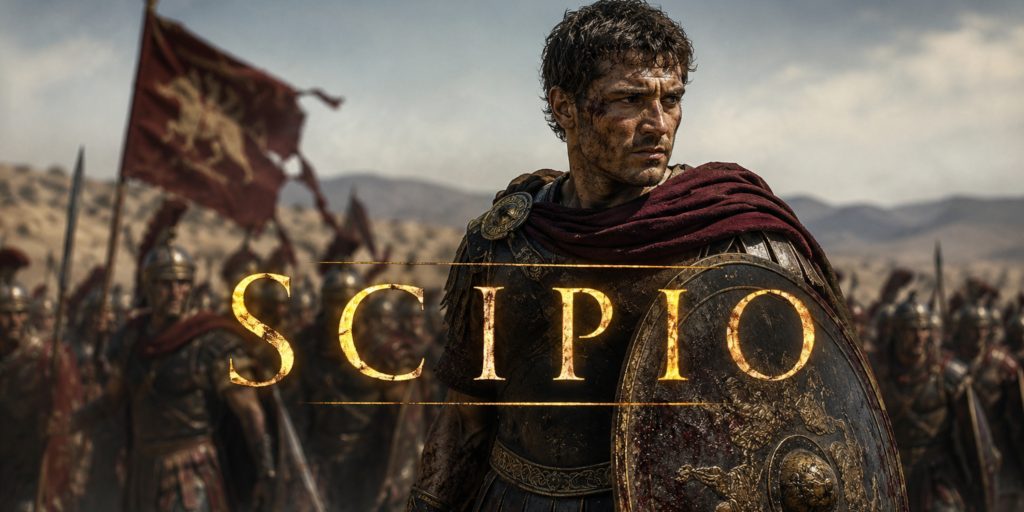
| Publius Cornelius Scipio | Rome | Overall Roman commander | Planned the deceptive deployment and controlled the Roman offensive |
| Marcus Junius Silanus | Rome | Senior subordinate | Experienced officer who had previously defeated Carthaginian forces in Iberia |
| Lucius Marcius Septimus | Rome | Senior subordinate | Commanded Roman forces during the Iberian campaigns |
| Hasdrubal Gisco | Carthage | Principal Carthaginian commander | Led the combined Carthaginian and allied army |
| Mago Barca | Carthage | Senior commander | Brother of Hannibal and an experienced cavalry commander |
| Masinissa | Numidian ally of Carthage | Cavalry leader | Commanded highly mobile Numidian horsemen before later changing allegiance |
Scipio’s command
Scipio placed his Roman and Italian infantry where they could deliver the decisive attacks. His Iberian allies occupied the centre during the final deployment, facing the strongest African troops but avoiding an immediate heavy engagement.
This was tactically clever and politically astute. Scipio did not insult his allies by removing them from the battle line, yet he did not ask them to perform the most dangerous offensive work.
Hasdrubal’s command
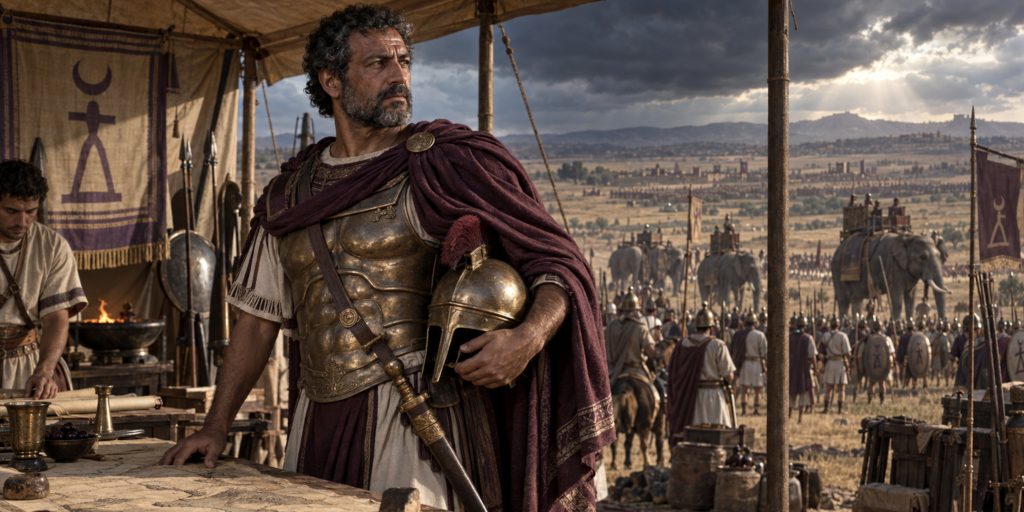
Hasdrubal positioned his African infantry in the centre and his less dependable Iberian troops on the wings. Elephants and cavalry supported the flanks.
This arrangement was perfectly reasonable. The strongest infantry held the centre, while cavalry and elephants could operate in the open ground beside the main line. Its weakness only became apparent when Scipio refused to attack where Hasdrubal expected him to.
Arms and Armour
Ilipa brought together Roman, Punic, African, Iberian, Celtiberian, Numidian and Balearic fighting traditions. There was no single standard set of equipment across either army.
Roman and Italian equipment
| Weapon or armour | Description and use |
|---|---|
| Gladius Hispaniensis | A straight, double-edged sword capable of both cutting and thrusting |
| Pilum | Heavy Roman javelin used to disrupt shields and formations before contact |
| Scutum | Large body shield offering substantial protection in close formation |
| Hasta | Thrusting spear, still used by some Roman and allied troops |
| Pugio | Short dagger carried as a secondary weapon |
| Montefortino helmet | Common bronze helmet with cheek pieces and a simple neck guard |
| Mail armour | Flexible protection worn by wealthier or better-equipped soldiers |
| Pectoral plate | Small bronze chest plate used by some infantrymen |
The gladius Hispaniensis was associated with Iberian sword-making traditions and had entered Roman service by the Second Punic War. It was generally longer than many later imperial gladii and was suited to powerful cuts as well as thrusts.
Iberian and Celtiberian equipment
| Weapon or armour | Description and use |
|---|---|
| Falcata | Forward-curving single-edged sword used in parts of southern and eastern Iberia |
| Straight Iberian sword | Double-edged weapon that influenced Roman sword development |
| Soliferrum | Heavy all-iron throwing spear designed for penetration |
| Falarica | Heavy incendiary or penetrating javelin, though its presence at Ilipa cannot be proven |
| Caetra | Small round shield used by mobile Iberian infantry |
| Scutum-type shield | Larger oval shield adopted by some Iberian and Celtiberian warriors |
| Javelins | Common weapons among light and medium infantry |
| Montefortino-style helmet | Helmet forms shared or exchanged across the western Mediterranean |
It would be misleading to imagine every Iberian warrior carrying a falcata. Archaeological evidence shows considerable regional variation. Straight swords, antenna-hilted weapons and spears were also important.
Carthaginian and African equipment
| Weapon or armour | Description and use |
|---|---|
| Thrusting spear | Principal weapon of many African heavy infantry formations |
| Punic straight sword | Secondary weapon used by some Carthaginian and African soldiers |
| Captured Roman equipment | African veterans may have used arms taken during earlier victories |
| Large shield | Used by close-order infantry, possibly including oval and round forms |
| Linen, scale or mail armour | Protection varied according to status, origin and unit |
| Javelins | Used by African and Iberian light troops |
The African infantry were probably the most reliable part of Hasdrubal’s line. They are sometimes described as fighting like Roman legionaries because Carthaginian troops had captured Roman equipment in Italy. Some may indeed have carried Roman arms, but uniform re-equipment across the whole force should not be assumed.
Cavalry and missile troops
- Numidian cavalry used javelins, small shields and exceptional mobility.
- Iberian cavalry carried spears, javelins and swords.
- Roman and Italian cavalry generally fought with spears, swords and larger shields.
- Balearic slingers used several sling types and could strike at considerable range.
- Light infantry protected the flanks and supported the elephants.
War elephants
The elephants were probably North African animals commanded by drivers and accompanied by light troops. Whether every elephant carried a tower is doubtful. Ancient depictions and accounts suggest that towers were used in some Hellenistic armies, but they should not automatically be added to every Carthaginian elephant.
At Ilipa, the elephants were placed near the wings. Roman missiles and skirmishers disturbed them, causing some to turn back into their own supporting troops. Elephants remained terrifying weapons, although their habit of panicking in two directions made them rather less predictable than generals might have wished.
Scipio’s Deception
For several days, both armies deployed without committing to a full battle.
Hasdrubal placed his African infantry in the centre and Iberian troops on the wings. Scipio responded by positioning his Romans in the centre and Iberian allies on his own flanks. After standing under arms and engaging in limited skirmishing, both sides returned to camp.
The repetition created an expectation. Hasdrubal came to believe that Scipio would continue using the same formation.
On the decisive morning, Scipio changed everything.
He ordered his men to eat before dawn and sent cavalry and light infantry forward to harass the Carthaginian camp. Hasdrubal hurried his army out before many of his troops had eaten. Assuming the familiar deployment would be repeated, he arranged his Africans in the centre and Iberians on the wings.
Scipio then revealed his reversed formation:
- Roman and Italian heavy infantry occupied the wings.
- Iberian allied infantry held the centre.
- Cavalry and light troops operated outside the Roman wings.
- The strongest Roman units now faced the weaker Carthaginian flanks.
- Hasdrubal’s best African infantry faced Scipio’s centre but could not easily intervene.
It was deception in plain sight. Scipio had shown Hasdrubal the same answer for several days, then changed it when the examination began.
How the Battle Unfolded
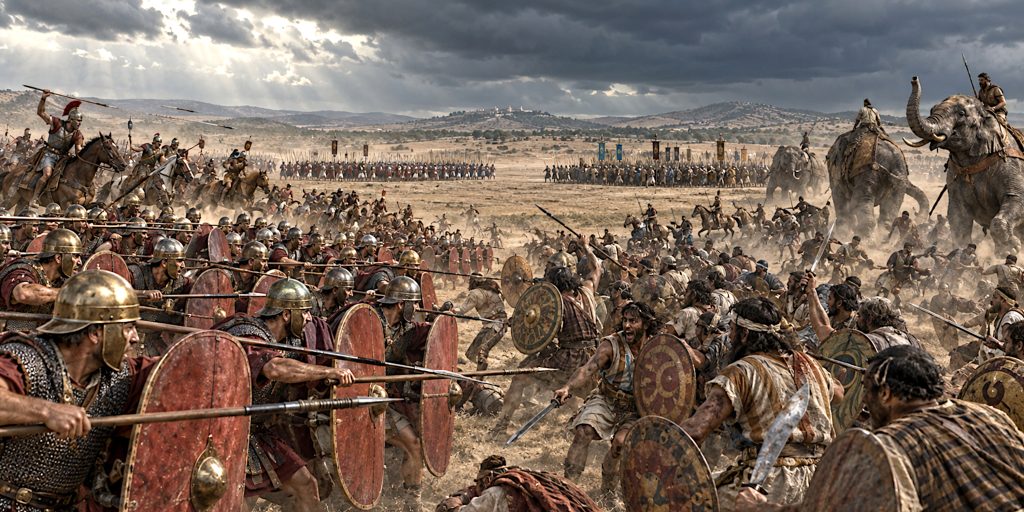
Scipio advanced towards the Carthaginian army but kept his Iberian centre moving more slowly. The Roman wings moved forward at a faster pace and wheeled towards the enemy flanks.
This produced an unusual formation. Rather than maintaining one straight battle line, the Roman army advanced with its wings leading and its centre held back.
Roman cavalry and light infantry attacked the Carthaginian cavalry, skirmishers and elephants. Missile fire unsettled the animals. Some elephants were driven back towards their own troops, creating disorder at precisely the point where Hasdrubal needed his wings to resist the approaching legionaries.
The Roman and Italian infantry then struck the Iberian formations on both Carthaginian flanks. These troops faced concentrated attacks from heavy infantry, cavalry and skirmishers.
Meanwhile, the African centre remained largely unengaged. Hasdrubal could not simply move it sideways without breaking formation and exposing it during the manoeuvre. Nor could it advance freely, because Scipio’s Iberian centre remained in front of it.
The fighting continued for hours. Hunger, heat, crowding and pressure gradually weakened the Carthaginian line. The wings began to collapse, forcing the centre to withdraw.
The Carthaginians initially retreated in reasonable order, but that discipline broke as Roman pressure continued. A sudden storm or heavy rain, recorded in the ancient tradition, helped bring the pursuit to an end and allowed some of Hasdrubal’s army to reach camp.
Battle Timeline
| Stage | Development |
|---|---|
| Before the main battle | Mago and Masinissa attack the Romans while Scipio is establishing camp |
| Following days | Both armies deploy repeatedly but avoid a full engagement |
| Roman routine | Romans appear in the centre with Iberian allies on the wings |
| Carthaginian routine | African infantry occupies the centre, with Iberians on the wings |
| Before dawn | Scipio orders his troops to eat and prepare early |
| Early morning | Roman cavalry and light infantry attack the Carthaginian outposts |
| Carthaginian deployment | Hasdrubal rushes his army into its customary formation |
| Roman surprise | Scipio places Roman and Italian infantry on the wings and Iberians in the centre |
| Opening attack | Roman wings advance rapidly while the allied centre moves more slowly |
| Fighting on the flanks | Roman infantry, cavalry and skirmishers attack the Carthaginian wings |
| Elephant disorder | Missile attacks drive some elephants back into friendly troops |
| Carthaginian retreat | The wings weaken and the African centre is compelled to withdraw |
| End of battle | Bad weather limits the Roman pursuit and survivors reach their camp |
| Following night and day | Desertions weaken Hasdrubal’s army and the remaining force abandons its position |
| Aftermath | Hasdrubal and Mago escape, but Carthaginian field power in Iberia is effectively broken |
Why Scipio Won
He created a false routine
Scipio used repeated deployments to make Hasdrubal expect the Roman legions in the centre. The final reversal was effective because it contradicted an established pattern.
His troops were fed and ready
The Romans ate before deploying. Hasdrubal’s soldiers were called out in haste and remained under arms for much of the day without a proper meal. Hunger alone did not decide the battle, but it increased the strain on troops already fighting under pressure.
He attacked the weaker wings
Scipio avoided an immediate collision with Hasdrubal’s best African infantry. Instead, Roman and Italian legionaries attacked the Iberian wings.
He controlled the pace of the centre
The slower Roman-allied centre fixed the Carthaginian Africans in position without committing to a costly frontal fight. This prevented Hasdrubal’s strongest troops from easily supporting the flanks.
He combined different arms effectively
Infantry, cavalry and skirmishers attacked together. The Roman light troops disrupted the elephants, while the cavalry applied pressure around the edges of the battlefield.
Carthage struggled to coordinate its army
Hasdrubal commanded a multinational force with uneven levels of training and loyalty. Once the flanks were compromised, holding the entire line together became extremely difficult.
Ancient Accounts and Quotes
No surviving eyewitness account of Ilipa is known. Polybius wrote within living memory of the events and had connections to Scipio’s family, while Livy wrote around two centuries later. They are ancient sources, but describing their words as strictly contemporary would be inaccurate.
Polybius emphasises how Scipio shaped the battle through preparation and timing:
“He had made all his calculations with a view to the actual battle.”
He also describes the mounting physical pressure on the Carthaginian troops:
“They were suffering severely from hunger and the heat.”
Livy presents the Carthaginian deployment as a hurried response to Scipio’s early attack:
“The enemy rushed out to battle without having taken food.”
The wording varies between English translations. More importantly, neither author should be read as a neutral battlefield reporter. Polybius admired effective generalship, while Livy shaped events into a broader moral history of Rome.
The quotations previously attributed to Livy and Appian on many retellings of Ilipa are often paraphrases rather than verifiable translations. They are best avoided unless accompanied by an edition and passage reference.
Casualties
Precise casualty totals are impossible to establish. Ancient narratives depict the Carthaginian army suffering heavy losses during the fighting, pursuit, retreat and subsequent desertions.
Some modern summaries give extraordinarily high totals, but these depend upon accepting ancient army figures and reconstructing what happened to men who dispersed after the battle. It is safer to conclude that:
- Carthaginian losses were severe.
- Many allied troops deserted after the defeat.
- A surviving core escaped with Hasdrubal and Mago.
- Roman losses were substantial enough to matter, but far lower.
- The Carthaginian army ceased to function as an effective field force in Iberia.
The victory was decisive without being a complete battlefield encirclement. Hasdrubal and Mago both survived, which rather spoils the cleaner versions of the story but makes the history more credible.
Archaeology and the Location of Ilipa
Ilipa is usually identified with modern Alcalá del Río, approximately 14 kilometres north of Seville. The ancient settlement occupied a strategically important position close to the River Baetis, now the Guadalquivir, and controlled routes connecting the lower valley with the mineral wealth of the Sierra Morena.
Archaeological work at Alcalá del Río has confirmed ancient settlement, including Iberian and Roman occupation. Finds associated with the wider area include:
- Iberian and Roman pottery
- Coins from Punic and Roman contexts
- Structural remains from the ancient town
- Sections or traces associated with later Roman fortification
- Funerary and domestic evidence
- Roman mosaics and architectural material
However, no securely identified battlefield assemblage has established the exact location of Scipio’s deployment or the Carthaginian camp. Claims that particular weapon fragments or campsites have been conclusively linked to the battle should therefore be treated cautiously.
Locating the battlefield presents several problems:
- The Guadalquivir has altered its course and surrounding landscape.
- Centuries of agriculture have disturbed surface evidence.
- Ancient weapons and armour were routinely recovered and reused.
- The descriptions provided by Polybius and Livy are not detailed enough for a precise modern map.
- The Carthaginian line and retreat route remain subjects of debate.
The traditional identification is plausible, but the surviving archaeology illuminates ancient Ilipa more clearly than it reconstructs the battle itself.
Aftermath
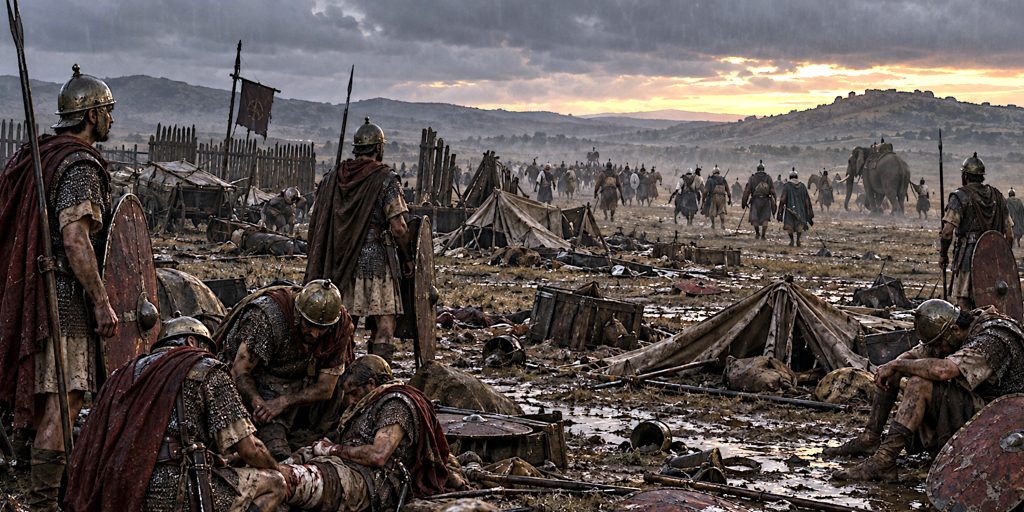
The Carthaginian survivors withdrew to their camp, but their position quickly deteriorated. Iberian allies began to desert, and Hasdrubal no longer trusted the remaining contingents to defend the camp.
The army attempted to retreat towards the coast. Roman pursuit and continued desertion reduced it further, although Hasdrubal and Mago escaped.
The consequences were considerable:
- Organised Carthaginian field resistance in Iberia collapsed.
- Gades eventually passed out of Carthaginian control.
- Mago later sailed for the Balearic Islands and attempted to continue the war in northern Italy.
- Hasdrubal returned to North Africa.
- Masinissa eventually abandoned Carthage and aligned himself with Scipio.
- Rome inherited influence over Iberian communities previously tied to Carthage.
Ilipa did not instantly create a peaceful Roman Spain. Indigenous communities continued to resist Roman expansion for generations. Rome had removed its great rival, but ruling the peninsula proved considerably harder than defeating one army.
The Legacy of Ilipa
Ilipa secured Scipio’s reputation before his African campaign and victory over Hannibal at Zama. Several features of his command at Ilipa would appear again in later operations:
- Careful observation of enemy habits
- Deliberate manipulation of expectations
- Flexible use of Roman formations
- Strong coordination between infantry, cavalry and skirmishers
- Concentration of superior troops against vulnerable sectors
- Refusal to fight the battle preferred by his opponent
The battle also demonstrated the growing flexibility of the Roman army. Scipio did not merely place the legions in a conventional line and trust Roman discipline to solve the problem. He altered the formation, varied the speed of advance and used allied troops according to their political as well as military value.
As a historian, I find Ilipa more convincing as evidence of preparation than of genius in the romantic sense. Scipio noticed routines, created one of his own and then broke it at the exact moment it became useful. Brilliant generalship is often less theatrical than people hope. It frequently resembles very careful administration conducted while thousands of armed men try to kill one another.
Ilipa removed Carthage as the dominant power in Iberia and gave Rome the territorial base from which it would begin a much longer conquest. It also prepared Scipio for the campaign that carried the war into Africa. Zama made his name immortal, but Ilipa showed that the reputation was already deserved.
Frequently Asked Questions
Who won the Battle of Ilipa?
Publius Cornelius Scipio won a decisive victory for Rome over the Carthaginian army commanded by Hasdrubal Gisco and Mago Barca.
When was the Battle of Ilipa fought?
The battle was fought in 206 BCE during the final phase of the Second Punic War in Iberia.
Where did the battle take place?
It is traditionally located near ancient Ilipa, identified with modern Alcalá del Río north of Seville. The precise battlefield has not been conclusively located.
How large were the armies?
Polybius gives Scipio around 48,000 troops and the Carthaginians around 74,000, including 32 elephants. Livy provides lower figures for the Carthaginian army. All totals remain estimates.
What swords were used at Ilipa?
Roman and Italian troops used the gladius Hispaniensis. Iberian warriors could carry falcatas or straight double-edged swords, while some Carthaginian and African troops used straight swords as secondary weapons.
Why was Scipio’s formation unusual?
He placed Roman and Italian legionaries on the wings rather than in the centre. This allowed his strongest infantry to attack the weaker Carthaginian flanks while his Iberian centre held back the African heavy infantry.
Did the Battle of Ilipa end the war in Spain?
It ended Carthage’s ability to maintain a major field army in Iberia, although further operations, defections and local resistance continued.