Few defeats in Roman history feel as uncomfortable as Carrhae. It is not just that a Roman army was beaten. That had happened before and would happen again. What unsettles is the manner of it. Discipline, tradition, and confidence all met something they did not fully understand, and for once those qualities were not enough.
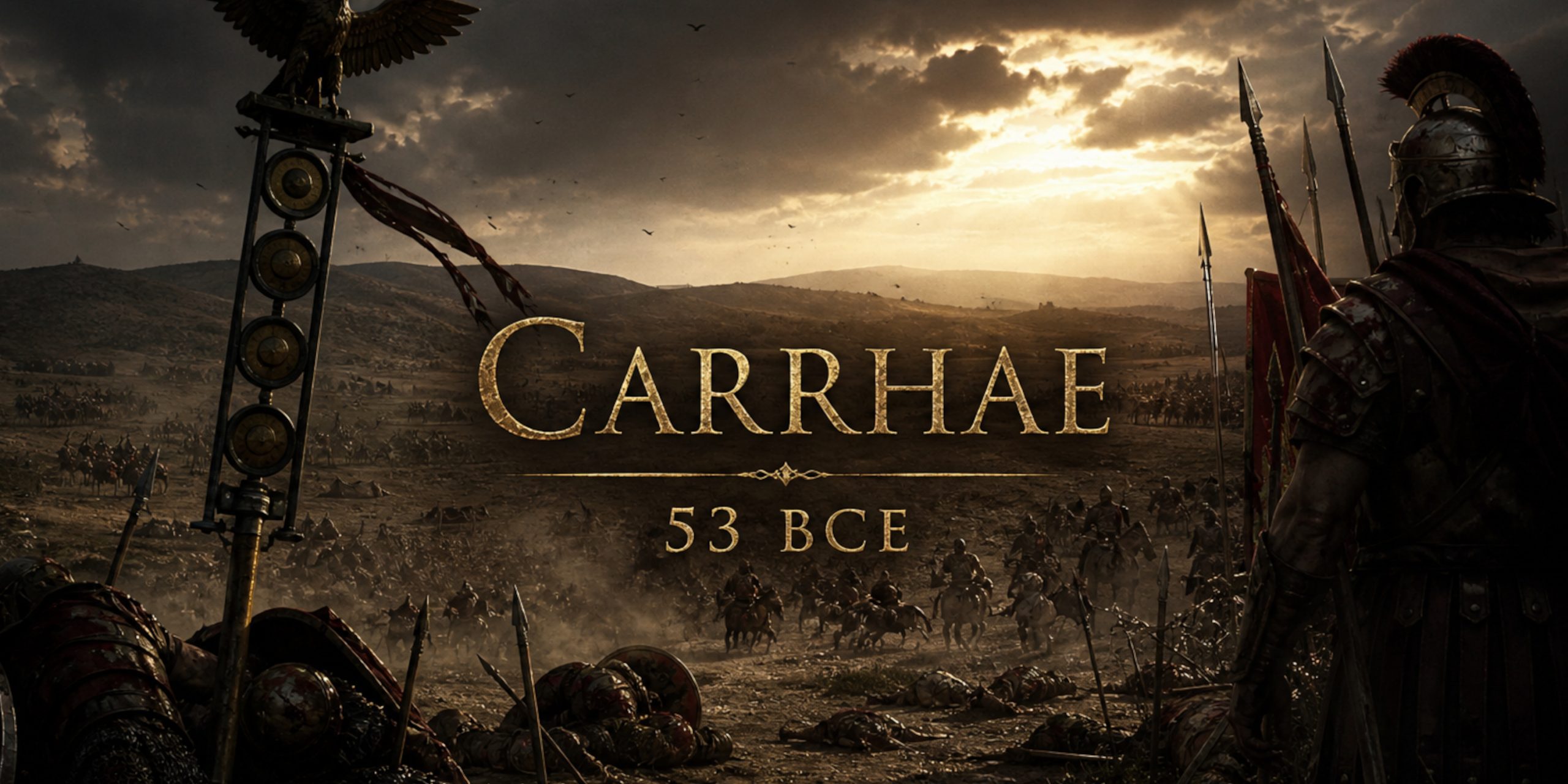
The Battle of Carrhae in 53 BC saw a Roman army under Marcus Licinius Crassus march deep into Mesopotamia and suffer a devastating defeat at the hands of the Parthians. It was a clash between two very different military systems. On one side stood the rigid, infantry-focused Roman legion. On the other, a highly mobile force built around horse archers and heavily armoured cavalry.
Crassus, wealthy and ambitious, sought glory to match his peers. Instead, he found himself outmanoeuvred, outthought, and ultimately undone.
Background to the Campaign
Crassus was one of Rome’s most powerful men, part of the First Triumvirate alongside Caesar and Pompey. Yet his reputation rested more on wealth than military brilliance. Carrhae was meant to change that.
Ignoring more cautious strategies, Crassus chose a direct march into Parthian territory. He declined support from local allies and pressed into open terrain that favoured cavalry. It is one of those decisions historians return to with a quiet shake of the head.
The Parthians, led by Surena, were well aware of their advantages. They would not meet Rome on Roman terms.
Foces
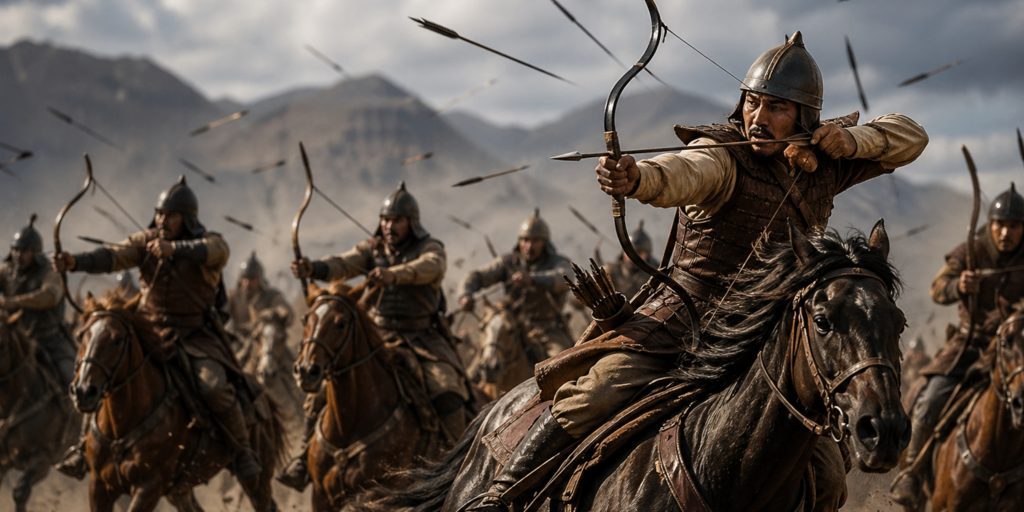
Roman Forces
| Component | Estimated Numbers | Notes |
|---|---|---|
| Legionary infantry | 35,000 to 40,000 | Heavy infantry, backbone of the army |
| Cavalry | 4,000 | Limited and largely ineffective |
| Light infantry | Several thousand | Skirmishers with minimal impact |
Parthian Forces
| Component | Estimated Numbers | Notes |
|---|---|---|
| Horse archers | 9,000 to 10,000 | Highly mobile, continuous missile fire |
| Cataphracts | 1,000 | Armoured shock cavalry |
The numbers alone tell only part of the story. Carrhae was not about size. It was about how those forces were used.
Arms and Armour
Roman Equipment
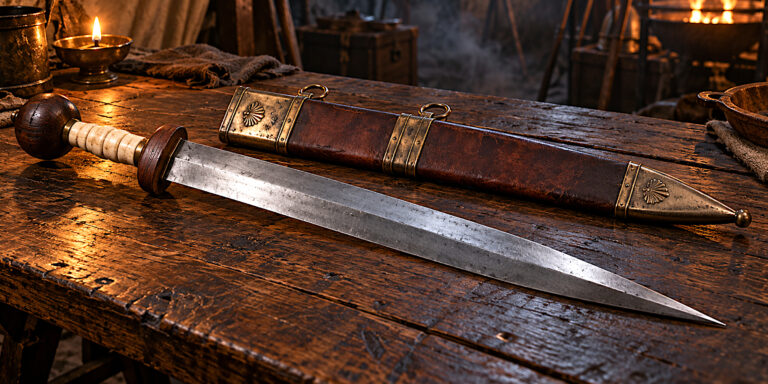
- Gladius Hispaniensis
Short stabbing sword designed for close combat within tight formations - Pilum
Heavy throwing spear intended to disrupt enemy lines before contact - Scutum
Large rectangular shield offering strong frontal protection - Lorica Hamata
Mail armour, flexible and reliable, though not designed for sustained missile harassment - Helmets
Iron and bronze, effective in melee but less so against repeated arrow strikes
Parthian Equipment
- Composite Bow
Capable of powerful shots from horseback, with impressive range and accuracy - Akinakes-style sword
Short blade used by cavalry when closing in, secondary to missile weapons - Cataphract lance
Long, heavy lance designed for devastating charges - Scale armour
Worn by both rider and horse in cataphract units, offering significant protection - Light horse armour
Minimal protection for archers, prioritising speed and endurance
The contrast could not be sharper. Roman kit was built for holding ground and closing distance. Parthian equipment was built for never needing to.
Leaders and Command Structure
Roman Command
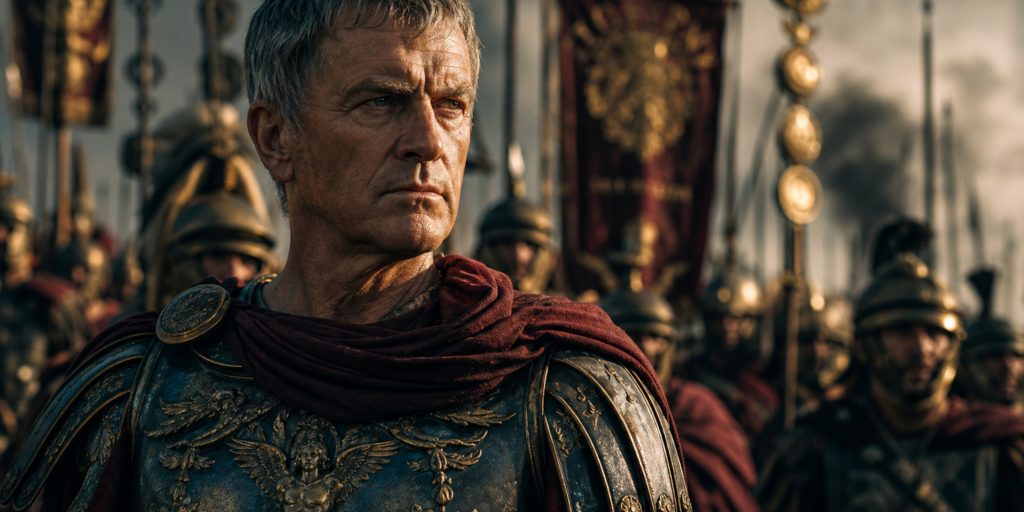
- Marcus Licinius Crassus
Overall commander, politically powerful but strategically inflexible - Publius Crassus
His son, energetic and capable, led the cavalry contingent
Parthian Command
- Surena
A commander of remarkable composure and tactical clarity
Surena’s approach was patient. He did not rush victory. He let the Romans exhaust themselves.
The Battle
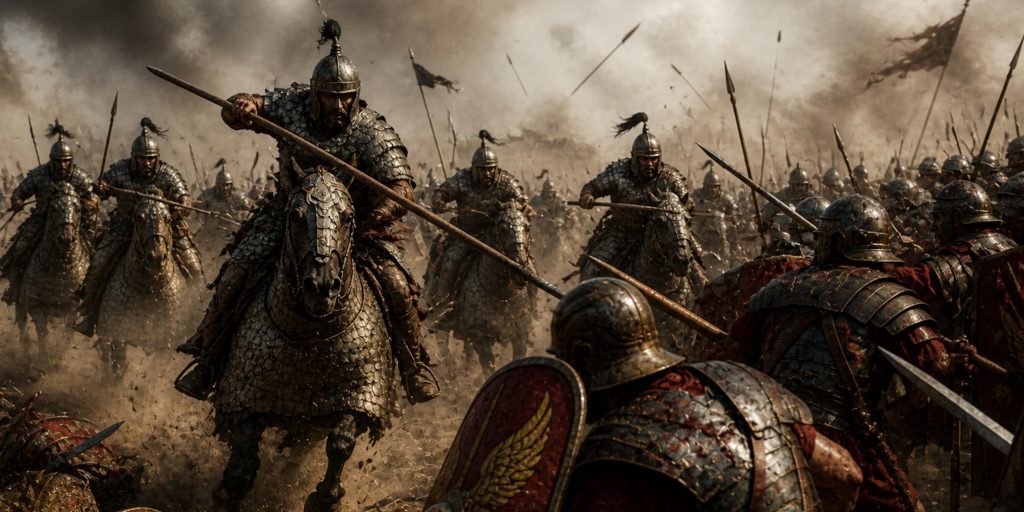
The Roman army formed into a hollow square, an attempt to guard against attacks from all sides. It was a defensive posture, and it already suggested uncertainty.
The Parthians began with sustained arrow fire. Their horse archers rode in, loosed volleys, then withdrew. The Romans held formation, shields raised, but the arrows kept coming. And coming.
A detail that often gets overlooked is the Parthian supply system. Camels carried vast reserves of arrows, allowing the barrage to continue far longer than the Romans expected. The assumption that the enemy would run out proved dangerously wrong.
Publius Crassus led a cavalry charge in an effort to break the pattern. It was a bold move, perhaps the only one available. It ended in disaster. Isolated and surrounded, his force was destroyed. His death broke Roman morale in a way no arrow ever could.
The final phase saw cataphracts advance against a shaken and depleted Roman line. What had begun as harassment became annihilation.
Battle Timeline
- Morning
Roman forces advance into open terrain near Carrhae - Late morning
Parthian horse archers begin sustained missile attacks - Midday
Roman formations hold but suffer growing casualties - Early afternoon
Publius Crassus leads cavalry charge and is encircled - Late afternoon
Roman morale collapses following news of Publius’ death - Evening
Parthian forces press the advantage, Roman army begins to disintegrate - Following day
Retreat turns chaotic, Crassus killed during negotiations
Archaeology and Evidence
Physical evidence from Carrhae is sparse, which is not unusual for battles fought across wide, open landscapes. What we rely on instead are literary sources and comparative archaeology.
- Arrowheads consistent with Parthian composite bows have been found in the wider region
- Roman military equipment discovered in Mesopotamia offers insight into what the legions carried
- Settlement layers around Carrhae show disruption consistent with military activity in the period
The absence of a clear battlefield site leaves room for debate, though the general outline of events is well supported.
Contemporary Accounts
Ancient writers provide vivid, if sometimes dramatic, descriptions of the battle.
Plutarch describes the relentless nature of the attack:
“From all sides arrows fell upon them, not at random but with aim, striking armour and flesh alike.”
Cassius Dio reflects on the Roman confusion:
“They could neither advance nor retreat, but stood there, suffering and waiting for death.”
These accounts carry a tone of disbelief. Roman armies were not meant to be handled this way.
Aftermath and Consequences
The defeat at Carrhae had immediate and long-term effects.
- Crassus was killed, ending the balance of the First Triumvirate
- Roman expansion eastward stalled for a generation
- Parthia established itself as a serious rival to Rome
- The loss of legionary standards became a lasting humiliation
It also forced Rome to reconsider how it fought in the East. Later commanders adapted, bringing more cavalry and avoiding the same mistakes. That lesson was hard won.
Takeaway
Carrhae is one of those battles that refuses to sit quietly in the record. It challenges assumptions about Roman superiority and reminds us that military systems have limits.
There is something almost painful in watching a well-drilled army slowly unravel because it cannot bring its strengths to bear. Crassus marched east chasing glory. He found a lesson instead, and Rome paid the price.