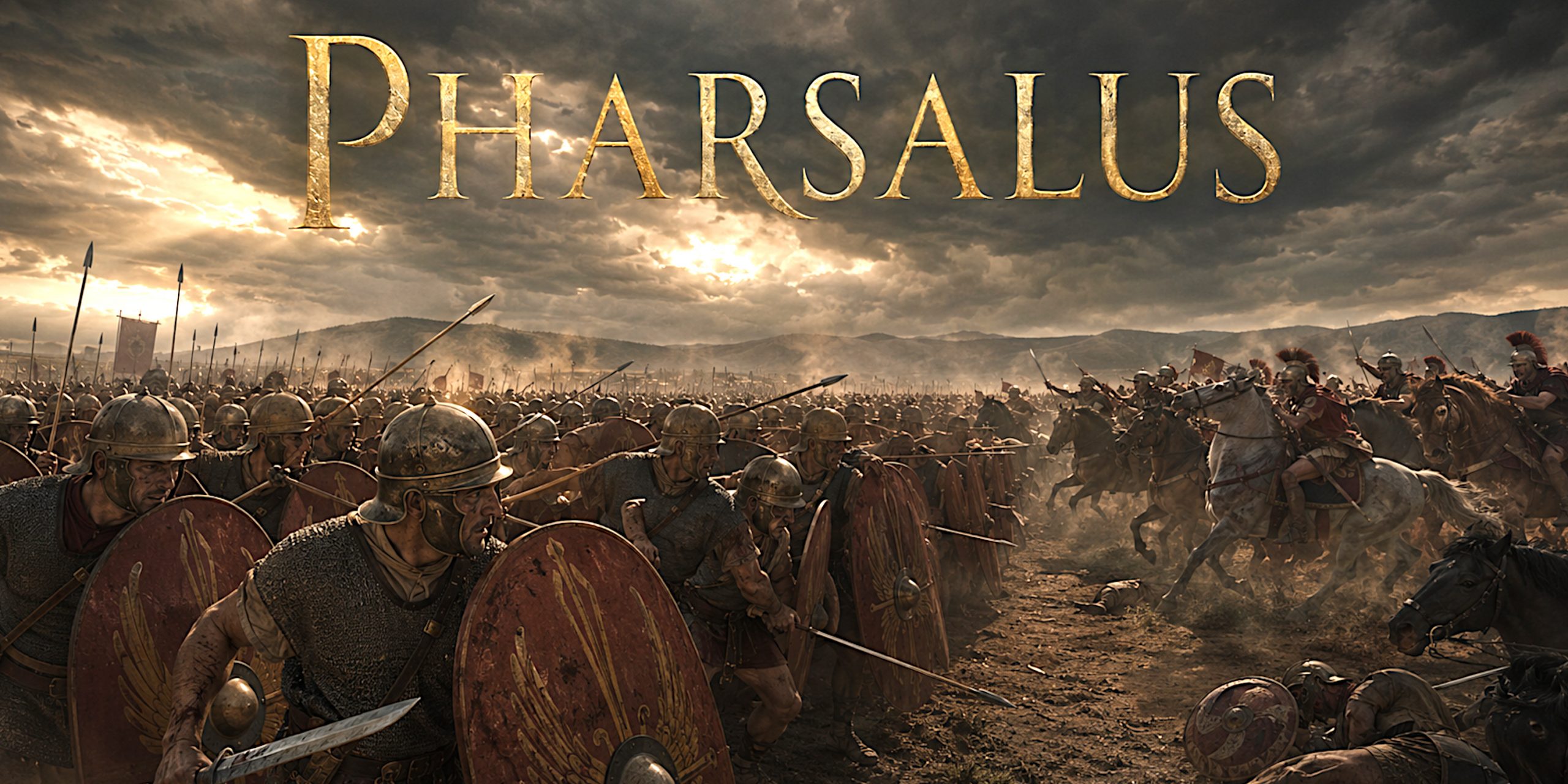
On a dusty plain in Thessaly in 48 BCE, two Roman armies met to decide who would control the Republic. Julius Caesar commanded fewer men, but most were veterans who had followed him through Gaul. Pompey the Great possessed the larger army, a formidable cavalry arm and the backing of much of the senatorial establishment. On paper, Caesar had arranged an excellent day on which to lose.
He did not lose.
The Battle of Pharsalus was the decisive engagement of Caesar’s Civil War. Caesar neutralised Pompey’s cavalry, broke his infantry and captured his camp. Pompey fled first to Larissa and then towards Egypt, where he was murdered. The Roman Republic did not formally expire on the field, but after Pharsalus it was increasingly difficult to pretend that its old political machinery still governed events.
The evidence is unusually rich by ancient standards and unusually awkward. Caesar wrote the fullest surviving account, which means the victor is also our principal witness. Plutarch, Appian, Cassius Dio and Lucan add detail, but they wrote later and sometimes contradict him. Troop strengths, casualties, the date in the modern calendar and even the precise battlefield remain disputed.
Battle of Pharsalus at a Glance
| Detail | Information |
|---|---|
| Conflict | Caesar’s Civil War |
| Traditional date | 9 August 48 BCE in the contemporary Roman calendar |
| Modern calendar equivalent | Often calculated as 29 June 48 BCE, though reconstructions vary |
| Location | Near Palaepharsalus in Thessaly, central Greece |
| Combatants | Caesarians against Pompeians, also called Republicans or Optimates |
| Result | Decisive Caesarian victory |
| Caesarian commander | Gaius Julius Caesar |
| Pompeian commander | Gnaeus Pompeius Magnus, Pompey the Great |
| Strategic consequence | Pompey fled; Caesar became the dominant figure in the Roman world |
Why Caesar and Pompey Went to War
Caesar and Pompey had once been political partners. Along with Marcus Licinius Crassus, they formed the informal alliance now known as the First Triumvirate. Crassus died at Carrhae in 53 BCE, while the death of Julia, Caesar’s daughter and Pompey’s wife, removed an important personal bond. Political rivalry hardened into a constitutional crisis.
Caesar’s enemies demanded that he surrender his provincial command and return to private life before standing for another consulship. Caesar feared prosecution and political destruction if he complied. In January 49 BCE, he crossed the Rubicon with the Thirteenth Legion. Pompey and many senators withdrew from Italy to Greece, where they could draw upon the Republic’s eastern provinces, fleets, allied rulers and tax revenues.
Caesar seized Italy, secured Spain and crossed the Adriatic in early 48 BCE. His attempt to blockade Pompey near Dyrrachium ended badly. Pompey broke Caesar’s siege works and inflicted a serious defeat. Caesar later claimed that Pompey had failed to realise how completely he had won. This is convenient testimony, but the underlying point is fair: Pompey did not turn Caesar’s reverse into a decisive destruction.
Caesar withdrew into Thessaly, captured Gomphi and joined forces with Domitius Calvinus. Pompey followed. Several of Pompey’s senior supporters reportedly argued over future offices and Caesar’s property before the campaign had been settled. Nothing ages quite so poorly as dividing the spoils before winning the battle.
Forces
Ancient figures should be read as claims rather than audited returns. Caesar states that he fielded 80 cohorts containing 22,000 legionaries and about 1,000 cavalry. He gives Pompey 110 cohorts, 45,000 legionaries, 7,000 cavalry, 3,000 archers and six cohorts of slingers. Later authors provide different totals.
Caesar had a clear reason to emphasise the numerical imbalance. A victory over overwhelming odds served both his reputation and his explanation of events. His figures are plausible in outline, especially because his legions were severely understrength, but their apparent precision should not seduce us.
Estimated troop composition
| Arm | Caesar’s army | Pompey’s army | Historical caution |
|---|---|---|---|
| Legionary infantry | About 22,000 in 80 cohorts | About 36,000 to 45,000 in roughly 110 cohorts | Caesar supplies the best-known figures; modern estimates often reduce Pompey’s total |
| Cavalry | About 1,000 | About 5,000 to 7,000 | Pompey’s mounted superiority is accepted, although the exact ratio is uncertain |
| Archers and slingers | Several thousand at most | Caesar lists 3,000 archers and six cohorts of slingers | Allied contingents are poorly recorded |
| Other auxiliaries | Greek and western allied troops | Thracian, Pontic, Cappadocian, Syrian, Cretan and other eastern troops | Ancient narratives routinely pay less attention to non-citizen soldiers |
| Overall character | Smaller, cohesive and highly experienced | Larger and more varied, with a powerful cavalry wing | Quality and command structure mattered as much as totals |
Caesar’s legions
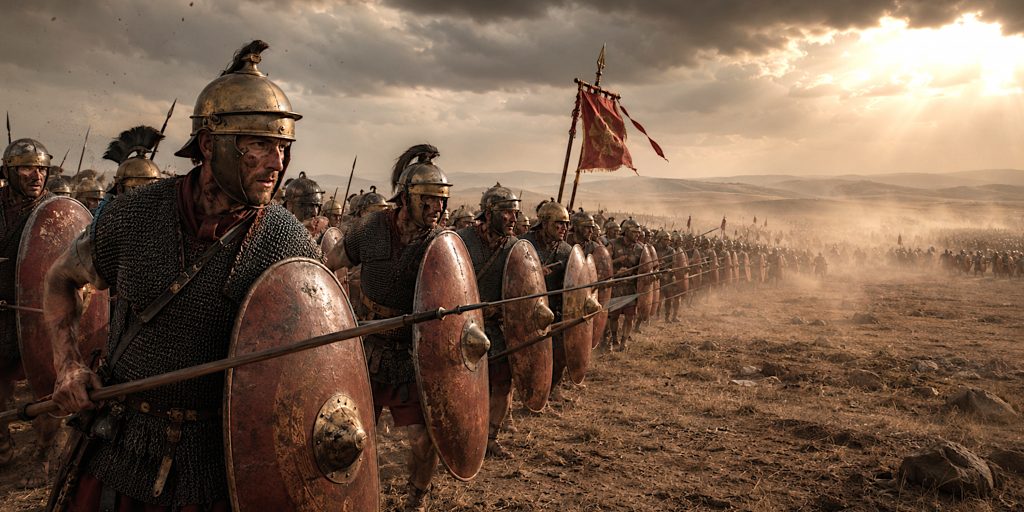
Caesar’s army included eight veteran legions, although none approached its theoretical establishment:
- Legio VI
- Legio VII
- Legio VIII
- Legio IX
- Legio X
- Legio XI
- Legio XII
- Legio XIII
The Eighth and Ninth had suffered heavily and were combined under Mark Antony on Caesar’s left. The Tenth, perhaps his most trusted formation, held the right, where the decisive manoeuvre developed.
Pompey’s army

Pompey’s legionary force included:
- Two legions formerly serving with Caesar, usually identified as the First and Third
- Two legions brought from Syria by Metellus Scipio
- Cilician cohorts and newly raised Italian formations
- Re-enlisted veterans distributed among less experienced units
- Large allied contingents of cavalry, archers, slingers and light infantry
Pompey’s host was not simply an amateur army. Some formations and officers were experienced, and Pompey himself was one of Rome’s most successful commanders. Its weakness lay in uneven experience and the difficulty of coordinating troops drawn from many regions and commands.
Leaders and Command Structure
| Side | Commander | Position or role | Assessment |
|---|---|---|---|
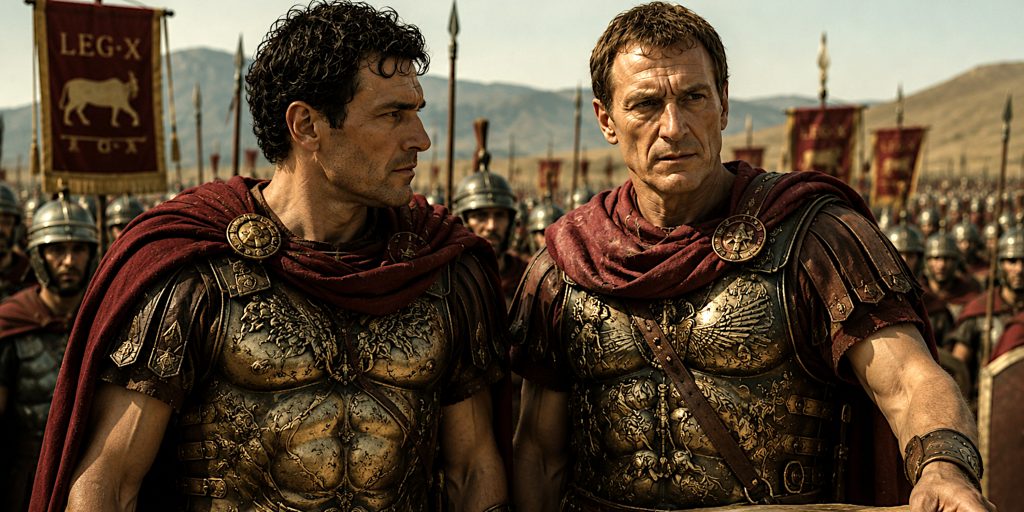
| Caesarian | Julius Caesar | Overall command, probably near the right | Identified the threat to his exposed flank and created a reserve to meet it |
| Caesarian | Mark Antony | Left wing | Commanded the depleted Eighth and Ninth legions |
| Caesarian | Gnaeus Domitius Calvinus | Centre | Faced Metellus Scipio’s sector |
| Caesarian | Publius Cornelius Sulla | Right wing in Caesar’s account | Helped direct the sector beside the Tenth Legion |
| Pompeian | Pompey the Great | Overall command | Built a sensible plan around his superiority in cavalry, but had no effective answer when it failed |
| Pompeian | Titus Labienus | Cavalry on the left | Formerly one of Caesar’s ablest officers in Gaul; led the intended enveloping attack |
| Pompeian | Metellus Scipio | Centre | Commanded the Syrian legions |
| Pompeian | Lucius Domitius Ahenobarbus | One infantry wing | Ancient sources disagree over the exact allocation of Pompeian wing commanders |
| Pompeian | Lentulus Crus | One infantry wing | His position varies between surviving accounts |
The disagreement about Pompey’s wing commanders is worth preserving. Replacing uncertainty with a tidy diagram may look helpful, but it manufactures confidence the sources do not deserve.
Arms and Armour
Pharsalus was a Roman civil battle, so the opposing legionaries were equipped and trained in broadly similar ways. There was no technological gulf for Caesar to exploit. The difference lay in experience, cohesion, deployment and the use of reserves.
| Equipment | Form and use at Pharsalus |
|---|---|
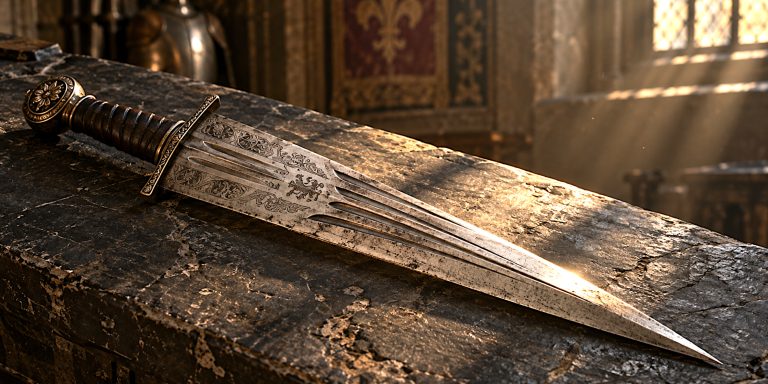
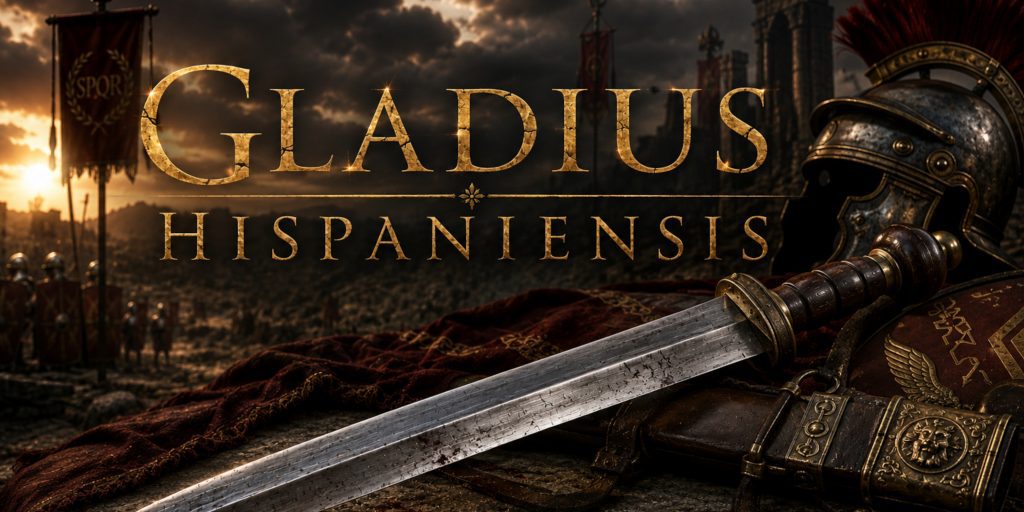
| Gladius Hispaniensis | The principal Roman short sword of the late Republic, suited to both thrusting and cutting. Blade dimensions varied, and the neat archaeological categories used for later imperial swords should not be projected backwards too rigidly |
| Transitional gladii | Early forms leading towards what collectors call the Mainz type were emerging around this period, but assigning a precise subtype to every legionary at Pharsalus would be guesswork |
| Pugio | A double-edged dagger worn by many Roman soldiers, useful as a sidearm and personal tool |
| Pilum | Heavy Roman javelin thrown before close combat. Caesar’s concealed cohorts used pila against Pompey’s cavalry, although the famous instruction to stab at the riders’ faces appears in later sources rather than Caesar’s own narrative |
| Scutum | Large curved shield, commonly oval or sub-rectangular in late Republican evidence. It protected the body and helped legionaries maintain an aggressive close-order line |
| Lorica hamata | Mail armour worn by legionaries and officers. It was flexible, durable and expensive enough to be repaired and passed through long service |
| Helmets | Montefortino and related Coolus forms were common. Finds show considerable variation rather than a perfectly uniform military issue |
| Hasta and light spear | Used by some allied infantry and cavalry, particularly in the diverse eastern contingents |
| Spatha | A longer sword associated particularly with cavalry and some auxiliary traditions. It was not yet the standard weapon of Roman legionary infantry |
| Kopis or machaira | Curved single-edged swords remained in use in parts of the Greek and eastern Mediterranean world. Some allied cavalrymen may have carried them, but no excavated weapon can be securely assigned to a Pharsalus contingent |
| Bows and slings | Pompey assembled Cretan and Syrian archers as well as slingers. These troops were concentrated near his cavalry on the left |
The legionary’s sword mattered after the lines met, but Pharsalus was not decided by superior blade design. Both sides carried Roman military equipment. Caesar won by finding the point at which Pompey’s plan depended upon one arm of service and then breaking it.
The Battlefield and Deployment
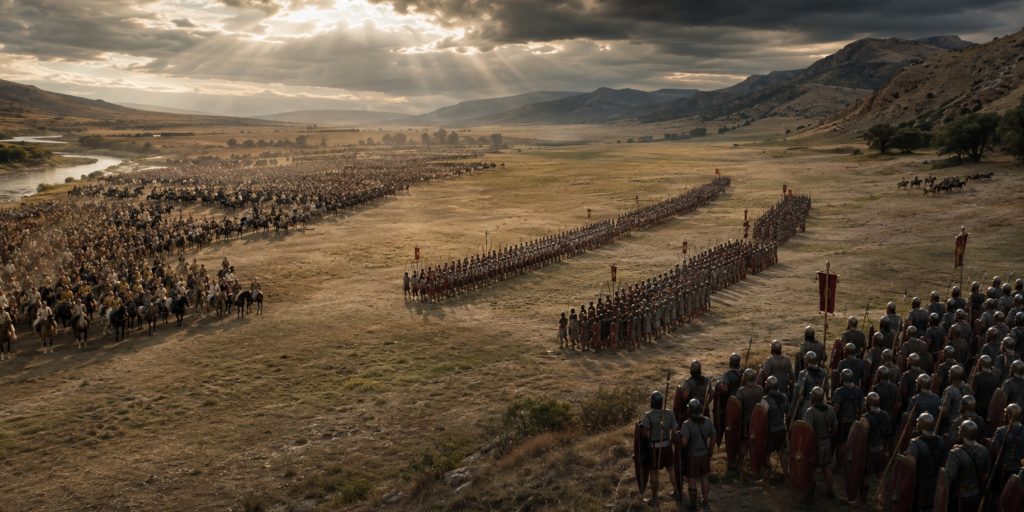
The armies formed near Palaepharsalus, probably in the plain around the River Enipeus. The exact site remains contested. A major modern reconstruction places the battlefield north of the river near Krini, while an older school located it south of the Enipeus nearer modern Farsala. The ancient texts do not settle the issue cleanly.
Pompey deployed his infantry in the conventional three lines. A watercourse protected his right, allowing him to concentrate most of his cavalry, archers and slingers on his left. His intention was clear: Labienus would overwhelm Caesar’s much smaller cavalry, turn Caesar’s right flank and attack the legions from the side and rear.
Caesar also formed three lines. Antony commanded the left, Calvinus the centre and Sulla the right. When Caesar saw the mass of horsemen opposite his right wing, he removed several cohorts from his third line and formed them obliquely behind his cavalry. This improvised fourth line was ordered not to join the general infantry battle until signalled.
That decision was the centre of the battle. Caesar accepted a thinner main line in order to create a specialised reserve at the threatened point. It was a risk, but a considered one.
How the Battle Unfolded
The infantry advance
Pompey ordered his legionaries to remain stationary and receive Caesar’s charge. Caesar criticised this afterwards, arguing that a running advance produced momentum and fighting spirit. His criticism should not be treated as universal doctrine. Holding position could preserve formation and tire an advancing enemy. On this occasion, however, it gave Caesar another opportunity to praise the judgement of his veterans.
According to Caesar, his first line noticed that Pompey’s troops had not advanced. The men halted midway, recovered their breath, re-formed and then completed the charge. That small act of discipline says more about the quality of Caesar’s army than any speech placed in his mouth by a later writer.
The legionary lines met after exchanging pila. Fighting became prolonged and close. Pompey’s infantry did not collapse at once.
The cavalry attack
On Pompey’s left, Labienus drove forward with the massed cavalry. Caesar’s horsemen gave ground, whether by design or under pressure. Pompey’s cavalry spread out to envelop Caesar’s flank, while the archers and slingers moved in support.
Caesar then signalled his concealed cohorts. They advanced into the cavalry’s exposed front and flank. The Pompeian horse broke and fled towards the high ground. The archers and slingers, left without cavalry protection, were cut down or scattered.
Plutarch and other later authors say Caesar told his men to thrust their pila at the cavalrymen’s faces because the young aristocrats feared disfigurement. It is memorable, insulting and suspiciously perfect. Caesar does not mention it. The reserve attack itself is secure; the facial beauty anecdote is best treated as hostile battlefield folklore.
Pompey’s left is turned
The reserve cohorts did not pursue the cavalry indefinitely. They wheeled against the exposed flank of Pompey’s infantry. At the same time, Caesar committed his fresh third line to relieve the tired first and second lines.
Pompey’s army now faced renewed pressure from the front and an attack from the flank. Cohesion failed. The left wing collapsed, and the disorder spread through the remaining line.
Pompey withdrew to his camp. Caesar depicts him as mentally defeated, waiting in his tent before fleeing when the camp came under attack. This portrait may contain truth, but it is also crafted by a rival determined to contrast his own energy with Pompey’s paralysis.
The camp and surrender
Caesar’s men stormed the Pompeian camp despite resistance from its defenders. The abandoned tents reportedly contained decorated dining shelters, silver plate and signs of confidence in victory. Such details made excellent Caesarian moral theatre: hardened veterans defeating aristocrats who had laid the table too early.
Many fugitives reached nearby high ground. Caesar pursued, cut them off from water and forced a large body to surrender the following day. He offered clemency to numerous Roman opponents, a policy that was politically calculated as well as humane. Dead enemies could not reconcile the governing class to his victory. Pardoned enemies might, though several later proved difficult to keep grateful.
Battle Timeline
| Phase | Event |
|---|---|
| Before dawn or early morning | Caesar prepares to move camp, then sees Pompey’s army advancing farther than usual and orders his men to deploy |
| Initial deployment | Both armies form three infantry lines; Pompey masses most cavalry and missile troops on his left |
| Caesar’s adjustment | Caesar draws cohorts from his third line and creates a concealed or refused fourth line behind his right-wing cavalry |
| Infantry engagement | Caesar’s legionaries advance, pause to recover formation, throw pila and close with Pompey’s stationary line |
| Pompeian cavalry attack | Labienus drives back Caesar’s cavalry and begins the attempted envelopment |
| Caesarian counterstroke | The fourth line attacks; Pompey’s cavalry flees and its missile troops are exposed |
| Flank attack | Caesar’s reserve turns against Pompey’s left while his fresh third line enters the frontal battle |
| Pompeian collapse | The infantry line breaks; Pompey retreats to camp and then escapes |
| Camp captured | Caesarian troops storm the fortified camp and seize its contents |
| Pursuit | Caesar presses fleeing Pompeians towards high ground and denies them access to water |
| Following day | A large group surrenders; Caesar continues the pursuit of Pompey |
Casualties and Prisoners
The casualty evidence is contradictory and politically charged.
| Source or estimate | Caesarian losses | Pompeian losses |
|---|---|---|
| Caesar | About 200 legionaries and 30 centurions killed | About 15,000 killed; more than 24,000 surrendered |
| Appian’s alternative tradition | Up to 1,200 killed | Asinius Pollio reportedly counted about 6,000 Pompeian dead |
| Sensible conclusion | Probably substantially lower than Pompey’s | Several thousand killed, with many more captured or dispersed |
Caesar’s figure of 200 dead alongside 30 centurions is possible but remarkably favourable. Appian preserves a higher Caesarian estimate and cites Asinius Pollio, an officer present at the battle, for about 6,000 Pompeian dead. No exact total can be recovered. What matters militarily is that Pompey lost the field army as an organised force, not simply that he lost more bodies.
Contemporary and Ancient Voices
Only Caesar’s surviving narrative was written by a participant, and even that is a polished political work rather than an unfiltered dispatch. The quotations below are given in common English translations, whose wording varies by edition.
“This is what they wished; to such a pass have they brought me that I must destroy them or be destroyed myself.”
Plutarch attributes this reaction to Caesar as he viewed the Roman dead after the battle, drawing on the lost history of Asinius Pollio. Whether the words are exact is unknowable, but they capture the civil war’s central horror: Romans had destroyed Romans to decide who ruled Rome.
“We shall conquer, Caesar, and you will thank me today, alive or dead.”
Appian gives this prediction to the centurion Gaius Crastinus before the fighting. Crastinus was killed in the battle and honoured for his courage. Caesar tells a closely related version, though the exact phrasing differs.
“They would have gained the victory today, if they had had a commander who knew how to conquer.”
Caesar reportedly said this after his defeat at Dyrrachium, according to Plutarch. The remark is usually aimed at Pompey’s failure to exploit success. It is also Caesar explaining why a reverse should be remembered as evidence of his opponent’s inadequacy, which is extremely Caesar.
“Spare your fellow citizens.”
Appian reports that Caesar sent orders to spare Romans who stopped resisting while concentrating violence upon auxiliaries. The claim fits his wider policy of clemency, though the treatment of defeated non-Romans exposes the limits of that celebrated mercy.
Why Caesar Won
Veteran discipline
Caesar’s legions were understrength but hardened by years of campaigning. Their ability to halt during the advance, dress the ranks and resume the charge suggests tactical confidence that raw troops would struggle to reproduce.
An effective reserve
Caesar recognised Pompey’s intended cavalry envelopment and retained troops for the precise moment when it became dangerous. The fourth line was not a magical invention, but it was an excellent use of limited manpower.
Better timing
The counterattack struck after Pompey’s cavalry had advanced and spread out. Once the horsemen fled, Pompey’s missile troops and infantry flank were exposed in sequence.
Pompey’s plan lacked resilience
Pompey’s strategy was rational. His greatest numerical advantage lay in cavalry, and an enveloping attack could have destroyed Caesar’s smaller force. The problem was dependence. When the cavalry attack failed, there was no equivalent reserve ready to repair the flank.
Caesar controlled the narrative
This did not win the fighting, but it shaped how the fighting has been remembered. Caesar presents himself as observant, mobile and decisive, while Pompey appears passive and bewildered. The contrast is probably grounded in events, yet sharpened by one of antiquity’s most accomplished self-publicists.
Archaeology and the Search for the Battlefield
Pharsalus has not produced a securely identified archaeological assemblage comparable to a modern battlefield survey with mapped concentrations of weapons, projectiles and human remains. The landscape has been cultivated for centuries, river courses and drainage patterns have altered, and no universally accepted site has been confirmed through diagnostic finds.
The principal questions are topographical:
- Was the battle fought north or south of the Enipeus?
- Where was Palaepharsalus, the Old Pharsalus named by several ancient sources?
- Which stream or difficult watercourse protected one flank?
- Which hills match the camps, flight route and final surrender described by Caesar?
John D. Morgan’s influential study argued for a site north of the Enipeus near Krini, based upon ancient routes, settlement evidence and the relationship between Palaepharsalus and the battlefield narrative. Earlier scholars proposed locations south of the river, and that interpretation has not vanished from discussion.
Archaeology around modern Farsala confirms long occupation, including prehistoric, Classical and later remains. It does not, by itself, prove where the lines of 48 BCE stood. Claims that a visitor can walk to an undisputed spot where Caesar placed his fourth line are therefore too confident. One can visit the relevant Thessalian landscape, but the exact battlefield remains an argument conducted across fields rather than a marked archaeological certainty.
What archaeologists would hope to find
- Concentrations of Roman pila heads or other military projectiles
- Sling bullets with inscriptions or securely datable forms
- Armour fittings, hobnails and weapon fragments distributed in tactically meaningful patterns
- Camp ditches or temporary fortifications dating to 48 BCE
- Mass burials demonstrably associated with the engagement
Even such evidence would require careful interpretation. A single Roman weapon in a region crossed by armies proves very little. Distribution and context matter far more than an attractive object in isolation.
The Fate of Pompey
Pompey escaped the battlefield, travelled to Larissa and reached the coast. He sailed east with a small group that included his wife Cornelia. After considering his options, he sought refuge in Egypt, where the advisers of the young Ptolemy XIII decided that killing him would please Caesar.
Pompey was murdered as he came ashore near Pelusium on 28 September 48 BCE. His head was later presented to Caesar. Ancient writers say Caesar reacted with grief or disgust. The performance may have carried political value, but Pompey had also once been his ally and son-in-law. Roman politics had a talent for making private grief indistinguishable from public calculation.
Consequences and Legacy
Pharsalus destroyed Pompey’s principal field army and gave Caesar the decisive advantage, but it did not end the civil war. Pompeian resistance continued in Africa under Metellus Scipio and Cato, then in Spain under Pompey’s sons. Caesar still had to win at Thapsus in 46 BCE and Munda in 45 BCE.
The battle nevertheless changed the political landscape:
- Pompey, the only commander with comparable prestige and resources, was removed
- Much of the eastern Mediterranean transferred allegiance to Caesar
- Caesar could present clemency as the policy of a victor secure enough to pardon opponents
- The senatorial coalition lost its best opportunity to defeat him in a single campaign
- Personal command over loyal armies became impossible to disguise as a temporary constitutional disturbance
Caesar was assassinated in 44 BCE, partly because senators feared that his supremacy had become monarchy in all but name. Another cycle of civil wars followed. The eventual winner was his adopted heir Octavian, later Augustus. Pharsalus did not create the Roman Empire in one afternoon, but it removed the strongest barrier to the political transformation that followed.
Historical Assessment
Pharsalus is often presented as a clean contest between Caesar’s brilliance and Pompey’s incompetence. That judgement is too comfortable. Pompey’s plan exploited a real advantage and came close enough to force Caesar into an unusual deployment. His infantry fought for some time, while his cavalry failed against a well-timed counterstroke.
Caesar deserves credit for reading the field, trusting his veterans and maintaining a reserve despite his inferior numbers. Yet his account invites readers to see every Caesarian decision as foresight and every Pompeian act as error. Historians should admire the general without enlisting in his publicity department.
The battle’s deepest significance lies in its nature as a Roman civil conflict. The weapons, formations and command culture on either side were largely shared. Pharsalus was Rome using its formidable military system against itself, with the future of the Republic resting on which army of citizens broke first.
Frequently Asked Questions
When was the Battle of Pharsalus fought?
The traditional date is 9 August 48 BCE in the Roman Republican calendar then in use. Because that calendar had drifted from the solar year, the equivalent is often calculated as 29 June in the proleptic Julian calendar. Readers will encounter both dates.
Where was the Battle of Pharsalus fought?
It was fought near Palaepharsalus in Thessaly, central Greece, in the wider area of modern Farsala and the River Enipeus. The precise location remains disputed.
How many soldiers fought at Pharsalus?
Caesar claims about 22,000 legionaries and 1,000 cavalry for his own army, against 45,000 legionaries and 7,000 cavalry under Pompey, plus auxiliaries on both sides. Modern historians regard the broad imbalance as credible but debate the totals.
What swords were used at Pharsalus?
Roman legionaries primarily carried forms of the gladius Hispaniensis, with the pugio as a secondary weapon. Cavalry and allied troops may also have used longer spathae and regional sword forms such as the Greek machaira or kopis. No sword find has been securely tied to a specific unit at the battle.
Why did Pompey lose?
His plan depended heavily on the cavalry enveloping Caesar’s right. Caesar anticipated the attack, defeated it with reserve cohorts and then struck Pompey’s exposed infantry flank while committing a fresh third line from the front.
Did Pharsalus end the Roman Republic?
Not formally, and it did not end the civil war. It did remove Pompey and leave Caesar dominant. The Republic’s institutions continued, but increasingly under the control of victorious military leaders.
Suggested Further Reading and Primary Sources
- Julius Caesar, The Civil War, Book III, sections 81 to 99
- Appian, The Civil Wars, Book II, sections 75 to 82
- Plutarch, Life of Caesar, sections 42 to 46
- Plutarch, Life of Pompey, sections 68 to 80
- Cassius Dio, Roman History, Book XLI
- John D. Morgan, “Palae-pharsalus: The Battle and the Town”, American Journal of Archaeology