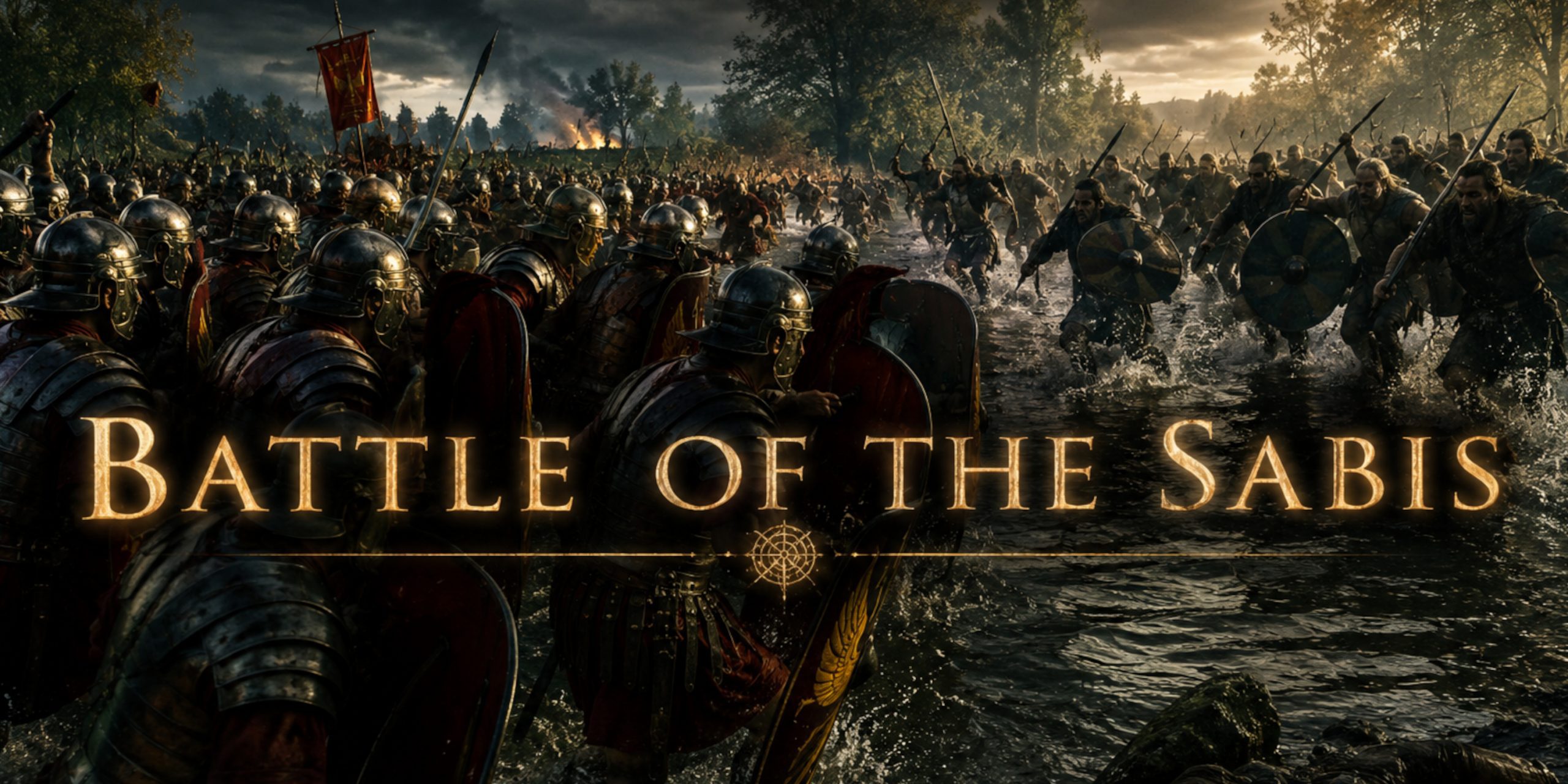
The Battle of the Sabis, fought in 57 BCE, was one of the most dramatic encounters of Julius Caesar’s Gallic Wars. Against the Nervii, one of the most determined Belgic tribes of northern Gaul, Caesar’s army came dangerously close to disaster.
Unlike many Roman victories that appear almost inevitable when read centuries later, the Sabis was chaotic, desperate and brutally close. Caesar himself admitted his army was caught off guard. For a commander who was not exactly famous for highlighting his mistakes, that admission alone tells us something.
The battle showed both sides at their most formidable. The Nervii demonstrated discipline, courage and tactical intelligence, while the Romans survived because of training, flexibility and the ability of experienced soldiers to restore order when everything was falling apart.
Historical Background
By 57 BCE, Caesar had turned his attention north after earlier successes in Gaul. The Belgic tribes alarmed Rome because they were considered aggressive, independent and less influenced by Roman trade and culture.
The Nervii were particularly respected. Caesar described them as avoiding luxury goods and foreign influence, believing such things weakened warriors. Whether this was accurate or Roman storytelling is difficult to separate, but their reputation as fierce opponents was well established.
Caesar wrote:
“The Nervii were the fiercest of all the Belgae.”
The campaign was not simply a defensive action by Rome. Caesar was expanding Roman power, building his own political reputation and acquiring wealth and military glory. The tribes resisting him were fighting against a foreign army moving deeper into their territory.
Forces
Exact numbers remain debated. Ancient sources often exaggerate army sizes, especially when victory looks better against overwhelming odds.
| Army | Commander | Estimated Strength | Main Troops |
|---|---|---|---|
| Roman Republic | Julius Caesar | Around 35,000 to 45,000 soldiers | Legionaries, cavalry, auxiliaries |
| Nervii and allies | Boduognatus | Possibly 40,000 to 60,000 warriors | Tribal infantry, nobles, light troops |
The Roman army was professional, organised and heavily trained. The Nervii relied more on speed, aggression and local knowledge, but they were far from an undisciplined mob. Caesar’s own account suggests they planned their attack carefully.
Leaders And Troop Composition
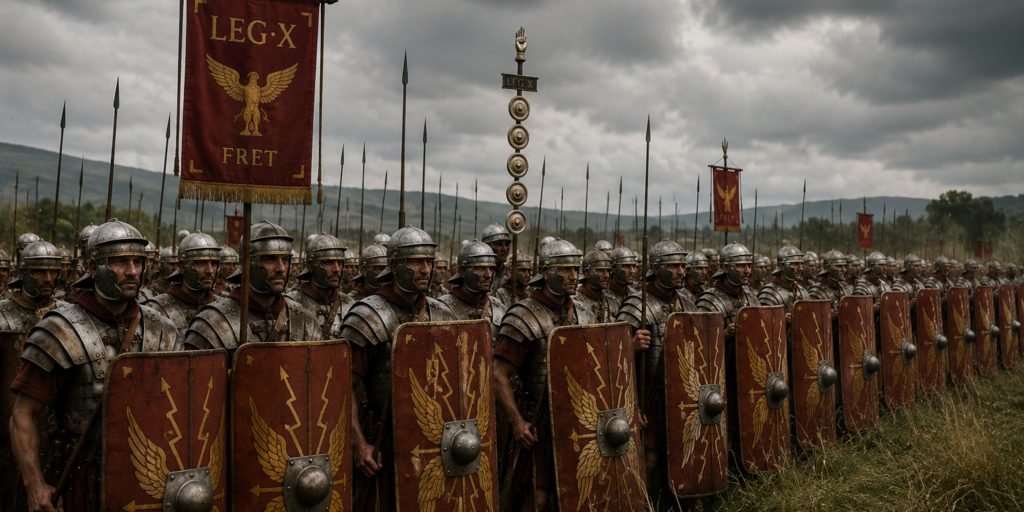
Roman Republic
Julius Caesar
- Governor of Roman Gaul
- Experienced commander and politician
- Used rapid movement and battlefield adaptation
Roman forces included:
- Veteran Roman legionaries
- Eight legions involved in the campaign
- Auxiliary cavalry
- Allied troops
- Engineers and camp builders
Key Roman units:
- Legio VII
- Legio VIII
- Legio IX
- Legio X Equestris
- Legio XI
- Legio XII
- Legio XIII
- Legio XIV
The Tenth Legion, Caesar’s favourite formation, played a crucial role in stabilising the Roman position.
Nervii Confederation
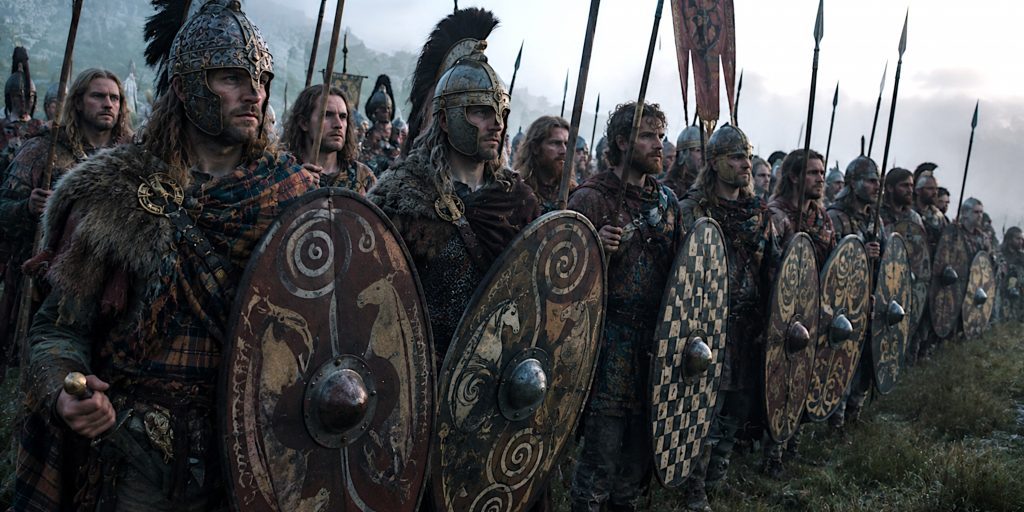
Boduognatus
- Leader of the Nervii
- Organised the surprise attack
- Used terrain effectively
Forces included:
- Nervii warriors
- Atrebates allies
- Viromandui allies
- Tribal aristocratic fighters
- Light infantry
The Nervii were not fighting like Hollywood barbarians charging without thought. Their plan involved concealment, timing and hitting the Romans while vulnerable.
Arms And Armour
The Battle of the Sabis is a fascinating clash because it shows two different military systems meeting under extreme pressure.
Roman Weapons And Equipment
Gladius Hispaniensis
The main Roman sword of this period was likely the gladius Hispaniensis.
Features:
- Length around 60 to 70 cm
- Double edged blade
- Strong thrusting capability
- Effective in tight formations
The gladius was terrifyingly efficient. It was not designed for dramatic sword fights lasting several minutes. Roman soldiers wanted the matter finished much quicker.
Pilum
The Roman heavy javelin was crucial.
Advantages:
- Could penetrate shields
- Disrupted enemy formations
- Forced opponents to abandon damaged equipment before close combat
Scutum Shield
The large Roman shield provided:
- Strong frontal protection
- Formation advantages
- Ability to push opponents back
Armour
Roman soldiers typically used:
- Mail armour known as lorica hamata
- Bronze or iron helmets, including Montefortino styles
- Greaves among some troops
- Heavy military belts
Nervii Weapons And Equipment
The Nervii fought within the wider La Tène Celtic military tradition.
Celtic Longsword
Many elite warriors carried iron swords.
Features:
- Longer blade than the Roman gladius
- Often around 70 to 90 cm
- Better suited for powerful cuts
- Used with larger movements in open combat
Spears
The most common weapon.
Advantages:
- Easier to manufacture
- Effective in mass formations
- Useful against cavalry and infantry
Shields
Nervii warriors carried:
- Large oval shields
- Wooden construction
- Iron bosses for reinforcement
Armour
Equipment varied widely:
- Elite warriors could own chainmail
- Helmets were used by wealthier fighters
- Many ordinary warriors fought with limited protection
Interestingly, chainmail itself was probably a Celtic invention later adopted enthusiastically by Rome. The Romans were extremely good at recognising a useful idea and then pretending they had always meant to have it.
The Battle Timeline
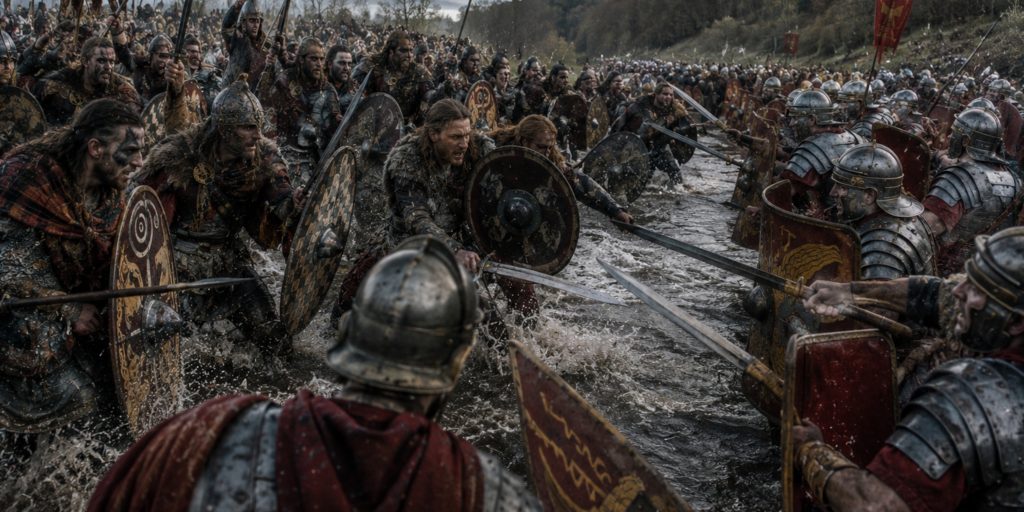
Roman Arrival At The Sabis River
Caesar’s army approached the river and began building a marching camp. Roman soldiers were spread out, some working rather than standing ready for combat.
The Nervii saw their opportunity.
The Nervii Ambush
Hidden in nearby woodland, the Nervii launched a sudden attack.
Their warriors:
- Crossed the river quickly
- Overwhelmed Roman cavalry screens
- Reached the legions before proper formations were ready
Caesar later wrote:
“Everything had to be done at one moment: the standard raised, the signal sounded, the soldiers recalled.”
Roman Lines Under Pressure
Several legions struggled to form defensive positions.
Problems included:
- Soldiers separated from their units
- Officers unable to issue clear orders
- Parts of the army surrounded
Caesar personally entered the fighting area, carrying a shield after finding some troops close to collapse.
The Roman Recovery
The discipline of the legions gradually changed the battle.
Important factors:
- Veteran soldiers formed defensive groups without waiting for orders
- Commanders adapted independently
- Reinforcements arrived from other Roman units
The arrival of fresh Roman forces turned the battle decisively.
Collapse Of The Nervii Attack
The Nervii fought almost to destruction. Caesar claimed their warriors continued resisting even when surrounded and heavily outnumbered.
Although Roman sources may exaggerate, the scale of Nervii losses appears to have been severe.
Archaeology And Battlefield Evidence
The exact location of the Battle of the Sabis remains debated.
The traditional identification places it near the modern River Selle in northern France, although some historians have proposed alternatives.
Archaeological challenges include:
- Limited confirmed battlefield remains
- Difficulty identifying temporary Roman military activity
- Changes to river landscapes over two thousand years
- Reliance on Caesar’s geographical descriptions
Finds from wider Gallic War archaeology help reconstruct the period, including:
- Roman military equipment
- Iron weapons
- Celtic coinage
- Fortified settlement evidence
The battlefield itself remains frustratingly elusive. Ancient armies rarely left convenient labels saying “Caesar nearly lost here”, which is inconsiderate of them.
Contemporary Accounts
The main surviving account comes from Caesar himself in Commentarii de Bello Gallico.
Caesar described the danger:
“The enemy showed such great courage that when the front ranks had fallen, those behind stood upon their bodies and continued the fight.”
This passage is dramatic, although historians treat Caesar carefully. His writings were political documents as much as military history. Caesar was reporting events, but he was also advertising Caesar.
Why Did Rome Win?
Several factors decided the battle:
- Superior Roman organisation
- Experienced officers
- Better battlefield communication
- Flexible legion structure
- Strong defensive equipment
- Reinforcement timing
The Nervii had an excellent plan. Their mistake was that they almost defeated a Roman army rather than completely destroying it. Against Caesar, “almost” was rarely enough.
Aftermath And Legacy
The victory strengthened Caesar’s control over northern Gaul, although resistance continued for years.
The Battle of the Sabis demonstrated:
- Roman armies could be surprised and nearly defeated
- Gallic forces were capable of sophisticated tactics
- Caesar’s victories were not effortless
- Professional military systems had advantages during prolonged combat
For Caesar personally, the battle became another chapter in his growing legend. For the Nervii, it became a symbol of fierce resistance against one of history’s most successful commanders.
The Sabis remains compelling because it strips away the myth of unstoppable Rome. For several terrifying moments beside a river in Gaul, the future ruler of Rome was not conquering history. He was simply trying to survive the next attack.