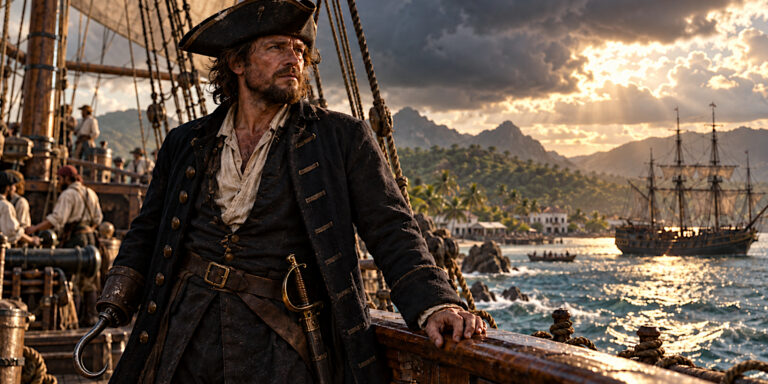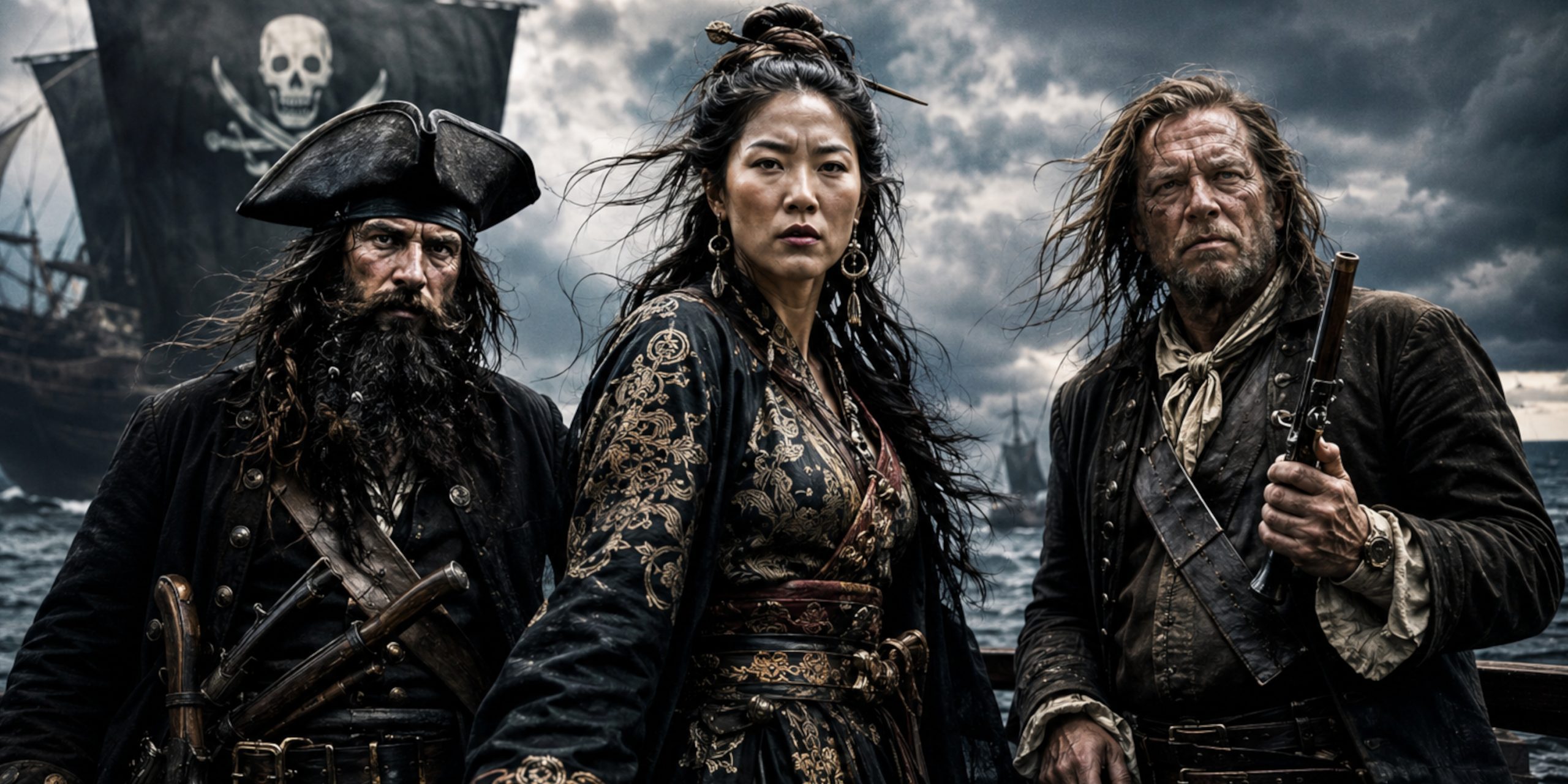
Not every pirate became legendary. Thousands operated across the Caribbean, Mediterranean, Indian Ocean and South China Sea, but only a handful became notorious enough to terrify merchants across continents.
Infamy usually came from several factors:
- Ruthless violence
- Attacks on wealthy or powerful targets
- Naval victories against impossible odds
- Public executions
- Government manhunts
- Strong personal image and mythmaking
- A talent for surviving far longer than expected
Some pirates cultivated terror deliberately. Others simply became symbols of wider instability during periods of war and economic collapse.
As one eighteenth century observer dryly noted:
“A merry life and a short one shall be my motto.”
That line has been linked to pirate Bartholomew Roberts, and it captures the general atmosphere rather well. It was less a philosophy than an admission of likely outcomes.
20. Stede Bonnet
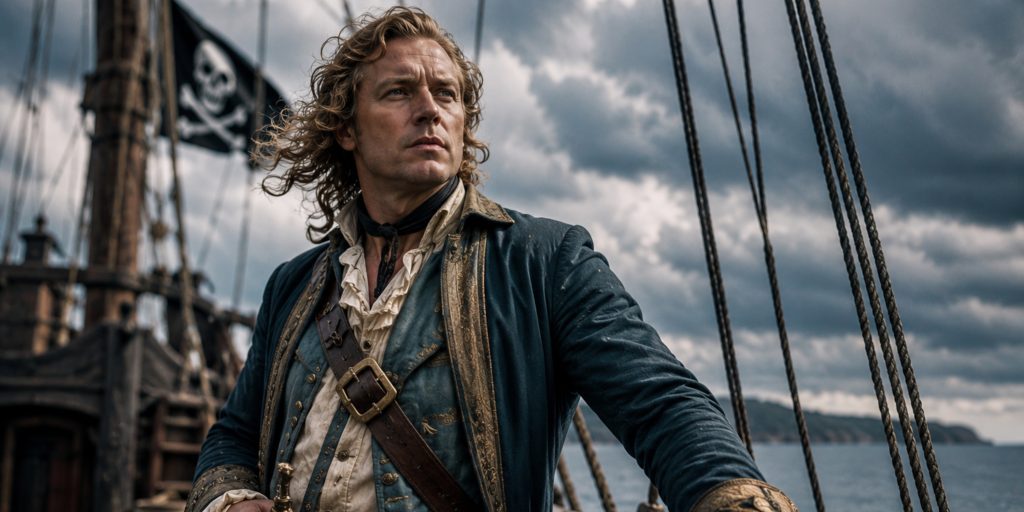
The Gentleman Pirate
Active: 1717–1718
Nationality: Barbadian
Notoriety: Wealthy plantation owner who abandoned polite society for piracy despite possessing almost no naval experience.
Weapons and Ships
- Sloop Revenge
- Flintlock pistols
- Cutlasses
- Muskets
Bonnet remains one of the strangest figures of the Golden Age of Piracy. Unlike most pirates, he did not emerge from naval warfare or poverty. He simply appears to have become deeply dissatisfied with normal life and decided armed robbery at sea was somehow the logical next step.
That decision went about as smoothly as one might expect.
Contemporary Quote
“He knew not how to command.”
Eventually Bonnet fell under the influence of Blackbeard, who effectively took control of operations.
19. François l’Olonnais
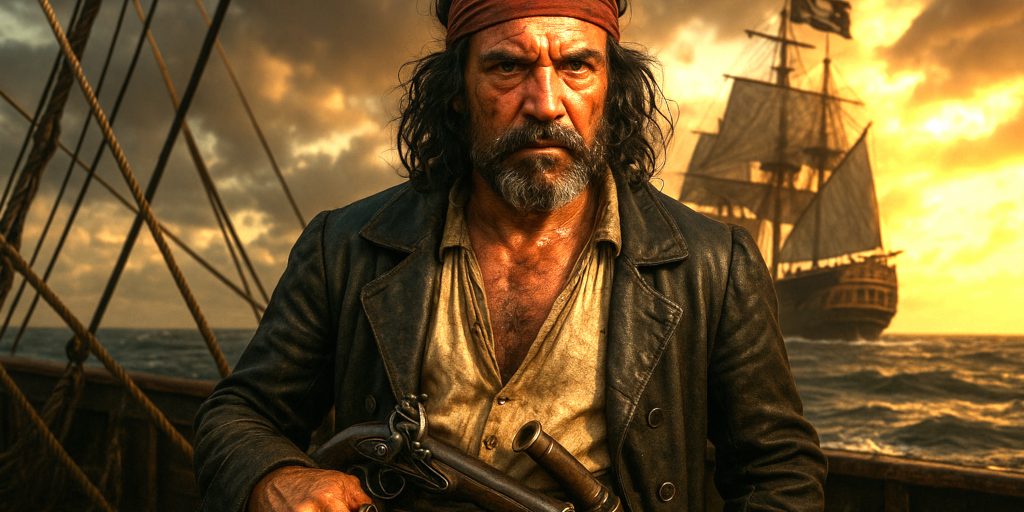
The Buccaneer Feared by Spain
Active: 1660s
Nationality: French
Notoriety: One of the most feared and brutal Caribbean buccaneers of the seventeenth century.
Weapons and Ships
- Buccaneer vessels operating in the Caribbean
- Pistols
- Boarding sabres
- Muskets
- Grenades
François l’Olonnais became infamous for savage raids against Spanish settlements and crews. Contemporary Spanish accounts portray him almost as a demon wandering the Caribbean with a cutlass.
While some reports were certainly exaggerated, his reputation for cruelty was undeniably widespread.
Contemporary Quote
“He spared neither age nor condition.”
His own death was reportedly gruesome, which many chroniclers described with noticeable satisfaction.
18. Calico Jack Rackham
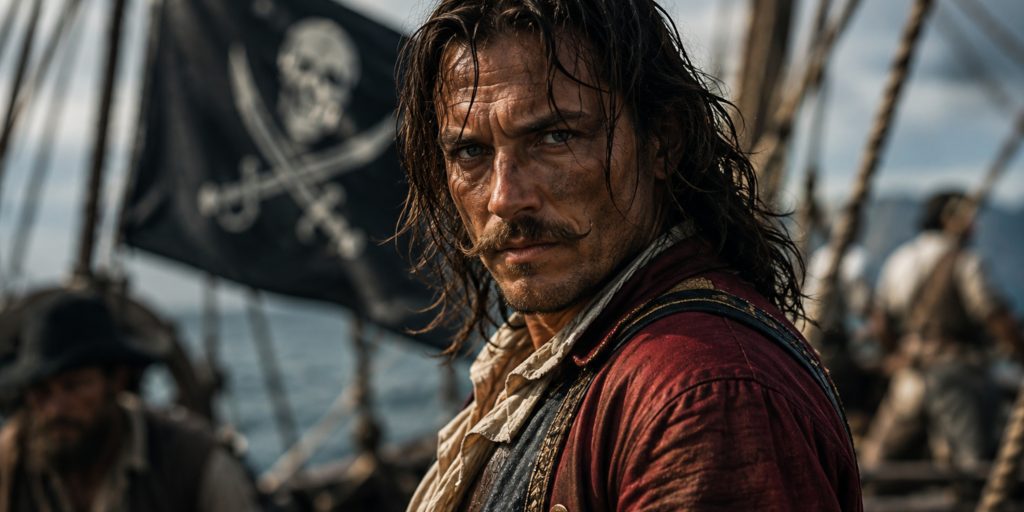
The Pirate Flag Icon
Active: 1718–1720
Nationality: English
Notoriety: Associated with the famous skull-and-crossbones imagery and for sailing alongside Anne Bonny and Mary Read.
Weapons and Ships
- Sloops
- Cutlasses
- Flintlock pistols
- Boarding axes
Rackham was not among the most successful pirates militarily, but he became culturally immortal thanks to symbolism and public fascination surrounding his crew.
His nickname came from his fondness for colourful calico clothing. It sounds faintly fashionable until one remembers he spent most of his time robbing ships.
17. Benito de Soto
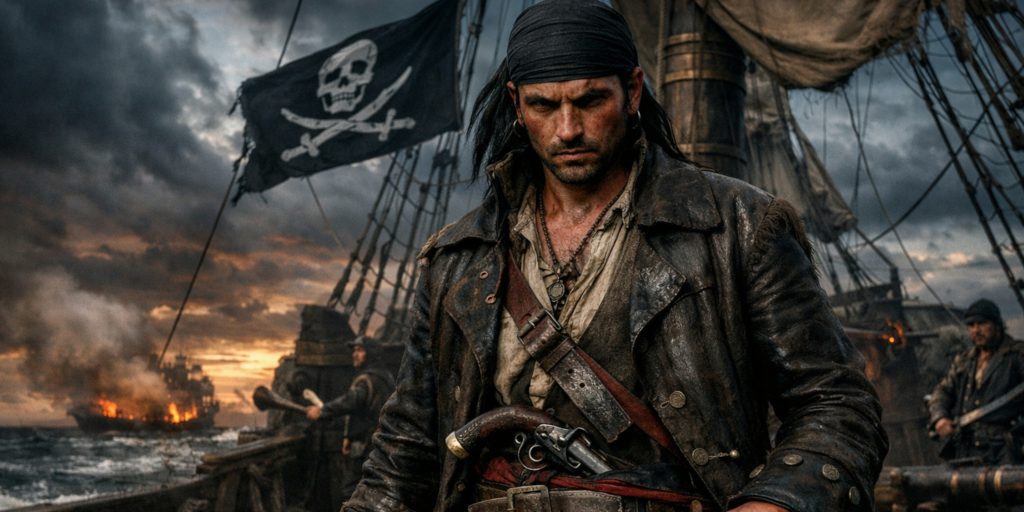
The Last Great Atlantic Pirate
Active: 1827–1830
Nationality: Spanish
Notoriety: One of the final major Atlantic pirates, infamous for murder, deception and attacks on merchant shipping.
Weapons and Ships
- Defensor de Pedro
- Naval cannon
- Pistols
- Boarding knives
- Cutlasses
Benito de Soto operated during the dying years of large-scale Atlantic piracy, long after the so-called Golden Age had faded. That actually made him more shocking to contemporaries. Piracy by the 1830s felt like something civilised nations believed they had mostly suppressed.
De Soto proved otherwise.
After mutinying aboard a slave ship, he and his crew turned fully to piracy, attacking vessels across Atlantic trade routes with alarming violence.
Why He Became Infamous
De Soto gained notoriety after attacking the British ship Morning Star in 1828. Survivors described robbery, murder and attempts to sink the vessel with passengers still aboard.
The brutality horrified Europe and reignited fears of oceanic piracy.
Contemporary Quote
“A man without pity or conscience.”
Authorities pursued him relentlessly. He was eventually captured in Gibraltar and executed in 1830.
16. Edward Low
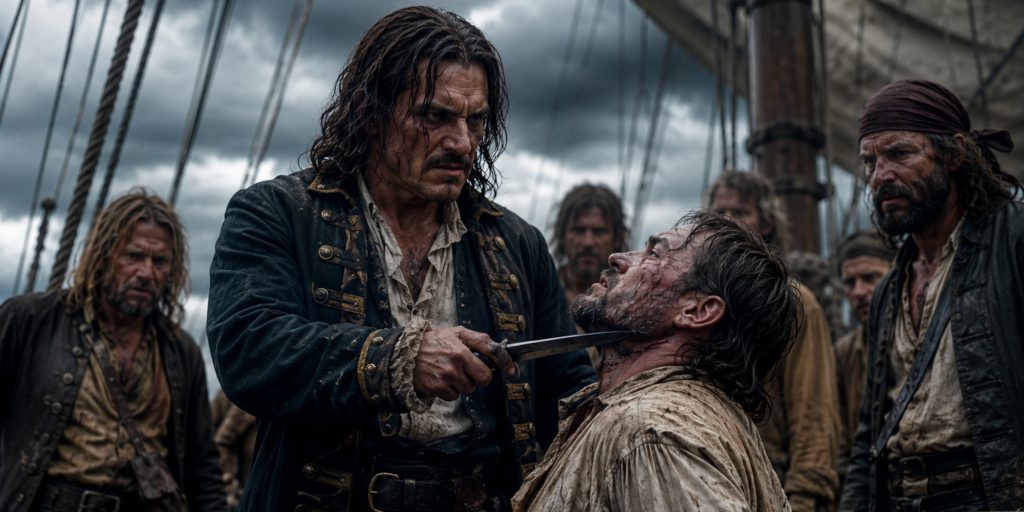
Terror Even Among Pirates
Active: 1721–1724
Nationality: English
Notoriety: Notorious for extreme cruelty even by pirate standards.
Weapons and Ships
- Armed sloops
- Pistols
- Boarding knives
- Muskets
- Cutlasses
Edward Low’s reputation horrified sailors across the Atlantic. Stories accuse him of torture, mutilation and acts so savage that even fellow pirates reportedly disliked serving under him.
That is a fairly spectacular achievement in a profession not exactly known for emotional sensitivity.
Contemporary Quote
“The most savage villain that ever sailed.”
15. Mary Read
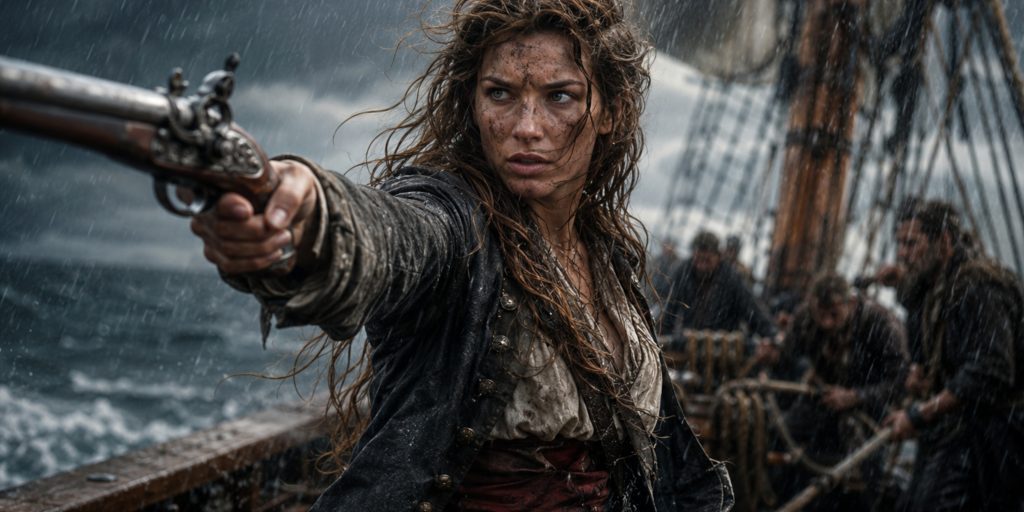
The Soldier Turned Pirate
Active: 1718–1720
Nationality: English
Notoriety: Female pirate who disguised herself as a man and fought alongside Anne Bonny.
Weapons and Ships
- Sloops commanded by Calico Jack
- Pistols
- Cutlasses
- Muskets
Mary Read had previously served as a soldier before drifting into piracy. Her story remains remarkable because it exposes how unstable and fluid identity could become during the eighteenth century.
Contemporary Quote
“She was very ready and willing to do anything on board.”
Read died in prison before execution.
14. Anne Bonny
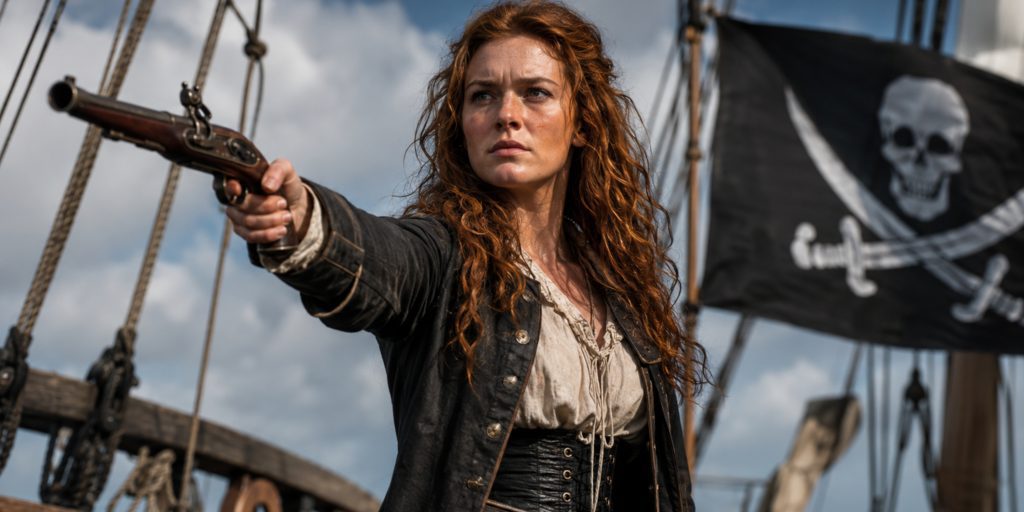
The Most Infamous Female Pirate
Active: 1718–1720
Nationality: Irish
Notoriety: Fierce pirate fighter whose defiance became legendary.
Weapons and Ships
- Pirate sloops
- Flintlock pistols
- Cutlasses
- Boarding knives
Anne Bonny became one of the most famous women in maritime history because she reportedly fought with unusual aggression during raids and battles.
Contemporary Quote
“If you had fought like men, you need not have been hanged like dogs.”
That line survived for centuries because it captures pirate contempt in its purest form.
13. Charles Vane
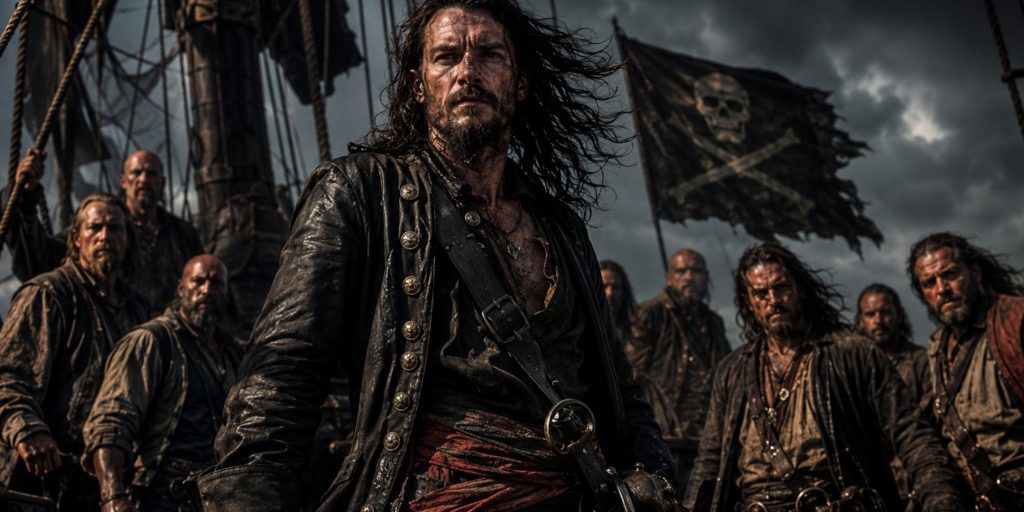
The Pirate Too Dangerous for Allies
Active: 1716–1721
Nationality: English
Notoriety: Violent and stubborn pirate captain eventually abandoned by his own crew.
Weapons and Ships
- Brigantines and sloops
- Pistols
- Muskets
- Naval cannon
- Cutlasses
Charles Vane rejected royal pardons and preferred constant aggression against shipping. Even other pirates considered him difficult.
Being judged unreasonable by criminals armed with cannon is genuinely impressive.
12. Henry Every
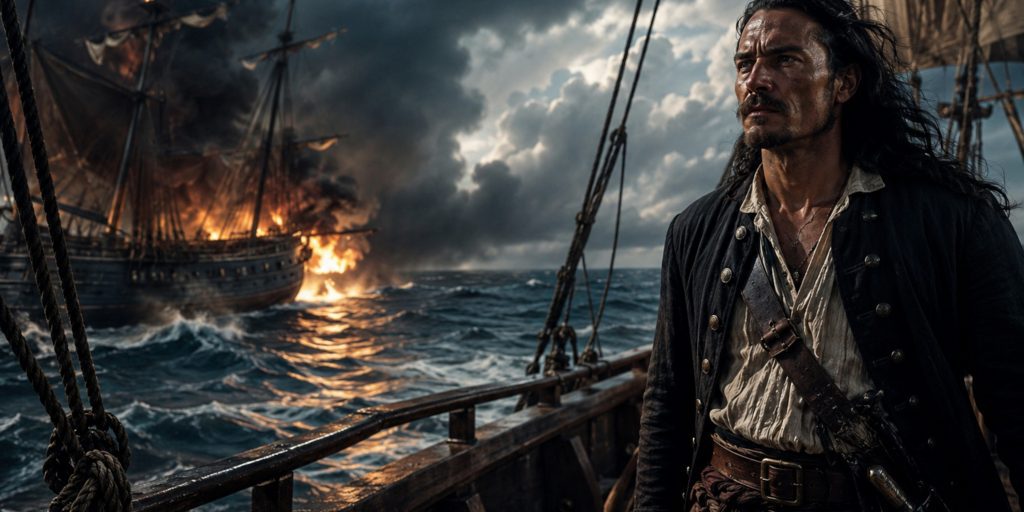
The Pirate Who Vanished
Active: 1694–1696
Nationality: English
Notoriety: Captured immense Mughal treasure and disappeared from history.
Weapons and Ships
- Fancy
- Naval cannon
- Pistols
- Muskets
- Cutlasses
Every’s attack on Mughal treasure ships triggered one of the largest pirate manhunts ever organised.
Contemporary Quote
“The arch pirate.”
Remarkably, he appears to have escaped permanent capture.
11. William Kidd
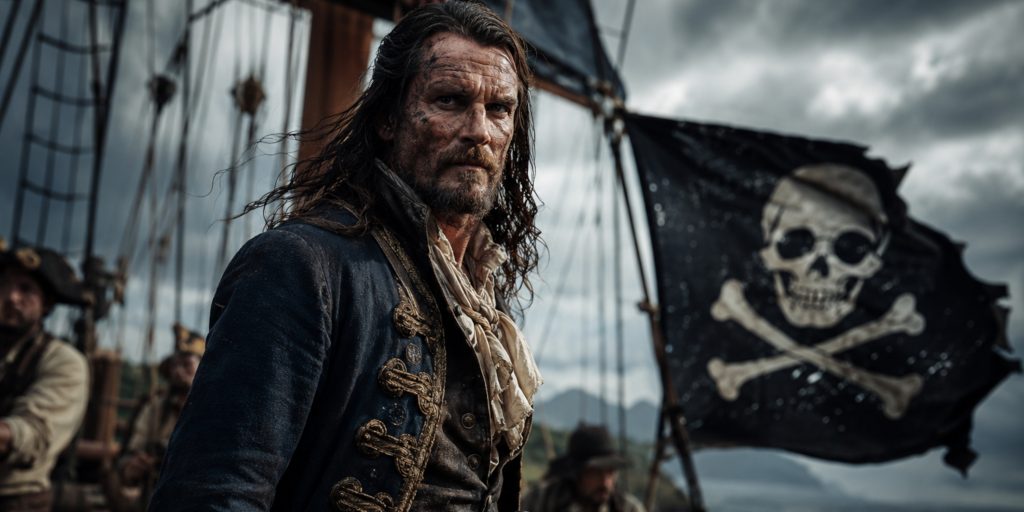
Pirate or Political Casualty?
Active: 1695–1699
Nationality: Scottish
Notoriety: Privateer turned accused pirate whose execution became infamous.
Weapons and Ships
- Adventure Galley
- Naval cannon
- Pistols
- Cutlasses
- Muskets
Captain Kidd’s story remains controversial because he likely believed himself legally protected as a privateer.
Governments disagreed very forcefully.
Contemporary Quote
“A man much inclined to villainy.”
His body was displayed publicly after execution as a warning to sailors. Early modern justice enjoyed dramatic presentation.
10. Black Caesar
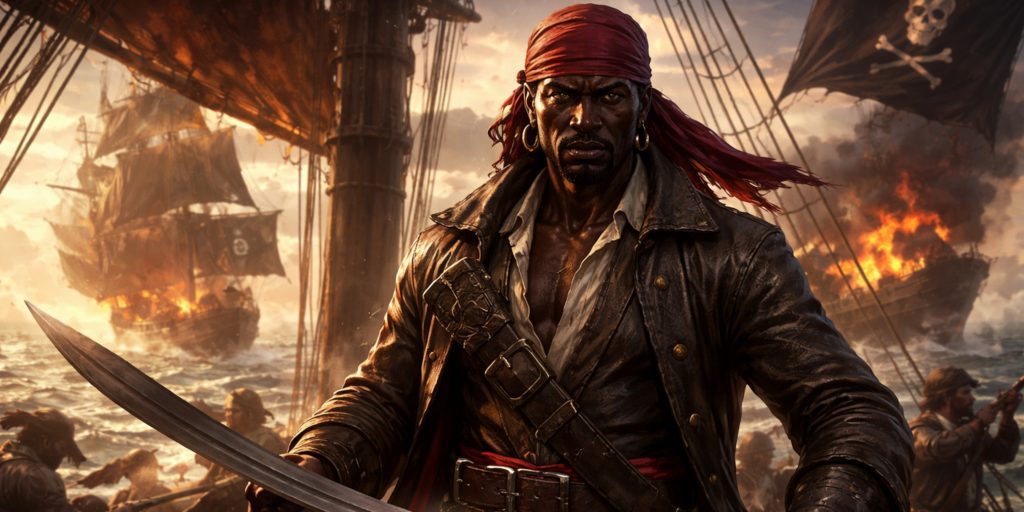
The Pirate of the Florida Coast
Active: Early 18th century
Nationality: African
Notoriety: One of the most famous Black pirates of the Golden Age, associated with Blackbeard and the waters around Florida.
Weapons and Ships
- Small pirate sloops
- Flintlock pistols
- Boarding axes
- Cutlasses
- Muskets
Black Caesar’s life is partly obscured by legend, though surviving accounts consistently describe him as physically formidable and highly capable at sea. Stories claim he escaped enslavement before becoming involved in piracy across the Caribbean and Florida coast.
Like many pirates, the truth surrounding him became tangled with folklore remarkably quickly.
Contemporary Reputation
Sailors described him as a dangerous raider who operated with speed and surprise rather than grand fleet actions.
9. Sir Francis Drake
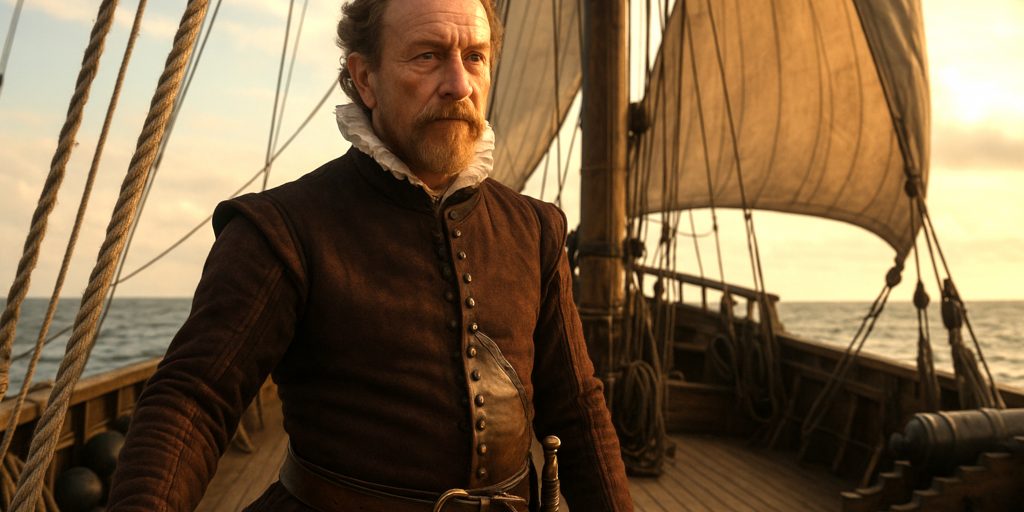
England’s Hero, Spain’s Pirate
Active: 1560s–1596
Nationality: English
Notoriety: Privateer, explorer and naval commander viewed as a national hero in England and a pirate menace by Spain.
Weapons and Ships
- Golden Hind
- Naval cannon
- Rapiers
- Pistols
- Muskets
Sir Francis Drake occupies a fascinating middle ground between pirate, privateer and naval commander. To the English Crown he was a valuable weapon against Spanish power. To Spain he was effectively a state-sponsored pirate who attacked treasure fleets and colonial ports with alarming boldness.
Spanish officials reportedly referred to him as:
“El Draque”, the Dragon.
Which, admittedly, is an exceptionally strong pirate nickname.
8. Thomas Tew
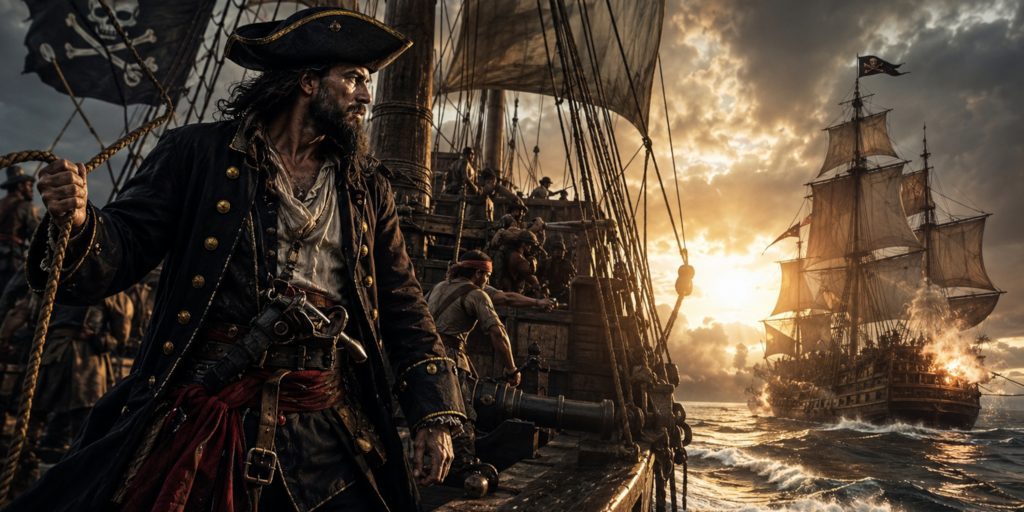
Pioneer of the Indian Ocean Pirate Routes
Active: 1692–1695
Nationality: English
Notoriety: Helped establish long-range pirate raiding into the Indian Ocean.
Weapons and Ships
- Amity
- Naval cannon
- Flintlock pistols
- Cutlasses
- Muskets
Thomas Tew became enormously influential among pirates because his raids against rich shipping proved spectacularly profitable.
His successes encouraged later pirate expeditions into Mughal and Red Sea trade routes.
Death
Tew reportedly died after cannon fire struck him during battle. Pirate mortality rates remained brutally efficient.
7. Jean Lafitte
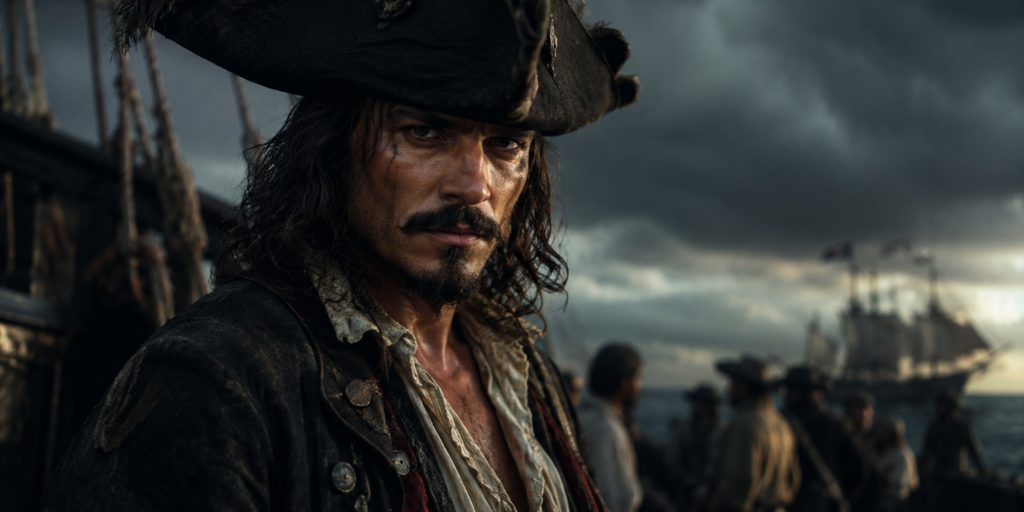
Smuggler, Pirate and Folk Hero
Active: 1803–1823
Nationality: French
Notoriety: Gulf Coast pirate and smuggler who later assisted American forces during the Battle of New Orleans.
Weapons and Ships
- Brigantines
- Sloops
- Naval artillery
- Pistols
- Cutlasses
Jean Lafitte operated through hidden coastal bases around Louisiana and the Gulf of Mexico. His organisation mixed piracy, smuggling and black-market trade into a highly profitable operation.
He later aided American forces against the British in 1815, which complicated his reputation enormously.
Contemporary Reputation
To authorities he was a criminal menace. To locals he often appeared more useful than dangerous. History occasionally produces very confusing heroes.
6. Bartholomew Roberts
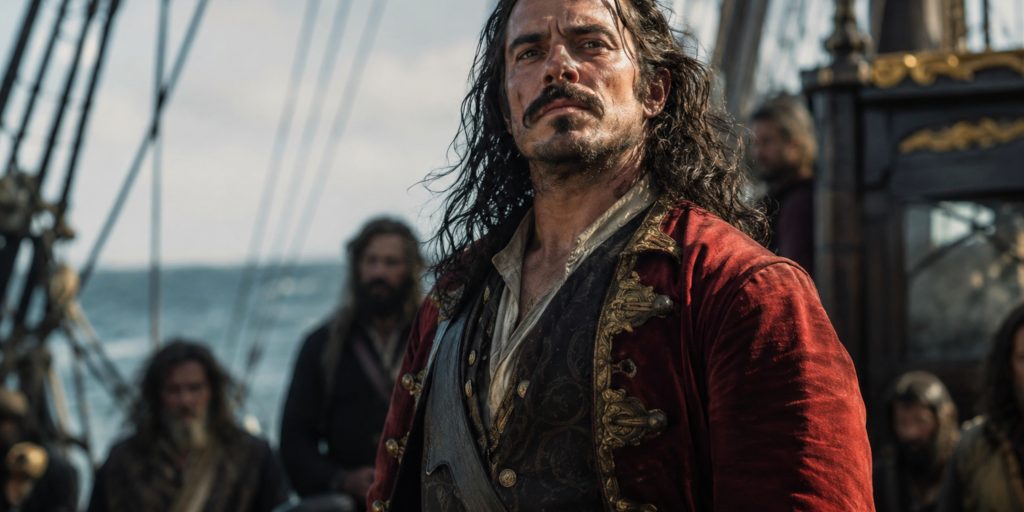
The Most Successful Pirate Captain
Active: 1719–1722
Nationality: Welsh
Notoriety: Captured hundreds of ships and became the most successful pirate of the Golden Age.
Weapons and Ships
- Royal Fortune
- Heavy naval cannon
- Pistols
- Cutlasses
- Muskets
Unlike chaotic pirate captains, Roberts enforced discipline and structure aboard his ships. He dressed extravagantly, maintained strict codes and ran piracy with almost alarming professionalism.
Contemporary Quote
“The boldest and most successful pirate.”
Roberts disrupted Atlantic trade routes on a massive scale before dying in battle against the Royal Navy in 1722.
5. Henry Morgan
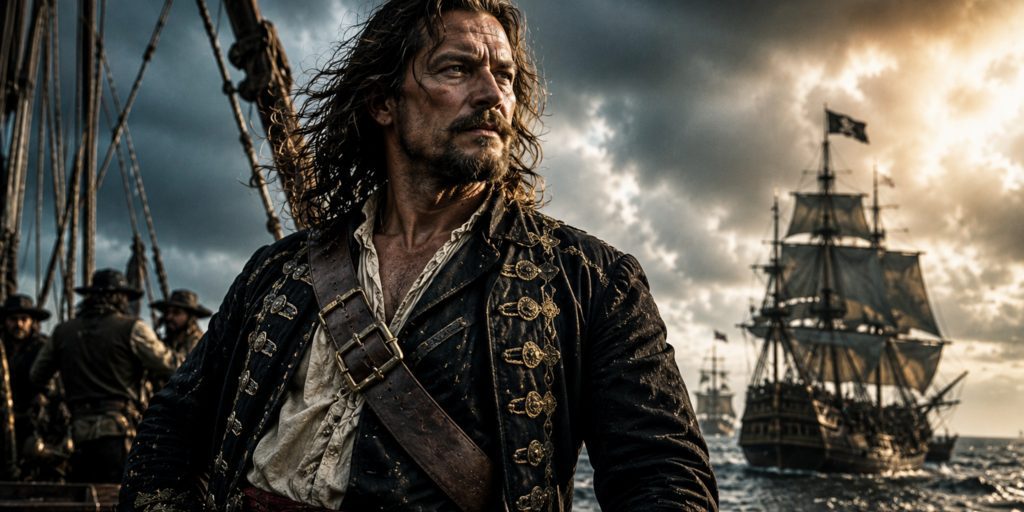
The Pirate Who Became Sir Henry Morgan
Active: 1660s–1670s
Nationality: Welsh
Notoriety: Led devastating raids against Spanish settlements before eventually becoming Lieutenant Governor of Jamaica.
Weapons and Ships
- Buccaneer fleets
- Muskets
- Naval cannon
- Boarding pikes
- Pistols
- Cutlasses
Morgan’s raids blurred the line between piracy and imperial warfare. His attack on Panama became infamous across Europe for its destruction and scale.
Contemporary Quote
“A man of great courage and conduct.”
Remarkably, Morgan later received a knighthood. One suspects Spanish officials were less enthusiastic about the decision.
4. Black Sam Bellamy
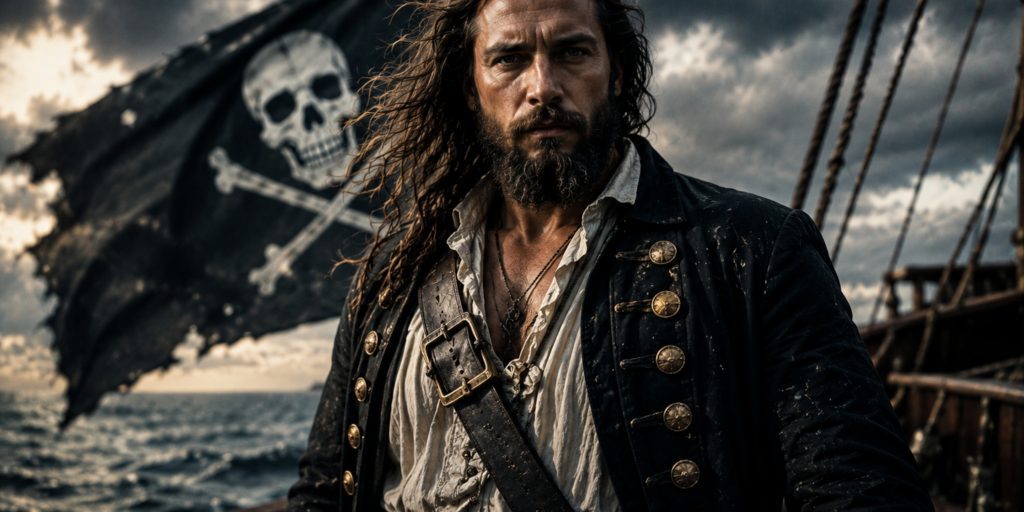
The Charismatic Rebel Pirate
Active: 1716–1717
Nationality: English
Notoriety: Romanticised pirate captain associated with rebellion against wealthy elites.
Weapons and Ships
- Whydah Gally
- Naval cannon
- Pistols
- Muskets
- Cutlasses
Bellamy gained enormous wealth quickly through piracy before disaster struck off Cape Cod.
Archaeology
The Whydah wreck remains one of the most important pirate archaeology discoveries ever made, providing rare insight into pirate equipment and daily life.
Contemporary Quote
“They vilify us, the scoundrels do.”
Bellamy’s image later evolved into something approaching a pirate folk hero.
3. Captain Flint
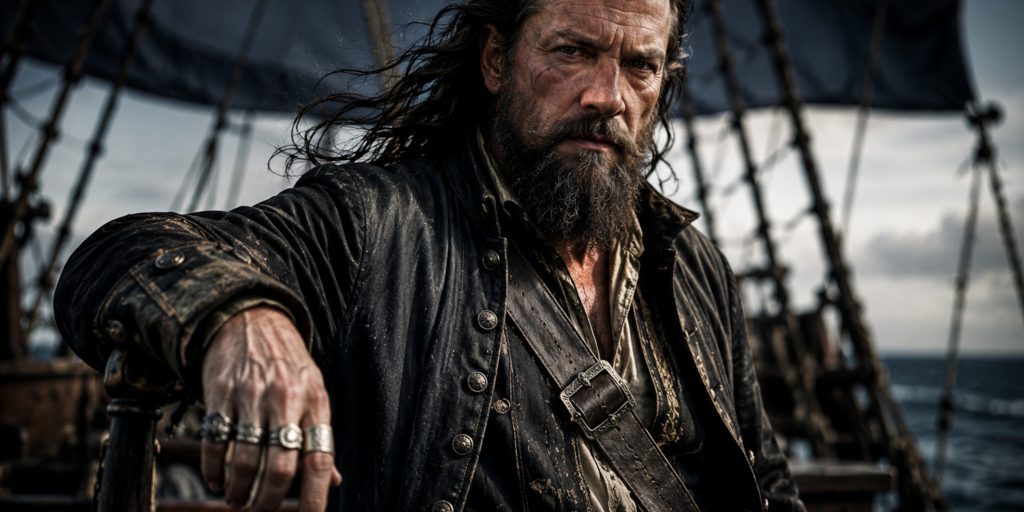
The Fictional Pirate Who Defined Pirate Culture
Active: Fictional eighteenth century setting
Nationality: Fictional English pirate
Notoriety: Literary pirate who shaped modern pirate mythology.
Weapons and Ships
- Walrus
- Flintlock pistols
- Naval cannon
- Cutlasses
Captain Flint never existed historically, yet his influence over pirate imagery is enormous. Created through Treasure Island, Flint helped define:
- Buried treasure myths
- Treasure maps
- Mutiny stories
- Peg-leg pirate imagery
- Pirate speech stereotypes
Modern pirate culture owes as much to fiction as it does to real history.
Frankly, actual pirate life contained far fewer dramatic monologues and substantially more disease.
2. Blackbeard
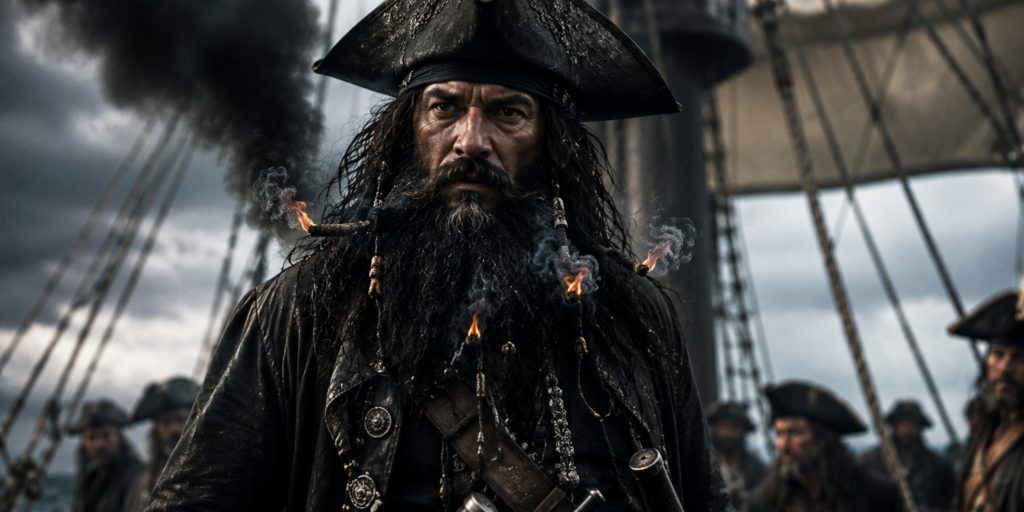
Terror of the Atlantic
Active: 1716–1718
Nationality: English
Notoriety: Master of intimidation, often fought with slow-burning fuses woven into his beard.
Weapons and Ships
- Queen Anne’s Revenge
- Multiple flintlock pistols
- Naval cutlasses
- Boarding axes
- Heavy naval cannon
Blackbeard cultivated terror deliberately. Contemporary descriptions portray him entering battle surrounded by smoke, armed heavily enough to resemble an angry walking armoury.
Merchant crews frequently surrendered without resistance.
Contemporary Quote
“Such a figure that imagination cannot form an idea of a fury from hell.”
His blockade of Charleston in 1718 humiliated colonial authorities and demonstrated the vulnerability of Atlantic trade.
Death
Blackbeard died during fierce combat against Royal Navy forces led by Lieutenant Robert Maynard. Reports claim he suffered numerous wounds before finally collapsing.
His severed head was displayed publicly afterwards.
Eighteenth-century governments strongly believed in visual messaging.
1. Zheng Yi Sao
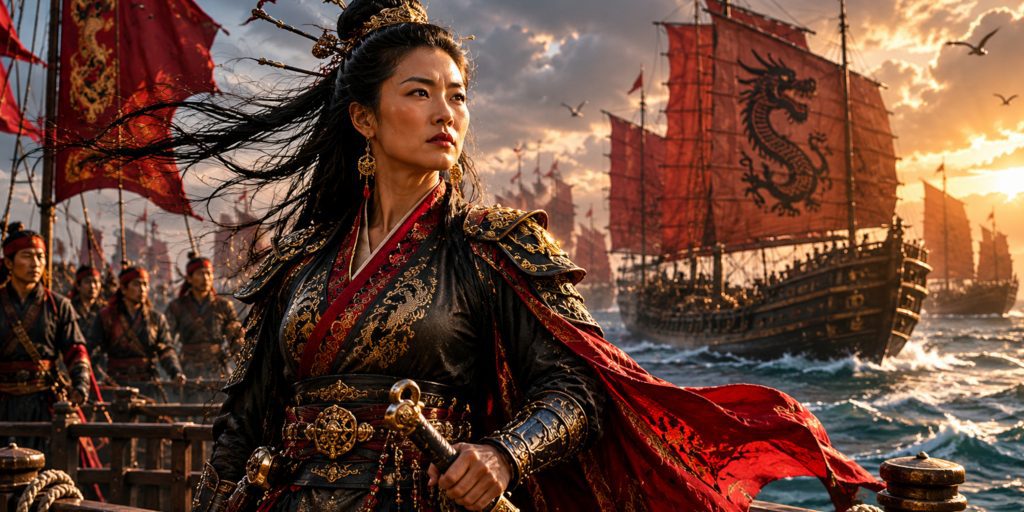
The Greatest Pirate Leader in History
Active: 1801–1810
Nationality: Chinese
Notoriety: Commanded the largest and most effective pirate fleet in recorded history.
AKA: Shi Yang also known as Zheng Yi Sao, Shi Xianggu, Shek Yeung, Quing Shi, and Ching Shih
Weapons and Ships
- Red Flag Fleet war junks
- Naval cannon
- Dao swords
- Spears
- Matchlock firearms
Zheng Yi Sao stands above every pirate on this list because of sheer organisational power and military success.
Her fleets controlled major coastal regions, extorted settlements and repeatedly defeated imperial opposition.
Leadership and Discipline
Her pirate confederation operated with:
- Strict legal codes
- Coordinated fleets
- Economic taxation systems
- Naval discipline
- Regional influence over trade routes
This was piracy on an imperial scale.
Contemporary Quote
“The terror of the China Seas.”
Unlike most pirates, Zheng Yi Sao negotiated amnesty successfully and retired wealthy.
That alone places her in a category almost entirely her own. Most pirates ended hanging in chains above crowded harbours while seagulls judged them silently from nearby posts. Zheng Yi Sao simply walked away.