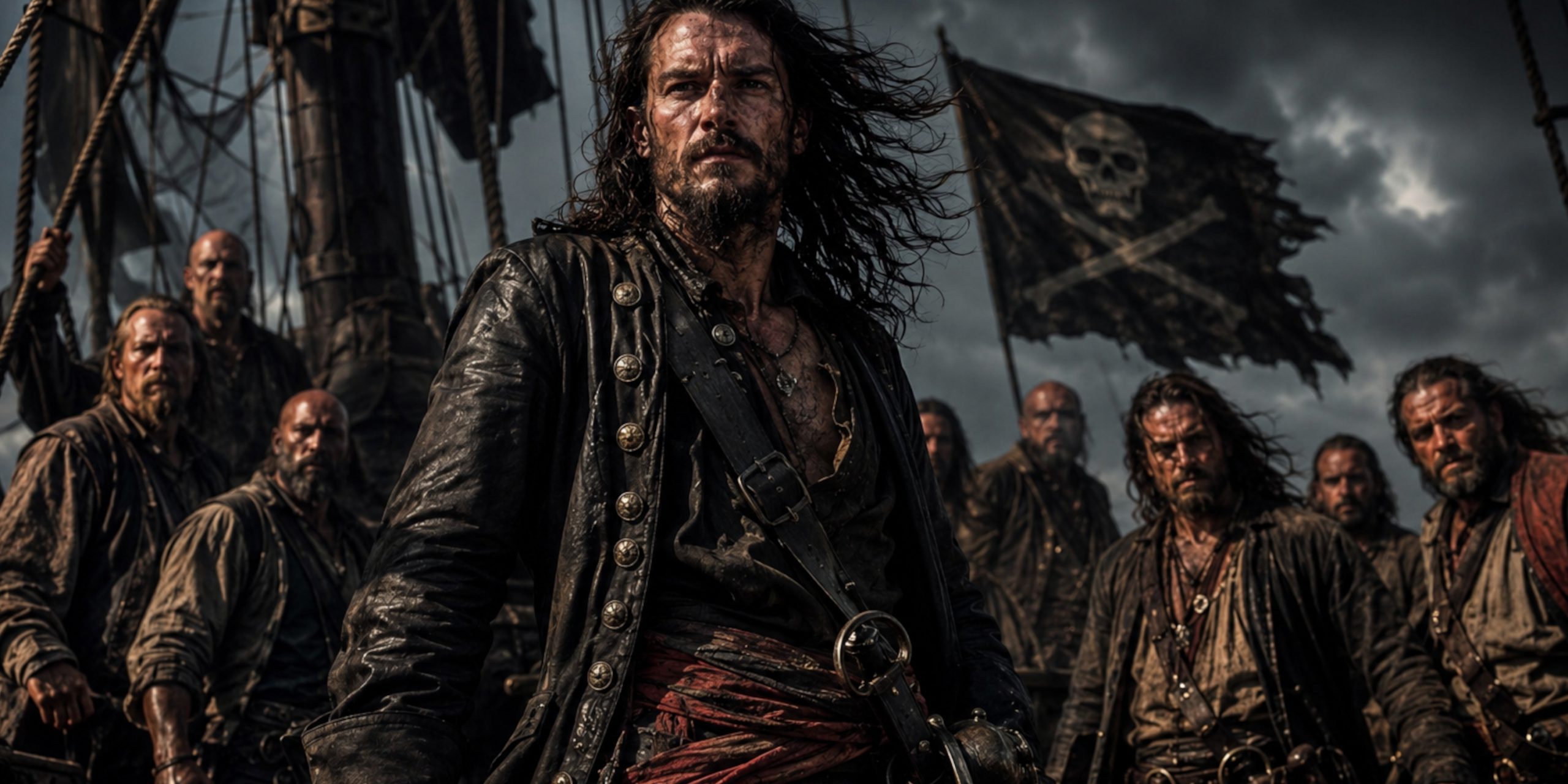
Few pirates have managed to cultivate a reputation quite as poisonous as Charles Vane. Even among pirates, who were hardly known for calm diplomacy and respectable manners, Vane stood apart. He was reckless, violent, stubborn beyond reason, and apparently allergic to compromise. Had he been born in Yorkshire, someone would have eventually told him to stop being so bloody difficult. In the Caribbean, however, that obstinacy became legend.
Unlike Blackbeard, who understood theatre, or Bartholomew Roberts, who preferred discipline and organisation, Vane thrived on fury and intimidation. He was not a romantic rogue with hidden nobility. He was a pirate captain during the harshest years of the Golden Age of Piracy, and he embraced the role with alarming enthusiasm.
Yet despite his fearsome reputation, Charles Vane remains strangely elusive. Much of what survives comes from hostile witnesses, terrified merchants, or government officials who wanted him swinging from a rope. Pirates rarely kept neat diaries. It is one of history’s great inconveniences.
Who Was Charles Vane?
Charles Vane was an English pirate active during the early 18th century, primarily between 1716 and 1721. He operated throughout the Caribbean and the American eastern seaboard during the final violent years of the so called Golden Age of Piracy.
Very little is known about his early life. He may have been born around 1680 in England, though no surviving records confirm the exact location. Like many pirates of the period, he likely emerged from the brutal maritime world created by imperial warfare, privateering, poor wages, and catastrophic treatment aboard merchant vessels.
By 1716, Vane had appeared in the Bahamas among the growing pirate settlement at Nassau. Nassau at the time was less a functioning colony and more a floating argument held together with rum, stolen sugar, and cannon smoke.
The town became the centre of the so called Pirate Republic. Men such as Benjamin Hornigold, Edward Teach, known later as Blackbeard, Calico Jack Rackham, and Charles Vane all operated there at various points.
Vane quickly earned a reputation for aggression. He attacked merchant vessels relentlessly and showed little interest in royal pardons or negotiation.
That decision would define his career.
Nassau and the Pirate Republic
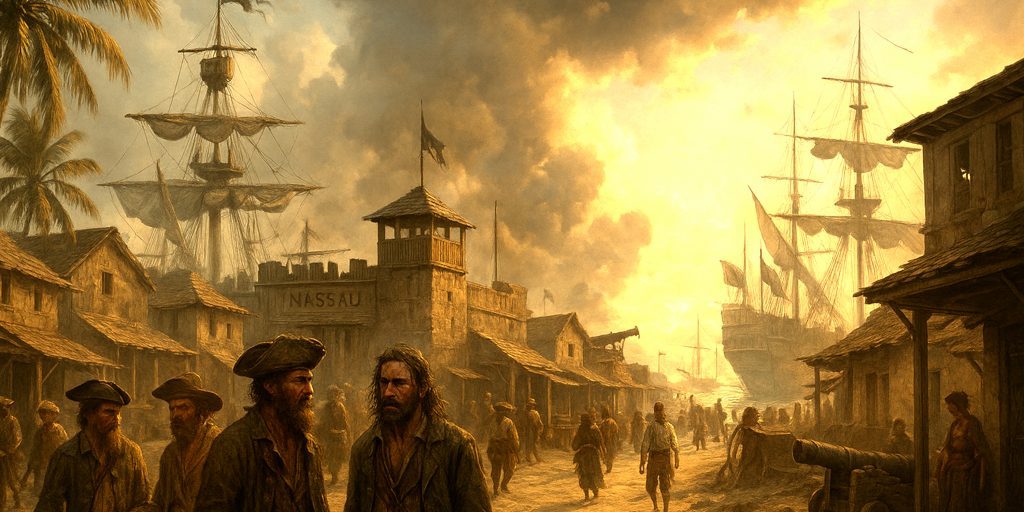
At the beginning of the 18th century, Nassau was effectively controlled by pirates. Britain’s authority in the Bahamas had collapsed, leaving privateers and outlaw captains to govern themselves.
Vane became one of the leading pirate figures in Nassau during this period. He commanded crews composed of English sailors, escaped servants, former privateers, and hardened adventurers who preferred piracy to starvation wages aboard naval vessels.
Unlike some captains who eventually accepted pardons from the Crown, Vane despised compromise. When King George I offered pardons to pirates willing to surrender, many accepted.
Charles Vane did not.
There is something almost admirable about such complete refusal to cooperate with authority, right up until one remembers he also robbed and terrorised civilians for a living.
Charles Vane’s Ships
Pirates rarely sailed enormous warships. Speed mattered more than prestige. Vane favoured smaller, agile vessels capable of chasing merchant ships and escaping naval frigates.
The Ranger
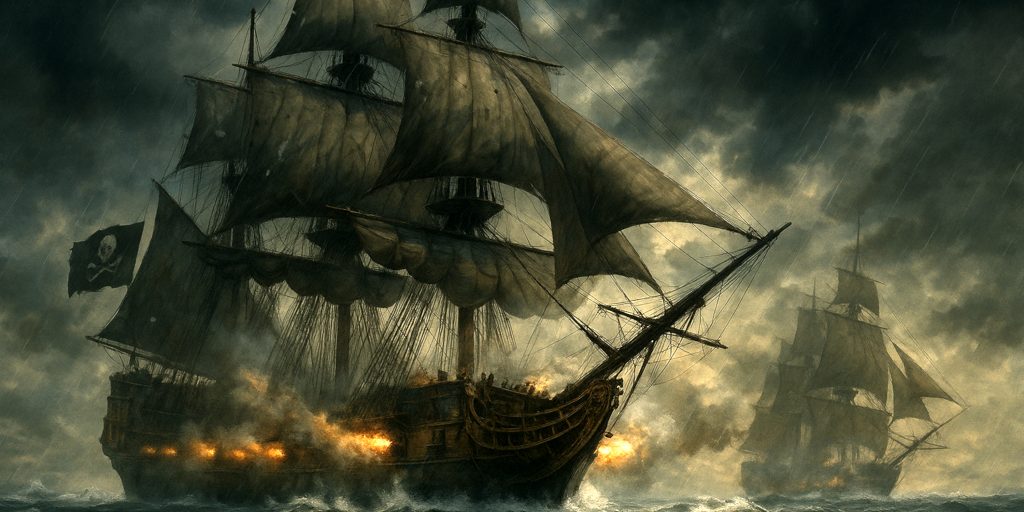
Vane’s most famous vessel was the Ranger, a brigantine armed with multiple cannon and crewed by experienced pirates. The ship became one of the most feared pirate vessels in the Caribbean.
The Ranger combined speed with enough firepower to overwhelm merchant ships quickly. Pirate engagements usually relied upon intimidation rather than prolonged naval battles. Cannon fire damaged cargo, and cargo was money.
Captured Vessels
Like most pirates, Vane frequently captured and exchanged ships. Pirate fleets were fluid things. A good ship was used until something faster appeared over the horizon.
His fleet occasionally included:
- Sloops
- Brigantines
- Captured merchant ships
- Lightly armed coastal vessels
These ships allowed Vane to raid shipping lanes across the Bahamas, Jamaica, and the Carolinas.
Weapons Used by Charles Vane and His Crew
Pirates relied upon brutal close combat weapons suited for boarding actions aboard cramped ships.
Common Pirate Weapons
- Cutlasses
- Flintlock pistols
- Boarding axes
- Muskets
- Daggers
- Grenades filled with powder and scrap metal
The cutlass became the signature pirate weapon because it was short, heavy, and devastating during close fighting aboard crowded decks.
Vane’s men also used intimidation extensively. Pistols were often carried in pairs or trios tucked into belts and sashes. Accuracy was secondary to shock value. Most boarding fights descended into smoke, screaming, splintered wood, and complete confusion within minutes.
The romantic image of elegant duels belongs more to novels than reality. Real pirate combat looked exhausting and deeply unpleasant.
Charles Vane’s Battles and Raids
Vane participated in numerous pirate attacks throughout the Caribbean.
The Blockade of Nassau Harbour
One of his most famous acts occurred in 1718 when British governor Woodes Rogers arrived in Nassau with a fleet intended to restore Crown authority.
Vane refused to surrender.
Instead, he loaded a captured French ship with gunpowder, set it ablaze, and sent it drifting toward the British fleet as a fireship during the night.
The attack caused panic and confusion, allowing Vane to escape Nassau harbour under darkness.
It was reckless, theatrical, and undeniably effective.
Raids on Merchant Shipping
Vane repeatedly attacked merchant vessels carrying:
- Sugar
- Tobacco
- Indigo
- Textiles
- Precious cargo
- Provisions
Merchant crews often surrendered quickly once pirate flags appeared. Resistance frequently resulted in violence.
Conflict With Fellow Pirates
Vane’s own crew eventually grew tired of his refusal to engage heavily armed targets. After declining to attack a French warship in 1718, his crew accused him of cowardice.
Among pirates, being called cautious was practically an insult worthy of exile.
He was removed from command and replaced by Calico Jack Rackham.
One cannot help noticing the irony. Charles Vane, notorious for recklessness, was overthrown for not being reckless enough.
Contemporary Quotes About Charles Vane
Several contemporary accounts survive, though many were written by enemies or sensationalist chroniclers.
Captain Charles Johnson, author of A General History of the Pyrates, described Vane as:
“A resolute fellow, if courage alone could have made a complete pirate.”
Woodes Rogers viewed Vane as one of the most dangerous pirate leaders in the Bahamas. British officials repeatedly described him as violent, defiant, and unwilling to accept royal authority.
Another account described Vane’s crew as:
“Desperate villains fit for any mischief.”
To be fair, this was not entirely inaccurate.
Bounty and Treasure
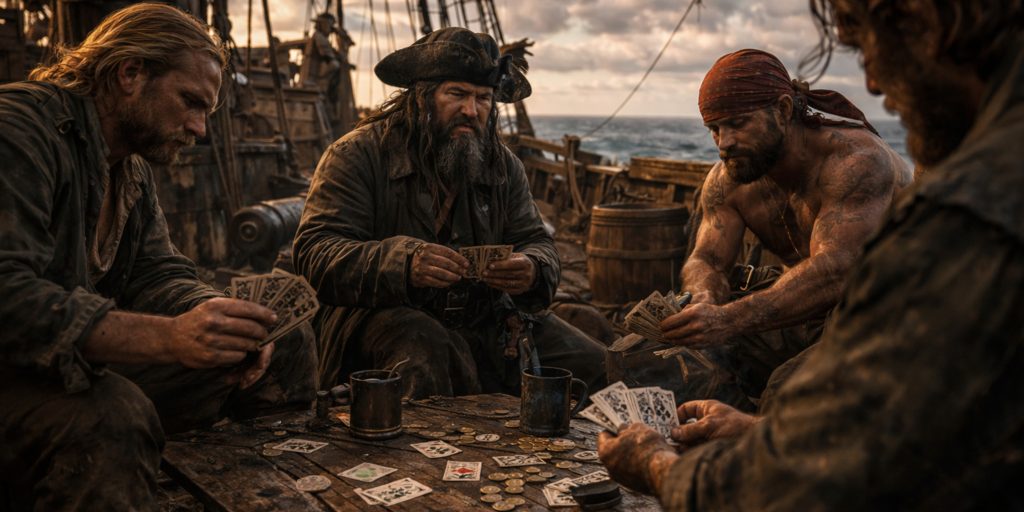
Like many famous pirates, Charles Vane became associated with hidden treasure legends. Unfortunately for treasure hunters armed with metal detectors and excessive optimism, there is no confirmed evidence that Vane buried enormous riches.
Pirates generally spent money rapidly on:
- Alcohol
- Repairs
- Gambling
- Weapons
- Food
- Bribes
The image of carefully hidden treasure chests owes more to Victorian fiction than historical practice.
Still, Vane seized substantial wealth during his career through captured cargoes and ransom.
British authorities eventually placed bounties upon notorious pirates operating in the Caribbean, including Vane. Exact figures varied across colonies and periods, though his capture became a serious imperial priority.
Charles Vane’s Fate
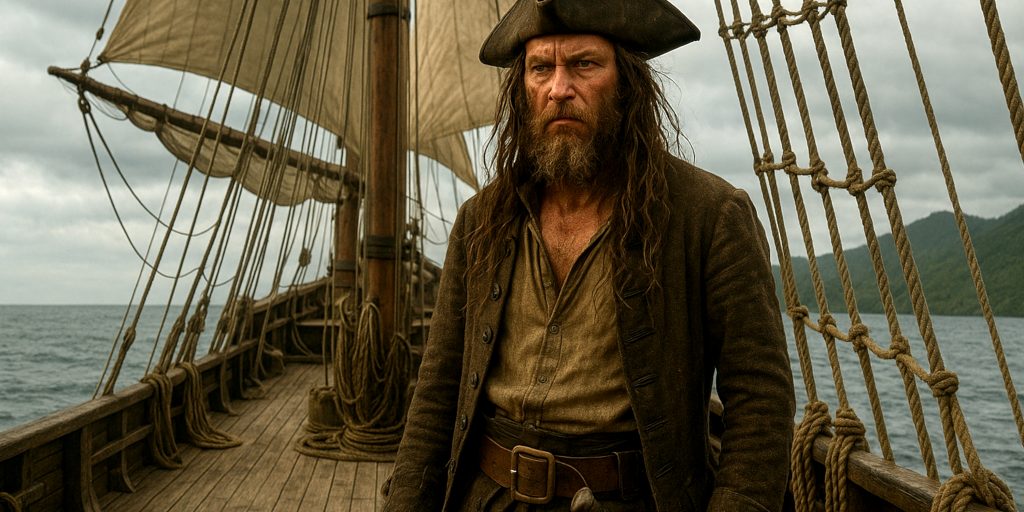
Vane’s downfall arrived through misfortune rather than glorious battle.
After losing command of his crew, he continued piracy with a smaller group. In 1720, his ship was wrecked during a hurricane near Jamaica.
He survived the wreck but was eventually recognised and arrested.
Vane was transported to Port Royal, Jamaica, where he faced trial for piracy.
The outcome was never particularly in doubt.
He was convicted and hanged on 29 March 1721 at Gallows Point in Port Royal. His body was later displayed in chains as a warning to other pirates.
Governments of the period adored this sort of theatrical corpse display. Apparently a simple execution lacked sufficient flair.
Charles Vane’s Legacy
Charles Vane became one of the defining figures of the Golden Age of Piracy because he embodied its most uncompromising qualities.
He rejected pardons.
He fought authorities openly.
He intimidated allies and enemies alike.
And he remained dangerous until the very end.
Unlike pirates later softened into charming rogues by fiction, Vane feels genuinely threatening in the historical record. That authenticity has kept historians fascinated for centuries.
Modern portrayals in television, novels, and games often emphasise his volatility and brutality, which is understandable. Charles Vane was not designed for subtlety.
Still, beneath the violence lay a revealing figure shaped by the chaos of the early 18th century Atlantic world, where empires expanded faster than governments could control them, and desperate sailors sometimes decided theft at cannon point offered better career prospects than honest labour.
A dreadful career adviser, certainly. A fascinating historical figure, absolutely.
What We Actually Know About Charles Vane
Separating myth from fact remains difficult.
Reliable evidence confirms:
- He operated as a pirate between roughly 1716 and 1721
- He was based heavily around Nassau
- He commanded the Ranger
- He refused royal pardons
- He escaped Nassau using a fireship
- He was removed by his own crew
- He was captured after a shipwreck
- He was executed in Jamaica
Much else remains uncertain or exaggerated by later storytellers.
That ambiguity is part of the reason pirates continue to fascinate people centuries later. The gaps invite imagination, and Charles Vane left behind more than enough shadows to keep legends alive.
Even in death, he remained exactly what he had always been. Dangerous, defiant, and impossible to tidy neatly into polite history books.rs’ journals. Vane’s life may have ended in disgrace, but his defiance ensured he would be remembered.