From Viking blades and knightly arming swords to Japanese katana and Indian talwars, the medieval world produced an astonishing variety of swords. This guide explores how these weapons evolved across Europe, the Middle East, Africa and Asia, why they changed over the centuries, and what archaeology tells us about the people who carried them.
Few objects capture the imagination quite like the medieval sword.
It represents honour, authority, warfare, craftsmanship and, occasionally, spectacularly poor decision making. Across films, games and novels, swords have become symbols of an age filled with castles, crusades and heroic last stands. The reality is rather more interesting.
The medieval world was not dominated by a single style of sword. It produced hundreds of regional variations, each reflecting local materials, military tactics, armour technology and cultural traditions. A Viking warrior sailing into England carried a very different weapon from a Byzantine cavalry officer riding through Anatolia. An English knight at Agincourt relied upon a different blade from a Japanese samurai or a Mamluk emir defending Cairo.
Despite these differences, swords shared one important characteristic almost everywhere. They were rarely the primary battlefield weapon.
That statement often surprises people.
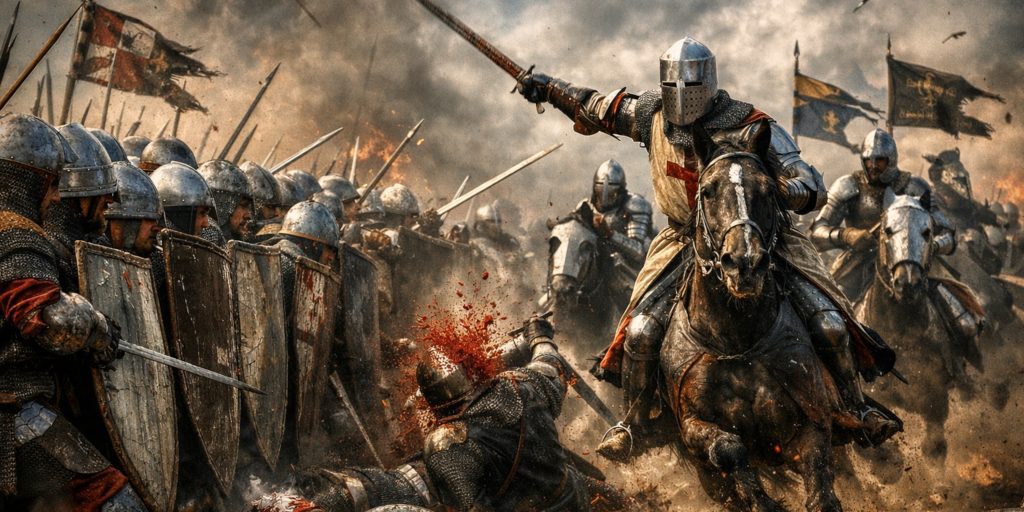
Spears, lances, bows, crossbows and polearms generally accounted for far more casualties. Swords were expensive to produce, required considerable skill to use effectively and often served as reliable sidearms once a primary weapon was broken, lost or simply too cumbersome for close fighting.
That hardly diminished their prestige.
Throughout the medieval period, kings were crowned with swords beside them. Knights received them during ceremonies of investiture. Noble families passed treasured blades from generation to generation. Religious traditions imbued swords with symbolic meaning, while master smiths developed techniques that still inspire admiration today.
This article follows the sword across nearly a thousand years of history, tracing how changing battlefields transformed one of humanity’s most recognisable weapons.
The Medieval World Was Larger Than Europe
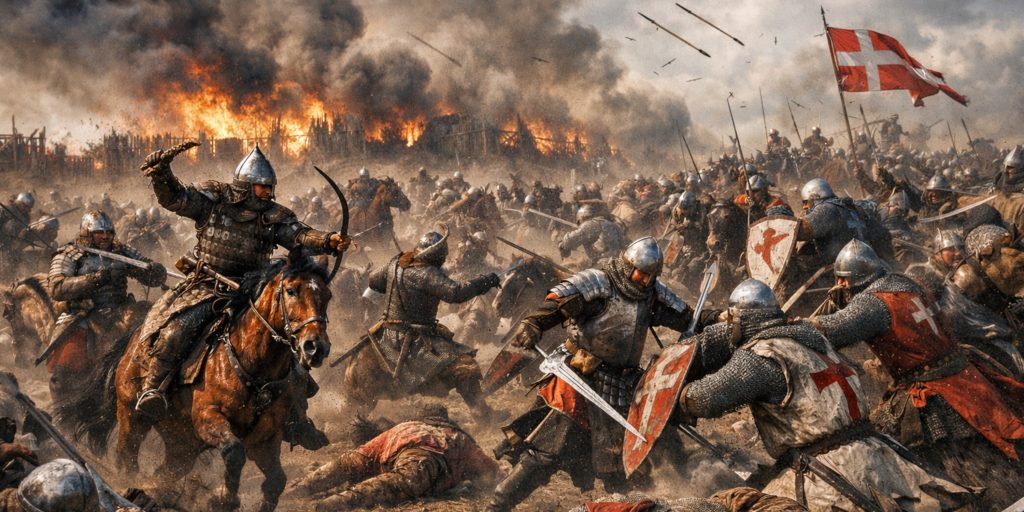
Modern discussions often treat medieval swords as though they belonged exclusively to European knights.
History politely disagrees.
Between approximately AD 500 and AD 1500, sophisticated sword traditions flourished across much of the world.
Europe witnessed the rise of Viking swords, knightly arming swords, longswords and specialised armour-piercing weapons.
The Byzantine Empire blended Roman military traditions with influences from Persia and the Islamic world.
Across the Middle East, Islamic smiths became renowned for beautifully crafted curved and straight blades, many forged using advanced steel technologies that fascinated European travellers.
India developed remarkable weapons ranging from broad cutting swords to elegant curved blades, alongside some of the world’s most sophisticated metallurgical traditions.
China continued producing military swords throughout successive dynasties, while refining steel production techniques on an industrial scale.
Japan created perhaps the most famous sword tradition of them all, although even there the sword occupied a more complex military role than popular culture often suggests.

Across Africa, kingdoms produced distinctive swords suited to local methods of warfare, trade networks and craftsmanship.
The story of medieval swords is therefore a global one.
Ideas travelled with merchants, pilgrims, mercenaries and conquerors. Steel crossed continents. Smiths borrowed techniques from neighbouring cultures. Victorious armies collected enemy weapons and sometimes copied the best features.
Even the Crusades, remembered chiefly for conflict, became an unexpected avenue for technological exchange.
What Makes a Sword “Medieval”?
The medieval period is generally dated between the collapse of the Western Roman Empire in the fifth century and the beginning of the Renaissance around the late fifteenth century.
Sword development followed no neat timetable.
Some Roman designs survived for generations after the empire’s decline. Elsewhere, new weapons emerged decades before becoming widespread.
Historians usually classify medieval European swords into several broad phases.
| Period | Approximate Dates | Dominant Sword Types |
|---|---|---|
| Early Medieval | AD 500 to 900 | Migration Era swords, Viking swords |
| High Medieval | AD 900 to 1250 | Knightly arming swords |
| Late Medieval | AD 1250 to 1500 | Longswords, estocs, falchions, great swords |
Outside Europe, developments followed entirely different timelines.
The important point is that medieval swords evolved continuously rather than appearing fully formed.
Every generation adapted existing designs to meet changing military demands.
From Rome to the Early Middle Ages
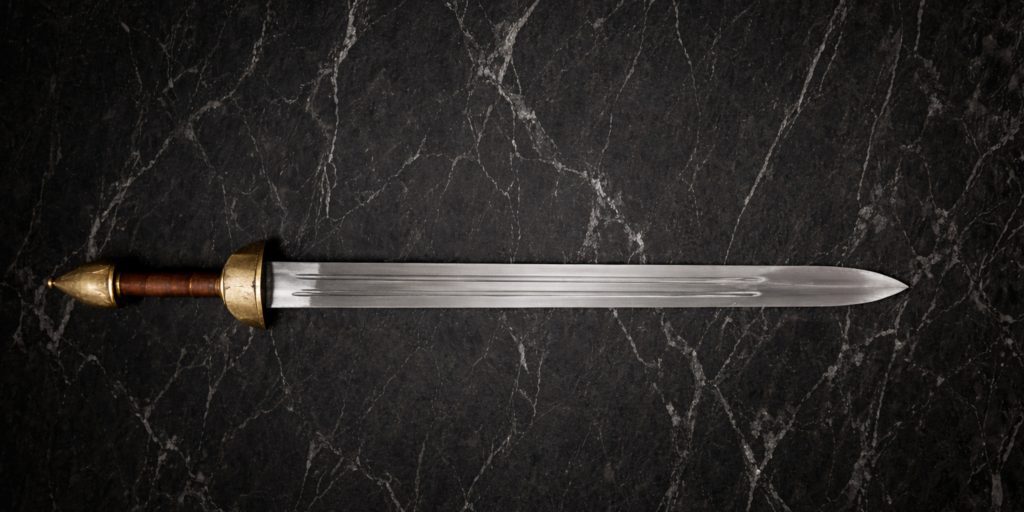
The fall of the Western Roman Empire did not suddenly transform warfare.
Many Germanic kingdoms inherited Roman armour, military organisation and weapon production. Roman smiths continued working under new rulers, while surviving trade routes supplied iron across Europe.
The Roman spatha became particularly influential.
Originally a cavalry sword, the spatha featured a relatively long, straight blade designed for cutting and thrusting. During the empire’s later centuries it increasingly replaced the shorter gladius.
When Roman political authority collapsed, the spatha lived on.
Frankish, Gothic, Lombard and Anglo-Saxon warriors adopted and gradually modified the design. Blades became broader in some regions, guards grew more substantial and decorative styles reflected emerging kingdoms rather than imperial Rome.
This transition was gradual rather than revolutionary.
Archaeological finds reveal continuity instead of sudden change, reminding us that history usually ignores the tidy boundaries found in textbooks.
The Migration Era Sword
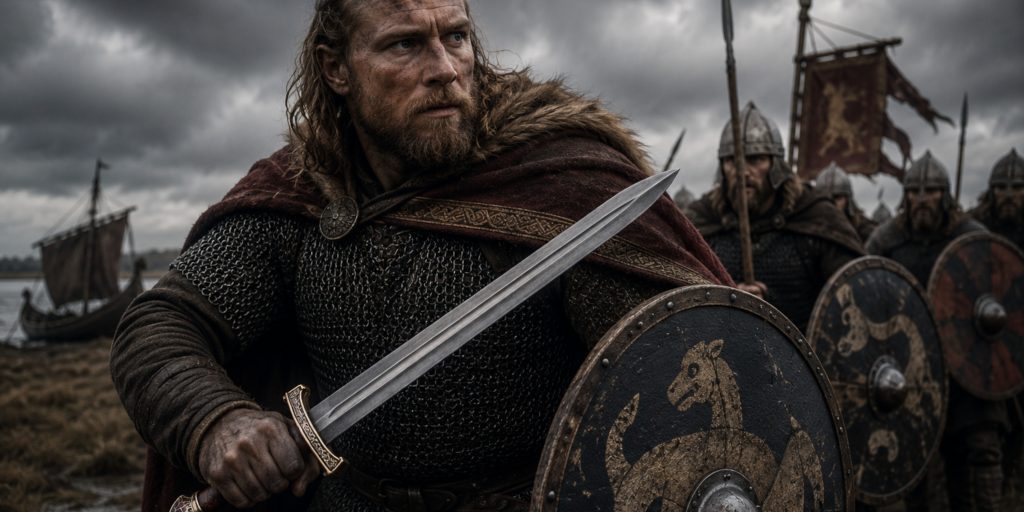
The earliest recognisably medieval swords belong to what historians call the Migration Period.
Between the fifth and seventh centuries, Europe witnessed enormous population movements.
The Goths, Vandals, Franks, Lombards, Saxons and numerous other peoples established kingdoms across territories once ruled by Rome.
Their swords reflected both Roman influence and indigenous traditions.
Most featured:
- Straight double-edged blades
- Broad cutting profiles
- Short crossguards
- Multi-piece decorated hilts
- Pattern welded steel construction
Pattern welding deserves particular attention.
Rather than forging a sword from one homogeneous piece of steel, smiths twisted rods of iron and steel together before hammering them into a single blade.
The resulting surface displayed intricate wave-like patterns after polishing.
These patterns were not simply decorative.
They reflected advanced craftsmanship that balanced flexibility with durability using the materials available.
Modern viewers often mistake pattern welded blades for Damascus steel, but they represent different metallurgical traditions.
Pattern Welding: Beauty with a Practical Purpose
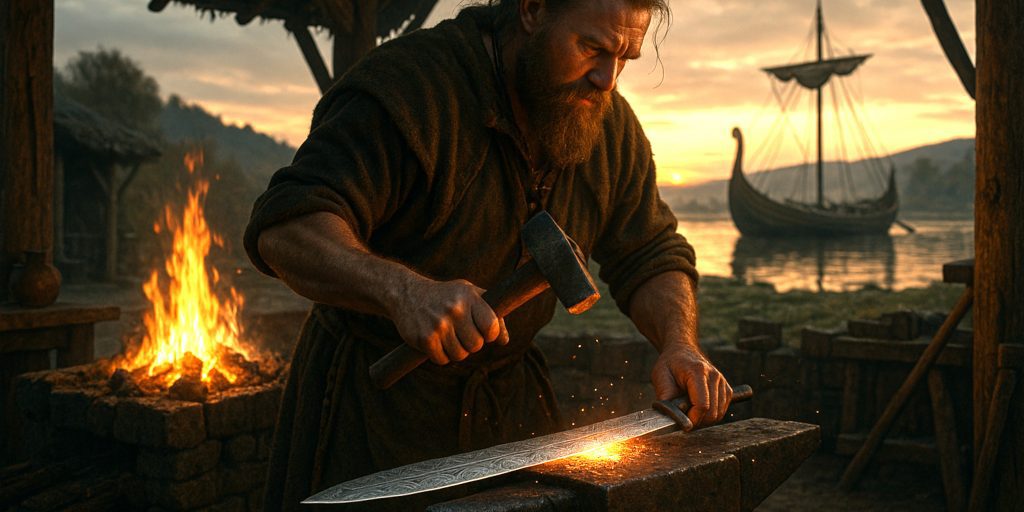
Early medieval Europe lacked consistent access to large quantities of high-quality steel.
Smiths therefore became remarkably inventive.
By combining softer iron with harder steel strips, they produced blades capable of absorbing impacts while maintaining a useful cutting edge.
Every workshop developed its own methods.
Some blades contained elaborate herringbone designs.
Others produced flowing chevrons or subtle ripples running the length of the weapon.
Each sword therefore possessed something approaching an individual fingerprint.
There is something wonderfully human about this.
Long before factory production, every successful sword reflected the judgement of one experienced craftsman standing beside a charcoal forge, making countless small decisions that no written manual could adequately explain.
The Rise of the Viking Sword
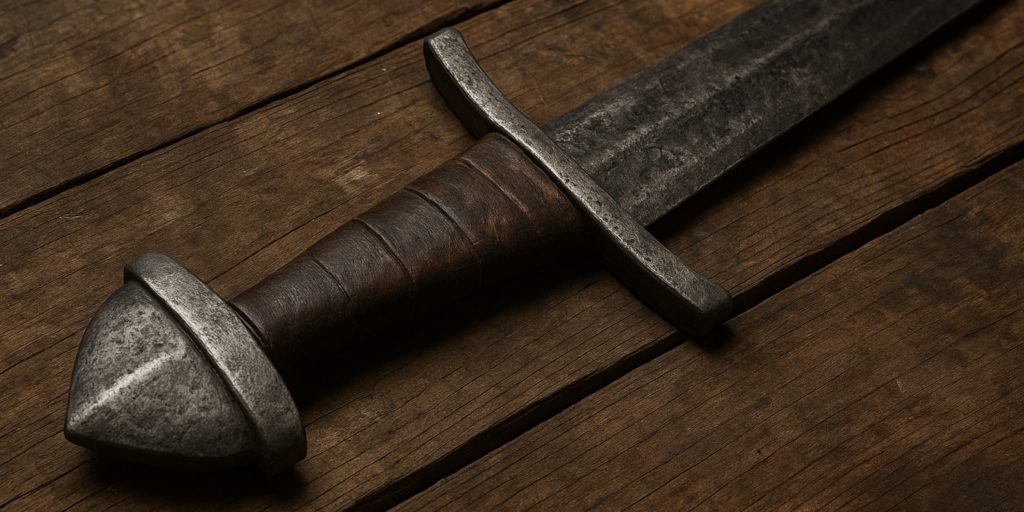
Between the late eighth and eleventh centuries, the Viking sword emerged as one of the finest weapons in Europe.
Its reputation owes as much to exceptional craftsmanship as to the exploits of the men who carried it.
Contrary to popular imagination, Vikings did not all own swords.
Quite the opposite.
A good sword represented considerable wealth.
Many warriors relied primarily upon spears and axes, while swords remained possessions of wealthy landowners, experienced fighters and successful raiders.
Owning a sword demonstrated status.
Receiving one from a lord symbolised loyalty.
Passing one to descendants reinforced family identity.
Some blades even received names, appearing in Norse sagas almost as characters in their own right.
The line between treasured heirloom and practical weapon could become remarkably blurred.
Characteristics of Viking Swords
Typical Viking swords shared several defining features.
| Feature | Description |
|---|---|
| Blade Length | Approximately 70 to 90 cm |
| Edges | Double edged |
| Point | Rounded or only moderately tapered |
| Primary Function | Cutting with capable thrusting ability |
| Weight | Usually between 1.1 and 1.5 kg |
| Grip | Short enough for one hand |
| Balance | Optimised for fast cuts |
These swords excelled in combination with shields.
Viking combat relied heavily upon mobility, shield use and aggressive offensive action.
A relatively light one-handed sword complemented these tactics perfectly.
Ulfberht: The Legendary Name

Among Viking swords, one name stands above all others.
More than 170 blades bearing variations of this inscription have been discovered across Europe.
Some were genuine.
Others were imitations.
The originals appear to contain unusually high-quality crucible steel, exceptional for northern Europe during the period.
Exactly how this steel reached Frankish workshops remains debated.
Trade through the Islamic world.
Imports from Central Asia.
Advanced European production.
Perhaps a combination of all three.
Whatever the explanation, genuine Ulfberht swords represented premium weapons whose quality stood noticeably above many contemporary blades.
Predictably, counterfeit versions soon appeared.
Apparently even medieval consumers had to worry about fake luxury goods.
Some things never change.
Viking Swords in Battle
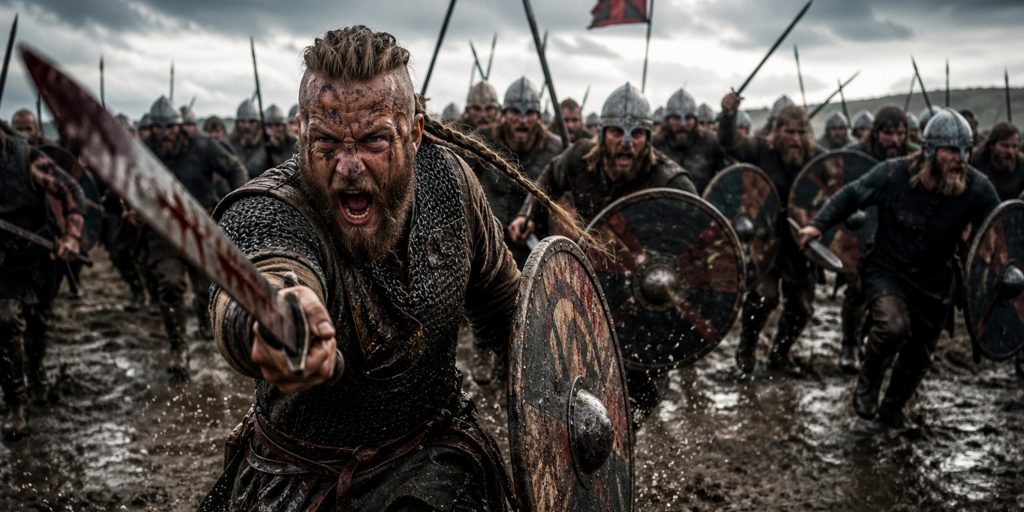
The Viking sword was built for speed rather than brute force.
Against lightly armoured opponents, broad cuts proved devastating.
Against mail armour, success depended upon exploiting gaps around the neck, face, limbs and joints.
Contrary to modern fiction, warriors did not generally attempt to chop directly through quality mail.
That would have been optimistic to the point of comedy.
Instead, experienced fighters combined cuts, thrusts and shield work while looking for openings.
The sword rewarded timing, positioning and judgement far more than raw strength.
The Norman Revolution

The Norman Conquest of England in 1066 marked far more than a change of kings. It accelerated a transformation in European warfare that had been gathering pace for generations.
Mounted knights became increasingly dominant on the battlefield. Castles spread across western Europe. Armour steadily improved. Warfare became more organised, more professional and considerably more expensive.
The sword evolved alongside these changes.
The broad cutting blades favoured by Viking warriors remained effective, but they gradually developed into weapons better suited to mounted combat and increasingly sophisticated armour.
This was the birth of the classic knightly sword.
For many people, this is the image that immediately springs to mind when the words “medieval sword” are mentioned.
The Knightly Arming Sword
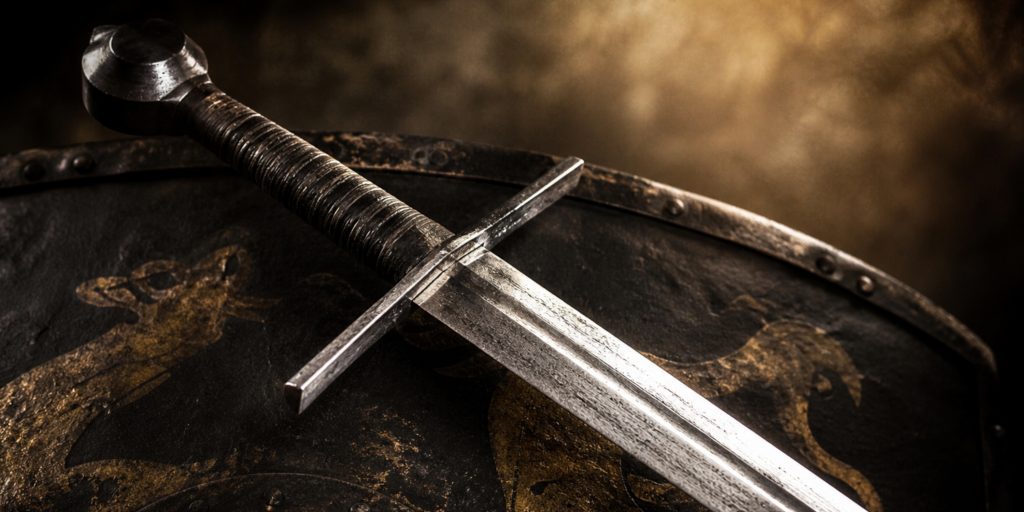
Between the eleventh and thirteenth centuries, the arming sword became the standard sidearm of European knights.
Simple, elegant and remarkably effective, it was neither excessively large nor particularly heavy.
Modern replicas sometimes encourage the misconception that medieval swords resembled oversized crowbars. Surviving originals tell a different story.
Most arming swords weighed between 1 and 1.4 kilograms.
That is lighter than many modern laptops.
The balance point sat close to the hilt, allowing rapid changes of direction and precise control. A trained swordsman could strike, recover and defend in one smooth movement.
The weapon was designed to complement a shield, not replace it.
Characteristics of the Arming Sword
| Feature | Description |
|---|---|
| Period | c. 1050 to 1350 |
| Blade Length | 70 to 85 cm |
| Grip | One-handed |
| Edges | Double edged |
| Point | Moderate taper |
| Primary Role | Cutting and thrusting |
| Companion Equipment | Shield or buckler |
Although often associated with the Crusades, arming swords were carried throughout Europe for almost three centuries.
They became the defining weapon of medieval knighthood.
Why Crossguards Became Longer
One of the most obvious developments during this period was the crossguard.
Earlier Viking swords possessed relatively short guards.
By the High Middle Ages, these became noticeably longer.
There were practical reasons for this.
A longer guard protected the wielder’s hand more effectively.
It also improved leverage during parries and helped prevent an opponent’s blade sliding onto the fingers.
The crossguard even developed symbolic significance.
When held upright, sword, hilt and guard formed the shape of a Christian cross.
For crusading knights this carried obvious religious meaning, although historians remain cautious about assuming symbolism outweighed practicality.
As with many medieval objects, both explanations may be true.
The Sword and the Knight
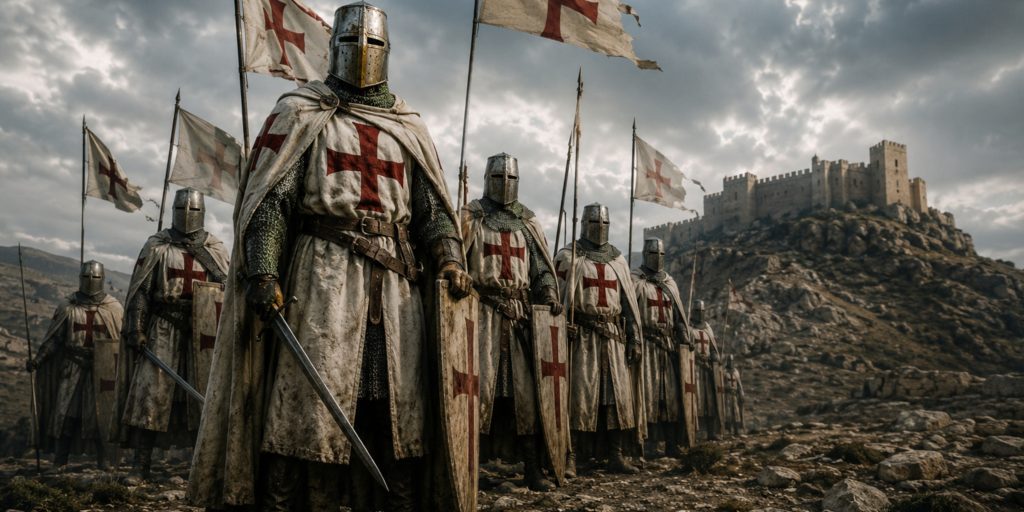
The sword occupied a unique place within medieval society.
A spear could be made relatively cheaply.
A sword demanded considerable resources.
Producing one required skilled smiths, quality iron, carefully controlled heating, extensive grinding and hours of finishing work.
Many swords also featured:
- Leather wrapped grips
- Decorative pommels
- Silver or brass inlays
- Inscribed blades
- Heraldic decoration
Owning such a weapon reflected wealth as much as military necessity.
When a young nobleman became a knight, receiving a sword formed one of the most important moments of the ceremony.
The weapon represented justice, responsibility and military service.
Ideally, at least.
History offers no shortage of knights who cheerfully ignored the finer points of chivalry when money or politics entered the conversation.
The Crusades and Eastern Influence
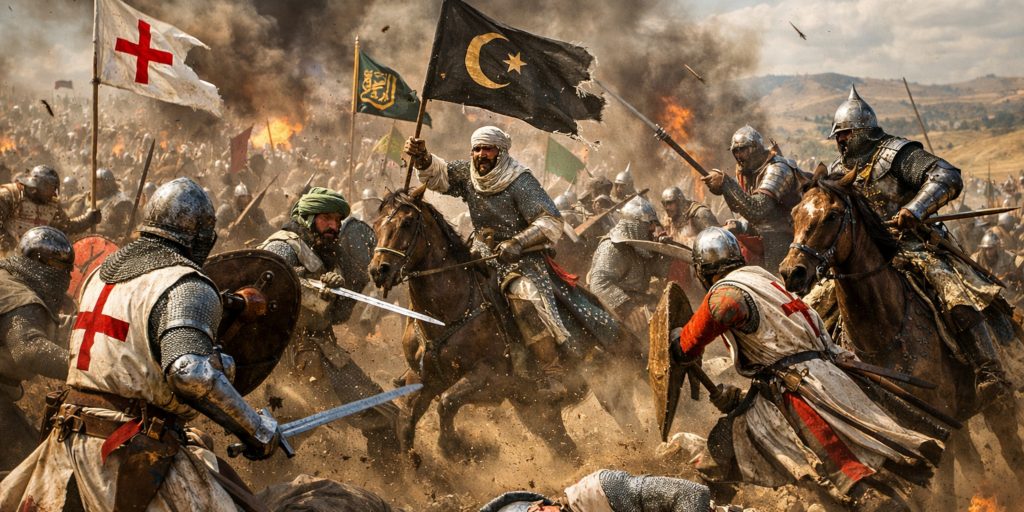
The Crusades brought western Europeans into prolonged contact with the Byzantine Empire and the Islamic world.
These encounters introduced new ideas about warfare, armour and sword manufacture.
Popular myths often claim European knights abandoned their own swords in favour of curved Middle Eastern blades.
The archaeological evidence says otherwise.
European knights largely continued using straight double-edged swords.
However, they certainly admired eastern craftsmanship.
Damascus steel became famous throughout Europe.
Eastern blades often demonstrated exceptional flexibility and edge retention, although medieval writers occasionally exaggerated their qualities into near legend.
Trade expanded alongside conflict.
Captured weapons circulated across Europe.
Smiths examined foreign designs.
Ideas travelled even when armies fought.
War has always been an unfortunate but remarkably efficient method of cultural exchange.
Damascus Steel
Few terms are more misunderstood than Damascus steel.
Historically, the name referred to blades traded through Damascus rather than necessarily forged there.
Many were produced using crucible steel originating in India.
These steels contained distinctive microscopic structures that produced beautiful flowing surface patterns after polishing.
Their combination of hardness and toughness impressed both medieval observers and modern metallurgists.
European smiths admired these weapons enormously, although they continued developing their own traditions rather than simply copying eastern designs.
The Oakeshott Typology
Any discussion of medieval swords eventually arrives at one name.
Ewart Oakeshott.
Before his work, many museums classified swords rather loosely.
One broad blade might simply be labelled “medieval sword”, regardless of date or purpose.
Oakeshott transformed this approach.
Building upon earlier research, he created a detailed typology based primarily upon blade shape, point design, fuller length and overall proportions.
His classification remains the standard reference used by historians, collectors and museums today.
Why It Matters
The typology demonstrates something important.
Medieval sword development was not random.
Each design reflects changing battlefield conditions.
As armour improved, blades evolved.
As cavalry tactics shifted, sword geometry changed.
As plate armour spread, points became narrower and stiffer.
Rather than fashion, necessity drove innovation.
Some Important Oakeshott Types
| Type | Approximate Date | Characteristics |
|---|---|---|
| X | c. 1000 to 1150 | Broad blade with long fuller, excellent cutter |
| XI | c. 1100 to 1175 | Longer blade, improved reach |
| XII | c. 1170 to 1350 | Balanced cutting and thrusting |
| XIII | c. 1250 to 1350 | Broad blade with two-handed variants |
| XIV | Late 13th century | Shorter blade with acute point |
These early types represent the classic swords of the High Middle Ages.
Later types would become increasingly specialised as armour technology advanced.
The Fuller: Not a Blood Groove
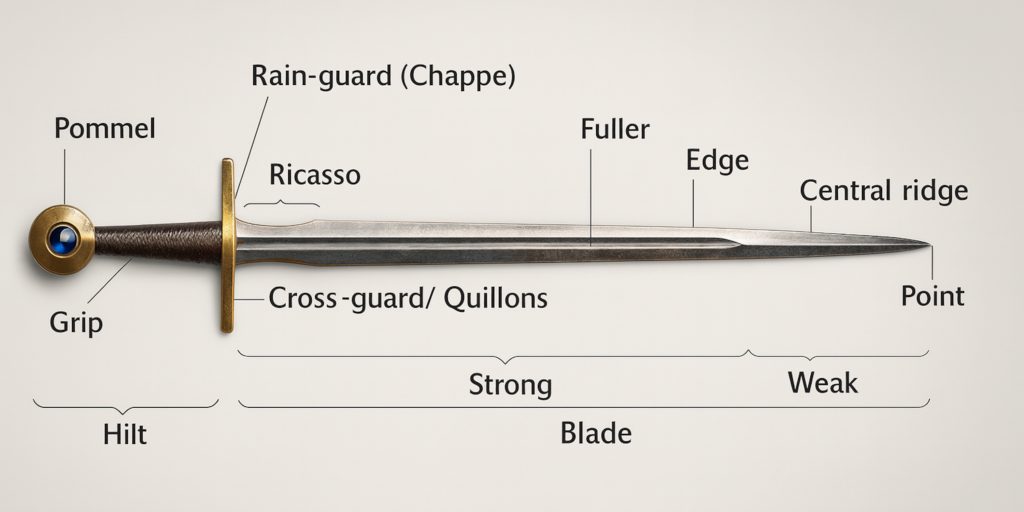
One myth refuses to disappear.
The groove running along many medieval swords is not a “blood groove.”
It is properly called a fuller.
Its purpose is structural.
Like the web of an I-beam, the fuller reduces weight while maintaining strength.
This allows a sword to remain stiff without becoming unnecessarily heavy.
Removing material from the centre of the blade improves handling.
It does not encourage blood flow.
Medieval smiths understood engineering remarkably well, even if they would not have described it using modern terminology.
The Rise of Professional Swordsmiths
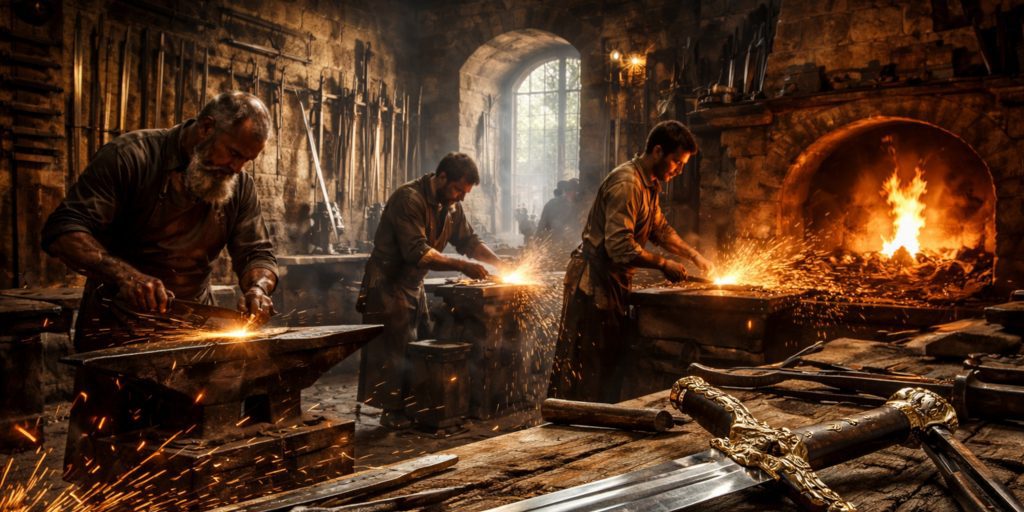
As towns expanded during the twelfth and thirteenth centuries, sword making became increasingly specialised.
Earlier smiths often produced a wide range of iron goods.
Later workshops focused almost exclusively on weapons.
Several cities developed international reputations.
Among the most famous were:
- Passau
- Solingen
- Milan
- Toledo
Their products travelled across Europe through extensive trade networks.
A knight in Scotland might carry a German blade mounted with an English hilt.
A French nobleman could commission an Italian sword while fighting in Spain.
Medieval Europe was considerably more interconnected than many people imagine.
Marks of Quality

Swordsmiths increasingly stamped their blades with distinctive symbols.
These marks served several purposes.
They identified workshops.
They advertised quality.
Sometimes they probably discouraged forgery, although counterfeiters have always been enthusiastic.
Common examples include:
- Wolves
- Crosses
- Religious inscriptions
- Initials
- Geometric symbols
Some became famous across Europe.
Possessing a blade from a respected workshop carried considerable prestige.
One might even call it medieval brand loyalty.
Scabbards Were More Important Than People Realise
Surprisingly few original medieval scabbards survive.
Leather and wood rarely withstand centuries underground.
When preserved examples do appear, they reveal just how sophisticated these objects were.
A typical scabbard consisted of:
- Thin wooden core
- Leather covering
- Wool or fur lining
- Suspension straps
- Metal chape protecting the tip
The lining often contained oils that helped prevent rust.
Far from being simple storage, the scabbard formed an essential part of the weapon’s maintenance.
A fine sword deserved proper protection.
Leaving it exposed to damp weather would have been almost as unpopular in the Middle Ages as it is among modern collectors.
Swords Beyond the Battlefield
Although designed for war, swords served many other purposes.
Knights wore them during ceremonies.
Judges carried ceremonial swords representing royal authority.
Kings were crowned beside sacred weapons.
Nobles displayed richly decorated swords as symbols of status.
Executioners employed specialised forms.
Some cities maintained ceremonial swords used during civic events.
The sword therefore occupied both practical and symbolic roles.
It was simultaneously a weapon, an heirloom, a political statement and an object of artistic craftsmanship.
Very few tools have carried so many meanings at once.
An Arms Race in Steel
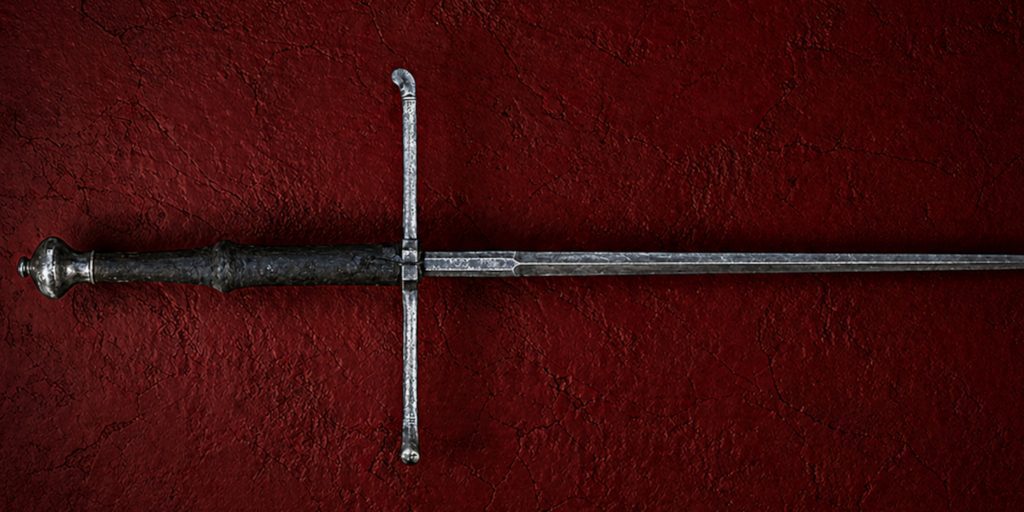
By the late thirteenth century, European battlefields had become considerably more dangerous.
Mail armour had protected warriors for centuries, but armourers were experimenting with iron and steel plates to reinforce vulnerable areas. Helmets enclosed more of the face, limb defences became common and by the fifteenth century, wealthy knights could be encased in full plate harness.
Swordsmiths responded.
The classic knightly arming sword remained in use, but it was no longer enough on its own. New blade designs emerged to cope with increasingly resilient opponents. Some emphasised powerful cuts, others precise thrusts and a few abandoned versatility altogether in favour of specialised roles.
This was not the replacement of one sword by another.
It was an explosion of innovation.
Why Swords Changed
Several factors drove the evolution of medieval swords:
- Better armour required stronger thrusting points.
- Longer polearms kept opponents at greater distance.
- Professional armies became more common.
- Infantry regained importance alongside heavy cavalry.
- Fencing systems became increasingly sophisticated.
The result was a remarkable diversity of blades, many of which existed simultaneously rather than replacing one another.
The Longsword
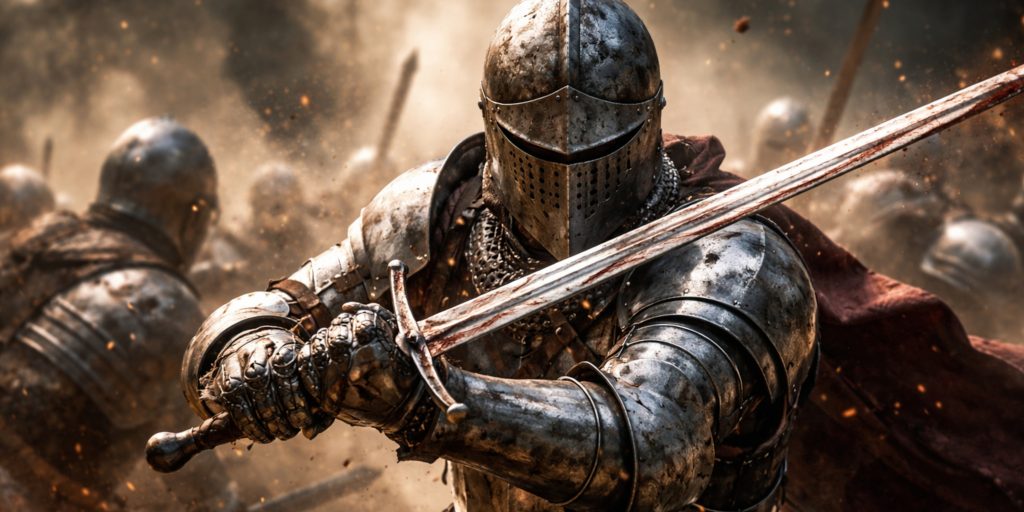
No medieval sword enjoys a greater reputation today than the longsword.
Ironically, medieval people rarely used that exact term. Modern historians adopted it as a convenient way to distinguish these weapons from earlier one-handed swords.
The longsword appeared during the late thirteenth century and reached its peak between about 1350 and 1500.
It remains one of the finest examples of functional weapon design ever produced.
Characteristics of the Longsword
| Feature | Description |
|---|---|
| Period | c. 1300 to 1550 |
| Blade Length | 85 to 110 cm |
| Overall Length | 110 to 140 cm |
| Grip | Long enough for two hands |
| Weight | Usually 1.2 to 1.8 kg |
| Fighting Style | Cutting, thrusting and grappling |
Despite popular belief, longswords were not enormous.
Most weighed less than many modern cricket bats.
Their longer grip allowed greater leverage, faster recovery and significantly improved control.
Contrary to countless films, they were not swung wildly overhead like woodcutting axes.
A trained fencer used remarkably economical movements.
The Science Behind the Long Grip
Adding a second hand transformed the sword.
Two-handed control allowed:
- Faster changes of direction
- More powerful cuts
- Greater point control
- Improved leverage during binds
- Better thrusting accuracy
Rather than making the weapon clumsy, the longer hilt often made it feel more responsive.
Anyone who handles a well-balanced reproduction quickly discovers that the blade seems eager to move.
That is no accident.
Centuries of refinement had produced an exceptionally efficient weapon.
The Rise of Fencing Masters
As swords evolved, so did the people teaching their use.
From the late fourteenth century onwards, Europe produced detailed fencing treatises unlike anything seen previously.
For the first time, masters recorded sophisticated martial systems in writing.
Among the most influential were:
- Johannes Liechtenauer
- Fiore dei Liberi
- Hans Talhoffer
- Sigmund Ringeck
- Joachim Meyer
These manuals demonstrate beyond doubt that medieval swordsmanship was highly technical.
Students learned:
- Timing
- Distance
- Footwork
- Wrestling
- Dagger fighting
- Mounted combat
- Judicial duelling
- Armed and unarmed techniques
The sword formed only one part of a complete martial education.
Half-Swording
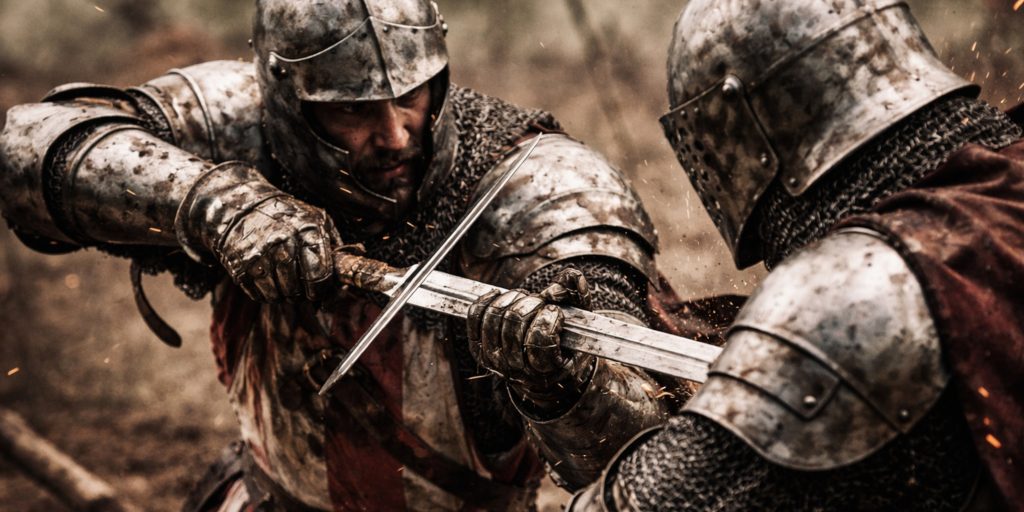
One of the greatest surprises for newcomers is half-swording.
Rather than gripping only the hilt, fighters deliberately grasped the middle of their own blade with one hand.
This seems alarming until one remembers that sword edges were not razor blades.
With gauntlets, or even bare hands applied correctly, gripping the flat of the blade was perfectly practical.
Half-swording transformed the weapon into a short spear.
It allowed precise thrusts into gaps around:
- The visor
- Armpits
- Elbows
- Neck
- Groin
- Knees
Against full plate armour, this proved vastly more effective than attempting to cut through steel.
Mordhau: Holding the Sword Backwards
Another technique often dismissed as fantasy is the Mordhau, or “murder stroke”.
The swordsman held the blade with both hands and struck using the crossguard or pommel like a hammer.
Against heavily armoured opponents, this generated tremendous concussive force.
Historical manuals clearly illustrate the technique.
Reality, once again, turns out to be stranger than fiction.
The Falchion
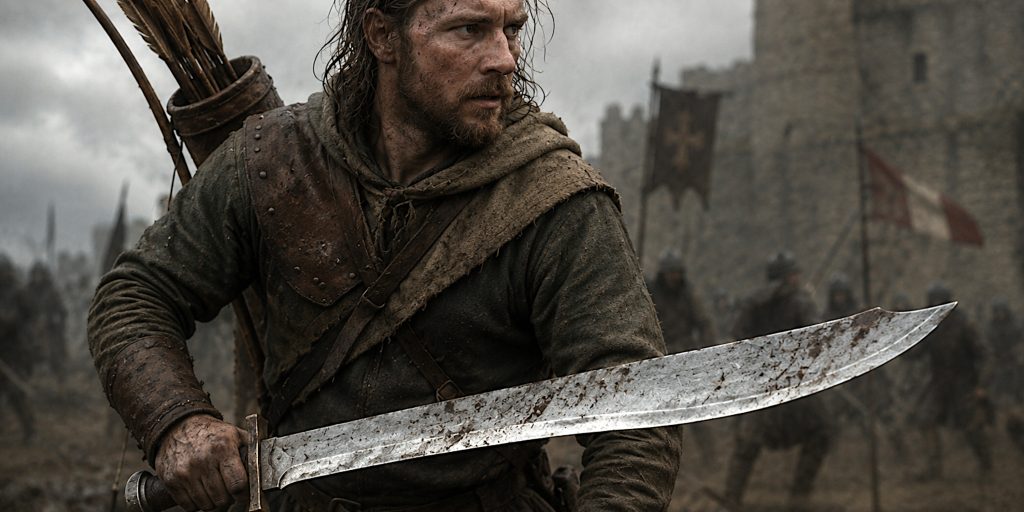
While longswords became increasingly refined, another family of weapons developed along a very different path.
Unlike the straight double-edged knightly sword, falchions possessed a single cutting edge.
Many broadened dramatically towards the tip, concentrating weight where it generated maximum cutting power.
They combined characteristics of swords and large knives.
Some resemble oversized machetes.
Others display graceful curves.
No single design defines the type.
Characteristics
| Feature | Description |
|---|---|
| Edge | Single |
| Primary Role | Powerful cutting |
| Users | Infantry, knights and civilians |
| Blade Shape | Straight or gently curved |
| Weight | Similar to arming swords |
Far from being crude peasant weapons, richly decorated falchions belonged to wealthy owners.
The magnificent Conyers Falchion, preserved in England, remains one of the finest surviving examples.
Why Choose a Falchion?
The broader blade produced fearsome cuts.
Against lightly armoured opponents it could inflict devastating injuries.
It also required less steel than some double-edged swords, making manufacture slightly simpler.
Modern testing suggests well-made falchions performed exceptionally well.
They deserve far greater recognition than they usually receive.
The Messer
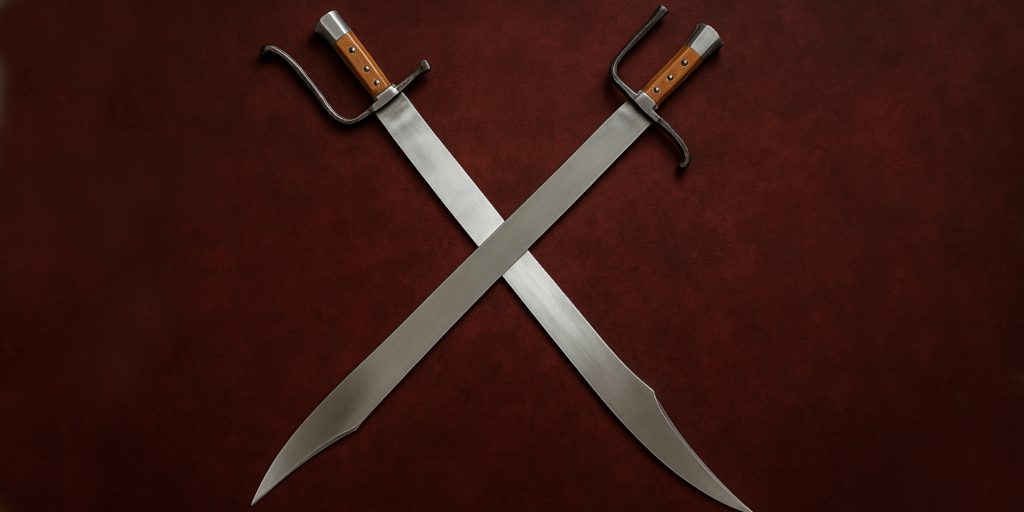
Closely related to the falchion was the messer.
The name simply means “knife” in German.
Legally, that mattered.
In some towns, knife makers rather than swordsmiths held the right to manufacture these weapons.
By classifying them as oversized knives, craftsmen could work around guild restrictions.
Medieval bureaucracy, it seems, has always possessed a certain creativity.
Features
Messers typically possessed:
- Single-edged blades
- Knife-style construction
- Nagel hand protection
- Excellent cutting performance
- Versatility for civilian and military use
The larger Kriegsmesser evolved into an impressive battlefield weapon capable of competing with longswords.
The Estoc
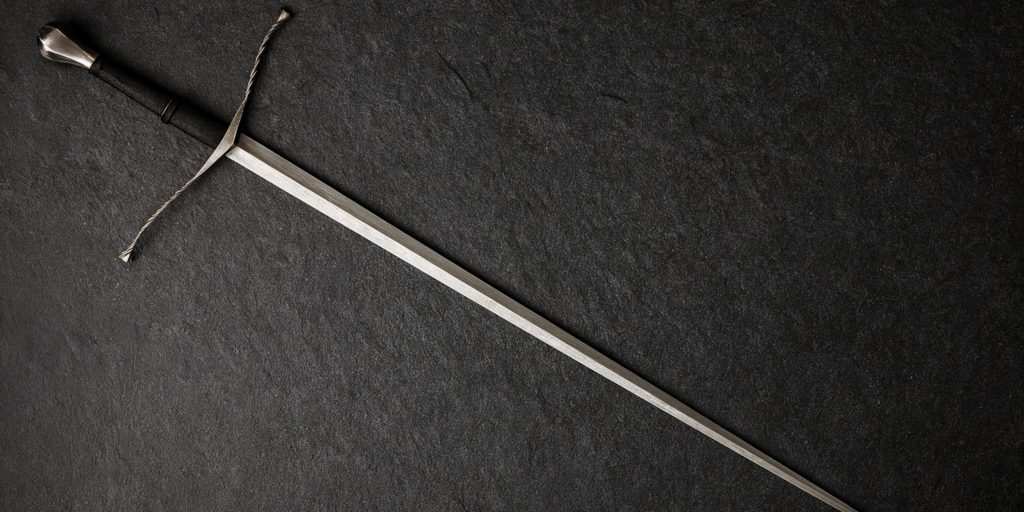
As plate armour spread during the fifteenth century, cutting became increasingly ineffective against elite opponents.
Swordsmiths responded with the estoc.
This was a specialised thrusting weapon.
Its blade featured little or no cutting edge.
Instead, it possessed:
- Thick cross-section
- Very stiff blade
- Acute point
- Exceptional penetration
The estoc aimed directly at weak points in armour.
Against unarmoured opponents it remained dangerous, but its true purpose lay in defeating the finest defensive equipment of its age.
Fighting Plate Armour
Modern films often show swords slicing effortlessly through steel breastplates.
History strongly disagrees.
Quality plate armour worked astonishingly well.
Instead of attempting impossible cuts, trained fighters:
- Targeted joints
- Used half-swording
- Wrestled opponents to the ground
- Employed daggers for finishing blows
- Used blunt force where necessary
Armoured combat resembled a wrestling match with sharp objects.
Elegant? Occasionally.
Exhausting? Almost certainly.
Great Swords
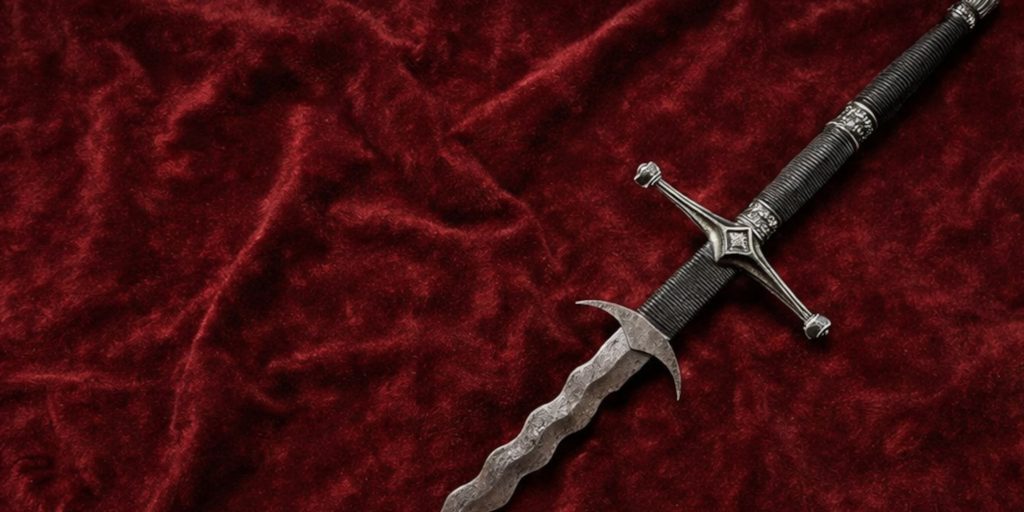
Towards the end of the medieval period, truly enormous swords appeared.
These included weapons later known as:
- Zweihänder
- Bidenhänder
- Montante
- Spadone
Most belong slightly beyond the medieval period, although their origins lie in late fifteenth-century developments.
They served specialised military roles.
Contrary to myth, soldiers did not carry them constantly.
Nor were they intended for hacking through ranks of pikes like agricultural machinery.
Instead they excelled at:
- Protecting standards
- Breaking formations
- Guarding narrow spaces
- Controlling distance
Experienced fighters could generate extraordinary reach with these weapons.
Beyond Europe: A Global Perspective
While Europe refined the longsword, remarkable sword traditions flourished elsewhere.
Each developed according to local warfare, available materials and cultural preferences.
None should be viewed as inherently superior.
Each solved different military problems.
The Byzantine Empire
The Byzantine Empire inherited Roman military traditions while absorbing influences from Persia, the Caucasus and the Islamic world.
Its armies used both straight and curved swords.
Among the most significant were:
- Spathion
- Paramerion
The spathion descended directly from the Roman spatha.
The paramerion developed into a curved cavalry weapon ideal for mounted warfare.
Byzantine armies fought an astonishing variety of enemies, from Vikings to Arabs and Turks.
Their weapons reflected this diversity.
The Islamic World
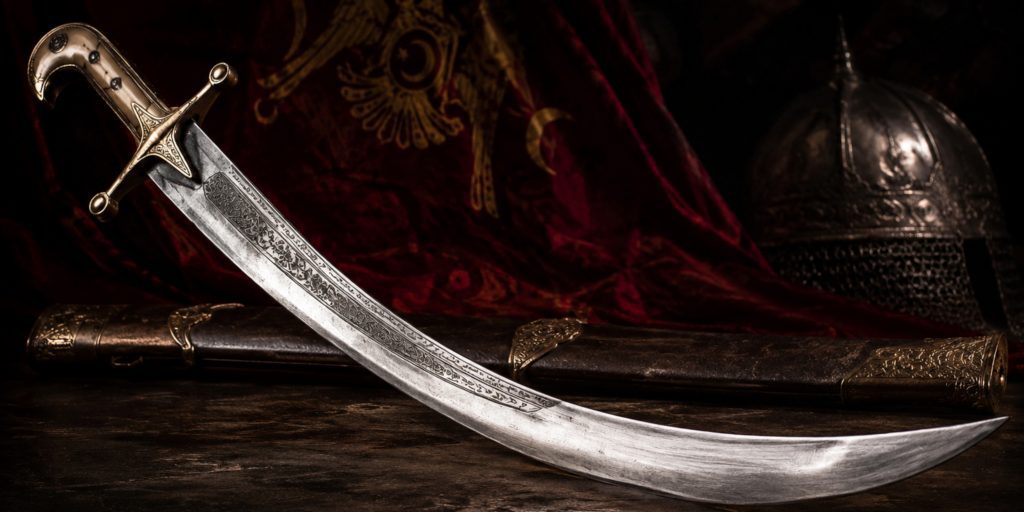
From Spain to Central Asia, Islamic civilisation produced some of the finest blades of the medieval world.
Sword designs varied enormously.
Straight swords remained common for centuries before curved sabres became increasingly popular.
Important examples include:
The Crusades introduced Europeans to these remarkable weapons.
Equally important was exposure to advanced steel production techniques.
The exchange of ideas worked both ways.
European blades also found their way east through trade and warfare.
Medieval India
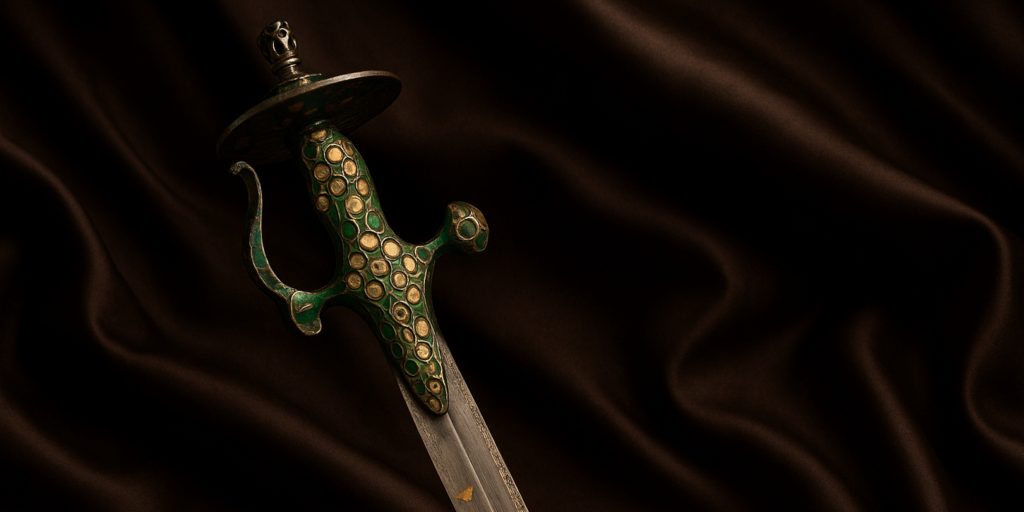
Few regions influenced swordmaking more profoundly than India.
Long before the Middle Ages, Indian craftsmen had developed advanced methods of producing crucible steel. This material would later become famous throughout the Islamic world and eventually Europe under the name wootz steel.
Indian swords evolved considerably throughout the medieval period.
Early medieval kingdoms often favoured relatively straight blades, while increasing contact with Central Asian cavalry traditions encouraged the adoption of curved forms.
Among the most significant medieval Indian swords were:
Some appeared before the end of the medieval period, while others became dominant during the transition into the early modern world.
The Khanda
The khanda remains one of India’s most distinctive swords.
Unlike many curved cavalry sabres, the khanda possessed:
- A broad double-edged blade
- A reinforced tip
- A basket-style hilt
- Excellent cutting power
Its wide blade delivered tremendous force, while the reinforced point allowed effective thrusting.
The weapon suited heavily armoured warriors and remained closely associated with Rajput martial traditions.
Wootz Steel
Indian crucible steel deserves special attention.
Rather than producing steel through repeated forging alone, Indian smiths melted carefully selected iron with carbon inside sealed crucibles.
The result was an exceptionally pure, high-carbon steel.
When forged correctly it displayed remarkable qualities:
- Fine edge retention
- High toughness
- Beautiful watered patterns
- Consistent internal structure
This steel travelled across Persia and the Middle East, eventually becoming associated with the famous Damascus blades admired by Crusaders.
The global reputation of medieval Islamic swords owes much to Indian metallurgy.
China
China possesses one of the world’s oldest continuous swordmaking traditions.
Throughout the medieval period, successive dynasties maintained sophisticated military industries capable of producing weapons on a remarkable scale.
Unlike Europe, where the sword gradually became a secondary battlefield weapon, Chinese armies employed a broader variety of bladed arms alongside spears, polearms, crossbows and cavalry weapons.
Two sword types dominated.
The Jian

The jian is often called the “gentleman of weapons.”
This elegant straight sword had already existed for centuries before the medieval era but continued evolving throughout the Tang and Song dynasties.
Characteristics included:
- Straight double-edged blade
- Excellent balance
- Precise thrusting ability
- Refined civilian and military use
The jian became associated with scholars, officers and martial artists.
Its graceful appearance should not obscure its effectiveness.
A well-made jian proved deadly in skilled hands.
The Dao
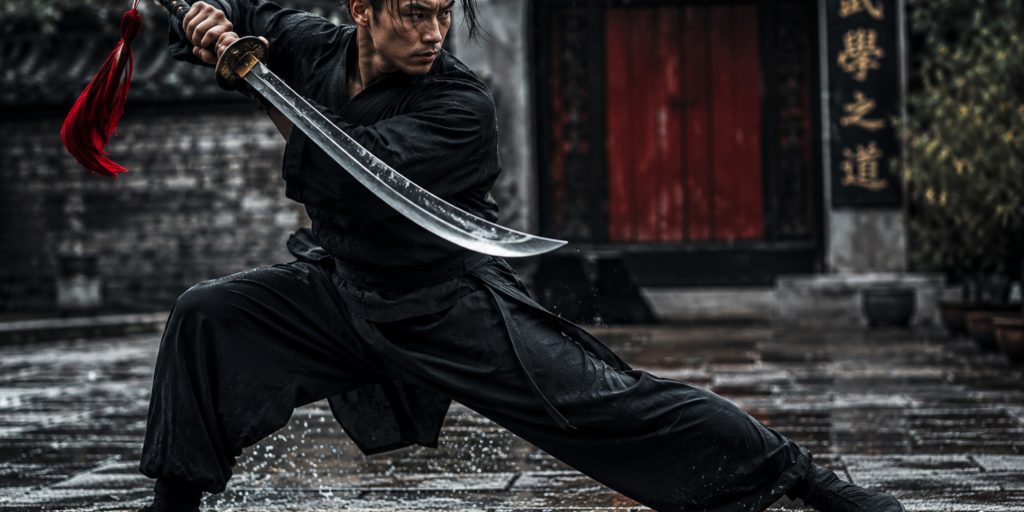
Where the jian emphasised precision, the dao prioritised battlefield practicality.
Typically featuring:
- Single-edged blades
- Slight curvature
- Strong cutting power
- Durable construction
The dao became increasingly common among soldiers.
Many later sabres across East Asia drew inspiration from Chinese developments.
Its influence spread through trade, diplomacy and warfare.
Japan
No medieval sword attracts greater attention than the Japanese katana.
Its reputation is deserved in many respects.
Its mythology often goes rather further.
The katana did not appear suddenly.
It evolved from earlier Japanese swords, particularly the tachi.
The changing nature of warfare gradually encouraged shorter, more versatile blades that could be drawn quickly from the belt.
The Samurai Sword
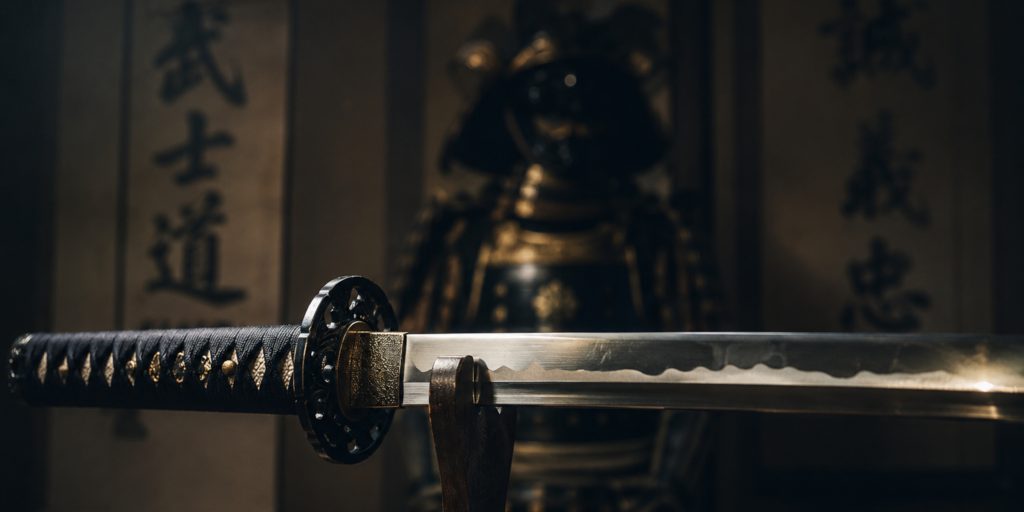
Japanese swordsmiths pursued extraordinary levels of craftsmanship.
Typical construction involved:
- Folding steel repeatedly
- Differential hardening
- Clay tempering
- Careful polishing
- Individual mounting
The famous hamon, or temper line, resulted from differential hardening.
The edge became extremely hard.
The spine remained comparatively flexible.
This balance reduced the likelihood of catastrophic breakage.
Were Katana the Greatest Swords Ever Made?
This question appears surprisingly often.
The honest answer disappoints people hoping for a simple ranking.
Katana were exceptional weapons.
So were European longswords.
So were high-quality Islamic blades.
So were Indian crucible steel swords.
Each reflected different priorities.
European swords generally displayed greater flexibility.
Japanese swords often possessed extremely hard cutting edges.
Neither characteristic automatically made one superior.
Modern testing consistently demonstrates that well-made historical swords from multiple cultures perform remarkably well within the conditions for which they were designed.
The medieval world produced many masterpieces.
There was no single champion.
Korea
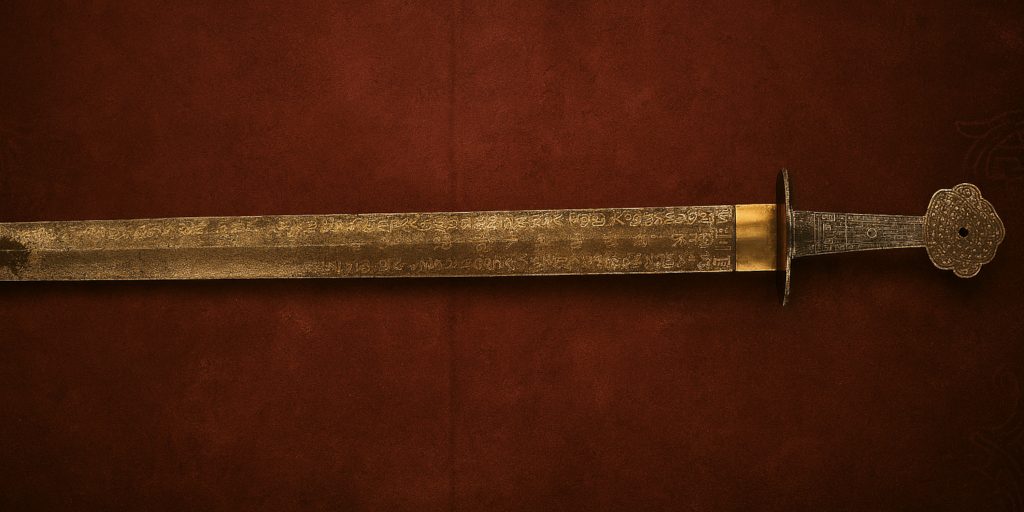
Korean sword traditions are frequently overshadowed by neighbouring China and Japan.
That is unfortunate.
During the Goryeo Dynasty, Korea developed sophisticated military equipment influenced by both neighbouring powers while maintaining distinctive local styles.
Korean swords generally featured:
- Straight or gently curved blades
- Functional military designs
- High-quality steel
- Excellent craftsmanship
Many examples have unfortunately been lost through successive invasions, limiting the archaeological record.
Southeast Asia
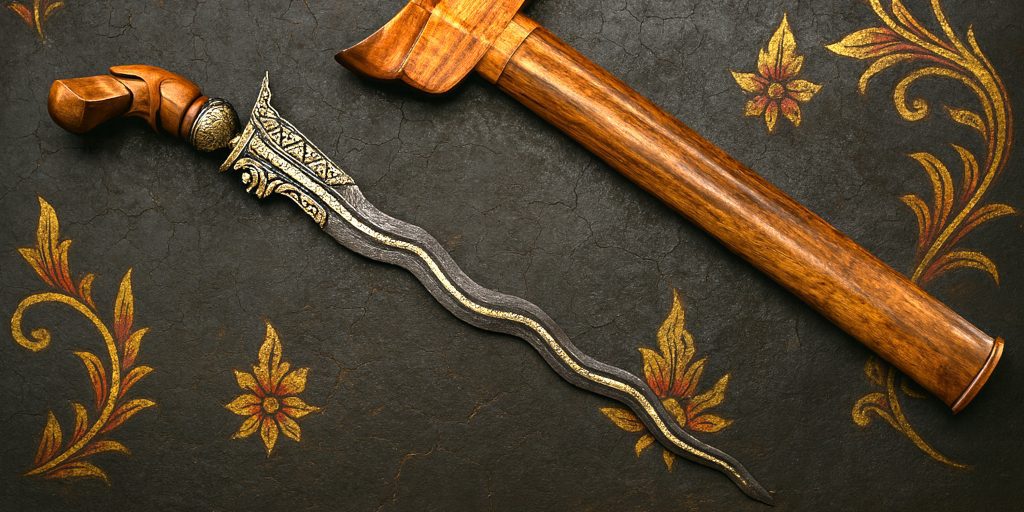
Across Southeast Asia, swords reflected tropical environments and distinctive military traditions.
Notable weapons included:
The kris deserves particular mention.
Its wavy blade has become iconic, although straight examples were equally common.
Beyond military use, many kris served ceremonial and spiritual roles.
Some were regarded almost as family members.
The relationship between owner and weapon could become deeply personal.
Medieval Africa
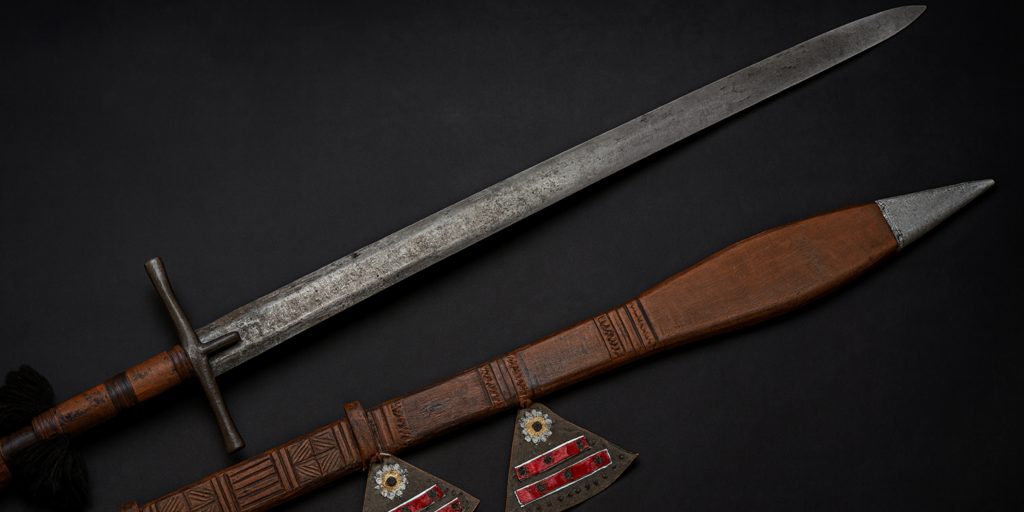
Africa’s sword traditions receive far less attention than they deserve.
This owes more to historical bias than lack of evidence.
Across North Africa, Islamic influence encouraged sophisticated sword production closely linked to wider Mediterranean trade.
Further south, numerous kingdoms developed their own distinctive weapons.
Examples include:
Many combined local traditions with influences arriving through trade across the Sahara.
Ironworking flourished in several African civilisations long before European contact.
Swordsmiths adapted designs to local warfare rather than simply copying foreign examples.
Ethiopian Swords
Medieval Ethiopia maintained one of Africa’s longest surviving Christian kingdoms.
Its warriors employed several sword forms alongside spears and shields.
Later weapons such as the shotel became famous for their dramatically curved blades, although their greatest prominence belongs slightly after the medieval period.
Even so, Ethiopian metallurgy and military traditions formed an important part of Africa’s martial history.
How Medieval Swords Were Made

Creating a fine sword demanded extraordinary patience.
The popular image of a blacksmith hammering glowing steel captures only a fraction of the process.
Production typically involved:
- Smelting ore
- Refining iron
- Producing steel
- Forging the blade
- Heat treatment
- Grinding
- Polishing
- Hilt construction
- Final assembly
Each stage required specialist knowledge.
Mistakes made early in the process often remained hidden until the sword was almost complete.
Weeks of work could disappear with one unfortunate crack during hardening.
The pressure must have been considerable.
One can only imagine the vocabulary occasionally employed inside medieval workshops.
Selecting the Steel
Not all iron was suitable.
Smiths judged materials through experience.
Good steel required the correct carbon content.
Too little produced soft blades.
Too much created brittleness.
Achieving the correct balance represented one of the greatest skills of medieval metallurgy.
Long before chemistry explained carbon percentages, experienced craftsmen understood the practical results.
Knowledge passed from master to apprentice over generations.
Forging the Blade
Once suitable steel had been prepared, the blade took shape through repeated heating and hammering.
This process:
- Refined the grain
- Removed impurities
- Formed the profile
- Improved consistency
Contrary to popular belief, hammering alone did not magically strengthen steel.
The real expertise lay in controlling temperature and heat treatment.
This separated competent smiths from exceptional ones.
Heat Treatment
Perhaps no stage mattered more.
The blade was heated carefully before being quenched.
Depending upon the desired characteristics, smiths used:
- Water
- Oil
- Brine
- Other locally available materials
Quenching hardened the steel.
Tempering then reduced brittleness by reheating to a lower temperature.
The correct balance produced blades capable of surviving repeated impacts without snapping.
Successful heat treatment relied almost entirely upon experience.
There were no thermometers.
Only colour, sound and judgement.
The Hilt
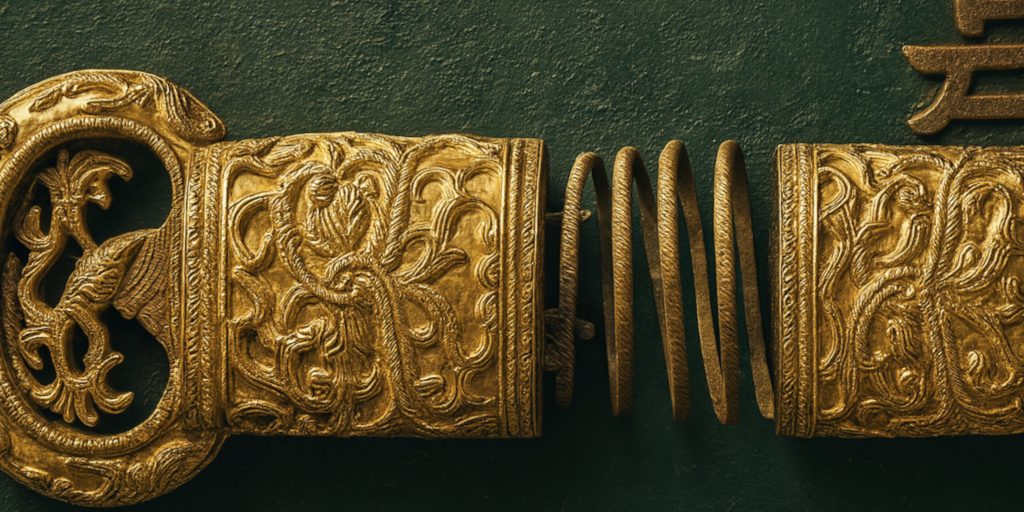
Many surviving swords have lost their original grips.
The steel survives.
Wood and leather rarely do.
A complete medieval hilt generally included:
- Wooden grip core
- Leather covering
- Crossguard
- Tang
- Pommel
The pommel served several functions.
It balanced the blade.
Secured the hilt.
Sometimes acted as a striking surface.
Its shape also evolved continually through the medieval period.
Oakeshott classified dozens of pommel forms, each helping historians date surviving swords.
Decoration and Prestige
Elite swords frequently became works of art.
Decoration included:
- Gold inlay
- Silver wire
- Copper alloys
- Religious inscriptions
- Family heraldry
- Precious stones
These additions rarely affected performance.
They reflected prestige.
A noble’s sword communicated wealth long before its owner drew it from the scabbard.
In many ways, it functioned as both weapon and jewellery.
Although considerably more dangerous than most jewellery.
The Beginning of the End
The medieval sword did not disappear because it suddenly became ineffective.
Its decline was gradual, uneven and shaped by changes that transformed warfare across Europe, Asia and much of the wider world.
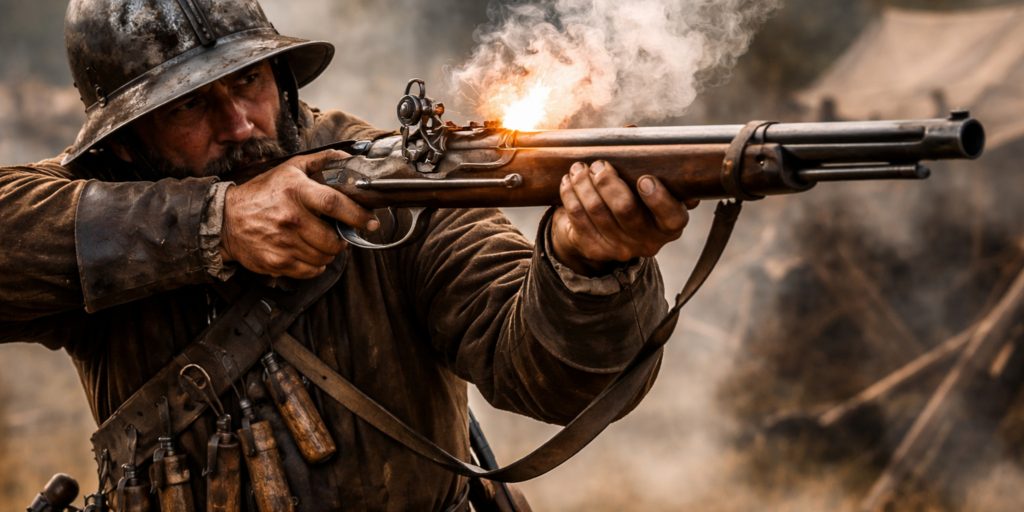
By the late fifteenth century, armies were becoming larger, more disciplined and increasingly dependent upon specialist troops. Gunpowder weapons improved steadily, while pike formations dominated many battlefields. Armour reached its technical peak just as firearms began making even the finest harnesses less practical.
The sword remained important.
It simply ceased to be the battlefield’s most influential weapon.
That distinction belonged increasingly to pikes, arquebuses, cannons and organised infantry.
The sword adapted where it could.
Eventually, military technology moved on.
Why Swords Became Obsolete
Several developments contributed to the decline of the medieval sword.
Gunpowder Weapons
Early firearms were slow, inaccurate and unreliable.
They were also improving.
Every generation brought stronger barrels, better ignition systems and greater battlefield effectiveness.
Armour that could stop an arrow often struggled against a lead ball.
Eventually, producing armour thick enough to resist firearms became impractical.
Without heavy armour, sword design also changed.
This marked the transition into the civilian and military swords of the Renaissance.
Pike Warfare
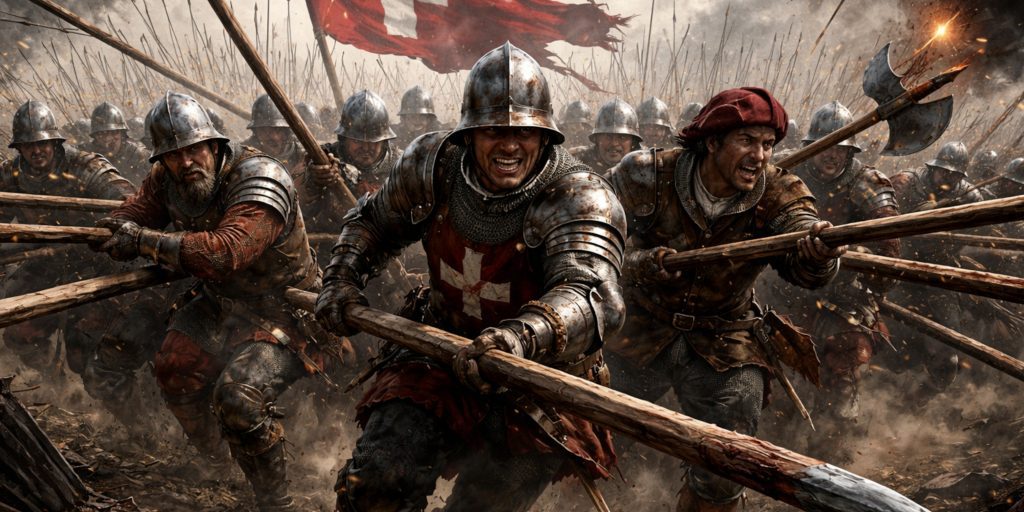
Swiss and German infantry demonstrated that disciplined formations armed with long pikes could defeat mounted knights.
The reach advantage was overwhelming.
Closing the distance with only a sword became extremely dangerous.
The sword survived as a sidearm.
The pike became the primary weapon.
Professional Standing Armies
Feudal levies gradually gave way to professional soldiers.
Training focused increasingly on formation fighting rather than individual heroics.
Commanders valued discipline above personal combat skill.
This reduced the battlefield importance of individual swordsmen.
The age of the lone knight deciding the course of battle was fading.
It had always been rarer than legend suggests.
The Sword Lives On
Ironically, the sword became more symbolic as it became less decisive in war.
European officers continued carrying swords into the twentieth century.
Royal ceremonies still feature ceremonial swords today.
Many military academies issue swords during graduation parades.
Judges, mayors and universities retain ceremonial examples dating back centuries.
The weapon that once settled battles now often represents justice, honour or public office.
Its practical role changed.
Its symbolic power endured.
Medieval Sword Myths
Centuries of fiction have created several persistent misconceptions.
Some are entertaining.
Most are historically inaccurate.
Myth: Medieval Swords Were Extremely Heavy
Reality says otherwise.
The vast majority of surviving medieval swords weigh between one and one and a half kilograms.
Even many longswords rarely exceed 1.8 kilograms.
Only specialised great swords approach truly substantial weights.
Well-balanced swords feel surprisingly agile.
Medieval warriors expected to fight for extended periods.
No sensible weapon designer would create unnecessary fatigue.
Myth: Swords Could Cut Through Plate Armour
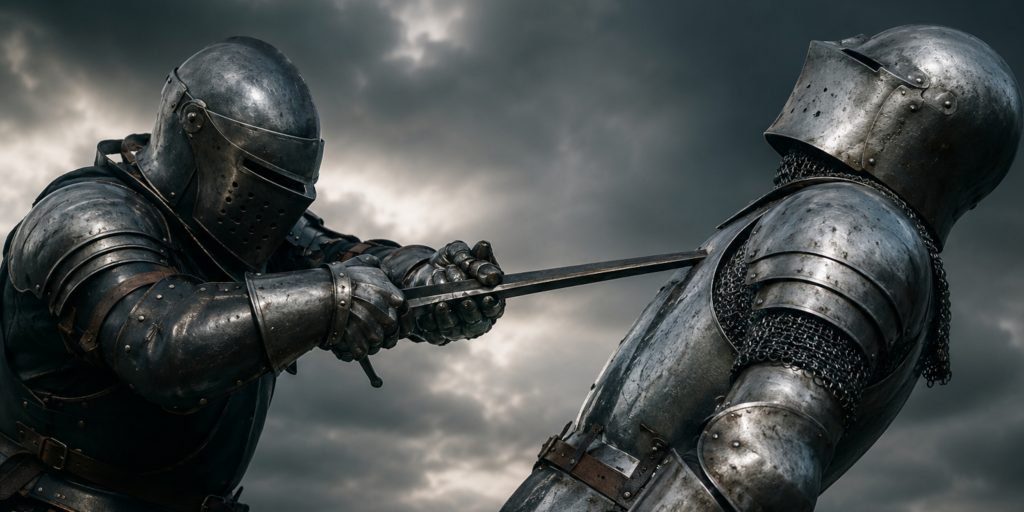
No.
High-quality plate armour was exceptionally effective.
Historical fencing manuals consistently teach fighters to:
- Thrust into gaps
- Wrestle opponents
- Use daggers
- Employ half-sword techniques
- Strike with the hilt
Trying to chop directly through a breastplate would have achieved little beyond exhausting the attacker.
Myth: Katana Could Cut Through European Swords
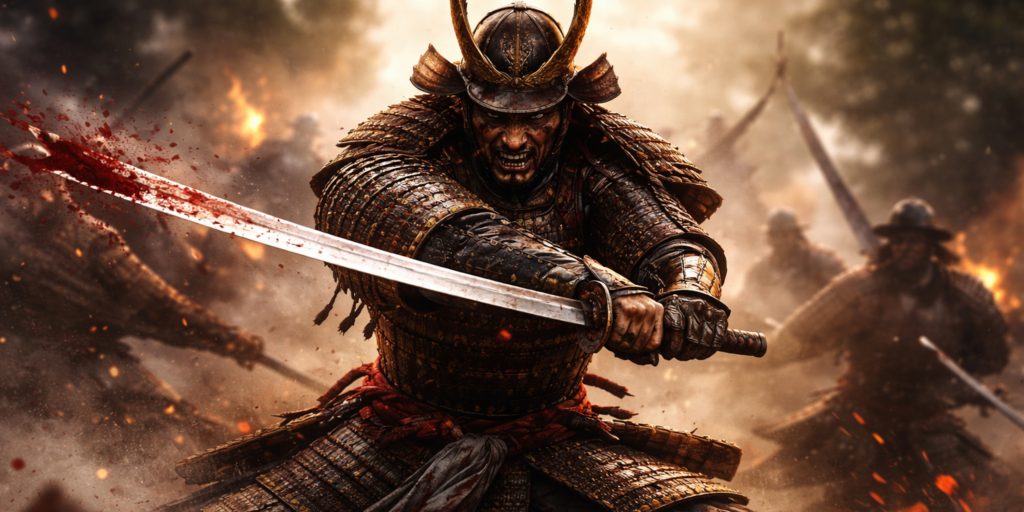
There is no historical evidence supporting this popular claim.
European and Japanese swords used different steels, different heat treatments and different design philosophies.
Both performed extremely well within their intended roles.
Modern destructive tests designed for internet entertainment tell us very little about historical combat.
Real warriors were considerably more interested in surviving than producing spectacular sparks for an audience.
Myth: Every Knight Owned an Elaborate Sword
Many did.
Many did not.
Swords represented valuable possessions.
They were expensive.
A wealthy noble might own several.
A poorer man-at-arms could possess only one throughout his life.
Some infantry soldiers carried none at all.
Spears remained far cheaper.
Myth: Medieval People Constantly Fought with Swords
The sword certainly appeared in war, self-defence and judicial combat.
Daily life, however, involved farming, trading, travelling, praying, building and paying taxes.
Most swords spent far more time hanging quietly from belts or walls than being swung dramatically through the air.
History is usually less theatrical than cinema.
What Archaeology Has Revealed
Archaeology has transformed our understanding of medieval swords.
Many assumptions based upon artwork and later tradition have been corrected by excavated evidence.
Some of the most important discoveries include:
- Viking river burials
- Anglo-Saxon graves
- Crusader castle finds
- Battlefield excavations
- Medieval urban excavations
- Castle armouries
- River deposits
These discoveries reveal how swords were manufactured, repaired, decorated and eventually discarded.
Some also preserve remarkable evidence of combat damage.
Bent blades.
Broken points.
Edge chips.
Each tells part of a story that written records often omit.
River Discoveries
A surprising number of medieval swords have been recovered from rivers.
Several explanations exist.
Some were accidental losses.
Others may represent ritual deposits.
Throughout European history, rivers frequently held religious significance.
The practice stretches back into the Bronze Age and Iron Age.
Even during the Middle Ages, valuable weapons occasionally found their way into water for reasons that remain uncertain.
Archaeologists continue debating individual finds.
History does not always provide convenient answers.
Battlefield Archaeology
Sites such as:
- Visby
- Towton
- Wisby Harbour
- Castillon
have revealed valuable evidence about medieval warfare.
Combined with skeletal analysis, surviving weapons allow historians to reconstruct:
- Injury patterns
- Armour effectiveness
- Fighting styles
- Weapon damage
- Battlefield organisation
Every excavation adds another piece to the puzzle.
Sometimes that puzzle has been buried for six hundred years.
Famous Medieval Swords That Survive
Relatively few medieval swords remain in excellent condition.
Those that do provide extraordinary insight into historical craftsmanship.
Among the most famous are:
| Sword | Date | Current Location |
|---|---|---|
| The Sword of St Maurice | 13th century | Vienna, Austria |
| Conyers Falchion | 13th century | Durham Cathedral, England |
| Wallace Sword | Traditionally 13th century | Stirling, Scotland |
| River Witham Sword | 10th century | British Museum |
| Numerous Ulfberht Swords | 9th to 11th centuries | Museums across Europe |
Many others survive in national collections throughout Germany, France, Italy, Sweden, Norway, Denmark and Spain.
Where to See Medieval Swords
For anyone interested in historical arms, several museums possess exceptional collections.
Europe
- Royal Armouries, Leeds
- British Museum, London
- Wallace Collection, London
- Germanisches Nationalmuseum, Nuremberg
- Musée de l’Armée, Paris
- Kunsthistorisches Museum, Vienna
- National Museum of Denmark, Copenhagen
Asia
- Tokyo National Museum
- Kyoto National Museum
- National Museum of Korea
- National Museum, New Delhi
- Palace Museum, Beijing
These collections demonstrate both regional diversity and shared craftsmanship across the medieval world.
Seeing original swords in person is an entirely different experience from viewing photographs.
The balance, proportions and fine details become immediately apparent.
Many visitors are surprised by how elegant they appear.
How Modern Historians Study Medieval Swords
Research no longer relies solely upon surviving weapons.
Modern historians combine evidence from multiple disciplines.
These include:
- Archaeology
- Metallurgy
- Experimental archaeology
- Historical documents
- Artwork
- Museum conservation
- CT scanning
- X-ray analysis
- Chemical testing
Experimental archaeology has become particularly valuable.
Replica swords, produced using historical techniques, allow researchers to test:
- Cutting ability
- Durability
- Heat treatment
- Balance
- Edge retention
These experiments help answer questions impossible to resolve through written evidence alone.
Historical European Martial Arts
One of the most exciting developments in recent decades has been the growth of Historical European Martial Arts, commonly known as HEMA.
Drawing upon surviving fencing manuals, practitioners reconstruct historical combat systems.
This has changed academic understanding significantly.
Techniques once dismissed as unrealistic now prove entirely practical when performed correctly.
Scholars and martial artists increasingly work together.
It is an excellent reminder that books and museums do not preserve history on their own.
Sometimes history needs to be picked up, carefully, with appropriate protective equipment.
Timeline of Medieval Sword Development
| Period | Major Development |
|---|---|
| 5th Century | Migration Era swords emerge after Rome |
| 8th to 11th Century | Viking swords dominate northern Europe |
| 11th Century | Norman knightly swords spread |
| 12th Century | Classic arming sword reaches maturity |
| 13th Century | Oakeshott Type XII and XIII become widespread |
| 14th Century | Longsword becomes increasingly common |
| 15th Century | Estocs and specialised armour fighting swords flourish |
| Late 15th Century | Firearms begin changing battlefield tactics |
| Early 16th Century | Medieval sword traditions transition into Renaissance weapons |
The Medieval Sword’s Enduring Legacy
The medieval sword survives because it represents something larger than warfare.
It embodies craftsmanship.
Discipline.
Responsibility.
Status.
Faith.
Power.
Identity.
Few historical objects combine engineering, art and symbolism so successfully.
Perhaps that explains why museums devote entire galleries to swords while relatively few visitors gather around medieval agricultural equipment.
The plough undoubtedly fed more people.
The sword simply tells a more dramatic story.
Frequently Asked Questions
What was the most common medieval sword?
The arming sword was probably the most widespread knightly sidearm between the eleventh and fourteenth centuries.
What was the strongest medieval sword?
There is no universally strongest design. Performance depended upon construction quality and intended purpose rather than a single blade type.
Did Vikings really use swords?
Yes, although relatively few Vikings could afford one. Spears and axes remained much more common.
Was the longsword used with one hand?
Yes. Although designed primarily for two-handed use, historical manuals show one-handed techniques when circumstances required.
Were medieval swords razor sharp?
They were certainly sharp enough for combat, but not usually sharpened like modern razors. Durability mattered as much as cutting ability.
Could medieval swords break?
Yes. Poor manufacture, severe impacts or battlefield abuse could damage even excellent blades. High-quality swords, however, proved remarkably durable.