Historical European Martial Arts, better known as HEMA, is one of those hobbies that quietly pulls people in and then refuses to let go. One minute you’re watching a video of two people fencing with longswords, the next you’re reading a 600 year old manuscript while trying to justify why another sword is an entirely sensible purchase.
Unlike stage combat or fantasy sword fighting, HEMA is built upon surviving historical fencing manuals. Practitioners reconstruct forgotten martial systems using original treatises, archaeological evidence and decades of practical experimentation. It is equal parts history lesson, sporting challenge and detective work.
As a historian, I find that combination irresistible. There is something deeply satisfying about seeing techniques described by a fifteenth century master actually work in modern sparring. It reminds us that these were not theatrical flourishes. They were practical skills developed by people whose lives genuinely depended upon them.
Fortunately, getting started is far easier than many people imagine.
What Is HEMA?
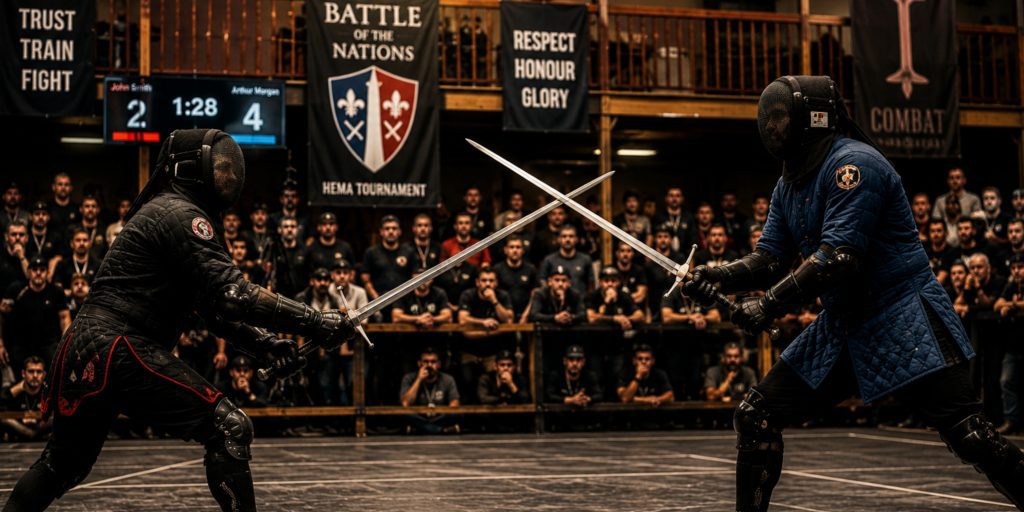
Historical European Martial Arts is the study and practice of European fighting systems from roughly the thirteenth through the seventeenth centuries, although some schools extend into the eighteenth and nineteenth centuries.
Rather than inventing techniques, HEMA practitioners reconstruct them from historical sources, including:
- Medieval fencing manuals
- Renaissance combat treatises
- Military training texts
- Personal combat manuscripts
- Contemporary artwork and illustrations
- Archaeological evidence
Training usually combines:
- Technical drills
- Partner exercises
- Controlled sparring
- Physical conditioning
- Historical research
- Tournament competition
Think of it as learning a historical language, except the vocabulary occasionally involves someone attempting to hit you with a steel sword.
A Brief History of HEMA

For centuries, Europe possessed sophisticated martial traditions taught by professional fencing masters. Noblemen, soldiers, mercenaries and civilians all studied weapon combat for warfare, self-defence and judicial duels.
Masters such as Johannes Liechtenauer, Fiore dei Liberi and Joachim Meyer recorded their teachings in beautifully illustrated manuscripts that survived in libraries across Europe.
As firearms became dominant and civilian duelling declined, many of these traditions disappeared. By the nineteenth century, only fragments remained through classical fencing.
The modern HEMA movement began in the late twentieth century when historians and martial artists started translating surviving manuscripts and testing their techniques in practice.
Today, thousands of clubs exist worldwide, with international tournaments attracting competitors from dozens of countries.
Why HEMA Has Become So Popular
HEMA appeals to an unusually broad mix of people.
Some arrive because they love medieval history.
Others come from Olympic fencing, kendo, martial arts or historical reenactment.
Many simply grew up wanting to know whether sword fighting actually worked the way films suggested.
The answer, incidentally, is usually no.
Real historical fencing tends to be quicker, more efficient and far less interested in dramatic spinning attacks.
Which Weapon Should Beginners Learn?
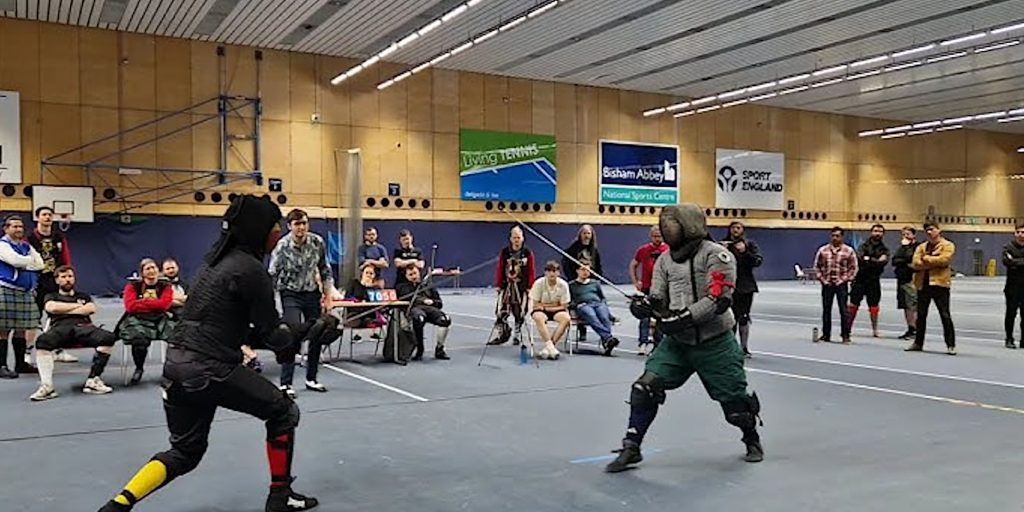
Every HEMA club has its own focus, but several weapons are particularly suitable for newcomers.
| Weapon | Beginner Friendly | Typical Training Weapon Cost (USD) | Why Learn It? |
|---|---|---|---|
| Longsword | Yes | $200 to $400 | Most popular discipline with abundant learning resources |
| Rapier | Yes | $150 to $350 | Excellent footwork and precision |
| Arming Sword and Buckler | Yes | $100 to $300 | Fast, technical and highly enjoyable |
| Sabre | Yes | $150 to $400 | Dynamic cutting and thrusting weapon |
| Messer | Yes | $150 to $350 | Versatile single-edged sword with practical techniques |
| Greatsword (Montante) | Advanced | $300 to $600 | Large weapon requiring excellent control |
Longsword remains the most common starting point because almost every HEMA club teaches it and the available historical material is extensive.
Essential Equipment for Beginners

One pleasant surprise for newcomers is that most clubs provide loan equipment during your first few sessions.
That means you do not need to arrive carrying £1,000 worth of armour.
A basic personal kit usually includes:
| Equipment | Purpose | Typical Cost (USD) |
|---|---|---|
| Synthetic or Steel Training Sword | Drills and practice | $50 to $300 |
| HEMA Gloves | Protect hands | $50 to $150 |
| Fencing Mask (350N minimum) | Head protection | $100 to $300 |
| Light HEMA Jacket | Upper body protection | $150 to $300 |
A realistic beginner investment ranges from $350 to $1,000, although borrowing equipment initially can reduce that considerably.
Full Sparring Equipment
Once you begin free sparring, you’ll need additional protection.
| Equipment | Purpose | Typical Cost (USD) |
|---|---|---|
| Heavy HEMA Jacket | Full contact protection | $250 to $500 |
| Padded Trousers | Leg protection | $100 to $250 |
| Gorget | Neck protection | $50 to $100 |
| Heavy Sparring Gloves | Hand protection | $100 to $250 |
| Breeches | Mobility and durability | $80 to $200 |
| Chest Protector | Optional additional protection | $30 to $80 |
A complete sparring kit generally costs between $800 and $1,500.
Quality equipment lasts many years and is well worth the investment if you intend to compete regularly.
How Much Does HEMA Cost?
Compared with many sports, HEMA is surprisingly affordable.
| Expense | Typical Cost (USD) | Frequency |
|---|---|---|
| Club Membership | $50 to $150 | Monthly |
| Workshops | $50 to $300 | Per event |
| Private Lessons | $30 to $100 | Per hour |
A committed practitioner might spend $600 to $1,800 annually, excluding travel and tournament expenses.
Many clubs also offer reduced rates for students or discounted annual memberships.
A Budget Starter Kit
If you’re unsure whether HEMA is for you, keep spending modest until you’ve attended a few months of classes.
| Equipment | Approximate Cost |
|---|---|
| Fencing Mask | $100 |
| Basic Gloves | $50 |
| Synthetic Sword | $80 to $150 |
| Borrow Club Equipment | Usually Free |
A sensible starter budget sits around $250 to $400.
It is far better to buy gradually than rush into expensive equipment you’ll later replace.
Choosing Between Steel and Synthetic Swords
Synthetic swords are inexpensive, durable and ideal for beginners learning technique.
Steel feders provide the closest experience to historical fencing. Their balance, handling and flexibility better replicate real swords.
If you remain committed after several months of training, upgrading to a quality steel feder makes perfect sense.
Until then, synthetic swords are excellent learning tools.
Safety Always Comes First
HEMA looks intimidating, but reputable clubs place enormous emphasis on safety.
Rules are clear:
- Wear appropriate protective equipment.
- Respect your training partner.
- Control your strikes.
- Stop immediately if equipment fails.
- Listen to instructors.
No experienced fencer is impressed by someone trying to hit as hard as possible.
Good control is infinitely more respected than brute force.
Finding the Right Club
The quality of instruction matters far more than the quality of your first sword.
Look for clubs that:
- Welcome beginners
- Maintain strong safety standards
- Encourage respectful training
- Offer structured lessons
- Have experienced instructors
- Provide loan equipment
Visit several clubs if possible.
Every group develops its own culture, and finding one where you enjoy training is invaluable.
Learning from Historical Manuals
One of HEMA’s greatest strengths is its direct connection to surviving historical texts.
Among the most influential are:
- Fiore dei Liberi, whose Fior di Battaglia remains a cornerstone of Italian martial arts.
- Johannes Liechtenauer, whose teachings shaped the German longsword tradition.
- Joachim Meyer, whose sixteenth century manuals bridge martial practicality and sporting fencing.
Reading the original sources adds remarkable depth to your training.
There is a quiet thrill in recognising a technique during sparring that you first encountered in a manuscript written over five hundred years ago.
Fitness for HEMA
You do not need to arrive in peak athletic condition.
Regular training naturally develops:
- Cardiovascular fitness
- Leg strength
- Core stability
- Grip strength
- Coordination
- Balance
- Flexibility
Many beginners are surprised to discover that sword fighting is largely about footwork.
Your legs often tire long before your arms.
Common Beginner Mistakes
Almost everyone makes the same early errors.
- Trying to win every exchange.
- Ignoring footwork.
- Swinging too hard.
- Buying expensive equipment too early.
- Watching too many films and expecting historical fencing to resemble them.
Hollywood is wonderfully entertaining.
It is also spectacularly unreliable as a fencing instructor.
Women in HEMA
HEMA continues to attract increasing numbers of female practitioners.
Modern clubs welcome participants regardless of age, size or athletic background. Technical ability consistently outweighs physical strength, particularly as experience grows.
Watching skilled fencers demonstrates that timing, distance and judgement remain far more decisive than raw power.
History itself supports this perspective. While surviving manuals were largely written for male audiences, European history contains numerous accounts of women training with weapons, defending castles and participating in armed conflict when circumstances demanded.
Recommended HEMA Equipment Manufacturers
Several manufacturers have built excellent reputations within the community.
| Supplier | Region | Known For |
|---|---|---|
| SPES | Poland | Protective clothing and gloves |
| Leon Paul | United Kingdom | Masks and fencing equipment |
| Regenyei Armory | Hungary | Steel feders and training swords |
| Black Armoury | France | Wide range of HEMA equipment |
| Purpleheart Armory | United States | Synthetic weapons and starter kits |
Whenever possible, speak with experienced club members before making purchases. They have usually made every expensive mistake already and are surprisingly happy to stop newcomers repeating them.
Is HEMA Worth It?
Absolutely.
HEMA offers something remarkably rare.
It is intellectually stimulating, physically demanding, socially welcoming and rooted in genuine historical scholarship. Every training session reveals another small piece of Europe’s martial heritage that might otherwise have remained confined to museum archives.
As a historian, I find enormous satisfaction in watching centuries old techniques come alive through modern practice. These manuscripts were never meant to gather dust behind glass. They were practical manuals written by experienced fighters, and every successful technique reminds us just how sophisticated medieval martial culture really was.
Besides, there are few hobbies where buying another sword is met with enthusiastic encouragement rather than puzzled concern. That may or may not be a positive influence on your bank balance, but it certainly keeps life interesting.