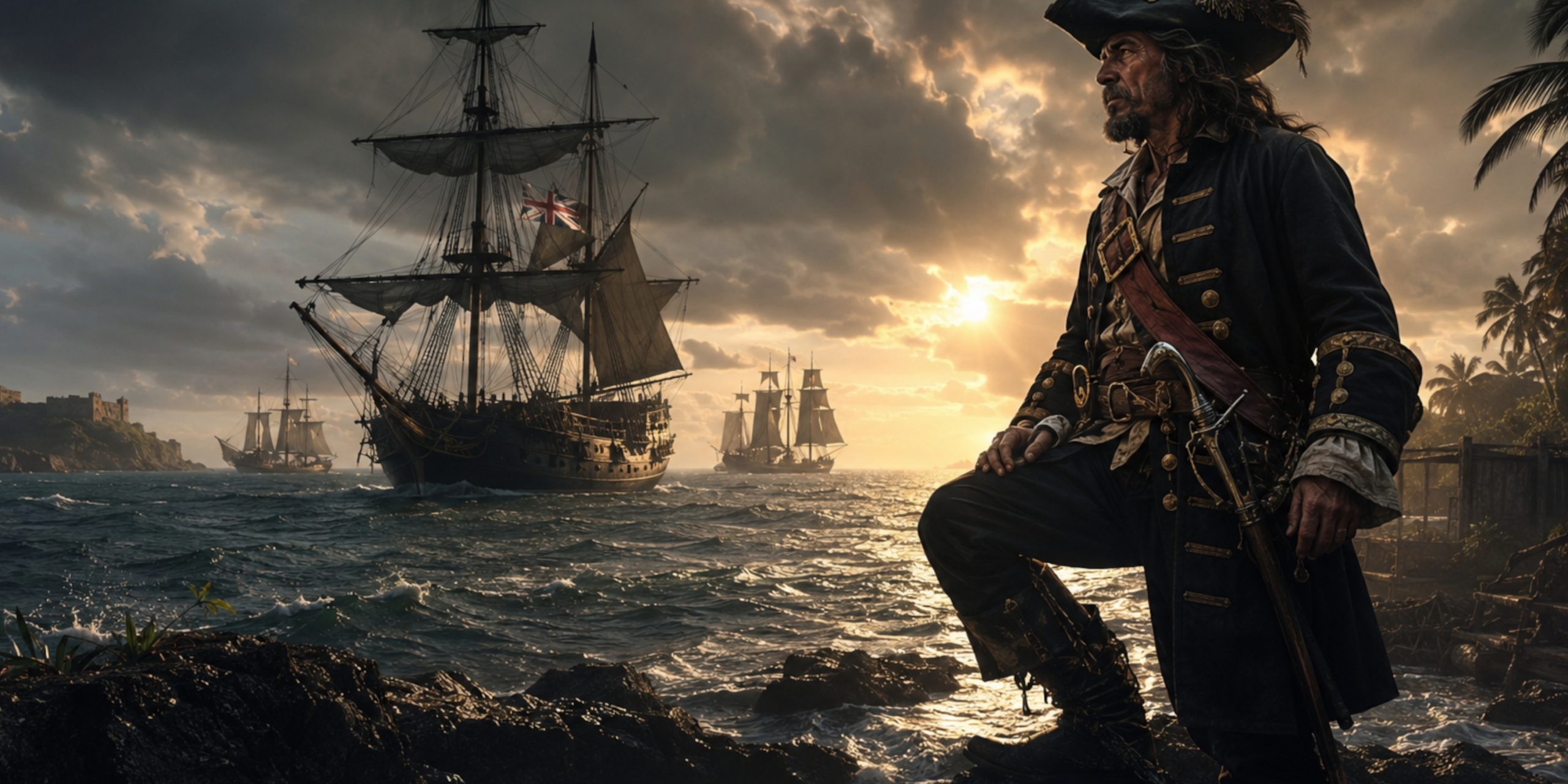
Few figures from the seventeenth century provoke as much debate as Sir Henry Morgan. To the Spanish, he was a ruthless raider whose name inspired fear across the Caribbean. To many English contemporaries, he was a daring privateer who helped secure England’s growing colonial ambitions. Modern audiences often remember him simply as a pirate, helped in no small part by rum bottles bearing his name, yet that label tells only part of the story.
Morgan’s career unfolded during an age when the distinction between piracy and privateering was often blurred by politics. One government’s outlaw could be another government’s celebrated naval commander. His spectacular attacks on Spanish settlements reshaped the balance of power in the Caribbean and contributed to England’s emergence as a dominant colonial force.
As a historian, I have always found Morgan fascinating because he refuses to fit neatly into any moral category. He could display remarkable tactical brilliance one week and shocking brutality the next. History has an irritating habit of producing complicated people.
Who Was Sir Henry Morgan?
| Detail | Information |
|---|---|
| Born | c.1635, Monmouthshire or Glamorgan, Wales |
| Died | 25 August 1688, Jamaica |
| Nationality | Welsh |
| Occupation | Privateer, naval commander, colonial administrator |
| Allegiance | Kingdom of England |
| Base of Operations | Port Royal, Jamaica |
| Highest Office | Lieutenant Governor of Jamaica |
| Best Known For | The raids on Porto Bello, Maracaibo and Panama City |
Early Life
Morgan’s origins remain surprisingly obscure for such a famous man. Most historians place his birth around 1635 in Wales, although the exact location remains disputed. Some sources favour Llanrhymny in Monmouthshire, while others point towards Glamorgan.
Little documentary evidence survives concerning his childhood. Contemporary accounts suggest he came from a reasonably respectable farming family rather than poverty. Stories claiming he was kidnapped and sold into indentured servitude in Barbados probably originated from later embellishments and cannot be confirmed.
By the mid-1650s, Morgan had reached the Caribbean, almost certainly during or shortly after the English conquest of Jamaica in 1655. England had wrestled the island from Spain under the Commonwealth government of Oliver Cromwell, creating a valuable base from which privateers could strike Spanish shipping.
For an ambitious young man with few prospects at home, the Caribbean offered opportunity in abundance, provided he possessed courage, leadership and a willingness to accept extraordinary risks.
Jamaica and the Rise of the Buccaneers
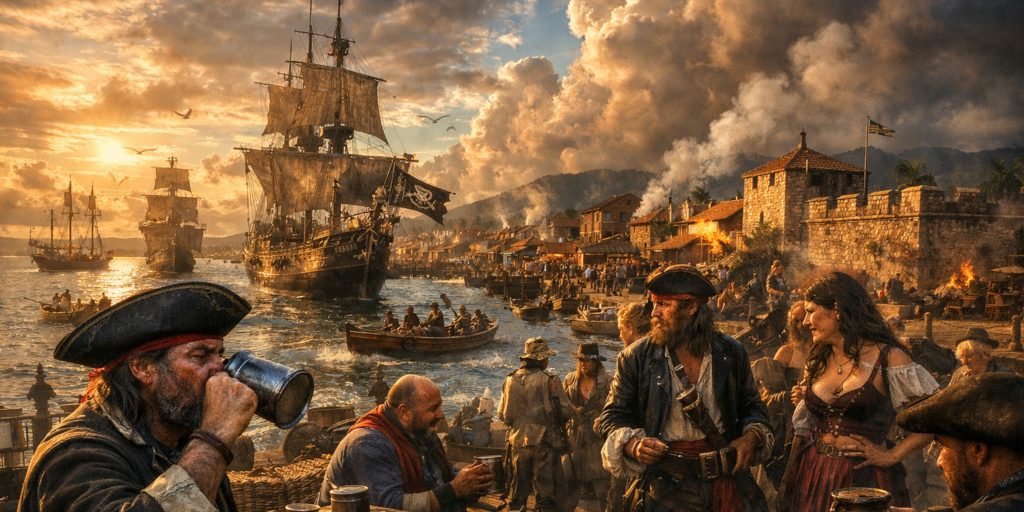
The Jamaica Morgan encountered was rough, underdeveloped and constantly threatened by Spanish retaliation. Port Royal quickly evolved into one of the busiest ports in the Caribbean and became famous for attracting merchants, sailors, soldiers and privateers.
Privateering differed from outright piracy because it operated under legal authority. Captains received letters of marque permitting them to attack enemy shipping during wartime. Of course, legality often depended entirely upon which flag happened to be flying.
Morgan rapidly established a reputation for discipline and leadership. Unlike many captains, he understood logistics, planning and intelligence gathering. Successful privateering required far more than bravery. It demanded organisation, diplomacy between fractious crews and careful coordination of naval and land operations.
The Dutch physician and writer Alexandre Exquemelin, who sailed among the buccaneers, later described Morgan as:
“A person of great courage and conduct.”
Although Exquemelin admired Morgan’s military skill, he was equally critical of his cruelty, producing one of the most influential contemporary accounts of Caribbean privateering.
The Capture of Porto Bello, 1668
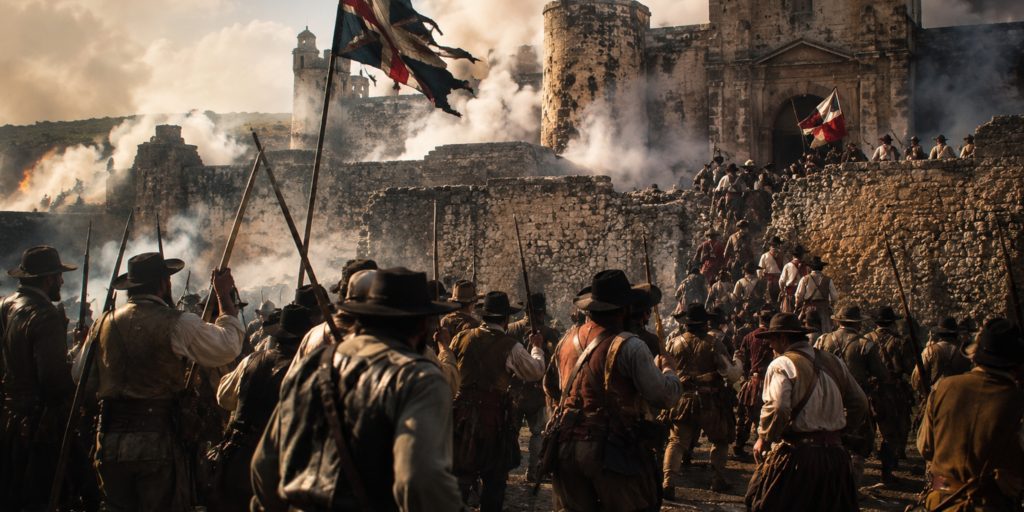
Morgan’s assault on Porto Bello established him as one of Europe’s most feared commanders.
The city was among Spain’s strongest ports in the Americas, protected by multiple forts and substantial artillery. Rather than launching a conventional siege, Morgan relied upon speed and surprise.
Landing roughly 450 to 500 men several miles away, he attacked from an unexpected direction, overwhelming the outer defences before the Spanish could properly respond.
Exquemelin claimed Morgan forced captured clergy and religious figures to carry scaling ladders towards the fortress walls. Whether every detail is accurate remains debated, but there is little doubt the assault was exceptionally ruthless.
The victory stunned Europe. England celebrated it enthusiastically, while Spain regarded it as an outrage.
Maracaibo and Gibraltar, 1669
Morgan’s next campaign demonstrated his ability as a naval tactician.
After capturing Maracaibo and Gibraltar on Lake Maracaibo, he found his escape blocked by three heavily armed Spanish warships positioned at the lake’s entrance.
Rather than surrender, Morgan constructed a fireship packed with explosives and combustible material.
When released against the Spanish flagship, it created chaos. One vessel exploded, another ran aground, while the remaining ship was abandoned. Morgan then deceived the Spanish governor into repositioning the harbour defences before escaping with his fleet.
It was an extraordinary display of improvisation and psychological warfare.
The March on Panama, 1671
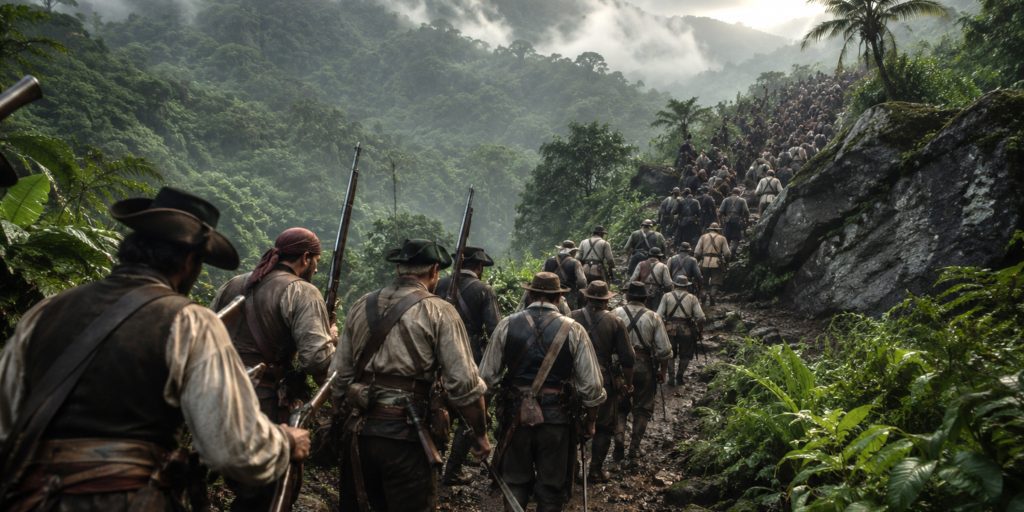
Morgan’s greatest victory also proved his most controversial.
Leading around 1,200 privateers from numerous nations, he crossed the Isthmus of Panama on foot in one of the largest land expeditions undertaken by Caribbean buccaneers.
After days of difficult marching through jungle, his force confronted a significantly larger Spanish army outside Panama City.
Despite numerical disadvantage, Morgan’s veterans broke the Spanish formations through disciplined musket fire and aggressive assaults.
The subsequent sack of Panama City became infamous.
Large sections of the city were destroyed by fire. Whether Morgan deliberately ordered the burning remains uncertain, although many contemporary witnesses blamed the privateers while others suggested accidental causes during the fighting.
The amount of treasure captured has long been disputed. Contemporary estimates ranged enormously, though the wealth seized included gold, silver, jewels, merchandise and enslaved people.
Spanish official reports described the devastation with horror.
“They spared neither churches nor houses.”
The attack achieved military success but created a diplomatic crisis because England and Spain had already signed the Treaty of Madrid, formally ending hostilities.
News simply travelled rather more slowly than an angry fleet.
Leadership and Military Ability
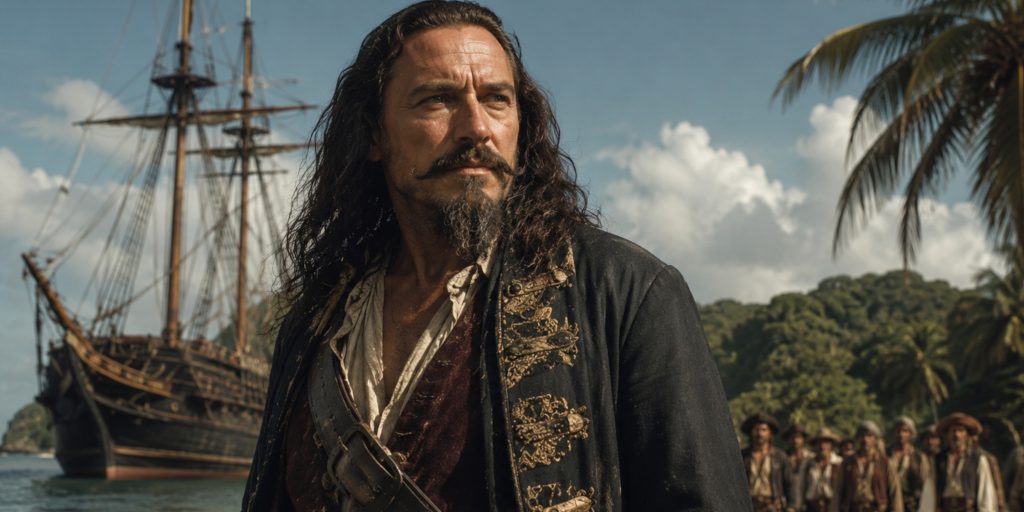
Morgan’s greatest weapon was neither his cutlass nor his ships.
It was planning.
His campaigns consistently demonstrated several strengths.
| Strength | Impact |
|---|---|
| Surprise attacks | Neutralised stronger fortifications |
| Strong discipline | Maintained cohesion among multinational crews |
| Intelligence gathering | Allowed careful planning before assaults |
| Naval flexibility | Enabled rapid movement between islands |
| Psychological warfare | Reduced enemy morale before battle |
Unlike many buccaneer captains, Morgan preferred carefully organised operations over reckless charges.
His success depended upon preparation as much as courage.
Ships and Weapons
Morgan commanded fleets rather than a single famous vessel.
During the Panama expedition, his flagship was Satisfaction, a captured frigate carrying substantial artillery.
His fleet included:
- Frigates
- Sloops
- Brigantines
- Armed merchant vessels
- Small coastal craft suitable for shallow Caribbean waters
His crews typically fought with:
- Flintlock pistols
- Matchlock and flintlock muskets
- Cutlasses
- Boarding axes
- Daggers
- Grenades
- Cannon loaded with round shot and grape shot
Fire ships became one of Morgan’s signature tactical weapons, particularly during the escape from Maracaibo.
Treasure and Wealth
Morgan accumulated enormous wealth throughout his career, although precise figures remain impossible to calculate.
The Panama campaign alone generated vast quantities of bullion, silver, trade goods and valuables.
Rumours that Morgan buried treasure on secret Caribbean islands have never been supported by historical evidence.
Like most privateering profits, the wealth was divided among investors, officers and crews, spent rapidly or invested in land and property.
The romance of hidden treasure has proved considerably more durable than the treasure itself.
Arrest, Knighthood and Political Career
Following the attack on Panama, Morgan returned to England under arrest after Spanish protests.
His treatment, however, surprised many observers.
Rather than facing severe punishment, Morgan became something of a celebrity.
England had little desire to condemn a man whose victories had weakened Spanish influence across the Caribbean.
In 1674, King Charles II knighted Morgan before appointing him Lieutenant Governor of Jamaica.
His later career carried an irony historians rarely ignore.
The former privateer spent much of his time suppressing piracy and enforcing English law against men who operated much as he once had.
History occasionally possesses an excellent sense of humour.
Contemporary Views
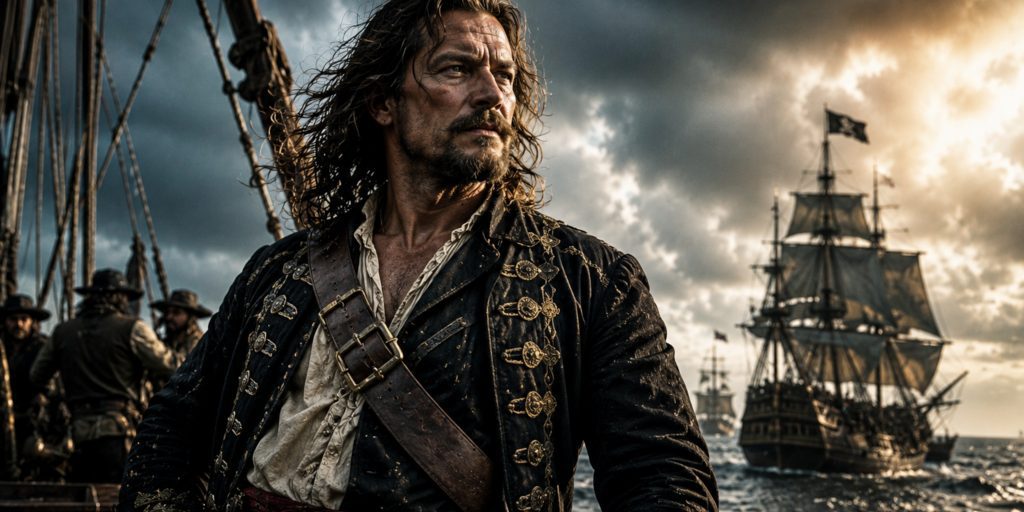
Morgan inspired admiration and condemnation in equal measure.
The physician Alexandre Exquemelin wrote:
“Captain Morgan was feared by all the Spaniards.”
Spanish officials viewed him rather differently.
One colonial report described his forces as:
“Cruel enemies who laid waste to everything before them.”
The English diarist and politician Sir William Beeston later praised Morgan’s importance to Jamaica’s defence, describing him as an energetic colonial leader despite criticism from abroad.
These contrasting accounts reveal how political perspective shaped Morgan’s reputation during his own lifetime.
Death
Morgan died on 25 August 1688, probably suffering from complications linked to tuberculosis, liver disease or chronic alcohol consumption, although the exact cause remains uncertain.
He received a state funeral in Port Royal.
Four years later, the devastating earthquake of 1692 caused much of Port Royal to collapse beneath the sea.
Morgan’s grave disappeared beneath the Caribbean, making it one of history’s more dramatic examples of archaeology becoming considerably harder than expected.
Archaeology and Recent Discoveries
Marine archaeology has transformed understanding of Morgan’s world.
Excavations beneath modern Kingston Harbour continue to uncover streets, warehouses and domestic buildings from submerged Port Royal, preserving an extraordinary snapshot of seventeenth century colonial life.
In 2011, underwater archaeologists identified the remains of what is believed to be one of Morgan’s vessels near the mouth of the Chagres River in Panama. Although no spectacular treasure was recovered, the wreck provided valuable evidence concerning the ships used during the Panama expedition.
Artefacts recovered from submerged Port Royal include:
- Clay tobacco pipes
- Glass bottles
- Coins
- Ceramics
- Weapons
- Navigation equipment
- Personal belongings of merchants and sailors
Together, these discoveries help separate historical reality from centuries of pirate mythology.
Where to Learn More About Sir Henry Morgan
Visitors interested in Morgan’s life can explore several important sites.
| Site | Significance |
|---|---|
| Port Royal, Jamaica | Morgan’s principal base of operations |
| Fort Charles, Port Royal | One of Jamaica’s oldest surviving forts |
| National Museum Jamaica | Exhibits on Port Royal and colonial Jamaica |
| Panamá Viejo | Archaeological remains of the city attacked in 1671 |
| Chagres National Park | Region crossed during Morgan’s march to Panama |
Legacy
Sir Henry Morgan occupies an unusual place in history.
He helped transform England into the dominant European power in the Caribbean while contributing to one of history’s most enduring pirate legends. His military campaigns demonstrated genuine strategic ability, yet they also inflicted immense suffering upon civilian populations.
Modern portrayals often reduce him to either fearless adventurer or ruthless villain. The historical Morgan was considerably more complex.
He operated in an era when empire, commerce and warfare overlapped in ways that now appear deeply uncomfortable. Judging him requires understanding the brutal world he inhabited without excusing the violence that accompanied his success.
That complexity is precisely why he continues to fascinate nearly three and a half centuries after his death.
Frequently Asked Questions
Was Sir Henry Morgan actually a pirate?
Legally, Morgan spent most of his career as an English privateer operating under letters of marque. Spanish authorities naturally regarded him as a pirate.
Did Sir Henry Morgan bury treasure?
No reliable historical evidence supports the popular legend that Morgan buried treasure on secret Caribbean islands.
Why was Henry Morgan knighted?
Despite diplomatic tensions with Spain, King Charles II rewarded Morgan for strengthening England’s position in the Caribbean and appointed him Lieutenant Governor of Jamaica.
What was Morgan’s greatest victory?
Most historians consider the capture of Panama City in 1671 his greatest military achievement, although it also proved his most politically damaging.
Was Morgan buried at sea?
No. He was buried in Port Royal, Jamaica. His grave was later lost when the city was partly destroyed by the catastrophic earthquake of 1692.