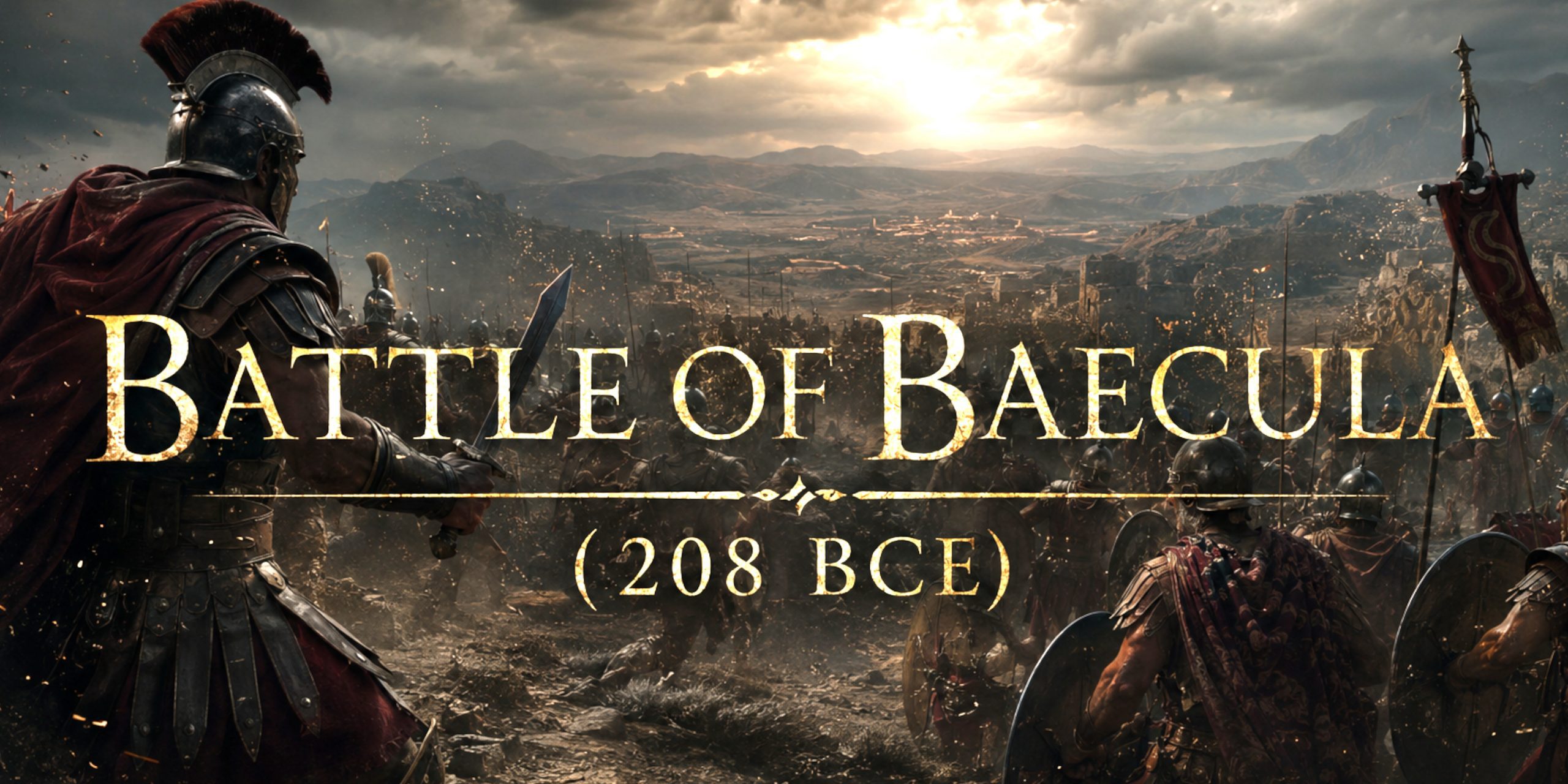
The Battle of Baecula, fought in 208 BCE during the Second Punic War, was one of those victories that historians still enjoy arguing about. On paper, Publius Cornelius Scipio defeated Hasdrubal Barca and secured another Roman success in Iberia. In reality, Hasdrubal escaped with much of his army and soon marched into Italy to reinforce Hannibal.
That curious mixture of tactical brilliance and strategic frustration is what makes Baecula so fascinating. Scipio demonstrated the aggressive battlefield instincts that would later destroy Hannibal at Zama, yet his opponent achieved his principal strategic objective by getting away.
As a historian, I have always thought Baecula deserves more attention than it receives. It sits awkwardly between the famous victories at New Carthage and Ilipa, overshadowed by both, yet it reveals Scipio growing into one of Rome’s finest commanders while showing just how resilient the Barcid military machine remained.
Background
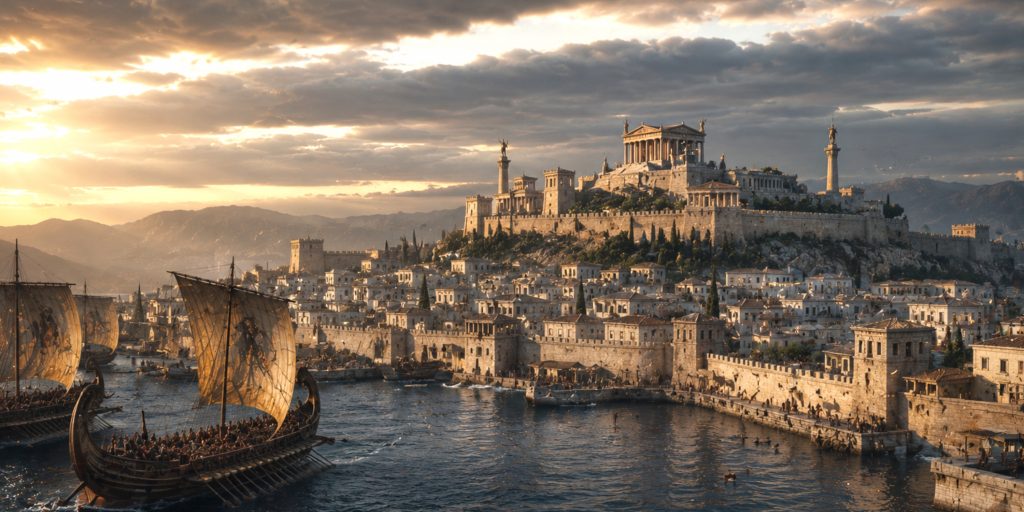
Following the Roman capture of New Carthage in 209 BCE, Carthaginian control of Iberia had begun to weaken.
Three Carthaginian armies still operated in the peninsula:
- Hasdrubal Barca
- Mago Barca
- Hasdrubal Gisco
Scipio recognised that allowing these forces to unite would create a serious threat. Rather than waiting, he launched a rapid campaign against Hasdrubal before reinforcements could arrive.
Hasdrubal selected a defensive position near Baecula, probably somewhere in modern Jaén Province, although the exact location remains debated.
Where Was the Battle of Baecula?
Most modern scholars associate Baecula with the area around Santo Tomé and the upper Guadalquivir valley.
Recent archaeological work strongly supports this region, replacing older theories that placed the battlefield elsewhere.
The surrounding terrain consisted of:
- Steep ridges
- River valleys
- Narrow approaches
- High defensive plateaus
Hasdrubal intended to use this difficult landscape to offset Roman aggression.
Forces
Roman Army
| Formation | Estimated Strength |
|---|---|
| Roman infantry | 20,000 to 25,000 |
| Allied infantry | 10,000 to 15,000 |
| Cavalry | Around 3,000 |
| Total | Approximately 35,000 to 40,000 |
Commanders
| Leader | Role |
|---|---|
| Publius Cornelius Scipio | Commander-in-chief |
| Gaius Laelius | Cavalry commander |
| Lucius Marcius | Senior subordinate |
Carthaginian Army
| Formation | Estimated Strength |
|---|---|
| African infantry | Around 15,000 |
| Iberian infantry | 10,000 to 15,000 |
| Cavalry | Around 4,000 |
| War elephants | Around 10 |
| Total | Approximately 25,000 to 30,000 |
Commanders
| Leader | Role |
|---|---|
| Hasdrubal Barca | Commander |
| Various Iberian tribal chiefs | Allied contingents |
Leaders and Troop Composition
Rome
Strengths
- Highly disciplined legionaries
- Flexible manipular formations
- Strong leadership from Scipio
- Excellent coordination between infantry and cavalry
Weaknesses
- Required uphill assaults
- Operating far from Italy
- Dependent upon rapid manoeuvre
Carthage
Strengths
- Excellent defensive ground
- Experienced Iberian veterans
- Strong cavalry
- Mixed force with varied tactical options
Weaknesses
- Limited room to manoeuvre
- Difficult retreat routes
- Increasing pressure across Iberia
The Battlefield
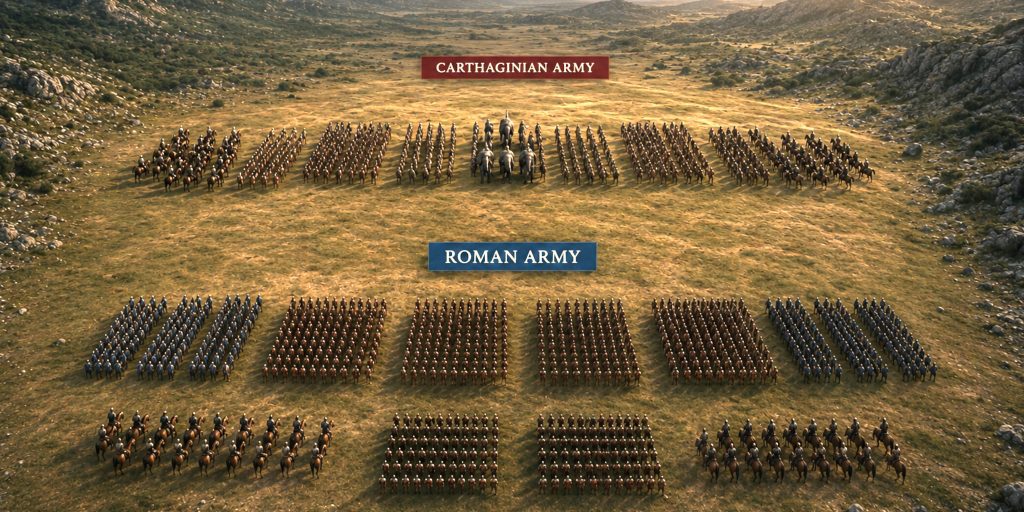
Hasdrubal deployed his troops on a plateau protected by steep slopes.
His front line occupied lower terraces while reserves waited higher up behind natural defences.
It was a sensible position. Any Roman assault would have to climb under missile fire before reaching the main line.
Scipio decided against a slow siege or prolonged skirmishing. Instead, he attempted something remarkably bold.
He ordered simultaneous attacks against both flanks while pinning the centre.
It was risky. It was fast. It was also very Scipio.
Battle Timeline
| Time | Event |
|---|---|
| Morning | Roman army approaches Baecula |
| Early morning | Skirmishers engage Carthaginian forward troops |
| Late morning | Roman flank assaults begin |
| Midday | Heavy fighting develops across the slopes |
| Afternoon | Roman troops seize the plateau |
| Late afternoon | Hasdrubal withdraws with much of his army |
| Evening | Romans occupy the battlefield |
How the Battle Unfolded
The opening exchanges involved light infantry.
Roman velites pushed Carthaginian skirmishers backwards, allowing Scipio to assess the ground.
Instead of attacking directly up the strongest position, Scipio split his assault columns.
Roman troops climbed difficult slopes on both sides of the hill while the main force fixed the enemy in place.
The Carthaginian line began to buckle.
Hasdrubal realised his position could not be held indefinitely.
Rather than risking annihilation, he organised an orderly withdrawal, taking much of his experienced army, treasury and surviving elephants with him.
The Romans captured the camp and won the battlefield, but not the decisive destruction Scipio had hoped for.
Arms and Armour
Roman Equipment
| Equipment | Details |
|---|---|
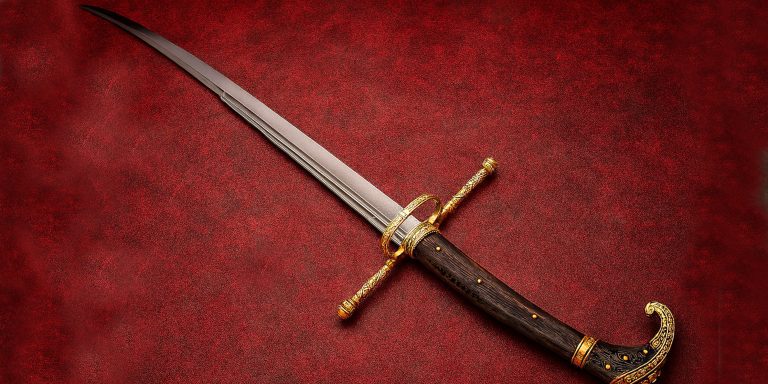
| Gladius Hispaniensis | Standard Roman sword, derived from Iberian designs and superb for close combat |
| Pilum | Heavy throwing spear designed to disrupt enemy formations |
| Scutum | Large curved shield offering excellent protection |
| Montefortino helmet | Bronze helmet widely used during the period |
| Mail armour | Increasingly common among wealthier legionaries |
The irony is difficult to ignore. Roman soldiers defeated Hasdrubal using a sword originally inspired by Iberian craftsmanship. History occasionally enjoys its little jokes.
Carthaginian Equipment
| Equipment | Details |
|---|---|
| Falcata | Powerful curved Iberian sword capable of devastating chopping blows |
| Antennae sword | Older Iberian straight sword still carried by some warriors |
| Celtic long swords | Used by Gallic mercenaries serving Carthage |
| Iberian shields | Oval and round shield varieties |
| Spears and javelins | Common among Iberian infantry |
| Mail armour | Worn by elite troops and officers |
| Linen cuirasses | Used by many African infantry |
The diversity of Hasdrubal’s army meant equipment varied enormously. Carthaginian armies were less uniform than Roman legions, but often possessed impressive individual fighting quality.
Casualties
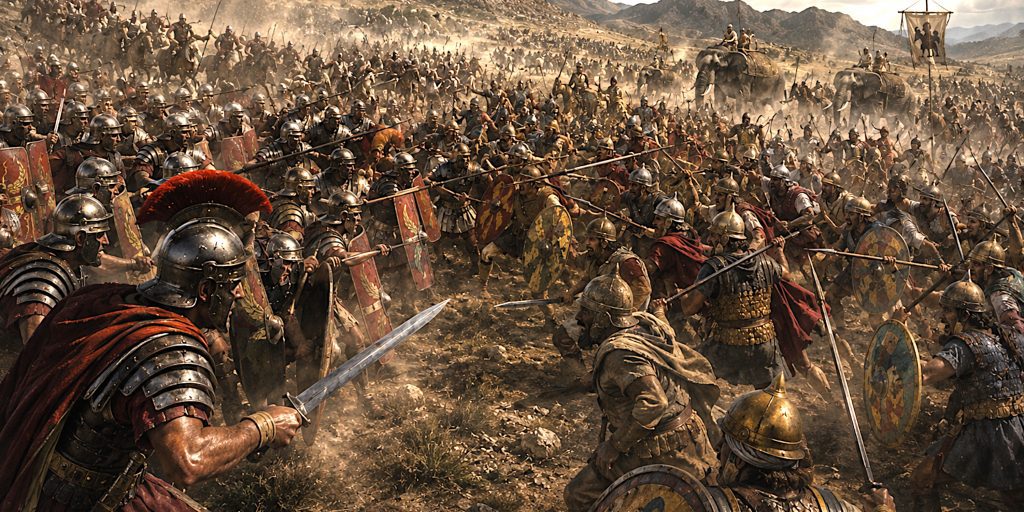
Precise figures remain uncertain.
Estimated losses suggest:
| Army | Estimated Casualties |
|---|---|
| Roman | Around 1,000 to 2,000 |
| Carthaginian | Around 6,000 killed, wounded or captured |
Most importantly, thousands of experienced Carthaginian soldiers escaped.
Military Analysis
Scipio displayed several qualities that would define his later career.
Strengths
- Excellent reconnaissance
- Rapid decision making
- Flexible battlefield tactics
- Effective use of terrain
- Coordinated flank attacks
Hasdrubal also deserves more credit than he often receives.
Although defeated tactically, he preserved the core of his army and successfully marched towards Italy. Strategic withdrawals rarely make dramatic paintings, but they often make good military sense.
Archaeology
The archaeology of Baecula has advanced considerably during the last two decades.
Excavations around Santo Tomé have uncovered material consistent with a major late third century BCE battlefield.
Discoveries include:
- Iron spearheads
- Javelin points
- Lead sling bullets
- Arrowheads
- Horse equipment
- Carthaginian and Roman military artefacts
Distribution patterns suggest fighting occurred across several elevated ridges rather than on a single open plain.
Archaeological evidence has helped reshape modern understanding of Scipio’s flanking manoeuvres and supports many elements described by the ancient sources.
Even so, some debate continues over the precise battlefield limits. Ancient battles have an irritating habit of refusing to leave neat signposts.
Contemporary Sources
The principal accounts come from the Greek historian Polybius and the Roman historian Livy.
Polybius wrote:
“Scipio attacked the enemy on both flanks.”
Livy praised the Roman commander:
“Victory followed both courage and skill.”
Neither writer was entirely neutral. Both admired Scipio, although Polybius is generally regarded as the more reliable military historian.
Why the Battle Mattered
Baecula secured Rome’s growing dominance in Iberia.
Its consequences included:
- Reduced Carthaginian control of Spain
- Greater Roman confidence in Scipio’s leadership
- Continued Roman momentum in the peninsula
- Hasdrubal’s march towards Italy
- The chain of events leading to the Battle of the Metaurus
In many ways, Baecula was less a conclusion than the opening chapter of Rome’s final victory over Carthage.
Legacy
The Battle of Baecula demonstrated that Scipio had become far more than an ambitious young aristocrat.
He had developed into an adaptable battlefield commander capable of taking calculated risks against experienced opponents.
For Hasdrubal, the defeat was frustrating but not catastrophic. His escape kept alive Carthage’s hope of relieving Hannibal in Italy, although that hope would ultimately end at the Metaurus the following year.
Today, Baecula stands as an excellent reminder that history is rarely divided neatly into winners and losers. Rome won the field. Hasdrubal escaped with his army. Both commanders achieved something important, and both left the battlefield believing they still had a chance to shape the war.
Watch the documentary:
Further Reading
Primary sources:
- Polybius, Histories
- Livy, Ab Urbe Condita
Modern works:
- Adrian Goldsworthy, The Fall of Carthage
- Dexter Hoyos, Mastering the West
- John Lazenby, Hannibal’s War