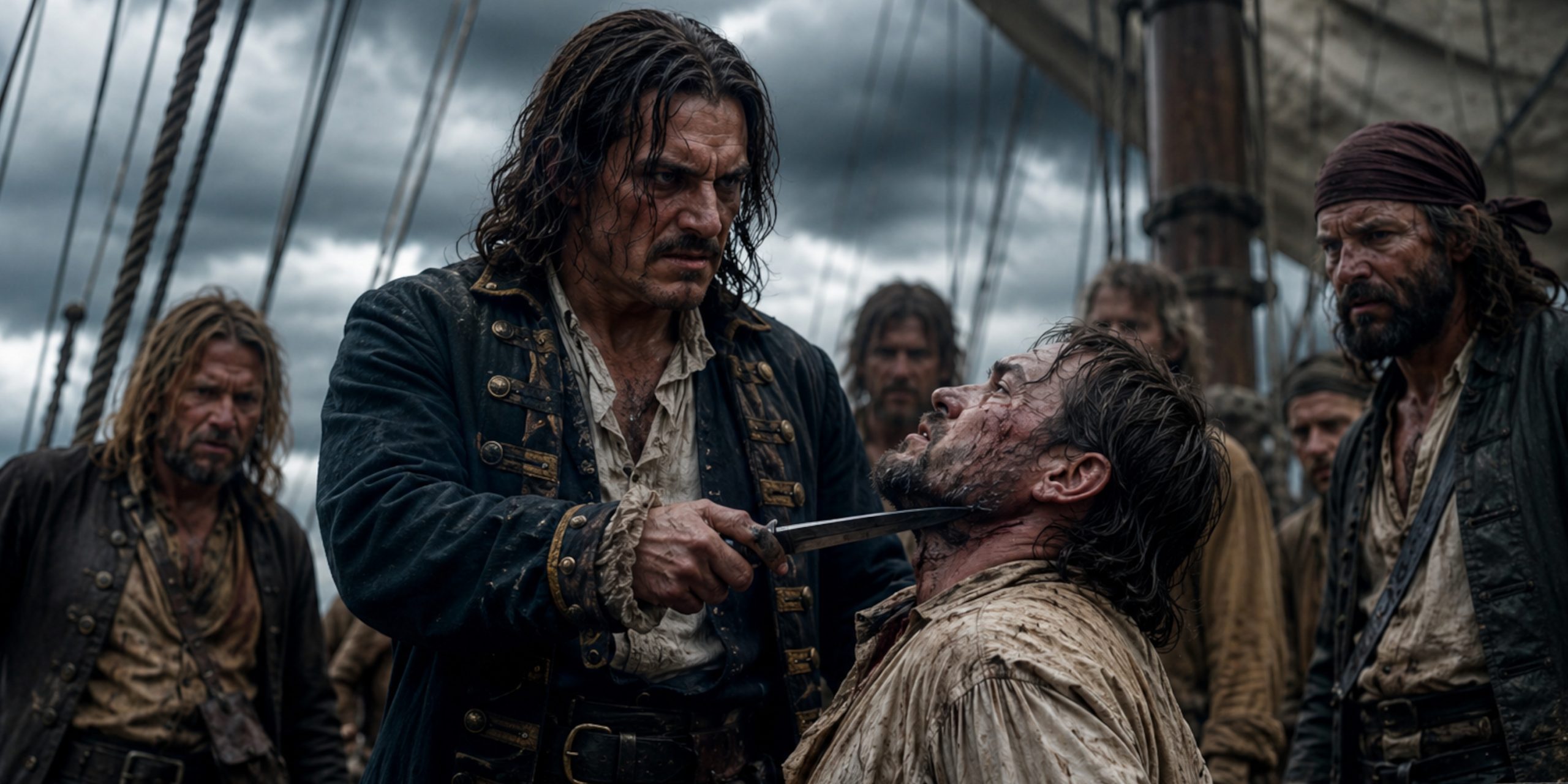
Edward Low was one of the most infamous pirates of the early 18th century, remembered less as a romantic outlaw and more as a terrifying example of how brutal piracy could become. During the Golden Age of Piracy, many captains cultivated a reputation for violence to force quick surrender. Low took that reputation further.
Operating mainly between 1721 and 1724, he captured dozens, possibly more than a hundred vessels across the Atlantic, Caribbean, and North American coast. Contemporary accounts portrayed him as unusually cruel, even by pirate standards, although some stories were undoubtedly exaggerated by newspapers hungry for shocking tales.
Separating fact from propaganda is tricky. The 18th-century press enjoyed a good villain, and Low gave them plenty of material to work with.
Edward Low’s Other Names And Aliases
Edward Low appears in historical sources under several variations:
| Name | Details |
|---|---|
| Edward Low | Most common modern spelling |
| Edward Lowe | Alternative spelling used in historical records |
| Ned Low | Common nickname |
| Captain Low | Used after gaining command of his own pirate crew |
| Captain Lowe | Alternative contemporary spelling |
Unlike some pirates who deliberately used multiple identities, these variations were mostly caused by inconsistent spelling in 18th-century records.
Early Life: From London Streets To The Sea
Edward Low was born around 1690 in Westminster, London. Accounts of his childhood describe poverty, crime, and a difficult upbringing. According to later writers, he became involved in petty theft at a young age.
Much of what is known about Low’s early years comes from Captain Charles Johnson’s famous work A General History of the Pyrates (1724), a major source on pirate history but one that blends fact, rumour, and storytelling.
Johnson described Low as naturally troublesome from childhood:
“He was always a wild and extravagant young fellow.”
Such descriptions need caution. Writers of the period often presented criminals as being doomed from youth, partly as moral lessons for readers.
Low eventually travelled to America, where he worked as a sailor and labourer. His path changed dramatically after a dispute while working on a logging vessel in Honduras.
Becoming A Pirate
The turning point came around 1721 when Low joined a group of mutineers after a conflict with his captain. From there he entered piracy, first serving under George Lowther.
Lowther was already an established pirate captain, and Low quickly learned how pirate crews operated:
- Capturing merchant ships
- Recruiting skilled sailors
- Using intimidation before battle
- Sharing captured wealth under pirate articles
Low’s ambition soon pushed him toward independent command.
Captain Edward Low And His Pirate Fleet
Once in charge, Low built a reputation as an aggressive and successful raider. His ships included:
| Ship | Details |
| Rebecca | One of his earliest pirate vessels |
| Fancy | Became strongly associated with Low’s later career |
| Merry Christmas | Captured vessel used during his raids |
His hunting grounds included:
- Caribbean waters
- Newfoundland fishing routes
- American colonial coastlines
- Atlantic trade routes
Low understood that reputation was a weapon. Many merchant crews surrendered quickly when faced with pirates known for cruelty.
Weapons, Ships And Pirate Warfare
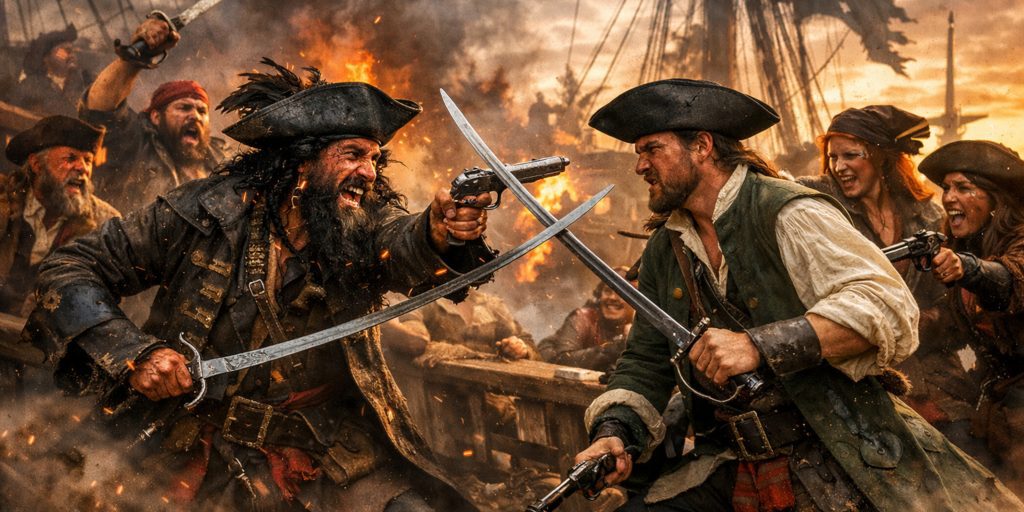
Edward Low’s crew used typical weapons of early 18th-century Atlantic pirates.
Common weapons included:
- Cutlasses for close combat
- Flintlock pistols
- Boarding axes
- Muskets
- Swivel guns mounted on ships
- Cannon for disabling enemy vessels
The cutlass became the classic pirate sword because it suited ship fighting. It was short enough for crowded decks but powerful enough for brutal close combat.
Pirate success rarely came from dramatic sword fights. Most victories came from speed, intimidation, and convincing a merchant captain that surrender was better than resistance.
A pirate’s greatest weapon was often his reputation. Low’s was horrifyingly effective.
Why Was Edward Low Considered So Cruel?
Low became infamous because of repeated stories describing torture and extreme punishment of prisoners.
Reports claimed he:
- Cut off prisoners’ ears and noses
- Tortured captured sailors
- Burned ships after taking supplies
- Killed captives who resisted
One of the most notorious accusations claimed Low cut out the heart of a Portuguese captain after the man threw valuables into the sea rather than surrender them.
Whether every story is true is impossible to prove. Pirate hunters, governments, and newspapers all benefited from portraying pirates as monsters.
That said, even other pirates reportedly considered Low excessive, which says rather a lot given the competition.
Contemporary Quotes About Edward Low
Captain Charles Johnson wrote of Low:
“The desperadoes of this wicked crew became the terror of the seas.”
Another contemporary description claimed:
“Low’s behaviour was so savage that humanity itself seemed forgotten.”
These accounts helped create Low’s reputation as one of the darkest figures of the Golden Age of Piracy. They should be read as historical evidence of reputation as much as evidence of exact events.
Edward Low Compared With Other Pirates
| Pirate | Reputation | Main Difference |
| Blackbeard | Psychological intimidation | Used fear but avoided unnecessary fighting when possible |
| Bartholomew Roberts | Organisation and success | Captured far more ships |
| Charles Vane | Violence and defiance | Similar aggressive style |
| Edward Low | Extreme brutality | Remembered primarily for cruelty |
Low lacked the theatrical image of Blackbeard or the strategic achievements of Roberts. His legacy came from fear.
What Happened To Edward Low?
Edward Low’s final fate remains uncertain.
Different accounts suggest:
- His crew abandoned him after becoming tired of his cruelty
- He escaped and disappeared
- He was captured by the French and executed
- He lived quietly after piracy
The execution story is often repeated, but firm evidence is lacking. By 1725 he had effectively vanished from historical records.
For a man who created such noise across the Atlantic, his disappearance was strangely quiet.
Legacy Of Edward Low
Edward Low represents the darker reality behind pirate mythology. Modern culture often portrays pirates as charming rebels, but Low reminds historians that many were violent criminals operating in a dangerous world.
His career was short, probably only three years, yet his reputation survived for centuries.
Some pirates became legends because they were clever. Some because they were successful. Edward Low became infamous because people were genuinely frightened of him.
Even allowing for exaggeration, that is not a legacy most people would want carved onto their gravestone.
Frequently Asked Questions About Edward Low
Was Edward Low A Real Pirate?
Yes. Edward Low was an English pirate active during the Golden Age of Piracy in the early 1720s.
What Was Edward Low’s Nickname?
He was commonly known as Ned Low.
Was Edward Low Worse Than Blackbeard?
Many contemporary accounts described Low as more openly cruel. Blackbeard relied heavily on intimidation, while Low developed a reputation for actual violence.
How Did Edward Low Die?
His death remains unknown. Theories include execution, abandonment, or disappearance after leaving piracy.
What Was Edward Low’s Ship Called?
His most famous vessel was the Fancy, although he commanded several captured ships during his career.s is the fear he left behind, and the records of those who crossed his path and barely lived to speak of it.