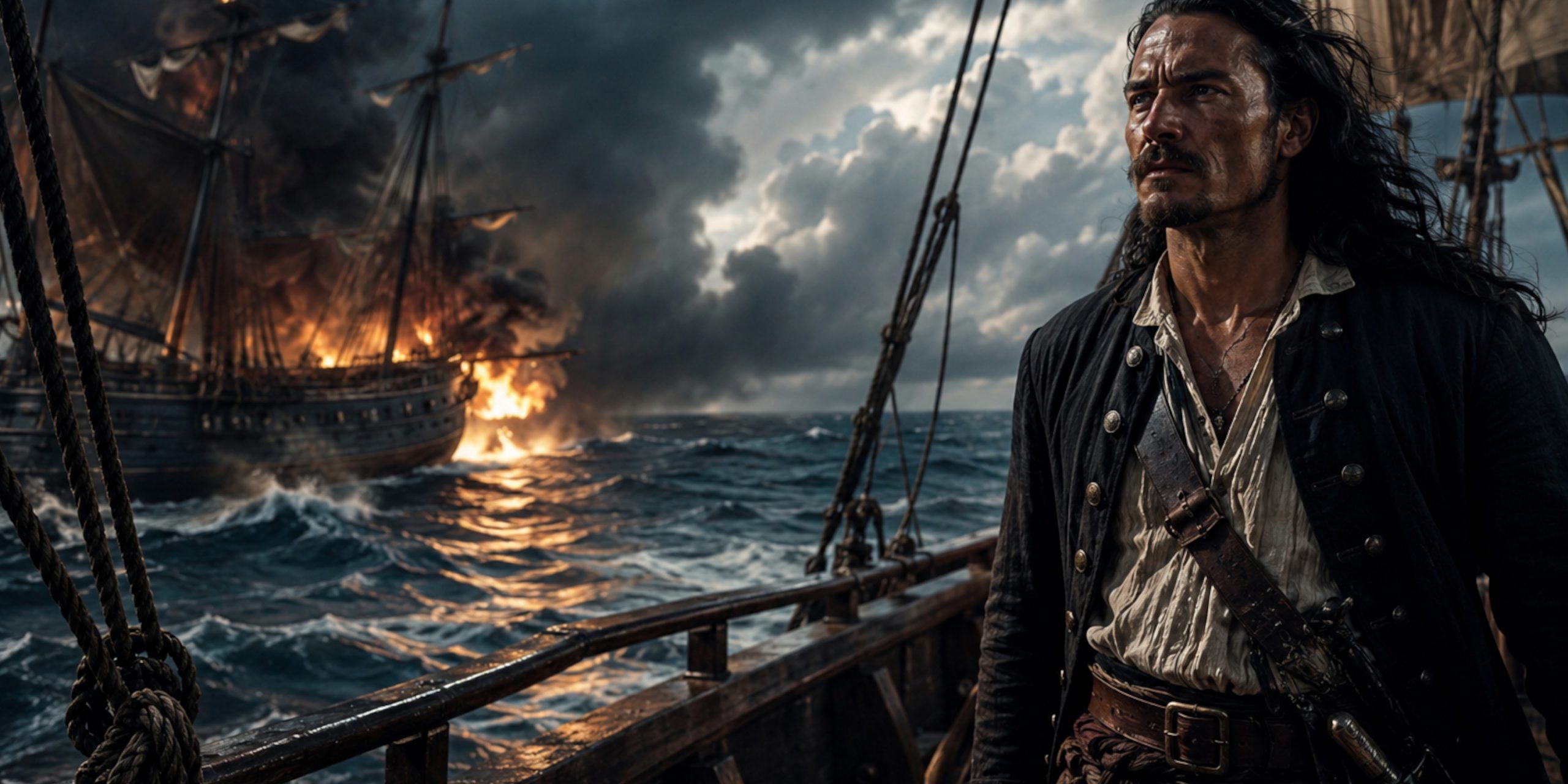
Few pirates managed to achieve what Henry Every did. He captured one of the richest prizes in maritime history, escaped a global manhunt and disappeared before the authorities could put a rope around his neck.
Many pirates became famous because they died dramatically. Every became legendary because he didn’t.
Known under several names including Henry Avery, Long Ben, Benjamin Bridgeman and John Avery, he became the subject of rumours, ballads and exaggerated stories that turned him into the so-called “King of Pirates.”
The reality was less romantic. Every was a skilled sailor, an opportunistic commander and a ruthless criminal whose greatest victory caused an international crisis between England and the Mughal Empire.
Quick Facts About Henry Every
| Category | Details |
|---|---|
| Full Name | Henry Every |
| Alternative Spellings | Henry Avery |
| Aliases | Long Ben, Benjamin Bridgeman, John Avery |
| Born | Around 1659 |
| Birthplace | Likely Devon, England |
| Occupation | Sailor, privateer, pirate captain |
| Active As Pirate | 1694 to 1696 |
| Famous Ship | Fancy |
| Greatest Prize | Mughal treasure ship Ganj-i-Sawai |
| Fate | Unknown |
Early Life And Naval Career
The early years of Henry Every are frustratingly difficult to trace. Like many pirates, he did not leave behind a helpful autobiography explaining exactly when he decided a life of armed robbery at sea sounded like a career move.
Most evidence suggests he came from Devon and had experience as a professional sailor before turning pirate. He likely served in merchant shipping and possibly the Royal Navy, giving him the knowledge needed to command crews and navigate long-distance voyages.
By the 1690s he was serving aboard the Charles II, a privateering vessel hired by Spanish interests. The voyage was plagued by delays, unpaid wages and frustration among the crew.
Those conditions created the perfect environment for mutiny.
The Mutiny And Birth Of The Fancy
In 1694, Every helped lead a takeover of the Charles II while it was anchored at Corunna in Spain.
The ship’s original captain was removed and Every took command. He renamed the vessel Fancy and converted it into a fast pirate ship.
The Fancy was modified for speed:
- Excess structures were removed to reduce weight
- Additional guns improved its fighting capability
- The crew reorganised under pirate leadership
Every understood something many captains ignored. A pirate ship that could choose when to fight and when to escape was far more dangerous than one overloaded with weapons.
The Pirate Career Of Henry Every
Every sailed into the Indian Ocean, where European pirates targeted wealthy trade routes connecting India, Arabia and Africa.
His crew joined other pirate vessels hunting Mughal shipping. The greatest opportunity came in 1695 when they encountered the enormous treasure ship Ganj-i-Sawai.
This was not a small merchant vessel carrying a few unlucky traders. It was one of the richest ships travelling under the protection of the Mughal Empire.
The Capture Of The Ganj-i-Sawai

The Ganj-i-Sawai belonged to the fleet of the Mughal emperor Aurangzeb and was returning from the Red Sea.
Although the Mughal ship was larger and heavily armed, it suffered critical problems during the battle:
- A cannon reportedly exploded aboard the ship
- Defensive fire became ineffective
- The Fancy’s crew successfully boarded
The pirates captured an extraordinary fortune in:
- Gold
- Silver
- Jewels
- Luxury goods
- Personal valuables
The exact value remains debated, but estimates often place it among the largest pirate captures ever recorded.
The aftermath was brutal. Contemporary reports accused Every’s crew of torture, assault and murder against passengers. Some accounts were likely exaggerated through political anger, but the attack was unquestionably violent.
The popular image of pirates sharing jokes over rum rarely survives contact with the historical record.
The Global Manhunt
The attack created a diplomatic disaster.
The Mughal emperor Aurangzeb was furious and threatened English trade interests in India. The East India Company feared losing access to one of the richest markets in the world.
The English government responded with one of the first major international pirate hunts.
A proclamation was issued offering rewards for Every’s capture. Several members of his crew were eventually arrested and tried.
Every himself escaped.
Contemporary Quotes About Henry Every
The legend of Every grew quickly through newspapers, government documents and popular writing.
A government proclamation described him as:
“A notorious pirate”
The pirate writer Charles Johnson later claimed Every had achieved almost mythical status, writing that people believed:
“He had acquired such immense riches”
Many stories suggested Every created a pirate kingdom or lived like royalty. These tales are almost certainly fiction, but they reveal how quickly he became a symbol of rebellion and forbidden wealth.
What Happened To Henry Every?
Every’s disappearance remains one of piracy’s greatest mysteries.
Several theories exist:
He Returned To England
Some reports suggest Every secretly returned home under an assumed identity but lost much of his fortune dealing with dishonest merchants.
He Escaped Abroad
Other theories place him in:
- Ireland
- The American colonies
- The Caribbean
He Died Poor
One popular account claims he died without wealth despite carrying out one of history’s richest robberies.
It would be a painfully fitting pirate ending: steal a fortune, anger an empire, become world famous, then somehow still fail at retirement planning.
No confirmed record of his death has ever been found.
Myths And Legends
Henry Every became larger than life after his disappearance.
Stories claimed he:
- Married a Mughal princess
- Founded a pirate kingdom
- Commanded a secret fleet
- Lived as a wealthy ruler
Most historians dismiss these tales.
The truth is arguably more interesting. Every achieved what almost no other famous pirate managed. He made his fortune and escaped.
Legacy Of Henry Every
Every’s career was incredibly short, but his impact was enormous.
He influenced the later Golden Age of Piracy by proving that independent pirate crews could strike at major international trade networks.
His actions also forced governments and trading companies to treat piracy as a global security issue rather than a local nuisance.
Unlike Blackbeard, Bartholomew Roberts or Captain Kidd, Every avoided the final battle, public execution or dramatic downfall.
History rarely gives pirates quiet exits, but Henry Every somehow slipped through the cracks.
Frequently Asked Questions
Was Henry Every A Real Pirate?
Yes. Henry Every was a real English pirate active during the 1690s and one of the most successful pirates in history.
What Other Names Did Henry Every Use?
He was also known as:
- Henry Avery
- Long Ben
- Benjamin Bridgeman
- John Avery
What Ship Did Henry Every Command?
His famous pirate ship was the Fancy, originally the Charles II before his crew seized it.
Was Henry Every Ever Captured?
No. Despite a major international manhunt, Every disappeared and his final fate remains unknown.
Was Henry Every The Richest Pirate?
He was possibly one of the richest pirates after capturing the Ganj-i-Sawai, although whether he kept his fortune is unknown.