There are pirates, and then there is Bartholomew Roberts.
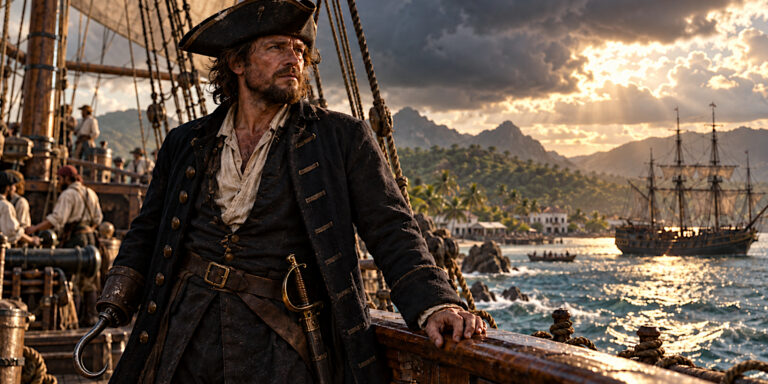
Most people picture pirates as drunken opportunists with missing teeth and deeply questionable hygiene. Roberts was something rather different. He dressed in crimson silk, carried himself like a naval officer who had wandered into organised crime, and captured more ships than almost any pirate in history. Somewhere between 400 and 470 vessels fell into his hands during a career that lasted barely three years.
That figure sounds exaggerated until you start reading contemporary accounts and realise, rather alarmingly, that it probably is not.
Known to history as Black Bart, Roberts became one of the defining figures of the Golden Age of Piracy. He terrorised Atlantic trade routes from West Africa to the Caribbean and up the American coast. Merchants feared him, governors cursed him, and sailors often joined him willingly because his success rate was frankly difficult to ignore.
As a historian, I confess I have always found Roberts fascinating because he feels less like a common pirate and more like an ambitious medieval condottiero who accidentally arrived in the eighteenth century.
Who Was Black Bart Roberts?
Bartholomew Roberts was born in Pembrokeshire, Wales, around 1682. His birth name was likely John Roberts, though pirate records from the era are often murky enough to make parish archives feel like detective fiction.
Before piracy, Roberts worked as a professional sailor. He served aboard merchant ships and slave vessels, developing the navigation and leadership skills that later made him so dangerous. Unlike many pirates, he was educated, disciplined, and deeply competent at sea.
His life changed dramatically in 1719 when the slave ship Princess was captured by pirates led by Howell Davis off West Africa. Roberts was forced into the pirate crew. According to later accounts, he resisted at first.
Then Howell Davis was killed during an ambush on the island of Príncipe.
The crew elected Roberts as captain shortly afterwards.
This was either an inspired democratic decision or one of the worst staffing errors in Atlantic commercial history.
The Rise of Black Bart
Roberts expanded pirate operations with astonishing speed. He struck shipping lanes across:
- West Africa
- Brazil
- Newfoundland
- The Caribbean
- The American eastern seaboard
He preferred bold attacks rather than isolated raids. Several times he entered heavily trafficked harbours and simply took what he wanted while local authorities panicked.
One of his most famous exploits came in 1721 at Trepassey Harbour in Newfoundland, where he captured or burned numerous vessels with almost casual efficiency.
Roberts also developed a reputation for strict discipline aboard ship.
His pirate code reportedly banned:
- Gambling
- Fighting onboard
- Women disguised as men aboard ship
- Lights and candles after certain hours
Pirates were not generally associated with administrative competence, yet Roberts operated with the efficiency of a hard-nosed merchant company. One suspects modern middle management would have admired him terribly.
Contemporary Quotes About Black Bart
Captain Charles Johnson’s A General History of the Pyrates remains one of the main sources on Roberts. Though parts of the text are embellished, it preserves valuable contemporary impressions.
Johnson wrote:
“In an honest service there is thin commons, low wages, and hard labour. In this, plenty and satiety, pleasure and ease, liberty and power.”
Another famous line attributed to Roberts states:
“A merry life and a short one shall be my motto.”
That sentence has survived because it captures the strange mixture of fatalism and swagger common among pirates of the era. Roberts understood perfectly well how pirate careers usually ended.
Poorly.
Black Bart’s Ships
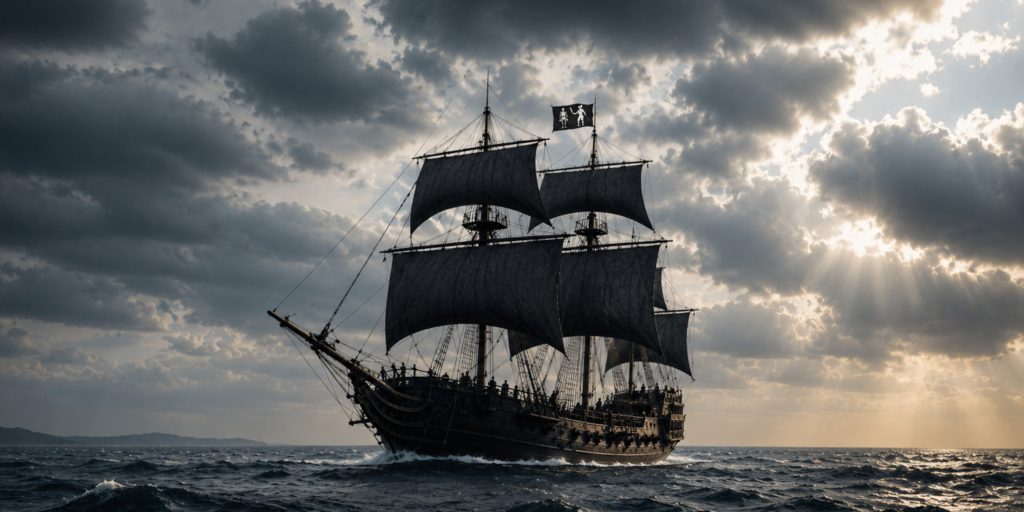
Roberts commanded several ships during his career, many bearing the name Royal Fortune. Pirate captains frequently renamed captured vessels, partly for intimidation and partly because pirates enjoyed theatrical branding long before marketing departments existed.
Notable Ships
| Ship | Type | Notes |
|---|---|---|
| Royal Fortune | Frigate | Roberts’ most famous flagship |
| Good Fortune | Sloop | Used during earlier campaigns |
| Ranger | Sloop | Fast raiding vessel |
| Fortune | Brigantine | Captured merchant conversion |
The largest Royal Fortune reportedly carried around 40 guns and was heavily armed for a pirate vessel.
Roberts favoured speed and aggression. He often attacked quickly before merchant captains could organise resistance. In truth, many merchant crews surrendered immediately once his black flag appeared.
A sensible decision, honestly.
Weapons Used by Black Bart and His Crew
Pirate warfare relied on intimidation, speed, and brutal close combat.
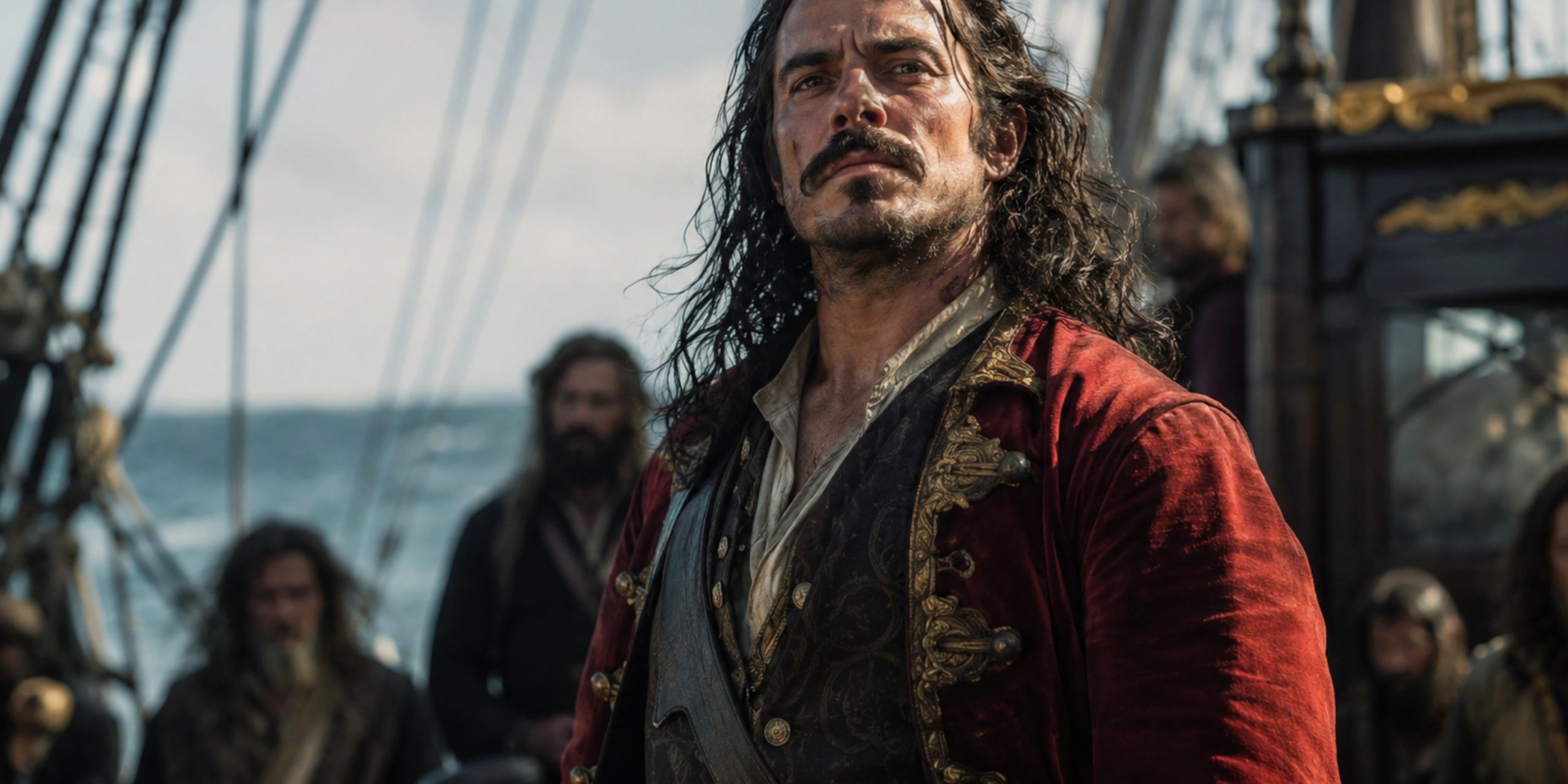
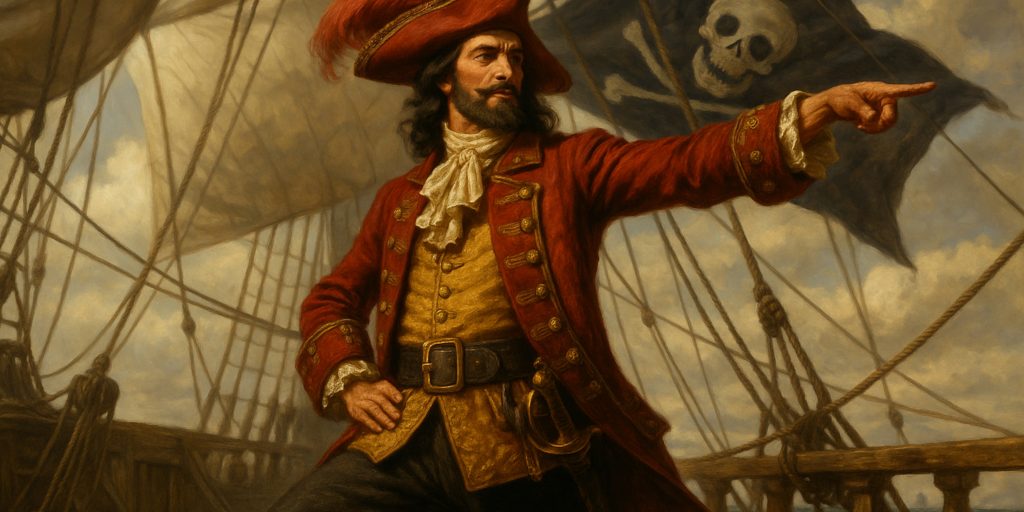
Roberts himself reportedly dressed extravagantly during battle, wearing:
- Crimson damask waistcoats
- Feathered hats
- Gold chains
- Diamond crosses
Which is an exceptionally confident outfit choice during naval artillery exchanges.
Common Weapons
| Weapon | Purpose |
|---|---|
| Cutlass | Close-quarters fighting |
| Flintlock pistols | Boarding combat |
| Boarding axes | Breaking barriers and fighting |
| Muskets | Ship-to-ship fire |
| Cannons | Disabling enemy vessels |
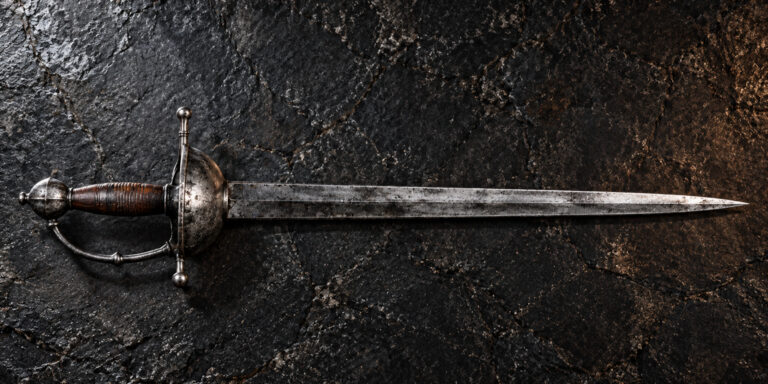
The cutlass became the iconic pirate weapon because it was short, brutal, and practical aboard crowded decks.
Roberts also relied heavily on artillery intimidation. Merchant vessels often surrendered after a single devastating broadside.
Treasure and Bounty
One of the enduring myths surrounding Black Bart concerns buried treasure.
There is no reliable evidence Roberts buried vast treasure hoards on remote islands. Pirates generally spent wealth rapidly or distributed it among crews.
Still, Roberts captured enormous wealth during his career.
His prizes included:
- Gold dust from West Africa
- Sugar cargoes
- Indigo
- Slaves
- Silver coin
- Trade goods
- Luxury textiles
Several captured vessels were worth fortunes by eighteenth-century standards.
Authorities placed significant bounties on pirate leaders during this period, though exact figures for Roberts varied between colonies. More importantly, Royal Navy patrols aggressively hunted him because he disrupted Atlantic commerce on a massive scale.
At one point, Roberts effectively paralysed regional shipping routes through fear alone.
That takes talent.
Black Bart’s Greatest Battles
The Capture of the Portuguese Treasure Fleet
Near Brazil in 1719, Roberts infiltrated a convoy of Portuguese treasure ships by sailing among them unnoticed at night.
He captured one of the richest vessels before escaping ahead of pursuing escorts.
It was audacious even by pirate standards.
The Trepassey Harbour Raids
In Newfoundland, Roberts captured and destroyed numerous fishing and merchant ships while local resistance collapsed around him.
The attacks demonstrated his ability to dominate entire anchorages.
Battles Off West Africa
Roberts spent significant time operating near Sierra Leone and the Gold Coast. He captured slave ships and European merchant vessels alike.
The region became extraordinarily dangerous for commercial traffic while he operated there.
Black Bart’s Pirate Flag
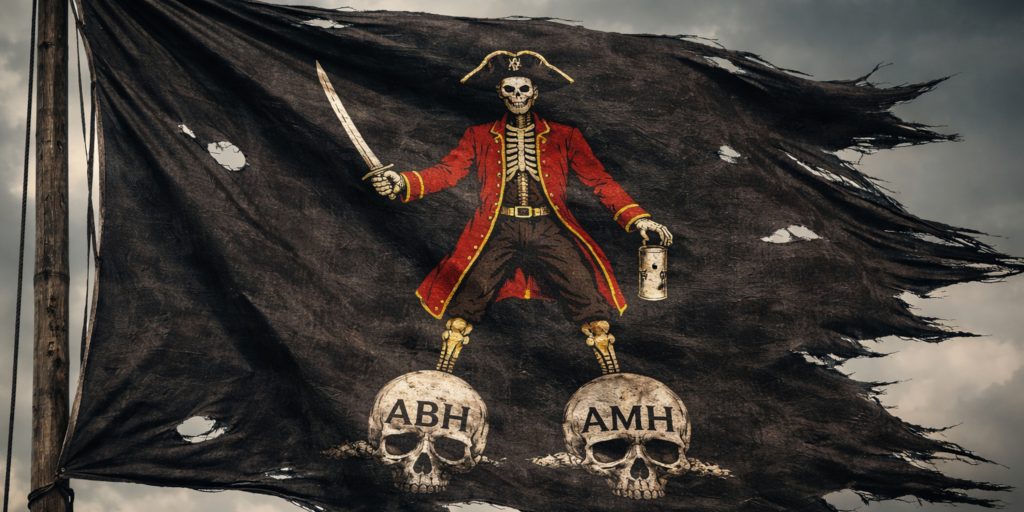
Roberts used several pirate flags during his career.
One depicted Roberts standing with a flaming sword over two skulls labelled “ABH” and “AMH,” representing Barbados and Martinique, colonies he despised after their governors sent warships against him.
Another showed a skeleton holding an hourglass beside the pirate captain.
Subtlety was not the defining artistic principle of pirate heraldry.
The Death of Black Bart
Roberts met his end in February 1722 during battle with HMS Swallow off Cape Lopez, Gabon.
Captain Chaloner Ogle of the Royal Navy lured Roberts into combat through deception, separating pirate vessels before attacking decisively.
During the engagement, Roberts reportedly stood on deck dressed in his usual elaborate clothing.
A grapeshot blast struck him in the throat.
He died almost instantly.
According to crew accounts, Roberts had ordered that his body be thrown overboard if he fell in battle to prevent capture and public display.
His men obeyed.
With Roberts dead, pirate resistance collapsed rapidly. Survivors were captured, tried, and many were executed.
The Golden Age of Piracy itself began declining soon afterwards.
Black Bart’s Legacy
Roberts became one of the most successful pirates in recorded history not because he was reckless, but because he was organised.
He combined:
- Naval skill
- Ruthless aggression
- Charismatic leadership
- Tactical intelligence
- Psychological warfare
Unlike Blackbeard, whose legend partly rests on theatrical terror, Roberts built an operational empire across the Atlantic.
Modern pirate mythology often blurs reality into fantasy, yet Roberts remains frighteningly impressive even stripped of exaggeration.
A disciplined captain with naval experience, strong logistics, and absolute ambition was infinitely more dangerous than a drunken rogue waving a pistol in a tavern.
History repeatedly proves this point, unfortunately.
Where to Learn More About Black Bart
Several museums and collections contain artefacts linked to the Golden Age of Piracy, including:
- The National Maritime Museum in Greenwich
- The Museum of the Atlantic in Halifax
- Pirate collections in Nassau
- Maritime museums in Bristol and Liverpool
Archaeological discoveries from pirate wrecks continue to reveal details about eighteenth-century life at sea, from weaponry and navigation tools to trade goods and ship construction.
Roberts himself left few confirmed personal artefacts behind, partly because pirate careers tended to end in cannon smoke and legal complications.
Seven Swords Takeaway
Black Bart Roberts was not merely a pirate captain. He was one of the most effective maritime raiders of the eighteenth century.
He rose from forced recruit to Atlantic legend in barely three years. He captured hundreds of ships, humiliated colonial authorities, and built a reputation so formidable that merchant captains often surrendered before a shot was fired.
For all the romance attached to piracy, Roberts’ career also reveals its brutality. The Atlantic world he exploited was tied deeply to imperial trade and the horrors of the slave economy. Pirates lived outside the law, but they were still products of that violent maritime system.
Even so, Roberts remains impossible to ignore.
A Welsh sailor in crimson silk, standing calmly on the deck of a warship while cannon smoke rolled across the Atlantic, feels almost fictional.
Then you look at the records.
And realise he actually did it.