Alfonso V of Aragon at a Glance
| Detail | Information |
|---|---|
| Full Name | Alfonso V of Aragon |
| Also Known As | Alfonso the Magnanimous |
| Born | 1396, Medina del Campo, Castile |
| Died | 27 June 1458, Naples |
| Father | Ferdinand I of Aragon |
| Mother | Eleanor of Alburquerque |
| Reigned | King of Aragon (1416 to 1458), King of Naples (1442 to 1458) |
| Dynasty | House of Trastámara |
| Principal Rivals | René of Anjou, Genoa, Milan, various Italian powers |
| Famous For | Conquest of Naples, Renaissance patronage, Mediterranean expansion |
Few medieval rulers managed to reinvent themselves as completely as Alfonso V of Aragon. He began life as a king whose responsibilities stretched across Iberia and the western Mediterranean. He ended it as the undisputed ruler of Naples and one of the great patrons of the early Italian Renaissance.
History remembers him as the Magnanimous, a title that sounds almost suspiciously flattering. Like many royal nicknames, it hides as much as it reveals. Alfonso was generous to scholars, artists and loyal followers, but he was also relentless in war, politically calculating and perfectly willing to spend years besieging cities that stood in his way.
As a historian, I have always found Alfonso fascinating because he belonged to two different worlds. He was one of the last great medieval warrior kings, yet he embraced Renaissance humanism with genuine enthusiasm. His sword won him a kingdom. His library ensured that kingdom would become a centre of learning.
Early Life and Rise to the Throne
Alfonso was born in 1396 during a period of significant political change across the Iberian Peninsula. His father, Ferdinand of Antequera, unexpectedly became King of Aragon after the Compromise of Caspe in 1412, giving the Trastámara dynasty control over one of Europe’s most important Mediterranean kingdoms.
When Ferdinand died in 1416, Alfonso inherited a remarkably diverse collection of territories that included:
- Aragon
- Catalonia
- Valencia
- Sardinia
- Sicily
- Mediterranean possessions stretching across vital trade routes
Rather than remaining focused solely on Spain, Alfonso increasingly looked eastward. Italy became the centrepiece of his ambitions.
The Dream of Naples
The Kingdom of Naples was among the richest prizes in Europe.
Queen Joanna II initially adopted Alfonso as her heir, only to reverse her decision after political disagreements. That could have ended Alfonso’s ambitions. Instead, it sparked nearly two decades of warfare.
The struggle for Naples became one of the defining conflicts of fifteenth century Italy.
After years of shifting alliances, sieges and naval campaigns, Alfonso finally entered Naples triumphantly in 1442.
Rather than treating Naples as another conquered province, he transformed it into the political heart of his empire.
In many respects, Naples became his masterpiece.
Battles and Military Campaigns
Alfonso earned his reputation through persistence rather than spectacular battlefield victories. He understood logistics, naval warfare and diplomacy as well as he understood combat.
Major Military Campaigns
| Campaign | Date | Outcome |
|---|---|---|
| Sardinian campaigns | 1420s | Strengthened Aragonese authority |
| War for Naples | 1420 to 1442 | Successful conquest |
| Siege of Gaeta | 1435 | Strategic setback before later recovery |
| Naval Battle of Ponza | 1435 | Captured by Genoese fleet |
| Reconquest of Naples | 1436 to 1442 | Complete victory |
| Campaigns against Angevin claimants | 1440s | Consolidated control |
His defeat and capture after the Battle of Ponza could easily have ended his career.
Instead, Alfonso demonstrated remarkable political skill. While imprisoned by the Duke of Milan, he persuaded his captor that supporting Aragon served Milan’s interests better than supporting France.
He effectively negotiated himself back into the war.
Not many kings have managed to turn captivity into a diplomatic victory.
Military Acumen
Alfonso excelled in several areas.
Strategic Strengths
- Long term planning
- Effective naval logistics
- Coalition building
- Siege warfare
- Political negotiation
- Flexible diplomacy
Rather than gambling everything on decisive battles, Alfonso preferred gradual pressure.
His campaigns often lasted years.
Modern readers sometimes mistake this for indecision. Medieval warfare rewarded patience. Cities rarely fell overnight, armies depended upon supply chains and alliances shifted constantly.
Alfonso mastered this environment.
Arms and Armour
As a fifteenth century monarch, Alfonso would have worn some of the finest armour produced in Europe.
Armour
His battlefield equipment likely included:
- Full Italian white plate armour
- Reinforced breastplate
- Articulated pauldrons
- Plate gauntlets
- Gothic style leg defences
- Close helmet or great bascinet during earlier campaigns
- Sallet helmets later in life
Italian armour workshops were becoming Europe’s finest during Alfonso’s reign, particularly those around Milan and Brescia.
Swords
Alfonso’s armoury likely contained several prestigious weapons.
| Weapon | Purpose |
|---|---|
| Longsword | Primary battlefield weapon |
| Arming sword | Everyday military sidearm |
| Estoc | Armour piercing thrusting sword |
| Rondel dagger | Close combat and finishing weapon |
The longsword of the fifteenth century had become a wonderfully balanced weapon.
It was equally suited to cutting, thrusting and half sword techniques used against armoured opponents.
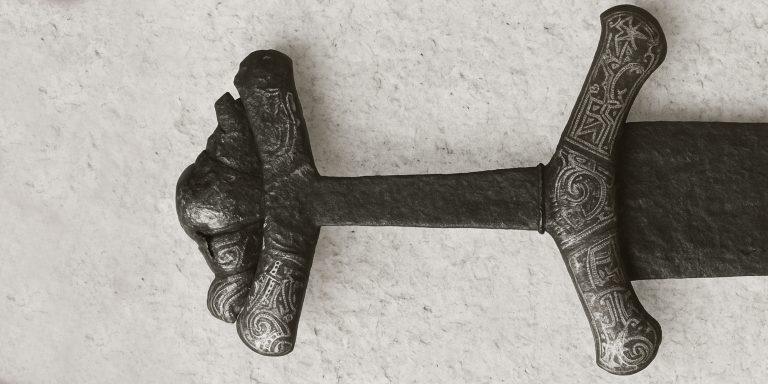
Royal swords also carried ceremonial importance.
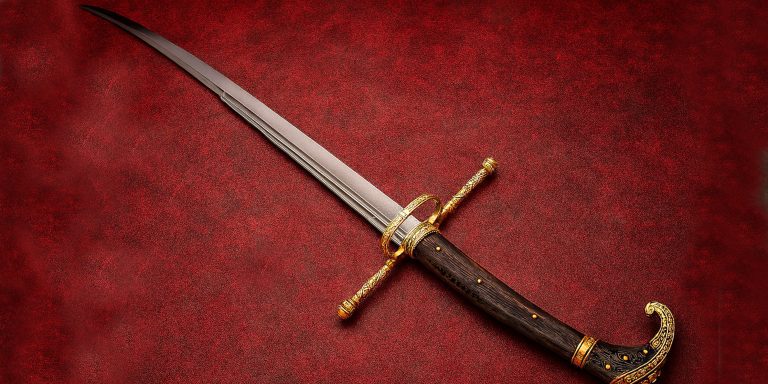
Many were richly decorated with gilded fittings, religious imagery and precious metals while remaining perfectly functional weapons.
The Aragonese Navy
One reason Alfonso succeeded where others failed was his understanding of sea power.
The Mediterranean was effectively a maritime highway.
His fleets transported soldiers, horses, siege equipment and supplies between Spain, Sicily and southern Italy.
Control of the sea allowed him to recover repeatedly from military setbacks.
Without naval superiority, the conquest of Naples would almost certainly have failed.
Alfonso and the Renaissance
Military success financed cultural ambition.
Alfonso gathered scholars from across Italy and the Iberian Peninsula.
His court became renowned for:
- Classical scholarship
- Greek manuscripts
- Latin literature
- Poetry
- Architecture
- Humanist philosophy
Unlike rulers who merely funded artists for prestige, Alfonso appears genuinely interested in learning.
His library became one of Europe’s great intellectual collections.
Government and Administration
Alfonso ruled through a mixture of medieval tradition and Renaissance statecraft.
His government relied upon:
- Experienced administrators
- Noble supporters
- Merchant networks
- Diplomatic alliances
- Urban elites
Naples flourished economically under his rule, although taxation remained substantial to fund military commitments.
His ability to balance Spanish and Italian interests remains one of his greatest political achievements.
Contemporary Opinions
The humanist Antonio Beccadelli praised Alfonso as:
“A prince worthy of immortal glory.”
Historian Bartolomeo Facio wrote that Alfonso possessed:
“Greatness of spirit beyond ordinary kings.”
Not everyone admired him, naturally.
French and Angevin writers often portrayed him as an ambitious foreign conqueror.
The truth probably lies somewhere between both portraits.
He inspired remarkable loyalty while remaining unmistakably ambitious.
Artefacts from Alfonso’s Reign
Visitors interested in Alfonso’s world can still see remarkable surviving material.
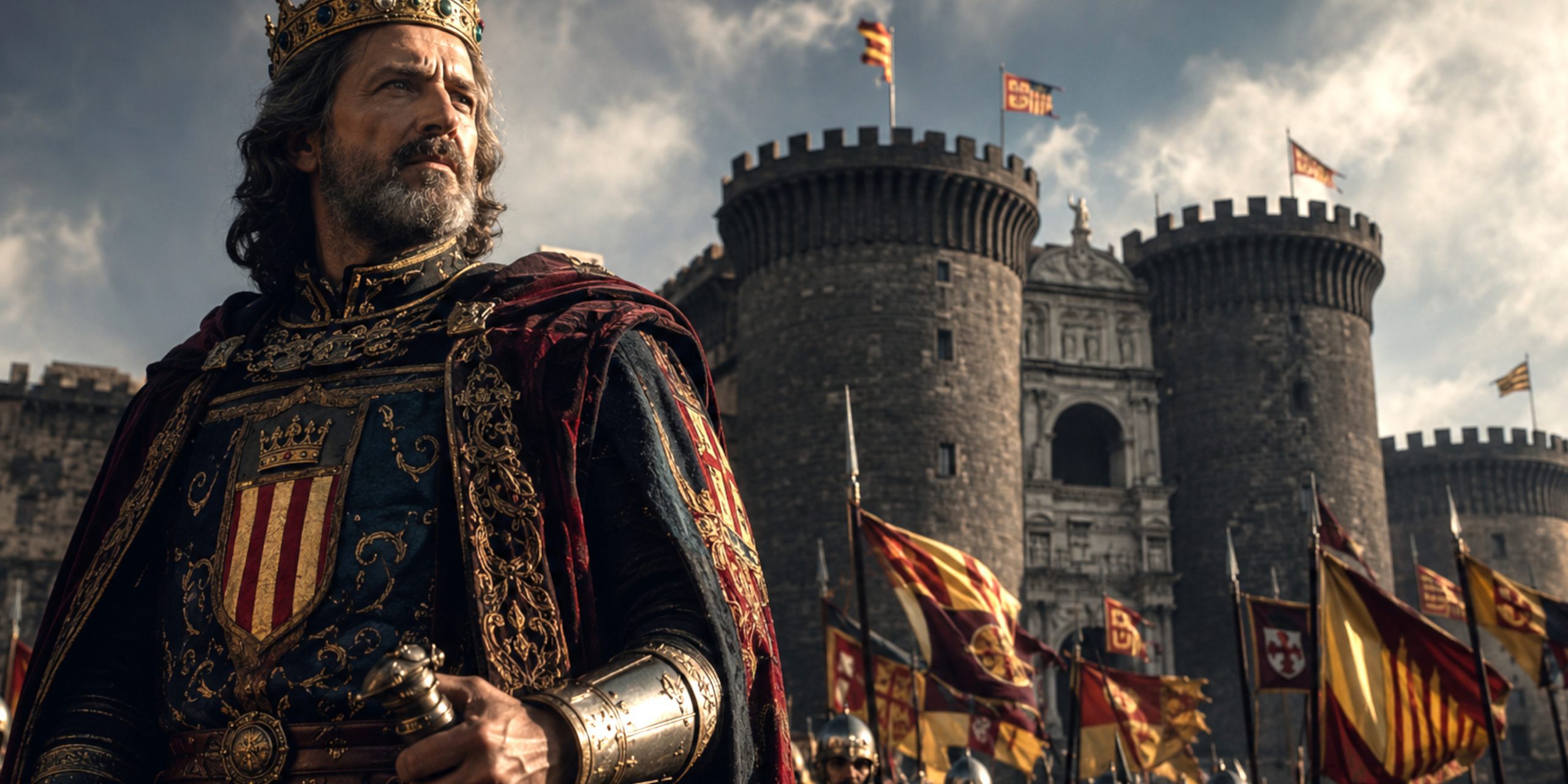
Castel Nuovo, Naples
His greatest architectural legacy.
The famous triumphal marble arch celebrating his conquest remains one of the masterpieces of Renaissance political art.
Royal Armouries of Madrid
Collections include fifteenth century Iberian swords, armour and military equipment similar to that used during Alfonso’s reign.
Museo Archeologico Nazionale di Napoli
Displays relating to medieval Naples help illustrate the city Alfonso transformed into his capital.
Biblioteca Nazionale Vittorio Emanuele III
Contains manuscripts connected with the intellectual life encouraged by Alfonso’s court.
Archivo de la Corona de Aragón, Barcelona
One of Europe’s richest archives for studying Alfonso’s administration, diplomacy and military correspondence.
Archaeology and Recent Discoveries
Research into Alfonso’s reign continues through archaeological work across southern Italy and Spain.
Recent investigations have focused on:
Castel Nuovo
Ongoing conservation has revealed additional structural evidence from Alfonso’s extensive rebuilding programme, helping historians better understand how the fortress evolved into both palace and military headquarters.
Medieval Naples
Urban excavations continue uncovering streets, workshops and harbour infrastructure dating to Alfonso’s rule.
These discoveries shed light on the commercial prosperity that accompanied Aragonese government.
Harbour Archaeology
Marine archaeology around Naples has improved understanding of fifteenth century shipping, naval logistics and Mediterranean trade networks that supported Alfonso’s campaigns.
Documentary Archaeology
Rather than excavation alone, historians increasingly combine surviving administrative records with archaeological evidence to reconstruct taxation, military supply systems and urban development during Alfonso’s reign.
It is a reminder that archaeology is not always about spectacular treasures. Sometimes a warehouse foundation or a forgotten dock tells us more about a king’s success than another golden crown.
Legacy
Alfonso transformed the Crown of Aragon into one of the Mediterranean’s dominant powers.
His conquest of Naples shifted the political balance of Italy for generations.
He also demonstrated that military conquest and intellectual curiosity were not mutually exclusive.
His successors inherited a kingdom that had become both stronger militarily and richer culturally.
Many rulers could win battles.
Far fewer could leave behind libraries, monuments, diplomatic innovations and an entire Renaissance court.
That combination explains why Alfonso still commands attention six centuries later.
Takeaway
Alfonso V of Aragon remains one of medieval Europe’s most compelling rulers because he refused to fit neatly into a single category. He was a knight who admired classical philosophy, a conqueror who surrounded himself with scholars and a politician capable of extraordinary patience when impatience would have been easier.
His campaigns reshaped southern Italy. His patronage enriched Renaissance culture. His court became a meeting place for soldiers, poets and diplomats who helped define a changing Europe.
If there is one lesson from Alfonso’s career, it is that power is rarely sustained by force alone. Swords may win kingdoms, but ideas often keep them.