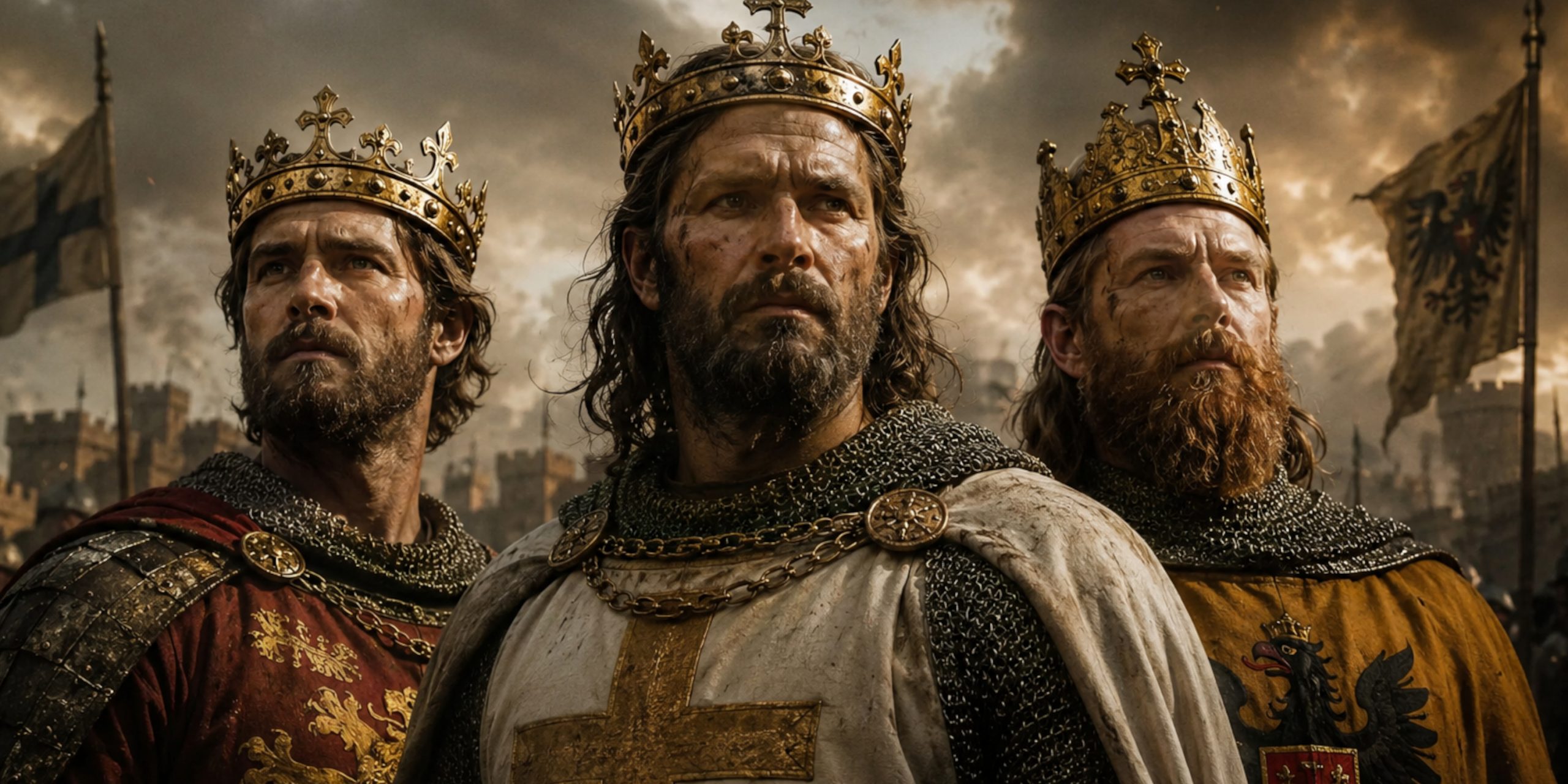
The Crusades created some of the most fascinating, brilliant, stubborn and occasionally disastrous monarchs of the medieval world. The kings who ruled during this period were not simply battlefield commanders. They were diplomats, politicians, negotiators, patrons, and sometimes professional creators of their own problems.
Ranking them is not easy. Medieval kingship was a brutal job interview that lasted your entire life and usually involved assassins, rebellions, angry nobles and at least one neighbour who wanted your castle.
This ranking considers:
- Military ability
- Political skill
- Impact on the Crusades
- Long-term legacy
- Leadership under pressure
- Success compared with the situation they inherited
The focus is primarily on the kings of the Crusader States and major monarchs who personally led Crusading campaigns.
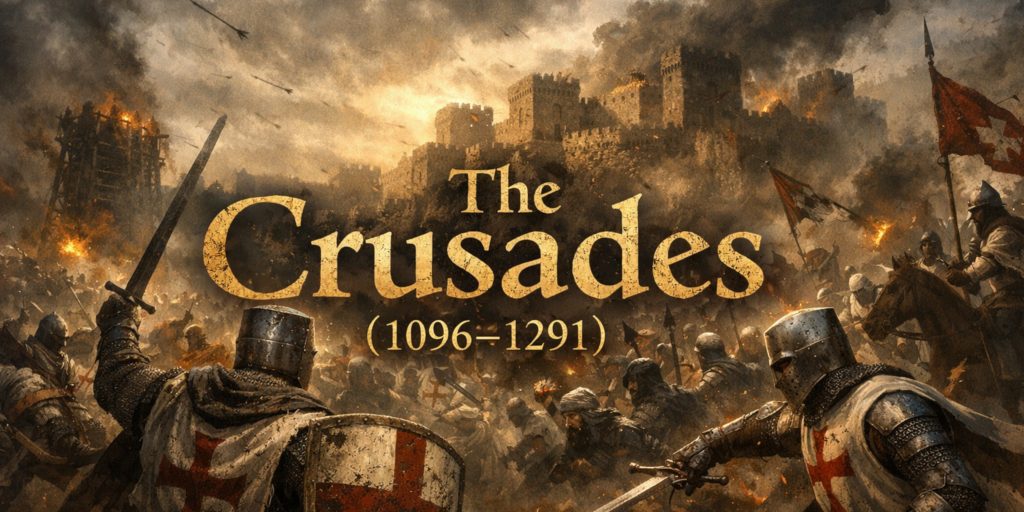
20. Guy of Lusignan
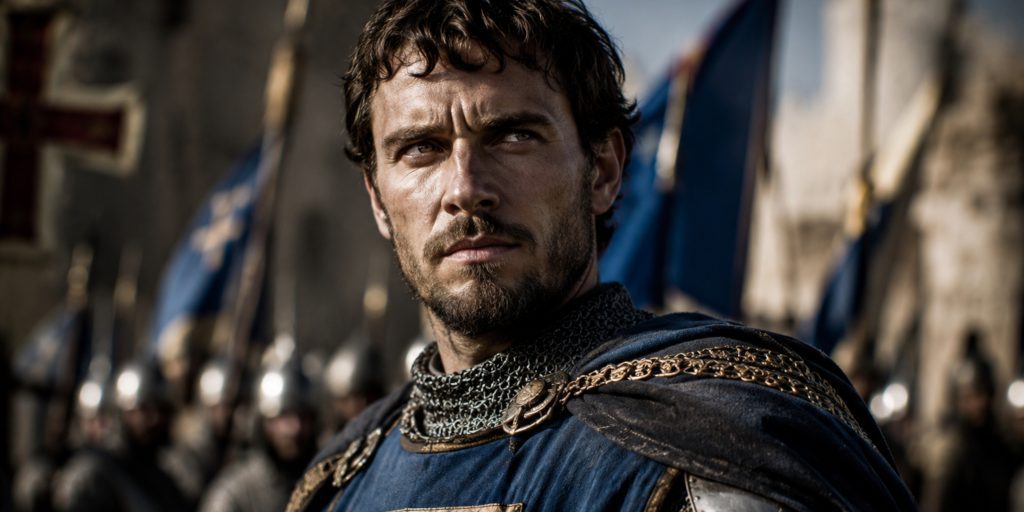
King of Jerusalem: 1186 to 1192
King of Cyprus: 1192 to 1194
Poor Guy. Few medieval rulers managed to turn a difficult situation into an outright catastrophe quite as efficiently.
Guy inherited a fragile Kingdom of Jerusalem surrounded by the rising power of Saladin. His biggest test came at the Battle of Hattin in 1187, where his army was surrounded and destroyed. The loss opened the way for Saladin to retake Jerusalem.
Strengths
- Personally brave
- Survived captivity and political collapse
- Helped establish Lusignan rule on Cyprus
Weaknesses
- Poor strategic judgement
- Failed to control powerful nobles
- Led the kingdom into its greatest defeat
His later rule in Cyprus saved his reputation slightly, but Hattin remains the giant shadow over his legacy.
Verdict: A brave knight, but a disastrous king.
19. Conrad III of Germany
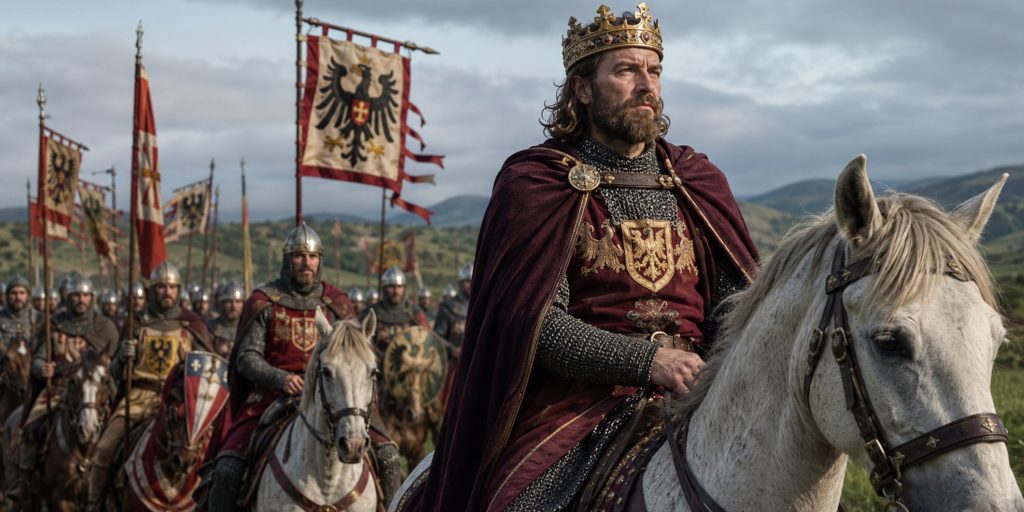
King of Germany: 1138 to 1152
Conrad III was one of the leaders of the Second Crusade, and unfortunately for him, it became a masterclass in how not to organise an international military expedition.
His army suffered heavily in Anatolia, and the later failed attack on Damascus in 1148 damaged Crusader prestige.
Strengths
- Experienced European ruler
- Personally courageous
- Maintained imperial authority at home
Weaknesses
- Poor campaign organisation
- Limited understanding of eastern warfare
- Failed to achieve Crusading objectives
Medieval logistics were a nightmare, but Conrad still managed to make them look even worse.
Verdict: A strong European monarch but an unsuccessful Crusader.
18. Louis VII of France
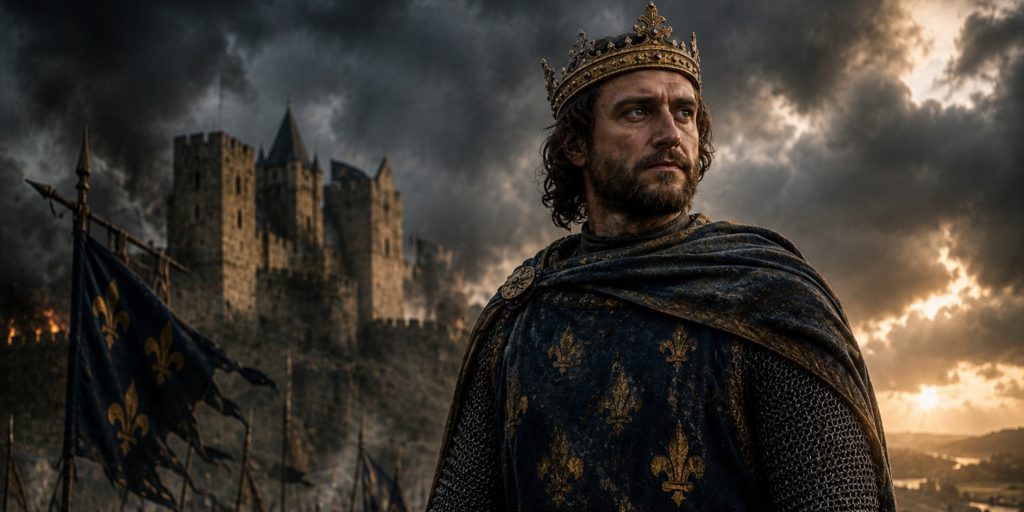
King of France: 1137 to 1180
Louis VII entered the Second Crusade with religious passion but struggled with the realities of eastern campaigning.
His army suffered heavy losses travelling through Anatolia, and the expedition ended with failure at Damascus. His personal courage was never doubted, but enthusiasm alone does not win medieval wars.
Strengths
- Devout and committed
- Strengthened royal administration in France
- Personally brave
Weaknesses
- Poor military instincts
- Strategic mistakes during the Crusade
- Overshadowed by later Capetian rulers
Verdict: A sincere king who discovered that faith does not replace planning.
17. Amalric I of Jerusalem
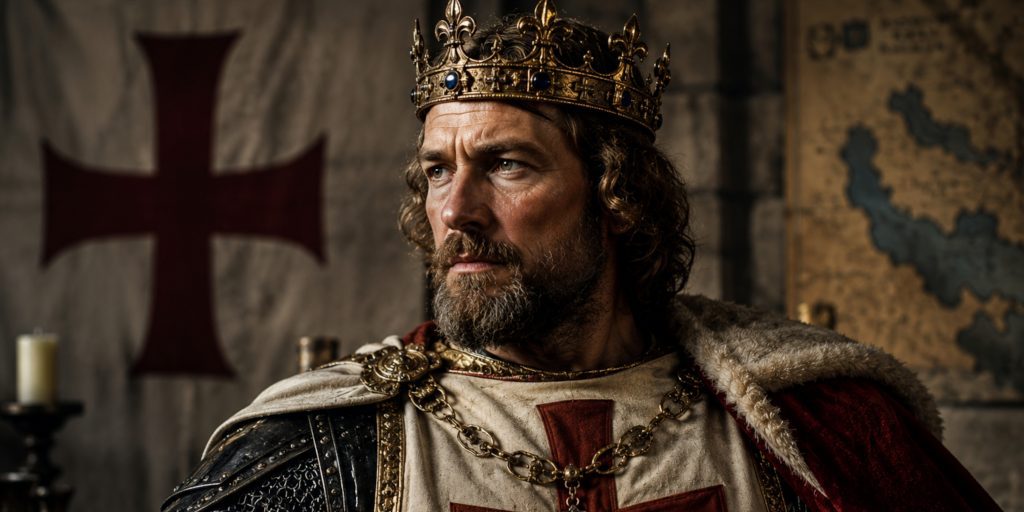
King of Jerusalem: 1163 to 1174
Amalric was ambitious, intelligent and far more politically sophisticated than he is usually given credit for.
His major goal was controlling Egypt before Nur ad-Din and Saladin could dominate the region. The idea was strategically brilliant, but the execution failed.
Strengths
- Strong diplomatic ability
- Understood the importance of Egypt
- Expanded royal administration
Weaknesses
- Failed Egyptian campaigns
- Expensive military adventures
- Left Jerusalem exposed to a stronger enemy
Verdict: A king who saw the future danger but could not prevent it.
16. Frederick II, Holy Roman Emperor
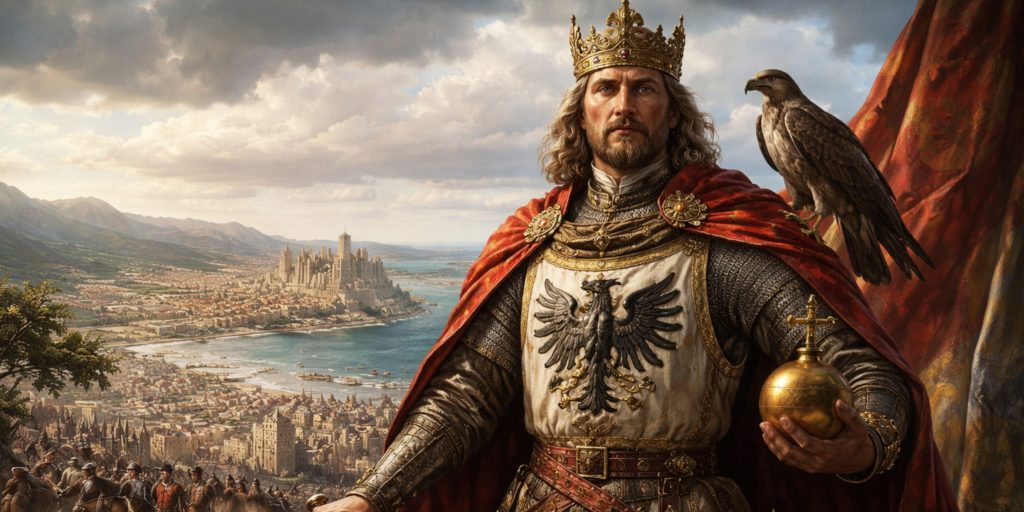
King of Jerusalem: 1225 to 1228
Frederick II is one of the strangest Crusader rulers in history.
While many kings tried to conquer Jerusalem through battle, Frederick simply negotiated it back during the Sixth Crusade. The fact he achieved this while excommunicated by the Pope makes the story even more medieval.
Strengths
- Exceptional diplomat
- Brilliant administrator
- Regained Jerusalem without major bloodshed
Weaknesses
- Alienated almost everyone
- Poor relationship with local Crusader nobles
- Limited lasting success in the Holy Land
Verdict: A genius politician who somehow annoyed nearly every ally he had.
15. John of Brienne
King of Jerusalem: 1210 to 1225
John of Brienne was a professional survivor.
He became king through marriage and played a major role in the Fifth Crusade, particularly the campaign in Egypt.
Strengths
- Skilled commander
- Experienced diplomat
- Adapted well to difficult situations
Weaknesses
- Limited resources
- Lost influence after Frederick II’s involvement
- Failed to secure Jerusalem permanently
Verdict: One of the medieval world’s most underrated operators.
14. Henry II of England
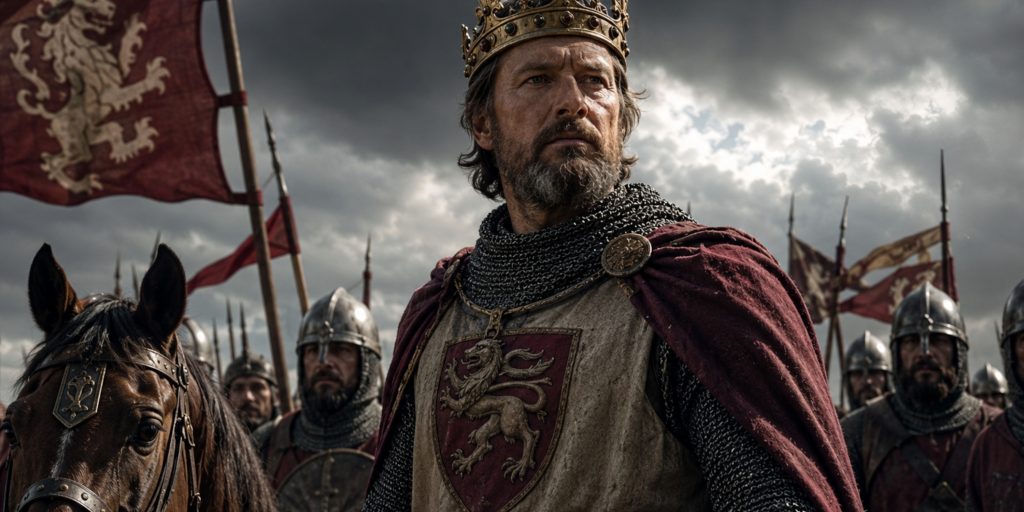
King of England: 1154 to 1189
Henry II never personally went on Crusade, which keeps him lower on this list, but his influence was enormous.
His financial systems, political reforms and resources helped create the England inherited by Richard the Lionheart.
Strengths
- Administrative genius
- Built England into a major power
- Created resources used in the Third Crusade
Weaknesses
- Never fulfilled his own Crusading ambitions
- Constant family conflicts
Few kings were better at running a kingdom. Few were worse at having peaceful family dinners.
Verdict: A great medieval ruler, but not truly a Crusader king.
13. Baldwin II of Jerusalem
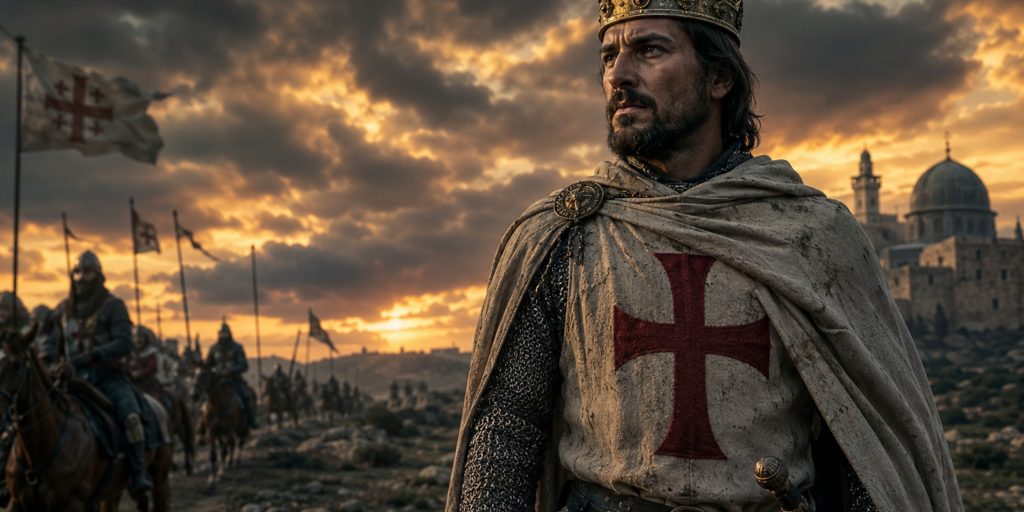
King of Jerusalem: 1118 to 1131
Baldwin II was a hardened Crusader veteran who helped stabilise the young Kingdom of Jerusalem.
He spent years fighting Muslim powers and strengthening the kingdom’s institutions.
Strengths
- Experienced military leader
- Expanded Crusader influence
- Supported the rise of military orders
Weaknesses
- Captured during campaigns
- Faced constant instability
Verdict: A builder king who kept the Crusader project alive.
12. Louis IX of France
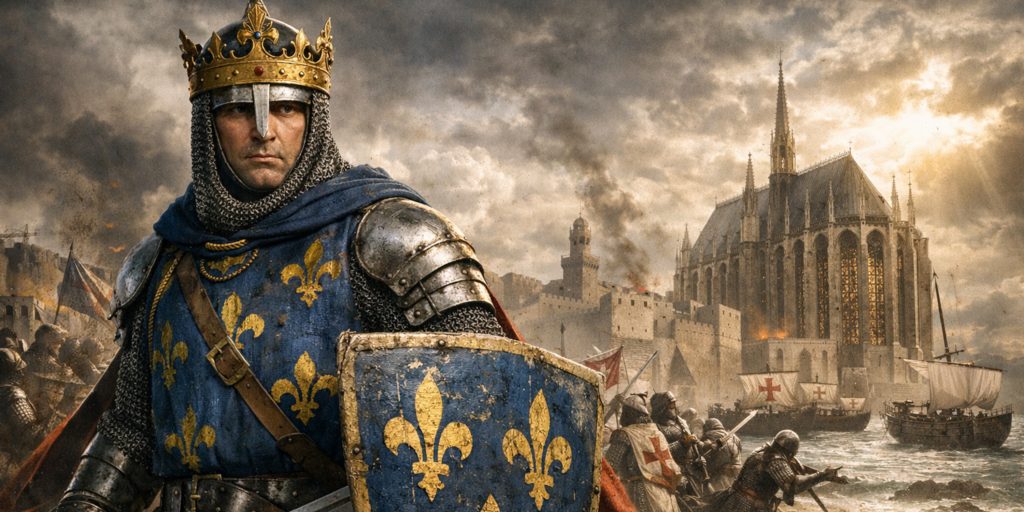
King of France: 1226 to 1270
Saint Louis was probably the most committed Crusader monarch of them all.
His Seventh Crusade ended in disaster when he was captured in Egypt, yet his leadership, discipline and reputation remained extraordinary.
Strengths
- Outstanding organiser
- Deeply respected by allies and enemies
- Strengthened France enormously
Weaknesses
- Failed military campaigns
- Overestimated Crusading possibilities
Verdict: A remarkable king, even if his Crusades did not match his ambitions.
11. Baldwin I of Jerusalem
King of Jerusalem: 1100 to 1118
The first king of Jerusalem transformed a fragile conquest into a functioning state.
Baldwin expanded territory, defeated enemies and created a stronger monarchy.
Strengths
- Excellent strategist
- Practical ruler
- Expanded Crusader territory
Weaknesses
- Ruthless politics
- Limited resources
Verdict: The architect of the Crusader kingdom.
10. Edward I of England
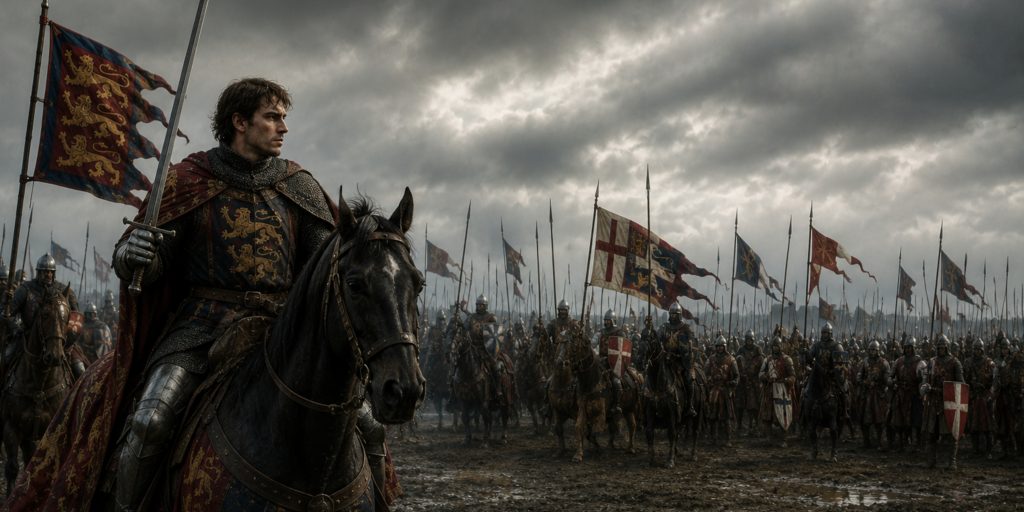
Lord Edward’s Crusade: 1271 to 1272
Before becoming king, Edward led one of the final serious Crusading expeditions.
Although small, his campaign showed tactical skill, particularly through raids and diplomacy.
Strengths
- Skilled commander
- Strong military organiser
- Adapted to local warfare
Weaknesses
- Limited manpower
- Arrived too late to reverse Crusader decline
Verdict: A dangerous battlefield leader who appeared after the golden age had passed.
9. Philip II Augustus of France
King of France: 1180 to 1223
Philip II rarely gets romanticised like Richard the Lionheart, but he was arguably the more effective king.
During the Third Crusade he helped capture Acre before returning home to focus on expanding French power.
Strengths
- Brilliant politician
- Expanded royal authority
- Strategic thinker
Weaknesses
- Limited Crusading commitment
- Rivalry with Richard weakened cooperation
Verdict: Less dramatic than Richard, probably better at actually running a country.
8. Fulk of Jerusalem
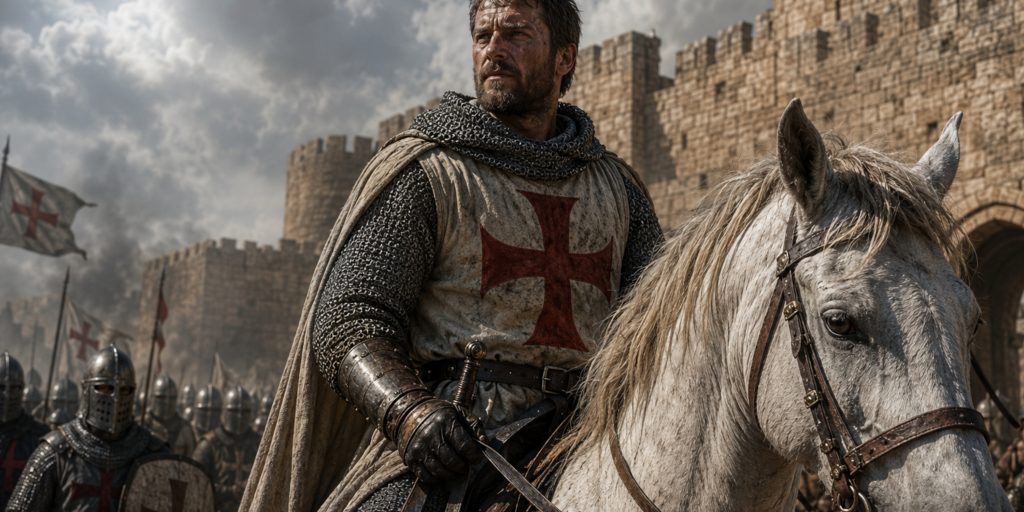
King of Jerusalem: 1131 to 1143
Fulk was already an experienced warrior before becoming king.
He strengthened defences, supported castle construction and resisted the growing power of Muslim states.
Strengths
- Veteran commander
- Defensive strategist
- Experienced noble ruler
Weaknesses
- Political tensions with local nobles
Verdict: A practical soldier king.
7. Henry I of Cyprus
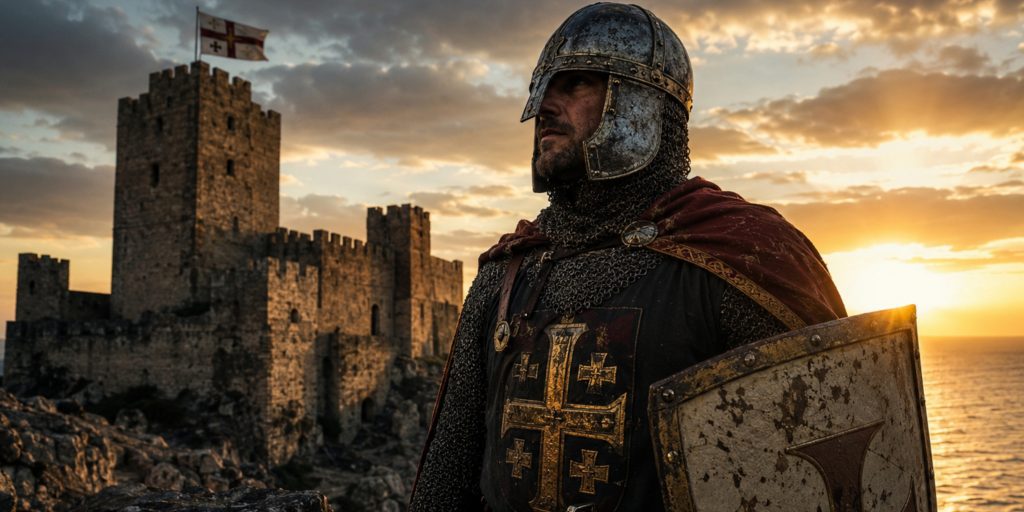
King of Cyprus: 1218 to 1253
Henry ruled one of the most successful Crusader kingdoms after the decline of Jerusalem.
Cyprus became wealthy, strategically important and culturally influential.
Strengths
- Stable government
- Strong economy
- Maintained Crusader influence
Weaknesses
- Less famous due to fewer dramatic campaigns
Verdict: Proof that good administration matters as much as swinging a sword.
6. Godfrey of Bouillon
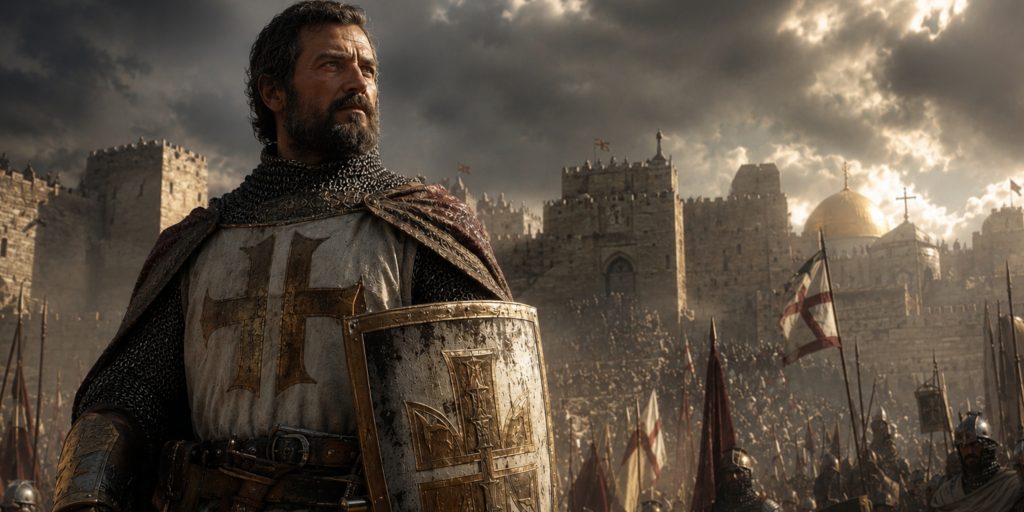
Ruler of Jerusalem: 1099 to 1100
Godfrey refused the title of king, preferring “Defender of the Holy Sepulchre”, but leaving him out would feel criminal.
He was one of the key leaders of the First Crusade and became the first ruler of the captured city.
Strengths
- Inspirational leader
- Skilled warrior
- Huge symbolic legacy
Weaknesses
- Short rule
- Limited time to establish institutions
Verdict: The legend was bigger than the reign.
5. Bohemond I of Antioch
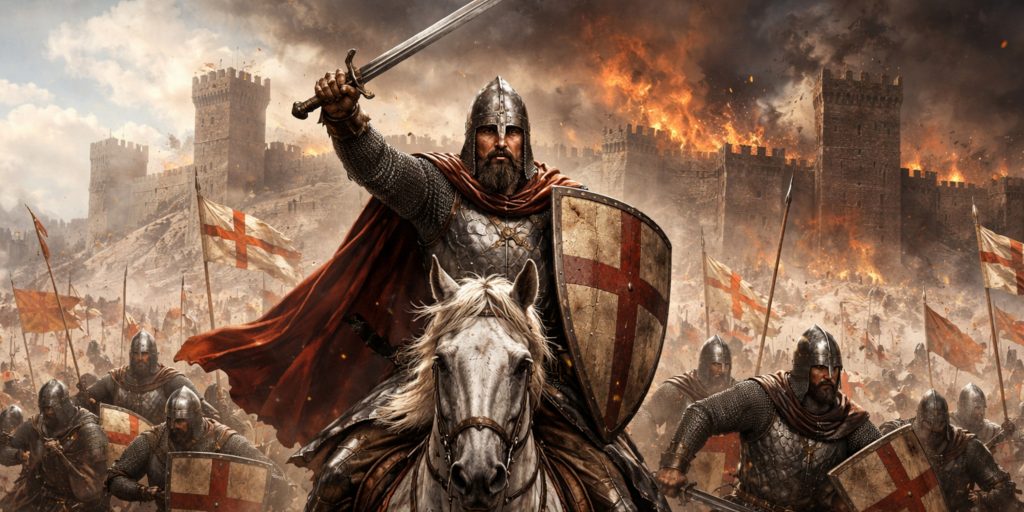
Prince of Antioch: 1098 to 1111
Technically not a king, but too important to ignore.
Bohemond was one of the finest commanders of the First Crusade and helped capture Antioch through a mixture of strategy, aggression and political cunning.
Strengths
- Brilliant battlefield commander
- Charismatic leader
- Tactical innovator
Weaknesses
- Extremely ambitious
- Prioritised personal power
Verdict: A terrifying opponent and exactly the sort of person you wanted on your side, until you remembered he mostly wanted his own side.
4. Baldwin IV “The Leper King”
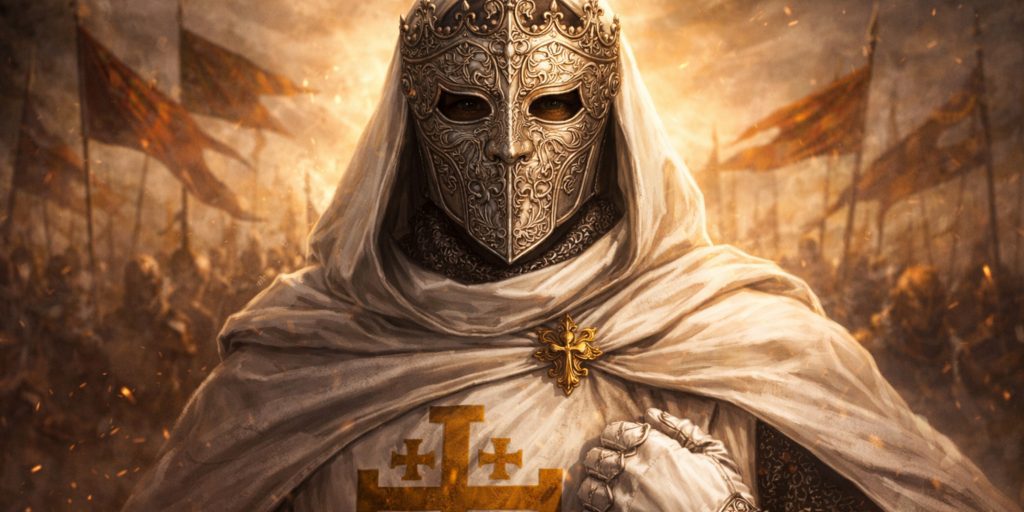
King of Jerusalem: 1174 to 1185
Baldwin IV remains one of the most extraordinary medieval rulers.
Despite suffering from leprosy from a young age, he repeatedly resisted Saladin and achieved a stunning victory at the Battle of Montgisard in 1177.
Strengths
- Exceptional courage
- Strong strategic instincts
- Maintained Jerusalem despite impossible circumstances
Weaknesses
- Illness limited his later rule
- Succession crisis after his death
Verdict: A tragic but genuinely impressive warrior king.
3. Frederick I Barbarossa
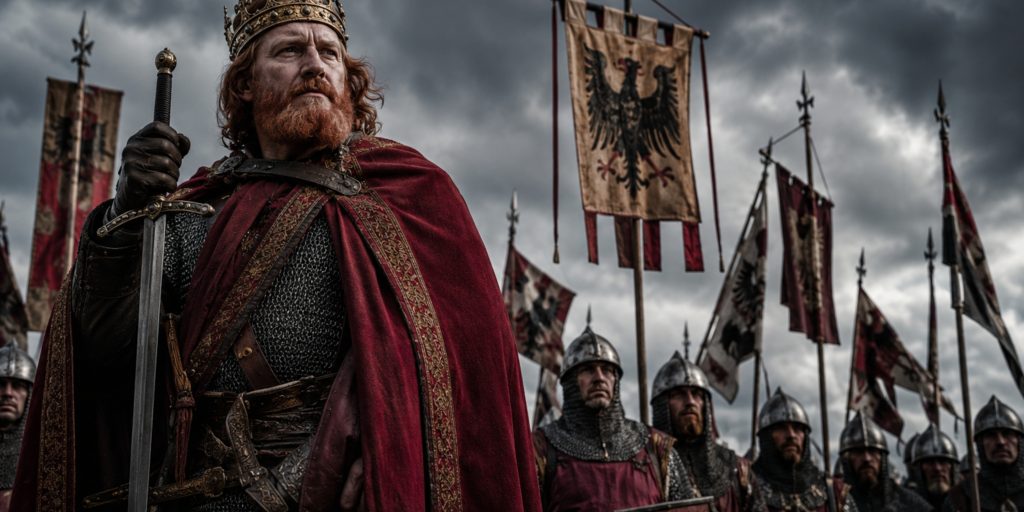
Holy Roman Emperor: 1155 to 1190
Barbarossa was already a legendary ruler before joining the Third Crusade.
His huge army created panic among his opponents, but he drowned before reaching the Holy Land.
Strengths
- Experienced commander
- Massive political authority
- Created a formidable Crusading force
Weaknesses
- Never completed his campaign
Verdict: One of the greatest medieval rulers whose Crusade ended with one tragic accident.
2. Richard I “The Lionheart”
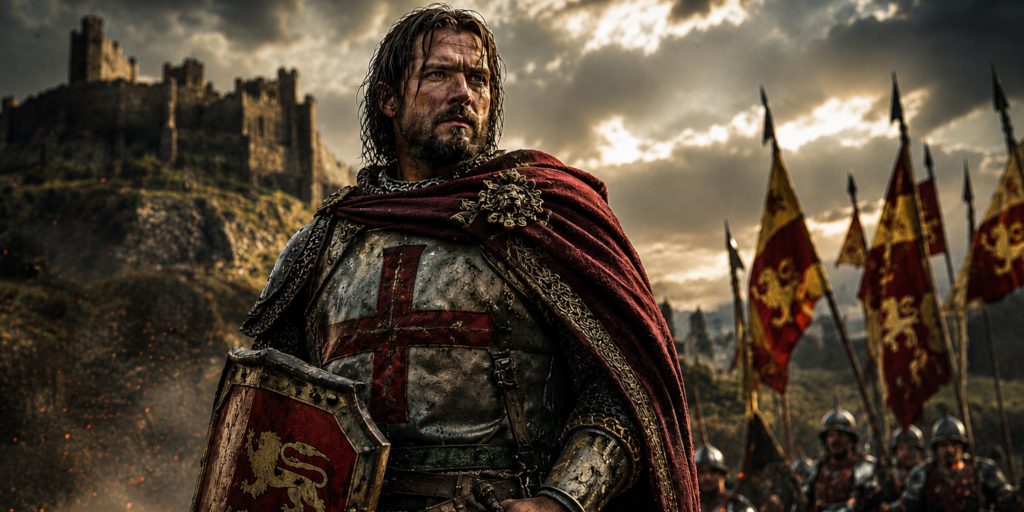
King of England: 1189 to 1199
Richard is the classic image of the Crusader king.
At the Third Crusade he defeated Saladin’s forces at Arsuf, captured key coastal cities and restored Crusader confidence.
Strengths
- Elite battlefield commander
- Tactical brilliance
- Inspired loyalty among soldiers
Weaknesses
- Poor long-term administrator
- Rarely spent time in England
Richard was built for medieval warfare. Running tax systems and attending council meetings? Slightly less exciting apparently.
Verdict: Possibly the greatest Crusader general.
1. Baldwin III of Jerusalem
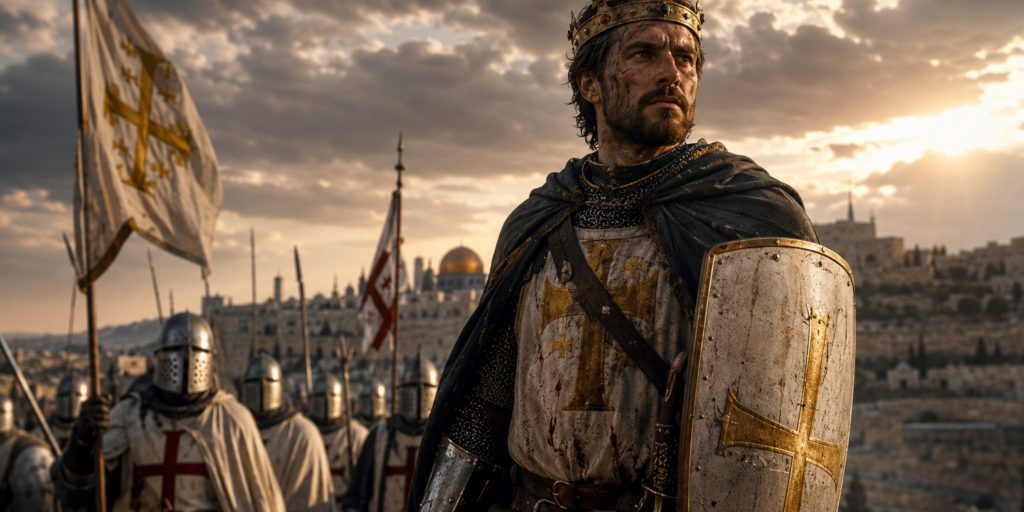
King of Jerusalem: 1143 to 1163
Baldwin III earns the top position because he represents the most complete Crusader king.
He was a skilled warrior, a capable politician and an effective ruler during one of Jerusalem’s strongest periods.
His capture of Ascalon in 1153 was a major victory that secured the southern frontier and strengthened the kingdom.
Strengths
- Strong battlefield commander
- Successful diplomat
- Respected by allies and opponents
- Balanced warfare with government
Weaknesses
- Died young
- Long-term threats continued after his reign
Verdict: The most rounded Crusader monarch. Not the most famous, but perhaps the one you would actually want running your kingdom.
Final Ranking Table
| Rank | Ruler | Greatest Strength |
|---|---|---|
| 1 | Baldwin III | Complete kingship |
| 2 | Richard I | Battlefield command |
| 3 | Frederick Barbarossa | Imperial leadership |
| 4 | Baldwin IV | Courage under pressure |
| 5 | Bohemond I | Tactical brilliance |
| 6 | Godfrey of Bouillon | Foundational leadership |
| 7 | Henry I of Cyprus | Stability |
| 8 | Fulk | Defensive strategy |
| 9 | Philip II Augustus | Political skill |
| 10 | Edward I | Military ability |
| 11 | Baldwin I | State building |
| 12 | Louis IX | Organisation and reputation |
| 13 | Baldwin II | Survival and expansion |
| 14 | Henry II | Administration |
| 15 | John of Brienne | Adaptability |
| 16 | Frederick II | Diplomacy |
| 17 | Amalric I | Strategic vision |
| 18 | Louis VII | Commitment |
| 19 | Conrad III | Experience |
| 20 | Guy of Lusignan | Survival |
The Crusader era rewards complexity. Some brilliant warriors were terrible rulers, while some less glamorous kings quietly achieved more by keeping their kingdoms alive. Medieval history has a habit of remembering the loudest sword, but sometimes the sharpest weapon was patience.