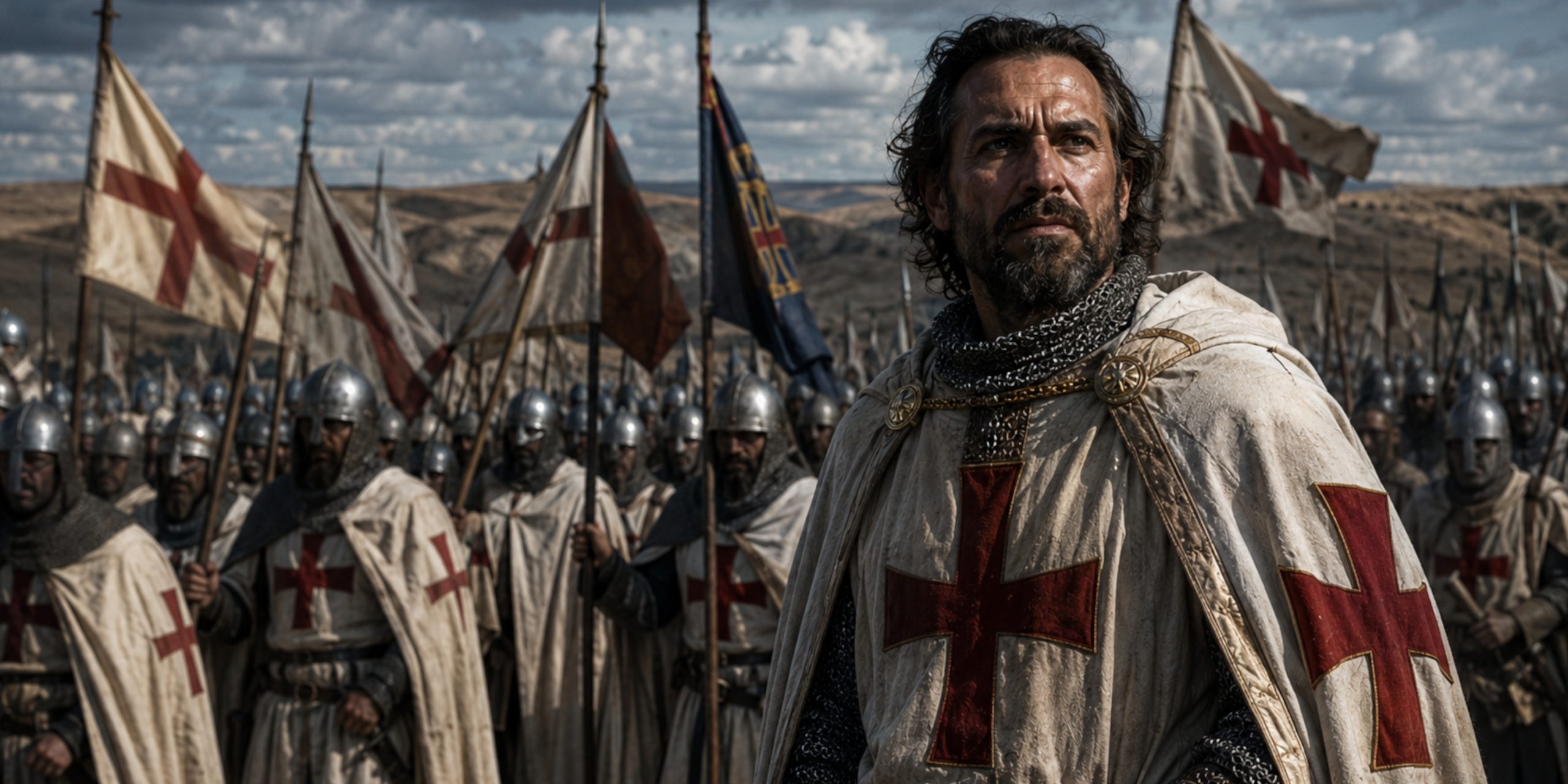
Amalric I of Jerusalem is one of those Crusader kings who often ends up standing in the shadow of louder names. Baldwin IV has the tragedy. Richard the Lionheart has the legend. Saladin has the myth-making machinery of half the modern world behind him. Amalric, meanwhile, tends to appear as the exhausted middle manager of the Crusader Kingdom, forever trying to stop everything collapsing at once.
That is unfair.
He was one of the most intellectually capable rulers the Kingdom of Jerusalem produced. He fought repeatedly in Egypt, navigated Byzantine diplomacy, attempted to hold together deeply divided nobles, and recognised before many others that Egypt would decide the future of the eastern Mediterranean. Sadly for him, recognising a problem and solving it are not always the same thing.
Amalric ruled Jerusalem from 1163 until 1174. During those years the Crusader states reached both their greatest strategic opportunity and the beginning of their long decline. Historians often look at his reign with a certain frustration. One can almost hear the chroniclers muttering into their wine cups: “He nearly managed it.”
Early Life and Rise to the Throne
Amalric was born around 1136, the son of King Fulk of Jerusalem and Queen Melisende. This placed him firmly inside the complicated and occasionally poisonous politics of the Crusader aristocracy. Jerusalem’s royal family was rarely calm for long. Assassinations, rival claims, shifting alliances and family disputes were as common as dust.
His elder brother Baldwin III became king first. Amalric spent much of his early life serving as Count of Jaffa and Ascalon, gaining practical military experience on the frontier with Fatimid Egypt.
When Baldwin III died unexpectedly in 1163 without heirs, Amalric inherited the throne. There was, however, an awkward issue. His marriage to Agnes of Courtenay was considered politically unsuitable by several leading nobles and churchmen. Amalric effectively had to agree to an annulment before being crowned king.
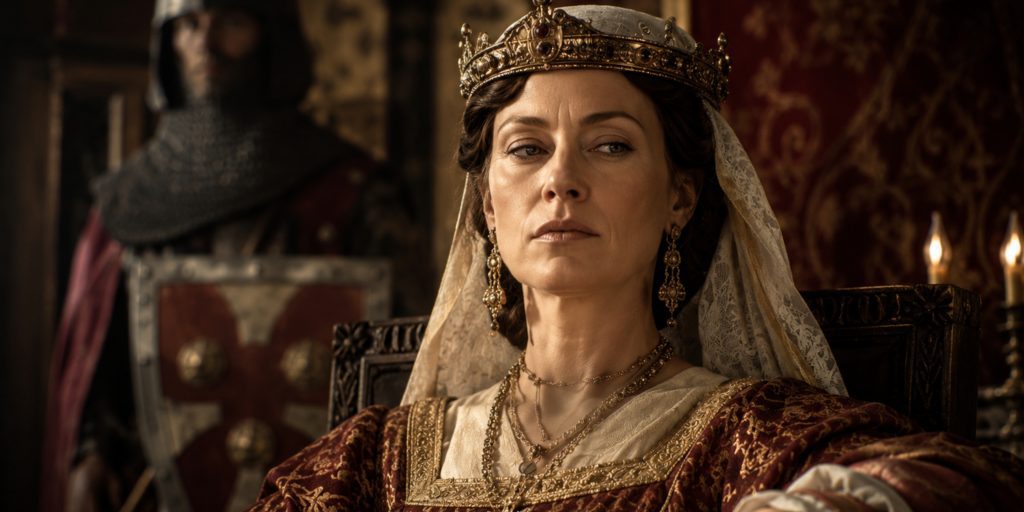
Medieval politics had a remarkable talent for making personal misery sound administrative.
Despite the annulment, the legitimacy of their children remained intact. This mattered enormously because those children included Baldwin IV and Sibylla, two figures who would later dominate the final years before the disaster at Hattin.
The Kingdom Amalric Inherited
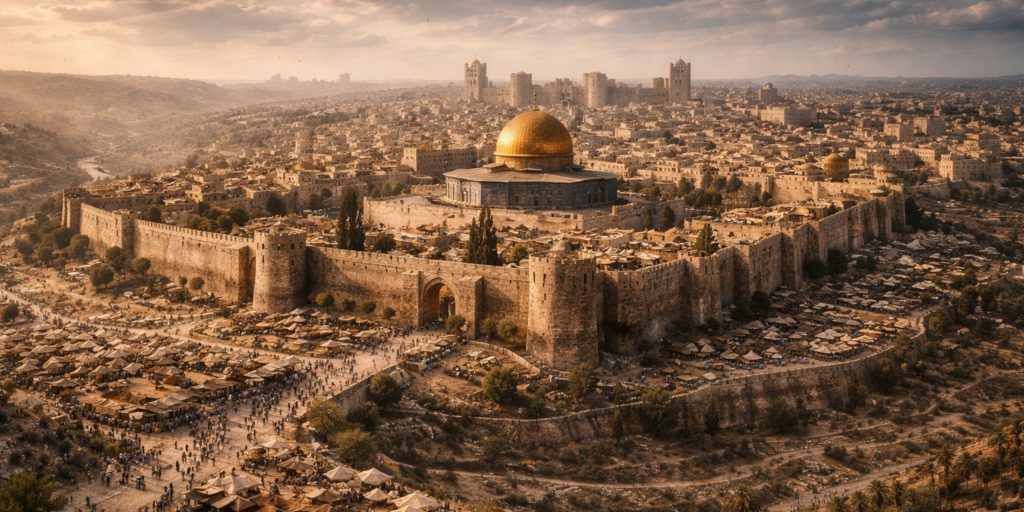
The Crusader Kingdom of Jerusalem in the 1160s was wealthy by Levantine standards but deeply fragile.
Its survival depended upon:
- Coastal trade
- Italian merchant fleets
- Fortified castles
- Internal cooperation among quarrelsome nobles
- Muslim disunity
That last factor mattered most.
The Muslim world around Jerusalem was fragmented between Syria, Egypt, rival emirs, and competing dynasties. Amalric understood that if Egypt and Syria united under a single ruler, Jerusalem would be in terrible danger.
Unfortunately for him, Nur ad-Din in Syria understood exactly the same thing.
This became the defining strategic contest of Amalric’s reign.
Amalric’s Egyptian Campaigns
The Great Obsession with Egypt
Amalric launched repeated campaigns into Egypt between 1163 and 1169. Modern historians sometimes criticise these invasions as reckless, but from Amalric’s perspective they made complete sense.
Egypt was fabulously wealthy compared with the Crusader states. Control over it could fund armies, fleets and fortifications on a scale Jerusalem could never otherwise afford.
If Jerusalem controlled Egypt, the Crusader states might survive for centuries.
If Syria controlled Egypt, the Crusader Kingdom would eventually be strangled.
That calculation drove nearly everything Amalric did.
Battles and Military Acumen
Amalric was not merely a ceremonial monarch. He was an active field commander who campaigned constantly.
Key Campaigns and Battles
| Year | Campaign | Outcome |
|---|---|---|
| 1163 | First Egyptian invasion | Initial success but strategic failure |
| 1164 | Defence against Nur ad-Din | Crusader setbacks in Syria |
| 1167 | Egyptian intervention | Temporary alliance with Fatimid factions |
| 1168 | Invasion and sack of Bilbeis | Short-term victory, long-term disaster |
| 1169 | Joint Byzantine-Crusader siege of Damietta | Failed siege |
Amalric’s strengths as a commander included:
- Strategic awareness
- Diplomatic coordination
- Aggressive operational campaigning
- Understanding supply and coastal logistics
His weaknesses were equally serious:
- Overextension
- Reliance on unreliable allies
- Difficulty securing lasting occupation
- Occasional brutality that alienated local populations
The sack of Bilbeis in 1168 became especially infamous. Crusader forces reportedly massacred large numbers of inhabitants. Contemporary chroniclers describe scenes of panic and slaughter. The violence horrified many Egyptians and helped push support toward Nur ad-Din’s general Shirkuh and his young nephew Saladin.
In trying to stop Muslim unification, Amalric arguably accelerated it.
History can be extraordinarily cruel in that way.
Amalric and the Rise of Saladin

One cannot discuss Amalric without discussing Saladin.
The future sultan first rose to prominence during the Egyptian struggles that Amalric helped create. Shirkuh secured control of Egypt for Nur ad-Din, and after Shirkuh’s death in 1169, Saladin inherited his position.
At first, many underestimated him.
This would prove to be one of the great miscalculations of the century.
Amalric recognised the danger relatively early and attempted to counterbalance it through diplomacy with Byzantium. Yet the political machinery of the Crusader states moved slowly, while Saladin combined patience, charisma, religious legitimacy and military competence.
That combination rarely ends well for one’s enemies.
Amalric and Byzantium
Amalric cultivated close relations with the Byzantine Empire, particularly Emperor Manuel I Komnenos.
He married Maria Komnene, strengthening ties between Jerusalem and Constantinople. The alliance culminated in the joint siege of Damietta in 1169.
The campaign failed badly.
Poor coordination, mistrust, logistical problems and disease crippled the operation. Byzantine and Crusader forces blamed each other afterwards with the sort of bitter irritation familiar to every coalition army in history.
Even so, Amalric deserves credit for recognising that Jerusalem could not survive indefinitely without stronger alliances.
Arms and Armour During Amalric’s Reign
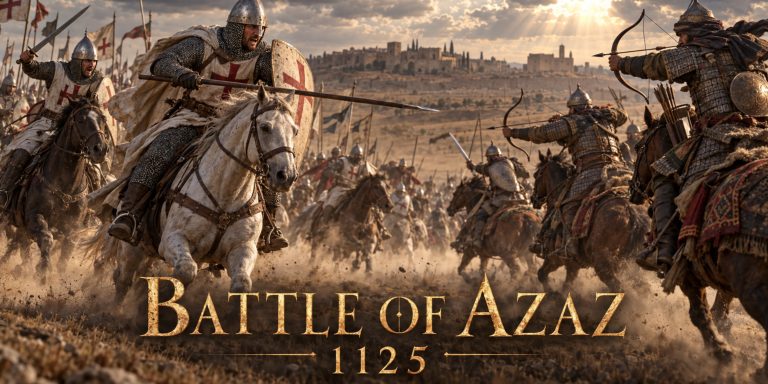
The military culture of Amalric’s Jerusalem reflected both western European traditions and eastern influences.
Royal and Noble Equipment
A high-ranking Crusader knight during Amalric’s reign would likely have worn:
- Mail hauberk extending to the knees
- Conical or rounded helmet
- Nasal helm transitioning toward enclosed helmets
- Quilted gambeson beneath mail
- Kite shield, increasingly shortened for cavalry mobility
- Spurs and heavy cavalry saddles
Sword Types
Specific swords associated with the era included:
| Weapon Type | Description |
|---|---|
| Arming sword | Straight double-edged knightly sword used by cavalry |
| Early cruciform sword | Broad-bladed weapon suited for cutting and thrusting |
| Falchion | Emerging single-edged blade with strong chopping capability |
| Byzantine-influenced sabres | Occasionally encountered through eastern contact |
Crusader weapons often reflected a fascinating cultural blend. European blades sat beside Islamic steelwork, Byzantine craftsmanship, and locally adapted armour styles. The Levant was not merely a battlefield. It was a vast exchange market for military ideas.
Military Doctrine
Amalric relied heavily upon:
- Shock cavalry charges
- Castle networks
- Mounted sergeants
- Military orders such as the Templars and Hospitallers
The military orders became increasingly influential during his reign. At times they were indispensable. At other times they behaved like heavily armed corporate rivals with vows.
Personality and Reputation
Contemporary chronicler William of Tyre provides one of the most important descriptions of Amalric.
He portrayed the king as intelligent, educated, physically capable, and unusually curious for a ruler of his age. Amalric reportedly enjoyed discussions on law, theology and history.
William wrote that Amalric possessed:
“A knowledge of history beyond that usually possessed by kings.”
That is not faint praise coming from a medieval cleric, many of whom viewed secular rulers with the exhausted tolerance of schoolmasters dealing with overexcited boys carrying swords.
Amalric also had a reputation for persistence. Some historians interpret this as determination. Others call it stubbornness. Both are probably correct.
Contemporary Quotes About Amalric
William of Tyre wrote:
“He was a man of wisdom and experience in affairs.”
Another chronicler described him as:
“Energetic in war and prudent in counsel.”
Arabic chroniclers, while hostile to Crusader rulers generally, still acknowledged the seriousness of Amalric’s campaigns and the threat posed by Jerusalem during his reign.
That alone says much.
Death and Succession
Amalric died in 1174, likely from dysentery or typhoid-related illness.
His death came at a dreadful moment for the Crusader Kingdom. Saladin was consolidating power, Nur ad-Din’s legacy was transforming the Islamic world, and Jerusalem’s political divisions remained unresolved.
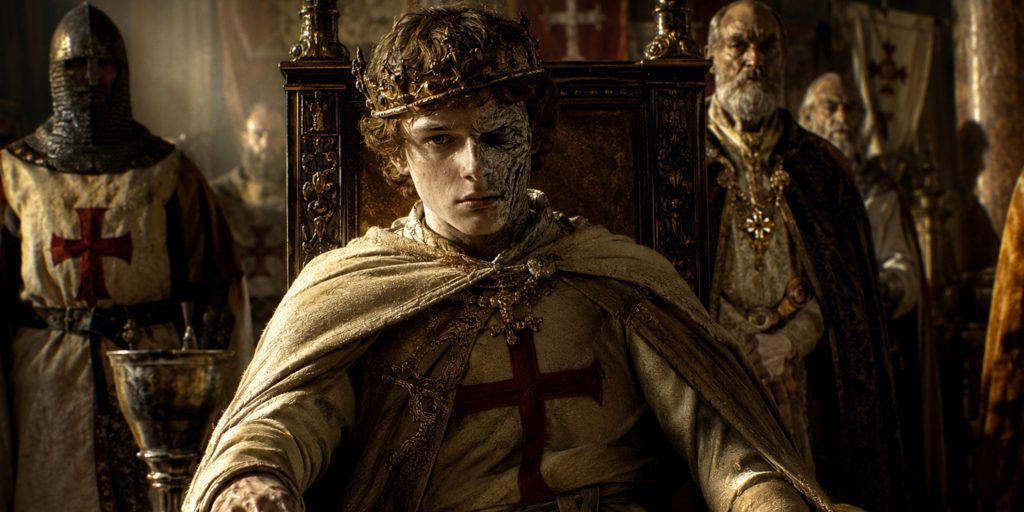
Amalric was succeeded by his son Baldwin IV, the so-called Leper King.
Baldwin’s courage would become legendary, but he inherited a kingdom already drifting toward catastrophe.
Archaeology and Latest Findings
Modern archaeology has continued to reshape understanding of Amalric’s world.
Important Archaeological Discoveries
Crusader Fortifications
Excavations at sites such as:
- Belvoir Castle
- Kerak
- Ascalon
- Caesarea
- Jerusalem’s defensive works
have revealed sophisticated military engineering from Amalric’s era.
Archaeologists have uncovered:
- Arrowheads
- Frankish spurs
- Chainmail fragments
- Ceramics linked to Crusader occupation
- Fortified gate systems
Egyptian Campaign Evidence
Excavations around Bilbeis and Damietta continue to provide insight into the military campaigns against Egypt. Burn layers and fortification remains support contemporary accounts of intense warfare during the 1160s.
Coinage
Coins from Amalric’s reign survive in museums and private collections. These often depict Christian iconography combined with Latin inscriptions, revealing how the Crusader Kingdom projected legitimacy and continuity.
Interestingly, several coins also demonstrate the practical blending of local eastern economic systems with western feudal rulership.
The Crusaders, despite their rhetoric, adapted quickly when money was involved. Medieval kingdoms were many things, but financially naïve was rarely one of them.
Where to See Artefacts from Amalric’s Reign
Several museums and historical sites preserve objects connected to Amalric’s Jerusalem and the broader Crusader period.
Notable Collections
| Location | Artefacts |
|---|---|
| Israel Museum, Jerusalem | Crusader coins, weapons, armour fragments |
| Rockefeller Archaeological Museum | Levantine Crusader artefacts |
| Louvre Museum, Paris | Medieval eastern Mediterranean collections |
| Metropolitan Museum of Art, New York | Crusader-period arms and religious objects |
| Belvoir Castle site | Crusader military architecture |
| Kerak Castle, Jordan | Fortifications from the Crusader frontier |
Many surviving objects are indirect rather than personal possessions of Amalric himself. Medieval kings rarely labelled belongings helpfully for future curators.
Amalric’s Legacy
Amalric I occupies a strange place in Crusader history.
He was neither the greatest warrior king nor the worst. He did not win a defining triumph, yet he recognised the strategic realities facing Jerusalem more clearly than many contemporaries.
His reign marks the final period when the Kingdom of Jerusalem still possessed genuine strategic initiative.
After Amalric, the Crusader states increasingly reacted to events rather than controlling them.
In many ways, he feels like the last Crusader king still attempting to think several moves ahead. The tragedy is that history rarely rewards foresight if resources and luck fail to cooperate.
One leaves Amalric with a curious mixture of admiration and frustration. He understood the danger. He fought tirelessly against it. He nearly succeeded.
Nearly, in medieval politics, is often another word for doomed.
Watch the documentary: