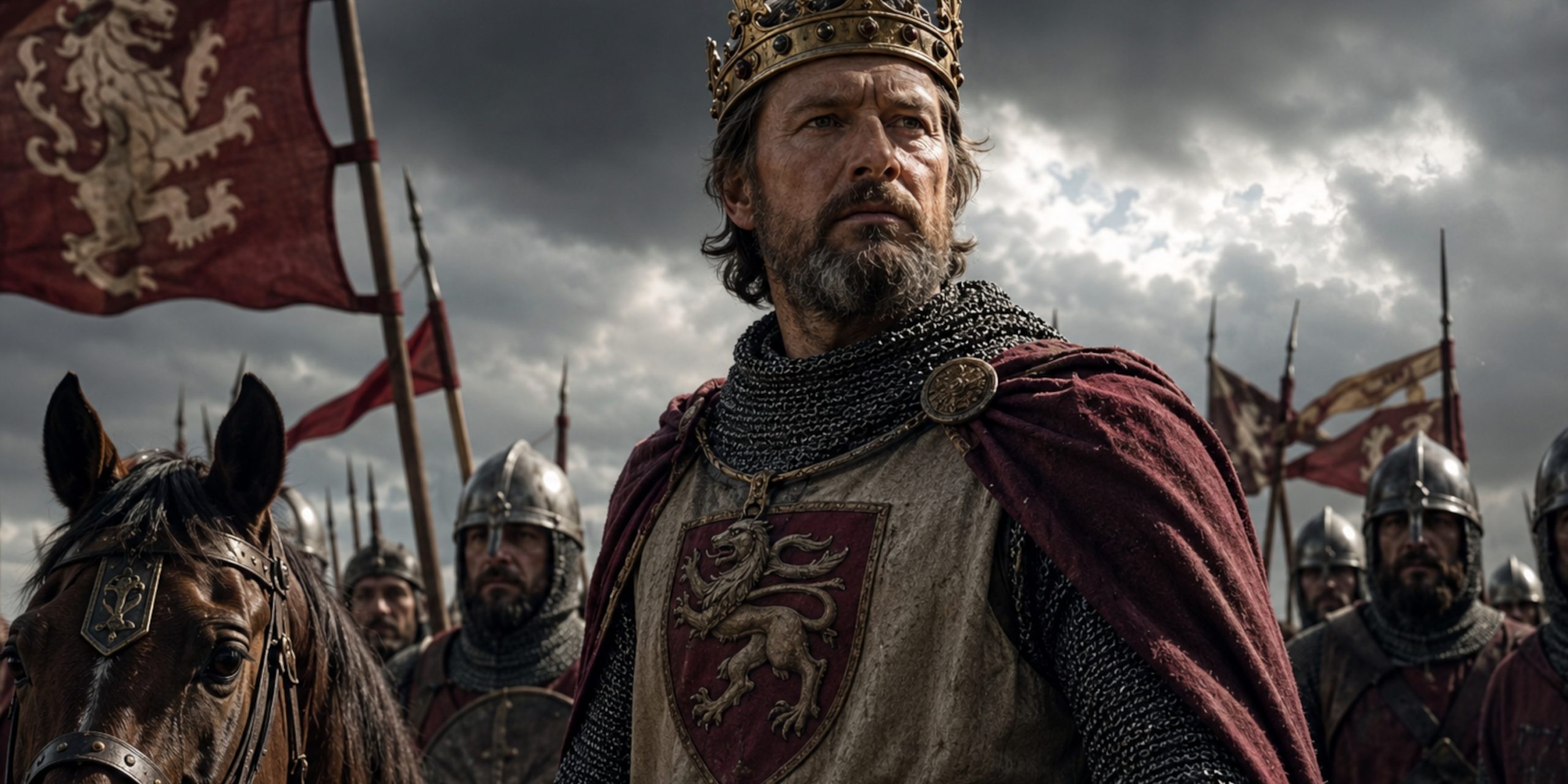
Few medieval kings seem permanently in motion quite like Henry II. Reading about him is rather exhausting. He crossed the English Channel repeatedly, argued with bishops, fought rebellious sons, dismantled castles, bullied rivals, rebuilt royal authority, and somehow still found time to establish one of the most formidable political realms in medieval Europe.
Henry II ruled England from 1154 to 1189, but “King of England” hardly covers it. Through inheritance, marriage, conquest, and relentless pressure, he controlled territories stretching from the Scottish borders to the Pyrenees. Historians later called this loose conglomeration the Angevin Empire, though Henry himself would likely have preferred something simpler, such as “mine.”
He was brilliant, energetic, terrifyingly intelligent, and often deeply unpleasant. Even sympathetic chroniclers admitted he possessed a volcanic temper. His enemies called him calculating and ruthless. His admirers called him tireless. Both were correct.
The Early Life of Henry II
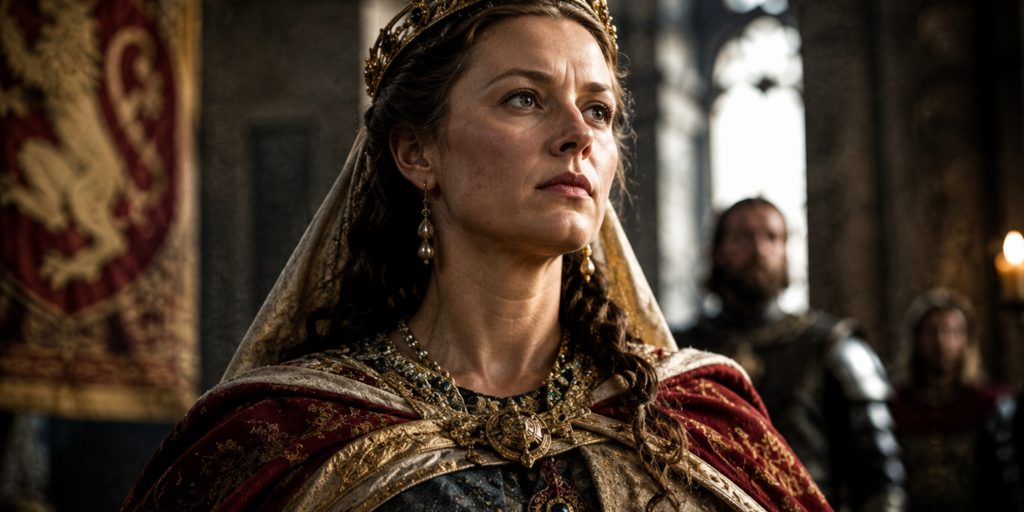
Henry was born in 1133 at Le Mans, the son of Geoffrey Plantagenet, Count of Anjou, and Matilda, daughter of Henry I of England. His childhood unfolded during one of the ugliest succession crises in English history.
After the death of Henry I in 1135, Matilda’s claim to the throne was challenged by Stephen of Blois. The resulting civil war became known as The Anarchy, though many contemporary peasants probably had stronger language for it.
England fractured into regional power blocs, castles multiplied like weeds, and royal authority collapsed. Henry grew up amid sieges, shifting alliances, and political violence. It shaped him profoundly. He developed an almost obsessive hatred of disorder and unauthorised fortifications.
By the age of fourteen he was already campaigning in England. By twenty one he had inherited Normandy and Anjou. In 1152 he married Eleanor of Aquitaine, one of the wealthiest and most politically influential women in Europe. The marriage transformed Henry from a powerful duke into a continental superpower.
Two years later Stephen recognised Henry as heir to the English throne. When Stephen died in 1154, Henry became king.
England had acquired a ruler of extraordinary force.
Henry II and the Angevin Empire
The territories under Henry’s control were immense:
- England
- Normandy
- Anjou
- Maine
- Touraine
- Aquitaine
- Parts of Wales
- Lordship over Ireland
- Influence in Brittany
The political map looked less like a kingdom and more like a sprawling family argument spread across western Europe.
Yet Henry’s empire was not centrally governed in the modern sense. It depended heavily upon personal authority, loyalty, intimidation, and relentless travel. Henry spent much of his reign moving between territories to enforce his will directly.
Contemporary writers repeatedly commented on his energy. Chronicler Gerald of Wales described him as a ruler who rarely sat still and seemed incapable of inactivity.
One suspects many of his courtiers secretly prayed for rainstorms simply to slow him down.
Henry II’s Military Skill and Political Instinct
Henry was not a romantic knight king in the mould later associated with Richard the Lionheart. He was not famed for reckless cavalry charges or theatrical heroics.
He was something far more dangerous.
Henry excelled at logistics, siege warfare, administration, and psychological pressure. He understood that medieval warfare was often won through endurance, money, engineering, and diplomacy rather than glorious battlefield clashes.
His campaigns demonstrated several recurring strengths:
- Rapid movement across territories
- Ruthless suppression of rebellions
- Effective use of mercenaries
- Strategic castle reduction
- Administrative coordination
- Flexible diplomacy
He preferred sieges and manoeuvre over catastrophic pitched battles. This was sensible. Medieval kings who gambled everything on one battle often ended up dead, imprisoned, or remembered by historians as cautionary tales.
Henry also grasped the importance of royal justice and financial control. His legal reforms strengthened crown authority and increased his ability to raise revenue for military operations.
In many respects, he behaved less like a feudal warlord and more like an early state builder.
Major Battles and Campaigns
The Campaigns Against Stephen
Before becoming king, Henry fought to secure his inheritance during the final years of The Anarchy. Although these campaigns produced no decisive climactic battle, they helped pressure Stephen into accepting Henry as successor.
The Treaty of Wallingford in 1153 effectively ended the civil war.
The Welsh Campaigns
Henry launched several expeditions into Wales, with mixed results.
The 1165 campaign became infamous after atrocious weather crippled his army in the Berwyn Mountains. Welsh resistance under Owain Gwynedd frustrated English ambitions repeatedly.
Henry’s fury after setbacks was legendary. Medieval chroniclers imply he occasionally responded to military frustration with the emotional restraint of a kicked hornet.
Still, he gradually extended English influence into parts of Wales through military pressure and political negotiation.
The Irish Intervention
In 1171 Henry personally travelled to Ireland after Anglo Norman lords led by Richard de Clare, known as Strongbow, began carving out territories independently.
Henry feared the emergence of semi independent rivals beyond his control. His intervention established English lordship over Ireland and forced local rulers into submission agreements.
The campaign demonstrated Henry’s greatest political instinct: never allow ambitious vassals too much freedom.
The Great Rebellion of 1173–1174
This was Henry’s greatest crisis.
His sons, encouraged by Eleanor of Aquitaine and supported by the kings of France and Scotland, revolted against him.
The rebellion spread across England, Normandy, and Aquitaine. It was effectively a multinational family breakdown conducted with swords and siege engines.
Henry responded with remarkable efficiency.
Key events included:
- Suppression of revolts in Normandy
- Defence of England against invasion
- Victory over Scottish forces at Alnwick
- Rapid movement between theatres of war
The capture of William the Lion of Scotland in 1174 was especially significant. It forced Scotland into temporary submission.
Henry emerged from the rebellion victorious, though emotionally scarred. His relationships with his sons never truly recovered.
Arms and Armour During Henry II’s Reign
The military culture of Henry II’s reign reflected the transition toward the classic high medieval knight.
Typical Arms
Common weapons included:
- Arming swords
- Early longswords
- Spears and lances
- Maces
- Axes
- Crossbows
- Longbows in limited regional use
The knightly sword of the period was generally straight, double edged, and optimised for cutting and thrusting against mail armour.
Crossbows became increasingly important despite church criticism. Henry valued practicality over clerical complaints when military effectiveness was involved.
Armour
A typical mounted knight under Henry II might wear:
- Mail hauberk
- Mail chausses
- Conical or flat topped helmet
- Nasal helm
- Gambeson padding
- Kite shield
By the later twelfth century, helmets evolved toward more enclosing forms. Surviving effigies and manuscript illustrations show increasingly sophisticated protection.
The kite shield remained dominant, especially among cavalry.
Castle Warfare
Henry understood castles better than many of his contemporaries.
He repaired royal fortifications, demolished adulterine castles built during The Anarchy, and used sieges extensively. Major fortresses such as Dover Castle received substantial investment during his reign.
Dover especially reflected Henry’s strategic vision. It became one of the strongest castles in Europe.
Henry II and Thomas Becket
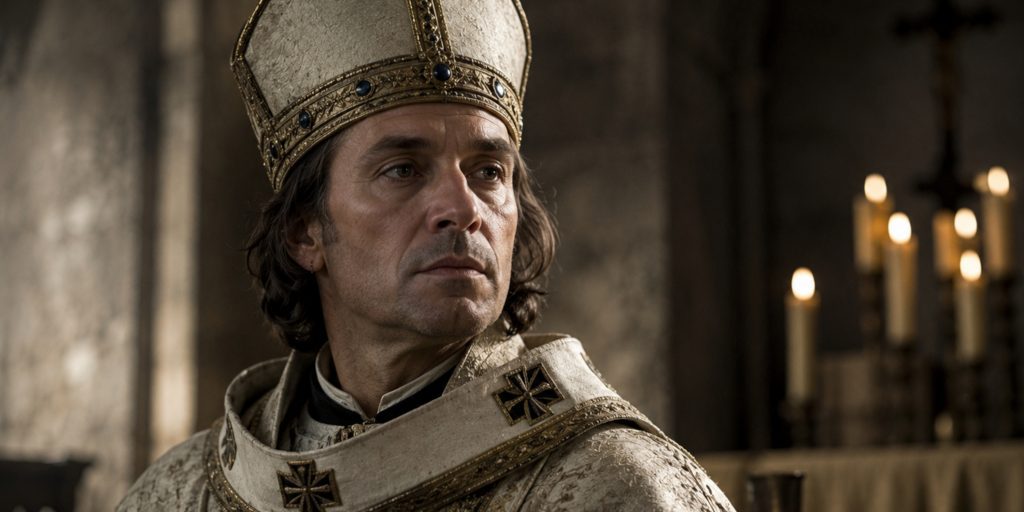
No discussion of Henry II can avoid Thomas Becket.
Initially close allies, the king and Archbishop of Canterbury became bitter enemies over royal authority and church privilege.
Henry wanted greater control over clerical courts and ecclesiastical power. Becket resisted fiercely.
Their conflict culminated in 1170 when four knights murdered Becket inside Canterbury Cathedral after interpreting Henry’s angry outburst as royal approval.
The killing shocked Europe.
Henry almost certainly did not order the murder directly, but his temper and political pressure created the atmosphere that enabled it.
The aftermath damaged his reputation profoundly. He later performed public penance at Becket’s tomb, though one suspects this was motivated by both genuine remorse and political necessity.
Possibly both at once. Medieval kings rarely enjoyed the luxury of separating the two.
Personality and Character
Henry II fascinates historians because he feels startlingly human.
He was intellectually gifted yet emotionally volatile. He loved hunting, debate, and administrative detail. Chroniclers described him as stocky, red haired, energetic, and intensely restless.
He ate quickly, slept little, and governed constantly.
Unlike many medieval rulers, he possessed genuine administrative curiosity. He involved himself deeply in legal cases and governance. This gave England stronger institutions but also made him controlling to an almost compulsive degree.
His family life was catastrophic.
His sons rebelled repeatedly. His marriage to Eleanor deteriorated into political hostility. Richard and John eventually turned against him alongside Philip II of France.
Henry spent much of his later life fighting the very dynasty he had built.
There is something grimly Shakespearean about it all. A man capable of governing half western Europe could not govern his own household.
Artefacts and Places Connected to Henry II
Several important sites and objects from Henry’s reign survive today.
Places to Visit
- Dover Castle, England
- Fontevraud Abbey, France
- Canterbury Cathedral, England
- Chinon Castle, France
- Winchester Great Hall, England
At Fontevraud Abbey, visitors can still see the remarkable effigies of Henry II, Eleanor of Aquitaine, Richard the Lionheart, and Isabella of Angoulême.
The effigy of Henry remains one of the most famous royal monuments of the medieval period.
Surviving Artefacts
Artefacts associated with Henry’s reign include:
- Angevin coins
- Royal seals
- Medieval charters
- Arms and armour fragments
- Ecclesiastical objects linked to Canterbury
- Norman and Angevin architectural remains
Many items are held in institutions such as the British Museum and regional cathedral collections.
Latest Archaeology and Historical Discoveries
Archaeological work connected to Henry II’s era continues to reshape understanding of the twelfth century.
Dover Castle Excavations
Excavations and conservation work at Dover Castle have revealed details about Henry’s extensive rebuilding programme, including defensive structures and royal apartments.
The scale of investment demonstrates how seriously Henry viewed continental invasion threats.
Medieval Urban Archaeology
Excavations in cities such as London, Winchester, and Canterbury have uncovered pottery, weapons, trade goods, and domestic remains from Henry’s reign.
These findings reveal an increasingly connected and economically vibrant kingdom.
Reassessment of Angevin Administration
Modern historians increasingly view Henry as one of medieval Europe’s greatest administrators. Surviving pipe rolls and legal records provide extraordinary evidence of governmental sophistication.
The bureaucracy he expanded outlived the empire itself.
That may have been his greatest victory.
The Death of Henry II
Henry’s final years were miserable.
Richard rebelled alongside Philip II of France. Henry’s health deteriorated under stress and exhaustion.
In 1189 he was defeated politically and forced into humiliating concessions. According to chroniclers, he was devastated to discover that even his youngest son John had betrayed him.
He died shortly afterward at Chinon Castle.
One chronicler claimed blood flowed from Henry’s nose when Richard approached the corpse, interpreted as divine judgement. Medieval writers loved dramatic symbolism almost as much as modern streaming television writers do.
Henry was buried at Fontevraud Abbey beside Eleanor.
Legacy
Henry II transformed England.
He restored royal authority after civil war, expanded legal administration, strengthened financial governance, reshaped castle policy, and laid foundations for the English common law tradition.
His empire ultimately fragmented, yet many of his governmental reforms endured for centuries.
He was not universally loved. Few rulers who centralise authority ever are.
But Henry was effective on a level few medieval kings could match.
Even now, he looms over the twelfth century like a force of nature: brilliant, exhausting, deeply flawed, and impossible to ignore.