The wars between Rome and Persia lasted for more than seven centuries. That is longer than many entire civilisations survive. Kingdoms rose, emperors vanished, capitals burned, and armies marched across the same exhausted frontiers generation after generation. The Euphrates became less a river and more a permanent argument.
At different times, Rome faced the Parthian Empire and later the Sassanid Empire. The names changed, the banners changed, and the armour evolved, yet the conflict itself remained strangely familiar. Both sides believed themselves to be the centre of the civilised world. Both considered the other arrogant, dangerous, and faintly insufferable.
As a historian, I cannot help admiring the sheer stubbornness of it all. Most empires eventually decide endless war is expensive. Rome and Persia looked at centuries of bloodshed and somehow concluded they simply needed another campaign season.
Origins of the Conflict
The first diplomatic contact between Rome and Parthia is traditionally dated to 92 BC, when Lucius Cornelius Sulla met a Parthian ambassador. Even then, there was tension beneath the ceremony. Rome was expanding eastward. Parthia controlled Mesopotamia and key trade routes stretching deep into Asia.
The real issue was power. Rome wanted influence over Armenia and Syria. Persia wanted buffers against Roman expansion. Armenia in particular became the eternal chessboard between the two powers. Kings were installed, removed, bribed, assassinated, and occasionally survived long enough to regret the throne entirely.
The conflict intensified dramatically after Rome absorbed the remnants of the Seleucid world. Suddenly the Mediterranean superpower and the great Iranian empire were neighbours.
That rarely ends quietly.
Rome Versus Parthia
The Disaster at Carrhae (53 BC)
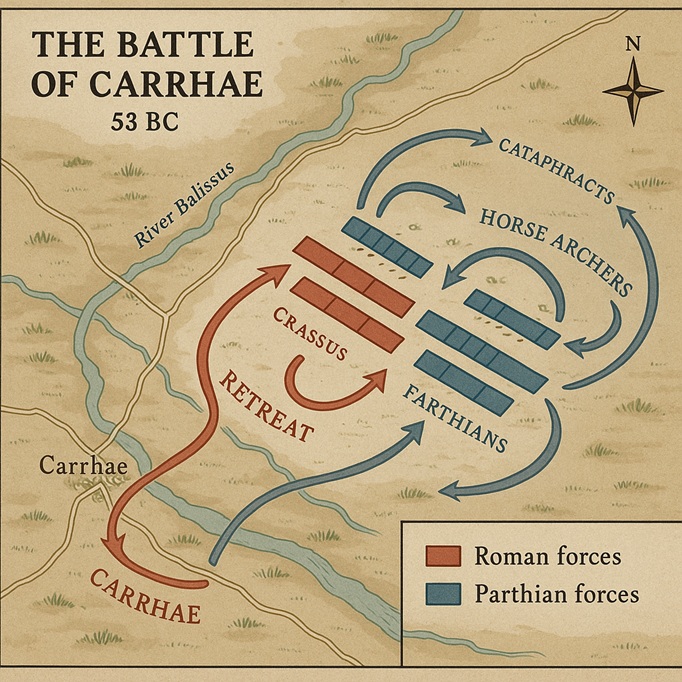
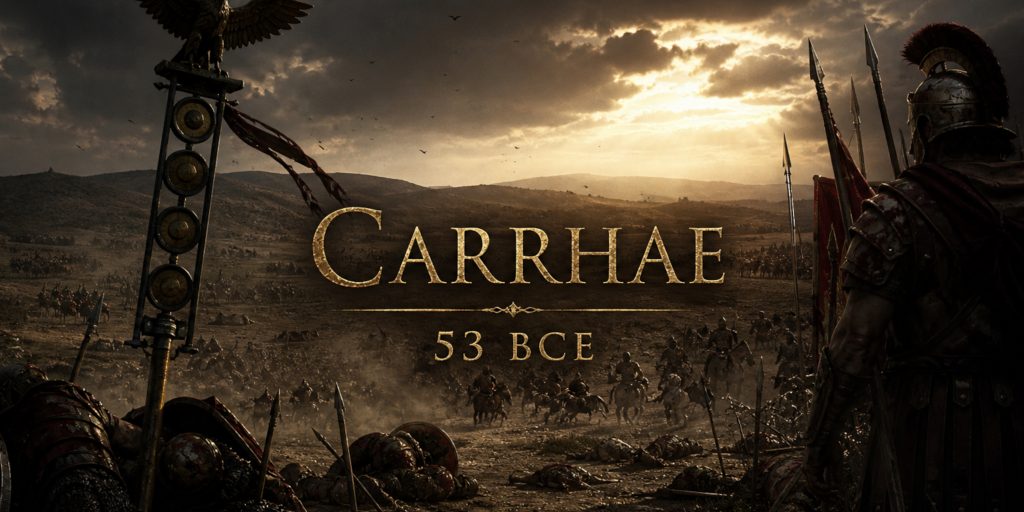
The most infamous early clash came at the Battle of Carrhae.
Roman general Marcus Licinius Crassus invaded Mesopotamia seeking glory and wealth. Instead, he encountered the Parthian general Surena, one of the finest cavalry tacticians of the ancient world.
The Roman legions struggled against mounted archers and heavily armoured cataphracts. The Parthians used mobility, relentless arrow fire, and psychological pressure to destroy the Roman force.
Contemporary historian Plutarch wrote:
“The arrows came in showers from every side.”
Crassus was killed during failed negotiations. Tens of thousands of Romans died or were captured. Roman standards were seized, an humiliation Rome never fully forgot.
The battle exposed a serious Roman weakness against highly mobile eastern cavalry armies. It also shattered the myth that Roman infantry was invincible.
The Great Roman Emperors and Eastern Campaigns
Trajan’s Invasion
In the early 2nd century AD, Trajan launched Rome’s greatest eastern offensive.
He conquered Armenia and pushed deep into Mesopotamia, even reaching the Persian Gulf. For a brief moment, Rome came close to permanently annexing the east.
It did not last.
The territories proved difficult to hold, local resistance grew, and Trajan’s successors abandoned much of the conquest. The east consumed resources at an alarming rate. One gets the impression Roman accountants quietly wept into wax tablets.
Lucius Verus and the Antonine Era
During the 160s AD, the Parthians invaded Roman territory again. Co-emperor Lucius Verus oversaw the Roman response.
Roman armies captured the Parthian capitals of Seleucia and Ctesiphon. Yet victory carried an invisible enemy home with the soldiers. The Antonine Plague spread across the empire soon afterward, devastating populations and weakening Rome for decades.
Ancient warfare had a habit of producing unintended consequences on an almost theatrical scale.
The Rise of the Sassanid Empire
In 224 AD, the Parthian Empire collapsed and was replaced by the far more aggressive Sassanid Empire under Ardashir I.
The Sassanids were centralisers, reformers, and ambitious imperialists. Unlike the often decentralised Parthians, they built a stronger military structure and promoted a confident imperial ideology rooted in Persian tradition.
The Romans suddenly faced a more disciplined and dangerous rival.
Shapur I and the Humiliation of Rome
One of the greatest Persian rulers was Shapur I.
His victories against Rome were extraordinary. In 260 AD, he defeated and captured Roman emperor Valerian at the Battle of Edessa.
No Roman emperor had ever been captured alive by a foreign enemy.
Persian rock reliefs still depict Valerian kneeling before Shapur. Roman writers were deeply embarrassed by the entire affair, which is understandable. Empires cope badly with images of their emperor effectively becoming someone else’s war trophy.
A famous inscription from Shapur declared:
“We captured the Emperor Valerian with our own hands.”
The psychological impact was immense.
Key Battles of the Persian–Roman Wars
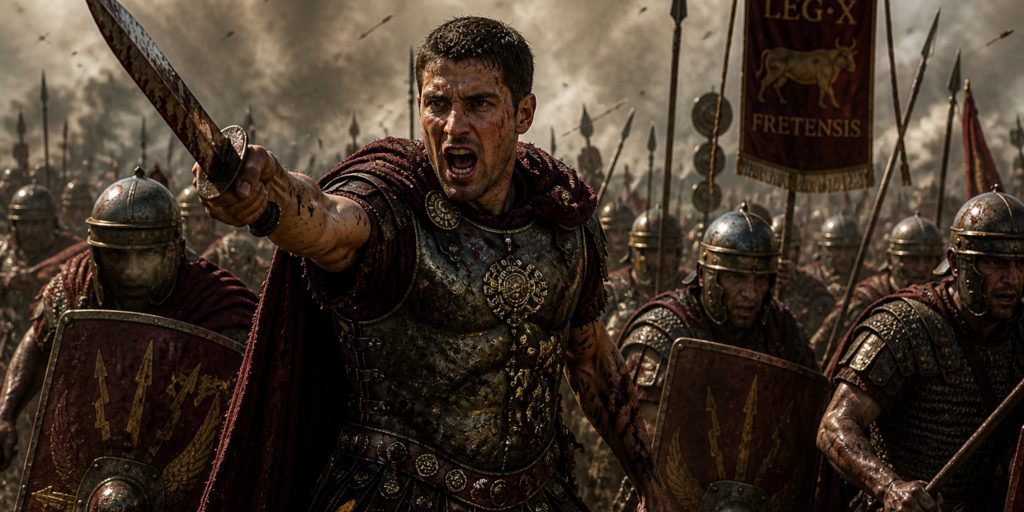
Battle of Carrhae
- Parthian victory over Crassus
- Demonstrated the power of horse archers and cataphracts
- Crushed Roman prestige in the east
Battle of Nisibis
- Massive clash between Rome and Parthia
- Extremely costly for both sides
- Helped shape later frontier agreements
Battle of Edessa
- Sassanid victory under Shapur I
- Emperor Valerian captured alive
Battle of Dara
- Byzantine victory under Belisarius
- Strong use of defensive positioning and combined arms tactics
Battle of Callinicum
- Hard-fought Persian victory
- Revealed the fragility of Byzantine eastern defence
Siege of Jerusalem
- Sassanid capture of Jerusalem
- Massive symbolic and religious consequences
Battle of Nineveh
- Byzantine emperor Heraclius defeated the Persians
- Marked the collapse of Sassanid resistance
Arms, Armour, and Warfare
The Persian–Roman Wars transformed military development on both sides.
Roman armies increasingly adapted to cavalry warfare. Persian armies refined elite heavy cavalry traditions that later influenced medieval knights and Byzantine cataphracts.
Roman Equipment
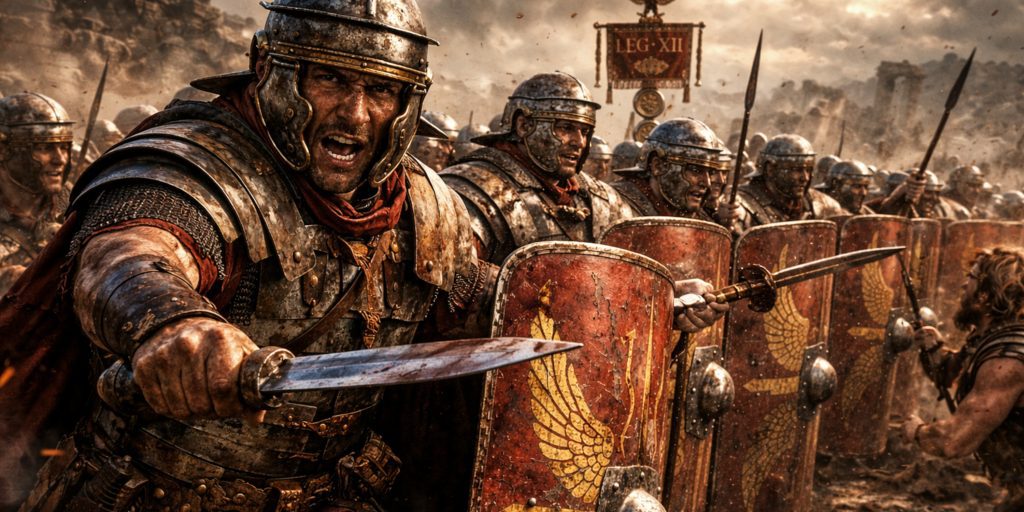
- Segmentata and later scale armour
- Gladius and later spatha swords
- Large shields and disciplined infantry formations
- Increasing use of cavalry and mounted archers in late antiquity
Persian Equipment
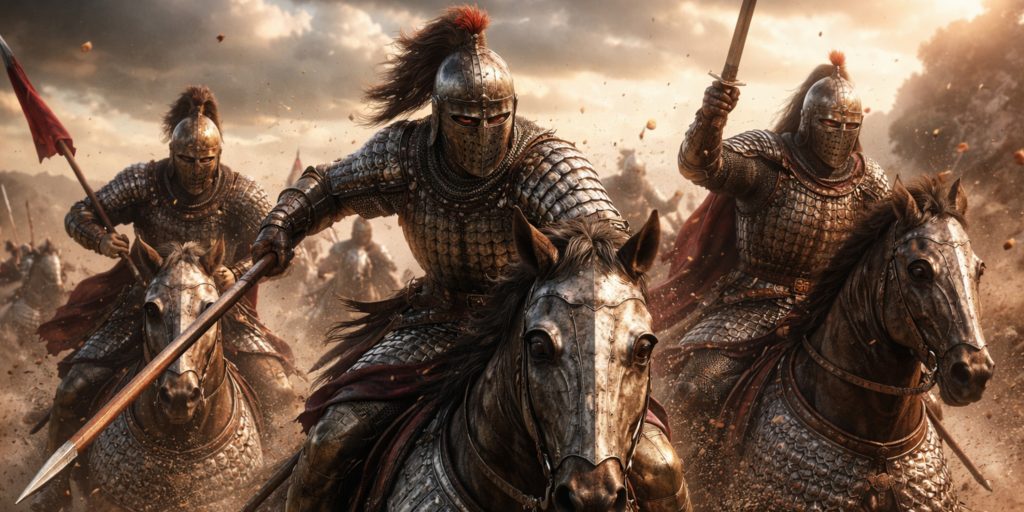
- Cataphract heavy cavalry with full armour
- Composite bows capable of devastating range and penetration
- Long swords, spears, and maces
- Lamellar and scale armour for nobles and elite guards
The Persians excelled at mobility and shock action. The Romans excelled at logistics, engineering, and stubborn refusal to stay defeated for long.
The Importance of Armenia
Armenia was the key strategic frontier between the empires.
Control of Armenia meant influence over mountain passes, trade routes, and regional alliances. Armenian kings often found themselves balancing between Rome and Persia with remarkable skill, or catastrophic miscalculation.
This frontier zone became culturally mixed over centuries, blending Roman, Persian, and local traditions.
One almost sympathises with Armenian diplomats of the period. Their job was essentially to survive being courted and threatened by two superpowers simultaneously.
Archaeology and What Survives
Archaeology has revealed enormous amounts about the conflict.
Dura-Europos
The frontier city of Dura-Europos preserves evidence of Roman and Persian warfare, including siege tunnels and defensive structures.
Excavations uncovered remarkable wall paintings, weapons, armour fragments, and one of the earliest known house churches.
Ctesiphon
The ruins of Ctesiphon remain one of the great symbols of Sassanid Persia.
The massive arch known as the Taq Kasra still survives in partial form. Roman armies captured the city multiple times but never permanently subdued Persia.
Rock Reliefs of Shapur
Sassanid rock carvings at sites such as Naqsh-e Rostam depict Persian victories over Rome.
These reliefs are not subtle. Persian kings appear majestic and triumphant while Roman emperors appear deeply uncomfortable. Ancient propaganda was often refreshingly direct.
Coins and Military Finds
Coins, helmets, swords, arrowheads, horse armour, and military fortifications have been uncovered across Syria, Iraq, Turkey, and Iran.
These finds reveal the immense scale of frontier militarisation. Entire landscapes became shaped by centuries of war.
Religion and Ideology
Religion increasingly influenced the later wars.
Rome became Christian. Persia remained closely tied to Zoroastrian royal ideology. Religious tension sometimes intensified political rivalry, especially during the Byzantine-Sassanid conflicts of the 6th and 7th centuries.
Yet politics usually mattered more than theology. Empires tend to discover that tax revenue and strategic territory are wonderfully motivating.
The Final War and the Collapse of Both Powers
The last great Byzantine-Sassanid war began in 602 AD.
It was catastrophic.
Persian armies overran Syria, Egypt, and much of the eastern Roman world. Jerusalem fell. Constantinople itself seemed threatened.
Then Emperor Heraclius launched a dramatic counterattack deep into Persian territory. His campaigns culminated in victory at Nineveh in 627 AD.
The war exhausted both empires completely.
Only a few years later, the expanding Islamic Caliphates swept across the region. Persia collapsed entirely. Byzantium lost much of its eastern territory forever.
After seven centuries of struggle, both powers emerged battered, financially ruined, and militarily drained. It is one of history’s clearest examples of mutual exhaustion opening the door to a new civilisation.
Contemporary Quotes
Roman historian Ammianus Marcellinus wrote of the Persians:
“Almost all of them are slender and dark, with fierce eyes.”
Procopius, describing the endless eastern conflict, observed:
“The Persians are formidable enemies.”
From the Persian side, Shapur I proudly proclaimed:
“I am the Mazda-worshipping lord, Shapur, King of Kings of Iran and non-Iran.”
The confidence is difficult to miss.
Legacy of the Persian–Roman Wars
The Persian–Roman Wars shaped the ancient and medieval world in profound ways.
They transformed military systems, trade, diplomacy, fortifications, and imperial ideology. They influenced Byzantine warfare, Islamic conquest patterns, and even later medieval cavalry traditions.
They also produced one of history’s longest geopolitical rivalries. Rome and Persia defined themselves partly through opposition to each other.
Studying these wars today feels strangely modern at times. Frontier disputes, ideological rivalry, proxy kingdoms, exhausted economies, and endless campaigning all feel painfully familiar.
The names change. Human behaviour rarely does.