Shapur I remains one of the most formidable rulers of the ancient world. He ruled the Sasanian Empire from around AD 240 to 270 and transformed Persia into the greatest rival Rome had faced since the days of Hannibal. Roman emperors marched east expecting another campaign against a troublesome neighbour. Instead, they encountered a king of immense ambition, military skill, and theatrical confidence.
He was not merely a conqueror. Shapur was a builder, administrator and propagandist with an eye for spectacle. He founded cities, carved triumphs into cliffs, and made certain that future generations would never forget the moment a Roman emperor knelt before him.
For a historian, Shapur I is irresistible. He appears in Persian inscriptions as a mighty king blessed by the gods. In Roman sources he is a dangerous enemy, sometimes portrayed with grudging admiration and sometimes with rather obvious bitterness. One can hardly blame the Romans. It is difficult to remain dignified after your emperor has been carried off into captivity.
Who Was Shapur I?
Shapur I was the son of Ardashir I, founder of the Sasanian Empire. Ardashir had overthrown the Parthian dynasty and built a new Persian kingdom in its place. Shapur inherited that kingdom and turned it into a genuine superpower.
He likely began ruling jointly with his father before becoming sole king after Ardashir’s death around AD 242. His official title was grand even by the standards of ancient monarchs: King of Kings of Iran and Non-Iran.
That title was not simply vanity. Shapur ruled over Persians, Mesopotamians, Armenians, Arabs and many other peoples. His empire stretched from Mesopotamia to Central Asia and from the Persian Gulf to the Caucasus.
He is known chiefly from three kinds of evidence:
- Persian royal inscriptions
- Roman histories and military accounts
- Archaeological remains, especially reliefs, coins and cities founded during his reign
The most important Persian source is the great inscription at Naqsh-e Rustam, often called the Res Gestae Divi Saporis. In it, Shapur proudly lists his victories, lands and titles with the confidence of a man who had very little reason to doubt himself.
Shapur I and the Roman Empire
No part of Shapur’s career is more famous than his wars with Rome.
During the third century, the Roman Empire was in chaos. Emperors rose and fell with alarming speed, usually after an inconvenient amount of stabbing. Shapur recognised an opportunity and moved west.
He fought three major campaigns against Rome.
The First Campaign
Around AD 243 to 244, Shapur invaded Roman territory in Mesopotamia. The Roman emperor Gordian III marched east to stop him. At the Battle of Misiche, Shapur defeated the Romans. Gordian died soon afterwards, although whether in battle or in a rather suspicious internal dispute remains debated.
The new emperor, Philip the Arab, quickly made peace and paid a large indemnity.
The Second Campaign
In the 250s, Shapur invaded again. He captured several cities, including Antioch, one of the richest and most important cities in the Roman world.
For the Romans, this was a catastrophe. Antioch was not some dusty frontier town. It was one of the empire’s great jewels. Losing it to the Persians was rather like watching an enemy army casually stroll into London or Paris.
The Third Campaign and the Capture of Valerian
In AD 260, Shapur achieved one of the most extraordinary victories in ancient history.
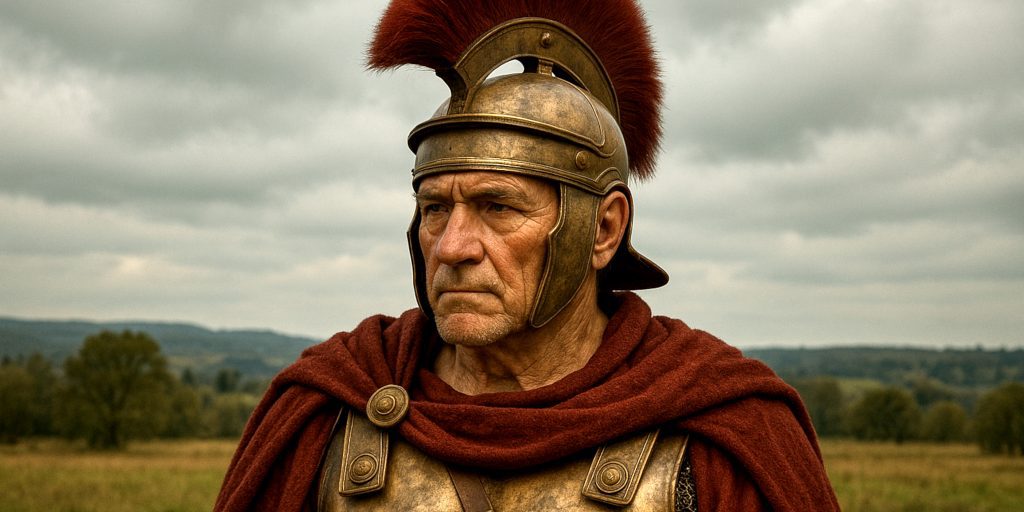
The Roman emperor Valerian marched east with a large army. Near Edessa, the Romans were defeated. Valerian himself was captured alive.
No Roman emperor had ever been taken prisoner by a foreign enemy before.
Shapur immortalised the moment in rock reliefs. In these carvings, Valerian kneels before the Persian king while another Roman emperor, Philip the Arab, stands submissively nearby. The message is wonderfully unsubtle.
Rome could survive defeat. It could survive civil war. But the image of an emperor kneeling before a foreign king haunted the Roman imagination for centuries.
Battles and Military Acumen
Shapur I was not simply fortunate. He was an exceptionally capable commander.
He understood how to exploit Roman weaknesses. During the third century, Rome suffered from civil wars, plague, economic crisis and overstretched frontiers. Shapur attacked when Roman armies were divided and their emperors distracted.
He also excelled at combining different types of troops.
Key Battles of Shapur I
| Battle | Date | Result |
|---|---|---|
| Battle of Misiche | AD 244 | Major Persian victory over Gordian III |
| Campaign against Antioch | AD 252-253 | Antioch captured by Shapur |
| Battle of Barbalissos | AD 252 | Roman field army destroyed |
| Battle of Edessa | AD 260 | Emperor Valerian captured |
Why Shapur Was So Effective
- He used heavily armoured cavalry to smash enemy formations.
- He combined cavalry with horse archers, creating both mobility and shock power.
- He attacked at moments when Roman emperors were distracted by other wars.
- He was prepared to besiege major cities rather than merely raid frontier regions.
- He understood the value of propaganda and used victory monuments to intimidate enemies.
Shapur’s campaigns show a commander who thought several steps ahead. He did not simply win battles. He used victories to weaken Roman authority, enrich his empire and elevate his own prestige.
As a military leader, he deserves to stand alongside the great rulers of antiquity. He lacked the glamour of Alexander and the legend of Hannibal, but in practical terms he was every bit as dangerous.
Arms and Armour of Shapur I and the Sasanian Army
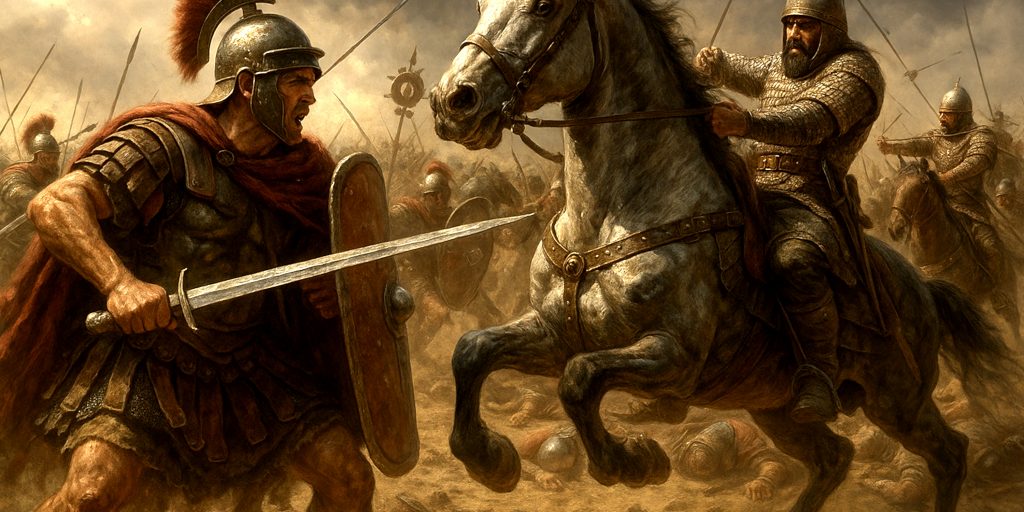
The armies of Shapur I were among the finest in the ancient world. Sasanian warfare relied heavily on cavalry, particularly elite armoured horsemen often called cataphracts.
These cavalrymen were terrifying opponents. Both rider and horse could be protected by armour, giving them the appearance of moving statues made entirely of metal.
Weapons Used by Shapur’s Army
- Long straight swords, often suspended from elaborate belts
- Heavy lances used by cavalry for devastating charges
- Composite bows used by mounted archers
- Spears and javelins
- Maces and axes for close combat
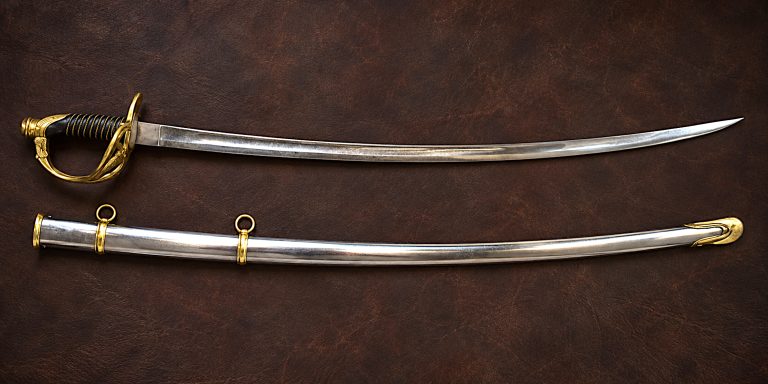
The sword carried by Sasanian nobles was usually a long straight blade, often richly decorated. Surviving depictions show elaborate hilts and scabbards. Persian cavalry preferred reach and power, making these weapons ideal for fighting from horseback.
Armour and Military Equipment
| Troop Type | Typical Equipment |
| Elite cavalry | Scale armour, lance, sword, horse armour |
| Horse archers | Composite bow, light armour, sword |
| Infantry | Spear, shield, short sword or axe |
| Noble bodyguards | Heavy scale armour, long sword, ornate helmet |
Sasanian armour usually consisted of:
- Scale armour made from overlapping metal plates
- Mail armour for wealthier soldiers
- Conical helmets with cheek guards
- Large shields of leather or wicker
- Armoured horse coverings for elite cavalry
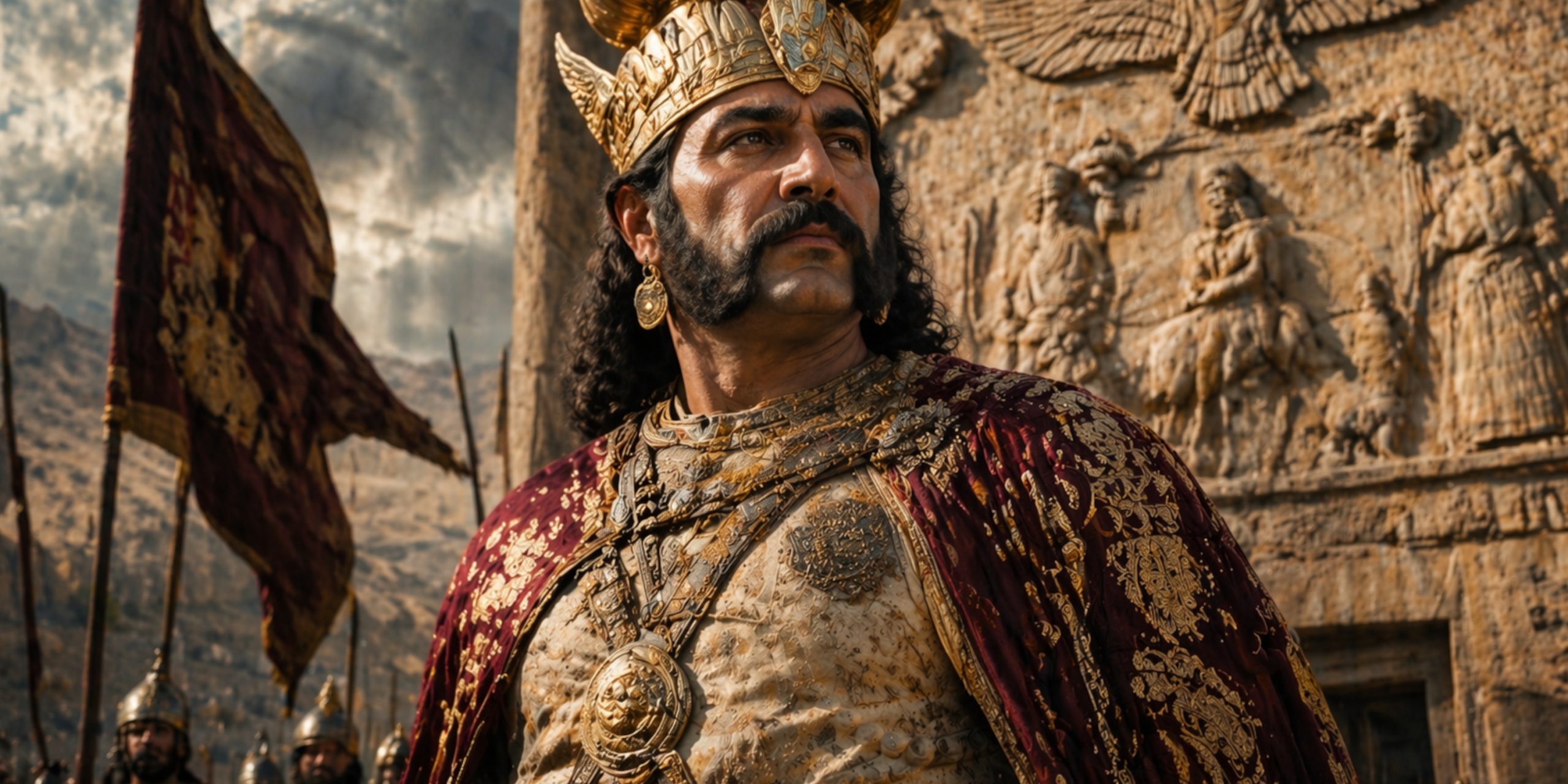
Shapur himself appears in his rock reliefs wearing royal armour and a distinctive crown. His crown is one of the easiest ways to identify him in surviving art. It rises dramatically above his head with crenellations and globe-like ornaments, looking faintly as though someone had challenged an architect to make a fortress wearable.
Shapur I as a Builder and Ruler
Shapur was more than a conqueror. He reshaped the Sasanian Empire through ambitious building projects.
He founded or rebuilt several important cities, including Bishapur in southern Iran and Nishapur in the east.
Bishapur was especially impressive. Designed with Roman influences, it included broad streets, palaces, temples and mosaics. Many of the craftsmen who built it were probably Roman prisoners captured during Shapur’s campaigns.
There is a curious irony in this. Roman engineers spent decades creating roads, cities and fortifications across the empire. Under Shapur, some of them ended up doing exactly the same thing for Persia instead.
Shapur also encouraged trade, strengthened royal authority and supported the Zoroastrian religion, although he appears to have tolerated other faiths more than some later Sasanian rulers.
Religion and Court Life
Shapur I ruled during a period when Zoroastrianism became closely linked to royal power.
He supported the great Zoroastrian priest Kartir, although the two may not always have agreed. Shapur also allowed other religions to exist within his empire.
The prophet Mani, founder of Manichaeism, enjoyed Shapur’s favour for a time. Mani even dedicated one of his works to the king.
This suggests that Shapur’s court was intellectually lively and perhaps more tolerant than later Sasanian courts. His empire included many peoples and beliefs, and he seems to have recognised that ruling such a vast realm required flexibility as well as force.
Where to See Artefacts from the Reign of Shapur I
Many of the finest remains associated with Shapur I still survive.
Naqsh-e Rustam
Near Persepolis in Iran, Naqsh-e Rustam contains one of the most famous reliefs of Shapur. It shows him on horseback triumphing over Roman emperors.
Bishapur
The ruins of Bishapur preserve palaces, mosaics and reliefs from his reign. Nearby rock carvings celebrate his victories.
The Cave of Shapur
One of the most remarkable artefacts from his reign is the colossal statue of Shapur I in the Cave of Shapur near Bishapur. Carved from a natural stalagmite, the statue stands several metres tall and is the only colossal statue of a Sasanian ruler to survive.
Seeing it in person is an unsettling experience. The figure towers above visitors in the darkness of the cave, still projecting the authority of a king who died nearly eighteen centuries ago.
Museums with Objects from His Reign
- The National Museum of Iran in Tehran
- The Louvre in Paris
- The British Museum in London
- The Metropolitan Museum of Art in New York
These museums hold coins, relief fragments, inscriptions, silverware and other objects from the Sasanian period.
Latest Archaeology and Discoveries
Archaeology connected with Shapur I has continued to produce new discoveries.
Recent work at Bishapur has focused on the so-called Palace of Valerian, traditionally linked with the captured Roman emperor. Archaeologists announced a new phase of excavations and preservation work in 2025. The aim is to uncover more of the palace complex and better understand how Roman prisoners contributed to the city.
Only a tiny part of Bishapur has been excavated so far. Most of the ancient city still lies underground, which means there is every chance that further discoveries remain hidden beneath the soil.
New studies of the colossal statue of Shapur I have also suggested that it collapsed because of ancient earthquakes rather than deliberate destruction. Modern restoration has allowed scholars to examine how the monument was originally carved and displayed.
Excavations at Nishapur, another city founded during the Sasanian period, continue to improve our understanding of urban life in Shapur’s empire. Archaeologists have uncovered evidence of streets, houses, workshops and religious buildings, revealing a far more sophisticated and cosmopolitan empire than older historians once imagined.
Legacy
Shapur I left behind one of the strongest and most respected states in the ancient world.
He humiliated Rome, expanded Persia and created a model of kingship that later Sasanian rulers tried to imitate. His victories became part of Persian memory and his monuments still dominate the landscape of Iran.
Roman writers remembered him as a fearsome enemy. Persian tradition remembered him as a great king. Both were right.
There is something wonderfully uncompromising about Shapur. He did not ask Rome for recognition. He forced it. He carved his triumphs into cliffs, built cities from the spoils of war and left behind an empire powerful enough to challenge the greatest state on earth.
Even now, standing before the reliefs at Naqsh-e Rustam or the immense statue in the Cave of Shapur, one has the uneasy sense that he expected to be remembered forever. Annoyingly for the Romans, he was quite correct.