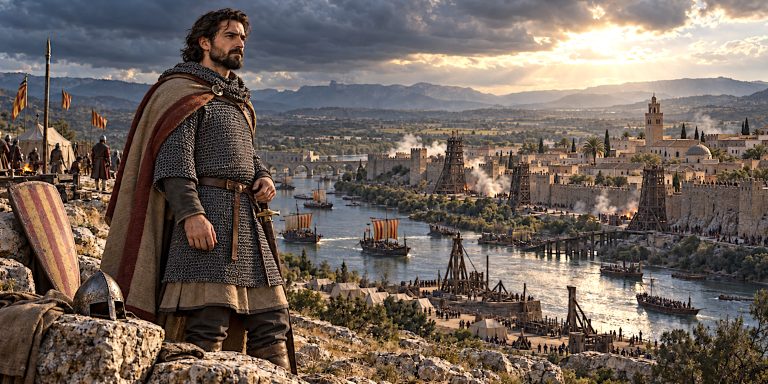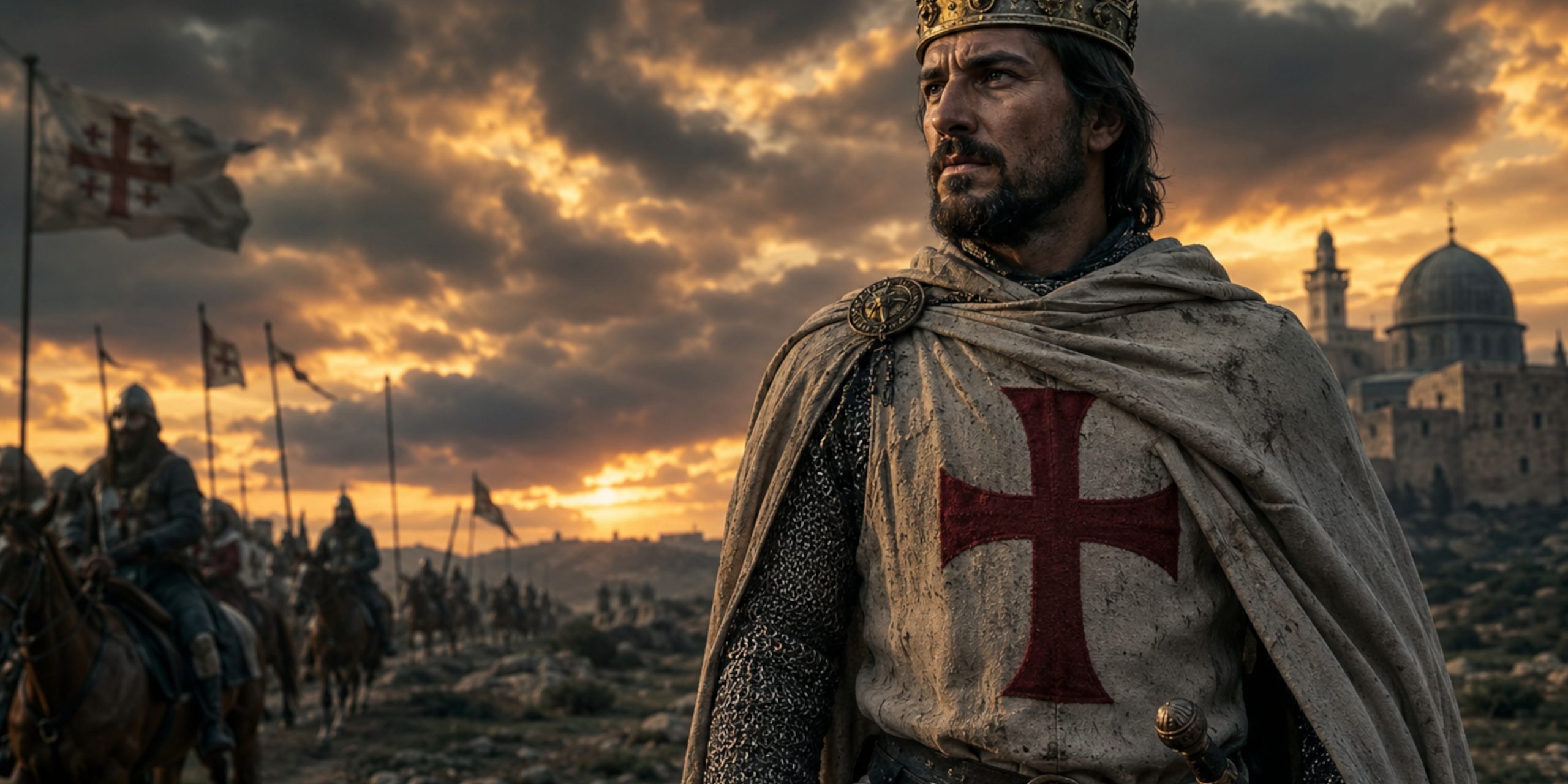
Few rulers have been as important to the survival of the Kingdom of Jerusalem while remaining so overshadowed by history. Baldwin II is often squeezed between the dramatic careers of Godfrey of Bouillon, Baldwin I and the legendary leper king Baldwin IV, yet without his stubborn leadership the Crusader kingdom might not have survived its first generation.
He was not the dazzling conqueror that Baldwin I had been, nor the tragic icon that Baldwin IV would become. Instead, Baldwin II was something rather rarer. He was a practical survivor. He spent decades balancing military campaigns, fragile alliances, difficult nobles and ambitious Muslim rulers while somehow keeping one of the world’s most precarious kingdoms alive.
As a historian, I have always found Baldwin II quietly fascinating. Medieval history often celebrates spectacular victories, but survival can require even greater skill. Baldwin’s reign feels like a masterclass in making the best of impossible circumstances. It is also a reminder that history has an unfortunate habit of overlooking competent people because they were too busy solving crises to create dramatic legends.
Who Was Baldwin II?
| Detail | Information |
|---|---|
| Full Name | Baldwin of Bourcq |
| Born | c. 1060s |
| Birthplace | County of Rethel, France |
| Died | 21 August 1131 |
| Reigned | King of Jerusalem, 1118 to 1131 |
| Predecessor | Baldwin I |
| Successor | Melisende and Fulk of Anjou |
| House | House of Rethel |
| Religion | Roman Catholic |
Baldwin was born into the noble House of Rethel in northern France. Unlike many of Europe’s greatest dynasties, his family was respected rather than exceptionally wealthy. This proved useful because younger sons often had to seek opportunity elsewhere, and the First Crusade offered precisely that.
He joined the expedition alongside his cousin Baldwin of Boulogne, who would later become Baldwin I of Jerusalem.
From the beginning, Baldwin earned a reputation for reliability rather than flamboyance. Medieval chroniclers consistently portray him as cautious, determined and deeply experienced in frontier warfare.
Baldwin and the First Crusade
Baldwin travelled east during the First Crusade in 1096.
Rather than remaining with the main crusading army throughout the campaign, he followed Baldwin of Boulogne into northern Syria and Mesopotamia, where opportunities existed to establish new Christian lordships.
These eastern territories would become the County of Edessa, the first Crusader state.
When Baldwin I became King of Jerusalem in 1100, Baldwin of Bourcq inherited the County of Edessa.
This proved to be excellent preparation.
Edessa stood directly against powerful Turkish rulers and required constant military attention. It was perhaps the harshest training ground any future king could have received.
Count of Edessa
Before becoming king, Baldwin spent nearly two decades defending Edessa.
His responsibilities included:
- Defending isolated castles
- Negotiating with Armenian nobles
- Managing Frankish settlers
- Conducting raids against neighbouring emirates
- Maintaining alliances with Byzantine and local Christian communities
Unlike Jerusalem, Edessa possessed long frontiers and relatively few natural defences.
Every year demanded diplomacy, military planning and considerable patience.
These experiences shaped Baldwin into a ruler who understood that kingdoms were not sustained by glorious victories alone. They survived through logistics, alliances and the occasional willingness to compromise.
Becoming King of Jerusalem
King Baldwin I died in 1118 while campaigning in Egypt.
Although several candidates possessed claims, Baldwin of Bourcq was ultimately chosen by the High Court of Jerusalem.
The decision reflected more than family connections.
He had experience.
He understood warfare in the Levant.
Most importantly, he had already demonstrated that he could govern.
His coronation marked a smooth transition during a period when instability could easily have destroyed the young kingdom.
The Military Challenges of His Reign
Almost immediately Baldwin found himself surrounded by enemies.
His principal opponents included:
| Opponent | Region |
|---|---|
| Artuqid rulers | Upper Mesopotamia |
| Seljuk Turkish leaders | Syria |
| Fatimid Egypt | Southern frontier |
| Local Muslim emirates | Throughout northern Syria |
The Kingdom of Jerusalem remained heavily dependent upon fortified towns linked by vulnerable roads.
Victory rarely meant permanent security.
Instead, Baldwin fought a continuous series of campaigns designed to preserve existing territory.
It was exhausting work.
Captured by the Turks
One of the most remarkable episodes of Baldwin’s career occurred in 1123.
While campaigning near the Euphrates, he was captured by the Artuqid ruler Balak.
Many medieval kingdoms would have collapsed after losing their king.
Jerusalem did not.
The government continued functioning under capable church and noble leadership while negotiations for Baldwin’s release slowly progressed.
His captivity lasted more than a year.
Eventually a substantial ransom secured his freedom.
Remarkably, Baldwin resumed ruling almost immediately upon returning.
One cannot help admiring his resilience. Most people would require a rather lengthy holiday after spending over a year imprisoned by hostile warlords.
Relations with the Military Orders
During Baldwin’s reign, two organisations that would define Crusader history rose to prominence.
The Knights Templar
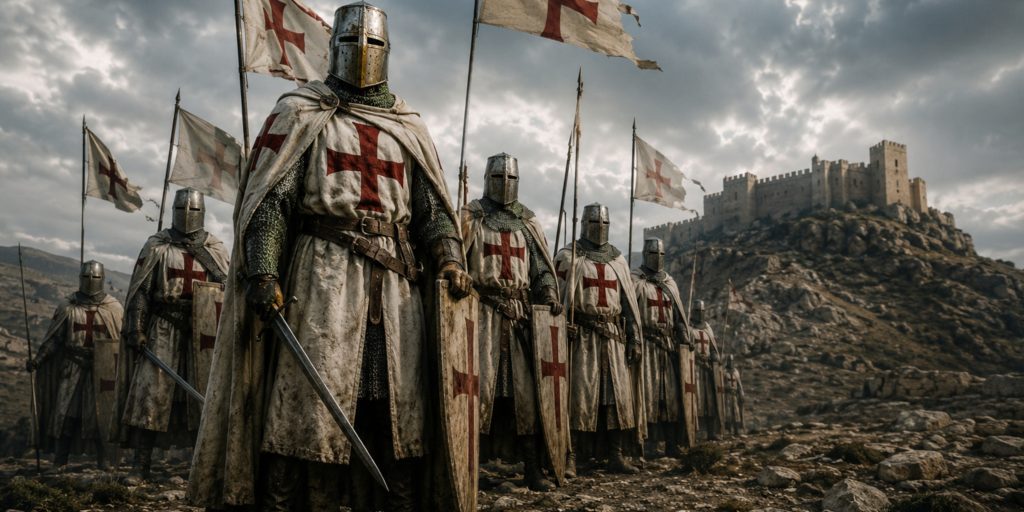
The early Knights Templar received royal encouragement from Baldwin.
He granted them quarters within the Temple Mount, which became their headquarters.
From these modest beginnings emerged one of medieval Europe’s most influential military organisations.
The Knights Hospitaller
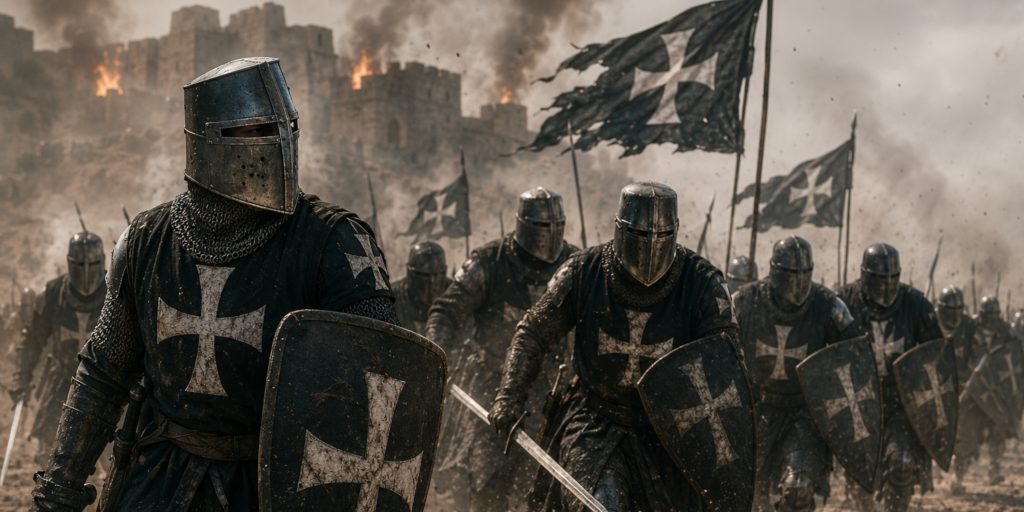
The Hospitallers also expanded significantly under Baldwin’s rule.
Originally devoted primarily to caring for pilgrims, they increasingly adopted military responsibilities while continuing their charitable work.
Supporting both organisations proved one of Baldwin’s wisest long term decisions.
Diplomacy and Marriage Alliances
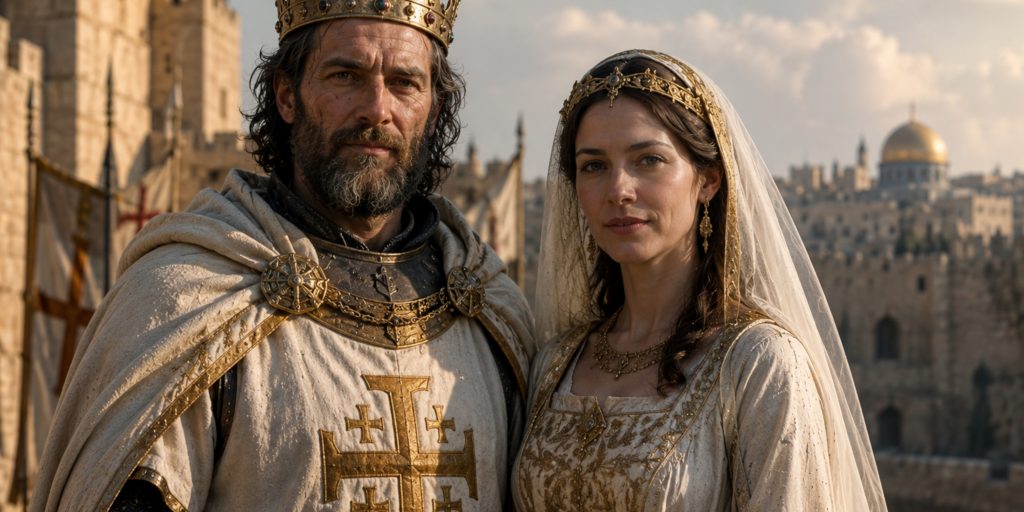
Baldwin understood that marriages could accomplish what armies often could not.
His greatest diplomatic achievement involved arranging the marriage of his daughter Melisende to Fulk of Anjou.
Fulk was one of western Europe’s most experienced nobles and brought considerable military prestige.
The marriage secured western support for Jerusalem while ensuring an orderly succession.
Unlike many medieval succession plans, this one actually worked remarkably well, at least initially.
Given the usual medieval enthusiasm for civil wars, that deserves recognition.
Melisende and the Succession
Baldwin had no surviving sons.
Rather than allowing uncertainty to develop, he carefully prepared his eldest daughter Melisende to inherit the throne.
She was recognised as heir during his lifetime.
This decision demonstrated Baldwin’s political foresight.
Melisende would later become one of the most capable rulers in Crusader history, continuing many of her father’s policies while strengthening royal authority.
Arms and Armour
Baldwin fought throughout an era when Frankish military equipment had reached a highly effective form.
Typical Equipment
| Equipment | Description |
|---|---|
| Helmet | Conical nasal helmet, later flat topped great helm in limited use |
| Mail Armour | Full mail hauberk with coif |
| Shield | Large kite shield bearing heraldic designs |
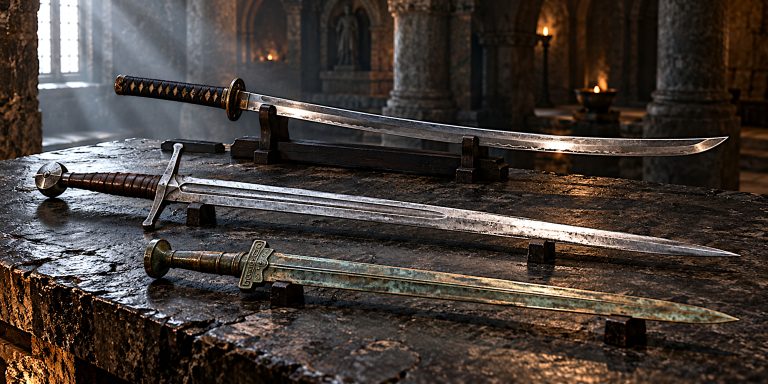
| Sword | Knightly arming sword, early Oakeshott Type X and XI forms |
| Lance | Primary cavalry weapon |
| Dagger | Utility and close combat weapon |
| Spurs | Symbol of knightly status |
As king, Baldwin likely possessed equipment of exceptional quality imported from both Europe and local workshops.
His armies also incorporated Syrian Christians, Armenians, native infantry and mounted Turcopoles, creating one of the most diverse military forces in the eastern Mediterranean.
Leadership Style
Unlike more aggressive Crusader kings, Baldwin rarely pursued unnecessary conquests.
His leadership focused upon:
- Maintaining alliances
- Strengthening frontier castles
- Preserving manpower
- Supporting military orders
- Careful diplomatic negotiation
- Strategic campaigning rather than reckless offensives
This measured approach reflected experience gained from decades defending Edessa.
He understood that the Kingdom of Jerusalem simply lacked the manpower to waste soldiers.
Contemporary Opinions
The chronicler William of Tyre, writing later in the twelfth century, described Baldwin as a capable and prudent ruler whose judgement commanded respect.
Other Latin chroniclers praised his courage during captivity and his steadfast defence of the kingdom.
Muslim writers acknowledged him as a determined opponent whose persistence complicated regional politics.
Praise from enemies is often the most convincing sort.
Death
Baldwin II died on 21 August 1131.
By the time of his death:
- The Kingdom of Jerusalem remained intact.
- Military orders had become established institutions.
- The succession had been secured.
- Relations with western Europe remained strong.
- Crusader political structures had matured considerably.
His daughter Melisende and her husband Fulk inherited a kingdom that was more stable than the one Baldwin himself had received.
Legacy
Baldwin II occupies an unusual place in Crusader history.
He won no battle comparable to the capture of Jerusalem.
He founded no legendary dynasty.
He inspired relatively few romantic tales.
Yet his achievements were arguably more important.
He transformed a fragile conquest into a functioning medieval kingdom capable of surviving another generation.
Modern historians increasingly appreciate Baldwin because his reign illustrates the practical realities of Crusader government. Castles required maintenance. Alliances demanded constant attention. Ransoms had to be paid. Noble factions needed careful management. These were not glamorous tasks, but they kept the kingdom alive.
Had Baldwin failed, later figures such as Melisende, Baldwin III and even Baldwin IV might never have inherited a kingdom worth ruling.
That may explain why Baldwin rarely receives the attention afforded to more dramatic monarchs. Quiet competence rarely produces epic legends. It does, however, produce stable governments, and medieval history could certainly have benefited from a little more of it.
Where to See Artefacts Connected to Baldwin II
Although no confirmed personal possessions survive, several sites preserve material from his reign.
| Site | What to See |
|---|---|
| Church of the Holy Sepulchre, Jerusalem | Royal burial traditions and Crusader architecture |
| Tower of David Museum, Jerusalem | Artefacts from the Kingdom of Jerusalem |
| Israel Museum, Jerusalem | Crusader weapons, coins and sculpture |
| Louvre Museum, Paris | Crusader period art and manuscripts |
| British Museum, London | Coins, seals and objects from the Crusader states |
Baldwin II Timeline
| Year | Event |
|---|---|
| c.1060s | Born in the County of Rethel |
| 1096 | Joins the First Crusade |
| 1100 | Becomes Count of Edessa |
| 1118 | Crowned King of Jerusalem |
| 1123 | Captured by Balak |
| 1124 | Released after ransom |
| 1129 | Arranges marriage of Melisende and Fulk |
| 1131 | Dies and is succeeded by Melisende and Fulk |
Takeaway
Baldwin II may never command the same recognition as Richard the Lionheart or Saladin, but that says more about our fascination with dramatic personalities than it does about his ability.
He inherited a kingdom balanced precariously between survival and disaster, then spent thirteen years preventing it from falling apart. It is not the most glamorous achievement in medieval history, but it may be one of the most impressive.
History often remembers those who changed the world with spectacular victories. Baldwin II deserves equal recognition for preserving one through patience, resilience and remarkably sensible judgement. In an age where kings often solved problems by charging directly towards them with a lance, Baldwin understood that keeping a kingdom alive sometimes required something much more difficult: knowing when not to.