The Almohads are one of those dynasties that historians quietly become obsessed with. You begin by studying a reformist Berber movement in the Atlas Mountains and somehow end up standing beneath the arches of Seville, staring at a minaret while wondering how medieval rulers found the energy to conquer half a continent before lunch.
Between 1121 and 1269, the Almohad Dynasty reshaped North Africa and large parts of Islamic Spain. They defeated rivals, crushed kingdoms, built cities, sponsored philosophy, and terrified enemies from Marrakesh to Toledo. They were brilliant organisers and deeply uncompromising reformers. They also had the slightly exhausting habit of declaring almost everyone insufficiently pure.
Their story is not merely one of conquest. It is the story of religious certainty colliding with political reality, and reality, as ever, proved stubborn.
Who Were the Almohads?
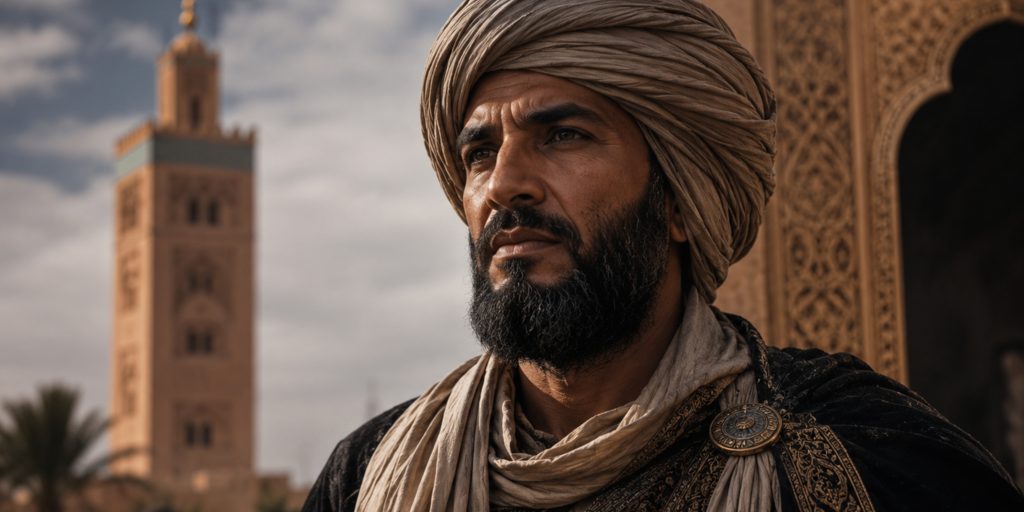
The Almohads emerged from the High Atlas Mountains of modern Morocco in the early twelfth century. Their movement began with a Berber religious reformer named Ibn Tumart, a fiercely intelligent theologian who believed the Islamic world had drifted into corruption and complacency.
The name “Almohad” derives from al-Muwahhidun, meaning “those who affirm the unity of God”. This was not subtle branding. Ibn Tumart believed existing Muslim rulers, especially the Almoravid Dynasty, had abandoned proper doctrine.
He preached strict monotheism, moral reform, and obedience to what he saw as authentic Islam. Unsurprisingly, this caused arguments.
Quite a few arguments, in fact.
After Ibn Tumart’s death around 1130, leadership passed to Abd al-Mu’min, the true architect of Almohad power. If Ibn Tumart supplied the ideology, Abd al-Mu’min supplied the armies, administration, and practical ambition required to build an empire.
Under him, the Almohads conquered Morocco, Algeria, Tunisia, and eventually much of al-Andalus in Islamic Spain.
The Fall of the Almoravids
The Almoravids had once appeared unstoppable themselves. They were hardened desert warriors who had crossed into Spain to halt Christian advances during the eleventh century.
Yet by the twelfth century they looked rigid and unpopular. Their authority weakened under military defeats and internal divisions.
The Almohads exploited this expertly.
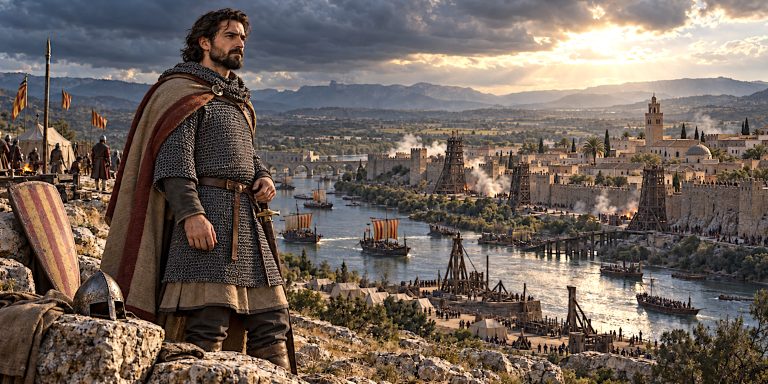
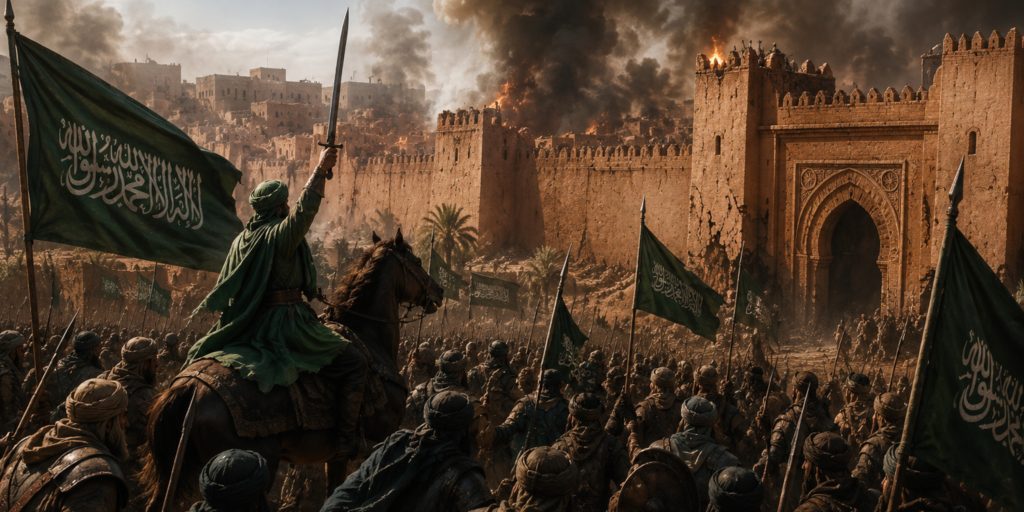
Marrakesh fell to the Almohads in 1147 after a brutal siege. The Almoravid state collapsed soon afterwards. This victory transformed the Almohads from a regional movement into rulers of a vast empire.
One cannot help admiring the speed of it. Medieval dynasties often spent generations consolidating power. The Almohads moved with alarming efficiency, rather like a tax collector who has spotted fresh income.
Almohad Expansion Into Spain
Al-Andalus became central to Almohad ambitions. Islamic Spain was wealthy, urbanised, and strategically vital.
The Almohads crossed into Iberia repeatedly during the twelfth century, presenting themselves as defenders of Islam against the Christian kingdoms of Castile, Aragon, Portugal, and León.
Cities such as Seville, Córdoba, and Granada became major Almohad centres.
Seville in particular flourished. The Almohads transformed it into one of the greatest cities in western Europe. The famous Giralda tower began life as the minaret of the Almohad mosque before later Christian modifications.
The dynasty brought North African military culture, architecture, theology, and administration directly into Iberia. Spain and the Maghreb became more tightly linked than they had been under earlier dynasties.
Ibn Tumart and Almohad Ideology
Ibn Tumart remains one of the most fascinating figures of the medieval Islamic world.
He claimed to be the Mahdi, a divinely guided leader destined to restore justice and true religion. This was an extraordinary claim and one not universally welcomed.
His teachings condemned luxury, anthropomorphic descriptions of God, and laxity in religious practice. The Almohads enforced doctrine with unusual intensity.
Christians and Jews faced greater restrictions under Almohad rule than under many previous Muslim dynasties in Spain. Some converted, some fled northward, and others adapted carefully to survive.
The famous Jewish philosopher Maimonides likely fled Almohad territory during this period.
The irony is difficult to ignore. The Almohads were intellectually sophisticated yet frequently intolerant. Medieval history specialises in these contradictions.
The Almohad Army
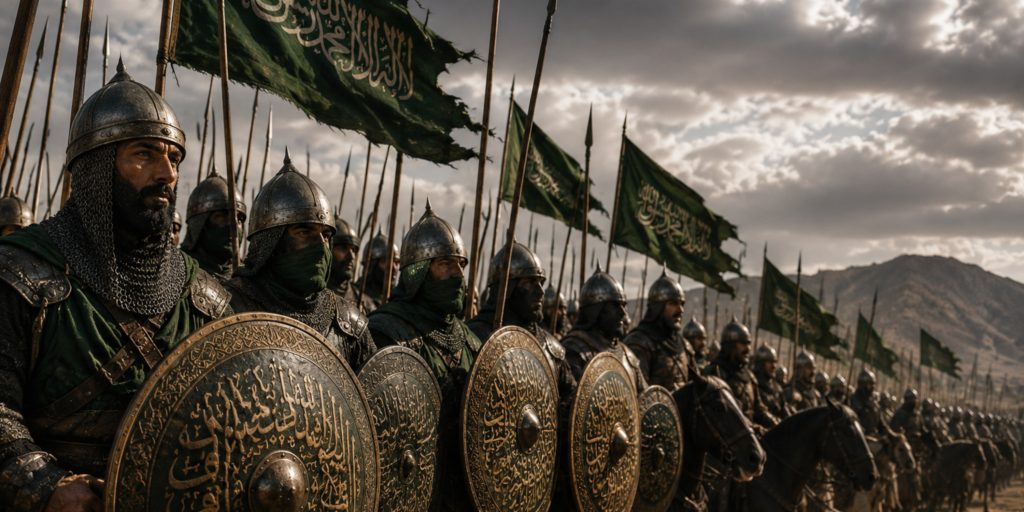
The Almohad military machine was formidable.
Their armies combined Berber tribal warriors, Andalusi troops, Arab cavalry, slave soldiers, and volunteers motivated by religion and conquest.
Key Features of Almohad Warfare
- Strong cavalry traditions
- Large infantry formations
- Skilled use of archers and javelin troops
- Religious zeal as battlefield motivation
- Extensive recruitment from across North Africa and Spain
Weapons and Arms
Common weapons included:
- Straight double-edged swords
- Curved saif blades
- Spears and lances
- Javelins
- Composite bows
- Round leather shields
- Mail armour and lamellar protection
Berber cavalry were especially feared for speed and discipline.
European chroniclers often described Almohad armies with a mixture of horror and admiration. Medieval writers did enjoy exaggerating enemy numbers, of course. According to some chronicles, every opposing army apparently contained enough men to empty a continent.
The Battle of Alarcos (1195)
The Almohad victory at Alarcos in 1195 was one of the greatest Muslim victories in medieval Spain.
The Almohad caliph Abu Yusuf Yaqub al-Mansur crushed the forces of King Alfonso VIII of Castile near modern Ciudad Real.
Christian casualties were devastating.
The battle temporarily halted Castilian expansion and restored Almohad prestige across al-Andalus.
Al-Mansur reportedly declared:
“God has broken their strength and humbled their pride.”
One senses the satisfaction.
After Alarcos, Almohad authority in Spain reached its high point. Yet the victory also created overconfidence. Dynasties often become most vulnerable immediately after triumph.
Architecture and Urban Power
The Almohads left behind extraordinary architecture.
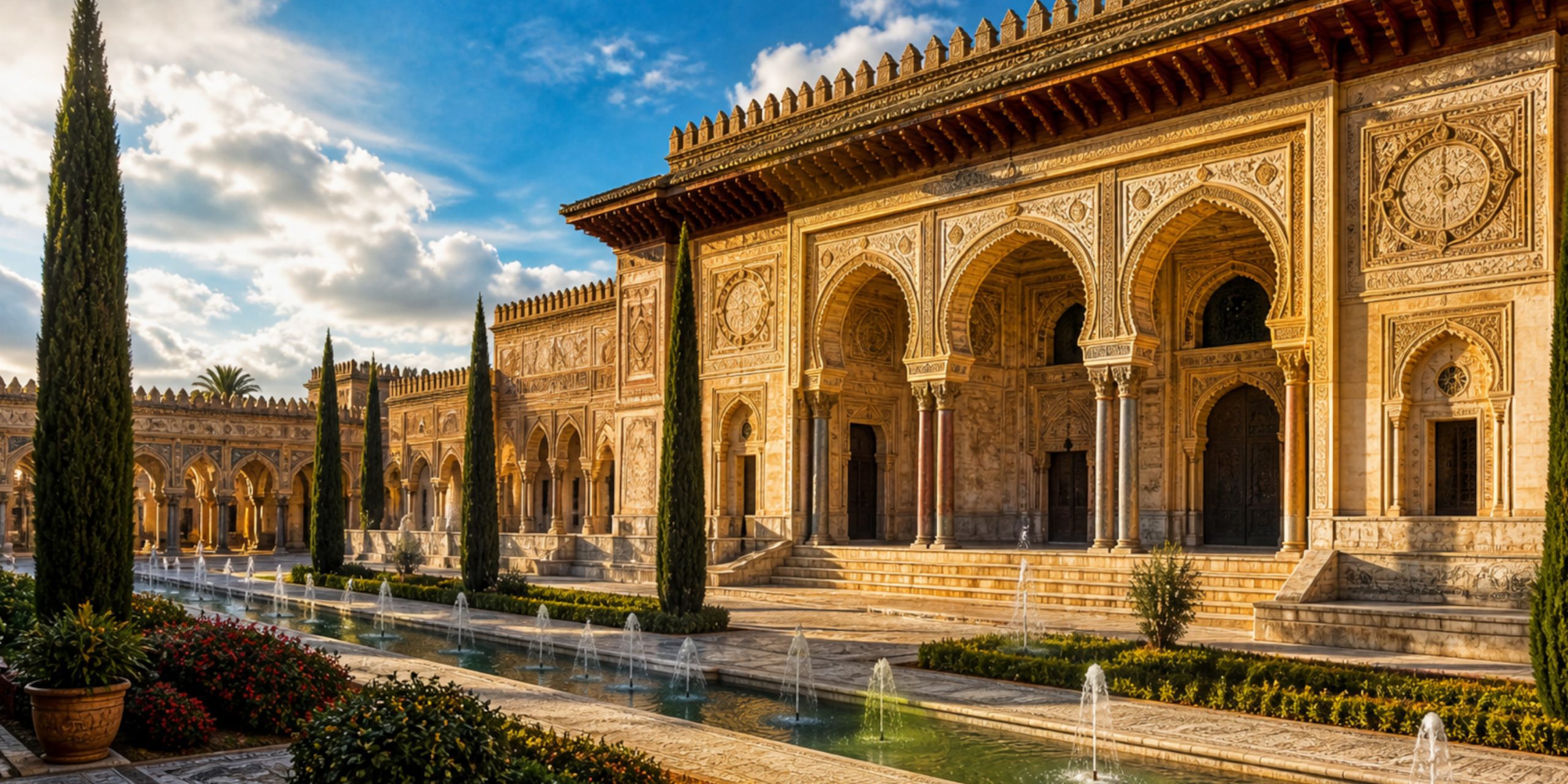
Their style balanced geometric simplicity with monumental confidence. There is a stern beauty to Almohad buildings. They feel disciplined rather than decorative.
Famous Almohad Monuments
- The Giralda in Seville
- Kutubiyya Mosque in Marrakesh
- Hassan Tower in Rabat
- Extensive city walls and fortifications
Their architects used horseshoe arches, patterned brickwork, carved stucco, and monumental gateways.
The Kutubiyya Mosque became a model for later Islamic architecture across the Maghreb.
Even now, Almohad structures possess a strange calm authority. Medieval rulers often built monuments to intimidate rivals. The Almohads seemed determined to intimidate centuries.
Philosophy, Learning and Culture
Despite their rigidity, the Almohads sponsored major intellectual activity.
The philosopher Ibn Rushd, known in Europe as Averroes, worked under Almohad patronage. His commentaries on Aristotle influenced both Islamic and Christian scholarship.
Medicine, astronomy, mathematics, and law all flourished during parts of Almohad rule.
Yet intellectual life existed within strict limits. Philosophers could enjoy patronage one year and suspicion the next. Medieval courts were not ideal environments for relaxing job security.
Still, Almohad Spain remained one of the intellectual centres of the Mediterranean world.
The Battle of Las Navas de Tolosa (1212)
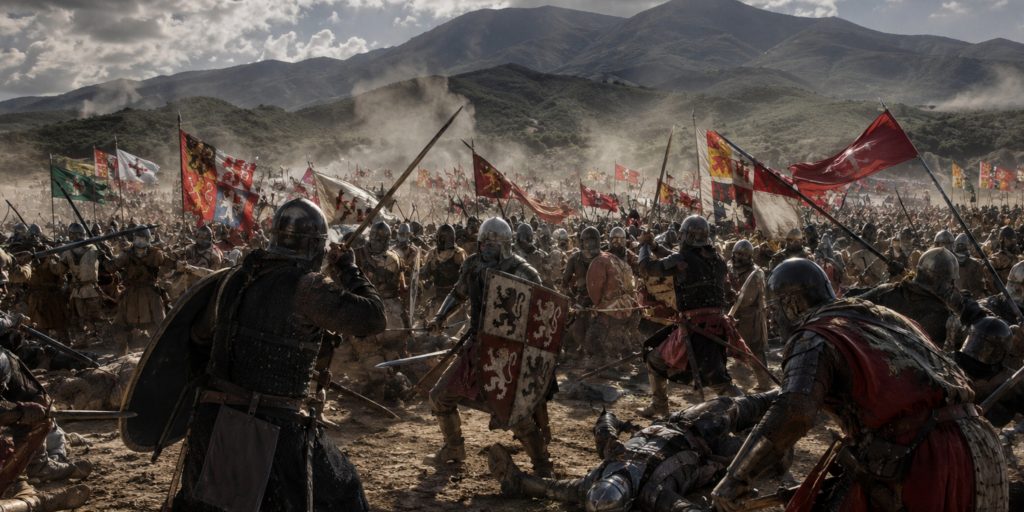
If Alarcos marked Almohad triumph, Las Navas de Tolosa marked the beginning of the end.
In 1212, a coalition of Christian kingdoms defeated the Almohad caliph Muhammad al-Nasir in one of the decisive battles of medieval Europe.
Castile, Aragon, and Navarre combined forces against the Almohads in central Spain.
The defeat shattered Almohad military dominance.
Christian armies advanced rapidly afterwards, capturing major cities over the following decades.
Contemporary Christian chroniclers treated the battle as a providential victory. Muslim sources described catastrophe and disorder.
Both sides understood the scale of the moment.
After Las Navas de Tolosa, the Almohad Empire never fully recovered.
Decline and Fragmentation
The thirteenth century saw the Almohad state unravel.
Several factors contributed:
- Military defeats in Spain
- Internal tribal rivalries
- Economic strain
- Regional rebellions
- Weak succession politics
Local dynasties emerged across North Africa, including the Marinids in Morocco and the Hafsids in Tunisia.
By 1269, Marrakesh fell to the Marinids, effectively ending Almohad rule.
The collapse was remarkably swift considering the empire’s earlier power. Medieval empires could appear immovable right up until the moment they disintegrated.
Rather like certain football clubs after an expensive transfer window.
Religion and Society Under the Almohads
Life under the Almohads varied enormously depending on class, religion, and location.
Urban centres prospered economically and culturally, while rural areas remained shaped by tribal politics and local loyalties.
The Almohads enforced religious conformity more aggressively than many earlier Islamic rulers in Spain. Christians and Jews faced pressure to convert or leave.
This remains one of the darker aspects of Almohad rule.
Yet their empire also facilitated trade, scholarship, architecture, and urban development across a huge region linking Africa and Europe.
History rarely grants us simple villains or heroes. The Almohads were disciplined reformers, conquerors, patrons, zealots, and administrators all at once.
Legacy of the Almohads
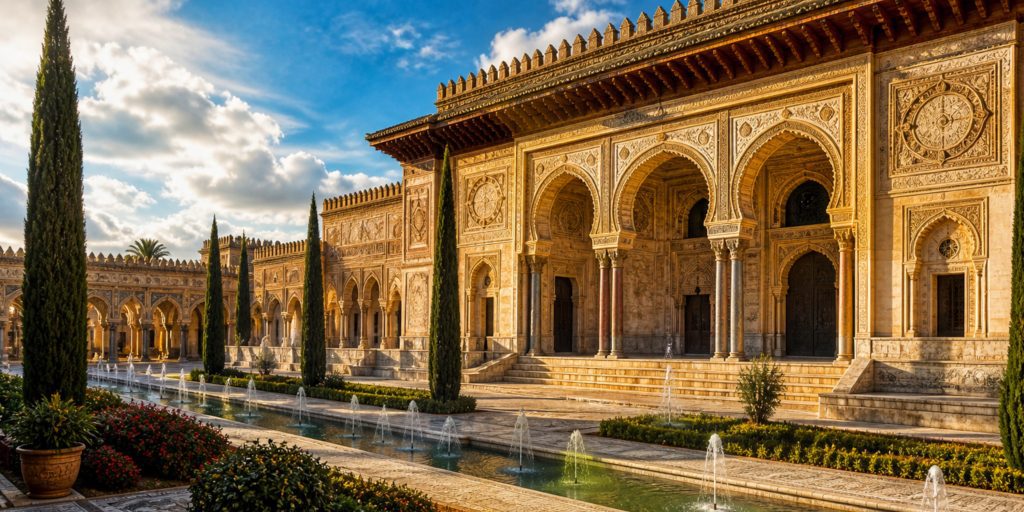
The Almohads transformed the western Islamic world.
They unified vast territories across North Africa and Spain, spread distinctive architecture, influenced philosophy, and shaped the final centuries of Islamic power in Iberia.
Their military campaigns altered the balance between Christian and Muslim kingdoms in medieval Spain. Their buildings still dominate skylines centuries later.
Modern Morocco, Algeria, Tunisia, and Spain all carry traces of Almohad influence.
And perhaps that is the strangest thing about studying them. The dynasty vanished in the thirteenth century, yet pieces of its world remain stubbornly present. Towers survive. Walls survive. Ideas survive.
Even the arguments survive, which feels particularly medieval.
Contemporary Quotes About the Almohads
“Their armies covered the earth like clouds.”
Christian chronicle describing Almohad invasions of Iberia
“The caliph ruled with justice and severity.”
Medieval North African account of Abd al-Mu’min
“Seville became one of the ornaments of the world.”
Andalusi writer describing Almohad Spain
Takeaway
The Almohads fascinate me because they represent both the brilliance and danger of absolute certainty.
They built magnificent cities while demanding ideological obedience. They encouraged philosophy while enforcing orthodoxy. They created an empire through discipline yet eventually fractured beneath the weight of their own rigidity.
As a historian, I find them impossible to reduce into neat categories. They were not simply enlightened rulers or fanatical conquerors. They were both, often simultaneously.
And frankly, medieval history would be rather dull without dynasties that could produce great philosophers in one decade and catastrophic political decisions in the next.