The Wars of the Roses were not one long war. England did not spend thirty years permanently covered in mud while armoured noblemen chased one another around Yorkshire.
Instead, between 1455 and 1487, periods of relative stability were punctured by rebellions, political coups, executions and some exceptionally violent battles. At different moments the crown belonged to Henry VI, Edward IV, Henry VI again, Edward IV again, Richard III and finally Henry VII. Medieval constitutional stability was having something of a difficult afternoon.
At the centre of the struggle were rival branches of the Plantagenet dynasty, principally the houses of Lancaster and York. Yet describing the conflict simply as Lancaster against York conceals much of what makes it interesting. Loyalties changed. Former allies became enemies. Men who had helped put one king on the throne subsequently attempted to remove him.
The Earl of Warwick provides perhaps the finest example. He helped Edward IV become king, later helped restore Henry VI, and eventually died fighting Edward at Barnet. The term “Kingmaker” may be rather romantic, but Warwick certainly earned the paperwork.
This chronology covers the principal battles normally associated with the Wars of the Roses, from the cramped streets of St Albans in 1455 to the bloody destruction of the last major Yorkist rebellion at Stoke Field in 1487.
Wars of the Roses Battles at a Glance
| Date | Battle | Victor | Importance |
|---|---|---|---|
| 22 May 1455 | First St Albans | Yorkist | First major armed clash |
| 23 September 1459 | Blore Heath | Yorkist | Salisbury breaks through a Lancastrian interception |
| 12 October 1459 | Ludford Bridge | Lancastrian | Yorkist army collapses |
| 10 July 1460 | Northampton | Yorkist | Henry VI captured |
| 30 December 1460 | Wakefield | Lancastrian | Richard, Duke of York killed |
| 2 February 1461 | Mortimer’s Cross | Yorkist | Edward of March defeats Tudor forces |
| 17 February 1461 | Second St Albans | Lancastrian | Henry VI recovered by Lancastrians |
| 28 March 1461 | Ferrybridge | Contested | Bloody preliminary action before Towton |
| 29 March 1461 | Towton | Yorkist | Edward IV establishes control of England |
| 25 April 1464 | Hedgeley Moor | Yorkist | Lancastrian resistance weakened in the north |
| 15 May 1464 | Hexham | Yorkist | Organised northern Lancastrian resistance shattered |
| 26 July 1469 | Edgecote | Rebel/Warwick faction | Edward IV’s authority badly damaged |
| 12 March 1470 | Losecoat Field | Yorkist royal | Warwick’s rebellion exposed |
| 14 April 1471 | Barnet | Yorkist | Warwick killed |
| 4 May 1471 | Tewkesbury | Yorkist | Lancastrian royal line effectively destroyed |
| 22 August 1485 | Bosworth | Tudor | Richard III killed, Henry VII takes crown |
| 16 June 1487 | Stoke Field | Tudor | Last major Yorkist military challenge defeated |
Exact army strengths and casualty figures should be treated cautiously. Late medieval chroniclers were perfectly capable of exaggerating numbers, particularly when a conveniently enormous figure made a victory appear more miraculous or a defeat more horrifying.
Why Did the Wars of the Roses Begin?
The origins of the conflict lay much deeper than a disagreement between two families with different floral preferences.
Henry VI inherited the English throne as an infant. His reign eventually became associated with political factionalism, financial difficulties, the collapse of England’s position in France and disputes among powerful aristocratic families.
Henry’s episodes of severe incapacity intensified the crisis. Richard, Duke of York, possessed royal blood and considerable political influence. His rivalry with Edmund Beaufort, Duke of Somerset, became increasingly dangerous.
By 1455 political argument had acquired bows, bills and armour.
The resulting wars were fought partly over the crown, but also over access to the king, control of government, aristocratic rivalries, inheritance and personal survival.
That last point should not be underestimated. Once political opponents began killing one another’s fathers, brothers and sons, reconciliation became considerably harder.
First Battle of St Albans, 22 May 1455
Yorkist victory
The traditional opening battle of the Wars of the Roses was surprisingly small.
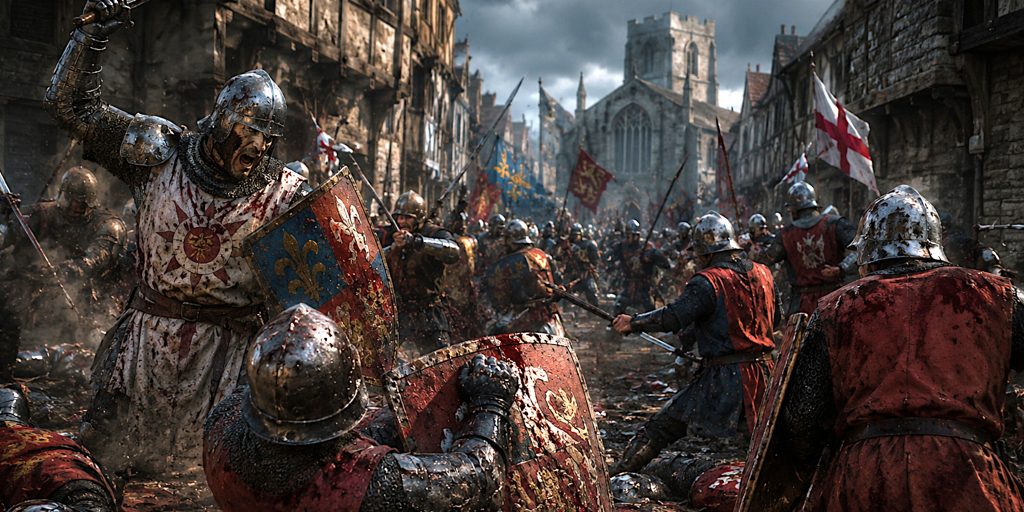
Richard, Duke of York, Richard Neville, Earl of Salisbury, and Richard Neville, Earl of Warwick confronted Henry VI and his supporters at St Albans. Negotiations failed and Yorkist troops entered the town.
Fighting took place through streets and properties rather than across a conventional open battlefield. Warwick’s men appear to have forced their way through gardens and buildings to attack the Lancastrian position.
Somerset was killed, as were other prominent Lancastrian nobles including the Earl of Northumberland and Lord Clifford. Henry VI himself was wounded by an arrow and taken under Yorkist control.
Why St Albans mattered
The casualties among ordinary soldiers were comparatively limited, but the political consequences were enormous.
Blood had now been deliberately shed between England’s most powerful noble factions. Sons inherited their fathers’ titles, estates and grudges.
The Paston correspondence preserves something of the anxiety surrounding these years, with political news travelling rapidly between households and retainers. These private letters are particularly valuable because they remind us that the conflict was experienced as contemporary uncertainty rather than an orderly sequence of textbook battles.
Battle of Blore Heath, 23 September 1459
Yorkist victory
Four years after St Albans, open warfare resumed.
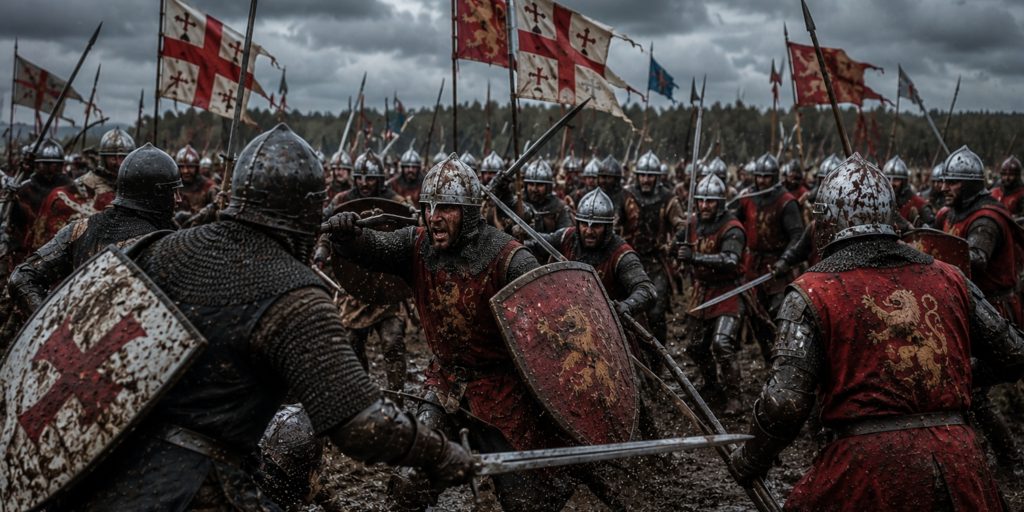
Richard Neville, Earl of Salisbury, was marching from Middleham towards Ludlow when his Yorkist force was intercepted near Blore Heath by a larger Lancastrian army commanded by James Tuchet, Lord Audley.
Salisbury adopted a defensive position protected by difficult ground and a stream.
According to later accounts, the Yorkists encouraged their opponents into attacking. Lancastrian forces crossed the intervening ground and were struck by Yorkist archery before the armies met in close combat.
Audley was killed and the Lancastrian army eventually broke.
Why Blore Heath mattered
Salisbury successfully continued towards Ludlow, but the victory did not solve the Yorkists’ strategic problem.
Their enemies still possessed the authority of Henry VI.
That would matter enormously a few weeks later.
Battle of Ludford Bridge, 12 October 1459
Lancastrian victory
Calling Ludford Bridge a “battle” is slightly generous.
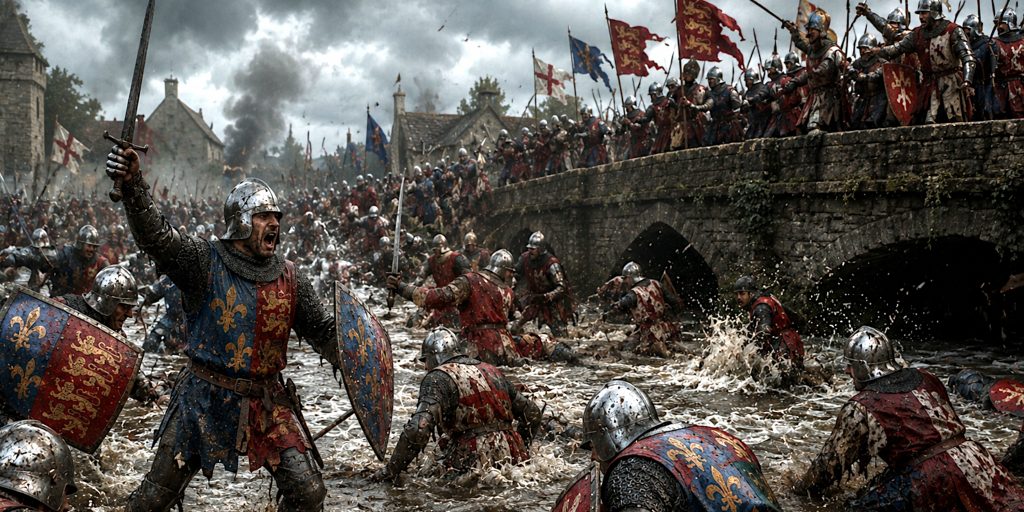
The Yorkist leadership assembled near Ludlow but found itself confronted by a much stronger royal army under Henry VI.
The crucial difficulty was legitimacy. Fighting another nobleman was one matter. Fighting the anointed king was rather more awkward.
Sir Andrew Trollope and men from the Calais garrison defected from the Yorkist side. York, Salisbury and Warwick abandoned their army and fled.
The Yorkist leadership escaped into exile, while the Lancastrian government appeared triumphant.
For the moment.
Wars of the Roses victories had an unfortunate habit of expiring quickly.
Battle of Northampton, 10 July 1460
Yorkist victory
Warwick, Salisbury and Edward, Earl of March returned to England in 1460.
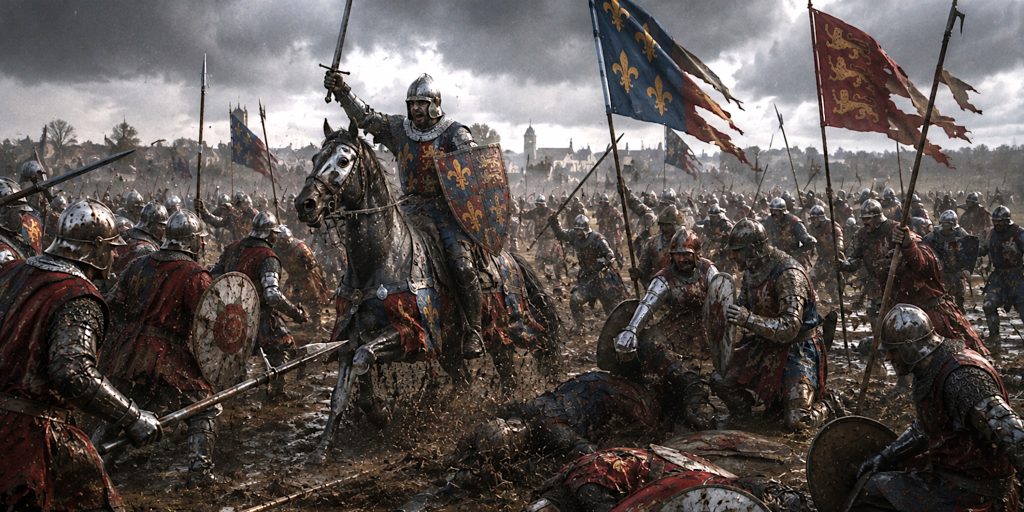
At Northampton they confronted a Lancastrian royal army positioned behind defensive works. Rain reportedly reduced the effectiveness of Lancastrian artillery, although the decisive development came from inside the Lancastrian position.
Lord Grey of Ruthin changed sides or deliberately allowed the Yorkists through his section of the defences.
The result was catastrophic.
Several leading Lancastrian nobles were killed and Henry VI was captured once again.
The political consequence
Richard of York subsequently advanced his own claim to the crown.
The resulting Act of Accord allowed Henry VI to remain king but recognised York and his descendants as Henry’s heirs.
There was one obvious problem.
Henry already had a son.
Margaret of Anjou was unlikely to accept the disinheritance of Prince Edward quietly. She did not.
Battle of Wakefield, 30 December 1460
Lancastrian victory
Wakefield reversed Yorkist fortunes with extraordinary violence.
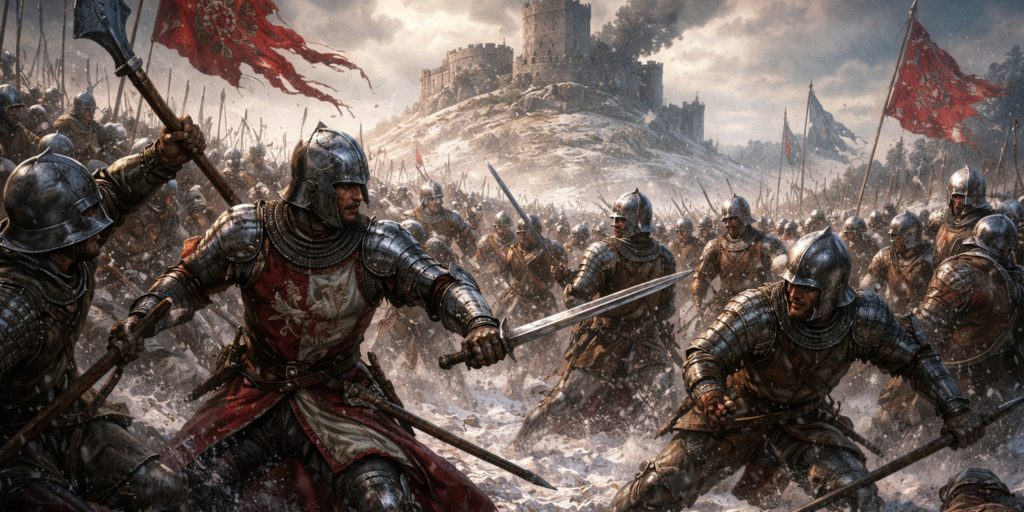
Richard, Duke of York, was based at Sandal Castle when Lancastrian forces gathered against him.
Precisely why York left the security of the castle remains debated. Later stories provide dramatic explanations involving deception or rashness, but certainty is impossible.
What is certain is that his army was overwhelmed.
York was killed. His seventeen-year-old son Edmund, Earl of Rutland, was also killed during or after the fighting. Richard Neville, Earl of Salisbury, was captured and subsequently executed.
York’s head was famously displayed at York, reportedly wearing a paper crown.
The struggle had now changed.
Richard of York was dead, but his eldest surviving son Edward was young, militarily capable and considerably less inclined towards compromise.
Battle of Mortimer’s Cross, 2 February 1461
Yorkist victory
Edward, Earl of March, confronted a Lancastrian army associated with Jasper Tudor and Owen Tudor in Herefordshire.
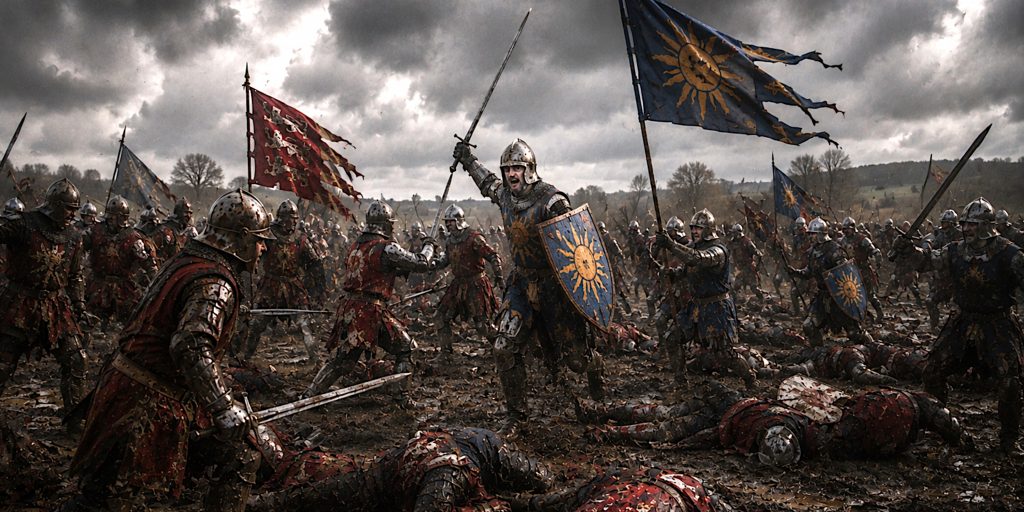
Before the battle, a parhelion reportedly appeared in the sky, making three suns visible.
Edward transformed the phenomenon into propaganda, presenting the three suns as a favourable sign. The image later became associated with his badge of the Sun in Splendour.
The Yorkists won.
Owen Tudor was captured and executed at Hereford.
The victory helped secure Edward’s position in the Welsh Marches and allowed him to move towards London.
Second Battle of St Albans, 17 February 1461
Lancastrian victory
While Edward was campaigning in the west, Margaret of Anjou’s army moved south.
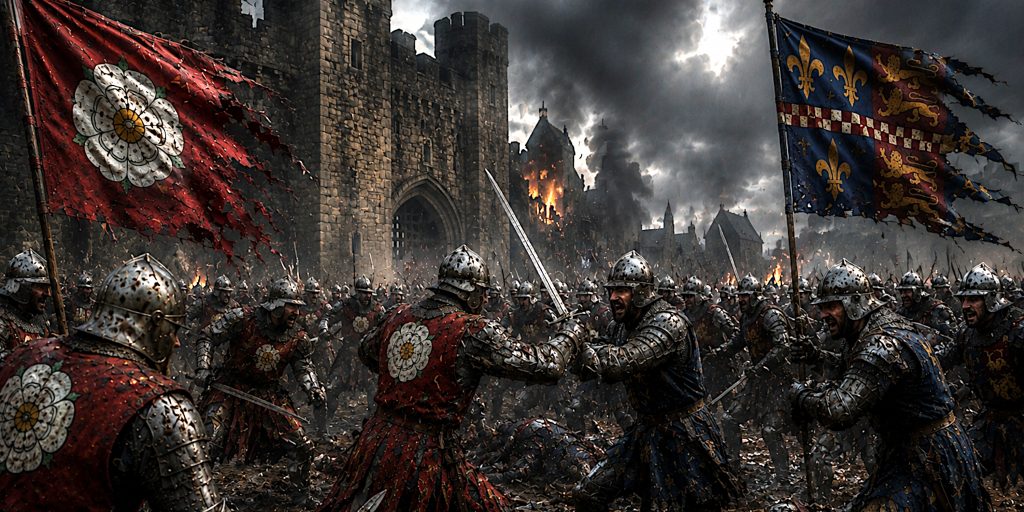
Warwick attempted to block the Lancastrian advance near St Albans using an elaborate defensive system that included field obstacles and artillery.
The Lancastrians outmanoeuvred him.
Warwick’s army collapsed and Henry VI, who had been travelling under Yorkist control, was recovered by his supporters.
Yet the Lancastrian victory produced remarkably little strategic reward.
Edward reached London and was proclaimed King Edward IV.
Two kings now claimed England.
The matter would be decided in Yorkshire.
Battle of Ferrybridge, 28 March 1461
Inconclusive preliminary engagement
Ferrybridge deserves to be separated from Towton rather than treated as part of a single battle.
As Edward IV’s army moved north, control of crossings over the River Aire became crucial.
Lancastrian forces launched a surprise attack at Ferrybridge, creating considerable disruption among the Yorkists. Lord FitzWalter was killed.
Yorkist forces eventually recovered the crossing while another force under Lord Fauconberg crossed elsewhere and threatened the Lancastrian position.
The Lancastrians withdrew towards Towton.
The main armies would meet the following day.
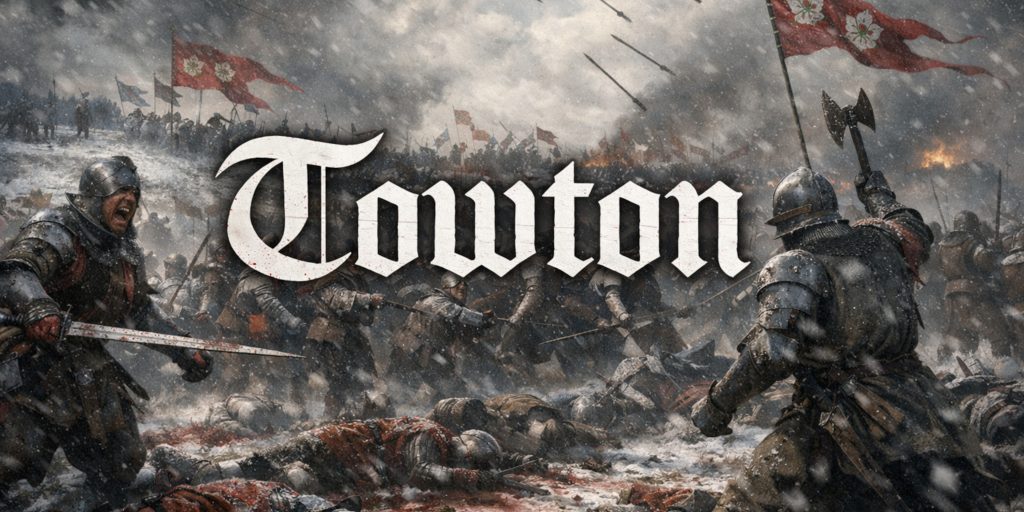
Battle of Towton, 29 March 1461
Decisive Yorkist victory
Towton was the great slaughter of the Wars of the Roses.
Fought on Palm Sunday in bitter weather, the battle brought enormous Yorkist and Lancastrian armies together on exposed ground in Yorkshire.
Exact numbers remain disputed. Contemporary and later sources give figures that are often extraordinarily high. What matters is that Towton was plainly a battle on an exceptional scale.
Snow and wind played an important role. Yorkist archers under Lord Fauconberg reportedly exploited the wind to outrange their opponents, shooting into the Lancastrian lines before withdrawing or recovering enemy arrows.
Eventually the armies collided.
The fighting became a prolonged close-quarter struggle involving bills, poleaxes, swords and other weapons. Reinforcements arriving under the Duke of Norfolk strengthened Edward’s position.
The Lancastrian line finally broke.
The retreat became a massacre as men attempted to escape across difficult ground and congested crossings.
How many died at Towton?
Later tradition gave a figure of 28,000 dead. Modern historians are understandably cautious.
Archaeological investigation has nevertheless confirmed the exceptional brutality of the fighting. Excavated mass graves have revealed traumatic injuries inflicted by edged and blunt weapons, some involving repeated blows to the head.
Whatever the exact number, Towton was one of the largest and bloodiest battles fought in medieval England.
Why Towton mattered
Edward IV emerged as the effective ruler of England.
Henry VI, Margaret of Anjou and Prince Edward fled north and eventually into Scotland.
Lancastrian resistance survived, but its ability to challenge Edward on this scale had been shattered.
Battle of Hedgeley Moor, 25 April 1464
Yorkist victory
Lancastrian resistance persisted in northern England.
John Neville, Lord Montagu, was escorting Scottish envoys when he encountered a Lancastrian force commanded by figures including Sir Ralph Percy.
The Lancastrian army broke apart relatively quickly as some contingents fled.
Percy remained and was killed.
A phrase traditionally attributed to him as he died is:
“I have saved the bird in my bosom.”
The precise wording and transmission deserve caution, as with many medieval deathbed quotations. The “bird” was presumably his loyalty to Henry VI.
Hedgeley Moor cleared the way for another confrontation.
Battle of Hexham, 15 May 1464
Yorkist victory
Montagu caught another Lancastrian army near Hexham only weeks later.
The Yorkist attack broke the Lancastrian position, apparently driving part of the defeated force into difficult ground near the Devil’s Water.
The aftermath was severe.
Henry Beaufort, Duke of Somerset, was captured and executed. Other Lancastrian leaders suffered the same fate.
Organised Lancastrian military resistance in northern England was effectively crushed.
Henry VI survived as a fugitive until his capture in 1465.
For several years Edward IV’s throne looked relatively secure.
His next serious enemy would come from his own side.
Battle of Edgecote, 26 July 1469
Rebel victory
By the late 1460s Edward IV had fallen out with Warwick.
Warwick resented the growing influence of the Woodville family following Edward’s marriage to Elizabeth Woodville and disagreed with aspects of royal policy.
A rebellion associated with the mysterious “Robin of Redesdale” developed in the north.
At Edgecote, rebel forces confronted a royal army commanded principally by William Herbert, Earl of Pembroke, and Humphrey Stafford, Earl of Devon.
The royal army was defeated.
Pembroke was captured and executed.
Edward IV subsequently fell into Warwick’s hands.
Why Edgecote mattered
Warwick had helped create Edward’s kingship.
He was now attempting to control it.
The relationship was beyond repair.
Battle of Losecoat Field, 12 March 1470
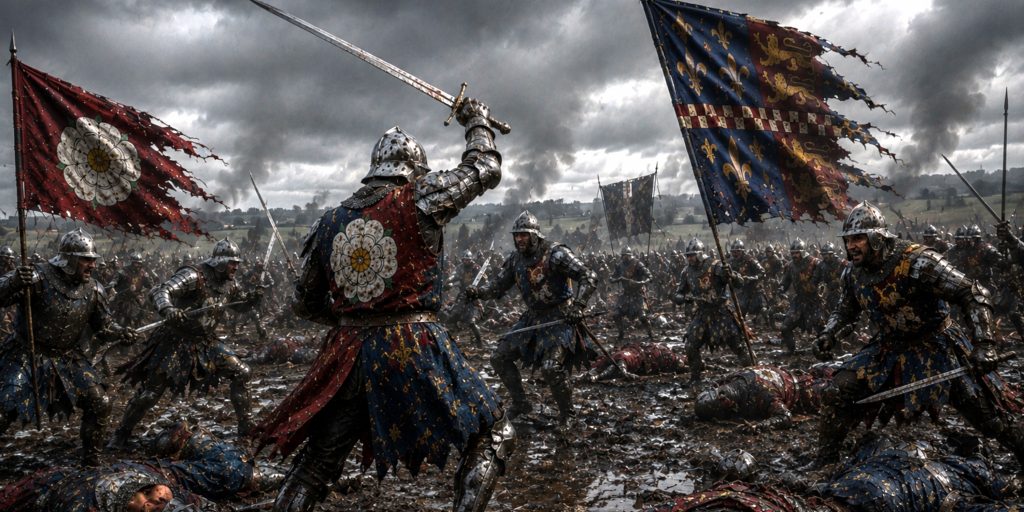
Edward IV victory
Another rebellion followed in Lincolnshire.
Sir Robert Welles led rebel forces against Edward IV, but the royal army defeated them near Empingham.
The battle acquired its colourful name from the coats supposedly discarded by fleeing rebels.
Evidence recovered from the defeated force helped expose the involvement of Warwick and Edward’s own brother, George, Duke of Clarence.
Warwick and Clarence fled England.
Then came one of the strangest political reversals of the entire period.
Warwick allied himself with Margaret of Anjou, the woman whose faction he had spent years fighting.
Politics has always produced uncomfortable meetings, but one would rather have been a fly on the wall for that negotiation.
Battle of Barnet, 14 April 1471
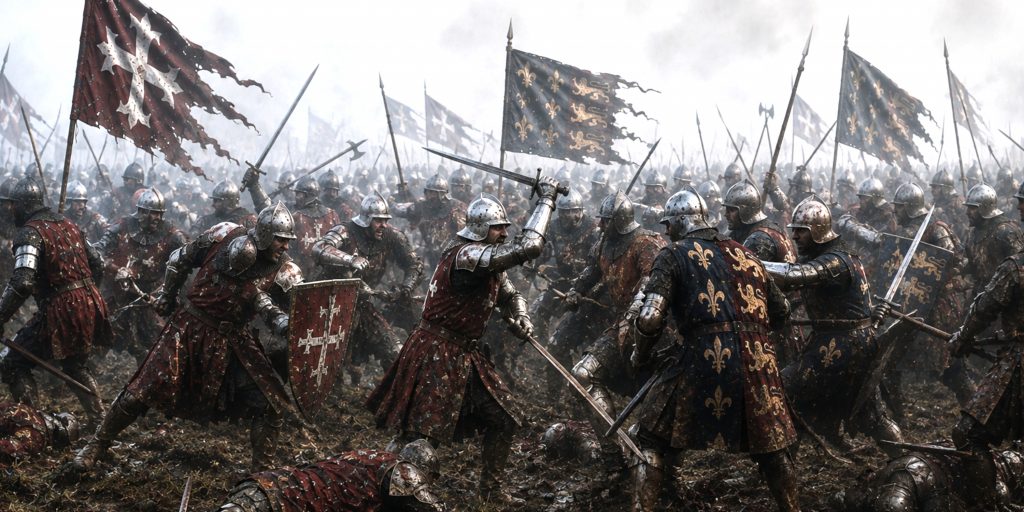
Yorkist victory
Warwick successfully restored Henry VI in 1470, forcing Edward IV into exile.
Edward returned the following year.
The armies met near Barnet on Easter Sunday.
Fog covered the battlefield and contributed to serious confusion. The opposing lines were offset, causing sections of each army to overlap their enemies.
Warwick’s men initially enjoyed success.
Then disaster struck.
The badge of John de Vere, Earl of Oxford, was a star with rays. In the fog it was apparently mistaken by Warwick’s troops for Edward IV’s Sun in Splendour.
Friendly fire followed.
Cries of treason spread.
Warwick’s army disintegrated.
Warwick himself was killed while attempting to escape.
Why Barnet mattered
The Kingmaker was dead.
Edward IV had eliminated the man most capable of uniting opposition against him, but Margaret of Anjou and Prince Edward had arrived in England.
Another battle followed within three weeks.
Battle of Tewkesbury, 4 May 1471
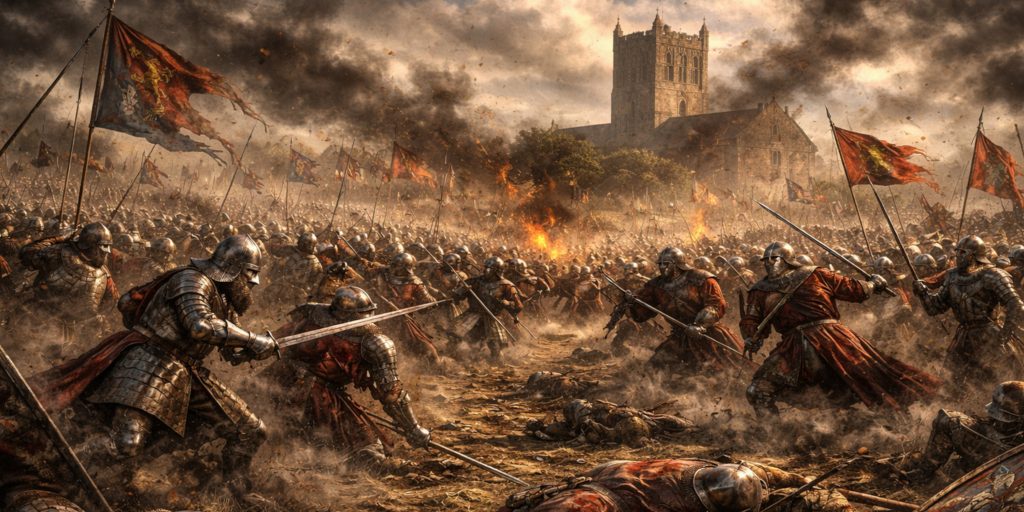
Decisive Yorkist victory
Margaret’s Lancastrian army attempted to reach Wales, where it hoped to gather reinforcements.
Edward IV caught it near Tewkesbury.
The Lancastrians occupied a defensible position, but the terrain complicated their movements.
Edmund Beaufort, Duke of Somerset, launched an attack against Edward’s forces. It failed, and the Lancastrian army collapsed.
Prince Edward of Westminster, the only son of Henry VI, was killed.
The precise circumstances of his death remain uncertain. Later accounts claiming that he was executed directly before Edward IV should not automatically be accepted.
Somerset and other Lancastrian leaders were executed shortly afterwards.
Henry VI died in the Tower of London later that month, almost certainly killed on Edward IV’s orders, although the surviving evidence does not allow us to reconstruct the murder itself with certainty.
The direct Lancastrian royal line had been destroyed.
The Long Peace, 1471 to 1483
Edward IV ruled for another twelve years.
This is an important gap in the chronology because it demonstrates how misleading the word “wars” can be.
England was not continuously fighting.
Edward’s regime became relatively stable. The political catastrophe began after his unexpected death in April 1483.
His young son became Edward V.
Within months, Edward IV’s brother Richard, Duke of Gloucester, had taken the throne as Richard III.
The disappearance of Edward V and his brother Richard, Duke of York, the Princes in the Tower, permanently damaged Richard’s reputation, although precisely what happened to the boys remains one of English history’s most famous unresolved questions.
Opposition gathered around Henry Tudor.
Battle of Bosworth Field, 22 August 1485
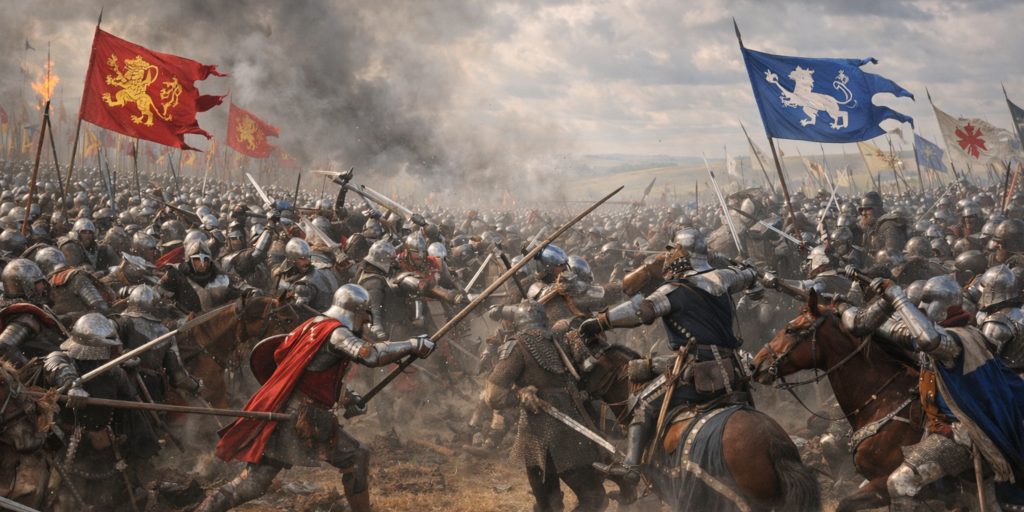
Tudor victory
Bosworth is the most famous battle of the Wars of the Roses, helped considerably by William Shakespeare, who arrived a century later and never knowingly allowed documentary uncertainty to spoil a good scene.
Henry Tudor landed in Wales and marched into England.
Richard III assembled a larger royal army. The forces of Thomas Stanley and Sir William Stanley remained a crucial uncertainty, despite their connections to Henry through his mother, Margaret Beaufort.
The battle opened with artillery and archery before the main bodies engaged.
Richard eventually saw an opportunity.
Henry Tudor was relatively exposed.
Richard led a mounted attack directly towards him.
It was an extraordinarily aggressive decision and nearly succeeded. Richard’s charge reportedly killed Henry’s standard-bearer, Sir William Brandon, and brought the king close to his rival.
Then Stanley forces intervened.
Richard was surrounded and killed.
The last Plantagenet king of England died fighting.
What happened to Richard III?
His body was stripped and taken to Leicester, where it was buried at Greyfriars.
More than five centuries later, archaeologists discovered his remains beneath a car park.
History occasionally has a sense of humour considerably drier than mine.
Examination of Richard’s skeleton revealed multiple wounds, including severe injuries to the skull consistent with violent close combat.
Henry Tudor became Henry VII.
But Bosworth was not quite the end.
Battle of Stoke Field, 16 June 1487
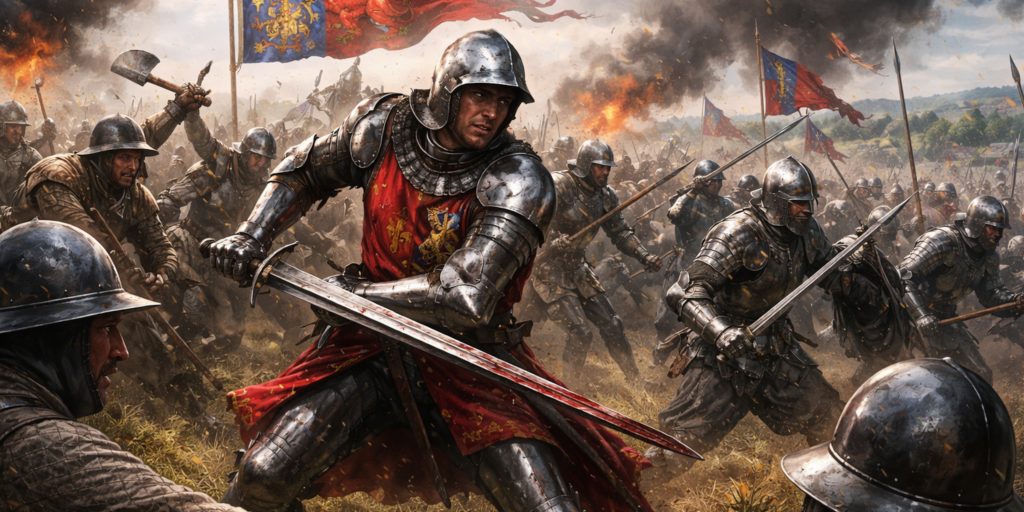
Tudor victory
Stoke Field has a strong claim to being the true final battle of the Wars of the Roses.
Henry VII’s position remained vulnerable after Bosworth.
Yorkist opponents rallied around Lambert Simnel, a boy presented as Edward, Earl of Warwick.
The rebellion was considerably more serious than the presence of a child pretender might suggest.
John de la Pole, Earl of Lincoln, led the Yorkist cause. His army included Irish troops and German mercenaries commanded by Martin Schwartz.
They landed in England and marched south.
Henry VII intercepted them near Stoke in Nottinghamshire.
The resulting battle was ferocious.
The rebel army fought stubbornly but was eventually destroyed. Lincoln and Schwartz were killed.
Simnel was captured.
Rather wonderfully, Henry did not execute him. The boy was employed in the royal kitchens and later became a royal falconer.
For everyone else involved, Tudor mercy was rather less dependable.
Which Was the Bloodiest Battle of the Wars of the Roses?
Towton is generally regarded as the bloodiest.
Contemporary and later estimates of casualties vary enormously, and figures such as 28,000 deaths should not be repeated as established fact.
Archaeological evidence does, however, demonstrate severe violence.
Towton was fought by large armies, lasted for hours and ended with a disastrous Lancastrian rout through restricted terrain.
The dead included men from across the social hierarchy.
This is worth remembering when looking at the Wars of the Roses through the familiar personalities of Edward IV, Warwick, Margaret of Anjou and Richard III.
Most of the people who died were not dukes.
What Weapons Were Used in the Wars of the Roses?
The popular image of these battles tends to focus heavily on swords.
Swords were certainly present, particularly as sidearms and weapons of status, but they were only part of the battlefield arsenal.
Iconic Wars of the Roses weapons included
- English longbows
- Bills and billhooks
- Poleaxes
- Spears
- Swords
- Daggers
- Maces and war hammers
- Early handguns
- Artillery
The longbow remained extremely important, as Towton demonstrates.
For heavily armoured men-at-arms fighting on foot, poleaxes and other staff weapons offered considerably greater leverage than the sword.
The sword was important.
It simply was not the medieval equivalent of everyone turning up with the same service rifle.
Armour and Battlefield Tactics
The Wars of the Roses occurred during a sophisticated period of European armour development.
Wealthy men-at-arms could wear highly developed plate harness capable of providing impressive protection against cutting attacks.
This influenced battlefield tactics.
Many English men-at-arms fought dismounted, creating dense formations supported by archers and other infantry.
Polearms could be used to hook, strike and thrust against armoured opponents. When a man was knocked down, daggers could be directed towards gaps in his armour.
Battle was often an exhausting physical contest at extremely close range.
Archaeological evidence from Towton is particularly useful here because skeletal trauma reveals a level of repeated violence that written chronicles sometimes sanitise.
Contemporary Voices from the Wars
One difficulty with the Wars of the Roses is that later writers have become almost too influential.
Shakespeare’s Richard III is magnificent drama. It is considerably less useful as an eyewitness account.
Contemporary chronicles, correspondence and administrative records offer a less theatrical picture.
The Paston Letters are especially valuable because members of the Paston family discussed political instability as it happened. Their correspondence reveals uncertainty over loyalties, rumours, military mobilisation and the practical consequences of aristocratic politics.
Following the First Battle of St Albans, contemporary accounts recorded Henry VI being wounded and several major Lancastrian lords killed.
At Towton, contemporary and near-contemporary chroniclers struggled to describe the scale of the bloodshed, although their casualty figures should be approached cautiously.
The Croyland chronicler provides another indispensable voice for the later stages of the conflict, particularly the extraordinary political reversals surrounding Edward IV, Warwick and Richard III.
These writers did not know how the story ended.
That makes them far more interesting than sources written safely under Tudor kings who already knew who the villains were supposed to be.
The Five Most Important Battles
If I had to reduce the wars to five decisive encounters, I would choose:
Towton, 1461
Edward IV’s victory transformed his claim to the throne into effective military control of England.
Barnet, 1471
Warwick’s death removed the most formidable political operator of the period.
Tewkesbury, 1471
The destruction of the Lancastrian field army and death of Prince Edward effectively ended the old Lancastrian royal cause.
Bosworth, 1485
Richard III’s death destroyed the reigning Yorkist monarchy and placed Henry Tudor on the throne.
Stoke Field, 1487
Henry VII defeated the last major Yorkist military attempt to overturn his regime.
St Albans deserves an honourable mention simply because somebody had to start the whole dreadful business.
Did the Wars of the Roses End at Bosworth or Stoke Field?
Both dates are defensible depending on what exactly we mean by “end”.
Bosworth in 1485 ended Richard III’s reign and brought Henry VII to the throne. It also ended direct Plantagenet kingship.
Stoke Field in 1487 destroyed a major Yorkist rebellion and is therefore frequently described as the final battle of the Wars of the Roses.
I prefer 1487 when discussing the military history.
Henry winning the crown at Bosworth did not magically make his opponents disappear. Stoke demonstrated that the new Tudor monarchy still had to defend itself on the battlefield.
Who Really Won the Wars of the Roses?
The obvious answer is Henry Tudor.
The more interesting answer is that almost everybody else lost.
The senior nobility suffered repeated deaths, executions and confiscations. The male lines of important aristocratic families disappeared. Henry VI, Edward of Westminster, Richard of York, Warwick and Richard III all died violently.
Edward IV enjoyed the greatest sustained military success of any major participant, winning at Mortimer’s Cross, Towton, Barnet and Tewkesbury.
Yet his dynasty still failed to retain the crown after his death.
Henry VII survived because he learned from the political wreckage around him. His marriage to Elizabeth of York strengthened his legitimacy, while his government worked carefully to contain aristocratic military power.
The familiar Tudor rose subsequently combined Lancastrian red and Yorkist white.
It was elegant propaganda.
History itself had been considerably messier.
Legacy of the Wars of the Roses
The wars did not simply annihilate the medieval aristocracy or instantly create modern England. Those older interpretations are too neat.
Many noble families survived and aristocratic power remained important under the Tudors.
What changed was the political landscape.
The repeated deposition of kings demonstrated how dangerous a combination of disputed legitimacy, weak royal authority and heavily armed aristocratic affinity could become.
The conflict also produced some of the most compelling figures in English medieval history: Margaret of Anjou, Edward IV, Warwick, Richard III and Margaret Beaufort among them.
Their reputations remain contested because the evidence itself is partisan, incomplete and frequently contradictory.
That is precisely what keeps bringing me back to the period.
The Wars of the Roses were not a tidy struggle between a red team and a white team. They were a succession of political crises in which family, ambition, fear, inheritance and personal loyalty collided.
Sometimes literally.
And when politics finally failed, thousands of ordinary men were expected to settle the argument with bows, bills and poleaxes.
Frequently Asked Questions
When did the Wars of the Roses begin?
The conventional starting date is 22 May 1455, when Yorkist and Lancastrian forces fought at the First Battle of St Albans.
When did the Wars of the Roses end?
Bosworth Field in 1485 ended Richard III’s reign, but Stoke Field in 1487 is commonly treated as the final major battle of the conflict.
What was the biggest battle?
Towton in 1461 appears to have involved the largest armies and produced the greatest bloodshed, although medieval troop and casualty figures are notoriously uncertain.
Who won the Wars of the Roses?
Henry Tudor ultimately emerged victorious. He defeated Richard III at Bosworth and became Henry VII, founder of the Tudor dynasty.
Was Richard III the last Plantagenet king?
Yes. His death at Bosworth in 1485 ended more than three centuries of Plantagenet kingship in England.
Were the wars really fought between red and white roses?
Not in the neat form suggested by later tradition. The white rose was closely associated with York, but the symmetrical opposition between a white Yorkist rose and red Lancastrian rose was developed and popularised later, particularly under the Tudors.