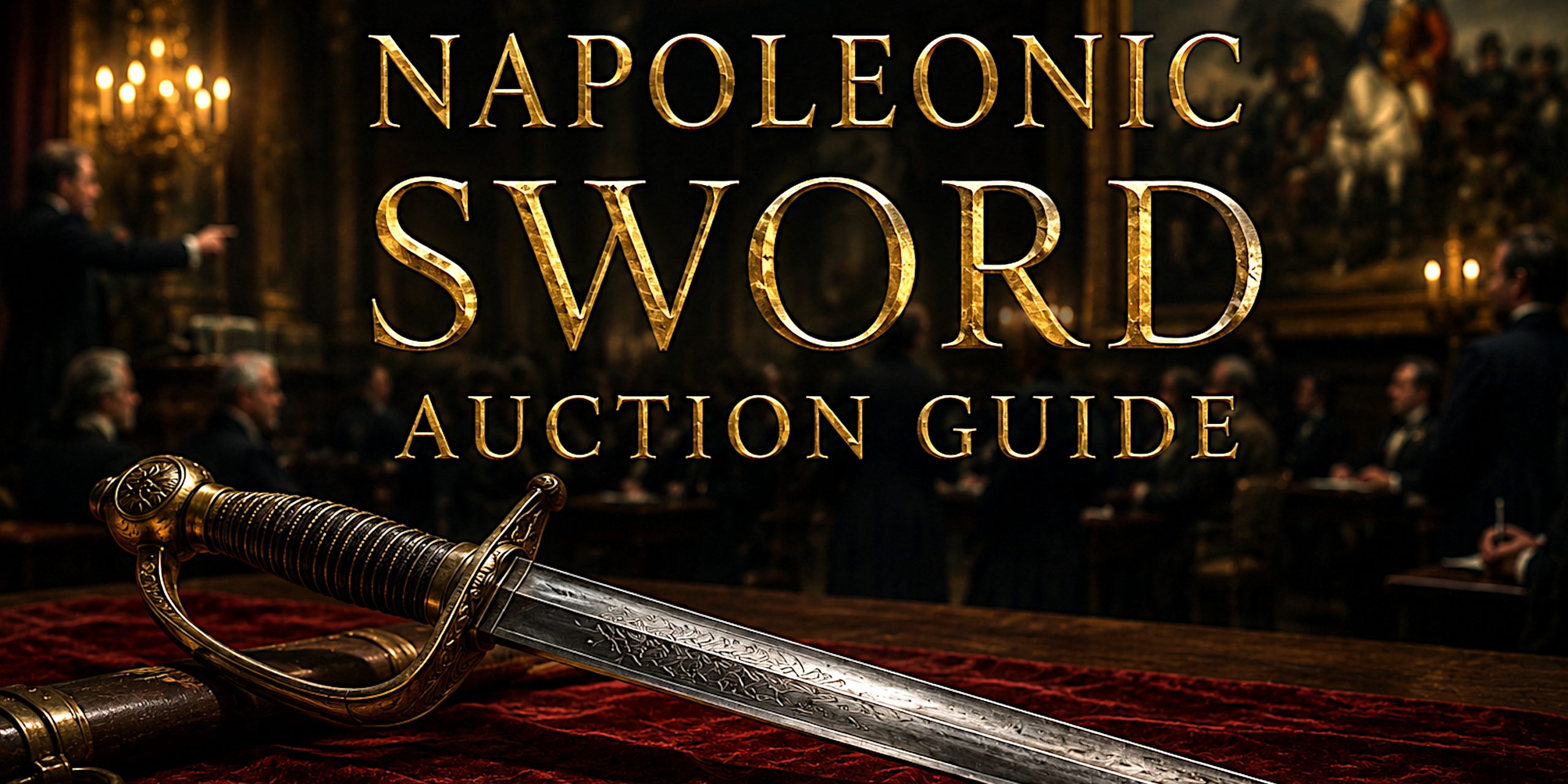
Buying an original Napoleonic sword is one of those collecting decisions where enthusiasm can become expensive remarkably quickly.
The period produced some of the most recognisable military swords ever carried: the British 1796 Light Cavalry Sabre, the formidable 1796 Heavy Cavalry Sword, French cuirassier sabres, infantry officer’s swords, naval cutlasses and a bewildering variety of privately purchased officer weapons.
Original examples remain available. The problem is working out exactly what you are looking at.
Two swords described as “Napoleonic cavalry sabres” can differ enormously in value. Originality, markings, condition, scabbard, provenance and precise model all matter. A convincing family story about Waterloo, meanwhile, is worth approximately nothing until someone can prove it.
This guide looks at what collectors should check before bidding, which Napoleonic swords attract the most interest and where the expensive mistakes tend to happen.
Napoleonic Sword Prices at a Glance
There is no reliable universal price list for antique swords. Auction results move considerably according to condition, attribution, country and the quality of the sale.
As a broad collecting guide:
| Type | Broad Collector Range |
|---|---|
| French infantry briquet sabre | £300 to £1,000+ |
| British 1796 Infantry Officer’s Sword | £600 to £2,000+ |
| British 1796 Light Cavalry Sabre | £700 to £2,500+ |
| British 1796 Heavy Cavalry Sword | £800 to £4,000+ |
| French AN IX / AN XI / AN XIII cavalry sabres | £1,000 to £4,000+ |
| British 1803 Infantry Officer’s Sword | £1,000 to £3,000+ |
| Napoleonic naval cutlass | £600 to £2,000+ |
| Named or presentation officer’s sword | £2,000 to £10,000+ |
| Documented historically important sword | Potentially far higher |
These figures should be treated as orientation rather than valuation. Exceptional provenance can completely detach an object from the normal market for its type.
A fairly tired trooper’s sword and the documented sword of an officer who fought at Waterloo may technically be the same pattern. Financially, they inhabit different planets.
What Makes a Napoleonic Sword Valuable?
Collectors sometimes focus too heavily on age. Almost every genuine sword from the period is old enough to be interesting. Value comes from the combination of several factors.
Rarity
Some military patterns were manufactured in large numbers and survive reasonably well. Others were produced in smaller quantities or suffered heavy losses through service, later modification and disposal.
Scarcity matters, although rarity alone does not guarantee desirability.
Condition
Collectors generally prefer swords retaining as much original material as possible.
Look particularly at:
- blade corrosion and pitting
- evidence of aggressive polishing
- original grip covering
- grip wire
- guard condition
- blade straightness
- original leather components
- scabbard condition
- replaced screws, rivets or fittings
- signs that parts have been assembled from different swords
A sword does not need to look new. In fact, a Napoleonic sword that looks suspiciously new deserves rather more examination.
Original Scabbard
An original matching scabbard can add considerably to desirability.
Leather scabbards have particularly poor survival rates, so complete examples are attractive. Steel scabbards survive more frequently but should still be checked for alterations, replacement suspension rings and mismatched fit.
Markings
Inspection stamps, maker’s names, arsenal inscriptions and regimental markings can help establish what a sword actually is.
They may also reveal rather inconvenient truths about an optimistic auction description.
Provenance
This is where values can become serious.
A sword with documented ownership by a known officer has considerably more historical interest than an anonymous example. Add participation in the Peninsular War or Waterloo and the potential premium increases.
The crucial word is documented.
A handwritten label saying “carried at Waterloo” is interesting. A chain of ownership supported by service records, correspondence, family papers and older collection catalogues is evidence.
The Most Collectable British Napoleonic Swords
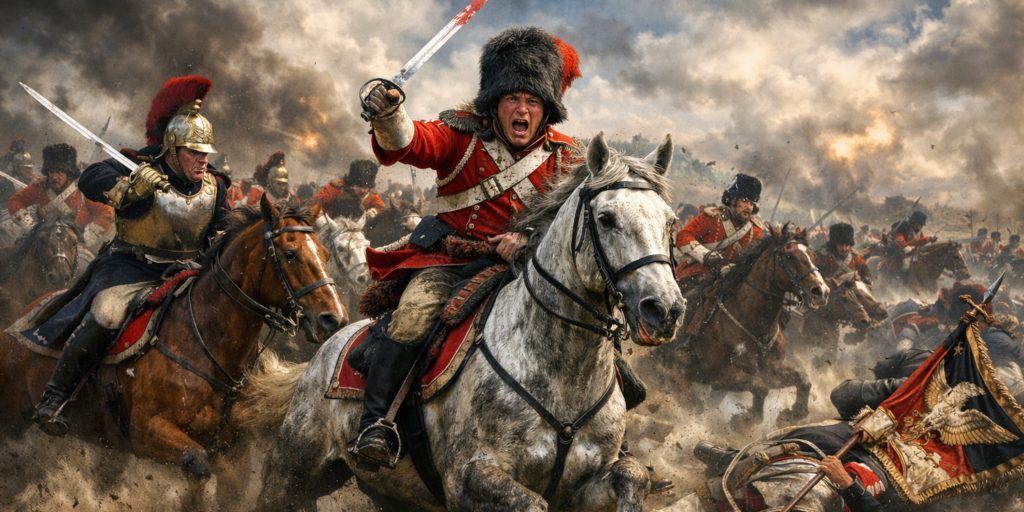
1796 Light Cavalry Sabre
The 1796 Pattern Light Cavalry Sabre is probably the best-known British sword of the period.
Its broad, curved blade and substantial cutting profile make it instantly recognisable. It was carried by British light cavalry during campaigns including the Peninsular War and Waterloo.
For collectors, useful features include:
- maker’s marks
- ordnance inspection stamps
- regimental markings
- original grip leather
- original scabbard
- untouched blade profile
Trooper examples appear often enough that a collector can afford to be selective.
Officer variants are another matter. These were privately purchased and can vary considerably in decoration and construction.
1796 Heavy Cavalry Sword
If the light cavalry sabre looks elegant, the 1796 Heavy Cavalry Sword looks like someone designed it after losing patience.
The trooper’s version has a broad straight blade and large guard. Many surviving examples show modifications, including altered points traditionally associated with improving thrusting ability.
Collectors should examine:
- blade tip configuration
- maker
- inspection marks
- guard alterations
- grip originality
- scabbard
- regimental marks
Original, complete examples are particularly desirable, while swords with convincing Waterloo associations occupy a stronger part of the market.
1796 Infantry Officer’s Sword
The 1796 Infantry Officer’s Sword offers a rather different proposition.
It is lighter and more elegant than the cavalry weapons, with a straight blade and gilt-brass hilt. Surviving examples frequently suffer from worn gilding, damaged grips and heavily polished blades.
Collectors should look for surviving:
- blade etching
- gilt decoration
- grip covering
- wire binding
- original scabbard fittings
The pattern is historically important, although contemporary officers were not universally enthusiastic about its qualities as a fighting weapon.
1803 Infantry Officer’s Sword
The 1803 Pattern is one of my favourites from the British Napoleonic period.
Its curved blade and elaborate hilt give it far more visual character than the 1796 infantry pattern. It was particularly associated with flank-company officers and became one of the distinctive British officer swords of the wars.
Officer swords were privately purchased, which means considerable variation exists.
That makes identification more interesting but also slightly more dangerous for inexperienced buyers.
Check blade decoration carefully. Genuine period engraving should be assessed alongside the construction and ageing of the entire sword rather than treated as proof on its own.
French Napoleonic Swords Worth Watching
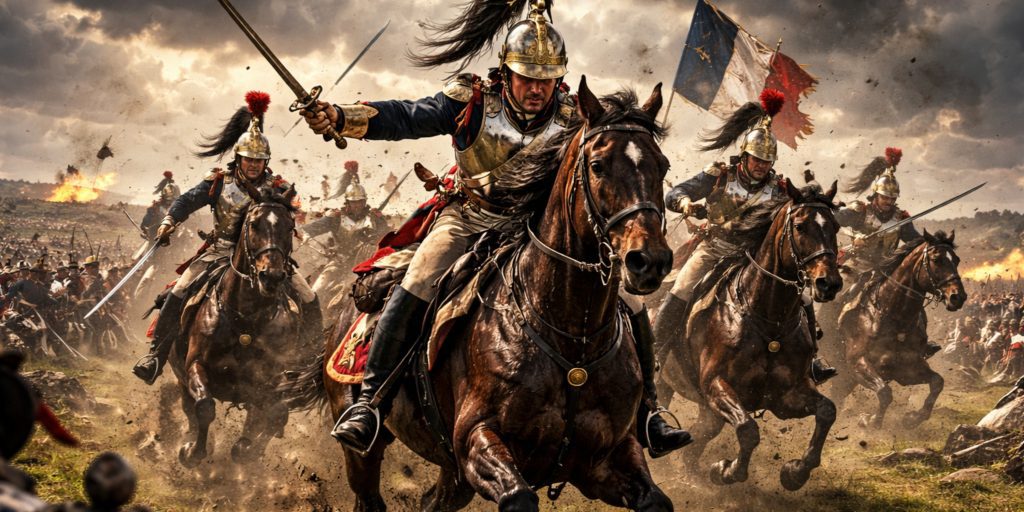
French swords can be wonderfully rewarding to collect because state manufacture and inspection systems often left useful evidence on surviving weapons.
AN IX, AN XI and AN XIII Cavalry Sabres
French heavy cavalry swords associated with cuirassiers and other mounted troops are among the great military weapons of the period.
Collectors should study:
- Klingenthal inscriptions
- manufacturing dates
- poinçons or inspection stamps
- guard construction
- blade dimensions
- scabbard configuration
French arsenal inscriptions can make these swords easier to date than many privately purchased British officer weapons.
That does not make them impossible to fake.
Quite the opposite. Their recognisable markings give dishonest sellers something useful to imitate.
French Infantry Briquet Sabres
The compact brass-hilted briquet is one of the more accessible ways into Napoleonic collecting.
Large numbers were manufactured and similar patterns remained in service internationally for many years.
That creates an identification problem.
A brass-hilted infantry sabre is not automatically a French Napoleonic weapon. Later examples and foreign derivatives are common.
Inspection marks, blade form and dimensions matter considerably.
Officer and Presentation Swords
This is where the market becomes both fascinating and dangerous.
Officers frequently purchased their own swords, allowing greater variation in:
- blade shape
- decoration
- gilding
- inscriptions
- grips
- heraldry
- presentation engraving
A genuine presentation sword connected to an identifiable officer can command a substantial premium.
Unfortunately, inscriptions can also be added later.
Never value a sword solely because a famous name appears on the blade or scabbard.
Research the officer.
Did the person exist? Did they serve in the stated regiment? Were they the correct rank at the relevant date? Does the sword’s pattern fit their period of service?
An hour in military records can save several thousand pounds.
Understanding Napoleonic Sword Markings
Markings are among the most useful tools available to collectors.
British swords may carry maker, retailer, inspection or regimental marks. Important Napoleonic-era British makers include names such as Osborn, Gill, Woolley and Dawes.
French military blades can carry arsenal inscriptions and inspection marks associated with manufacture at centres such as Klingenthal.
Do not assume every readable mark proves authenticity.
Compare:
- lettering style
- spelling
- location
- stamp shape
- depth
- wear
- relationship between marking and surrounding patina
A fresh-looking stamp sitting in two centuries of corrosion should inspire questions.
A Note About Wilkinson Swords
This is an important dating trap.
Wilkinson is one of the most famous names in British sword collecting, but Wilkinson swords belong primarily to the post-Napoleonic period.
A sword genuinely made by Henry Wilkinson cannot have been carried at Austerlitz, Salamanca or Waterloo.
For Napoleonic British swords, collectors are more likely to encounter makers including Osborn, Gill, Woolley and Dawes.
Small chronological details like this are precisely why researching the maker before bidding matters.
How to Spot a Reproduction or Composite Sword
There is no single test for authenticity.
Instead, examine whether every component tells roughly the same story.
Warning Signs
Be cautious when you encounter:
- artificially uniform patina
- recently aged leather
- incorrect screws
- modern machine marks
- implausibly crisp stamps
- mismatched blade and hilt
- incorrect grip wire
- poorly copied arsenal inscriptions
- suspiciously elaborate provenance
- a famous battlefield connection unsupported by documents
Composite swords are another problem.
An antique blade fitted to an antique hilt is still made from old components, but that does not make it an original sword.
This can be much harder to identify than a modern reproduction.
Restoration: How Much Is Too Much?
Old swords are supposed to look old.
Light conservation is one thing. Aggressive restoration can remove both historical evidence and financial value.
Polishing can destroy:
- etching
- arsenal inscriptions
- inspection stamps
- original surface finish
- evidence of manufacture
- historic patina
Regripping and replacing missing wire may improve appearance while reducing originality.
Before restoring an important sword, speak to a specialist conservator.
Please resist the temptation to attack a £2,000 sabre with metal polish because somebody on YouTube made it look easy.
Provenance: What Actually Counts as Evidence?
Strong provenance can include:
- original family correspondence
- military service records
- wills
- photographs
- presentation documents
- old collection catalogues
- previous auction records
- regimental records
- inscriptions independently matching a known owner
The evidence should ideally create a traceable chain connecting the object with the claimed person or event.
Weak Provenance
Be wary of phrases such as:
“Believed to have been carried at Waterloo.”
“Traditionally associated with…”
“From the family of a Napoleonic officer.”
“Possibly battlefield recovered.”
These statements are not necessarily false. They simply require evidence.
The difference between “Waterloo period” and “carried at Waterloo” can amount to thousands of pounds.
Buying a Napoleonic Sword at Auction
Before bidding, obtain the full condition report and the highest-resolution photographs available.
Ask for images of:
- both sides of the blade
- blade spine
- ricasso
- inspection stamps
- maker’s marks
- guard
- pommel
- grip
- scabbard throat
- scabbard drag
- suspension fittings
Request the sword’s measurements as well.
Compare them with known examples of the pattern.
If an auction house will not provide useful photographs or basic measurements for an expensive sword, I would be reluctant to bid remotely.
Remember the Buyer’s Premium
The hammer price is not necessarily what you pay.
Depending on the auctioneer and jurisdiction, additional costs can include:
- buyer’s premium
- VAT or local tax
- online bidding fees
- shipping
- insurance
- import charges
- currency conversion
- specialist packing
Always calculate your maximum bid from the final cost rather than the hammer price.
Auction fever is considerably less entertaining when the invoice arrives.
Buying Online
Online marketplaces have made antique swords easier to find, but they have also made questionable swords easier to sell.
Specialist dealers and established militaria auctioneers usually provide better descriptions than general marketplaces, although reputation never replaces your own examination.
For expensive purchases, ask for:
- detailed photographs
- measurements
- provenance documents
- condition report
- return terms
- written confirmation of restoration
Save copies of the listing and correspondence.
They become part of the object’s collecting history.
Should You Buy a Sword Without a Scabbard?
Yes, depending on the sword and price.
Many genuine Napoleonic swords have lost their scabbards. This is particularly understandable with leather examples.
A missing scabbard reduces completeness and usually value, but it does not make an otherwise good sword undesirable.
I would rather own an untouched genuine sword without its scabbard than an apparently complete example assembled from mismatched components.
Originality beats cosmetic completeness.
Battlefield Damage and “Combat Marks”
Treat claims of battle damage with considerable scepticism.
A nick in a blade does not prove that the sword parried a French cuirassier at Waterloo.
Damage could have occurred during:
- military service
- training
- later ceremonial use
- storage
- Victorian collecting
- twentieth-century handling
- somebody dropping it in 1974
Without supporting provenance, physical damage should simply be described as damage.
The history may be more exciting. We just cannot prove it.
Which Napoleonic Sword Is Best for a First-Time Collector?
For British swords, the 1796 Light Cavalry Sabre is an obvious starting point.
It is historically significant, instantly recognisable and sufficiently well documented that a new collector can compare a prospective purchase against surviving museum and auction examples.
A French briquet can offer a cheaper route into the period, although accurate dating becomes important because related designs continued beyond the Napoleonic Wars.
Collectors with a larger budget might consider a good 1803 officer’s sword or French heavy cavalry sabre.
Whatever you choose, buy the best researched example you can afford rather than simply the cleanest.
Questions to Ask Before Bidding
Before placing a serious bid, I would want satisfactory answers to these questions:
| Question | Why It Matters |
| Is the sword definitely of Napoleonic date? | Similar patterns continued after 1815 |
| Is the blade original to the hilt? | Composite swords exist |
| Is the grip original? | Regripping affects originality |
| Is the scabbard original to the sword? | Mismatched scabbards are common |
| Are the markings correct? | They can establish date and manufacture |
| Has the blade been polished? | Excessive cleaning damages evidence |
| Has anything been replaced? | Restoration affects collector value |
| Is the provenance documented? | Stories alone should not command premiums |
| What is the buyer’s premium? | It changes the actual purchase price |
| Can the sword legally be shipped to me? | Regulations vary by jurisdiction |
If the seller cannot answer everything, that does not automatically condemn the sword. It should, however, affect how confidently you bid.
Major Auction Houses and Specialist Sales
Napoleonic swords appear through international fine-arms auctions, specialist militaria auctioneers and regional houses.
Collectors commonly encounter material through firms including Bonhams and Hermann Historica, as well as specialist British and Continental militaria auctions.
General auction houses can occasionally produce the most interesting discoveries because poorly catalogued family collections still appear.
They can also produce some spectacularly optimistic descriptions.
Search by pattern rather than relying entirely on the auctioneer’s terminology. Try variations such as:
- 1796 cavalry sabre
- P1796 sabre
- Napoleonic cavalry sword
- AN XIII sabre
- Klingenthal sabre
- 1803 officer sword
- Waterloo sword
- French cuirassier sword
Misidentified objects sometimes hide behind surprisingly vague catalogue titles.
Is a Napoleonic Sword a Good Investment?
I would approach antique swords as historical objects first and investments second.
Quality examples have several characteristics collectors generally favour: finite supply, historical importance, recognisable patterns and an international collecting community.
That does not guarantee rising prices.
Auction costs create substantial friction when buying and selling, while fashions within militaria collecting change.
Provenance, originality and rarity tend to provide stronger long-term appeal than buying an ordinary sword simply because it dates from 1815.
Buy something you would still be pleased to own if prices remained flat for ten years.
That is usually a healthier collecting strategy.
Where to Research Before You Buy
Museum collections are extremely useful because they provide authenticated comparison pieces.
Good places to investigate include:
- Royal Armouries, Leeds
- National Army Museum, London
- Musée de l’Armée, Paris
- regimental museums
- major auction archives
- specialist arms and armour reference books
Compare several genuine examples rather than relying on one photograph.
Military swords were manufactured objects, but variation existed between makers, dates and contracts. Knowing the acceptable range is far more useful than memorising a single “correct” example.
Takeaway
Napoleonic swords sit in an unusually appealing part of the antique-arms market. They are old enough to belong to a very different military world, yet common enough that an ordinary collector can still own an authentic weapon from the period.
That accessibility comes with risk.
Learn the patterns. Study makers and inspection marks. Treat provenance as something to prove rather than something to believe. Look carefully at grips and scabbards, and become comfortable walking away from a sword when the details do not make sense.
Above all, do not let the words “Waterloo” or “Napoleon” disable your normal scepticism.
There will always be another sword.