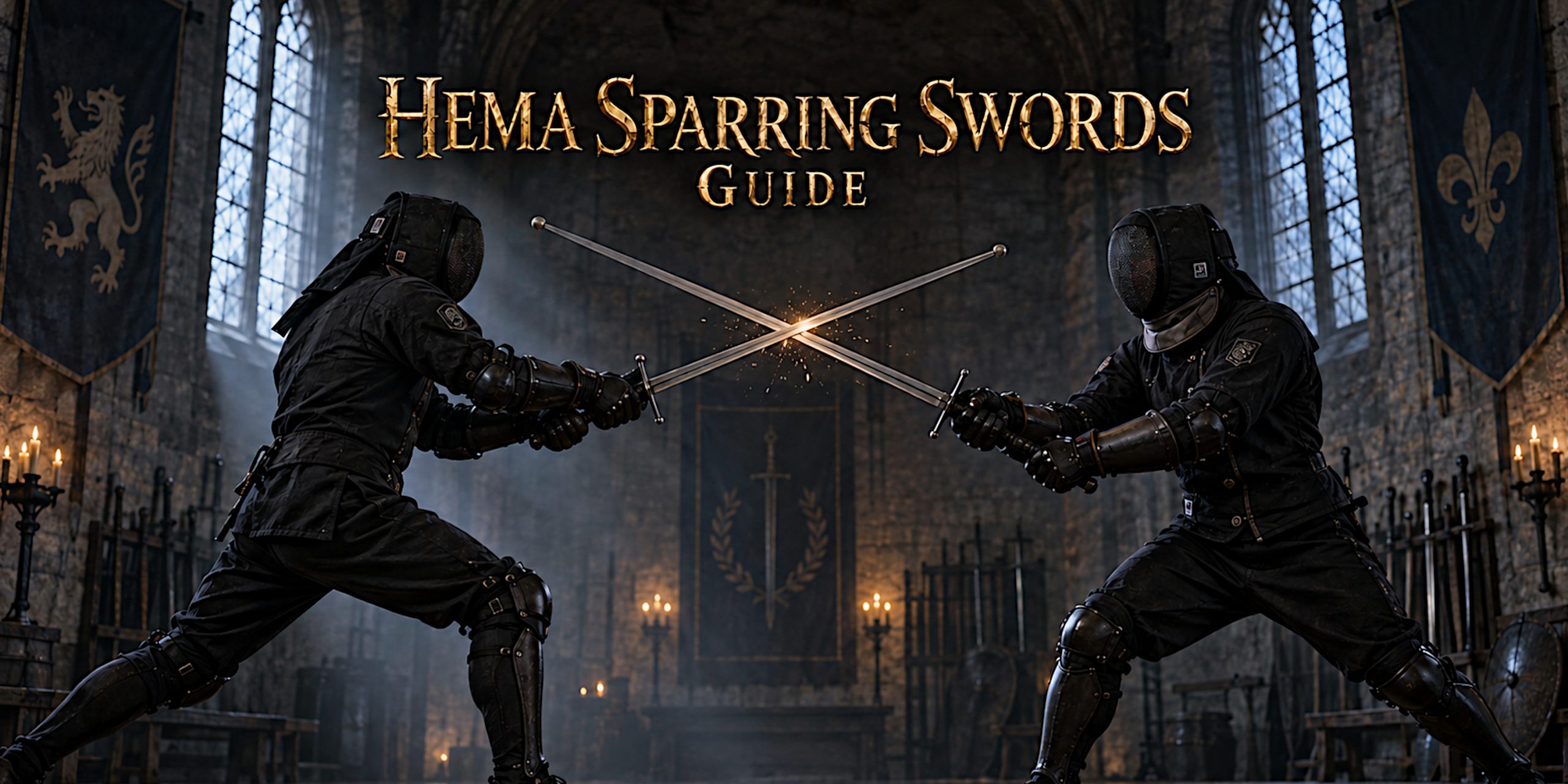
A HEMA sparring sword has a difficult role. It must resemble a historical weapon closely enough to teach meaningful technique, yet behave safely enough for repeated training against another person. Those demands do not always sit comfortably together.
Historical European Martial Arts, usually shortened to HEMA, covers a wide family of combat traditions reconstructed from surviving fencing books, treatises and other evidence. Longsword receives much of the attention, but clubs also study arming sword, sword and buckler, rapier, smallsword, sabre, messer, dussack and several less familiar weapons.
Each discipline places different demands on a training sword. A flexible rapier blade, a steel longsword feder and a synthetic sabre cannot sensibly be judged by one standard. The correct choice depends on the source being studied, the intensity of training, the protective equipment worn and the rules of the club or competition.
My first advice is therefore rather less romantic than the subject deserves: join a club before buying a sword. Borrow its equipment, speak to the instructor and discover what is actually permitted. A magnificent hilt is poor consolation when the weapon fails inspection.
What Is a HEMA Sparring Sword?

A HEMA sparring sword is a purpose-built training weapon intended for controlled partner work. It normally has blunt edges, a safe point treatment and a blade designed to withstand repeated contact. Where thrusting is permitted, the blade must also have suitable flexibility.
That definition needs care. The words blunt, practice sword and battle ready do not prove that a weapon is safe for sparring. Some blunt reproductions are too rigid, too heavy or too sharply pointed for free fencing. Others are designed for display, stage combat or solo forms rather than repeated blade contact.
A suitable sparring sword should be assessed for:
- Intended discipline and level of contact
- Overall length and blade length
- Weight and point of balance
- Blade flexibility
- Edge thickness and edge condition
- Point shape and covering
- Hilt security
- Hand clearance when gloves are worn
- Compatibility with club and competition rules
Even a well-designed training weapon remains capable of causing injury. A rounded point does not make a thrust harmless, and a thick edge can still strike with considerable force. Safe fencing relies on equipment, protective clothing, control, supervision and sensible rules working together.
Why Modern Sparring Swords Look Different from Historical Originals
Historical swords were built for particular martial, social and military purposes. Modern sparring swords are built for repeated practice. The two can feel similar, but they are not identical objects.
Many modern longsword fencers use a feder, or Federschwert. Historical feders appear in the culture of German fencing fraternities and training, although surviving examples vary. The modern HEMA feder is a contemporary sporting interpretation, usually with a narrow blade, thickened point and enough flex to reduce the force of a thrust.
Modern training weapons may also feature:
- Rolled, spatulated or widened tips
- Thicker edges than a sharp sword
- Flexible blades intended to bend under thrusting pressure
- Reinforced guards and pommels
- Grip dimensions chosen to accommodate protective gloves
- Replaceable blades or components
These concessions are sensible. Historical accuracy is valuable, but the aim of sparring is to test fencing rather than recreate the casualty list of a medieval street quarrel.
Synthetic, Steel Feder or Blunt Steel Sword?
| Type | Best suited to | Advantages | Limitations |
|---|---|---|---|
| Synthetic sword | Beginners, drills and club-approved sparring | Relatively affordable; resistant to rust; useful for learning basic movement | Handling differs from steel; still capable of causing injury |
| Steel feder | Longsword drills, free fencing and competition | Designed for repeated contact; familiar tournament format; responsive blade | Requires substantial protective equipment and regular inspection |
| Sparring-grade blunt steel sword | Discipline-specific drilling and approved sparring | Can offer handling closer to a particular sword form | Suitability varies greatly; some models are too rigid for thrusting |
| Wooden waster | Solo work and limited drills where approved | Traditional training material; simple construction | Often rigid and unforgiving; rarely suitable for modern free sparring |
| Sharp reproduction | Cutting practice under expert supervision | Tests edge alignment and cutting mechanics | Never suitable for partner sparring |
| Decorative sword | Display | Often inexpensive and visually appealing | Not made for impact, drilling or cutting |
Synthetic swords
Synthetic trainers are commonly made from nylon or another durable polymer. They are often recommended to newcomers because they cost less than steel and require little maintenance. Their handling is not identical to that of a steel sword, however, and some synthetics are surprisingly stiff.
They should never be treated as toys. Protective equipment remains necessary, particularly for the eyes, head, throat and hands. Clubs may also limit the intensity permitted with synthetic weapons.
Steel feders
The feder is the standard longsword training tool in much of competitive HEMA. Designs vary in blade stiffness, mass, grip length, guard shape and point construction. Some feel quick and lively, while others offer more presence in the bind.
A more flexible feder is not automatically safer in every respect. It can still hit hard, develop burrs or fail after prolonged use. Equally, excessive flexibility can affect handling. The useful question is whether the complete design suits the fencing and passes the relevant safety checks.
Blunt steel swords
A well-made blunt can give a closer visual and handling impression of an arming sword, longsword or sabre. Yet the category is inconsistent. One model may be designed for full-contact HEMA while another is intended only for careful drilling.
Never assume that a blunt edge makes a sword suitable for free fencing. Confirm the maker’s intended use and obtain approval from the club.
HEMA Sparring Sword Prices in the UK
Prices move with exchange rates, stock, custom options, postage and import charges. The following figures are practical UK budgeting ranges rather than live quotations.
| Weapon type | Indicative sword-only price | Typical use |
|---|---|---|
| Basic synthetic arming sword or longsword | £40 to £130 | Introductory drills and approved light sparring |
| Specialist synthetic rapier, sabre or messer | £65 to £180 | Weapon-specific introductory training |
| Entry-level steel feder | £200 to £300 | Club training and some competition formats |
| Mid-range steel feder | £300 to £450 | Regular steel sparring |
| Premium or customised feder | £450 to £650 or more | Experienced fencers with specific preferences |
| Steel arming sword or messer | £200 to £500 or more | Discipline-specific training |
| Steel rapier | £250 to £600 or more | Rapier drilling and approved sparring |
| Steel sabre | £220 to £500 or more | Military sabre and related systems |
| Smallsword trainer | £150 to £400 or more | Light thrust fencing |
The sword is only part of the cost. For steel sparring, a mask, overlay or back-of-head protector, throat guard, jacket, gloves and joint protection can collectively cost more than the blade. Chest and groin protection may also be required or strongly advised.
Allow for:
- Delivery charges
- VAT and possible import costs
- Protective equipment
- Club membership and insurance arrangements
- Replacement tips and consumable parts
- Maintenance materials
- Competition fees and travel
A cheaper sword that needs international return postage after a fault may become expensive with admirable speed.
Longswords and Feders
Longsword practice commonly draws on German material associated with Johannes Liechtenauer and Italian works by masters such as Fiore dei Liberi. These traditions contain overlapping principles but are not interchangeable, and clubs differ in how they interpret and train them.
When choosing a feder, consider:
- Length: Check the club’s preferred range and any competition limit.
- Grip: It must accommodate both hands while wearing gloves.
- Flex: The blade should meet the organiser’s test and suit permitted thrusts.
- Point: Rolled, widened or spatulated points may still require an additional cover.
- Guard: Quillons should not end in hazardous sharp corners.
- Balance: The sword should move naturally without encouraging uncontrolled acceleration.
- Schilt: This widened section above the guard can affect protection and blade contact.
Try several club swords before ordering. Small differences in grip shape or guard clearance can become very noticeable after an hour of fencing. Hands are opinionated things, especially when wrapped in heavy gloves.
Arming Swords and Sword with Buckler
The arming sword is a one-handed, double-edged weapon associated with a broad span of medieval martial culture. In HEMA it is often studied with a buckler, particularly through the late thirteenth or early fourteenth-century manuscript known as Royal Armouries MS I.33.
A sparring arming sword needs enough hand clearance for the chosen glove and an appropriate blade for the intensity of use. Close work with a buckler exposes the fingers to impacts, so hand protection deserves particular attention.
Some arming swords reproduce the broad blade and compact hilt of surviving originals more closely than others. That historical character is attractive, but it must be balanced against flex, point construction and the rules of the group.
Rapiers
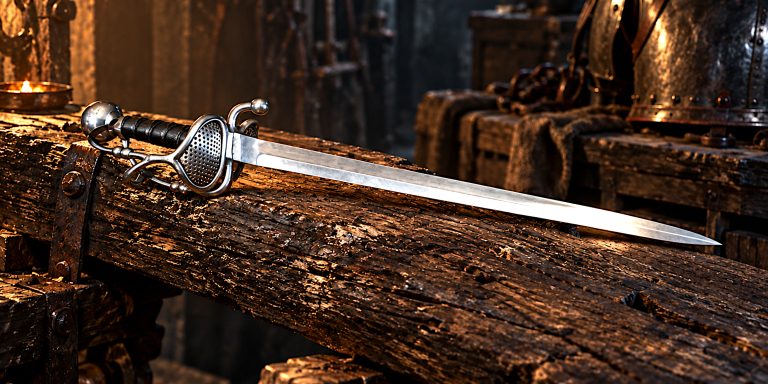
Rapier fencing is strongly associated with the sixteenth and seventeenth centuries and masters including Ridolfo Capo Ferro, Salvator Fabris and Gérard Thibault. The weapon is primarily associated with the thrust, although many systems also include cuts.
A practice rapier should have a flexible, purpose-built blade and a secure point treatment. Hilt complexity affects both price and comfort. Swept hilts, cup hilts and other forms protect the hand differently and may suit different historical traditions.
Pay attention to:
- Blade stiffness and recovery
- Point construction
- Hilt size and glove clearance
- Overall length
- Weight and balance
- Whether cuts are expected in the chosen ruleset
Rapier blades vary considerably. A blade suitable for controlled technical work may not be accepted for vigorous competition. Ask before buying, which remains an irritatingly effective answer throughout this guide.
Smallswords
The smallsword developed as a light thrusting weapon and became closely associated with civilian fencing and fashionable dress in the seventeenth and eighteenth centuries. It should not be treated as a shorter rapier with fewer decorative ambitions.
Modern trainers often use flexible blades derived from sport fencing or purpose-made HEMA components. Required protection may be lighter than for longsword, but the eyes, throat and weapon hand still need suitable coverage. Equipment must reflect the actual drill and intensity.
Sabres
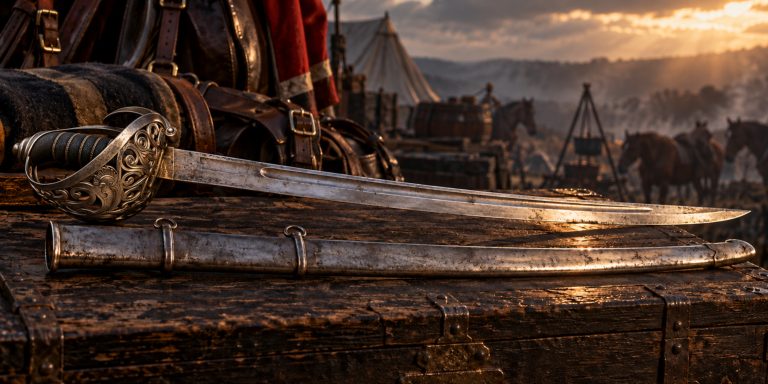
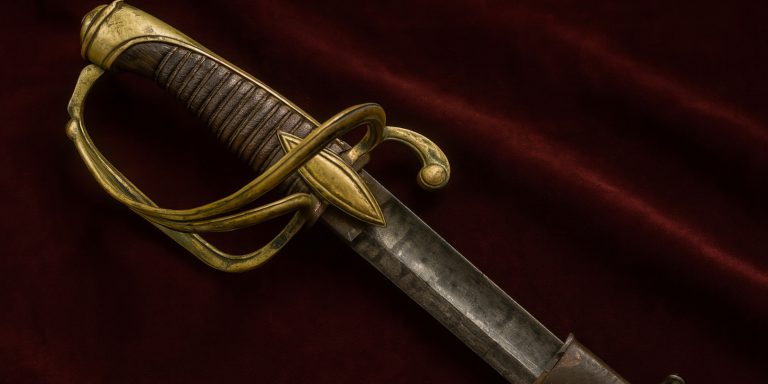
HEMA sabre covers several weapons and systems, from earlier cutting swords to nineteenth-century military practice. Blade curvature, guard form, weight and balance vary accordingly.
Some modern sparring sabres are deliberately light and flexible. Others aim for the stronger blade presence of military swords. Heavier is not necessarily more authentic, and it is certainly not more virtuous. An overweight trainer can distort technique and increase the force received by a partner.
Choose the sword for the source being studied. A gymnasium sabre, infantry officer’s sword and cavalry sabre belong to related but distinct contexts.
Messers and Dussacks
The messer is a single-edged weapon with a knife-like hilt construction, frequently including a side guard known as a nagel. It appears in several late medieval and early modern fencing sources.
The dussack is less straightforward because the term covers both weapons and training forms across time. Historical illustrations show simple training dussacks, while modern versions may be synthetic or steel.
For both disciplines, inspect the point, knuckle protection and any projecting hilt components. A prominent nagel should protect the hand without presenting an unnecessary hazard during close fencing.
Protective Equipment for HEMA Sparring
Protection must match the weapon and intensity. There is no single kit that makes every form of sparring safe.
Common equipment includes:
- A properly fitted fencing mask with an appropriate rating
- Back-of-head protection or a mask overlay
- Throat protection
- A padded and puncture-resistant fencing jacket
- Gloves suited to the weapon
- Forearm and elbow protection
- Knee and shin protection
- Chest protection where appropriate
- Groin protection where appropriate
Cutting weapons generally require heavier hand protection than light thrusting weapons. A standard fencing glove is not adequate for unrestricted longsword sparring. Likewise, a mask alone does not protect the back of the head, throat or cervical spine.
The British Federation for Historical Swordplay advises that equipment should be appropriate to the activity and that significant impact calls for heavier hand protection. Club rules may exceed general recommendations, and instructors should be able to explain why a particular level of kit is required.
How to Buy Your First HEMA Sword
Join a club first
Use loan equipment and learn what the group studies. A club may favour particular lengths, flex profiles or manufacturers because these work with its training method.
Decide what the sword is for
Separate solo drilling, paired technique, free sparring and tournament competition. One sword may cover several roles, but not every model will.
Read the specification
Check measurements rather than relying on product names. Compare overall length, blade length, mass, balance, flex and point design with club rules.
Handle it while wearing gloves
Grip length and guard clearance can feel completely different once protective gloves are added. This is particularly important for longswords, complex rapier hilts and enclosed sabre guards.
Budget for protection before steel
If the available money covers a feder but not suitable gloves and head protection, it does not yet cover steel sparring.
Inspect the sword on arrival
Before use, examine the edges, point, guard, grip and pommel. Check that the blade is straight and that no component moves unexpectedly.
Buying a Second-Hand HEMA Sword
Used equipment can offer excellent value, particularly when purchased through a trusted club member. It can also hide fatigue or poorly executed repairs.
Ask about:
- The age of the sword
- Frequency and intensity of use
- Any permanent bend or twist
- Previous straightening or repairs
- Cracks, deep notches or excessive burrs
- A loose guard, grip or pommel
- Changes made to the point
- The maker and exact model
Have an experienced instructor inspect the weapon before sparring. Steel accumulates fatigue through repeated flexing and impact, and a clean surface does not reveal every problem.
Sword Inspection and Maintenance
Inspect a sparring sword before every session and again after heavy contact. Look and feel carefully, without running bare fingers carelessly along an edge that may contain a fresh burr.
Remove the sword from use if you find:
- A crack or suspected crack
- A severe bend or twist
- A damaged or unsafe point
- A loose guard or pommel
- Deep edge damage
- Unusual vibration, sound or movement
- Corrosion that may affect structural integrity
After training, wipe away moisture and fingerprints. Dry the grip and store the sword in a ventilated place. Apply a suitable light protective oil to carbon steel where the maker recommends it. Do not leave a damp sword sealed in a bag unless you wish to conduct a rather dispiriting corrosion experiment.
Minor burrs may be dressed using an appropriate fine abrasive or file, provided the maker and club permit it. Structural damage is different. Do not return a cracked, severely bent or uncertain blade to partner work on the strength of optimism.
Common Buying Mistakes
- Buying before speaking to an instructor
- Choosing a sword because it is described as battle ready
- Assuming every blunt sword is suitable for sparring
- Spending the entire budget on the weapon
- Ignoring shipping and import charges
- Choosing excessive weight in the name of realism
- Overlooking hand clearance with gloves
- Buying a rigid blade for a thrust-heavy discipline
- Treating synthetics as safe without protection
- Expecting one trainer to suit every club and competition
The most expensive sword is not necessarily the best one. Experienced fencers often develop strong preferences, but beginners do not yet know which details will matter to them. Borrowing equipment is therefore research, not indecision.
Frequently Asked Questions
What is the best HEMA sword for a beginner?
The best first sword is one approved by the beginner’s club. Many newcomers start with a synthetic trainer or borrowed equipment before moving to steel. Discipline, body size, protective kit and local rules all affect the decision.
How much does a HEMA longsword cost?
A basic synthetic longsword commonly falls within a broad budget of £40 to £130. Steel feders often begin around £200, while premium and customised models may cost £450 to £650 or more. Delivery and import costs can increase the total.
Is a synthetic HEMA sword safe?
No training sword is inherently safe. Synthetic swords can cause eye injuries, broken fingers, bruising and harmful thrusts. Use the protective equipment and intensity required by the club.
Can I spar with a blunt replica sword?
Only if the specific model is designed and approved for that form of sparring. A blunt edge alone says nothing about flex, point safety or structural durability.
What is the difference between a feder and a longsword?
A modern feder is a training form of the longsword, usually built with a narrower blade, thickened point and characteristics suited to repeated fencing. It is still used to practise longsword systems, but it is not identical to a sharp historical fighting sword.
Can a HEMA sword break?
Yes. Repeated impacts and flexing fatigue steel, while poor maintenance or manufacturing faults may shorten its life. Inspect the sword frequently and retire it when its condition becomes uncertain.
Do tournaments accept every commercial feder?
No. Organisers can impose limits for length, weight, point design and flexibility. They may reject a damaged sword or one that fails inspection even if the same model has previously been accepted elsewhere.
Should I buy a sharp sword for HEMA?
Not for partner sparring. Some experienced practitioners use sharps for supervised test cutting, which develops specific skills and requires its own safety procedures. It is a separate activity from free fencing.
The Historian’s Verdict
HEMA lives in a productive tension between historical evidence and modern practice. The sources show us how earlier Europeans understood fencing, while modern trainers allow us to explore those systems without copying every historical risk. That is a compromise, but a sensible one.
Choose a sword for the fencing you actually do. It should fit the system, pass inspection, work with your protective equipment and behave predictably in the hands. Appearance matters, and I would be the last person to pretend otherwise, but reliability matters more when another person is standing at measure.
Join a reputable club, borrow several weapons and delay the grand purchase until your preferences have some basis in experience. The right sparring sword is not the one that looks most heroic in the shopping basket. It is the one that helps you train well and allows your partner to return next week.
Price note: All price bands are indicative UK figures and should be checked against current retailer listings, delivery costs and club requirements before purchase.
Sources and Further Reading
- British Federation for Historical Swordplay: What is HEMA?
- British Federation for Historical Swordplay: Advice about HEMA
- British Federation for Historical Swordplay: Protective Equipment
- British Federation for Historical Swordplay: Equipment, Rules and Etiquette
Image credit: HEMA Glasgow