A Quiet Staffordshire Field That Changed English History
The Battle of Blore Heath, fought on 23 September 1459, was one of the first major clashes of the Wars of the Roses. It was not the largest battle of the conflict, but it revealed something that would define the decades ahead, England’s nobility had moved beyond political rivalry and into organised warfare.
The battlefield near Market Drayton in Staffordshire became the scene of a deadly tactical contest between a Yorkist force commanded by Richard Neville, Earl of Salisbury, and a Lancastrian army led by James Tuchet, Lord Audley.
On paper, the Lancastrians held many advantages. They had numbers, royal authority and a strong cavalry presence. Salisbury had experience, discipline and a position chosen with care. Medieval battles often prove that the landscape is as important as the sword, and Blore Heath is a perfect example.
A field, a brook and one very costly decision changed everything.
Background: Why Did The Battle Of Blore Heath Happen?
By 1459, England was deeply divided. The rivalry between supporters of King Henry VI and Richard, Duke of York had escalated after years of political instability.
Key causes included:
- Henry VI’s periods of mental illness and weak royal authority
- Rival noble factions competing for influence
- Disputes between the powerful Neville and Percy families
- Yorkist frustration with the dominance of Queen Margaret of Anjou’s allies
Richard Neville, Earl of Salisbury, was marching south from Middleham Castle to join the Duke of York at Ludlow. Lancastrian forces attempted to intercept him before the Yorkist factions could combine.
Lord Audley positioned his army near Blore Heath, hoping to stop Salisbury’s advance.
Forces At The Battle Of Blore Heath
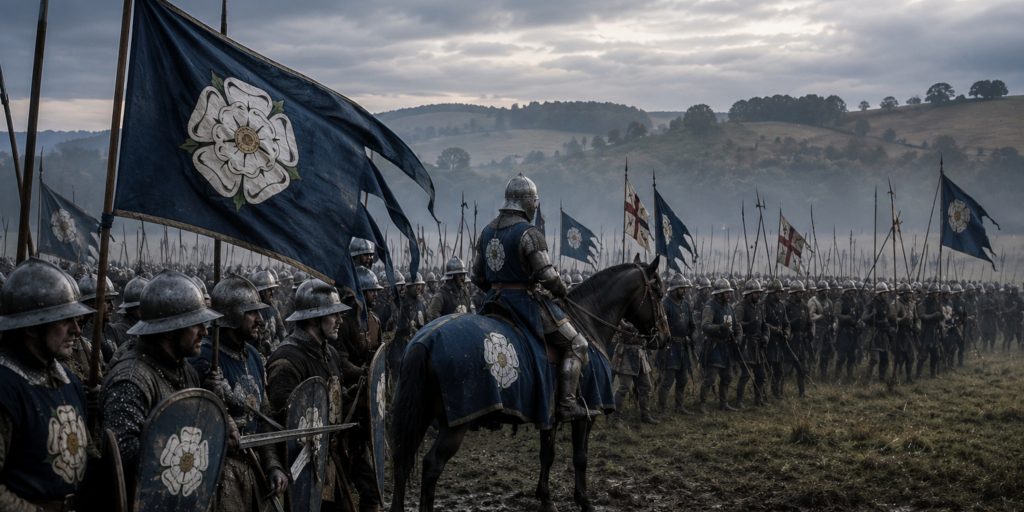
Exact numbers remain debated. Medieval chronicles often exaggerated army sizes, sometimes with the enthusiasm of someone trying to win an argument in a tavern. Modern estimates are more cautious.
| Army | Commander | Estimated Strength | Allegiance |
|---|---|---|---|
| Yorkists | Richard Neville, Earl of Salisbury | Around 3,000 to 5,000 men | House of York |
| Lancastrians | James Tuchet, Lord Audley | Around 6,000 to 10,000 men | House of Lancaster |
The Lancastrians probably had numerical superiority, although the gap may not have been as extreme as later accounts suggested.
Leaders And Troop Composition
Yorkist Army
Commander: Richard Neville, Earl Of Salisbury
A veteran soldier and one of the most experienced commanders of his generation.
Forces included:
- Men-at-arms from Neville estates
- Retainers and household troops
- Longbowmen
- Infantry armed with polearms
- Mounted nobles and knights
Salisbury’s greatest strength was not simply his soldiers, but his ability to control them under pressure.
Lancastrian Army
Commander: James Tuchet, Lord Audley
Audley was an experienced noble loyal to Henry VI and Queen Margaret’s faction.
Forces included:
- Noble cavalry
- Retinues from Cheshire and surrounding regions
- Longbowmen
- Infantry levies
- Men-at-arms
The Lancastrian army was powerful, but Blore Heath exposed the danger of aggression without patience.
Arms And Armour At The Battle Of Blore Heath
The battle occurred during a period when English warfare was changing. The heavily armoured knight still mattered, but disciplined infantry and missile troops increasingly shaped victories in the Wars of the Roses.
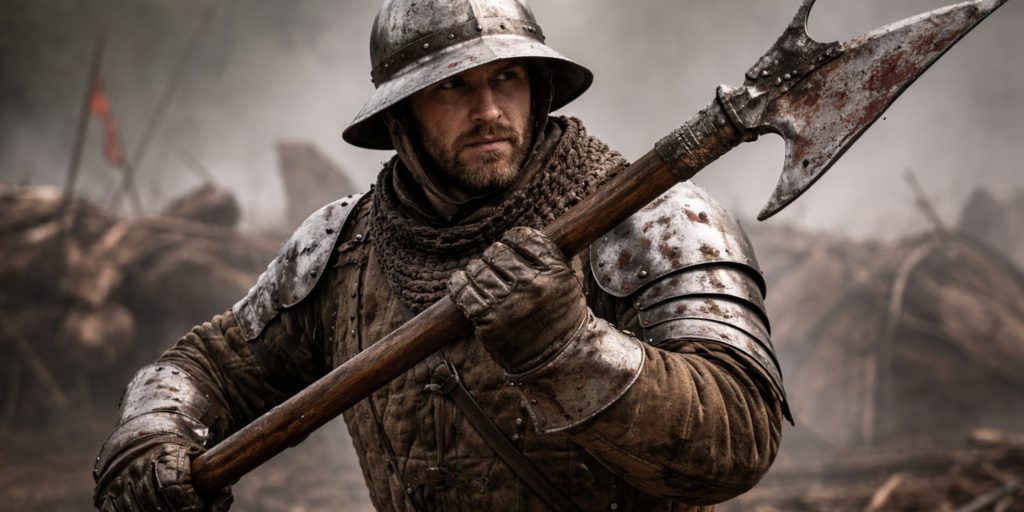
Swords Used
Arming Sword
The traditional knightly sidearm remained common.
Features:
- Straight double-edged blade
- Around 70 to 80 cm blade length
- Cruciform guard
- Designed for cutting and thrusting
It was often used with a shield earlier in the medieval period, but by the 15th century it was commonly paired with improved plate armour.
Longsword
The longsword was particularly associated with knights and professional soldiers.
Features:
- Two-handed grip
- Excellent reach
- Powerful thrusting ability
- Effective against gaps in plate armour
Against a fully armoured opponent, fighters targeted:
- Visor openings
- Armpits
- Groin protection
- Joints in armour
Plate armour was incredibly effective, despite what films suggest. Medieval warriors were not casually slicing through it like opening a letter.
Falchion And Single-Edged Blades
Some soldiers carried heavier cutting swords such as falchions.
Advantages:
- Strong chopping ability
- Useful against lightly protected troops
- Easier maintenance than elite weapons
Other Weapons
English Longbow
The longbow remained one of the defining weapons of English warfare.
Used for:
- Breaking formations
- Disrupting cavalry attacks
- Creating confusion before melee combat
At Blore Heath, missile fire helped force movement and shaped the early stages of the engagement.
Polearms
Common weapons included:
- Billhooks
- Poleaxes
- Spears
- Halberd-style weapons
The English bill was especially feared. It could hook riders from horses, attack armour gaps and turn a cavalry charge into a very expensive mistake.
Armour Used
Nobility And Men-At-Arms
Typical equipment:
- Full plate harness
- Sallet helmets
- Bevor throat protection
- Breastplates
- Gauntlets
- Mail reinforcement
Infantry
Common protection:
- Jack of plates
- Brigandines
- Kettle helmets
- Mail shirts
- Padded gambesons
Battle Timeline
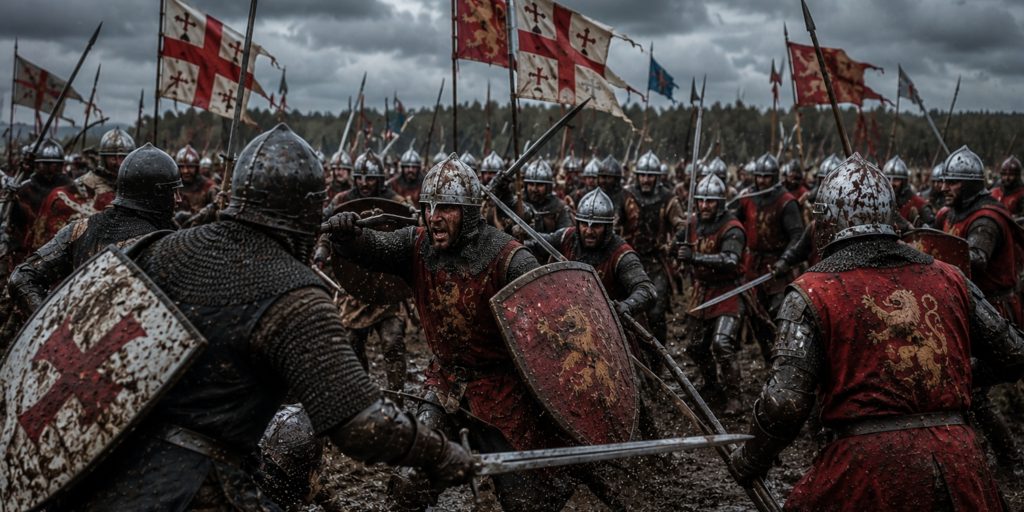
Morning, 23 September 1459
Salisbury’s Yorkist army approached Blore Heath while moving south.
He discovered the Lancastrian force blocking his route and selected defensive ground near a stream called the Hempmill Brook.
Initial Deployment
The two armies faced each other across difficult terrain.
Salisbury understood that attacking a larger force would be dangerous. Instead, he waited.
The Yorkist Feigned Retreat
The Yorkists reportedly pretended to withdraw.
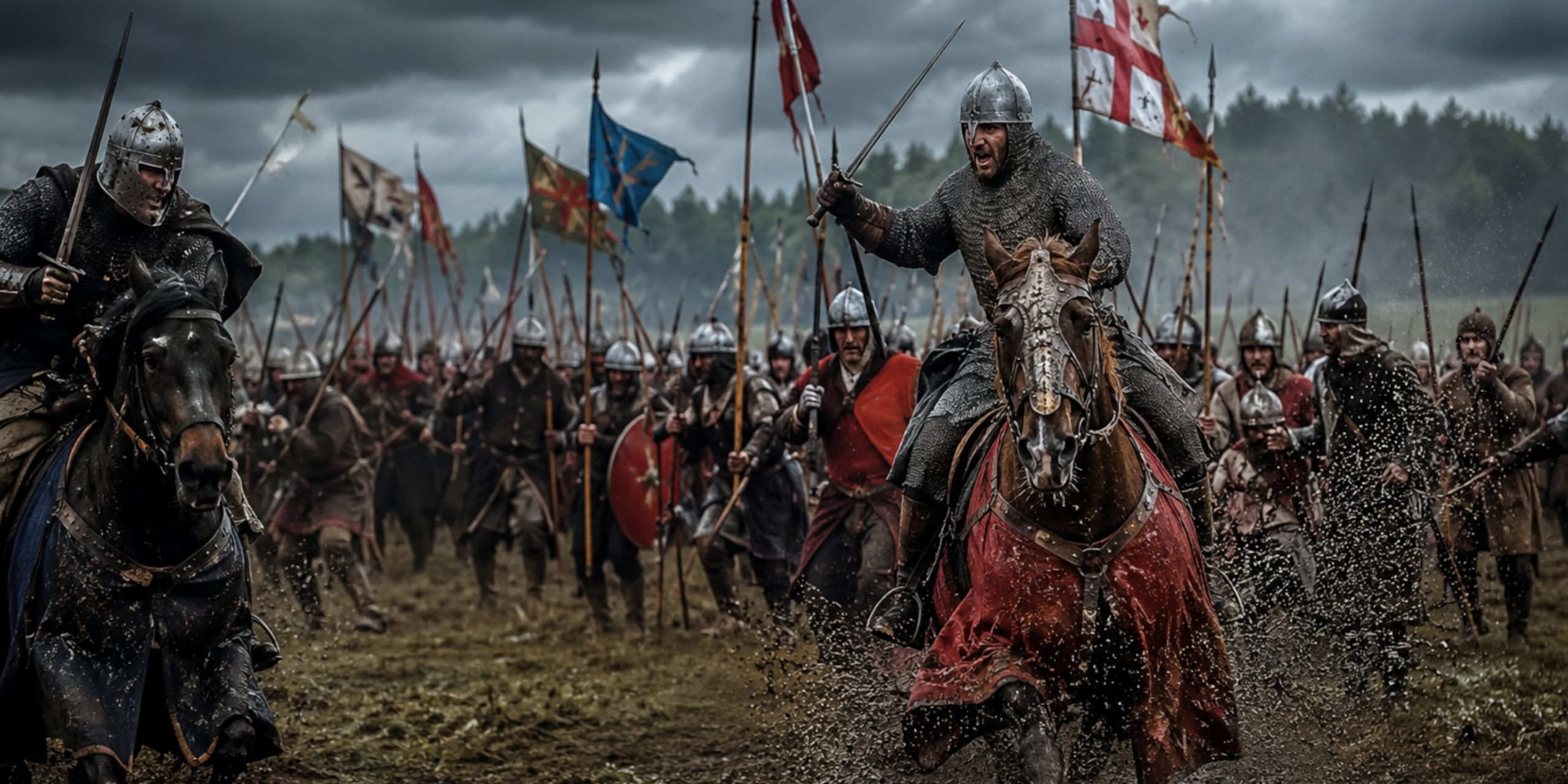
Seeing an opportunity, Lancastrian cavalry advanced.
Crossing the brook disrupted their formation and weakened their charge.
Lancastrian Assault
Audley’s troops attacked but struggled against:
- Difficult ground
- Yorkist arrow fire
- Organised defensive positions
Lord Audley was killed during the fighting.
Collapse Of The Lancastrian Army
With their commander dead and attacks failing, Lancastrian morale collapsed.
The Yorkists won a decisive victory despite being outnumbered.
Casualties
Numbers vary widely.
Possible estimates:
| Army | Estimated Losses |
| Yorkists | Several hundred |
| Lancastrians | Around 2,000 or more according to some sources |
Exact figures are uncertain, but Lancastrian casualties were clearly heavier.
Military Analysis: Why Did Salisbury Win?
The Yorkist victory came from several key factors:
- Superior battlefield positioning
- Controlled defensive tactics
- Effective missile fire
- Lancastrian overconfidence
- Better command decisions
Blore Heath showed that medieval battles were rarely decided by bravery alone. Both sides had courage. Salisbury simply made fewer mistakes.
The most dangerous weapon on the battlefield was arguably not a sword or bow, but patience.
Archaeology And Battlefield Evidence
Blore Heath is a registered battlefield and remains one of the better-preserved Wars of the Roses sites.
Archaeological interest includes:
- Metal detector surveys
- Landscape studies
- Examination of troop movement routes
- Analysis of possible fighting locations
Finds associated with the wider battlefield area include:
- Lead shot from later periods
- Weapon fragments
- Harness fittings
- Medieval metalwork
The exact distribution of fighting remains debated. Unlike sites such as Towton, Blore Heath has not produced huge quantities of battle remains, making landscape archaeology particularly important.
The modern battlefield can still be visited near Market Drayton, with interpretation boards explaining the main events.
Contemporary Quotes And Accounts
Medieval sources provide glimpses into how the battle was remembered.
The English chronicler Edward Hall later described the conflict as part of the destructive rivalry that consumed England:
“The father against the son, and the son against the father.”
While written after the events, it captures the tragedy of the Wars of the Roses.
The Paston Letters, one of the richest collections from 15th-century England, also reveal the anxiety caused by the political violence of the period, showing how noble disputes affected ordinary landowners and communities.
Aftermath And Legacy
Blore Heath was a major Yorkist victory, but it did not end the crisis.
Shortly afterwards, the Yorkists suffered a setback at Ludford Bridge and their leaders fled into exile. The war continued, eventually leading to:
- The rise of Edward IV
- The downfall of Henry VI
- The battles of Towton, Barnet and Tewkesbury
- The eventual emergence of the Tudor dynasty
Blore Heath mattered because it proved that the Yorkists could defeat royal forces in open battle. It also showed the brutal effectiveness of experienced commanders using terrain and disciplined troops.
Historian’s Perspective: Why Blore Heath Still Matters
Blore Heath is sometimes overshadowed by the bloodbath of Towton or the drama of Bosworth, but it deserves attention.
It was a battle of judgement. Salisbury did not win because he had the biggest army or the most glamorous knights. He won because he understood the ground beneath his boots.
The Wars of the Roses are often remembered through crowns, betrayals and family rivalries, but battles like Blore Heath remind us that practical decisions mattered. Where soldiers stood, when they moved and when a commander resisted the temptation to attack could decide the fate of kingdoms.
A muddy Staffordshire field might not look like the centre of history today, but in 1459 it helped push England further down the road to civil war.