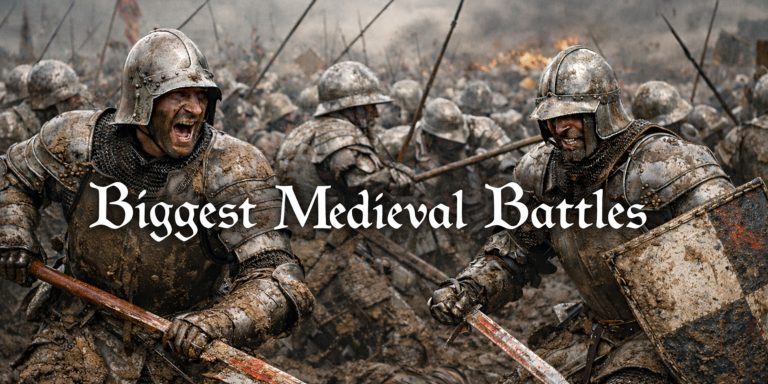
Medieval battles survive in memory for different reasons. Some changed the course of nations, others became legends through poetry, chronicles, film, and television. What follows is a historian’s survey of thirty famous medieval battles, why people still talk about them, who fought, who commanded, and how popular culture has kept them alive long after the field fell silent.
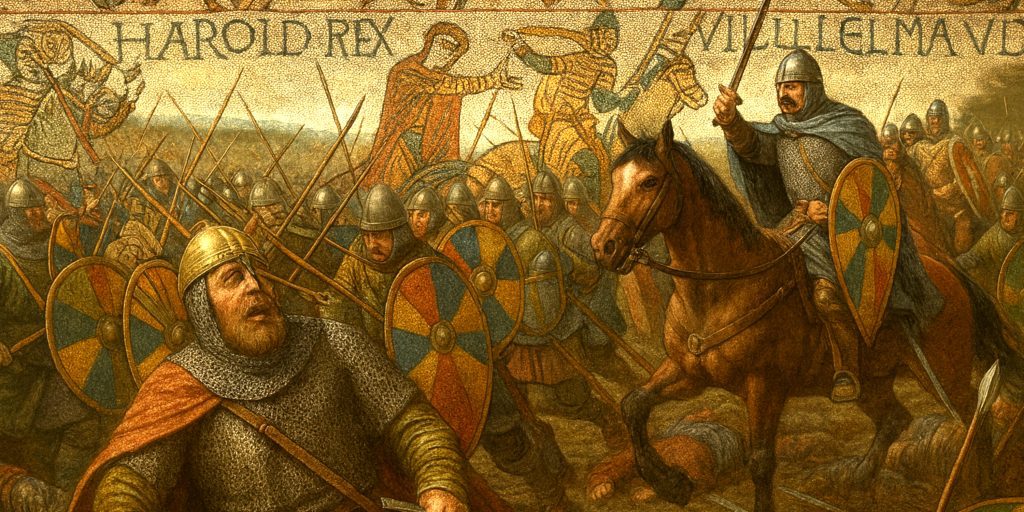
Battle of Hastings
Forces and generals
Normans led by William, Duke of Normandy, around 7,000 strong, against roughly the same number of Anglo-Saxons under King Harold Godwinson.
Why it is famous
It appears in the Bayeux Tapestry, school textbooks, novels, and endless documentaries. Any drama about Norman England circles back here.
Legacy
Hastings reshaped England’s ruling class, language, and landholding. Very few battles can claim such total cultural impact.
Battle of Tours
Forces and generals
Frankish infantry under Charles Martel faced an Umayyad raiding force led by Abdul Rahman Al-Ghafiqi.
Why it is famous
Often cited in historical writing as a turning point between Christian Europe and Islamic expansion, especially in older literature.
Legacy
Its reputation has grown larger than the battle itself, but it remains a symbol of early medieval Europe finding its footing.

Battle of Agincourt
Forces and generals
English army under Henry V, perhaps 6,000 men, against a French force at least twice that size commanded by Constable Charles d’Albret.
Why it is famous
Shakespeare’s Henry V ensured immortality. Films from Laurence Olivier to modern adaptations keep it alive.
Legacy
Agincourt defined the English longbow in popular memory and reframed ideas about medieval warfare and class.
Battle of Poitiers
Forces and generals
English army led by Edward the Black Prince against French forces commanded by King John II.
Why it is famous
Captured kings tend to stick in the historical imagination, and chroniclers never let France forget it.
Legacy
It destabilised France and showed that Crécy was no fluke.
Battle of Crécy
Forces and generals
Edward III commanded English troops against Philip VI of France.
Why it is famous
Regularly referenced in military history books as the beginning of the end for knightly dominance.
Legacy
Crécy forced European armies to rethink tactics, slowly and painfully.

Battle of Bannockburn
Forces and generals
Scottish army under Robert the Bruce versus Edward II of England.
Why it is famous
National poetry, folk songs, and films like Braveheart keep its image alive, even if accuracy sometimes suffers.
Legacy
Bannockburn secured Scotland’s independence and its place in European politics.
Battle of Las Navas de Tolosa
Forces and generals
A coalition led by Alfonso VIII of Castile faced the Almohad Caliph Muhammad al-Nasir.
Why it is famous
Appears prominently in Spanish historical literature and Reconquista narratives.
Legacy
It broke Almohad power in Iberia and shifted the balance permanently.

Battle of Manzikert
Forces and generals
Byzantine Emperor Romanos IV Diogenes against Seljuk forces led by Alp Arslan.
Why it is famous
Referenced endlessly in Byzantine histories as the moment everything went wrong.
Legacy
Opened Anatolia to Turkish settlement and sealed Byzantine decline.
Battle of the Golden Spurs
Forces and generals
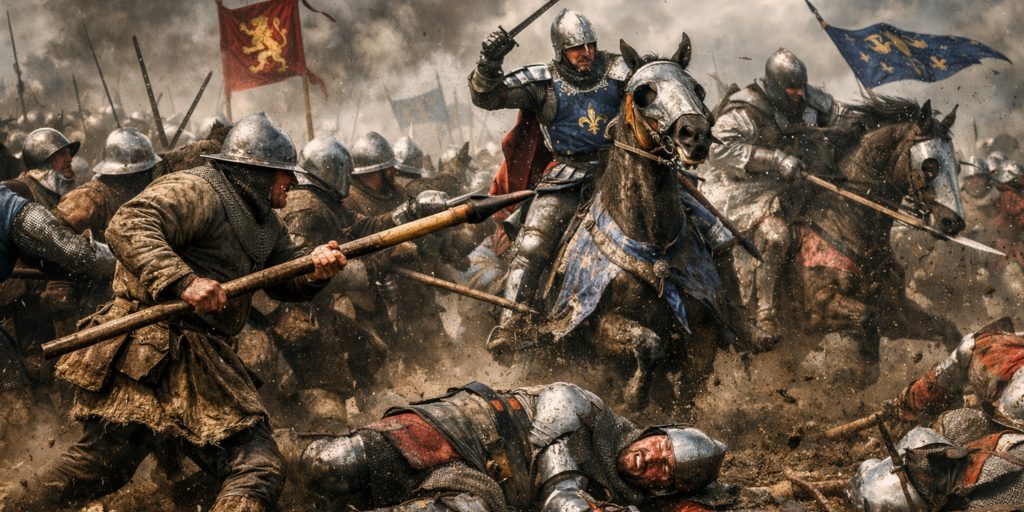
Flemish militias against French knights commanded by Robert II of Artois.
Why it is famous
The image of fallen spurs became a lasting symbol of common soldiers defeating nobility.
Legacy
Urban militias earned respect, and knights learned humility.
Battle of Towton
Forces and generals
Yorkist forces under Edward IV against Lancastrians led by Henry Beaufort.
Why it is famous
Frequently cited in novels and television dramas about the Wars of the Roses.
Legacy
The sheer scale of bloodshed marked a grim peak in English civil war.

Battle of Bosworth Field
Forces and generals
Henry Tudor against Richard III, with the Stanleys as decisive power brokers.
Why it is famous
Shakespeare’s Richard III fixed it permanently in cultural memory.
Legacy
Ended medieval England politically and ushered in the Tudor age.
Battle of Falkirk
Forces and generals
Edward I of England against William Wallace.
Why it is famous
Popularised through modern film and national storytelling.
Legacy
Showed the limits of infantry without missile support.
Battle of Lewes
Forces and generals
Simon de Montfort against King Henry III.
Why it is famous
Appears in constitutional histories rather than films.
Legacy
Advanced ideas that would shape parliamentary government.
Battle of Evesham
Forces and generals
Prince Edward led royal forces against de Montfort.
Why it is famous
Often paired with Lewes in historical writing as tragedy and reversal.
Legacy
Ended rebellion but not reform.

Battle of Nicopolis
Forces and generals
Crusader army led by Sigismund of Hungary against Ottoman Sultan Bayezid I.
Why it is famous
A cautionary tale repeated in crusade histories.
Legacy
Marked the end of major crusader offensives in eastern Europe.
Battle of Kosovo
Forces and generals
Serbian Prince Lazar against Sultan Murad I.
Why it is famous
Central to Serbian epic poetry and national identity.
Legacy
Symbolic defeat that shaped Balkan history and memory.
Battle of Brunanburh
Forces and generals
King Athelstan against a coalition of Norse, Scots, and Britons.
Why it is famous
Celebrated in Old English poetry.
Legacy
Often described as the birth of England as a single kingdom.

Battle of Stamford Bridge
Forces and generals
Harold Godwinson against Harald Hardrada.
Why it is famous
The legendary lone Viking defender appears in countless retellings.
Legacy
Ended Viking ambitions in England, at a terrible strategic cost.
Battle of Bouvines
Forces and generals
Philip II of France against an allied force including Emperor Otto IV.
Why it is famous
Often overshadowed, yet crucial in European political history.
Legacy
Strengthened French monarchy and weakened English royal authority.
Battle of Clontarf
Forces and generals
Brian Boru against Viking and Irish rivals.
Why it is famous
Immortalised in Irish legend and nationalist writing.
Legacy
Blended history and myth into something enduring.
Battle of Ain Jalut
Forces and generals
Mamluk Sultan Qutuz and Baibars against Mongol general Kitbuqa.
Why it is famous
Regularly cited as the first major Mongol defeat.
Legacy
Stopped Mongol expansion into the Middle East.
Battle of Hattin
Forces and generals
Saladin against Guy of Lusignan.
Why it is famous
Central to crusader chronicles and modern films.
Legacy
Led directly to the fall of Jerusalem.
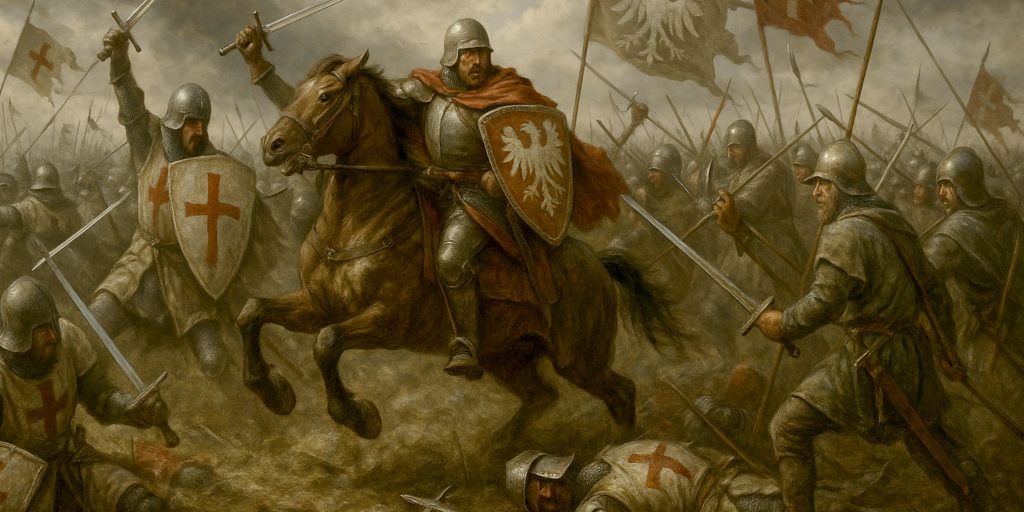
Battle of Grunwald
Forces and generals
Polish-Lithuanian army under Władysław II Jagiełło against the Teutonic Order.
Why it is famous
Celebrated in Polish art, novels, and national memory.
Legacy
Ended Teutonic dominance in the Baltic.
Battle of Mohács
Forces and generals
Hungarian King Louis II against Ottoman Sultan Suleiman the Magnificent.
Why it is famous
Appears often in Hungarian historical tragedy narratives.
Legacy
Ended medieval Hungary as an independent power.
The Takeaway
What makes these battles famous is rarely just the fighting. It is the stories told afterward, by monks, poets, playwrights, and now filmmakers. As a historian, I always find that the line between what happened and what people remember is where things get interesting. Medieval battles live on not because they were glorious, but because they mattered, and because we keep finding new ways to argue about them.