Few medieval figures earned a reputation quite like William Marshal. Born as a younger son with limited prospects, he rose through skill, loyalty, and sheer survival instinct to become one of the most respected warriors and statesmen of the Middle Ages.
He served five English kings, fought in tournaments across Europe, became regent of England, and helped secure the future of the Plantagenet dynasty. His story feels almost too polished for fiction. The landless knight becomes the protector of a kingdom. Yet behind the legend was a practical soldier who understood politics, warfare, and human nature better than most nobles born above him.
As a historian, Marshal fascinates me because his greatness was not built on a single dramatic victory. It came from consistency. Medieval chronicles are full of men who won one battle and lost everything soon after. Marshal kept adapting for more than seventy years, which in the brutal politics of the 12th and 13th centuries was almost a superpower.
Early Life And Rise From A Minor Noble Family
William Marshal was born around 1146, the fourth son of John Marshal, a minor Anglo-Norman nobleman. As a younger son, he was unlikely to inherit significant lands, meaning his future depended on what he could achieve through service.
His childhood was shaped by the civil war known as The Anarchy between King Stephen and Empress Matilda. During a siege at Newbury Castle, young William was famously taken hostage by Stephen after his father broke a surrender agreement.
According to later accounts, Stephen threatened to execute the boy, but William’s confidence and innocence impressed him. Whether every detail is accurate or partly romanticised, the episode became an important part of the Marshal legend.
At around twelve years old, William was sent to Normandy to train as a knight in the household of William de Tancarville. There he learned the skills that would define his career:
- Swordsmanship
- Horsemanship
- Lance combat
- Hunting
- Courtly behaviour
- Military organisation
- Tournament warfare
Unlike many nobles, Marshal’s reputation came from performance rather than inheritance.
Tournament Champion And The Making Of A Reputation
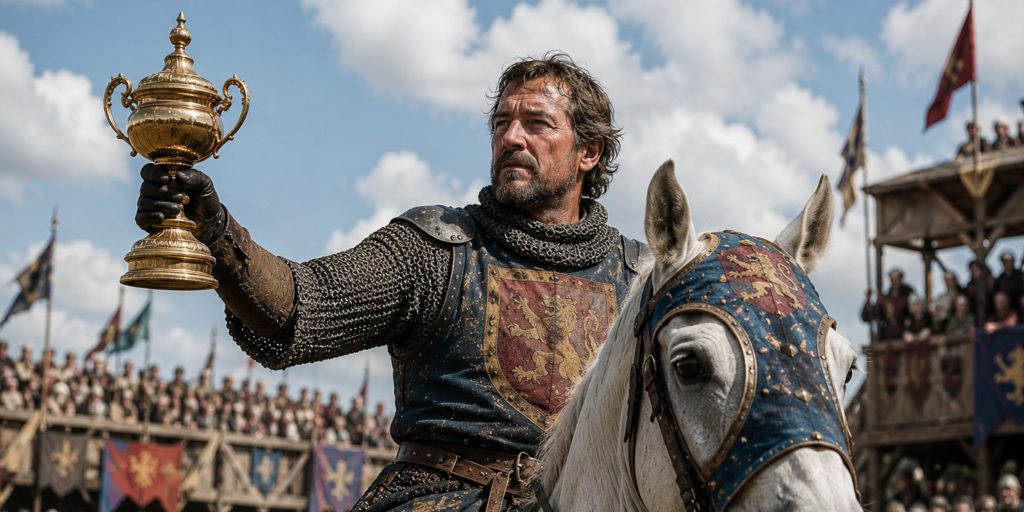
Before he became a commander, William Marshal became one of the greatest tournament fighters in Europe.
Medieval tournaments of the 12th century were far removed from the controlled jousts of later centuries. They were often huge mock battles across open countryside, with teams of knights charging, fighting, and capturing opponents for ransom.
Marshal excelled because he combined strength with discipline. The contemporary biography L’Histoire de Guillaume le Maréchal claims he captured hundreds of knights during his tournament career.
His success brought:
- Wealth from ransoms and prizes
- Powerful allies
- Recognition among European nobility
- A reputation for honour and reliability
A knight’s name was his currency, and Marshal became extremely wealthy in reputation before he became wealthy in land.
Service To The Plantagenet Kings
William Marshal’s career was closely tied to the Plantagenet dynasty. His ability to navigate royal politics was almost as impressive as his battlefield record.
Henry II
Marshal entered royal service through Henry II’s household and became responsible for training and protecting Henry’s eldest son, Henry the Young King.
After the Young King’s death in 1183, Marshal travelled to Jerusalem to fulfil his lord’s crusading vow. Details of his time there are limited, but the journey increased his prestige.
Richard I
Under Richard the Lionheart, Marshal’s influence grew further. Richard arranged his marriage to Isabel de Clare, one of the greatest heiresses in England and Ireland.
This transformed Marshal from a famous knight into one of the most powerful nobles in the realm.
King John
Marshal’s relationship with John was complicated. He remained loyal during periods when many barons rebelled, although he often acted as a moderating influence rather than a blind supporter.
His ability to stay respected by opposing sides would later prove crucial.
Henry III
After John’s death in 1216, Marshal became regent for the young Henry III.
A man in his seventies, who had spent his youth fighting tournaments, was now responsible for saving a kingdom.
Battles And Military Acumen
William Marshal was not a commander known for revolutionary tactics. His strength was judgement. He understood timing, morale, leadership, and when not to fight.
Major Conflicts And Campaigns
| Battle / Campaign | Date | Marshal’s Role | Significance |
|---|---|---|---|
| Revolt Of 1173 To 1174 | 1173 to 1174 | Knight in Young Henry’s household | Gained experience during Plantagenet family conflicts |
| Campaigns In France | Late 12th century | Royal commander and adviser | Defended Plantagenet interests against France |
| First Barons’ War | 1215 to 1217 | Regent and commander | Protected Henry III’s claim |
| Battle Of Lincoln | 1217 | English commander | One of his greatest victories |
Battle Of Lincoln, 1217
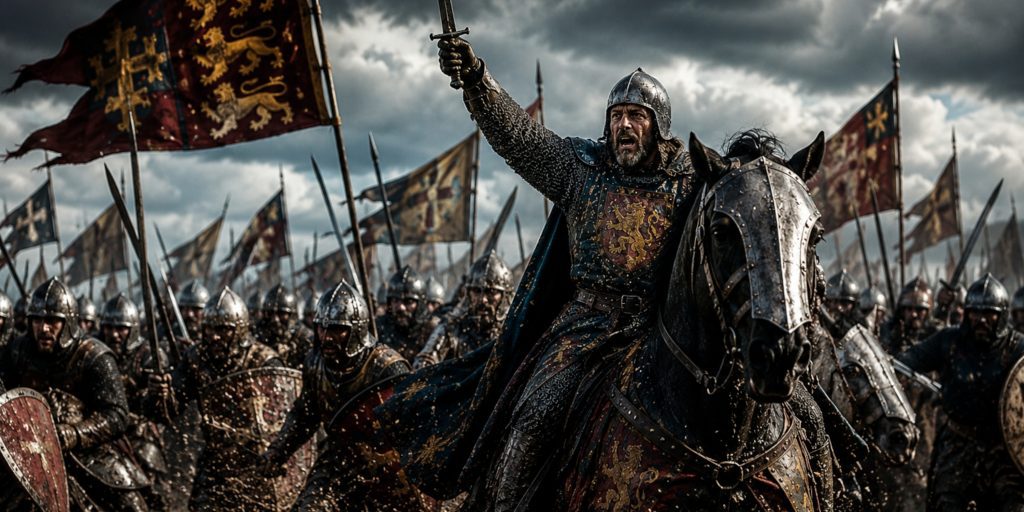
Marshal’s finest military achievement came near the end of his life.
England was divided after the death of King John. Rebel barons had invited Prince Louis of France to claim the English throne, leaving the young Henry III vulnerable.
Despite being around seventy years old, Marshal personally led the royalist army at Lincoln.
His forces used a combination of:
- Intelligence gathering
- Controlled movement
- A surprise attack through the city
- Experienced knightly charges
The victory destroyed much of the rebel military strength and helped secure Henry III’s reign.
A younger commander might have chased glory. Marshal chose efficiency, which was exactly what England needed.
Arms And Armour Of William Marshal
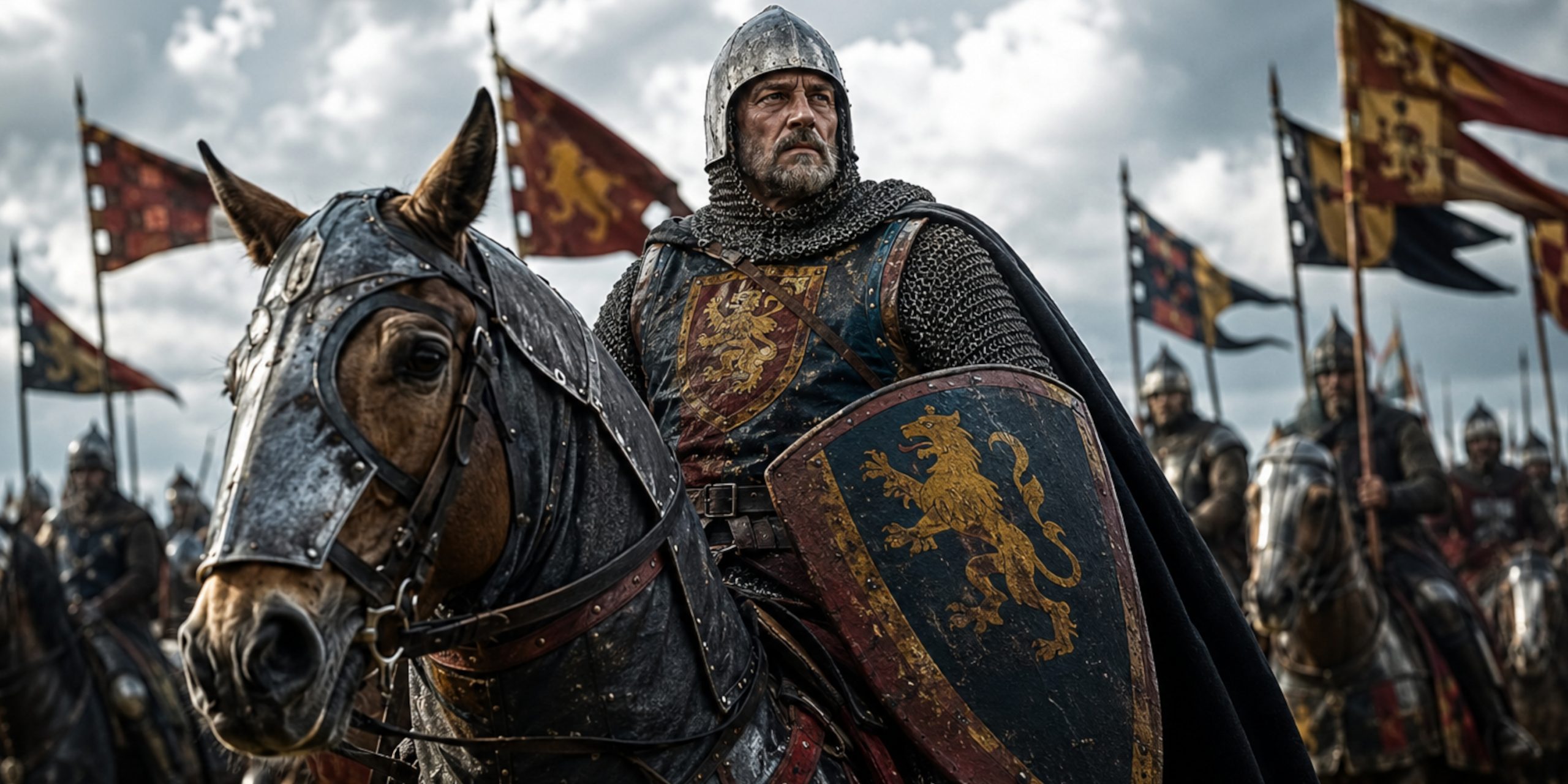
Marshal lived during a period of significant military development. Armour was improving rapidly as knights adapted to increasingly dangerous battlefield conditions.
Armour
During his career he would likely have used:
Mail Hauberk
A long mail shirt made from thousands of interlocking iron rings.
Features:
- Covered torso, arms, and upper legs
- Flexible and reliable
- Excellent protection against cuts
- Vulnerable to heavy blunt trauma
Mail Chausses
Protection for the legs became increasingly common among elite knights during Marshal’s lifetime.
Great Helm
By the early 13th century, enclosed helmets became popular among wealthy knights.
Advantages:
- Strong facial protection
- Better defence against lances
- Intimidating battlefield appearance
Earlier in his career, Marshal probably used simpler nasal helmets before transitioning with changing technology.
Surcoat
The cloth garment worn over armour helped identify knights and displayed heraldry.
Weapons Used By William Marshal
Marshal’s fighting equipment reflected the classic Anglo-Norman knightly style.
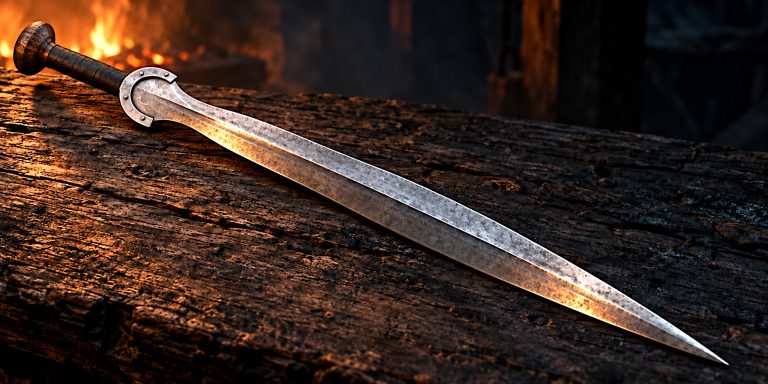
Knightly Arming Sword
The main sidearm of his career.
Typical features:
- Double-edged blade
- Around 70 to 85 cm blade length
- Straight crossguard
- Designed for cutting and thrusting
Likely sword types:
- Oakeshott Type XII
- Late Type XI variations
These swords suited mounted combat, offering enough cutting power from horseback while remaining quick in close fighting.
Lance
The primary weapon of a mounted knight.
By Marshal’s era, knights increasingly used the couched lance technique, locking the weapon under the arm to maximise the force of a cavalry charge.
Dagger
A practical backup weapon used in close combat, especially when fighting around armour.
Shield
Marshal would have used a kite shield early in his career, with smaller heater shields becoming more common later.
Leadership Style And Military Strengths
Marshal’s greatest qualities were not simply physical.
His strengths included:
- Reading political situations
- Inspiring loyalty
- Avoiding unnecessary risks
- Understanding experienced soldiers
- Maintaining discipline
Many medieval nobles confused bravery with charging first. Marshal understood that surviving long enough to win mattered more.
His reputation for honour also gave him unusual diplomatic power. In a world filled with shifting alliances, being considered trustworthy was a genuine strategic advantage.
Contemporary Quotes About William Marshal
The main source for Marshal’s life is L’Histoire de Guillaume le Maréchal, commissioned by his family after his death.
It described him as:
“The best knight in the world.”
The chronicler Matthew Paris later remembered him as a figure of exceptional honour and ability.
While medieval writers often exaggerated, the consistency of admiration from different sources suggests Marshal genuinely held an extraordinary reputation.
Family, Power And The Marshal Legacy
William’s marriage to Isabel de Clare brought him vast estates and the title Earl of Pembroke.
Together they had ten children, linking the Marshal family with some of the most important noble houses in Europe.
His political legacy was equally significant:
- Protected Henry III’s throne
- Helped stabilise England after civil war
- Reissued Magna Carta during the minority government
- Preserved Plantagenet authority
Few knights influenced both battlefield history and constitutional history in the same way.
Death And Burial
William Marshal died in 1219.
Near the end of his life he joined the Knights Templar, fulfilling a long-standing spiritual connection with the crusading movement.
He was buried in Temple Church, London, where his tomb effigy remains one of the most famous medieval knightly monuments in England.
Where To See Artefacts Connected To William Marshal
Temple Church, London
The most important surviving site linked directly to Marshal.
Visitors can see:
- His 13th-century effigy
- The burial place associated with the Knights Templar
- The setting connected to his final years
Pembroke Castle, Wales
Strongly associated with the Marshal family.
Highlights:
- Medieval architecture from his period
- Displays explaining the Norman lords of Wales
- Connections to the Earls of Pembroke
British Museum, London
While personal possessions of Marshal are extremely rare, the museum holds comparable medieval material from his lifetime:
- Knightly weapons
- Seals
- Manuscripts
- Everyday medieval objects
Royal Armouries, Leeds
One of the best collections for understanding the equipment Marshal’s class used.
Comparable objects include:
- Medieval swords
- Mail armour
- Helmets
- Knightly weapons
Archaeology And Latest Research
No complete personal armour set belonging to William Marshal has survived. This is normal for a figure from the early 13th century, as armour was frequently reused, altered, or melted down.
Modern research focuses on:
- Reassessment of his biography
- Study of tournament culture
- Analysis of Anglo-Norman warfare
- Castle archaeology linked to his estates
- Examination of medieval knightly identity
Recent scholarship has moved away from seeing Marshal only as a romantic knight. He was also a political survivor, administrator, and strategist.
That makes him far more interesting.
Was William Marshal Really The Greatest Knight?
Calling someone “the greatest knight” is always risky. Medieval Europe produced many exceptional warriors, and fame often depended on who had the best chroniclers.
Yet William Marshal has a stronger claim than most.
He fought successfully, survived dangerous courts, earned loyalty from enemies, and rescued a kingdom when most warriors his age would have retired.
The sword made his reputation, but judgement made his legacy. In many ways, that is the most medieval lesson of all.