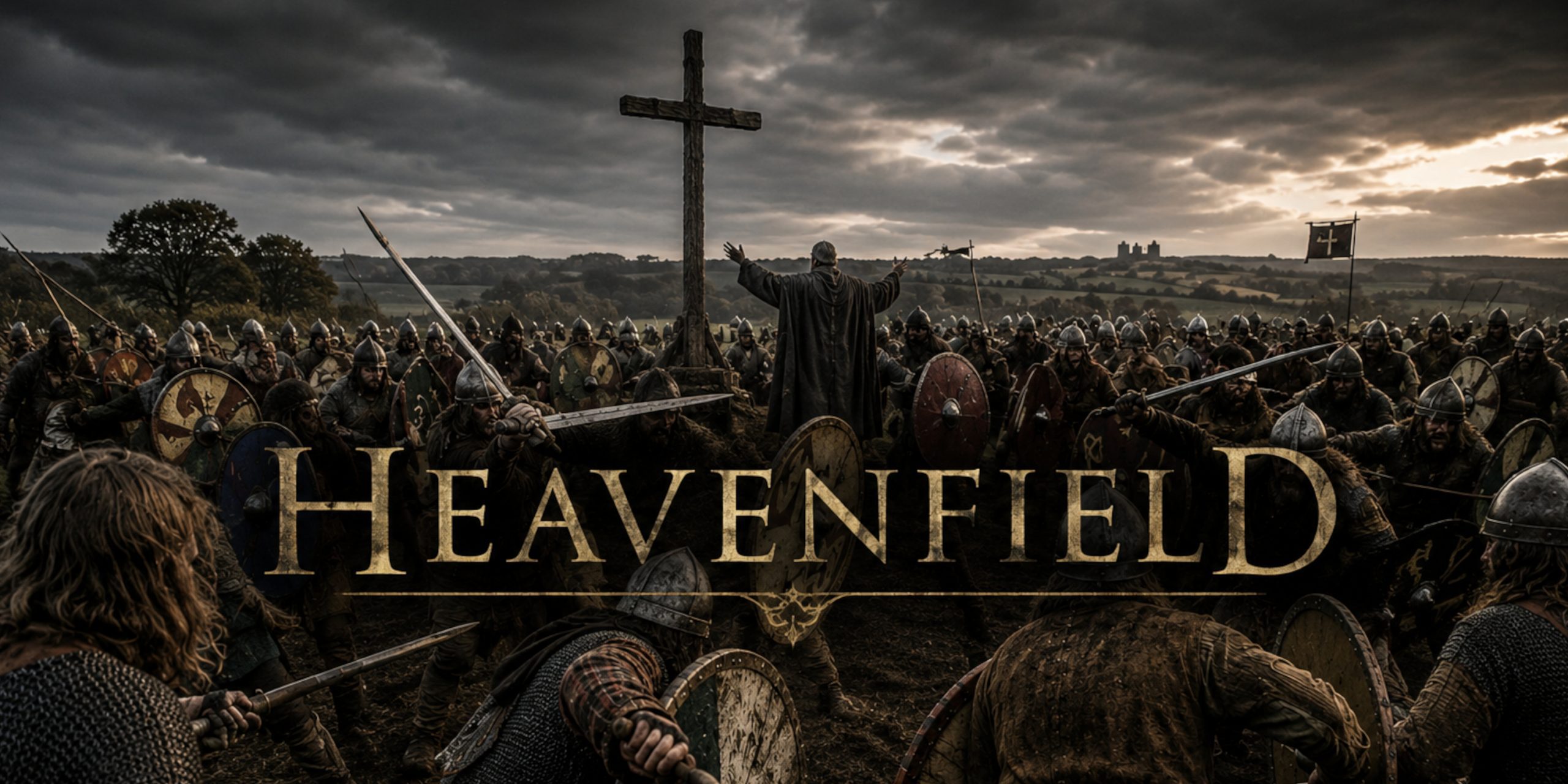
The Battle of Heavenfield was not one of the largest battles fought in early medieval Britain, but few encounters carried such lasting consequences. Around 633 or 634, a small Northumbrian force led by the exiled prince Oswald faced the much larger army of Cadwallon ap Cadfan of Gwynedd.
The battlefield, near Hexham in modern Northumberland, became wrapped in legend almost immediately. To later Christian writers it represented a divine victory, but beneath the religious symbolism was a brutal struggle for power between rival kingdoms.
Heavenfield was fought in a Britain still finding its shape after Roman rule. Anglo-Saxon kingdoms were expanding, Brittonic rulers were resisting, and alliances shifted with the reliability of a badly made shield strap.
Background: Britain Before Heavenfield
The early 7th century was a violent period of political change. Northumbria itself was the result of the union of two kingdoms:
- Bernicia in the north
- Deira in the south
King Edwin of Northumbria had created a powerful kingdom, but his dominance collapsed after defeat at the Battle of Hatfield Chase in 633.
At Hatfield Chase:
- Edwin was killed.
- Cadwallon ap Cadfan of Gwynedd and Penda of Mercia destroyed Northumbrian authority.
- Northumbria fractured.
- Oswald, son of Æthelfrith of Bernicia, returned from exile to reclaim power.
Oswald had spent years among the Gaelic kingdom of Dál Riata, where he encountered Christianity and likely gained military experience. When he returned, he brought not only ambition but a small, loyal fighting force.
Forces At The Battle Of Heavenfield
Exact numbers are unknown. Early medieval chroniclers rarely counted armies accurately, and when they did, enthusiasm often defeated mathematics.
Most historians agree Cadwallon commanded the larger force, while Oswald relied on position, discipline and surprise.
| Army | Commander | Estimated Strength | Composition |
|---|---|---|---|
| Northumbrians | Oswald of Bernicia | Possibly several hundred to around 1,000 warriors | Royal warband, household troops, local Bernician fighters |
| Gwynedd/Brittonic Alliance | Cadwallon ap Cadfan | Possibly several thousand warriors | Veteran Brittonic infantry, nobles, mounted warriors, allied fighters |
Leaders And Command Structure
Oswald Of Northumbria
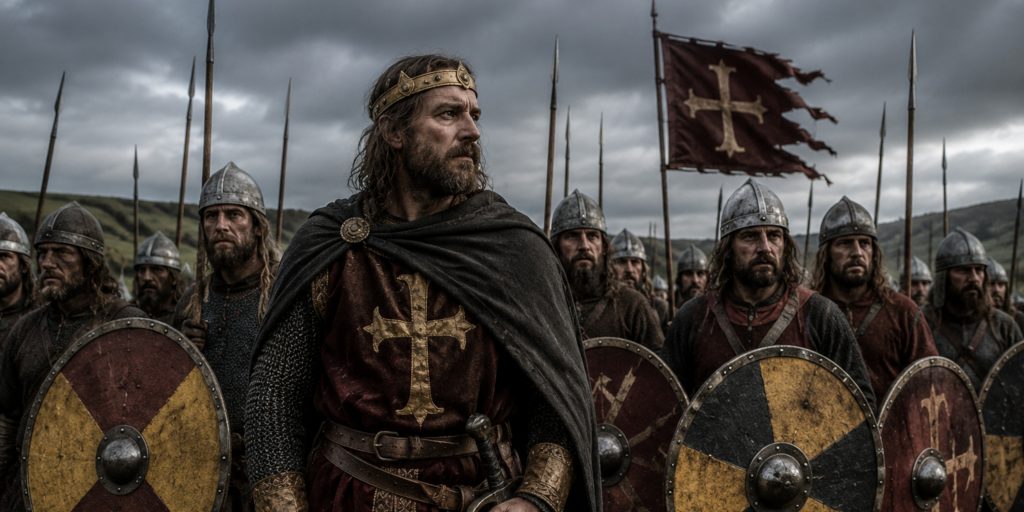
Role: Leader of the Bernician/Northumbrian army
Strengths:
- Experienced from exile and warfare in northern Britain
- Strong personal loyalty from followers
- Skilled at using terrain
- Combined military ambition with political vision
Oswald’s decision to fight at Heavenfield was extremely risky. He faced an enemy who had already destroyed one Northumbrian king. Retreat would have been understandable, but victory offered him everything.
Cadwallon ap Cadfan
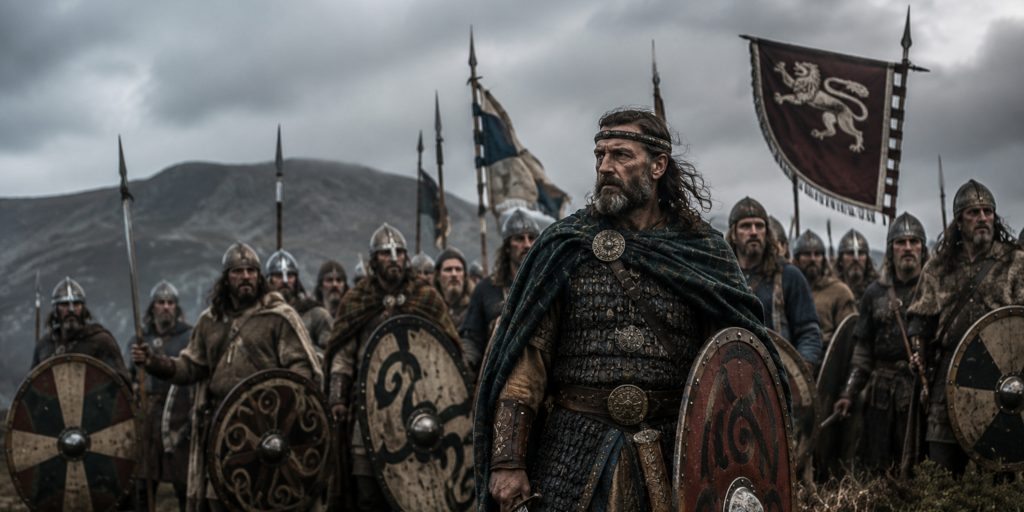
Role: King of Gwynedd
Strengths:
- Experienced campaign commander
- Successful against major Anglo-Saxon forces
- Maintained a long offensive campaign far from his homeland
- Inspired loyalty among Brittonic warriors
Cadwallon is often portrayed negatively in Northumbrian Christian sources, particularly by Bede. Modern historians tend to view him more carefully. He was not simply a destructive invader but a capable ruler attempting to challenge Northumbrian expansion.
Arms And Armour At Heavenfield
The battle occurred during the early Anglo-Saxon period, when elite warriors relied heavily on personal equipment. A wealthy fighter could look dramatically different from a common warrior standing beside him.
Northumbrian Equipment
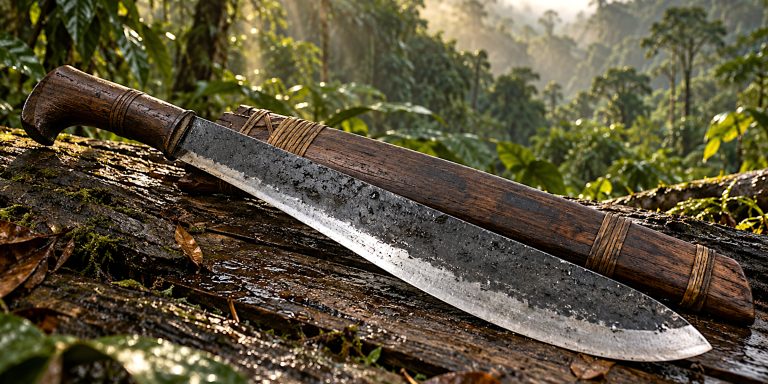
Swords
Likely sword types included:
Anglo-Saxon Pattern-Welded Sword
Features:
- Double-edged straight blade
- Length around 70 to 90 cm
- Iron and steel construction
- Pattern-welded core on higher-quality examples
- Short guard and decorated pommel
These swords were expensive prestige weapons, usually carried by nobles and elite retainers rather than ordinary warriors.
Other weapons:
- Seax fighting knives
- Spears
- Throwing spears
- Round wooden shields
- Axes
Armour:
- Mail shirts for wealthy warriors
- Iron helmets among elites
- Leather or padded protection among lower-status fighters
Brittonic Weapons And Armour
Cadwallon’s warriors likely carried a mixture of late Romano-British influenced equipment and contemporary early medieval weapons.
Possible swords:
Late Romano-British Spatha Descendants
Features:
- Long straight double-edged blades
- Designed for cutting and thrusting
- Associated with cavalry and elite warriors
Other weapons:
- Spears
- Javelins
- Small axes
- Long knives
- Round shields
Elite warriors may have used:
- Mail armour
- Decorated helmets
- Horse equipment showing high social rank
Despite later romantic images, neither army would have looked like medieval knights. This was shield-wall warfare: close, exhausting and deeply unpleasant for anyone near the front.
The Battle
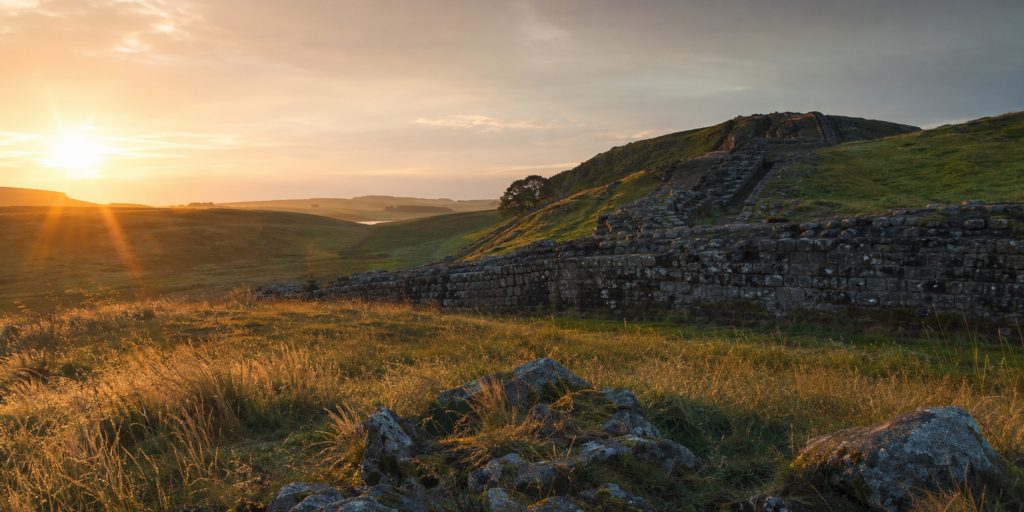
The traditional site places the battle near Hadrian’s Wall, close to modern Hexham.
According to Bede, before fighting began Oswald erected a wooden cross and prayed with his warriors.
Bede records:
“Let us all kneel, and together pray the almighty, living and true God.”
While written from a Christian viewpoint, the account suggests Oswald understood morale and symbolism. A small army facing a larger enemy needed belief as much as weapons.
The terrain likely helped the Northumbrians. Cadwallon’s numerical advantage was reduced, and his forces may have struggled to deploy effectively.
The fighting probably centred around shield formations:
- Warriors formed defensive lines.
- Spears opened the engagement.
- Elite fighters pushed into close combat.
- Swords and seaxes were used when formations broke.
Cadwallon was defeated and killed, reportedly at a place later identified as the Deniseburn.
Battle Timeline
| Date/Stage | Event |
| 633 | Edwin of Northumbria killed at Hatfield Chase |
| After 633 | Cadwallon campaigns through Northumbrian territory |
| Before Heavenfield | Oswald returns from exile |
| Night before battle | Oswald prepares his smaller army and reportedly raises a cross |
| Battle begins | Northumbrians engage Cadwallon’s larger force |
| Main fighting | Shield-wall combat decides the encounter |
| Collapse | Cadwallon’s army breaks |
| Aftermath | Cadwallon is killed and Oswald becomes ruler of Northumbria |
Archaeology Of Heavenfield
Identifying early medieval battlefields is extremely difficult. Unlike later medieval battles, 7th-century armies left limited material traces.
Archaeological interest around Heavenfield focuses on:
- Landscape analysis
- Possible battle locations
- Early medieval settlement patterns
- Relationship with Hadrian’s Wall
Finds from the wider region provide insight into the warriors of Oswald’s age:
- Anglo-Saxon weapons
- Shield bosses
- Jewellery
- Metalwork
- Burial evidence
The exact battlefield has not produced a definitive collection of battle remains, which is common for conflicts of this period. Iron weapons were valuable and normally recovered rather than abandoned.
Contemporary Sources And Quotes
The most important written source is Bede’s Ecclesiastical History of the English People, completed in 731.
Bede describes the battlefield:
“The place is shown to this day, and held in much veneration.”
He also presents Oswald as a Christian hero:
“He was always humble, kind, and generous to the poor and strangers.”
These passages tell us as much about how Northumbria wanted to remember Oswald as they do about the battle itself.
Later Welsh traditions preserve a very different memory of Cadwallon, treating him as a heroic Brittonic ruler rather than simply an enemy.
Aftermath And Consequences
The victory transformed Oswald’s future.
He became:
- King of Northumbria
- One of the most powerful rulers in Britain
- A major supporter of Christianity’s expansion
His reign strengthened links between:
- Northumbria
- Dál Riata
- Irish Christian communities
However, dominance was temporary. In 642 Oswald himself was killed fighting Penda of Mercia at the Battle of Maserfield.
Early medieval Britain had a habit of reminding successful kings that winning one great battle did not guarantee a peaceful retirement.
Legacy Of The Battle Of Heavenfield
Heavenfield became more than a military victory. It became part of Northumbrian identity.
Its importance comes from several areas:
- It restored Northumbrian power after disaster.
- It ended Cadwallon’s campaign.
- It elevated Oswald into one of Anglo-Saxon England’s most famous rulers.
- It strengthened Christian influence in northern England.
Historically, the fascinating part of Heavenfield is the contrast between reality and memory. The real battle was likely a fast, savage clash between relatively small forces. The legend became something much larger: a story of kingship, faith and the changing future of Britain.
For a fight involving perhaps only hundreds or a few thousand men, Heavenfield left a footprint far larger than the army that marched there.