
The Anarchy was a civil war fought for the English crown between King Stephen and the supporters of Empress Matilda. It lasted, with long pauses and sudden eruptions, from the troubled opening of Stephen’s reign in 1135 until the settlement agreed at Wallingford in 1153.
Calling it a succession dispute makes the whole affair sound almost administrative. It was nothing of the sort. Towns were burned, castles changed hands, prisoners were held for ransom and local lords used the collapse of royal authority to pursue feuds of their own. Yet this was not an uninterrupted national war. Much of England escaped sustained fighting, while the worst violence was concentrated in the west, the Thames Valley, East Anglia and around a chain of strategically important castles.
There was only one unmistakable pitched battle between the main royal and Angevin armies: the Battle of Lincoln in 1141. Most military operations were sieges, raids, ambushes and attempts to starve castles into submission. Medieval commanders generally preferred a strong wall and a full granary to the exciting uncertainty of an open field. Sensible men rarely make convenient subjects for battle paintings.
This chronology includes the principal battles, sieges and military actions associated with the struggle. Minor raids and poorly recorded local skirmishes cannot always be dated with confidence, and contemporary chroniclers were not compiling fixture lists.
The Anarchy at a Glance
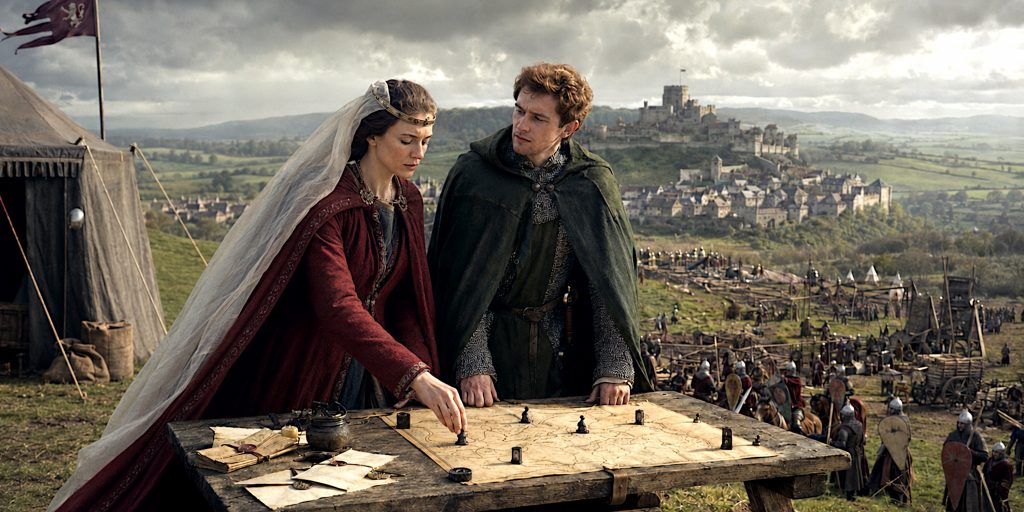
| Date | Engagement | Location | Outcome |
|---|---|---|---|
| 1136 | Siege of Exeter | Devon | Royal victory |
| 1137 | Siege of Bedford | Bedfordshire | Negotiated royal submission |
| June 1138 | Battle of Clitheroe | Lancashire | Scottish victory |
| August 1138 | Siege of Shrewsbury | Shropshire | Royal victory |
| 22 August 1138 | Battle of the Standard | North Yorkshire | English victory |
| September 1139 | Siege of Arundel | West Sussex | Matilda permitted to leave |
| November 1139 | Attack on Worcester | Worcestershire | Angevin raid and destruction |
| 1139 onwards | Sieges of Wallingford | Oxfordshire | Angevin stronghold endured |
| 1140 | Campaign around Ely | Cambridgeshire | Royal victory |
| December 1140 | Seizure of Lincoln Castle | Lincolnshire | Ranulf of Chester occupied the castle |
| 2 February 1141 | Battle of Lincoln | Lincolnshire | Decisive Angevin victory |
| August to September 1141 | Rout of Winchester | Hampshire | Royalist victory |
| September to December 1142 | Siege of Oxford | Oxfordshire | Royal success, but Matilda escaped |
| 1 July 1143 | Battle of Wilton | Wiltshire | Angevin victory |
| 1144 | Siege of Lincoln | Lincolnshire | Inconclusive |
| 1144 | Siege of Burwell | Cambridgeshire | Geoffrey de Mandeville mortally wounded |
| 1145 | Siege of Faringdon | Oxfordshire | Royal victory |
| 1152 | Siege of Wallingford | Oxfordshire | Angevin garrison resisted |
| January 1153 | Fighting at Malmesbury | Wiltshire | Henry of Anjou held his position |
| Summer 1153 | Confrontation at Wallingford | Oxfordshire | Negotiations replaced battle |
Why the War Began
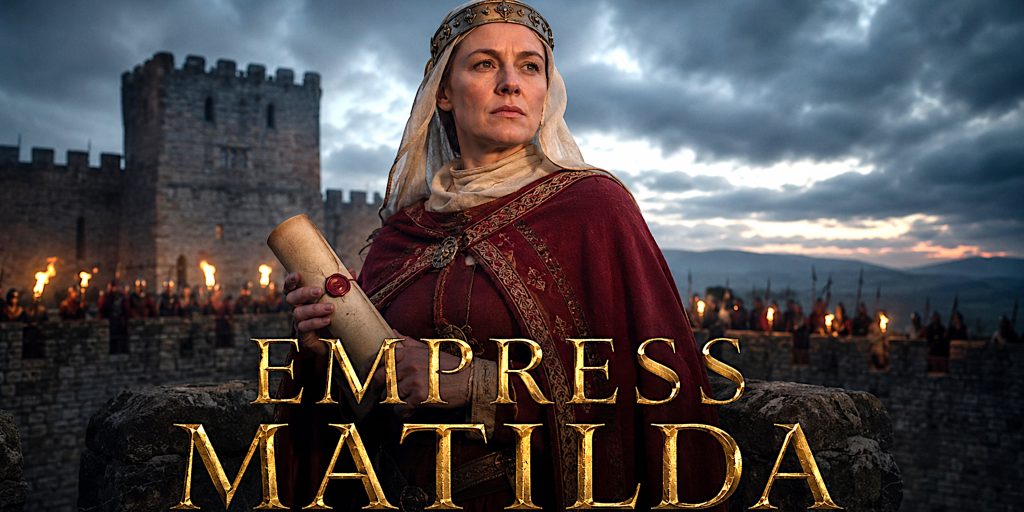
The roots of the Anarchy lay beneath the cold waters of the English Channel. In November 1120, the White Ship sank off Barfleur with William Adelin, the only legitimate son of Henry I, aboard.
Henry subsequently designated his daughter Matilda as his heir. She was the widow of the Holy Roman Emperor Henry V and later married Geoffrey Plantagenet, Count of Anjou. England’s leading magnates swore to recognise her succession, although oaths made in a royal hall could prove surprisingly delicate once the king who demanded them was dead.
Henry I died on 1 December 1135. Matilda was in Anjou and unable to act quickly. Her cousin Stephen of Blois crossed to England, secured the royal treasury at Winchester and was crowned on 22 December.
Stephen possessed several advantages. He was present, wealthy, well connected and male. Matilda possessed the stronger hereditary claim, experience of imperial government and the increasingly formidable support of her half-brother, Robert, Earl of Gloucester.
The struggle did not become a full civil war immediately. Stephen’s early reign was instead disturbed by baronial revolts, Scottish invasions and unrest in Wales. These conflicts gradually merged with Matilda’s claim to the throne.

The Siege of Exeter, 1136
One of the first serious challenges to Stephen came from Baldwin de Redvers, lord of extensive estates in Devon and the Isle of Wight. Baldwin rebelled during 1136 and fortified himself at Exeter Castle.
Stephen moved swiftly. His army surrounded the castle during the summer and settled into a siege that reportedly lasted around three months. Exeter’s defenders had strong walls but inadequate water. As their supplies failed, they were forced to surrender.
Some of Stephen’s followers urged him to execute the garrison. The king instead allowed the defenders to depart. This clemency was praised by some contemporaries and criticised by those who thought rebellion should have a more memorable conclusion.
Baldwin escaped to the Isle of Wight and then to Normandy, where he joined Matilda’s party. The siege was a royal victory, but Stephen’s treatment of the defeated rebels did not prevent them from returning to the war.
The Siege of Bedford, 1137
Bedford Castle was held by Miles de Beauchamp, who resisted Stephen’s attempt to transfer the fortress to Hugh de Beaumont.
The king besieged Bedford during the winter of 1137. The defenders resisted for several weeks before Henry of Blois, Bishop of Winchester and Stephen’s brother, helped negotiate a settlement.
Miles surrendered the castle but was permitted to leave with his men. Once again, Stephen secured his immediate objective without crushing his opponent. It was becoming something of a habit.
The Battle of Clitheroe, 1138
David I of Scotland supported Matilda’s hereditary claim and had already taken advantage of the succession crisis to occupy territory in northern England.
In June 1138, a Scottish army commanded by William fitz Duncan encountered an English force near Clitheroe in Lancashire. The English were led by William of Aumale and drew heavily upon local levies.
The Scots won the battle. Clitheroe was followed by destructive raiding across northern England, helping to provoke the larger mobilisation that culminated at the Battle of the Standard.
Clitheroe is sometimes treated as part of the Anarchy and sometimes as an episode in the separate Anglo-Scottish war. In practice, the two conflicts overlapped. David was Matilda’s uncle and supporter, but he was also pursuing Scottish territorial ambitions. Medieval politics could accommodate loyalty and self-interest without troubling itself over the distinction.
The Siege of Shrewsbury, 1138
During the summer of 1138, William FitzAlan declared for Matilda and held Shrewsbury Castle against the king.
Stephen besieged the town in August. FitzAlan escaped, but the castle garrison continued to resist. Once the fortress fell, the king abandoned his earlier leniency. Around ninety members of the garrison were reportedly hanged.
The executions were intended to deter further revolt and demonstrated that Stephen could act ruthlessly when he believed it necessary. They also reveal how dangerous castle warfare had become. A fortress was not simply a defensive refuge. It offered control over roads, markets, river crossings and the surrounding countryside.
Stephen captured several rebel positions during the campaign, including Hereford and Dover, although control of the west remained uncertain.
The Battle of the Standard, 22 August 1138
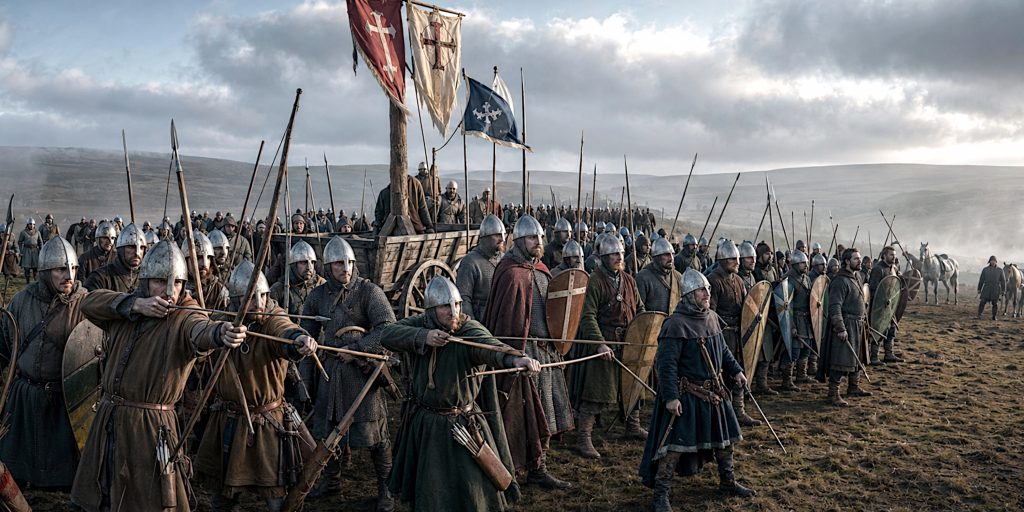
The Battle of the Standard was fought near Northallerton between the invading army of David I and a hastily assembled northern English force.
The English position was organised around a wagon bearing consecrated banners associated with St Peter of York, St John of Beverley and St Wilfrid of Ripon. Walter Espec and other northern barons commanded the army, while Archbishop Thurstan of York played a central role in raising resistance.
The Scottish army included:
- Norman and Anglo-Scottish knights
- Spearmen from Lowland Scotland
- Infantry from Galloway
- Troops drawn from Cumbria, Lothian and other territories
- English supporters of Matilda
David’s Galwegian infantry attacked the English formation but failed to break its line. English archery and disciplined resistance inflicted heavy losses, and the Scottish army eventually withdrew.
The victory protected Yorkshire, although it did not remove David from the war. The subsequent Treaty of Durham granted extensive northern lands to his son Henry. Stephen had won the battle but conceded much of the political prize.
Matilda Lands and the Siege of Arundel, 1139
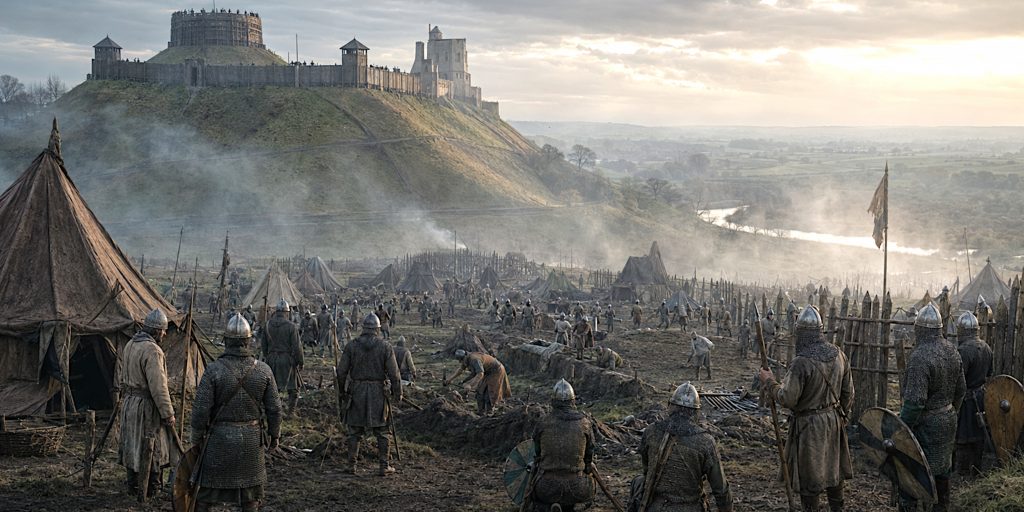
Empress Matilda landed at Arundel in September 1139 with Robert of Gloucester and a small body of supporters. Arundel Castle belonged to her stepmother, Adeliza of Louvain.
Stephen moved rapidly and surrounded the castle. Matilda appeared trapped before her campaign had properly begun. Yet the king allowed her to travel under escort to Bristol, where Robert of Gloucester had established the strongest Angevin base in England.
Why Stephen released his principal rival remains debated. He may have respected the obligations of aristocratic conduct, feared that a prolonged siege would prove costly or believed that concentrating his enemies in the west would make them easier to contain.
Whatever his reasoning, the decision proved generous to the point of bewilderment. Matilda reached Bristol safely and began building a territorial bloc across south-western England.
The Attack on Worcester, 1139
In November 1139, forces associated with Robert of Gloucester attacked Worcester. The city was entered and plundered, although its castle apparently remained beyond the attackers’ reach.
Contemporary accounts describe houses and churches being burned and inhabitants killed or taken captive. Worcester suffered several times during the civil war because it stood close to the shifting frontier between royalist and Angevin territory.
This was typical of warfare during the Anarchy. An army did not need to capture a castle to harm its enemy. Burning property, taking livestock and seizing prisoners could weaken a rival’s resources while enriching one’s own followers.
The people living nearby were rarely consulted about the strategic merits of this arrangement.
The Struggle for Wallingford
Wallingford Castle was held for Matilda by Brian Fitz Count and became one of the most important Angevin positions in the Thames Valley.
Its location allowed the garrison to threaten communications between London, Oxford and the west. Stephen built counter-castles around Wallingford and repeatedly attempted to isolate it.
The struggle was not one continuous siege. It was a long contest involving blockades, relief efforts, raids and the construction of rival fortifications. Wallingford became a stubborn obstruction to royal control and remained loyal to Matilda’s cause throughout the war.
Its survival mattered enormously. When Henry of Anjou returned to England in 1153, Wallingford provided both a strategic objective and a place where the exhausted factions could finally negotiate.
The Campaign Against Ely, 1140
Nigel, Bishop of Ely, had been one of the churchmen alienated by Stephen’s arrest of Bishop Roger of Salisbury in 1139. Nigel rebelled and used the Isle of Ely as a base.
The wetlands surrounding Ely made it difficult to attack. Causeways could be defended, boats controlled local movement and conventional cavalry was of limited use.
Stephen nevertheless campaigned successfully in the region during 1140. His forces used boats and temporary crossings to penetrate the marshes, compelling Nigel to flee.
The operation showed Stephen at his most energetic. He was often an effective field commander, capable of moving quickly and adapting to difficult terrain. His larger problem was political. Victories brought castles back into obedience, but rarely kept their owners obedient for long.
The Seizure of Lincoln Castle, 1140
Late in 1140, Ranulf de Gernon, Earl of Chester, and his half-brother William de Roumare seized Lincoln Castle through a mixture of stealth and deception.
According to the traditional account, their men entered under the pretence of visiting members of the garrison. Once inside, they admitted a larger force and took control of the fortress.
Stephen initially negotiated with Ranulf, but the citizens of Lincoln appealed for royal assistance. The king returned during the Christmas season and began a siege.
Ranulf escaped, leaving his family and garrison inside the castle. He then joined Robert of Gloucester and raised an army to break the royal siege.
That decision led directly to the defining battle of the war.
The Battle of Lincoln, 2 February 1141
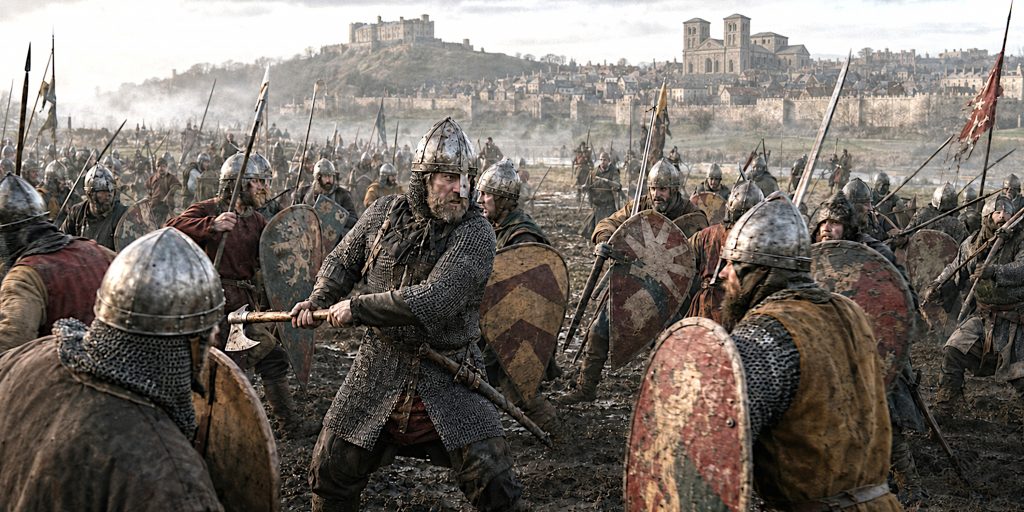
The Battle of Lincoln was the only clear, large-scale pitched battle between the principal armies of the Anarchy.
Stephen’s forces were positioned outside Lincoln while his opponents approached from the west. The Angevin army was commanded by Robert of Gloucester and Ranulf of Chester, with a substantial contingent of Welsh infantry.
Several royalist magnates advised Stephen to withdraw. His opponents probably outnumbered him, and the flooded ground restricted movement. Stephen chose to remain.
The battle began with attacks upon the royalist cavalry wings. Several leading earls fled or were driven from the field. Stephen remained with his infantry in the centre and fought on after much of his mounted support had disappeared.
Contemporary chroniclers admired his personal courage. His sword reportedly broke, after which he continued fighting with an axe. Surrounded and overwhelmed, he was struck down and captured.
The consequences were extraordinary:
- Stephen was imprisoned at Bristol
- Matilda gained the upper hand
- Henry of Blois recognised her as “Lady of the English”
- Preparations began for her coronation
- Numerous barons reconsidered their loyalties
Matilda came closer to ruling England than ever before. Yet she failed to secure London and alienated several influential supporters. Stephen’s queen, Matilda of Boulogne, continued the royalist cause with considerable determination.
The war had captured a king without producing a crowned queen.
The Rout of Winchester, 1141
The campaign around Winchester began as a political confrontation between Empress Matilda and Henry of Blois.
Henry had initially supported the empress after his brother’s capture. Relations soon deteriorated, and the bishop returned to the royalist party. Matilda and Robert of Gloucester entered Winchester in July 1141 and besieged the bishop’s stronghold at Wolvesey.
Royalist forces under Matilda of Boulogne and the Flemish commander William of Ypres closed the roads around the city. The besiegers became besieged. Food ran short, disease spread and parts of Winchester were burned during the fighting.
In September, the Angevin army attempted to withdraw towards Devizes. The retreat collapsed into a rout. Robert of Gloucester protected Matilda’s escape but was captured near Stockbridge.
The royalists now possessed the one prisoner valuable enough to exchange for Stephen. In November 1141, the king and Robert were released.
Winchester erased the political effects of Lincoln with remarkable efficiency. Both sides had captured the opposing faction’s most important commander, and after all the drama they exchanged them and resumed the war.
The Siege of Oxford, 1142

By 1142, Matilda had established herself at Oxford Castle. Stephen launched a sudden attack in September, crossing the River Thames and entering the town after fierce fighting.
Matilda withdrew into the castle while Stephen settled down to starve her out. Siege engines were constructed on nearby mounds, although blockade and hunger posed the greater threat.
After roughly three months, the garrison was close to exhaustion. Matilda escaped one night in December with a small group of knights. Later accounts describe her wearing white to blend into the snow before crossing the frozen landscape towards Abingdon and then Wallingford.
Some details may have been improved in the retelling, but the escape itself is well attested. It was an extraordinary feat. Stephen captured Oxford Castle, but his rival once again slipped from his grasp.
The fall of Oxford weakened the Angevin position in the Thames Valley. Matilda moved her court to Devizes, which remained one of her principal bases.
The Battle of Wilton, 1 July 1143
Stephen attempted to strengthen royal control in the south-west by fortifying Wilton and using it as a base against Angevin territory.
Robert of Gloucester attacked the king’s forces on 1 July 1143. Stephen marched out to meet him, but the royal army was driven back. Fighting spread into Wilton, and the town was set alight.
Stephen narrowly avoided capture. According to the Gesta Stephani, his steward William Martel fought a determined rearguard action that allowed the king to escape. Martel was taken prisoner and later exchanged for the strategically valuable Sherborne Castle.
Wilton was a clear Angevin success, although it did not transform the wider war. Stephen’s ability to recover from military embarrassment had become almost constitutional.
Geoffrey de Mandeville and the Siege of Burwell, 1144
Geoffrey de Mandeville, Earl of Essex, was one of the most formidable and least dependable magnates of the period. He changed allegiance more than once and accumulated offices and privileges from both sides.
In 1143, Stephen arrested Geoffrey at court and forced him to surrender several castles. Released from custody, Geoffrey rebelled and established himself in the fenlands of East Anglia. His forces occupied religious houses, raided surrounding lands and created a local war largely independent of Matilda’s claim.
During an attack on the royal castle at Burwell in 1144, Geoffrey was struck by an arrow. He died soon afterwards.
His rebellion illustrates why the term “Anarchy” has endured. The conflict was never merely a tidy contest between Stephen and Matilda. Weak central power allowed individual lords to create private military zones, sometimes pursuing royal causes and sometimes pursuing themselves.
The Siege of Lincoln, 1144
Lincoln changed hands and allegiances several times during Stephen’s reign. In 1144, the king again campaigned around the city and attempted to reduce the castle.
The precise course of the operation is poorly recorded. The castle remained difficult to take, while Ranulf of Chester continued to dominate much of the north-west and repeatedly shifted his political position.
The episode reinforces the strategic importance of Lincoln. The city controlled routes through eastern England, while its castle stood above the surrounding settlement with two powerful mottes. Whoever held it possessed a formidable regional base.
Stephen’s failure to impose lasting control in Lincolnshire was part of his broader inability to turn campaigning energy into permanent authority.
The Siege of Faringdon, 1145
Robert of Gloucester constructed a castle at Faringdon, probably to extend Angevin influence eastwards from the western heartlands.
Stephen besieged it in 1145. The first royal attacks reportedly failed, damaging morale and prompting desertions. The king persisted, reorganised the operation and eventually forced the garrison to surrender.
Faringdon was one of Stephen’s more useful later victories. It prevented the Angevins from pushing their military frontier closer to London and reduced the immediate threat to royal territory.
By this point, however, neither faction possessed the resources to win outright. Robert of Gloucester died in 1147, depriving Matilda of her most capable commander. Matilda left England in 1148 and did not return.
Her cause passed increasingly to her eldest son, Henry.
Warfare in Normandy
The struggle for England cannot be separated from events across the Channel. Henry I had ruled both England and Normandy, and control of the duchy was central to the succession.
While Matilda and Robert campaigned in England, Geoffrey Plantagenet invaded Normandy. His progress was slow but increasingly effective.
Key developments included:
- The capture of Caen in 1141
- The capture of Avranches and Mortain
- Geoffrey’s recognition as Duke of Normandy by 1144
- The transfer of Normandy to his son Henry in 1150
Normandy was arguably the most decisive Angevin victory of the entire conflict. Stephen retained the English crown, but he lost the duchy. Henry consequently gained a powerful territorial base from which to renew his claim to England.
The war in England appeared deadlocked. Across the Channel, the future Plantagenet settlement was already taking shape.
Henry of Anjou Invades, 1153
Henry made an unsuccessful expedition to England as a teenager in 1147. He returned in January 1153 as Duke of Normandy and Count of Anjou, possessing considerably greater authority and experience.
He landed with a relatively modest force but quickly attracted supporters. The campaign passed through the west and Midlands before moving towards the Thames Valley.
The war was no longer centred upon placing Matilda personally on the throne. It had become a contest over whether Stephen could secure the succession for his son Eustace or would be forced to recognise Henry.
The Fighting at Malmesbury, 1153
Stephen confronted Henry near Malmesbury during the opening phase of the 1153 campaign.
Heavy rain disrupted the royal army and reportedly flooded parts of its camp. Fighting occurred around the town, but neither side achieved a decisive victory. Henry retained his position and continued gathering support.
Malmesbury demonstrated the changed balance of the conflict. Stephen remained king and could still raise an army, but Henry did not need to defeat him in a grand battle. He needed only to remain in the field, preserve his coalition and make the continuation of war less attractive than negotiation.
It was patient strategy, helped by English weather performing its customary diplomatic service.
The Final Confrontation at Wallingford, 1153
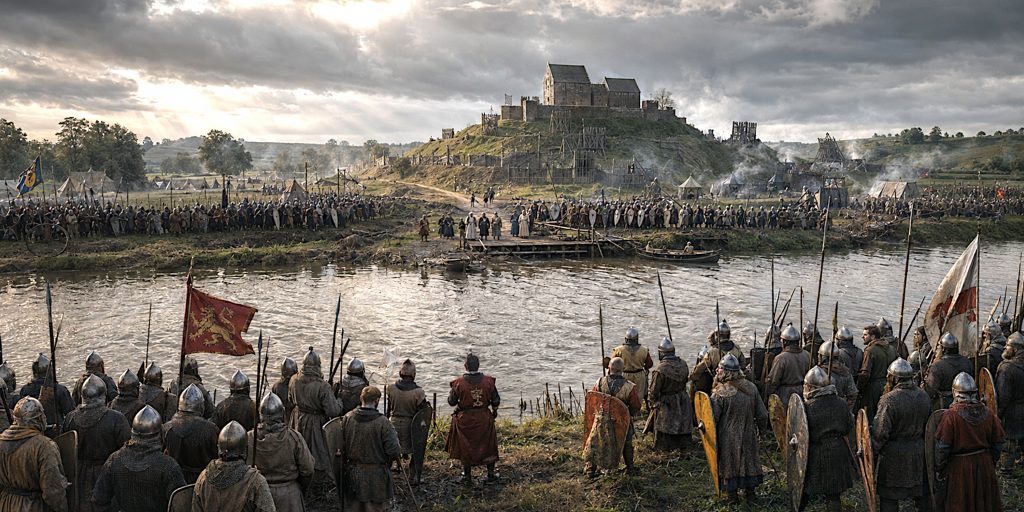
Wallingford Castle was again under royal pressure when Henry advanced to relieve it in the summer of 1153.
The opposing armies faced one another across the River Thames. A major battle seemed possible, but many barons on both sides were reluctant to fight. Years of divided loyalties, private agreements and mutual exhaustion had reduced enthusiasm for a final bloodletting.
Negotiations began instead. Stephen and Henry eventually reached terms, helped by senior clergy and magnates.
The death of Stephen’s son Eustace in August removed the greatest obstacle to settlement. Stephen’s remaining son, William, lacked either the support or perhaps the appetite to continue the struggle.
The agreement was formalised in the Treaty of Winchester during November 1153:
- Stephen would remain king for life
- Henry would be recognised as his adopted son and successor
- William would retain his family estates
- Royal authority and lawful possession were to be restored
- Many castles erected without permission were to be demolished
Stephen died on 25 October 1154. Henry was crowned Henry II at Westminster on 19 December.
The Anarchy ended not with a decisive charge or a king dragged from the battlefield, but with an exhausted political settlement.
Arms and Armour During the Anarchy
The armies of Stephen and Matilda were broadly similar in equipment and organisation. Allegiance did not determine weaponry. A knight serving the empress looked much like a knight serving the king, which must occasionally have complicated matters in poor weather.
Knights
Wealthy mounted warriors commonly used:
- Conical helmets, often with nasal guards
- Mail hauberks extending to the knees
- Padded garments beneath mail
- Kite-shaped shields
- Lances used from horseback
- Double-edged arming swords
- Maces and axes for close combat
The typical sword was a straight, double-edged weapon with a simple crossguard and wheel, brazil-nut or disc-like pommel. Blades corresponding broadly to Oakeshott Types X and XI were current during the period.
Infantry
Foot soldiers carried a wider assortment of equipment:
- Spears
- Bows
- Crossbows
- Axes
- Large shields
- Shorter swords and long knives
- Padded or leather protection
- Mail for those wealthy enough to obtain it
Crossbowmen were particularly useful during sieges, where accuracy and penetrative power mattered more than speed of movement.
Siege Weapons
Siege operations employed:
- Stone-throwing engines
- Torsion or traction artillery
- Battering equipment
- Mining beneath walls
- Timber siege towers
- Fire
- Blockade and starvation
- Counter-castles built to contain an enemy fortress
The trebuchet associated with later medieval warfare was not yet the universal castle-smashing machine imagined by popular culture. Many fortresses fell through negotiation, hunger, betrayal or the exhaustion of their defenders.
How Destructive Was the Anarchy?
Contemporary chroniclers painted a dreadful picture. The Anglo-Saxon Chronicle famously complained that powerful men “filled the land full of castles” and oppressed the population. Its verdict that “Christ and his saints slept” has shaped the reputation of the period ever since.
There was genuine suffering. Illegal or unauthorised castles proliferated, local warfare disrupted agriculture and towns including Worcester, Nottingham and Winchester were damaged. Captivity, ransom and the seizure of food placed heavy pressure upon communities caught near military frontiers.
Modern historians are more cautious about treating the whole of England as a wasteland. The violence was uneven:
- The south-west was the principal Angevin heartland
- London and the south-east generally remained royalist
- The Thames Valley was repeatedly contested
- East Anglia experienced Geoffrey de Mandeville’s rebellion
- Northern England faced Scottish intervention and semi-independent magnates
- Some regions experienced little sustained combat
“The Anarchy” remains a useful name, but it should not be mistaken for complete national collapse. Royal authority fractured rather than disappeared. Courts, monasteries, towns and local government continued to function, though often under severe strain.
Why Neither Side Could Win
Stephen and Matilda each came close to success, but neither could convert temporary advantage into uncontested rule.
Stephen’s weaknesses included:
- His disputed claim to the throne
- A tendency to release or reconcile dangerous opponents
- Repeated defections among major magnates
- The loss of Normandy
- Difficulty securing the succession for Eustace
Matilda’s weaknesses included:
- Her limited initial support in England
- Dependence upon Robert of Gloucester
- Failure to secure London in 1141
- A power base concentrated largely in the west
- Political resistance to her ruling personally as queen
Castle warfare favoured deadlock. A faction could control a region without possessing the strength to conquer the entire kingdom. Magnates could also change sides, negotiate private truces or remain neutral when it suited them.
The conflict ended only when Henry offered a plausible future acceptable to enough of the political nation. He was Matilda’s son and heir, but he was also a young male ruler who controlled Normandy and could promise continuity after Stephen’s death.
The Legacy of the Anarchy
Henry II inherited a kingdom in need of repair, though not the uniformly ruined landscape imagined by later legend.
His reign restored forceful royal government and strengthened institutions concerned with justice, finance and administration. Unauthorised castles were demolished, royal lands recovered and baronial independence curtailed.
The conflict also established the Plantagenet dynasty. Henry’s inheritance eventually stretched from the Scottish border to the Pyrenees, creating what historians often call the Angevin Empire.
Matilda never became crowned queen of England, but her campaign secured the succession of her son. Stephen retained the throne until his death, yet failed to establish his own dynasty.
Neither claimant achieved everything they wanted. Their compromise nevertheless determined the course of English monarchy for more than three centuries.
For a war remembered as anarchic, it produced a remarkably durable conclusion.
Frequently Asked Questions
How long did the Anarchy last?
The broad political crisis lasted from Stephen’s accession in 1135 until his agreement with Henry in 1153, or until Stephen’s death in 1154. The most intense civil warfare began after Robert of Gloucester renounced allegiance to Stephen in 1138 and Matilda landed in England in 1139.
Who won the Anarchy?
Stephen remained king for the rest of his life, but Matilda’s son succeeded him as Henry II. In dynastic terms, Matilda’s cause prevailed. In immediate personal terms, Stephen kept his crown.
Was Matilda ever Queen of England?
Matilda was recognised as “Lady of the English” in 1141 but was never crowned. She was driven from London before a coronation could take place.
What was the largest battle of the Anarchy?
The Battle of Lincoln in 1141 was the principal pitched battle of the civil war. Stephen was defeated and captured.
Was the Battle of the Standard part of the Anarchy?
It formed part of the wider succession crisis, although it was primarily an Anglo-Scottish battle. David I supported Matilda, but his invasion also served Scotland’s territorial ambitions.
Why were there so few pitched battles?
Open battle was extremely risky. Capturing a king or leading noble could transform a war, as Lincoln demonstrated. Commanders generally preferred sieges, raids and negotiated surrenders.
Where did most of the fighting take place?
The most heavily contested regions included south-western England, the Thames Valley, parts of the Midlands, East Anglia and the north.