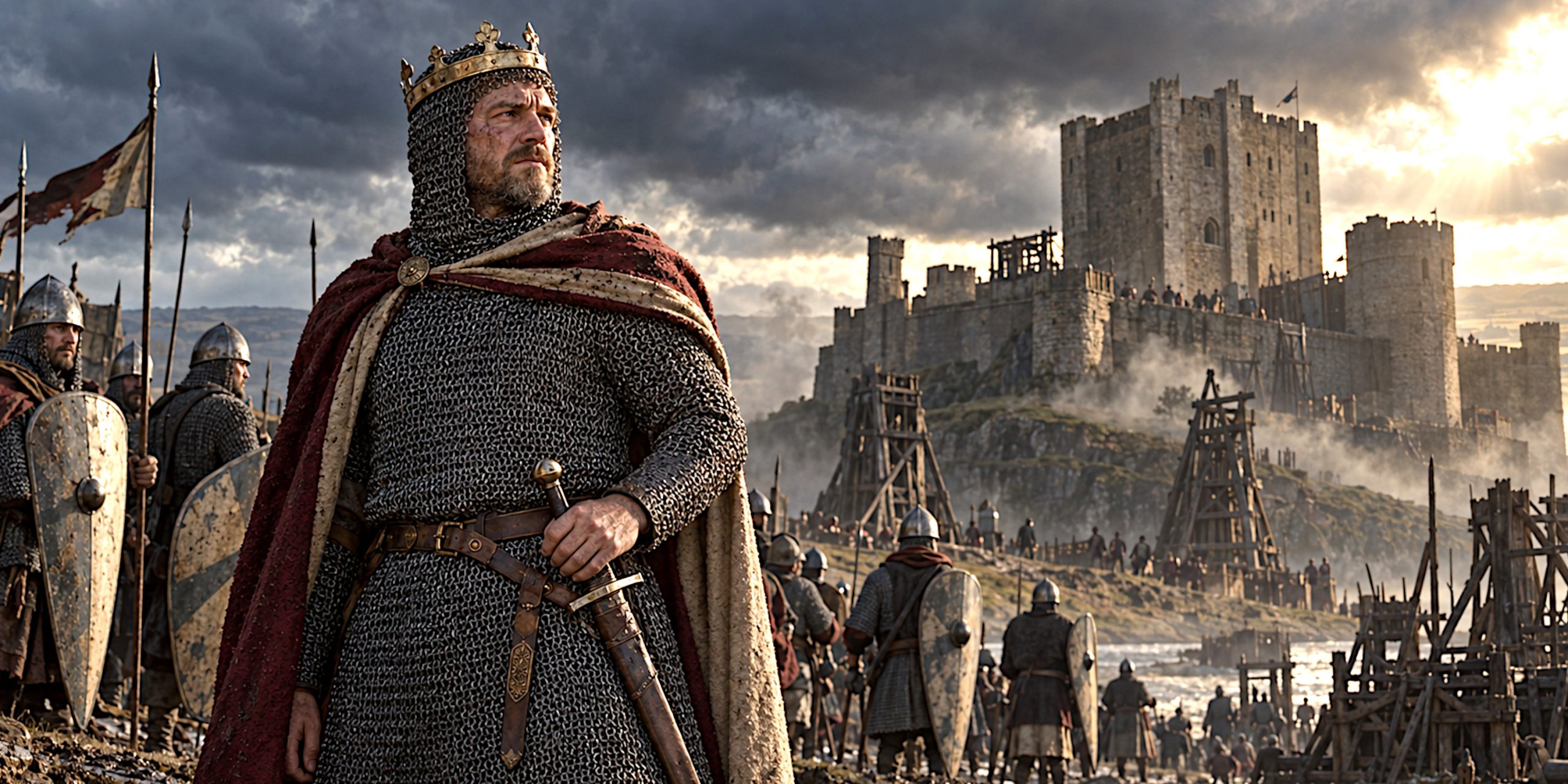
King Stephen ruled England from 1135 to 1154, surviving rebellion, imprisonment and a succession dispute that became a prolonged civil war. His reign is usually remembered as the Anarchy, a name that captures its suffering but can obscure how much royal government continued to function.
He was courageous, approachable and remarkably difficult to remove. He also made damaging political decisions, struggled to hold his alliances together and failed to secure the throne for his son.
I find Stephen more interesting than the familiar portrait of a pleasant man hopelessly out of his depth. He could be generous, calculating, forgiving and coercive, sometimes within the same campaign. His problem was that none of these qualities produced a lasting settlement until he accepted an heir from the opposing family.
King Stephen at a Glance
| Detail | Information |
|---|---|
| Common name | Stephen of Blois |
| Born | Around 1092–1096; the precise year is uncertain |
| Parents | Stephen-Henry, Count of Blois, and Adela of Normandy |
| Royal ancestry | Grandson of William the Conqueror through his mother |
| Wife | Matilda of Boulogne |
| Coronation | 22 December 1135, Westminster Abbey |
| Reign | 1135–1154 |
| Principal rival | Empress Matilda, daughter of Henry I |
| Major military disaster | Defeat and capture at Lincoln, 2 February 1141 |
| Successor | Henry II |
| Died | 25 October 1154, at Dover |
| Burial | Faversham Abbey, Kent |
Two Matildas dominate this story. Empress Matilda was Stephen’s cousin and rival. Matilda of Boulogne, his wife, was one of his most effective supporters. Confusing them makes an already complicated civil war considerably less manageable.
Early Life and the Making of a Royal Claimant
Stephen belonged to the extended Norman ruling family. His mother, Adela, was a daughter of William the Conqueror and a formidable political figure in her own right.
As a younger son, Stephen was not originally destined for the English crown. His prospects developed through the patronage of his uncle, Henry I, who supplied estates, opportunities and a place within the royal circle.
His marriage to Matilda of Boulogne brought substantial resources and useful connections across the Channel. Boulogne mattered because of its wealth and position along the routes between England and the Continent.
Then the White Ship disaster of 1120 transformed the succession. Henry I’s legitimate son, William Adelin, drowned, leaving the king without a surviving legitimate male heir.
Henry eventually required leading nobles to recognise his daughter, Empress Matilda, as his successor. Stephen was among those who swore to support her. That oath would become an awkward feature of his subsequent career.
How Stephen Became King
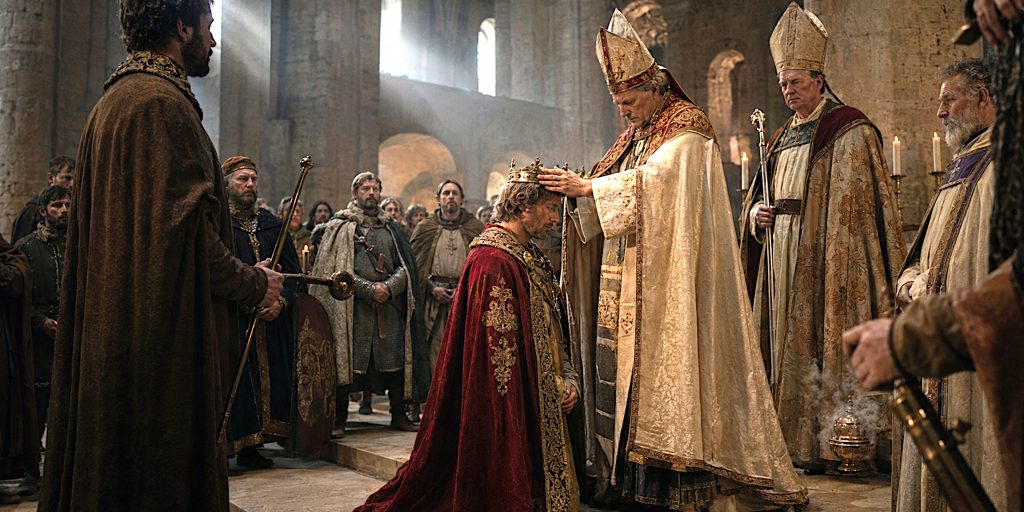
Henry I died on 1 December 1135. Stephen moved quickly, crossing to England and securing support in London and access to the royal treasury at Winchester.
His brother, Henry of Blois, Bishop of Winchester, helped build the ecclesiastical backing necessary for a coronation. Stephen was crowned at Westminster on 22 December.
His accession contradicted the earlier oath to Empress Matilda. Nevertheless, a coronation, possession of the treasury and recognition from influential supporters gave his claim immediate practical strength. Papal confirmation followed in 1136.
The Royal Family’s account of Stephen and Matilda outlines this contested succession.
Calling Stephen a usurper is defensible, but it should not suggest that succession operated through an automatic legal mechanism. Hereditary right, sworn promises, aristocratic consent and consecration could pull in different directions.
Stephen acted decisively in the opening weeks. The difficulty was persuading everyone else to treat those weeks as the end of the argument.
Why the Anarchy Began
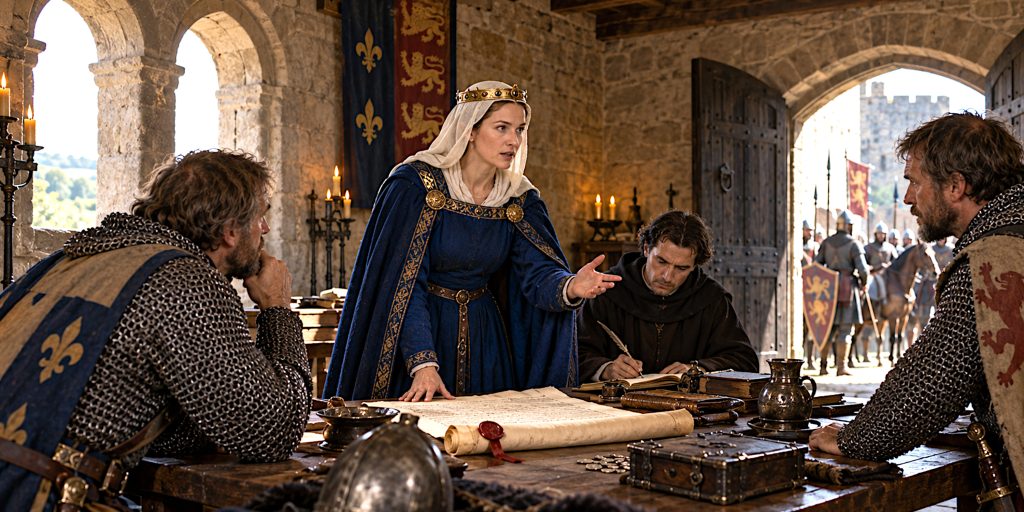
The succession dispute created a framework within which other conflicts could flourish.
Some nobles genuinely supported Matilda’s hereditary claim. Others wanted greater independence, disputed particular estates or sought advantages from whichever claimant needed them most.
Several pressures weakened Stephen’s position:
- An unresolved succession: Matilda possessed a claim that a coronation could not simply erase.
- Cross-Channel interests: Many aristocrats held property in both England and Normandy.
- Scottish intervention: David I pursued northern interests while supporting his niece, the empress.
- Regional ambitions: Powerful lords could use the dispute to strengthen their own positions.
- Expensive alliances: Stephen needed to reward support, but grants of land and authority could weaken the crown.
The arrest of Roger, Bishop of Salisbury, and members of his administrative circle in 1139 deepened the crisis. Stephen gained control of important castles, but the confrontation damaged relationships with churchmen and disrupted experienced royal administration.
Matilda arrived in England later that year. With her half-brother Robert of Gloucester as a principal military supporter, she established a durable challenge to Stephen’s rule.
The People Who Shaped His Reign
| Person | Role and significance |
|---|---|
| Matilda of Boulogne | Stephen’s queen, an organiser, negotiator and essential source of resources |
| Empress Matilda | Henry I’s designated heir and the principal challenger to Stephen |
| Henry of Blois | Stephen’s brother; an influential bishop whose support was not unconditional |
| Robert of Gloucester | The empress’s half-brother and leading military supporter |
| Ranulf, Earl of Chester | A powerful magnate whose regional interests repeatedly affected the war |
| Geoffrey of Anjou | Matilda’s husband, who conquered Normandy |
| Eustace | Stephen’s son and intended successor |
| Henry FitzEmpress | Matilda’s son, the future Henry II |
This was not a conflict between two tidy political parties. Allegiances reflected family obligations, property, local rivalries and calculations about survival.
A medieval oath carried religious weight. It also proved surprisingly vulnerable to a change in circumstances.
Stephen’s Battles and Campaigns
Stephen was an active campaigning king. His reign involved repeated sieges, rapid movements and attempts to recover castles rather than an uninterrupted sequence of great battles.
| Engagement | Stephen’s involvement | Significance |
|---|---|---|
| Siege of Exeter, 1136 | Personally directed the campaign against Baldwin de Redvers | Demonstrated that early rebellion could be suppressed |
| Battle of the Standard, 1138 | Stephen was not present; northern supporters defeated David I’s army | Checked the Scottish invasion |
| Battle of Lincoln, 1141 | Commanded his army and was captured | Threatened the survival of his kingship |
| Rout of Winchester, 1141 | Still a prisoner; his queen and supporters sustained the royalist cause | Robert of Gloucester’s capture enabled a prisoner exchange |
| Siege of Oxford, 1142 | Besieged the empress in Oxford Castle | Came close to capturing his rival |
| Battle of Wilton, 1143 | Defeated by Robert of Gloucester and escaped | Showed the continuing strength of the opposition |
| Wallingford campaign, 1153 | Confronted Henry FitzEmpress | Helped bring the succession dispute towards negotiation |
Stephen’s persistence deserves recognition. So does the limitation of his victories. Taking a castle could change the local balance without resolving who had the right to rule England.
Lincoln: The King Becomes a Prisoner
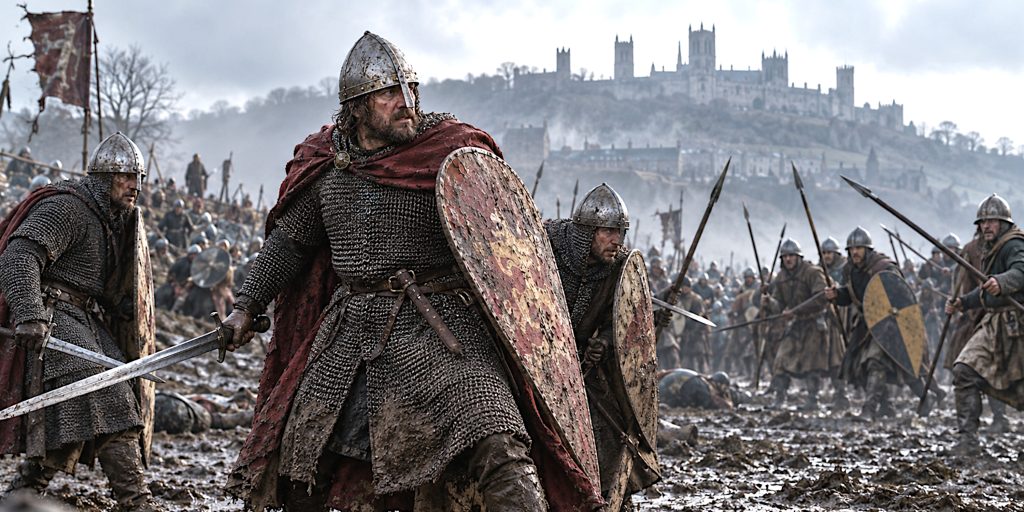
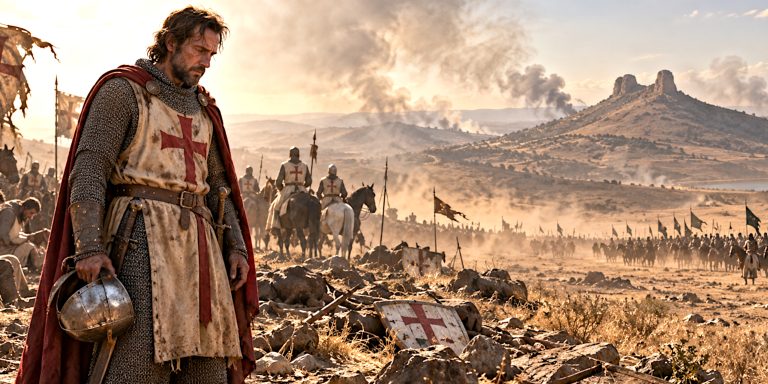
On 2 February 1141, Robert of Gloucester and Ranulf of Chester confronted Stephen while he was besieging Lincoln Castle.
Stephen’s army broke apart, but the king continued resisting with those who remained around him. Contemporary accounts differ over the precise sequence of his final stand, including his weapons and how he was brought down.
William of Malmesbury, who favoured Robert of Gloucester’s cause, nevertheless acknowledged that Stephen:
“by no means wanted spirit to defend himself”
In the older translation of his Historia Novella, William describes the king being overwhelmed and captured after his supporters were taken or dispersed. His account can be read in William of Malmesbury’s narrative of 1141.
Stephen was imprisoned at Bristol. For a time, Matilda appeared close to securing the crown.
Yet capturing the king did not transfer his whole network of support. His opponents still needed to turn military success into accepted government, a task that proved rather less straightforward.
Queen Matilda and Stephen’s Recovery

Matilda of Boulogne was central to the survival of Stephen’s cause.
While he remained imprisoned, she mobilised resources, maintained support and worked with royalist commanders, including William of Ypres.
Empress Matilda’s position weakened after she was driven from London. The struggle then shifted to Winchester, where her forces became trapped in a deteriorating military situation.
During their withdrawal in September 1141, Robert of Gloucester was captured. His value to the empress made an exchange possible: Robert’s freedom for Stephen’s.
This reversal should not be credited to Stephen’s battlefield leadership. He was a prisoner throughout it. His recovery depended on people who kept his cause alive, with his queen prominent among them.
It is difficult to assess his reign fairly while leaving her in the background.
Arms and Armour: What Stephen Probably Used
No surviving sword or suit of armour can be securely identified as Stephen’s personal equipment. Reconstruction therefore depends on contemporary imagery, surviving objects and written accounts.
| Equipment | Historically appropriate interpretation |
|---|---|
| Mail hauberk | The principal armour of a wealthy Anglo-Norman fighting man |
| Mail coif and leg protection | Appropriate additional protection, though the exact equipment Stephen wore on a particular occasion is unknown |
| Helmet | Conical or rounded helmets, often with nasal protection; later enclosed forms should not be assumed |
| Shield | A long kite shield is appropriate to much of his reign |
| Sword | A straight, double-edged, single-handed knightly sword |
| Lance | A major weapon for mounted combat |
| Battle-axe | Appears in accounts of his resistance at Lincoln, although narratives differ |
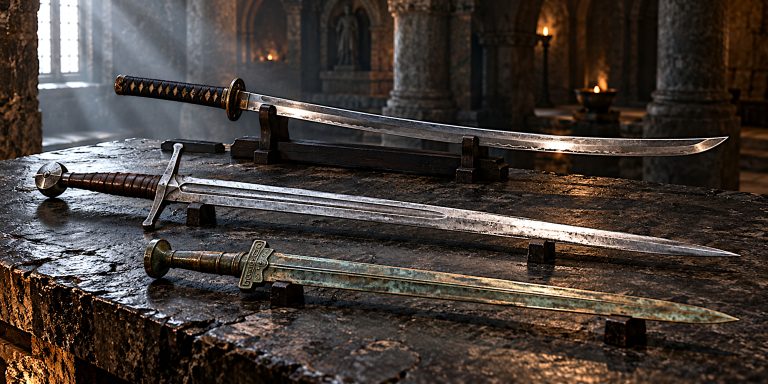
Oakeshott Type X and Type XI swords provide useful comparisons for blades circulating during this period. These are modern classifications, not names Stephen or his armourers would have used.
Mail offered valuable protection against cutting blows, but it did not make its wearer invulnerable. Shields, positioning and support from companions remained essential.
Stephen belongs to the world of mail, lances and kite shields. Full plate armour and the familiar enclosed great helm of later medieval imagery would misrepresent his reign.
What Contemporary Writers Said About Stephen
The surviving chronicles are valuable, opinionated and occasionally inconsistent. Their authors judged events through religious concerns, political loyalties and the experiences of their own communities.
The Peterborough continuation of the Anglo-Saxon Chronicle describes Stephen as:
“a mild man, and soft, and good”
This was hardly uncomplicated praise. The chronicler associated his gentleness with a failure to restrain powerful men.
The same account supplies the reign’s most memorable judgement:
“Christ slept, and his saints.”
Both quotations appear in James Ingram’s older English translation of the Anglo-Saxon Chronicle. They are translated medieval testimony, not Stephen’s own words.
The anonymous Gesta Stephani is generally sympathetic to Stephen, although it also criticises decisions and conduct. William of Malmesbury offers a different perspective, shaped partly by his association with Robert of Gloucester.
I would read these writers alongside one another. A chronicler could report genuine suffering while also arranging events into an argument about rightful kingship or divine punishment.
Was All of England Really in Anarchy?
The suffering was real. Armed groups extracted payments, damaged settlements and threatened the livelihoods of people who had little influence over the succession.
However, the severity of disruption varied across regions and over time. Some areas experienced repeated campaigning; others retained greater stability.
Royal charters continued to be issued. Religious institutions managed estates, local agreements restrained conflict, and administration survived in places where authority remained effective.
Even the Peterborough chronicler’s bleak narrative records building, charitable activity and institutional achievement at his own abbey.
“The Anarchy” is useful as a name for the conflict, but less reliable as a description of every village throughout Stephen’s reign.
The more revealing question is where authority failed, who replaced it and how ordinary communities adapted.
The Settlement of 1153 and Stephen’s Death
By 1153, Henry FitzEmpress had become the principal challenger to Stephen. Neither side could cheaply impose a complete victory.
Stephen’s attempt to secure the succession for Eustace had met ecclesiastical resistance. Eustace’s death in August 1153 removed a major obstacle to compromise.
The agreement usually called the Treaty of Wallingford, formalised at Winchester, allowed Stephen to remain king while recognising Henry as his successor.
Stephen died at Dover on 25 October 1154. Henry subsequently became Henry II.
Stephen had preserved his crown for life, but accepted that it would pass to the family he had displaced. It was a dynastic defeat and a practical achievement: the succession could finally proceed without another attempt to settle it by force.
Archaeology, Artefacts and Stephen’s Lost Tomb
Stephen was buried at Faversham Abbey, a royal foundation intended to house his family’s tombs.
The abbey was dissolved in 1538 and its principal buildings subsequently demolished. Stephen’s grave no longer survives as an identifiable royal tomb, and the fate of his remains is uncertain.
Later stories about their disposal should be treated as traditions rather than established archaeological evidence.
Historic England’s record of Faversham Abbey describes the foundation and excavations that revealed parts of its church and cloister. These remains provide evidence for the scale of Stephen’s intended royal memorial.
Other material evidence includes:
- Coins, which illuminate royal representation, minting and regional authority.
- Charters and seals, which show how kingship continued to operate.
- Castle remains and earthworks, which reveal the infrastructure of campaigning.
- Coin hoards, whose interpretation requires care: concealment does not automatically prove flight from a particular battle.
Oxford Castle, Lincoln Castle and the former abbey site at Faversham help place the narrative in a physical landscape. Surviving buildings often contain later alterations, so what stands today should not automatically be assigned to Stephen’s lifetime.
King Stephen’s Reign: Timeline
| Date | Event |
|---|---|
| Around 1092–1096 | Stephen is born |
| 1120 | The White Ship disaster removes Henry I’s legitimate male heir |
| 1127 | Stephen joins nobles swearing to support Empress Matilda’s succession |
| 1135 | Henry I dies; Stephen secures the English crown |
| 1136 | Stephen suppresses Baldwin de Redvers’s rebellion at Exeter |
| 1139 | Arrests of leading royal administrators; Matilda arrives in England |
| February 1141 | Stephen is defeated and captured at Lincoln |
| September 1141 | Robert of Gloucester is captured during the Rout of Winchester |
| Late 1141 | A prisoner exchange restores Stephen’s freedom |
| 1142 | Matilda escapes Stephen’s siege of Oxford |
| 1144 | Geoffrey of Anjou secures control of Normandy |
| 1148 | Matilda leaves England; her son’s claim continues |
| 1152 | Queen Matilda dies |
| 1153 | Eustace dies; Stephen recognises Henry as his successor |
| 1154 | Stephen dies and Henry II succeeds |
Stephen’s Legacy: A Failed King or a Survivor?
Stephen failed to establish a secure dynasty. His reign exposed the consequences of disputed legitimacy, expensive patronage and alliances that could dissolve when circumstances changed.
Yet “weak king” is too blunt a verdict.
He campaigned energetically, recovered from captivity and retained enough support to prevent his rivals from permanently replacing him. His willingness to use force also complicates the idea that excessive kindness explains everything.
What he lacked was a durable political arrangement capable of making his authority dependable.
My judgement is that Stephen was a resilient ruler whose abilities worked better in immediate crises than in the long business of securing a kingdom. His final settlement deserves more credit than it usually receives. After years of trying to preserve his family’s claim, he accepted an agreement that gave England a workable succession.
That did not repair every injury of his reign. It did help bring the struggle to an end.