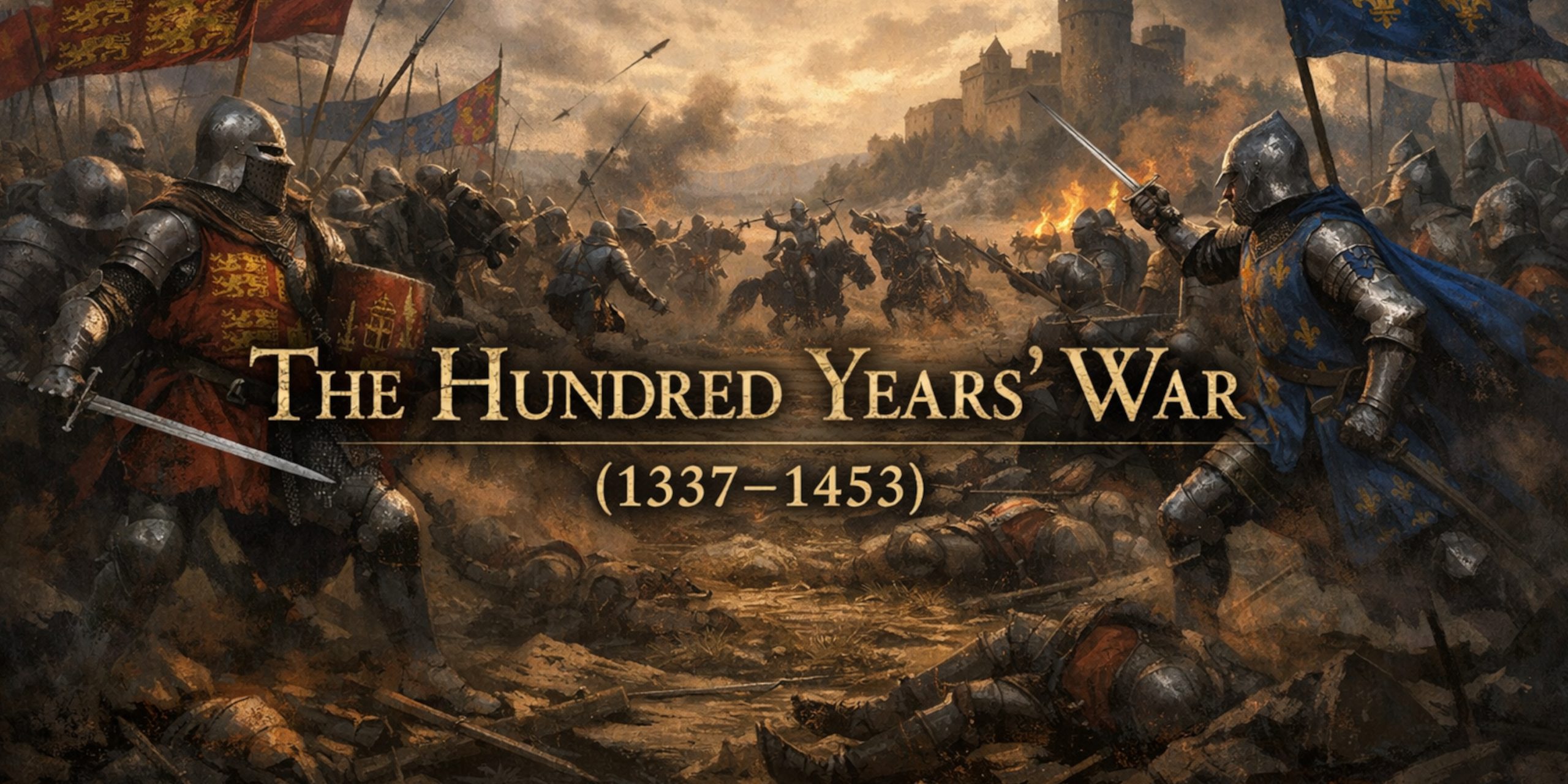
The Hundred Years’ War has one of the most misleading names in history. It lasted 116 years, involved long pauses in the fighting, and featured enough kings, claimants, betrayals and disastrous decisions to make even the Wars of the Roses look almost tidy.
At its heart, the war was a struggle between the kings of England and France over who had the right to rule France. What began as a dynastic quarrel slowly turned into something much larger. By the end of the conflict, England had lost almost all of its French possessions, France had become more united, and medieval warfare itself had changed beyond recognition.
There is also something strangely human about the whole affair. One generation marched off believing the war would be over by Christmas, or the medieval equivalent of Christmas. Several generations later their descendants were still fighting, still arguing over crowns and castles, and still discovering that invading France was rather easier than keeping it.
What Was the Hundred Years’ War?
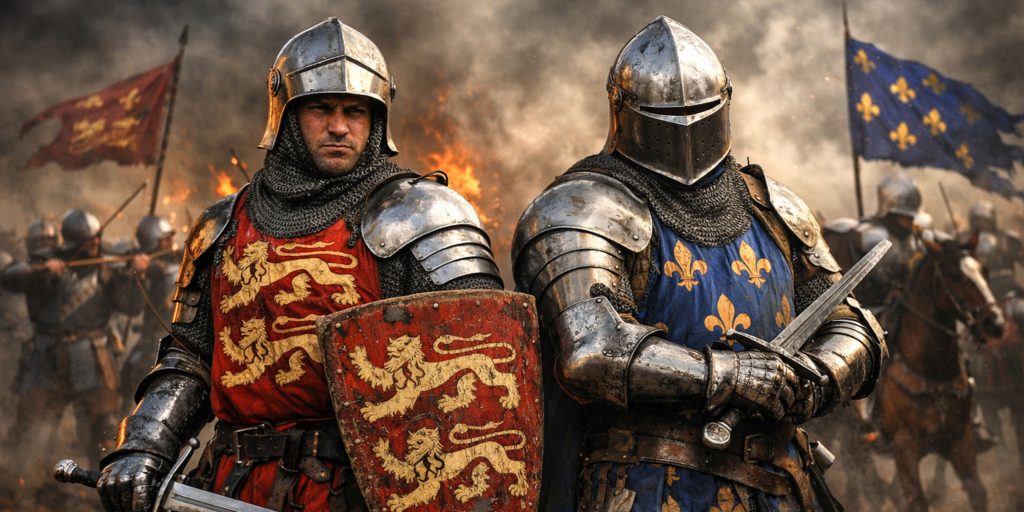
The Hundred Years’ War was a series of conflicts fought between the Kingdom of England and the Kingdom of France between 1337 and 1453.
The war is usually divided into three main phases:
- The Edwardian War, 1337–1360
- The Caroline War, 1369–1389
- The Lancastrian War, 1415–1453
Between these phases were uneasy truces, shifting alliances and periods when both kingdoms were too exhausted, too bankrupt or too busy dealing with plague and rebellion to continue fighting.
Although the war was fought largely in France, it also involved Scotland, Burgundy, Flanders, Castile and several other European powers. Medieval Europe had a habit of turning every local quarrel into an international one.
Why Did the Hundred Years’ War Begin?
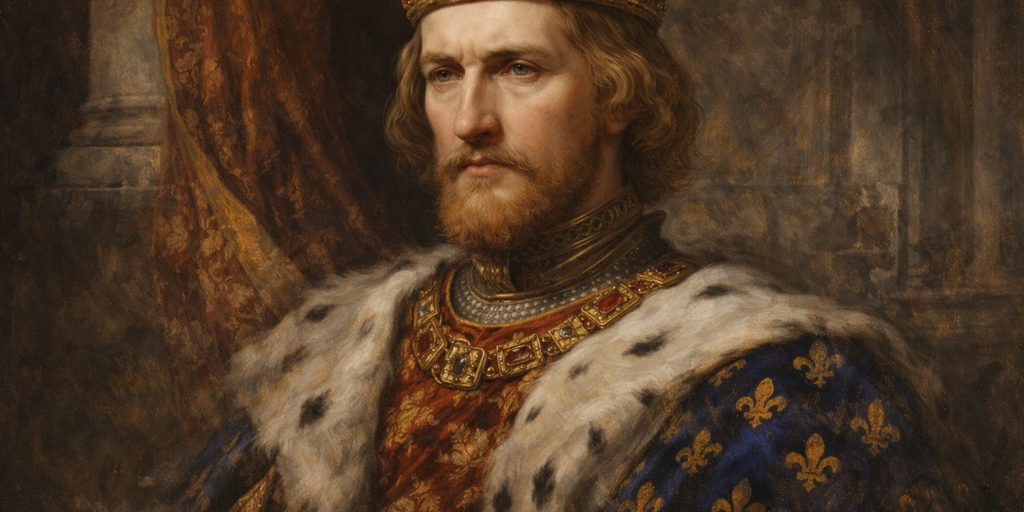
The immediate cause was a dispute over the French crown.
In 1328, King Charles IV of France died without a male heir. The nearest male relative through the direct royal line was Edward III of England, whose mother Isabella was Charles IV’s sister.
Edward believed this gave him a strong claim to the French throne. The French nobility disagreed. They chose Philip VI of Valois instead, arguing that the crown could not pass through the female line.
This legal argument quickly became tangled up with wider tensions:
- England still controlled Gascony in south-west France
- French kings wanted to weaken English influence in France
- English rulers resented French interference in their territories
- Trade disputes over wool and Flanders created further hostility
- Both kingdoms wanted prestige, land and, perhaps most dangerously, to avoid looking weak
By 1337 Philip VI had confiscated Edward III’s French lands. Edward responded by claiming the French throne. Medieval diplomacy had now done what it did best, turned a political disagreement into a very long war.
The Main Kings and Leaders
England
- Edward III
- Richard II
- Henry IV
- Henry V
- Henry VI
France
- Philip VI
- John II
- Charles V
- Charles VI
- Charles VII
Other figures became just as important as the kings themselves:
- Edward, the Black Prince
- Bertrand du Guesclin
- Henry V
- John, Duke of Bedford
- Philip the Good, Duke of Burgundy
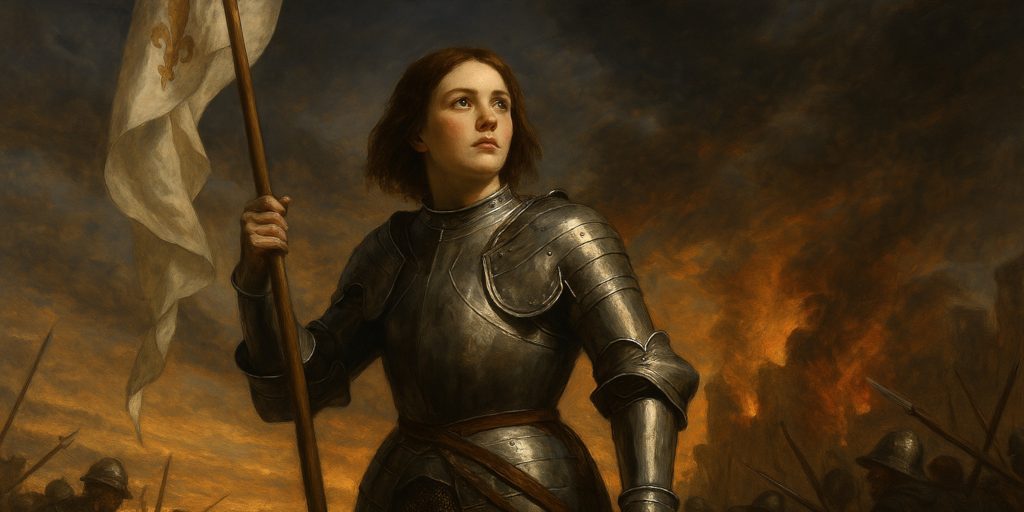
- Joan of Arc
Of these, Joan of Arc remains the most remarkable. A teenage peasant girl from eastern France somehow persuaded hardened nobles and soldiers that she had been sent by God to save France. Astonishingly, she then did exactly that, at least for a time.
The Edwardian War, 1337–1360
The first phase of the conflict brought England its greatest victories.
Edward III and his son, the Black Prince, invaded France repeatedly. English armies were often smaller than their French opponents, but they were better organised and used large numbers of longbowmen.
The longbow became the weapon most associated with the war. French knights, glittering in plate armour and convinced that courage could overcome mathematics, repeatedly charged straight into storms of arrows.
The Great Battles of the Hundred Years’ War
Battle of Sluys, 1340
The Battle of Sluys gave England control of the Channel.
Edward III destroyed much of the French fleet off the Flemish coast. This victory allowed English armies to cross to France more safely and ensured that England would remain capable of launching campaigns for decades.
Battle of Crécy, 1346
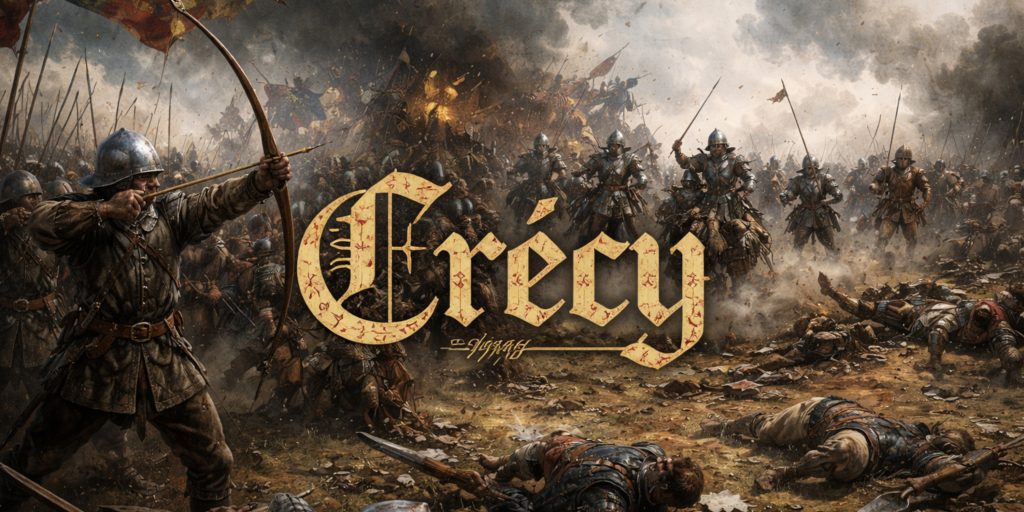
Crécy was one of the most famous English victories.
Edward III’s army defeated a much larger French force. English longbowmen devastated the French cavalry and infantry before they could close with the English line.
The battle demonstrated that heavily armoured knights were no longer unbeatable.
Battle of Poitiers, 1356
At Poitiers, the Black Prince captured King John II of France.
Few moments in medieval warfare were more humiliating for France. Losing a king in battle was difficult to explain away. French chroniclers attempted it anyway.
The capture of John II forced France into a political crisis and eventually led to the Treaty of Brétigny.
Battle of Agincourt, 1415
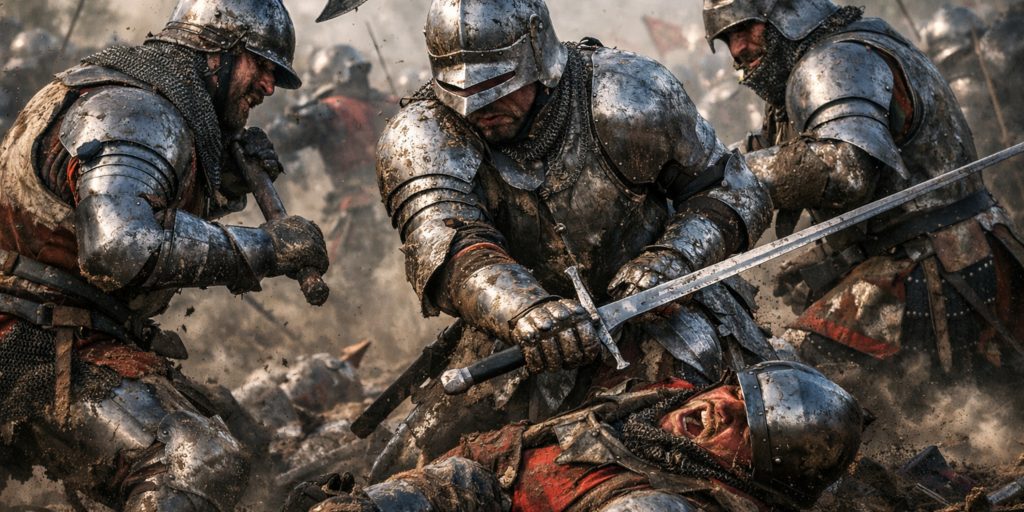
Agincourt became the defining battle of the war in English memory.
Henry V, exhausted, outnumbered and trapped by mud, defeated a much larger French army. Once again English longbowmen played a decisive role.
The French nobility crowded into the muddy battlefield and struggled to manoeuvre. Armoured knights sank, stumbled and collided with one another. Medieval warfare could be heroic, but at Agincourt it was also alarmingly close to a traffic jam.
Siege of Orléans, 1428–1429
The Siege of Orléans changed the course of the war.
French forces, inspired by Joan of Arc, lifted the English siege. For the first time in years the French gained confidence and momentum.
The victory at Orléans marked the beginning of the final French recovery.
Battle of Castillon, 1453
Castillon is often regarded as the final battle of the Hundred Years’ War.
French artillery destroyed an English army led by John Talbot. The battle showed how warfare was changing. Cannon and gunpowder increasingly mattered more than mounted knights and heroic charges.
After Castillon, England retained only Calais.
Joan of Arc and the French Revival
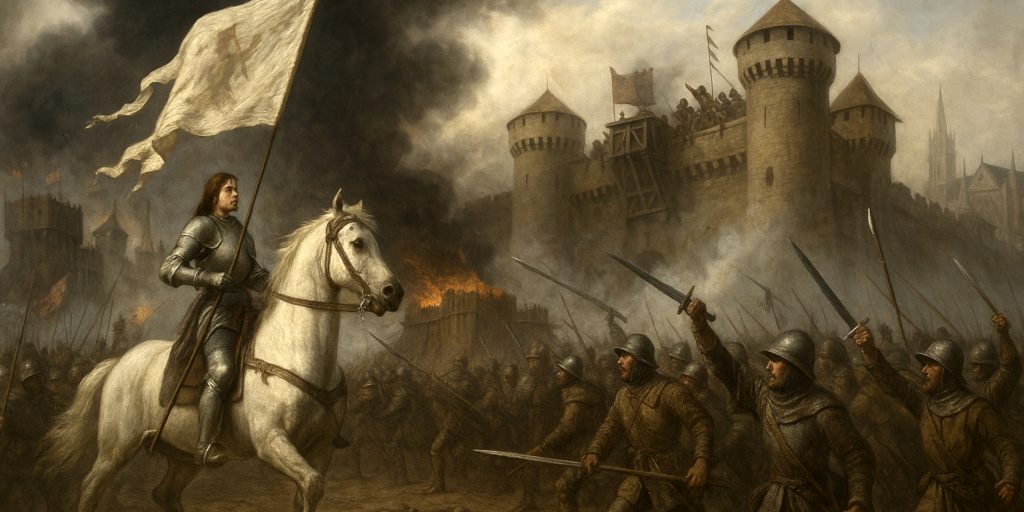
By the late 1420s France seemed close to collapse. The English controlled much of northern France, while Burgundy supported them.
Then Joan of Arc appeared.
Born in 1412, Joan claimed that saints had instructed her to support Charles VII and drive the English from France. Many people understandably thought this sounded improbable. Charles VII, desperate and short of alternatives, allowed her to accompany the army.
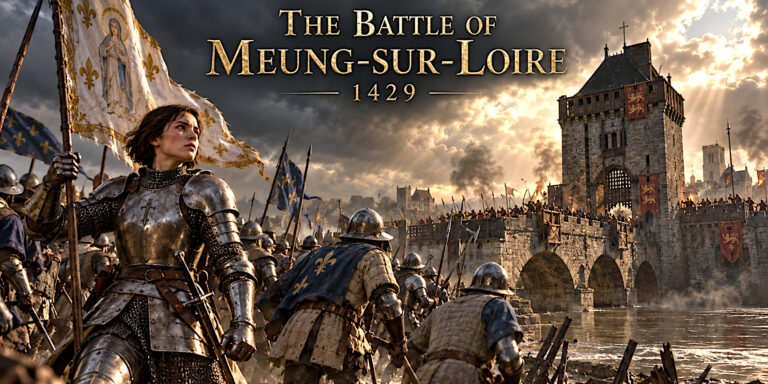
Joan helped inspire the relief of Orléans and accompanied Charles to Reims, where he was crowned king.
In 1430 she was captured by Burgundian forces and handed to the English. She was tried for heresy and executed at Rouen in 1431.
Her death did not stop the French revival. If anything, it strengthened it. Joan became a symbol of French resistance and determination.
A generation later, France had largely won the war.
How Warfare Changed
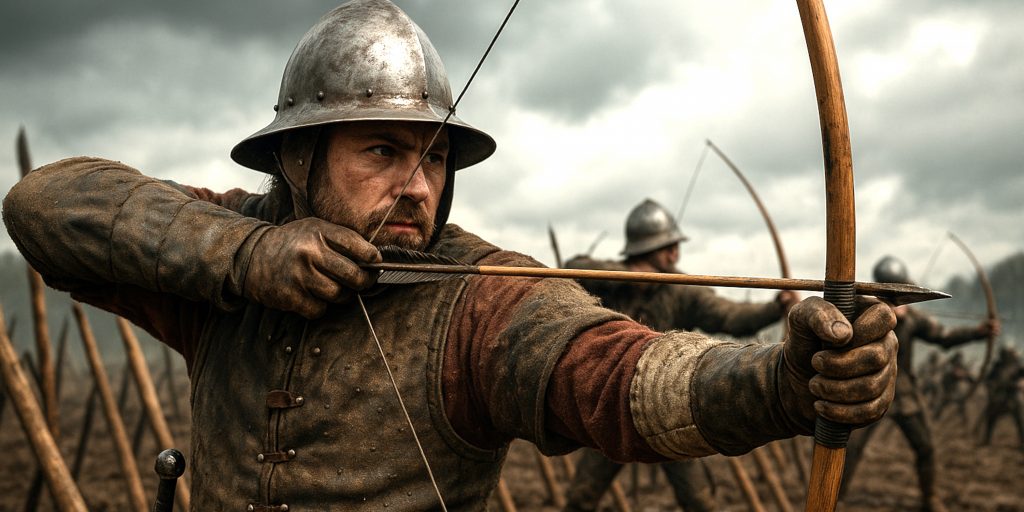
The Hundred Years’ War transformed medieval warfare.
At the start of the conflict, armies were still dominated by feudal knights and nobles. By the end, warfare relied more heavily on professional soldiers, infantry, artillery and paid armies.
Key developments included:
- The widespread use of the English longbow
- The decline of the mounted knight as the decisive force on the battlefield
- Larger standing armies
- The increasing use of gunpowder and cannon
- Improved fortifications and siege warfare
French kings in particular learned that they needed a permanent army rather than simply calling nobles to war. Nobles were often brave, but bravery and organisation are not always the same thing.
Life During the War
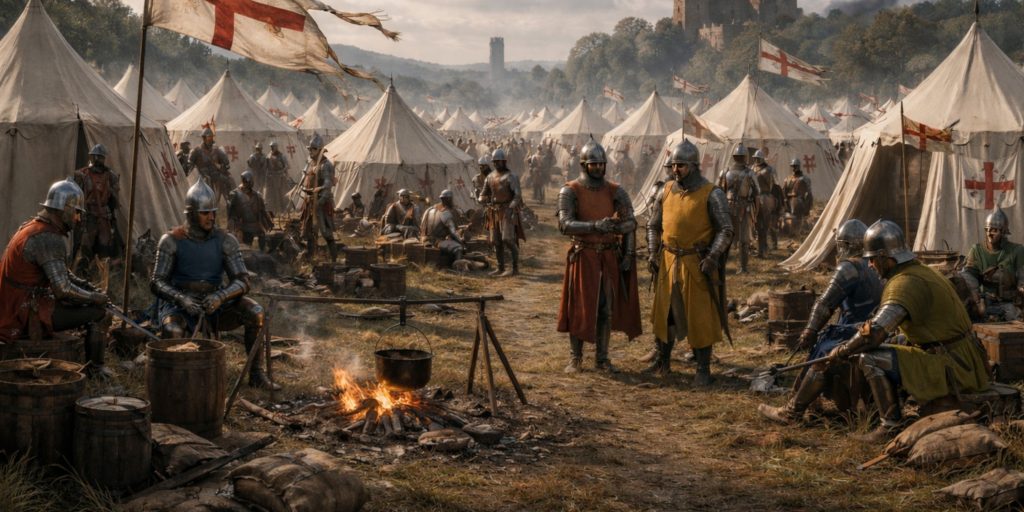
For ordinary people, the Hundred Years’ War was often catastrophic.
Armies marched across the countryside, burning villages, destroying crops and taking supplies. Bands of mercenaries roamed France during truces, looting whatever had survived the previous campaign.
The Black Death made everything worse. The plague reached Europe in 1347 and killed perhaps a third of the population. Kingdoms already weakened by war suddenly found themselves short of soldiers, workers and money.
Peasant revolts broke out in both England and France:
- The Jacquerie in France, 1358
- The Peasants’ Revolt in England, 1381
The war placed heavy taxes on both populations. Medieval governments discovered an uncomfortable truth that remains familiar today: wars are expensive, and someone always has to pay for them.
Archaeology of the Hundred Years’ War
Archaeology has revealed a great deal about the conflict.
Excavations at battlefields such as Crécy, Agincourt and Castillon have uncovered arrowheads, cannonballs, armour fragments and human remains.
At Agincourt, archaeologists have found evidence that supports contemporary descriptions of the muddy battlefield. Soil analysis suggests that the ground really was thick, wet and difficult to cross. For centuries historians suspected chroniclers might have exaggerated the mud. It turns out the mud was, if anything, understated.
Excavations at Castillon have revealed remains of French artillery positions. These discoveries show how organised and advanced French gunpowder warfare had become by 1453.
Archaeologists have also studied castles and fortified towns damaged during the war. Burn layers, collapsed walls and repaired defences reveal how often communities were attacked and rebuilt.
Mass graves discovered in northern France have sometimes been linked to campaigns during the war, although identifying exactly which battle they belong to can be difficult.
Contemporary Quotes
The war produced some striking contemporary observations.
Jean Froissart, perhaps the most famous chronicler of the conflict, wrote of Crécy:
“The English archers shot so wholly together and so thick that it seemed as if it snowed.”
After Agincourt, an English chronicler declared:
“God gave the victory to a few against many.”
Joan of Arc reportedly told her judges:
“I am not afraid. I was born to do this.”
The French chronicler Georges Chastellain later reflected bitterly on the destruction caused by the war:
“France was left poor, desolate and empty.”
The End of the Hundred Years’ War
By 1453 England had lost nearly all its territory in France.
Several factors explain the French victory:
- France became more politically united
- Burgundy abandoned its alliance with England
- French armies and artillery improved dramatically
- England suffered political instability under Henry VI
- The English simply lacked the resources to hold so much territory for so long
After 1453, England kept only Calais, which it finally lost in 1558.
The war also helped trigger the Wars of the Roses in England. Defeat in France damaged the prestige of the English monarchy and deepened political divisions.
France, meanwhile, emerged stronger and more centralised. The French crown now had greater authority than before, and a clearer sense of national identity had begun to develop.
Legacy of the Hundred Years’ War
The Hundred Years’ War shaped both England and France.
For England, it marked the end of the dream of ruling large parts of France. English kings gradually turned their attention away from continental ambitions.
For France, the war encouraged the growth of a stronger monarchy and a more united kingdom.
The conflict also changed how later generations thought about war itself. Battles such as Crécy, Agincourt and Orléans became legendary. Joan of Arc became a national heroine. The longbow entered English mythology, while the rise of artillery pointed towards the end of the medieval world.
There is a final irony to the Hundred Years’ War. Both sides spent over a century fighting over who should rule France. In the end, France remained French, England remained English, and everyone involved was poorer.
History can be wonderfully dramatic. It can also have a very dry sense of humour.