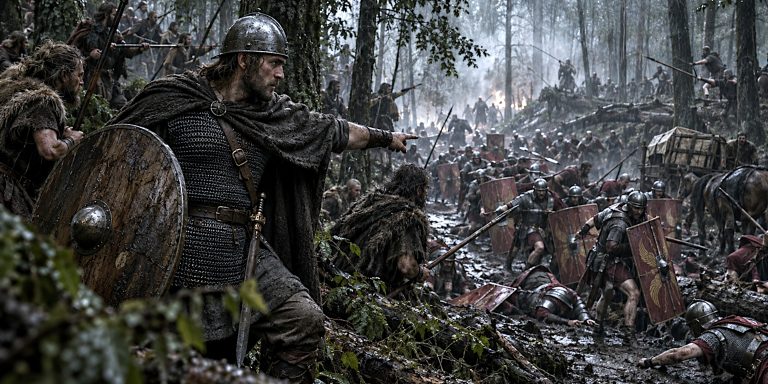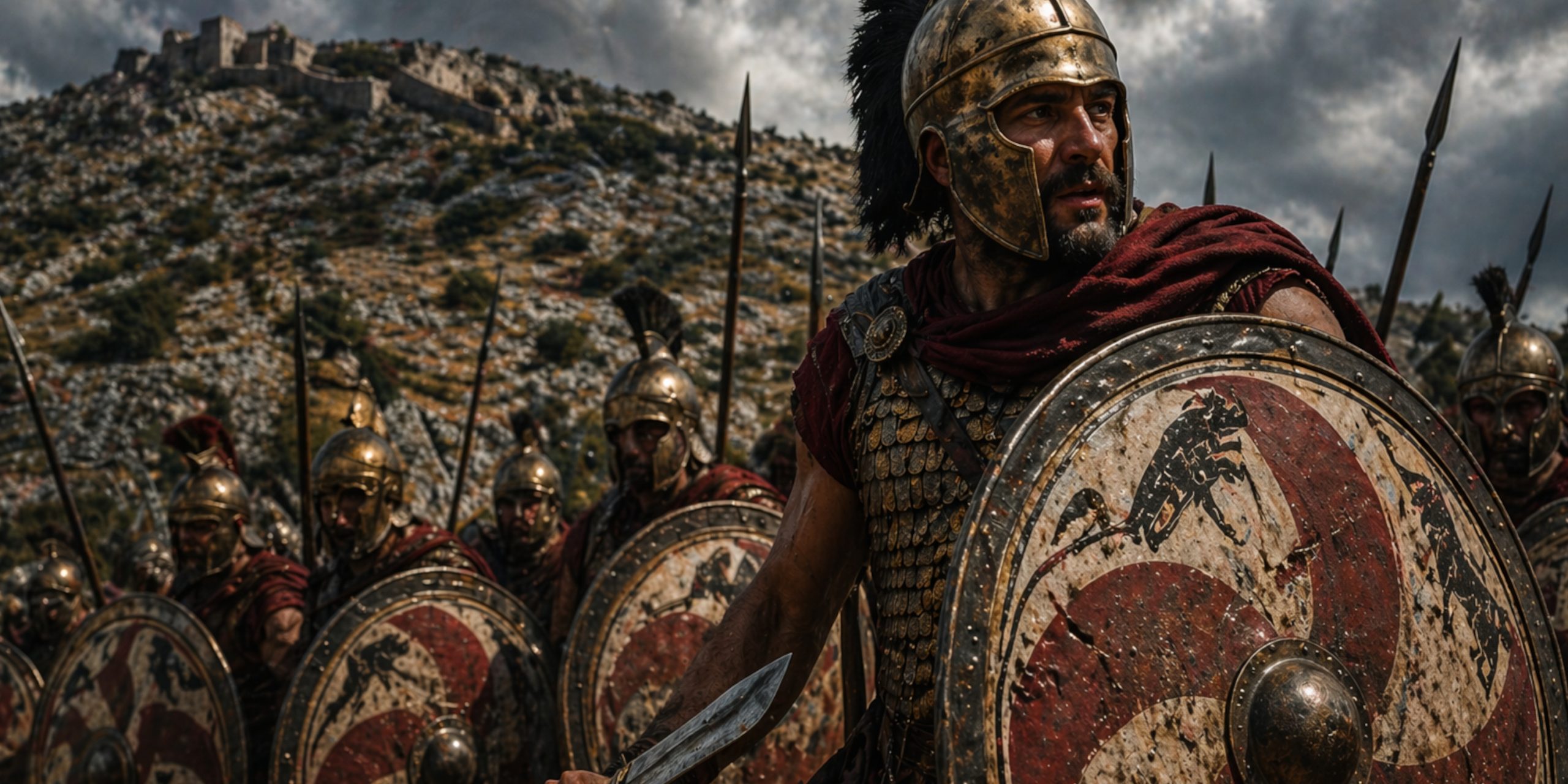
The Iberian Scutarii were among the most formidable infantry of the ancient western Mediterranean. They fought for Iberian tribes across modern Spain and Portugal during the violent centuries when Carthage and Rome turned the peninsula into a battlefield. Tall shields, heavy javelins, quick swords and a talent for fighting in broken ground made them dangerous opponents. Roman writers admired them, feared them and, eventually, copied parts of their equipment.
To understand the Scutarii is to look at a world caught between local tradition and the arrival of two imperial superpowers. Iberian warriors had been fighting one another for centuries, but the 3rd and 2nd centuries BC dragged them into something larger. Hannibal recruited them. Roman generals fought them. Some died defending their hillforts. Others marched all the way to Italy and left Roman legionaries wondering why a man from eastern Spain was trying to remove their head with a curved sword.
Who Were the Iberian Scutarii?
The term Scutarii comes from the Latin scutum, meaning shield. Roman writers used it to describe Iberian heavy infantry who carried a large oval shield rather than the smaller round shield associated with lighter troops, often called Caetrati.
The Scutarii were not a single tribe or army. They came from a range of Iberian peoples, including the:
- Celtiberians
- Edetani
- Contestani
- Turdetani
- Vaccaei
- Arevaci
- Lusones
Different tribes had their own styles, but Roman authors saw enough similarity to group their heavier infantry under the same label.
A Scutarius was usually better equipped than lighter warriors. He often fought in the front ranks and was expected to stand his ground in close combat. That did not mean Iberian warfare resembled the rigid formations of later Roman armies. Scutarii still fought in a looser, more flexible style. They advanced quickly, used rough terrain, threw javelins and then closed with swords.
There is a temptation to imagine them as miniature Roman legionaries. That is understandable, but wrong. The Scutarii remained distinctly Iberian in equipment, fighting style and attitude. They were less interested in neat lines and more interested in killing the man in front of them before his friend had time to intervene. Ancient warfare, for all its speeches and grand strategy, often had a surprisingly simple objective.
The Historical Background
By the 3rd century BC, the Iberian Peninsula was a patchwork of tribes, alliances and rivalries. There was no unified Spain. Instead, there were dozens of competing communities, each with its own chiefs, fortified towns and grudges.
The arrival of Carthage after the First Punic War transformed the peninsula. The Barcid family, particularly Hamilcar Barca and later Hannibal, expanded Carthaginian influence through conquest and diplomacy. Iberian warriors became prized recruits.
Hannibal took thousands of Iberian infantry with him during his campaigns. Some Scutarii fought at:
- The Trebia, 218 BC
- Lake Trasimene, 217 BC
- Cannae, 216 BC
Roman authors frequently singled out the Iberians in Hannibal’s army. They were often placed in the centre of the line beside Gallic infantry, though unlike the Gauls they were usually considered more disciplined and reliable. Which, in fairness, is rather like being praised as the least likely member of a pirate crew to set fire to the ship.
After Carthage weakened, Rome moved into Iberia. The following century became a grinding series of wars against Iberian tribes. The Scutarii fought Roman armies in campaigns such as:
- The Celtiberian Wars
- The Lusitanian War
- The Numantine War
For Rome, Iberia became one of those wars that was supposed to be over quickly. It was not. Roman commanders repeatedly underestimated Iberian resistance and discovered that capturing one hillfort simply meant the warriors had moved to another hillfort on an even more inconvenient hill.
Arms and Armour
The Scutarii were heavily armed by Iberian standards. Their equipment varied depending on wealth and tribe, but certain features appear repeatedly in archaeology and ancient accounts.
Shields
The defining weapon of the Scutarii was the large oval shield.
This shield, sometimes called a scutum by Roman writers, was usually:
- Oval or elongated in shape
- Made from wood with leather covering
- Reinforced with a central spine or boss
- Large enough to protect most of the body
It provided better protection than the smaller caetra used by lighter Iberian troops. Some shields may have been decorated with painted symbols, geometric patterns or tribal motifs.
Roman writers noticed the similarity between the Iberian shield and the Roman scutum. It is possible that Roman shield design was influenced in part by contact with Iberian and Celtiberian warriors during the 3rd century BC.
Sword Types
The Iberian Peninsula produced some of the finest swords in the ancient world, and the Scutarii used several famous types.
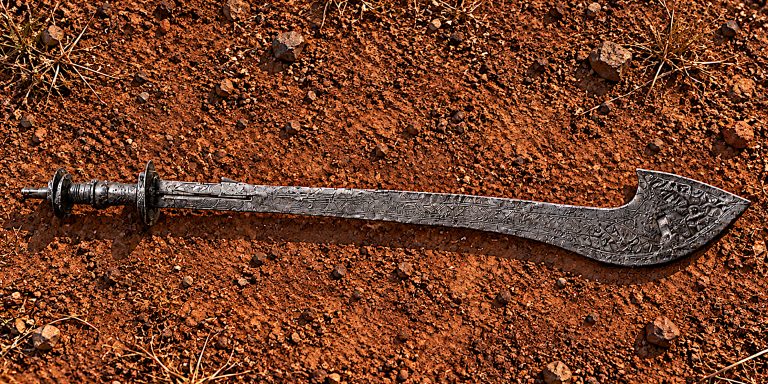
Falcata
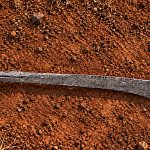
The most famous Iberian sword was the falcata.
This single-edged, forward-curving weapon had a blade designed for devastating chopping blows. It could also thrust effectively. The weight distribution made it particularly lethal in close combat.
The falcata was especially common in south-eastern Iberia. Surviving examples often show:
- Curved blades around 60 cm long
- Ornate hilts shaped like horses or birds
- Iron blades with strong cutting edges
- Decorative silver inlay on wealthy examples
The falcata acquired an almost mythical reputation among Roman writers. Later accounts claimed it could cut through helmets and shields. Ancient authors had a habit of exaggerating. If every sword described by a Roman historian truly cut a man in half from shoulder to waist, the ancient world would have run out of people rather quickly. Still, the falcata was undoubtedly an excellent weapon.
Gladius Hispaniensis
Another important Iberian sword was the straight, double-edged weapon later copied by Rome as the gladius Hispaniensis.
This sword was:
- Around 60 to 70 cm long
- Designed for both cutting and thrusting
- Particularly common among Celtiberian tribes
Roman legionaries adopted this weapon during the 3rd and 2nd centuries BC after fighting Iberian and Celtiberian warriors. The famous Roman gladius, which became one of the most recognisable swords in history, appears to have developed directly from Iberian models.
There is a certain irony in Rome spending decades trying to conquer Iberia, then deciding the Iberians had rather good swords after all.
Daggers and Sidearms
Many Scutarii also carried daggers or short knives. These could be used in close fighting or as utility tools.
The Iberian bidiscoidal dagger, with its distinctive two-lobed hilt, appears in several burials and may have been a common sidearm among wealthier warriors.
Spears and Javelins
Before closing with swords, the Scutarii often used javelins and spears.
Common weapons included:
- Heavy throwing spears
- Light javelins
- Longer thrusting spears for close combat
Some ancient writers mention the soliferreum, a remarkable all-iron javelin used by Iberian warriors. Unlike most javelins, which had wooden shafts, the soliferreum was forged from a single piece of iron.
The soliferreum was:
- Extremely strong
- Capable of piercing shields and armour
- Usually between 1.5 and 2 metres long
Archaeological finds show that these weapons were widespread across Iberia.
Armour and Helmets
Not every Scutarius wore armour. Wealth varied considerably, and many warriors fought with only shield and tunic.
Those who could afford armour used:
- Linen cuirasses
- Scale armour
- Bronze or iron breastplates
- Leather protection
Helmets were more common among wealthier warriors and included:
- Montefortino-style helmets
- Simple bronze caps
- Conical iron helmets
- Helmets decorated with crests or horsehair
The Montefortino helmet is especially interesting because it appears across Iberia, Italy and Gaul. Ancient warfare often involved a surprising amount of cultural borrowing. If a neighbour had a better helmet, eventually somebody copied it.
Many Scutarii also wore greaves or carried additional protection for the arms.
Fighting Style and Tactics
The Scutarii were heavy infantry, but they did not fight like the later Roman legionary.
Iberian warfare relied on speed, flexibility and local knowledge. The Scutarii often:
- Advanced in loose formations
- Used javelins before closing
- Took advantage of hills and broken terrain
- Fought in short, violent clashes
- Combined with lighter Caetrati troops
Roman authors repeatedly describe Iberian warriors as brave, aggressive and difficult to pin down.
At times, Scutarii could fight in disciplined formations. Hannibal trusted his Iberian infantry enough to place them in critical positions at Cannae. Yet they were equally capable of ambushes, raids and guerrilla warfare.
The Celtiberians and other Iberian peoples became particularly adept at fighting the Romans in rough country. They avoided open battle when possible and targeted Roman supply lines and isolated detachments.
This was deeply frustrating for Roman commanders, who generally preferred the enemy to stand in a nice open field and be defeated at a time convenient to the Roman timetable.
Scutarii in the Punic Wars
The most famous Scutarii served under Hannibal.
Ancient authors describe Iberian infantry in distinctive white tunics with purple borders. At Cannae they formed part of the centre of Hannibal’s army.
The Roman historian Polybius wrote:
“The Iberians wore white tunics bordered with purple, and their appearance was both strange and magnificent.”
Their role in Hannibal’s victories was considerable. Iberian infantry fought with discipline and ferocity against Roman legions that often outnumbered them.
At Cannae, Iberian and Gallic infantry held the centre while Hannibal’s African veterans and cavalry completed the encirclement. It was one of the greatest military disasters in Roman history.
Roman soldiers learned to respect Iberian troops. Some even feared them. Livy noted that Iberian warriors could fight with remarkable stubbornness even after taking severe casualties.
The Celtiberian Wars and Numantia
After the defeat of Carthage, the Scutarii became Rome’s enemies.
The Celtiberian Wars of the 2nd century BC saw some of the fiercest resistance Rome faced anywhere in the Republic.
The most famous example came at Numantia, a Celtiberian stronghold in northern Spain.
The defenders of Numantia resisted Roman armies for years. Several Roman commanders failed against them. Eventually, in 134 BC, Rome sent Scipio Aemilianus, the conqueror of Carthage.
Even then, the Numantines fought stubbornly. Scipio surrounded the city and starved it into submission.
Appian wrote:
“The Numantines, reduced by famine, still refused to surrender.”
According to later tradition, many chose death rather than capture.
Whether every dramatic detail is true is impossible to know. Ancient historians were fond of noble last stands. They rarely let facts spoil a good story. Still, Numantia became a symbol of Iberian resistance.
Archaeology
Archaeology has transformed our understanding of the Scutarii.
Excavations across Spain have uncovered weapons, armour, burials and settlements linked to Iberian warriors.
Important archaeological sites include:
- Numantia
- Ullastret
- Cerro de las Cabezas
- Baza
- El Cigarralejo
- La Bastida de les Alcusses
These sites have produced:
- Falcatas
- Gladius Hispaniensis blades
- Soliferrea
- Shield fittings
- Helmet fragments
- Horse equipment
- Warrior burials
At La Bastida de les Alcusses, archaeologists discovered evidence of a fortified Iberian settlement destroyed violently in the 4th century BC, offering clues about how Iberian warfare worked before the Scutarii reached their peak.
At Numantia, excavations have revealed Roman siege works alongside Celtiberian defences. The contrast is striking. On one side stood the organised engineering of Rome. On the other stood the stubborn refusal of people who apparently looked at a Roman siege line and decided they still fancied their chances.
Several rich burials contain decorated falcatas, ornate helmets and imported goods. These finds suggest that some Scutarii belonged to an aristocratic warrior class.
The famous Lady of Baza tomb also contained weapons and armour associated with Iberian elites. Such burials hint at a society where military skill and social status were closely linked.
Contemporary Quotes
Ancient writers left vivid descriptions of Iberian warriors.
Polybius wrote:
“The Iberians were valiant and tenacious in battle.”
Livy described them as:
“Men accustomed to warfare from childhood.”
Diodorus Siculus praised their weapons:
“The Iberian sword is excellent both for cutting and thrusting.”
Appian, writing about the Celtiberians, observed:
“They fought not as barbarians, but with intelligence and discipline.”
Even Roman authors who considered Iberians uncivilised could not hide a certain admiration. Roman historians had a habit of insulting foreign peoples while simultaneously admitting they were rather inconveniently good at fighting.
Legacy
The Scutarii vanished as a distinct type after Rome fully absorbed Iberia, but their influence remained.
Their greatest legacy was military.
The Romans adopted:
- The gladius Hispaniensis
- Elements of Iberian shield design
- Certain javelin styles
- Greater appreciation for flexible infantry tactics
Iberian auxiliaries continued to serve in Roman armies for centuries. Many fought across the empire, from Britain to the Near East.
The image of the fierce Iberian warrior survived long after the tribes themselves disappeared into the Roman world.
There is something fitting about that. The Scutarii never built an empire. They left no grand monuments, no vast palaces and no marble statues of themselves looking thoughtfully into the distance. What they left instead was a reputation. In the ancient world, that could be enough.
Takeaway
The Iberian Scutarii were among the finest heavy infantry of the ancient western Mediterranean. They combined powerful weapons, adaptable tactics and fierce determination. They fought for Carthage, resisted Rome and shaped the development of Roman warfare itself.
Thanks to archaeology and ancient texts, we can now see them more clearly than ever. Not as anonymous barbarians standing in the background of Roman history, but as skilled and sophisticated warriors in their own right.
If Roman legionaries ended up carrying Iberian swords, that tells us something important. Rome conquered Iberia, but it also learned from it.