The Tudors liked to think of themselves as modern, civilised and magnificently dressed. They built palaces, sponsored scholars and filled their courts with silk, jewels and enough political paranoia to make a modern cabinet meeting look almost relaxed. Yet beneath the velvet and gold sat a justice system that could be astonishingly savage.
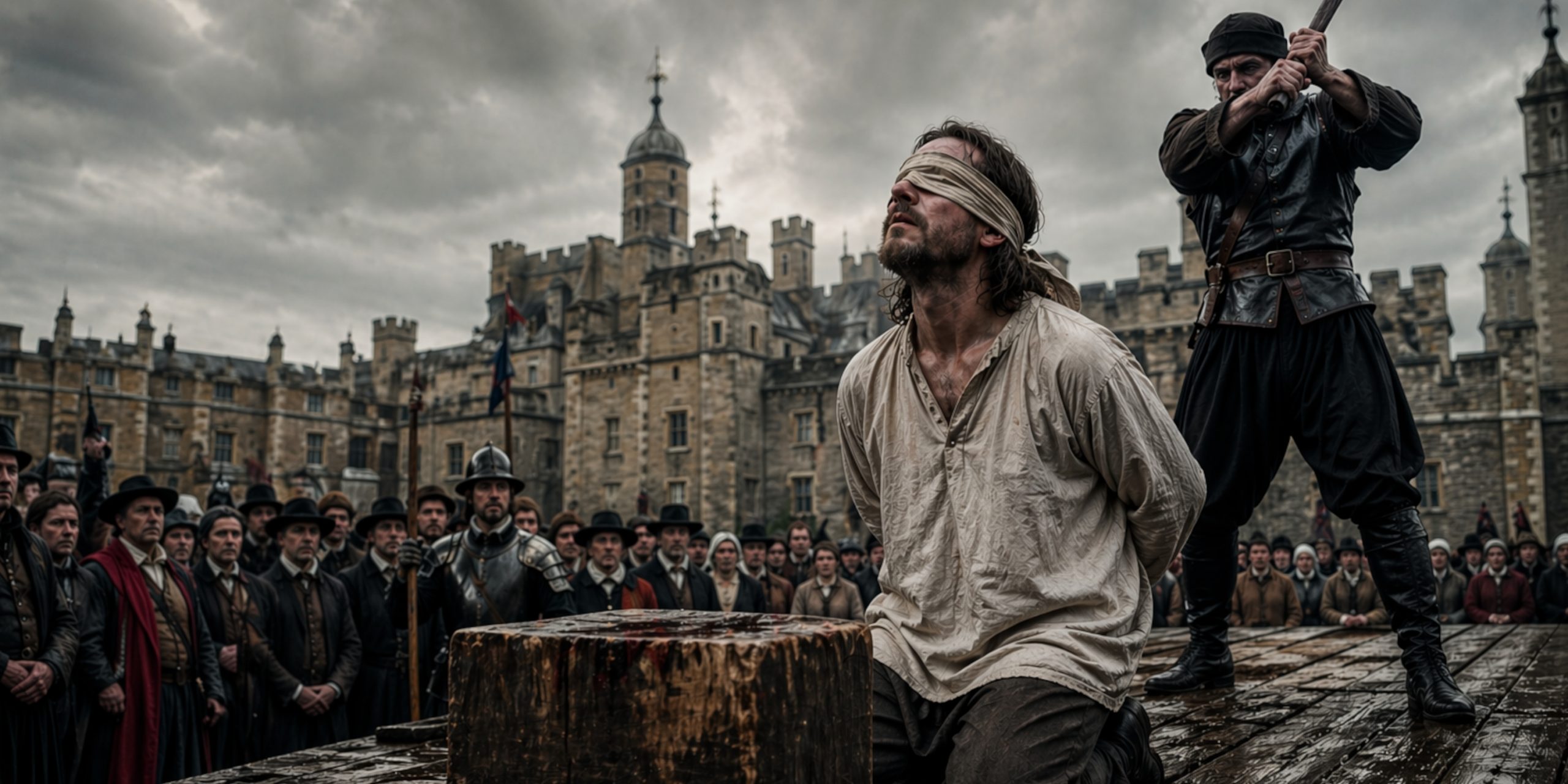
Execution in Tudor England was not simply a punishment. It was a performance. Crowds gathered, officials watched, preachers sermonised and the condemned were expected to die with dignity, even while being hacked apart in front of several thousand people. The Tudors did not merely kill their enemies. They turned death into a lesson.
Below are the most brutal executions of the Tudor age, not only because of how people died, but because of what those deaths reveal about Tudor power.
What Made Tudor Executions So Brutal?
Tudor punishments were carefully graded according to class and crime.
- Noblemen were usually beheaded, considered the cleaner and more honourable option
- Commoners convicted of treason were hanged, drawn and quartered
- Heretics were burned at the stake
- Women convicted of treason could be burned alive, though some sentences were later commuted to beheading
- Rebels and pirates were often left hanging in chains as a warning
The Tudors had a curious sense of fairness. A duke might lose his head with one clean swing. A blacksmith accused of the same crime might be dragged through the streets, hanged almost to death, cut open, disembowelled and chopped into pieces. Tudor justice was many things, but subtle was not one of them.
Anne Askew, Burned for Her Beliefs, 1546
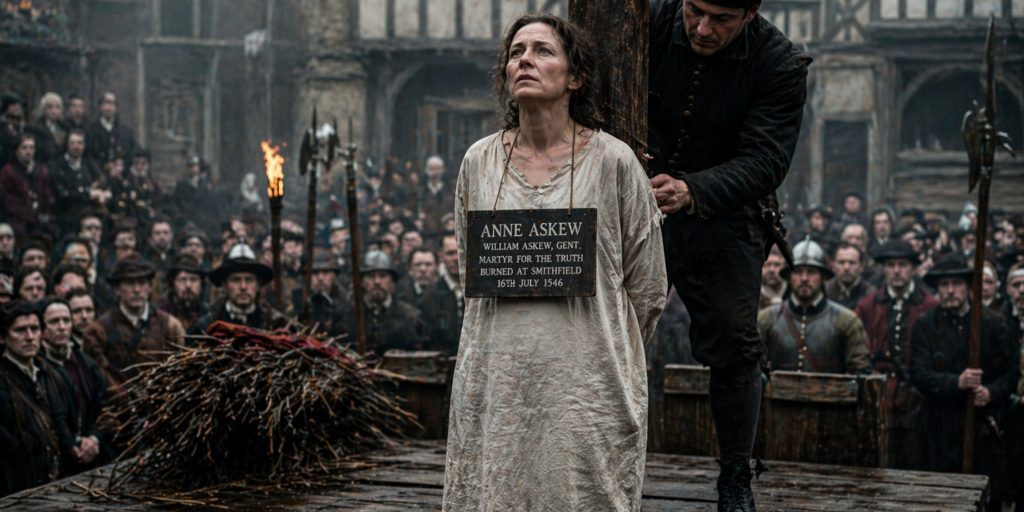
Few Tudor executions are as chilling as that of Anne Askew. A Protestant preacher and writer, she was arrested during the final years of Henry VIII’s reign for denying the doctrine of transubstantiation.
Askew was tortured on the rack in the Tower of London, despite being a gentlewoman. This was almost unheard of. She was stretched until her joints were dislocated and had to be carried to her execution in a chair because she could no longer walk.
On 16 July 1546 she was burned at Smithfield.
Contemporary chronicler John Bale wrote:
“She was so racked that she could not stand.”
Another witness claimed that when the fire was lit, gunpowder bags tied around the victims eventually exploded. It was a grim mercy. Burning alive could take many minutes. Tudor authorities were perfectly capable of cruelty, but occasionally even they seemed aware there were limits, though they had a habit of discovering those limits rather late.
Margaret Pole, Countess of Salisbury, 1541
Margaret Pole was nearly seventy when Henry VIII decided she had become inconvenient. The daughter of George, Duke of Clarence, and one of the last surviving members of the Plantagenet line, she was accused of treason after her son Reginald Pole criticised Henry’s break with Rome.
Her execution on Tower Green became notorious because it was so badly carried out. According to later accounts, Margaret refused to place her head on the block and declared:
“So should traitors do, and I am none.”
The executioner then chased her around the scaffold before striking her several times. One account claimed she needed as many as eleven blows before she died.
Whether every detail is true is debated by historians, but the broad picture is difficult to escape. An elderly woman was butchered in public because Henry VIII feared her family name. Tudor England could be ruthless. Henry VIII managed to make it feel oddly personal.
Thomas Cromwell, A Botched Beheading, 1540
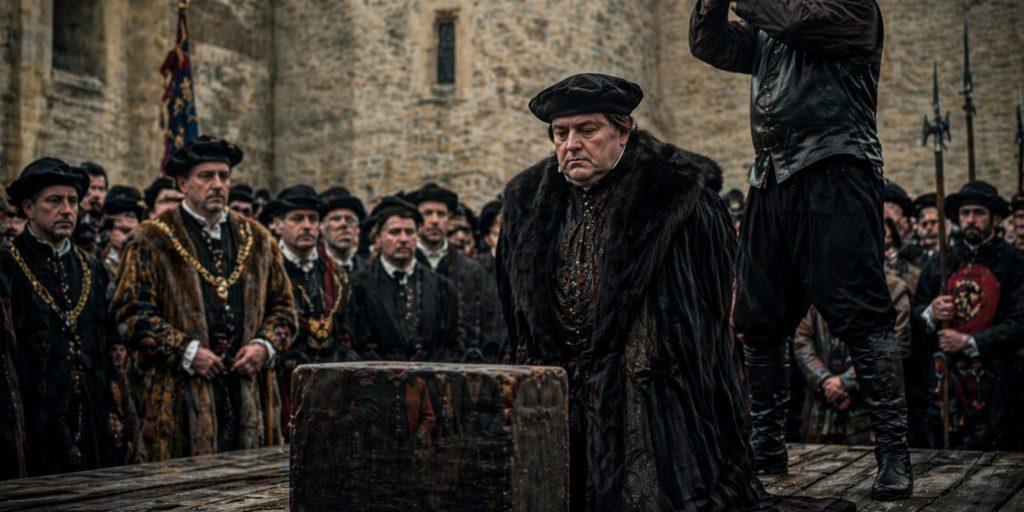
Thomas Cromwell rose from blacksmith’s son to Henry VIII’s chief minister, only to discover that serving Henry was rather like volunteering to feed a crocodile and being surprised when it eventually bites you.
After arranging Henry’s disastrous marriage to Anne of Cleves, Cromwell was arrested and accused of treason. He was executed on Tower Hill on 28 July 1540.
The execution was horribly bungled. Several witnesses later described the headsman as inexperienced or drunk. It reportedly took multiple blows to sever Cromwell’s head.
The chronicler Edward Hall later wrote that Cromwell was “miserably butchered”.
Cromwell had sent many others to the scaffold. Few men have had such an unfortunate opportunity to test the system from both sides.
The Duke of Monmouth’s Followers, Hanged, Drawn and Quartered
Although the Monmouth Rebellion belongs technically to the later Stuart period, the punishment used had changed very little since Tudor times. During the Tudor period, hanged, drawn and quartered remained the standard punishment for treason.
The condemned would be:
- Dragged to the place of execution on a hurdle
- Hanged briefly, but cut down while still alive
- Castrated and disembowelled
- Forced to watch their own entrails burned
- Beheaded and cut into four pieces
This punishment was used against many Tudor rebels, including participants in the Pilgrimage of Grace and Wyatt’s Rebellion.
The government wanted traitors to suffer publicly and memorably. The message was simple: oppose the Crown and your death would become a travelling exhibition.
Sir Thomas More, 1535
Thomas More’s execution was far less physically brutal than some others, but psychologically it was devastating. One of the greatest scholars in Europe, More refused to recognise Henry VIII as Supreme Head of the Church.
He was imprisoned in the Tower for over a year before being led to the scaffold.
More’s sentence had originally been to be hanged, drawn and quartered, but Henry commuted it to beheading. That was considered an act of mercy. Tudor mercy could be a slightly unnerving concept.
Before his death More reportedly told the lieutenant of the Tower:
“I die the King’s good servant, and God’s first.”
He was beheaded on 6 July 1535. His head was placed on London Bridge, where it remained until his daughter Margaret Roper secretly recovered it.
Anne Boleyn, 1536
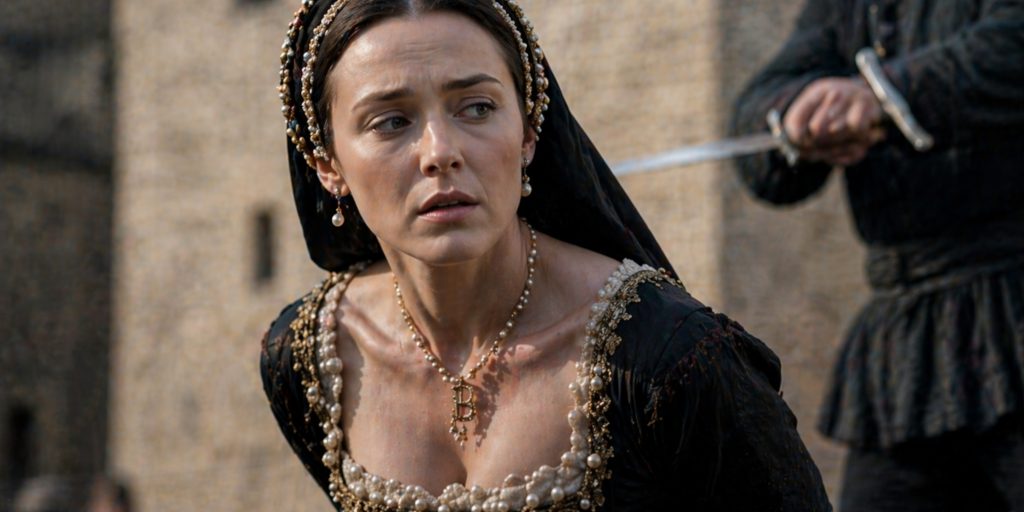
Anne Boleyn’s death remains one of the most famous executions in English history. Henry VIII’s second wife was accused of adultery, incest and treason, almost certainly on fabricated evidence.
Unlike most Tudor victims, Anne was granted a French swordsman rather than the usual axe. This was intended to make her death quicker.
On 19 May 1536 she knelt on the scaffold within the Tower of London.
The chronicler Edward Hall recorded her final words:
“I pray God save the King and send him long to reign over you.”
The swordsman severed her head with one stroke.
By Tudor standards, Anne’s death was oddly efficient. The brutality lies less in the method than in the sheer coldness of the political theatre. One day she was Queen of England. Three years later she was kneeling in the straw while her husband prepared to marry somebody else.
The Carthusian Martyrs, 1535
When Henry VIII demanded that his subjects swear allegiance to his religious changes, several Carthusian monks refused.
Their punishment was exceptionally brutal. The monks were hanged, drawn and quartered at Tyburn.
Witnesses reported that some were still conscious when their hearts were cut from their bodies.
The imperial ambassador Eustace Chapuys wrote:
“They were disembowelled whilst still alive.”
The monks had lived quiet, secluded lives devoted to prayer. Tudor government officials looked at this and somehow concluded that what England really needed was to cut them into pieces in front of a crowd.
Katherine Howard, 1542
Henry VIII’s fifth wife, Katherine Howard, was executed for adultery and treason in February 1542.
She was only around nineteen years old.
According to later tradition, Katherine spent the night before her execution practising how to place her head on the block. Whether true or not, the image has endured because it captures the horror of the situation. A frightened teenager, abandoned by everyone around her, rehearsing her own death.
She was beheaded at the Tower of London.
One chronicler described her as appearing “very fearful and heavy”.
Her execution was cleaner than many Tudor deaths, but no less grim.
Perkin Warbeck, 1499
Perkin Warbeck claimed to be Richard, Duke of York, one of the Princes in the Tower. For years he challenged Henry VII’s right to the throne.
Eventually captured, Warbeck was executed at Tyburn in 1499.
He was hanged, though many feared he would suffer the full traitor’s death.
Before his execution he confessed publicly that he was an impostor.
The Spanish ambassador recorded that Warbeck admitted:
“I am not the person I have been taken for.”
Warbeck’s end marked the closing of one of the last serious Yorkist threats to the Tudor dynasty. Henry VII had won. He also made absolutely certain nobody would feel tempted to try again.
Mary, Queen of Scots, 1587
Strictly speaking, Mary was not an English subject and her execution took place under Elizabeth I rather than Henry VIII. Yet it remains one of the most notorious deaths of the Tudor age.
Mary was executed at Fotheringhay Castle after being implicated in the Babington Plot.
The execution was badly bungled. The first axe blow missed her neck and struck the back of her head. The second blow nearly severed it, but not completely. The executioner had to use the axe again.
When he lifted her head to show the crowd, her wig came away in his hand.
One horrified witness wrote:
“Her lips stirred up and down a quarter of an hour after her head was cut off.”
That may well be an exaggeration, though not by much. Tudor executioners were rarely surgeons. They were often local tradesmen given a very unpleasant temporary assignment.
Guy Fawkes and the Legacy of Tudor Punishment
Guy Fawkes was executed after the Tudor period, in 1606, but his punishment followed the same Tudor model of treason.
He was condemned to be hanged, drawn and quartered. However, weakened by torture, he jumped from the scaffold and broke his neck before the executioners could disembowel him.
Even after death, his body was quartered and displayed.
The fact that this punishment remained in use long after the Tudors says something uncomfortable about Tudor influence. They did not invent brutality, but they certainly polished it into an art form.
Why Tudor Executions Still Fascinate Us
Part of the fascination lies in the contradiction. The Tudors are often remembered through portraits, palaces and Christmas television dramas full of meaningful looks across candlelit rooms. Yet the reality was often far harsher.
This was a world where queens lost their heads, monks were cut open alive and old women could be hacked to death because they had the wrong surname.
Executions mattered because Tudor rulers believed fear was useful. Public punishment was meant to reinforce royal authority. Every scaffold, every burning stake and every severed head on London Bridge was a warning.
The strange thing is that the Tudors were not especially unusual by European standards. France, Spain and the Holy Roman Empire could be equally savage. Tudor England simply left behind particularly vivid stories, helped by a dynasty with an extraordinary talent for making every family disagreement feel like a national catastrophe.
Seven Swords Takeaway
The most brutal Tudor executions reveal far more than grisly methods of death. They expose the insecurities of Tudor rulers, especially Henry VIII, whose reign lurks behind many of these stories like a very large, very angry shadow.
The Tudors wanted obedience, loyalty and silence. When they did not get it, they reached for the scaffold.
That is perhaps why these executions still linger in the imagination. They are horrifying, certainly, but they are also reminders that beneath the splendour of Tudor England sat a government that ruled as much through fear as through majesty.