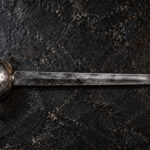
Outlander makes collecting dangerously tempting. One minute you are admiring Claire’s ring; the next you are comparing tartan swatches and wondering whether your flat has room for a Highland sword. Apparently, watching television now comes with furnishing decisions.
The best Outlander collectibles combine a meaningful connection to the story with decent materials and clear descriptions. That might mean a licensed wedding-ring replica, a carefully made shawl or a signed book with a verifiable history.
Before buying, decide what matters most: matching the television series, following Diana Gabaldon’s novels or finding something you will actually enjoy wearing and displaying. Those choices can lead to quite different purchases.
Official Merchandise, Replicas and Original Props Explained
“Authentic” is one of the most overworked words in collecting. A seller might use it to describe an authorised product, a convincing reproduction or an object supposedly used during filming. These are separate claims.
| Collectible type | What it means | What to check |
|---|---|---|
| Officially licensed merchandise | A product authorised by the relevant rights holder | Manufacturer, licensing information and product description |
| Screen-style replica | A reproduction intended to resemble something shown on television | Reference images, proportions, materials and specific version |
| Book-inspired collectible | A design based on the novels | Which passage or description informed the design |
| Fan-made or inspired item | An independent interpretation of the series or its themes | Maker’s photographs, workmanship and honest labelling |
| Production-used prop or costume | An object used by the production, potentially during filming | Documented provenance and precise description of its use |
| Signed memorabilia | An item bearing an autograph | Evidence of when, where and how it was signed |
A licensed replica is newly manufactured merchandise. It is not an original filming prop. Likewise, an attractive handmade piece does not become official because its listing includes Jamie Fraser’s name.
Independent makers can produce excellent work. The important thing is knowing what you are paying for.
Claire’s Wedding Rings: Choose the Right Version
Claire’s rings are among the most recognisable objects in Outlander, but listings can muddle their origins.
Frank gives Claire her gold wedding band. Jamie gives her a silver-coloured ring. The television adaptation and novels also differ in their treatment of Jamie’s ring, so “Claire’s wedding ring” is not a sufficiently detailed product description.
For the television series’ first-season design, the official Outlander Store lists a stainless-steel replica of the ring made from the key to Lallybroch. Its description identifies the hammered grooves and raised central detail. Outlander Store
Before ordering, check:
- The version: Does it reproduce the early television ring, a later design or the book description?
- The metal: Stainless steel, sterling silver and silver plate are different materials.
- The size: Use the seller’s sizing chart rather than assuming UK and US measurements correspond.
- The finish: Compare close-up photographs of the detailing.
- The returns policy: Particularly important for gifts and made-to-order jewellery.
Aurora Orkney Jewellery also identifies its Outlander collection as official Sony Pictures Consumer Products merchandise, including a replica of Claire’s ring. That provides a documented licensing connection to check when comparing makers. Aurora Orkney Jewellery
My preference would be a clearly identified design in a material suitable for regular wear. A lovely presentation box cannot compensate for a ring that spends its entire life irritating your finger.
Outlander Jewellery Beyond the Wedding Ring
Jewellery offers a relatively easy way to collect without turning a room into a small exhibition.
Dragonfly motifs, wedding-oath inscriptions and designs referencing the standing stones all appeal to different parts of the story. However, a symbolic design and a direct prop reproduction serve different purposes.
A pendant might capture the atmosphere of Outlander beautifully while having no exact counterpart on screen. That is perfectly reasonable, provided the seller describes it accurately.
Hamilton & Young’s two-rings necklet, for example, is explicitly presented as an inspired design. Its description specifies sterling silver and gold-plated silver, illustrating why the full material description matters more than a photograph alone. hamiltonandyoung.co.uk
For dragonfly and amber-style pieces, ask what the decorative element actually contains. Natural amber, resin, glass and enamel should not be treated as interchangeable.
Buy the design you like, then check the substance behind it. A warm amber colour tells you very little about the material.
Jamie Fraser’s Weapons: Swords and Dirks
Weapons make impressive display pieces, but they require more scrutiny than a mug or necklace.
A generic Scottish sword is not automatically a replica of Jamie’s weapon. If a listing makes that claim, it should identify the relevant screen reference and provide photographs that let you compare the hilt, blade, grip and scabbard.
Be especially careful with the word “claymore”. Sellers use it broadly. For collecting purposes, establish whether the object is a two-handed sword or a basket-hilted sword rather than relying on the name alone.
| Detail | What to look for |
|---|---|
| Hilt | Shape, construction and similarity to the claimed reference |
| Blade | Dimensions, finish and intended use |
| Grip | Material, fit and secure assembly |
| Scabbard | Whether it is included and fits properly |
| Product status | Licensed replica, historical reproduction or inspired display piece |
| Handling guidance | Clear manufacturer instructions and limitations |
A Highland dirk can be a more manageable display choice, particularly if space is limited. Look closely at the grip carving, fittings and sheath rather than judging it entirely by the blade.
Treat decorative weapons as display objects unless their maker explicitly specifies another intended use. “Steel” and “battle ready” are not adequate explanations of construction or suitability.
For an Outlander collection, visual accuracy and workmanship are usually more useful priorities than sharpness. The bookshelf has done nothing to deserve a duel.
Claire’s Knitwear, Shawls and Tartan Wraps
Textiles are appealing because they can become part of everyday life. A good shawl gets worn; a disappointing one becomes an unusually expensive chair decoration.
If you want a particular look from the series, identify the episode or costume before shopping. Similar colours can disguise substantial differences in shape, stitch pattern and drape.
For knitwear, compare:
- Fibre content and whether you find it comfortable against your skin.
- Finished measurements, including width and length.
- Photographs showing how the garment hangs when worn.
- Care instructions.
- Whether the listing is for a finished garment, pattern or kit.
That final distinction deserves attention. A bargain shawl becomes less of a bargain when the parcel contains instructions and an expectation that you learn to knit.
For tartan, ask which pattern is being supplied. A Fraser clan tartan and a reproduction of a particular television costume are separate claims. If screen accuracy matters, request a comparison rather than accepting “Fraser” as the entire explanation.
Books, Signed Editions and Smaller Collectibles
Books are a sensible starting point for fans who want a collection with practical value. Matching editions can look excellent together, while illustrated companions and production books offer something to revisit beyond the episodes.
When buying collectible editions, check the publisher, publication date, printing information and condition of the dust jacket.
Signed copies need additional care. A printed signature, a bookplate and an autograph written directly in the book are different things.
Useful evidence includes:
- A receipt from an established bookseller or signing event.
- Photographs documenting the signing.
- A clear account of the item’s ownership.
- Authentication from an identifiable specialist where appropriate.
Figures, cards and boxed merchandise require their own checks. Ask for photographs of the actual item, including packaging corners, seals and any missing accessories.
“Rare” should begin a question, not end one.
Where to Buy Outlander Collectibles
The right buying route depends on the kind of object you want.
| Buying route | Best suited to | Main consideration |
|---|---|---|
| Official Outlander Store | Licensed merchandise and listed replicas | Confirm current stock, shipping destination and total cost |
| Makers with documented licensing | Branded jewellery and accessories | Verify the individual product’s materials and status |
| Independent craftspeople | Knitwear, custom pieces and inspired designs | Review actual work and agree specifications |
| Established booksellers | Editions, companions and documented signed books | Check printing details and condition |
| Specialist memorabilia auction houses | Signed material and production-related objects | Read provenance, condition reports and fees |
| Second-hand marketplaces | Discontinued merchandise and used collectibles | Request original photographs and supporting records |
Specialist auction archives can help establish that a particular type of memorabilia has been offered publicly. Propstore’s Outlander archive, for example, includes cast-autographed scripts from charity auctions. Individual lot descriptions still need to be read carefully before drawing comparisons. Find Your Extraordinary
For overseas purchases, calculate the delivered cost before deciding whether something is good value. Shipping, currency conversion and applicable import charges can change the appeal quite quickly.
Prices and Resale Value: Avoid False Certainty
There is no dependable universal price for an “Outlander collectible”. A mass-produced necklace, a commissioned garment and a documented production prop belong to different markets.
Compare like with like:
| Item | Useful comparison |
|---|---|
| Jewellery | Same design, metal, maker and condition |
| Knitwear | Similar fibre, dimensions and workmanship |
| Replica weapon | Same manufacturer, model and included accessories |
| Signed book | Same edition, signature format and provenance |
| Production prop | Comparable use, documentation and recognisability |
An asking price is not a completed sale. A listing that remains unsold at a high figure tells you what the seller wants, not what collectors will pay.
Auction comparisons should identify the lot, sale date, currency and whether the stated result includes the buyer’s premium. Without those details, a precise-looking number can be surprisingly unhelpful.
Buy because you want the object. Resale value is a consideration, but it should not have to justify every purchase. Sometimes a ring is allowed to be a ring.
How to Spot Misleading Listings
Most collecting disappointments start with an attractive photograph and an incomplete description.
Pause when a listing:
- Claims an item was used on screen without supporting documentation.
- Uses “official” without identifying the manufacturer or licensing connection.
- Describes plated jewellery simply as gold or silver.
- Shows only stock photographs of a supposedly second-hand object.
- Calls an edition limited without giving its size or identifying the release.
- Supplies a certificate with no traceable issuer.
A certificate of authenticity is useful only when its source and claims can be assessed. Anyone can print one. Some even choose a very convincing font.
Ask specific questions and retain the answers. A seller who can explain materials, origins and condition is easier to assess than one who keeps repeating “premium collectible”.
Displaying and Caring for Your Collection
A small, thoughtfully arranged collection often looks better than several unrelated objects competing for shelf space.
A jewellery display beside a favourite edition or a carefully hung textile can make the connection to Outlander clear without needing an entire themed room.
Follow the maker’s care instructions, especially for mixed-material pieces:
- Keep textiles and printed material away from strong direct sunlight.
- Avoid damp storage.
- Store jewellery separately to reduce scratching.
- Use suitable supports for heavy display objects.
- Keep receipts, packaging and provenance records together.
For weapons, inspect mounts and fittings before display. For plated jewellery, avoid assuming that a cleaner suitable for solid silver will also suit the finish.
Frequently Asked Questions
Are all Outlander replicas officially licensed?
No. Some are authorised merchandise; others are independent reproductions or inspired designs. Check the individual listing and manufacturer.
Which wedding ring did Jamie give Claire?
Jamie gives Claire a silver-coloured ring. Frank’s wedding band is gold. When buying a replica, also establish which television or book design it follows.
Does officially licensed mean used during filming?
No. Licensed merchandise is authorised for sale. Production-used objects need separate evidence connecting them to the making of the series.
What is a good first Outlander collectible?
A clearly described ring, a well-made textile or a favourite book edition is a manageable starting point. Choose something you will enjoy owning rather than something advertised as an investment.
Do Outlander collectibles hold their value?
Some may, but there is no guarantee. Condition, provenance, availability and buyer demand all affect resale prospects.
What I Would Buy First
I would start with one object that connects to a favourite part of the story: a ring with the right details, a shawl I would actually wear or an edition I want to read again.
Then I would give it some time before buying the next piece. Collecting becomes more satisfying when each addition has a reason to be there.
The strongest Outlander collection reflects your relationship with the books or series. It does not need to resemble the contents of every merchandise tab you have ever opened.