Christopher Condent achieved something rather unusual for a pirate captain: he survived long enough to retire. His career carried him from the Atlantic into the Indian Ocean, where profitable raids were followed by negotiations with French colonial authorities and an escape from the usual pirate ending.
Even his name, however, requires an explanation. Period records support Edward Congdon, while “Christopher Condent” became the familiar name in later accounts. For consistency, this article uses Condent, but the distinction matters. Pirate history has enough invented identities without historians quietly supplying another.
What interests me most about him is the gap between the recognisable pirate character and the uncertain man behind it. The nickname, treasure and supposed shipwreck make an appealing story. His negotiated retirement makes a rather more revealing one.
Christopher Condent at a glance
| Detail | What we can reasonably say |
|---|---|
| Historically supported name | Edward Congdon |
| Familiar later name | Christopher Condent |
| Birthplace | Described in the early narrative as a Plymouth man |
| Birth date | Not securely established |
| Main period of activity | Late 1710s to approximately 1721 |
| Principal operating areas | Atlantic and Indian Ocean |
| Associated ship | Dragon, also called Flying Dragon and Fiery Dragon |
| Retirement | Negotiated surrender to French authorities on Bourbon, now Réunion |
| Reported death | Archival research identifies 3 May 1734 at Port-Louis, Brittany |
The surviving evidence is uneven. Names, dates and individual episodes should therefore be treated with different degrees of confidence.
Early life and the beginnings of piracy
Condent’s childhood and early employment remain obscure. The early narrative places him among the pirates leaving New Providence around Woodes Rogers’s arrival in the Bahamas in 1718. It describes him serving as quartermaster before becoming captain after a division within the crew.
A previous career as a privateer is sometimes proposed, but it should not be presented as established fact. Nor can we confidently reconstruct his motives for becoming a pirate. The surviving account itself acknowledges uncertainty about when and why he entered the trade.
That admission deserves preserving. “We do not know” is occasionally the most useful sentence in a biography, even if it does rather spoil an adventurous opening.
Why was he called Billy One-Hand?
There is historical evidence behind the association with a missing limb, although the nickname itself is less secure.
A report published in the French Mercure in 1722 described Congdon as having an arm cut off. The early English narrative tells a different part of the story: during a confrontation with a man threatening to ignite the ship’s powder, Condent supposedly suffered a broken arm. Neither account securely establishes the circumstances of an amputation.
Evidence for an injury and evidence for a nickname are separate things. “Billy One-Hand” should be introduced as a familiar later name, rather than confidently placed in the mouths of his shipmates.
How reliable are the accounts of his career?
Much of the colourful narrative belongs to the publishing tradition of A General History of the Pyrates, issued under the name Captain Charles Johnson.
It is indispensable to pirate history, but it is not a transparent record of events. Its stories need comparison with correspondence, testimony, newspapers and colonial documents. A vivid episode may preserve genuine information while also containing embellishment.
Brooks’s research is particularly useful because it compares the familiar narrative with other evidence rather than accepting every detail at face value.
As a historian, I am wary whenever a poorly documented pirate acquires perfectly remembered speeches. Eighteenth-century witnesses were not generally following him about with a notebook.
The Dragon and the Indian Ocean
Condent’s principal vessel appears under several names, including Dragon, Flying Dragon and Fiery Dragon. These variations should not automatically be turned into a fleet of separate ships.
By 1719, accounts place him at Sainte-Marie, off Madagascar. His activities formed part of the movement of pirate crews towards Indian Ocean trading routes.
A wealthy trading vessel, often named Faza Ramance in modern histories, became his celebrated prize. Accounts describe an exceptionally valuable haul and a distribution sometimes put at approximately £3,000 per man. These are reported figures, rather than audited accounts.
The money can easily dominate the story. Yet a captured cargo represented other people’s property, livelihoods and, potentially, survival. A profitable raid remained an act of armed coercion, however comfortably its proceeds might later be invested.
Weapons and fighting aboard ship
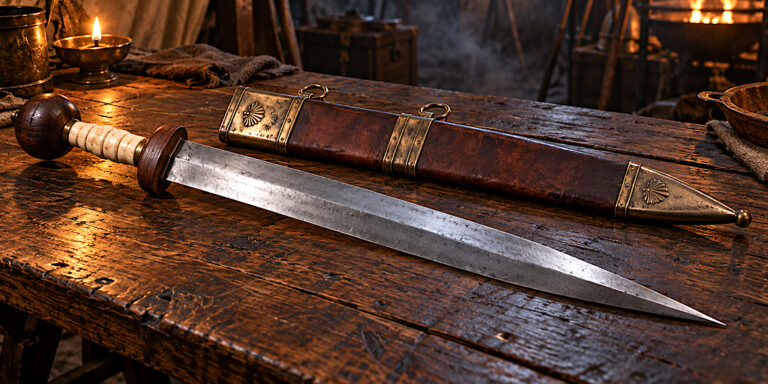
The sources consulted do not establish a surviving personal sword or pistol belonging to Condent. Descriptions of his favourite blade would therefore be speculative.
His maritime setting can still be explained through weapons appropriate to the period:
| Weapon | General shipboard role |
|---|---|
| Cutlass or short hanger | Close fighting where space was restricted |
| Flintlock pistol | Short-range fire, followed by reloading or changing weapons |
| Musket | Fire against an opposing deck or boarding party |
| Boarding axe | Practical shipboard work, with possible use in combat |
| Ship-mounted cannon | Damaging a vessel or encouraging surrender |
This is period context, not a verified inventory of Condent’s equipment.
The distinction also applies to illustrations. A plausible early eighteenth-century hanger is a reasonable artistic choice. An elaborately decorated “Condent sword” would require evidence. Pirates have already received quite enough accessories from later artists.
Negotiating a pardon on Bourbon
Condent’s retirement involved bargaining rather than a sudden enthusiasm for lawful employment.
Brooks’s reconstruction of French reporting places negotiations in late 1720, followed by departure for Bourbon in early 1721. The French authorities wanted the pirates to surrender their vessels and accept French authority. Condent and his companions wanted protection from prosecution.
The reporting also describes deaths before and during their departure from Madagascar, attributed to poisoning. That explanation should remain an attributed contemporary allegation, rather than a settled medical finding.
An uncomfortable provision of the surrender arrangements allowed a restricted retention of enslaved people. This belongs in the account: withdrawal from piracy did not mean withdrawal from colonial exploitation.
To my mind, these negotiations reveal more than another boarding story would. They show how accommodation could become possible when colonial authorities considered former pirates useful.
Marriage, France and his final years
The familiar account has Condent marrying the governor’s sister-in-law and travelling to France in 1723. His subsequent life is frequently associated with Saint-Malo.
Brooks’s archival research identifies his death at Port-Louis in Brittany on 3 May 1734. This offers a more specific ending than the vague claim that he simply disappeared into prosperous obscurity.
His survival suggests an ability to judge when negotiation offered better prospects than continued raiding. It does not establish that he became an admirable man. Respectability and innocence have never been quite the same qualification.
His flag and supposed buried treasure
The black flag bearing three skulls and crossbones is widely associated with Condent, but that attribution lacks secure contemporary support. It should be labelled a later association.
Buried treasure requires similar caution. A rich capture does not establish the existence of a hidden hoard.
There are plenty of ways for stolen wealth to leave a pirate’s possession: division among the crew, purchases, trading and the costs of establishing a new life. A treasure map is not a necessary stage in the process.
For the same reason, claims that Condent routinely forced captives to walk the plank should not be repeated without a traceable source.
Archaeology: has Condent’s ship been found?
A wreck off Sainte-Marie was promoted as the Fiery Dragon. UNESCO’s scientific mission in 2015 challenged that identification.
Its specialists identified the remains as a large Asian vessel, probably built in India, which had been plundered by pirates and abandoned. UNESCO also criticised shortcomings in the recovery, recording and conservation of material from the sites examined. UNESCO
The wreck remains relevant to the maritime history of Madagascar. It does not provide a confirmed archaeological identification of Condent’s ship.
That distinction may be less exciting than a treasure announcement, but it allows the evidence to tell its own story.
Why Christopher Condent still matters
Condent’s importance lies partly in his departure from the familiar pirate ending. His story allows us to examine how a man associated with maritime robbery could negotiate a place within colonial society.
It also exposes the weaknesses of popular pirate biography: uncertain names, repeated anecdotes and later imagery gradually presented as fact.
I find the incomplete version more interesting. We can see a captain making decisions, accumulating wealth and seeking an exit, while still acknowledging how much remains beyond our reach.
There is ample material here without invented speeches or compulsory plank-walking. A pirate who reached retirement and left historians arguing over his name has supplied a sufficiently awkward ending.