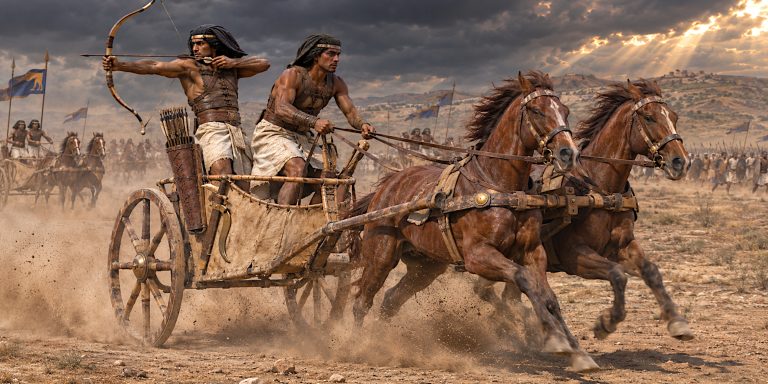
There is a particular pleasure in watching someone explain medieval campaigning while quietly struggling to keep their tent upright. History becomes rather more understandable once the wind gets involved.
The most rewarding historical re-enactment festivals combine spectacle with practical knowledge. A shield wall shows how closely soldiers needed to cooperate. A reconstructed kitchen reveals how much work went into feeding them. A conversation with an armourer can undo several years of misconceptions acquired from television.
Yet these events vary considerably. Some recreate a particular battle, others explore everyday life across an entire period, and some favour historical theatre. Each approach has its merits, provided visitors understand what they are watching.
From the battlefield at Hastings to Viking gatherings in Denmark and samurai commemorations in Japan, these are some of the most notable re-enactment festivals worldwide, with a historian’s eye on what makes them worth visiting.
What Counts as a Historical Re-enactment Festival?
Historical re-enactment involves reconstructing aspects of the past through clothing, equipment, activities and performance. The degree of historical precision depends on the organisers, participants and purpose.
Three overlapping formats are especially common.
| Format | What visitors can expect | What to look for |
|---|---|---|
| Battle re-enactment | A staged reconstruction of a named engagement or representative encounter | Commentary explaining formations, decisions and historical context |
| Living-history festival | Camps, cooking, crafts, clothing and military demonstrations | Participants who can explain the evidence behind their reconstructions |
| Historical pageant | Processions, dramatic performances and ceremonial displays | Clear distinctions between documented history, local tradition and theatrical invention |
A Renaissance fair may include excellent historical demonstrations, but its wider purpose can be entertainment rather than reconstruction. Likewise, competitive armoured combat follows sporting rules and should not automatically be treated as a demonstration of how a medieval battle unfolded.
These distinctions help visitors choose an event that suits their interests.
Famous Re-enactment Festivals at a Glance
The following is a selective international guide rather than a definitive ranking. Event programmes, venues and admission arrangements can change between editions.
| Event | Location | Historical focus | Particular appeal |
|---|---|---|---|
| Battle of Hastings re-enactment | Battle, England | Norman Conquest, 1066 | Battlefield setting and early medieval warfare |
| Tewkesbury Medieval Festival | Gloucestershire, England | Wars of the Roses, 1471 | Battle recreation, encampments and market |
| Grunwald battle re-enactment | Grunwald, Poland | Battle of 1410 | Medieval armies and commemorative landscape |
| JORVIK Viking Festival | York, England | Viking Age | Urban heritage, crafts and performances |
| Moesgaard Viking Days | Near Aarhus, Denmark | Viking Age | Practical crafts, weapons and daily life |
| Journées Romaines de Nîmes | Nîmes, France | Ancient Rome | Roman arena spectacle and city-wide activities |
| Battle of Grolle | Groenlo, Netherlands | Siege of 1627 | Seventeenth-century military and civilian life |
| Waterloo commemorative events | Waterloo area, Belgium | Campaign of 1815 | Battlefield museums and Napoleonic interpretation |
| Gettysburg anniversary re-enactments | Gettysburg area, USA | American Civil War | Military camps and battle demonstrations |
| Battle of Sekigahara Festival | Gifu Prefecture, Japan | Battle of 1600 | Armoured performances and battlefield commemoration |
| Abbey Medieval Festival | Moreton Bay, Queensland, Australia | Medieval Europe and the Middle East | Jousting, crafts and extensive encampments |
Planning note: seasonal references below are guidance. Confirm the next edition directly with its organiser before booking travel.
Battle of Hastings Re-enactment, England
Location: Battle Abbey and battlefield, East Sussex
Usual season: October
Historical focus: The battle of 14 October 1066
Hastings has an advantage that few historical events can manufacture: its setting. Watching reconstructed armies beside Battle Abbey gives the encounter a physical context that diagrams struggle to convey.
English Heritage holds its annual re-enactment here each October. The event combines the headline battle with opportunities to explore reconstructed early medieval life. English Heritage
For anyone interested in arms and armour, this is an opportunity to examine the relationship between mail, shields, spears, axes and swords. The sword deserves attention, but so does the considerably less glamorous business of holding a formation.
I would treat the performance as an introduction to the battle’s problems rather than a precise reconstruction of every movement. Numbers, safety requirements and spectator sightlines inevitably shape what can be staged.
Especially rewarding for: Norman Conquest enthusiasts, families and visitors interested in early medieval equipment.
Tewkesbury Medieval Festival, England
Location: Tewkesbury, Gloucestershire
Usual season: Second full weekend in July
Historical focus: The Battle of Tewkesbury, 4 May 1471
Tewkesbury combines a major Wars of the Roses re-enactment with encampments and a medieval market. Its central battle performance takes place on part of the original battlefield, giving the festival a close connection to the events it interprets. The organiser specifies the second full weekend in July as its regular slot. tewkesburymedievalfestival.co.uk
The attraction extends beyond the fighting. Late medieval warfare depended on equipment manufacture, supplies, clothing and the labour of people who rarely receive a banner in popular histories.
Spend time examining how different participants represent status and wealth. A well-equipped fighting man and a modestly dressed camp worker should not look as though they share the same shopping budget.
Especially rewarding for: Wars of the Roses readers, armour enthusiasts and visitors who enjoy exploring camps between scheduled displays.
Grunwald Battle Re-enactment, Poland
Location: Grunwald battlefield
Usual season: July
Historical focus: The Battle of Grunwald, 15 July 1410
The Grunwald re-enactment commemorates the confrontation between the Polish-Lithuanian coalition and the Teutonic Order. The battlefield museum confirms that the reconstruction takes place annually in July on the Grunwald fields. Muzeum Grunwald
Its appeal lies in the combination of military spectacle and historical commemoration. This is a landscape with significance beyond the performance itself.
For visitors interested in medieval armies, the useful questions concern organisation as much as individual weapons. How are groups identified? How do participants maintain cohesion? What happens when visibility becomes poor?
Avoid assuming that every costume, banner or sequence represents a settled historical conclusion. Re-enactments communicate interpretations, and medieval evidence does not always cooperate with a tidy script.
Especially rewarding for: Medieval military history enthusiasts and visitors interested in the relationship between battlefields and national memory.
JORVIK Viking Festival, England
Location: York
Usual season: February
Historical focus: Viking Age life and York’s Scandinavian heritage
JORVIK offers a city-based festival rather than a single battlefield reconstruction. Its programme includes living-history encampments, workshops, traditional crafts, tours and combat performances.
The organiser has announced 8–14 February 2027 for the next edition. Individual activities may have separate booking requirements. jorvikvikingfestival.co.uk
The format suits visitors whose interests extend beyond warfare. Trade, skilled production and domestic life help explain why Viking settlements functioned and endured.
My preference would be to combine the dramatic performances with the quieter demonstrations. A discussion about textile production may sound less exciting than a weapon display, until one considers how much effort was required simply to keep an early medieval household clothed.
Especially rewarding for: Families, Viking history readers and visitors who prefer a festival woven into a historic city.
Moesgaard Viking Days, Denmark
Location: Moesgaard, near Aarhus
Usual season: Late July
Historical focus: Viking Age crafts, material culture and performance
Often encountered under the older English name Moesgaard Viking Moot, this gathering is particularly appealing for its practical interpretation.
The published Viking Days programme includes weapons demonstrations, storytelling, equestrian displays and music. Activities also explore bread-making, fire-lighting and the use of animal products. vikingedage.dk
These subjects deserve their place beside the warriors. An axe tells us something about violence and labour; the skill needed to make a meal or process a hide tells us something about survival.
The most useful conversations concern evidence. Is an object copied from an archaeological find? Has a technique been reconstructed experimentally? Where does informed interpretation fill a gap?
Especially rewarding for: Visitors interested in archaeology, traditional skills and Viking life beyond raiding.
Journées Romaines de Nîmes, France
Location: Nîmes
Usual season: Spring
Historical focus: Ancient Rome, with changing themes
Nîmes provides a remarkable setting for Roman historical performance. Its Roman Days combine activities across the city with a major reconstruction spectacle in the ancient arena.
The city’s 2026 programme included talks, markets, guided visits, processions, workshops and an arena production centred on Spartacus. Themes change, so visitors should check the specific edition rather than expect the same story each year. nimes.fr
This is a strong choice for people who enjoy history presented through theatre and public spectacle. The arena itself adds architectural context that a temporary showground cannot reproduce.
Nevertheless, a Roman setting does not make every scene literal history. Dramatic storytelling compresses events and simplifies uncertainty. Enjoy the performance, then use it as a reason to investigate further.
Especially rewarding for: Roman history enthusiasts, families and visitors interested in combining performance with surviving ancient monuments.
Battle of Grolle, Netherlands
Location: Groenlo
Timing: Check the announced edition
Historical focus: The siege of 1627
The Battle of Grolle recreates the siege of the town historically known as Grol during the Dutch Revolt. Its organiser identifies the event specifically with the siege of 1627. Slag om Grolle
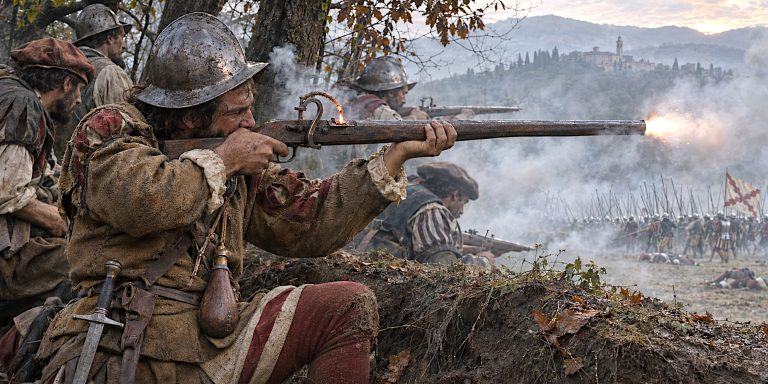
This period offers a different visual and historical experience from a medieval festival. Firearms, military drill and siege warfare change both the sound of the event and the questions worth asking.
Look beyond the firing demonstrations to the relationship between soldiers and townspeople. Siege warfare involved accommodation, provisioning, damage and negotiation, alongside the fighting.
Especially rewarding for: Early modern warfare enthusiasts and visitors interested in urban history.
Waterloo Re-enactments and Commemorations, Belgium
Location: Waterloo battlefield area, including Hougoumont and associated sites
Timing: Varies by programme
Historical focus: The campaign and battle of 1815
Waterloo remains an important destination for Napoleonic history, but it should not be described as one guaranteed festival on a fixed biennial schedule.
At the time of checking, the official battlefield website marked its planned Hougoumont re-enactment weekend of 27–28 June 2026 as cancelled. That makes checking the current programme essential. waterloo1815.be
When available, commemorative events can complement visits to the battlefield, museums and historic farms. The landscape helps explain the importance of defended buildings, restricted visibility and the movement of troops.
A firing demonstration is impressive. Understanding why soldiers were positioned where they were is more useful.
Especially rewarding for: Napoleonic enthusiasts and visitors willing to build a trip around the wider battlefield rather than one advertised performance.
Gettysburg Anniversary Re-enactments, USA
Location: Gettysburg area, Pennsylvania
Usual season: Around the July anniversary
Historical focus: The American Civil War battle of 1–3 July 1863
Gettysburg requires careful attention to venue. Anniversary re-enactments and the National Park Service’s living-history programme are distinct activities.
The Historic Daniel Lady Farm hosts re-enactment events, while Gettysburg National Military Park sets its own standards for historical interpretation, clothing, equipment and demonstrations. Check the named organiser and location when booking. danielladyfarm.com
The strongest interpretation connects military experience with the wider war, including slavery, emancipation and the impact on civilians. Uniforms and drill matter, but they cannot carry the whole explanation.
For visitors, an event and a separate battlefield visit can serve different purposes: one offers demonstration and conversation, the other space to examine the ground and consider the consequences.
Especially rewarding for: American Civil War readers and visitors interested in military and civilian interpretation together.
Battle of Sekigahara Festival, Japan
Location: Sekigahara, Gifu Prefecture
Season: Check each edition; the 2026 festival took place in October
Historical focus: The Battle of Sekigahara, 1600
Sekigahara broadens a guide that might otherwise become rather too comfortable among European helmets.
The official Gifu tourism announcement for the 2026 festival described an armoured battle re-enactment as a central attraction. visitgifu.com
For an international visitor, the value lies in encountering how another historical tradition presents warfare and commemoration. Armour, banners and performance conventions offer useful points of comparison with European events.
Read about the battle beforehand. Recognising the principal commanders and political stakes makes a performance considerably easier to follow, particularly where commentary is unfamiliar.
Especially rewarding for: Japanese military history enthusiasts and visitors interested in comparative approaches to battlefield heritage.
Abbey Medieval Festival, Australia
Location: Moreton Bay, Queensland
Usual season: July
Historical focus: Medieval Europe and the Middle East
The Abbey Medieval Festival demonstrates how historical reconstruction can flourish far from the places being represented.
Organised around the Abbey Museum, it brings together re-enactors, jousters, performers and craftspeople. The organiser describes a broad historical scope covering Europe and the Middle East from approximately 600 to 1600 CE, with activities including armour, swordsmanship, weaving, pottery and music. Abbey Medieval Festival
That breadth is part of its attraction, but it calls for attention to individual displays. A thousand years of history cannot sensibly be treated as one shared wardrobe.
Check ticket inclusions carefully. The festival’s published FAQs distinguish general festival access from jousting admission. Abbey Medieval Festival
Especially rewarding for: Australian visitors seeking a substantial medieval event with both demonstrations and hands-on historical interpretation.
How Historically Accurate Are Re-enactment Festivals?
Accuracy is best assessed through specific questions rather than a sweeping verdict.
A participant may wear clothing reconstructed from surviving evidence while using equipment adapted for public demonstrations. A battle may represent documented tactics while compressing several hours into a short performance.
These compromises do not make the event worthless. They need explaining.
Look for:
- Clear dates and locations. “Fifteenth-century Burgundy” tells you more than “medieval”.
- Evidence behind equipment. Archaeological finds, surviving objects, images and written sources should inform reconstructions.
- Honest uncertainty. A knowledgeable interpreter can explain where evidence ends.
- Civilian participation. Cooking, transport, textiles and trade help place warfare in context.
- Good commentary. Visitors should understand why something is happening.
- Visible safety adaptations. Staged combat cannot reproduce the intentions or consequences of historical violence.
I am generally more persuaded by someone explaining the limitations of their reconstruction than by someone insisting every detail is authentic. The latter claim usually deserves a follow-up question.
Planning a Visit
A little preparation makes these events far more enjoyable.
| Before booking | Why it matters |
|---|---|
| Confirm the current edition | Older event pages often remain searchable |
| Check the exact venue | A battlefield name may cover several separate sites |
| Read ticket inclusions | Jousting, evening shows or workshops may cost extra |
| Check accessibility information | Grass, slopes and temporary paths can affect access |
| Review the timetable | Camp access and headline performances may have different hours |
| Prepare for weather and noise | Outdoor conditions and firing demonstrations can shape the day |
Comfortable footwear is usually a better investment than an ambitious costume. Bring hearing protection where gunfire or artillery features, especially for children, and follow the organiser’s guidance.
Visitors are often welcome to dress up, but participation in combat or an official encampment requires separate arrangements. A ticket is not a military commission.
Why These Festivals Matter
The best historical re-enactment festivals make people curious enough to ask better questions.
How did that shield affect movement? Who repaired those clothes? How much fuel did the camp need? What happened to the people living beside the battlefield?
Those questions connect spectacle with historical understanding. They also restore some attention to the labour, skill and ordinary discomfort that grand accounts of warfare tend to hurry past.
I would choose an event for the quality of its interpretation as readily as the size of its battle. A thoughtful conversation beside a cooking fire can stay with you longer than a charge across a field, however excellent the banners.