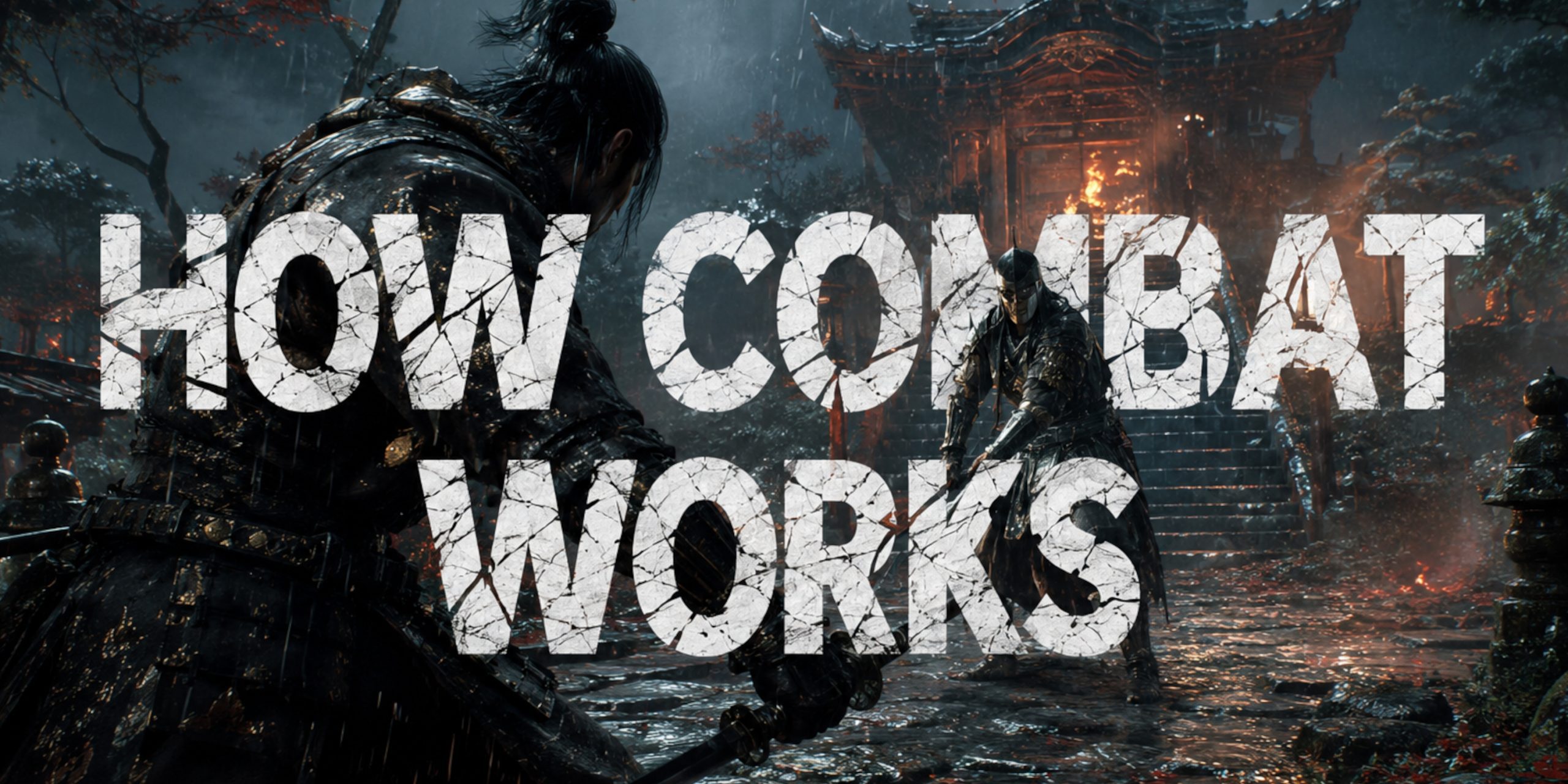
If you jump into Nioh 3 expecting another button-mashing action RPG, the game will very quickly introduce you to the concept of regret. Combat remains the heart of the series, blending lightning-fast reactions with deep mechanical systems that reward patience, experimentation and precision.
Every duel feels like a conversation. Your opponent attacks, you respond, they adapt, you make a mistake, and suddenly you’re staring at the “You Died” equivalent while wondering why you thought rolling into a giant demon wielding a tree was a sensible life choice.
The good news is that Nioh 3 builds on one of the finest combat systems in modern gaming. Whether you are new to the series or returning after hundreds of hours in Nioh and Nioh 2, understanding the fundamentals is the key to surviving Japan’s brutal battlefields.
The Core Philosophy of Combat
Nioh 3 is less about dealing damage as quickly as possible and more about controlling every encounter.
Unlike many action RPGs, enemies are dangerous from the very beginning. Even weaker soldiers can punish careless play, while Yokai possess unique attack patterns that demand observation rather than panic.
Combat revolves around several interconnected systems:
- Weapon stances
- Ki management
- Precise blocking and dodging
- Burst counters and Yokai abilities
- Positioning
- Weapon-specific skills
- Timing over aggression
Winning consistently means combining all of these mechanics instead of relying on one trick.
Ki Is Your Most Important Resource
Ki functions as stamina, but in Nioh 3 it is arguably even more important than health.
Almost every action consumes Ki:
- Attacking
- Dodging
- Blocking
- Sprinting
- Certain weapon abilities
Running out of Ki leaves your character exhausted and vulnerable for several seconds. Against stronger enemies, this usually leads to a painful lesson.
Good players constantly monitor their Ki bar before committing to long attack strings.
Think of Ki as your permission to stay alive. No Ki often means no options.
Master the Ki Pulse
Ki Pulse remains one of Nioh’s defining mechanics.
After finishing an attack sequence, glowing energy flows back toward your character. Pressing the Ki Pulse button at the correct moment instantly restores part of your spent stamina.
This creates a unique rhythm:
Attack.
Recover.
Attack again.
Experienced players almost perform Ki Pulses automatically, maintaining relentless pressure without exhausting themselves.
Ignoring this mechanic makes every encounter significantly harder than it needs to be.
Understanding Weapon Stances
Every melee weapon offers three distinct stances, each suited to different situations.
High Stance
High Stance delivers maximum damage and excellent armour breaking potential.
Advantages:
- Heavy attacks
- Strong Ki damage
- Great against slower enemies
- Powerful finishing blows
Disadvantages:
- Slower recovery
- Higher Ki consumption
- Easier to punish
If something needs hitting very hard, this is usually the answer.
Mid Stance
Mid Stance is the balanced option.
It offers:
- Reliable defence
- Strong blocking
- Versatile attack chains
- Comfortable Ki usage
Many players spend much of each fight here because it adapts well to almost every enemy.
Low Stance
Low Stance prioritises speed and mobility.
Benefits include:
- Fast dodges
- Quick attacks
- Lower Ki costs
- Easier repositioning
Damage is lower, but survival often matters more than raw numbers.
Against highly aggressive Yokai, staying mobile is frequently the smarter decision.
Switching Stances Mid Fight
The best players rarely remain in one stance.
Instead, they flow between them depending on the situation.
A typical engagement might look like this:
- Open in High Stance for heavy damage
- Switch to Mid Stance to defend
- Drop into Low Stance to evade incoming attacks
- Return to High Stance once the enemy is exposed
This constant adaptation makes combat feel incredibly dynamic.
Blocking Is Stronger Than You Think
Many action games teach players to dodge everything.
Nioh 3 encourages a healthier relationship with blocking.
A well-timed guard can completely negate many attacks, provided you still have enough Ki remaining.
Blocking becomes especially useful against:
- Fast weapon combinations
- Human enemies
- Unexpected follow-up attacks
Learning when to block instead of dodge dramatically improves survivability.
Dodging Requires Precision
Dodging is still essential, but it demands careful timing.
Rolling too early often results in tracking attacks catching you during recovery.
Rolling too late usually ends with a sword in your face.
Every enemy has unique attack timings, meaning successful dodging comes from observation rather than instinct.
The game rewards patience far more than panic.
Breaking Enemy Ki
Enemies rely on Ki just as much as you do.
Depleting an opponent’s Ki leaves them staggered and unable to defend effectively.
This opens opportunities for:
- Grapples
- Critical strikes
- Extended combos
- Massive burst damage
Against tougher Yokai, draining Ki often proves more effective than simply chasing health damage.
Yokai Combat Changes Everything
Battles against Yokai introduce another layer of complexity.
These supernatural enemies possess enormous strength, unusual attack patterns and powerful elemental abilities.
Many Yokai create dangerous combat zones that interfere with your own Ki recovery.
Learning how each Yokai behaves is just as important as learning your own moveset.
Every encounter becomes its own puzzle.
Burst Counters Reward Good Reactions
Burst Counters remain one of the most satisfying mechanics in the series.
Certain enemy attacks glow with a distinctive visual effect.
Responding with the correct Burst Counter interrupts these devastating attacks, damages enemy Ki and creates valuable openings.
The timing varies depending on your Guardian Spirit style, so mastering your chosen counter becomes an important skill.
Landing one perfectly never really stops feeling cool.
Weapon Skills Add Depth
Every weapon type features an extensive skill tree.
These unlock:
- New attack combinations
- Counter techniques
- Defensive manoeuvres
- Special finishers
- Mobility options
The result is that two players using the same weapon can develop very different fighting styles.
As your skill set expands, combat becomes increasingly expressive.
Positioning Wins Fights
Standing in the wrong place is often more dangerous than using the wrong weapon.
Good positioning allows you to:
- Avoid being surrounded
- Attack from safer angles
- Punish enemy recovery animations
- Escape large area attacks
- Control narrow spaces
Sometimes taking one step sideways accomplishes more than five perfectly timed dodges.
Every Weapon Feels Unique
Rather than functioning as simple damage upgrades, weapons completely change how combat feels.
Heavy weapons reward patience and calculated strikes.
Faster weapons encourage relentless pressure and fluid movement.
Others excel at breaking Ki, maintaining range or chaining long combos.
Finding a weapon that suits your natural rhythm makes the entire game feel more intuitive.
Learning Enemy Patterns
Success comes from observation.
Most enemies follow recognisable sequences.
Watch for:
- Opening attacks
- Recovery windows
- Delayed swings
- Grab attacks
- Phase transitions
- Ki depletion behaviour
Eventually, fights that once felt impossible begin to resemble carefully choreographed duels.
That feeling of improvement is one of Nioh’s greatest strengths.
Combat Rewards Practice More Than Levels
Higher levels certainly help, but player skill matters far more.
A well-prepared player who understands:
- Ki management
- Stance switching
- Blocking
- Burst Counters
- Positioning
- Enemy behaviour
can defeat opponents that initially seem overwhelming.
That constant sense of personal improvement is what makes the combat system so addictive.
Advanced Combat Tips
Once the basics become second nature, focus on refining your efficiency.
Useful habits include:
- Ki Pulse after almost every combo.
- Switch stances regularly rather than staying locked into one.
- Learn which attacks deal high Ki damage.
- Block when dodging would leave you vulnerable.
- Stay patient during unfamiliar boss fights.
- Experiment with different weapons instead of forcing one playstyle.
- Watch experienced players to discover new combo routes.
The difference between surviving and dominating often comes down to these small optimisations.
Takeaway
Nioh 3 continues the series’ tradition of delivering one of the deepest melee combat systems available. Every mechanic connects with another, creating battles that reward thought as much as reflexes. Managing Ki, switching stances, reading enemy movements and making split-second decisions all contribute to encounters that remain engaging dozens or even hundreds of hours into the game.
It can feel overwhelming at first, and that’s part of the charm. Few games ask so much from the player, but even fewer offer such a satisfying sense of mastery. The first time you dismantle a boss that previously flattened you in seconds, it becomes obvious why fans keep coming back.
Combat in Nioh 3 is not about perfection. It is about learning, adapting and slowly becoming the warrior you thought you already were. The Yokai have other ideas, of course, but proving them wrong is half the fun.