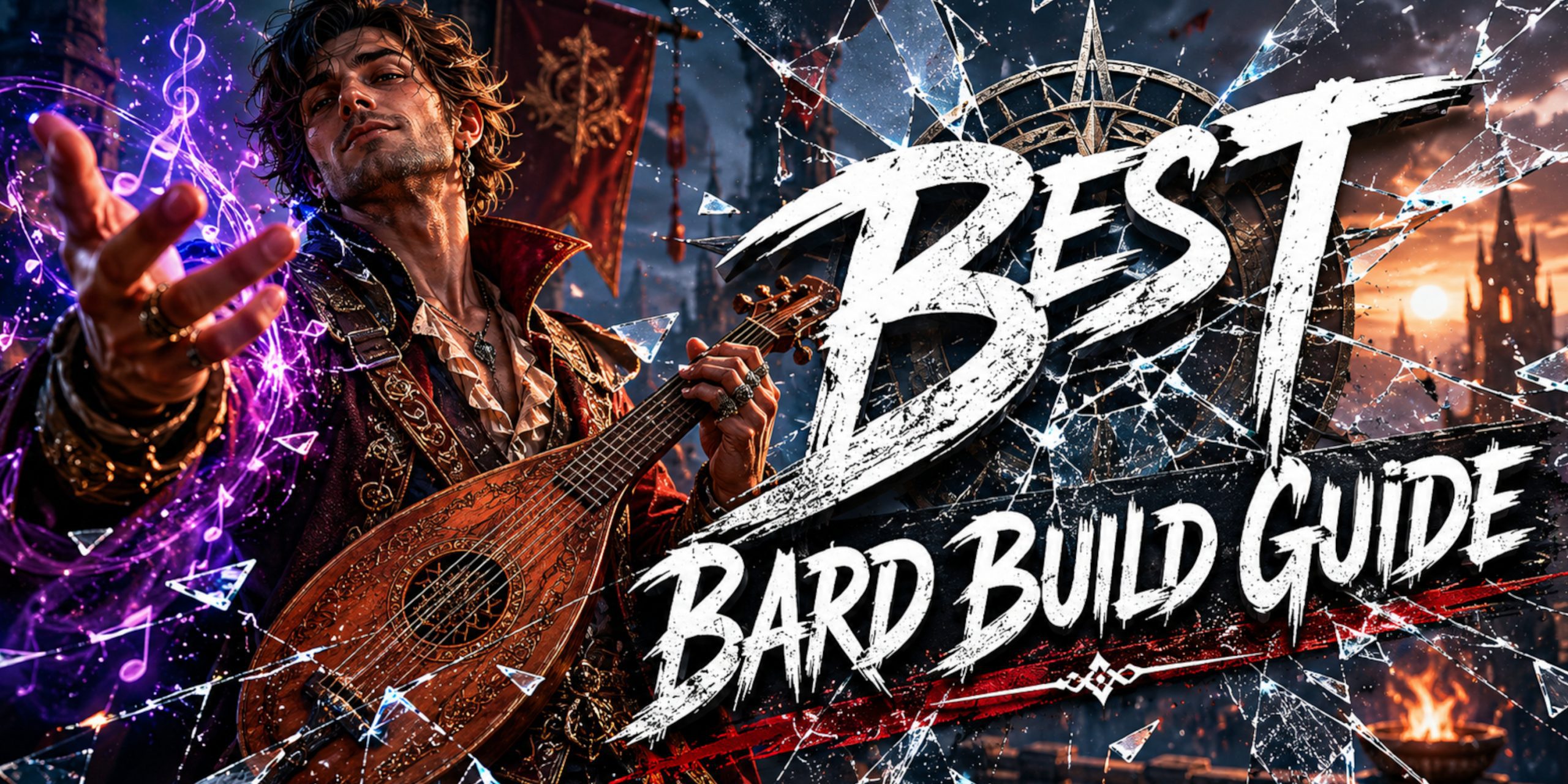
There is something deeply satisfying about talking your way out of disaster in Baldur’s Gate 3, only to immediately start a lute solo while your enemies explode from psychic damage. The Bard is absurdly flexible, weirdly dangerous, and occasionally feels like the developers let a theatre kid loose inside a warzone.
This class can heal, control crowds, buff allies, steal everything that is not nailed down, and somehow still end up as the party face. A good Bard does not just survive encounters. They hijack them.
If you want the strongest overall Bard build in the game, College of Swords is comfortably sitting on the throne. Lore Bard remains brilliant for control and dialogue-heavy runs, but Swords Bard combines damage, utility, mobility and charisma in a way that starts feeling unfair by Act 2.
Why Bard Is One of the Best Classes in Baldur’s Gate 3
Bard is the definition of versatility.
You get:
- Exceptional dialogue and persuasion checks
- Crowd control spells
- Strong support abilities
- Solid ranged or melee combat
- Fantastic multiclass potential
- Skill proficiency overload
- Some of the funniest class interactions in the game
A Bard can carry conversations, lockpick treasure rooms, heal the party, and then insult a goblin so hard it literally dies. That is not hyperbole. That is Vicious Mockery.
The class also scales beautifully through the campaign. Early game Bard can feel slightly fragile, but once the build comes online, especially around Level 6 onwards, it becomes one of the smoothest and most adaptable classes in the entire game.
Best Bard Subclass
College of Swords
College of Swords is the strongest all-round Bard subclass for most players.
It transforms Bard from “support musician with emotional damage” into a fully capable duelist that still retains incredible utility.
Why College of Swords Works So Well
- Extra Attack at Level 6
- Blade Flourishes add mobility and burst damage
- Strong ranged builds with hand crossbows
- Excellent synergy with Dexterity gear
- Keeps full Bard spellcasting progression
The subclass basically solves Bard’s biggest weakness, consistent weapon damage.
Slashing Flourish in particular is ridiculous. Watching one attack hit multiple enemies while your Bard casually pirouettes around the battlefield feels extremely Baldur’s Gate in the best possible way.
Best Race for a Bard
Several races work well, but a few stand out.
Best Overall Choice, Half-Elf
Astarion would probably approve.
Half-Elf gives:
- Shield proficiency
- Darkvision
- Extra survivability
- Flexible stat bonuses
That shield proficiency matters early on more than people realise. Bards are charismatic, not immortal.
Other Strong Choices
- High Elf, extra cantrip utility
- Drow, superior dialogue interactions and Darkvision
- Tiefling, strong racial spells and style points
- Human, carrying capacity and simple versatility
Honestly, race matters less than flavour here. Bard is one of the few classes where roleplay and optimisation happily coexist without punching each other in the throat.
Best Ability Scores
For a Swords Bard, Dexterity and Charisma are your priorities.
Recommended Starting Stats
| Ability | Value |
|---|---|
| Strength | 8 |
| Dexterity | 16 |
| Constitution | 14 |
| Intelligence | 10 |
| Wisdom | 10 |
| Charisma | 16 |
Dexterity boosts your armour class, initiative and weapon damage.
Charisma powers your spells and dialogue dominance.
Constitution keeps you alive when your ambitious positioning decisions inevitably go wrong.
Best Skills for a Bard
This is where Bard becomes ridiculous.
You can become proficient in so many skills that your party starts feeling unemployed.
Priority Skills
- Persuasion
- Deception
- Sleight of Hand
- Insight
- Perception
- Performance
By mid-game, your Bard will pass checks that make other classes look like they were educated by raccoons.
Best Bard Spells
A Bard’s spell list is all about control, support and chaos management.
Early Game Spells
Vicious Mockery
Still one of the best cantrips in the game simply because disadvantage is powerful.
Also, emotionally devastating enemies before stabbing them remains deeply entertaining.
Healing Word
Bonus action healing saves lives constantly.
Dissonant Whispers
Incredible early spell.
It forces enemy movement, triggers opportunity attacks, and deals respectable psychic damage.
Faerie Fire
One of the strongest support spells in Act 1.
Advantage for your whole party can completely swing difficult fights.
Mid and Late Game Spells
Hypnotic Pattern
Absolutely absurd crowd control.
Entire encounters can collapse instantly if enemies fail the save.
Hold Person
Especially deadly with martial companions nearby.
Automatic critical hits never stop being funny.
Greater Invisibility
Turns strong characters into tactical nightmares.
Otto’s Irresistible Dance
Humiliating bosses while your party beats them to death feels almost disrespectful.
Almost.
Best Feats
Level 4, Ability Improvement
Increase Dexterity to 18 or Charisma to 18 depending on your gear setup.
Usually Dexterity first for Swords Bard.
Level 8, Sharpshooter
If using dual hand crossbows, Sharpshooter becomes devastating.
The damage spike is enormous.
Alternative Feats
- Alert
- Lucky
- War Caster
- Actor
Actor deserves special mention for dialogue-heavy runs. At some point your Bard stops speaking normally and starts manipulating reality through confidence alone.
Best Weapons and Gear
Early Game Weapons
- Dual hand crossbows
- Rapier
- Shortswords with Dexterity scaling
Hand crossbows are particularly disgusting on Swords Bard because Slashing Flourish can hit multiple targets at range.
Larian absolutely knew what they were doing here, and they should probably answer for it.
Best Mid to Late Game Gear
Armour
- Armour of Agility
- Yuan-Ti Scale Mail
- Elegant Studded Leather
Accessories
- Risky Ring
- Band of the Mystic Scoundrel
- Helm of Arcane Acuity
Weapons
- Duellist’s Prerogative
- Ne’er Misser
- Hellfire Hand Crossbow
The Band of the Mystic Scoundrel is where things become truly silly.
Casting enchantment or illusion spells as bonus actions after attacks creates some horrifyingly efficient turns.
Best Bard Multiclass Options
Pure Bard is excellent, but multiclassing can push the class into absurd territory.
Bard and Paladin
The famous “Bardadin.”
This build combines:
- Divine Smite
- Bard spell slots
- Charisma scaling
- Heavy armour access
You become a charismatic holy blender.
Few things in BG3 are more satisfying than landing a critical smite while still talking like the smoothest person in Faerûn.
Bard and Warlock
Excellent synergy due to shared Charisma scaling.
Benefits include:
- Eldritch Blast
- Short rest spell recovery
- Strong ranged pressure
A little dramatic, slightly dangerous, incredibly effective. Very on-brand for Bard.
Best Companions for a Bard Party
Bard works best supporting aggressive frontline allies.
Strong Companion Choices
- Lae’zel for frontline damage
- Shadowheart for healing and support
- Karlach for chaos and raw violence
- Gale for magical artillery
Bard slots naturally into almost any composition because it fills so many gaps simultaneously.
Best Bard Build Progression
Levels 1 to 4
Focus on:
- Crowd control
- Dialogue dominance
- Supporting allies
- Staying alive
You are not yet the main damage dealer.
You are the clever nuisance making everybody else stronger.
Levels 5 to 8
This is the major power spike.
You gain:
- Font of Inspiration refreshes on short rest
- Stronger spells
- Extra Attack at Level 6
- Better Flourishes
At this point the build starts feeling genuinely elite.
Levels 9 to 12
Late game Bard becomes terrifying.
Control spells dominate encounters while weapon damage remains highly respectable.
You stop reacting to fights and start directing them like a stage play with significantly more fire and dismemberment.
Honour Mode Bard Tips
Honour Mode changes the pace of the game dramatically.
Key Advice
- Prioritise crowd control over greed
- Use dialogue constantly
- Abuse short rests
- Position carefully before combat
- Never underestimate Hold Person
A Bard thrives in Honour Mode because preventing damage is often stronger than healing it afterward.
Also, talking bosses into bad decisions is remarkably cost-effective.
The Seven Swords Takeaway
Bard might quietly be the most entertaining class in Baldur’s Gate 3.
It rewards creativity more than brute force, and the game constantly acknowledges your absurd charisma with unique dialogue options, ridiculous social victories and moments where NPCs seem genuinely exhausted by your confidence.
College of Swords remains the strongest overall build thanks to its blend of weapon damage, utility and spellcasting. It handles nearly every situation well, scales beautifully into late game, and never feels boring.
Most importantly, Bard captures the spirit of Baldur’s Gate 3 perfectly.
Chaotic, clever, theatrical, and somehow still effective despite making half its decisions with the energy of somebody who absolutely should not be trusted near explosives.