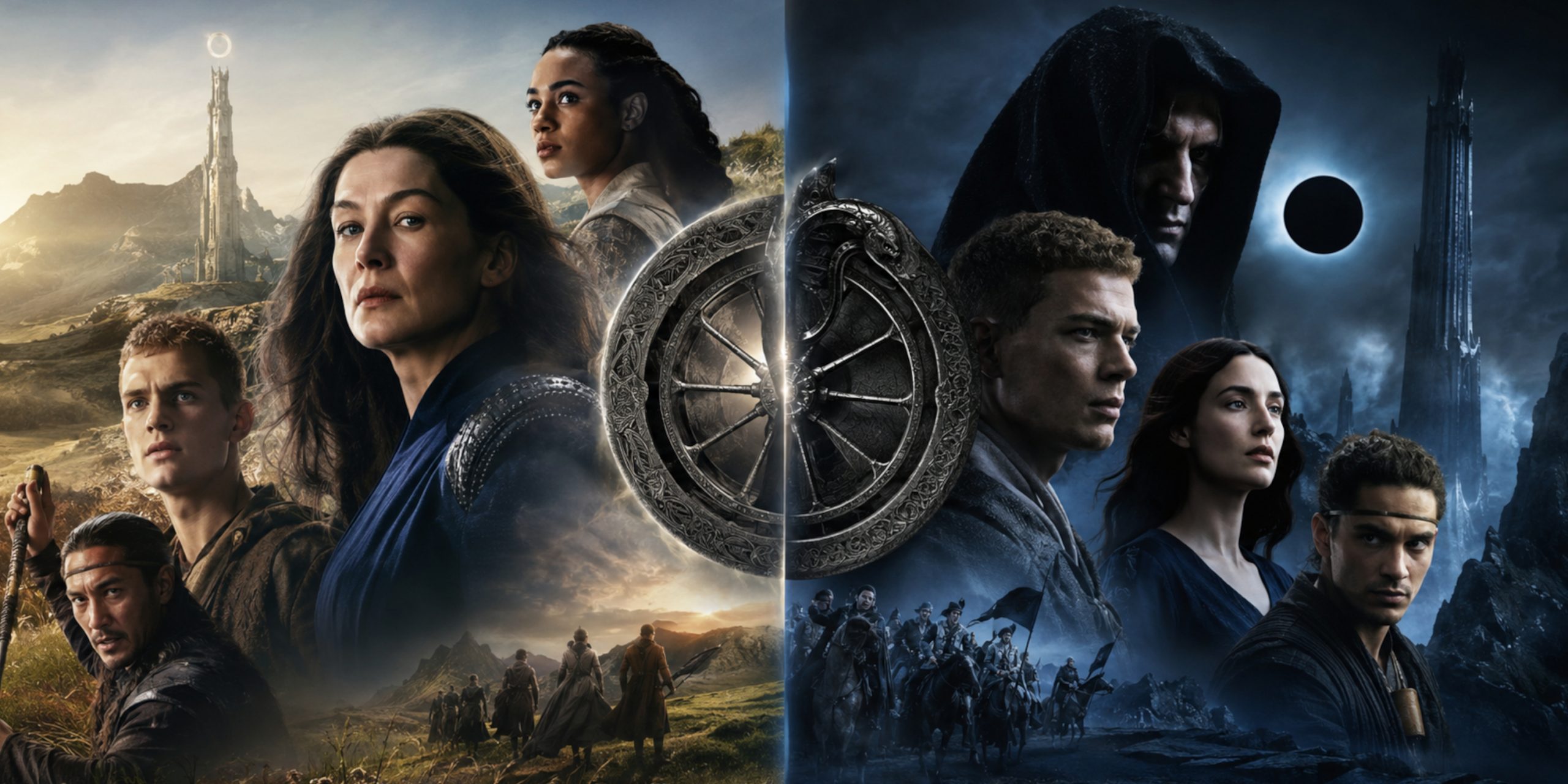
Amazon’s adaptation of The Wheel of Time arrived carrying one of the heaviest fantasy backpacks imaginable. Robert Jordan’s series is enormous, beloved, occasionally exhausting, occasionally brilliant, and packed with enough prophecy to make your average fantasy map burst into flames.
So naturally, the television version was never going to please everyone.
Some viewers wanted a page-by-page adaptation. Others just wanted magical politics, terrifying Forsaken, and Lan looking emotionally unavailable in high definition. The result sits somewhere in the middle. The Amazon series captures parts of the soul of The Wheel of Time, while also making dramatic changes that have sparked arguments fiercer than anything in the White Tower.
And honestly? Some of those arguments are fair.
The Biggest Difference: The Pace
The books move like a very determined horse pulling a library uphill.
The Amazon series moves like it accidentally drank three energy drinks before filming.
Robert Jordan’s novels take their time establishing culture, prophecy, politics, and geography. Villages have customs. Cities have distinct identities. Even minor nobles often receive enough description to furnish an entire Pinterest board.
The show compresses huge stretches of material into shorter narrative arcs. Characters meet earlier. Storylines merge. Entire journeys disappear.
This creates two very different experiences:
| Books | Amazon Series |
|---|---|
| Slow burn world-building | Faster, more streamlined storytelling |
| Deep political detail | Greater focus on immediate drama |
| Long character development | Faster emotional payoffs |
| Massive ensemble sprawl | Tighter central cast focus |
The books reward patience. The show prioritises momentum.
Depending on your tolerance for fourteen-volume fantasy sagas, either approach may sound completely reasonable.
Rand al’Thor Feels Very Different
In the novels, The Eye of the World spends a great deal of time inside Rand’s head. You experience his fear, paranoia, denial, and growing sense that destiny has selected the absolute worst possible candidate.
The series presents Rand more externally. He becomes less of a classic fantasy protagonist and more part of an ensemble mystery.
This was one of the adaptation’s most controversial decisions.
In the books, Rand is clearly central from the beginning, even when Jordan pretends otherwise for five minutes. In the series, the Dragon Reborn mystery spreads attention across multiple characters.
Some viewers enjoyed the uncertainty. Others felt it weakened Rand’s importance early on.
The television version also softens certain aspects of his personality. Book Rand gradually hardens into a frightening figure shaped by trauma, prophecy, and immense power. Show Rand feels more emotionally grounded and approachable so far.
Probably healthier for television audiences.
Probably less entertaining for fans who enjoy watching a chosen one spiral into magical stress-induced madness.
Moiraine Gets a Much Larger Role
This change makes complete sense for television.
In the early books, Moiraine is important but often mysterious and distant. The show transforms her into one of the central anchors of the story, largely because Rosamund Pike brings enough screen presence to make entire rooms feel nervous.
The series spends more time exploring:
- Aes Sedai politics
- Warder bonds
- Tower rivalries
- Moiraine’s personal struggles
- The emotional cost of power
The books eventually explore these ideas too, but much later and across far more pages.
Television simply cannot wait four seasons for audiences to understand how the White Tower functions. It needs immediate dramatic hooks.
That said, some book readers feel the increased focus on Moiraine occasionally sidelines younger characters who should be carrying the emotional core of the story.
Mat Cauthon Underwent Major Changes

Book Mat begins as a mischievous troublemaker with the survival instincts of a man actively trying to get cursed by ancient evil.
Eventually, he becomes one of the best characters in the series. Clever, reluctant, sarcastic, and weirdly competent.
The show gives Mat a darker background almost immediately. His family situation is rougher, his cynicism sharper, and his emotional baggage much heavier.
It makes him more dramatic early on, though arguably less fun.
There is also the unavoidable production issue. Actor Barney Harris departed after Season 1, leading to a recast with Dónal Finn. The transition created some awkward narrative reshuffling, though Season 2 handled it better than many expected.
Thankfully, the core of Mat still survives beneath the changes. He remains the human embodiment of “I absolutely do not want responsibility” while constantly stumbling into it anyway.
Perrin’s Storyline Changed Dramatically
This may be the adaptation’s most debated alteration.
The series gives Perrin a wife in Episode 1 and then immediately kills her during a tragic accident. This event becomes foundational trauma for his character.
Nothing like this happens in the books.
The intention seems clear. Perrin’s internal conflict in the novels revolves around violence, restraint, and fear of his own strength. Internal monologues work on the page. Television often requires visual shorthand.
Still, many fans disliked the change because it felt artificially brutal and reduced Perrin’s quieter emotional arc into a single traumatic incident.
Book Perrin develops gradually through leadership, loyalty, and internal conflict. Show Perrin arrives emotionally damaged almost immediately.
Whether that works depends entirely on how much patience you have for adaptation shortcuts.
The Tone Is Darker Earlier
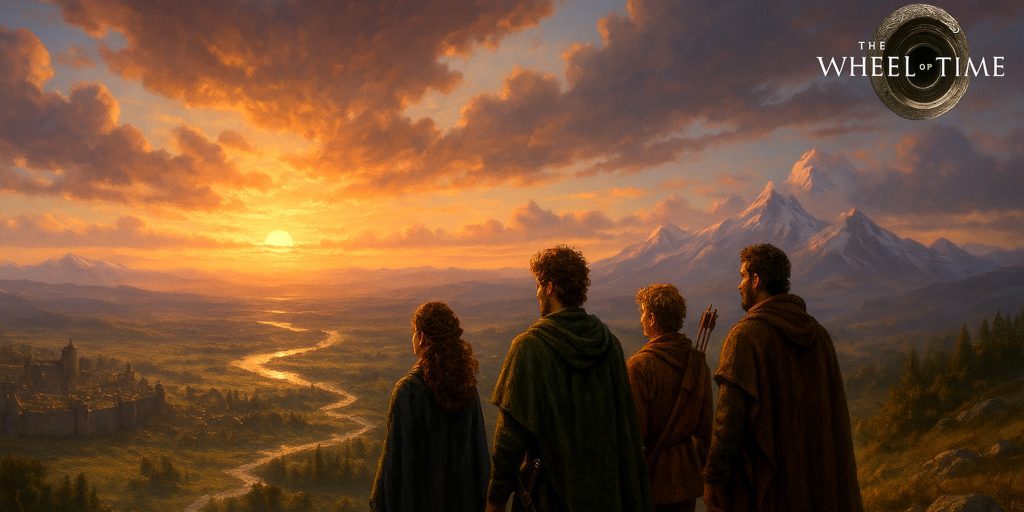
Robert Jordan’s early books contain wonder and adventure beneath the danger. There is genuine warmth in Emond’s Field before everything collapses into Trolloc attacks and existential prophecy.
The Amazon series introduces darkness much faster.
Violence is harsher. Politics are more cynical. Relationships are more openly sexual. The world feels older and more damaged from the beginning.
This partly reflects modern fantasy television trends after Game of Thrones changed audience expectations. Fantasy adaptations now often feel pressured to prove they are “mature” immediately.
Sometimes that works brilliantly.
Sometimes you miss the quieter innocence that made Jordan’s later darkness hit harder.
The Books Are More Detailed, Sometimes Excessively So
This is where honesty becomes important.
The Wheel of Time books are incredible. They are also hilariously over-detailed at times.
Robert Jordan loved descriptions. Clothing receives military-grade attention. Entire chapters can revolve around political tension, braid tugging, or observing embroidered sleeves with life-or-death seriousness.
The series trims much of this.
Honestly, television probably had to.
The adaptation removes:
- Large stretches of travelling
- Repetitive political discussions
- Minor nobles
- Internal monologues
- Some side quests
- Certain secondary characters
Purists may object, but adaptation is ultimately an act of controlled destruction. A fourteen-book epic cannot survive intact on television without becoming financially catastrophic and emotionally confusing.
The Forsaken Feel Different
In the books, the Forsaken are terrifying partly because of mythology. They feel ancient, half-forgotten, almost legendary.
The series humanises them more quickly.
Characters like Ishamael appear calmer, more philosophical, and emotionally manipulative rather than purely monstrous. This arguably improves them for television because they become memorable personalities instead of distant fantasy villains lurking in ominous conversations.
The show’s version of Ishamael, in particular, gained praise for feeling intelligent and unnervingly persuasive.
Which is honestly more dangerous than screaming evil wizard energy anyway.
The Visuals Capture Some Things Beautifully
When the series works visually, it really works.
The White Tower feels grand. The costumes often reflect regional identities well. Channeling effects improved significantly after the first season. Certain cities and landscapes finally gave fans the sense that the world was genuinely vast.
Season 2 especially looked more confident and cinematic.
Some highlights include:
- Falme’s atmosphere
- The Seanchan design aesthetic
- The White Tower interiors
- The Forsaken costumes
- Cairhien’s political elegance
Not every visual choice landed, but the production gradually found a stronger identity after a somewhat uneven beginning.
Fans Remain Deeply Divided
This is probably the most accurate comparison possible.
Some readers see the Amazon series as a thoughtful adaptation capturing the themes and emotional core of Jordan’s work while modernising structure and pacing.
Others see it as a fundamentally different story borrowing names and concepts while abandoning essential character arcs.
Both perspectives contain truth.
The show succeeds best when viewed as an adaptation inspired by the books rather than a strict recreation of them. Once expectations shift slightly, many of the changes become easier to understand, even if not every decision works.
And frankly, adapting The Wheel of Time was always going to resemble trying to organise fourteen hurricanes into a neat television schedule.
What the Series Gets Right
Despite criticism, the show absolutely succeeds in several important areas.
Stronger Female Character Presence
The books already featured influential women, but the series gives them immediate narrative weight and visibility.
Better Early Momentum
The show avoids some of the slower opening sections that tested readers in the early novels.
Improved Accessibility
New audiences can enter the world without committing to millions of words and enough named characters to overwhelm a medieval census.
Emotional Intensity
The performances often carry genuine emotional power, especially among the central cast.
What the Books Still Do Better
The novels remain unmatched in certain areas.
World-Building Depth
Jordan’s cultures, histories, and political systems possess extraordinary detail.
Rand’s Psychological Journey
The books explore his transformation with far greater nuance and tragedy.
Long-Term Character Growth
Characters evolve over thousands of pages in ways television rarely has time to achieve.
Lore Complexity
The mythology feels richer and more interconnected in the novels.
Takeaway
Comparing The Wheel of Time books to the Amazon series feels a bit like comparing an ancient illuminated manuscript to a modern streaming adaptation with a very healthy CGI budget.
They are related, but they are not identical experiences.
The books remain deeper, stranger, slower, and more immersive. The show is sharper, faster, more emotional upfront, and designed for a completely different medium.
Some changes improve the story for television. Others lose important pieces of what made the novels special.
Still, the fact people argue this passionately about the adaptation probably says something important. The Wheel of Time still matters. Few fantasy worlds inspire this level of loyalty, frustration, obsession, and occasional dramatic overreaction.
Which, in fairness, is probably exactly what Robert Jordan would have expected.