Few fantasy weapons carry the quiet prestige of Ringil. It rarely dominates discussions in the way Andúril or Sting do, yet among Tolkien fans it occupies an almost mythical place. This was the sword wielded by Fingolfin, the High King of the Noldor, during one of the most astonishing acts of courage in fantasy literature.
Unlike many famous magical weapons, Ringil receives relatively little description. Tolkien preferred to let its deeds speak for it. That restraint somehow makes the sword even more fascinating. Every mention hints at extraordinary craftsmanship, supernatural power and a weapon worthy of one of the greatest Elven kings who ever lived.
If swords could earn reputations through sheer audacity, Ringil would comfortably sit among the elite.
What Is Ringil?

Ringil was the personal sword of Fingolfin, High King of the Noldor during the First Age of Middle-earth. It is most famous for being the blade that wounded Morgoth, the original Dark Lord, during their legendary single combat outside the gates of Angband.
Although Tolkien provides only a handful of descriptions, those few lines have become legendary among readers.
Ringil was said to glitter with chilling cold, as though it carried the essence of winter within the blade itself. Its wounds were described as freezing, suggesting that the sword possessed supernatural properties beyond exceptional Elven craftsmanship.
For a world filled with enchanted weapons, that is impressive company.
Ringil at a Glance
| Feature | Details |
|---|---|
| Owner | Fingolfin |
| Race | Noldorin Elf |
| Age | First Age |
| Type | Longsword |
| Material | Unknown Elven-forged steel |
| Special Ability | Inflicted freezing wounds |
| Most Famous Battle | Duel with Morgoth |
| Status | Lost after Fingolfin’s death |
The Forging of Ringil
Tolkien never identifies who forged Ringil.
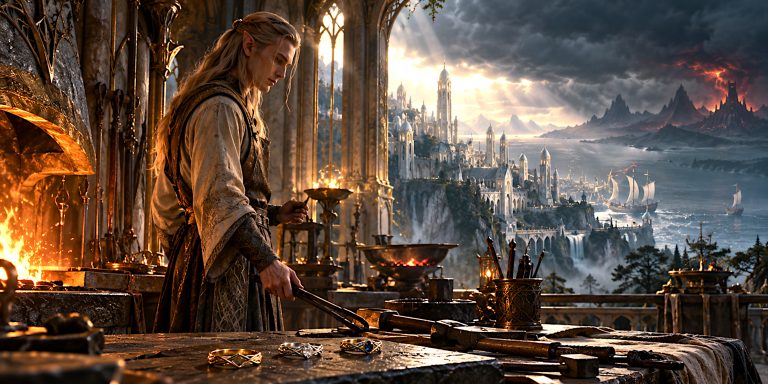
Given its extraordinary quality, most readers believe it was crafted by the Noldor during the Years of the Trees, when Elven smiths reached levels of artistry that bordered on the miraculous.
Possible origins include:
- Forged in Valinor before the exile.
- Created by master smiths inspired by the teachings of Aulë.
- Fashioned using techniques later lost forever after the destruction of the First Age.
Whatever its exact origin, Ringil clearly belonged among the greatest weapons ever made by the Elves.
The Sword’s Appearance
Tolkien offers only brief physical descriptions, leaving plenty to the imagination.
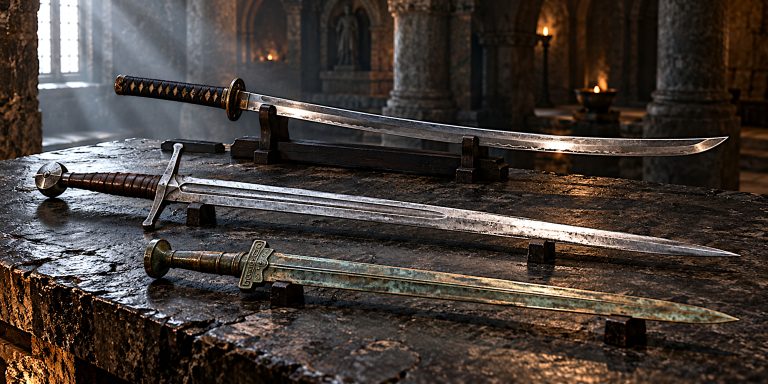
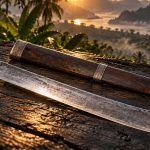
Based on the text, Ringil likely featured:
- A long, elegant Elven blade.
- Bright polished steel with a pale silver sheen.
- A crossguard decorated with subtle Elven designs.
- A graceful two-handed grip suitable for mounted or foot combat.
- A blade that shimmered with icy brilliance.
Rather than glowing dramatically like many modern fantasy swords, Ringil probably projected quiet elegance. It looked dangerous because it was, not because it announced itself with fireworks.
Sometimes subtle confidence is far scarier.
Ringil’s Supernatural Power
Ringil’s defining characteristic was its freezing wounds.
During Fingolfin’s duel with Morgoth, Tolkien writes that the blade “glittered like ice” and that the wounds it inflicted remained cold long after they were struck.
This is significant for several reasons.
First, Morgoth was among the most powerful beings in Tolkien’s mythology. Ordinary weapons could scarcely harm him.
Second, the lingering cold suggests Ringil carried an enchantment unlike simple sharpness or durability.
Whether this power reflected ancient blessings, master craftsmanship or something more mysterious remains deliberately unexplained.
That ambiguity is part of Tolkien’s magic. Not every legendary weapon comes with a neatly written list of abilities.
Fingolfin’s Greatest Moment
Everything about Ringil ultimately leads to one extraordinary event.
After the devastating Battle of Sudden Flame, Fingolfin believed all hope had been lost. In fury and despair, he rode alone to Angband and challenged Morgoth to single combat.
It remains one of the boldest scenes Tolkien ever wrote.
The Dark Lord emerged wearing immense black armour and wielding the gigantic hammer Grond.
Against all logic, Fingolfin fought him.
Again and again Ringil struck.
The sword cut Morgoth seven times, drawing blood each time. Each wound remained cold, leaving lasting pain that Morgoth would carry forever.
Eventually Fingolfin was crushed beneath Grond, yet even in defeat he carved his place into history.
Few fantasy heroes have ever walked knowingly toward certain death with such determination.
Why Ringil Matters
Ringil is not famous because it defeated evil.
It is famous because it proved evil could bleed.
For perhaps the first time, Morgoth appeared vulnerable. The supposedly invincible Dark Lord limped from the battlefield permanently injured.
That symbolic victory echoed throughout the rest of Tolkien’s mythology.
Ringil became more than a weapon. It represented defiance against impossible odds.
Comparison With Other Famous Tolkien Swords
| Sword | Wielder | Greatest Achievement |
|---|---|---|
| Ringil | Fingolfin | Wounded Morgoth seven times |
| Andúril | Aragorn | Symbol of the restored Kingdom of Gondor |
| Glamdring | Gandalf | Slain countless Orcs across Middle-earth |
| Sting | Bilbo and Frodo | Protected its bearers throughout their journeys |
| Gurthang | Túrin Turambar | Slew Glaurung the Dragon |
Ringil stands apart because of its opponent.
While dragons, Orcs and Balrogs are formidable enemies, only Ringil is remembered for permanently wounding the first Dark Lord himself.
Could Anyone Else Have Wielded Ringil?
Probably not to the same effect.
Like many legendary weapons, Ringil’s greatness was inseparable from its owner.
Fingolfin possessed extraordinary skill, courage and royal authority. The sword amplified those qualities, but it did not create them.
Placed in lesser hands, Ringil would still have been an exceptional blade, though perhaps not one remembered in song for thousands of years.
What Happened to Ringil?
Tolkien never records the sword’s ultimate fate.
Following Fingolfin’s death, Thorondor rescued the High King’s body before Morgoth could claim it.
Whether Ringil remained with Fingolfin, was buried alongside him or was lost somewhere in the aftermath has never been revealed.
This uncertainty has fuelled decades of discussion among Tolkien enthusiasts.
Some mysteries are more enjoyable when they remain unsolved.
Ringil in Adaptations
Ringil has appeared only sparingly outside Tolkien’s original writings.
It features in:
- Various Tolkien encyclopaedias and reference works.
- Tabletop role-playing games inspired by Middle-earth.
- Fan artwork depicting Fingolfin’s duel.
- Video game mods based on Tolkien’s First Age.
Unlike Andúril or Sting, Ringil has never enjoyed widespread mainstream recognition because The Silmarillion has yet to receive a full cinematic adaptation.
If that day ever comes, expect Ringil to become an instant fan favourite.
Why Ringil Remains One of Fantasy’s Greatest Swords
Some legendary weapons become famous through magical powers.
Others become iconic because their owners changed history.
Ringil manages both.
Its supernatural freezing blade made it extraordinary, but its true legacy comes from the impossible courage of Fingolfin. The sword became a symbol of resistance, honour and refusing to surrender, even when every sensible part of your brain is screaming that this is a terrible plan.
That combination gives Ringil a unique place within Tolkien’s legendarium. It is not merely an enchanted sword. It is the weapon that reminded the greatest evil in Middle-earth that even gods can bleed.
Frequently Asked Questions
What does Ringil mean?
Tolkien never provided a definitive translation, although the name is commonly associated with cold, frost or icy brilliance, fitting the sword’s supernatural nature.
Who wielded Ringil?
Ringil was wielded exclusively by Fingolfin, High King of the Noldor during the First Age.
Did Ringil kill Morgoth?
No. Ringil wounded Morgoth seven times but Fingolfin was eventually defeated during their duel.
Was Ringil magical?
Yes, although Tolkien never fully explains its enchantments. The sword inflicted freezing wounds that remained cold long after being struck.
Is Ringil stronger than Andúril?
They served very different purposes. Ringil demonstrated immense offensive power against Morgoth, while Andúril became a symbol of kingship and hope during the War of the Ring. Each is legendary in its own age.