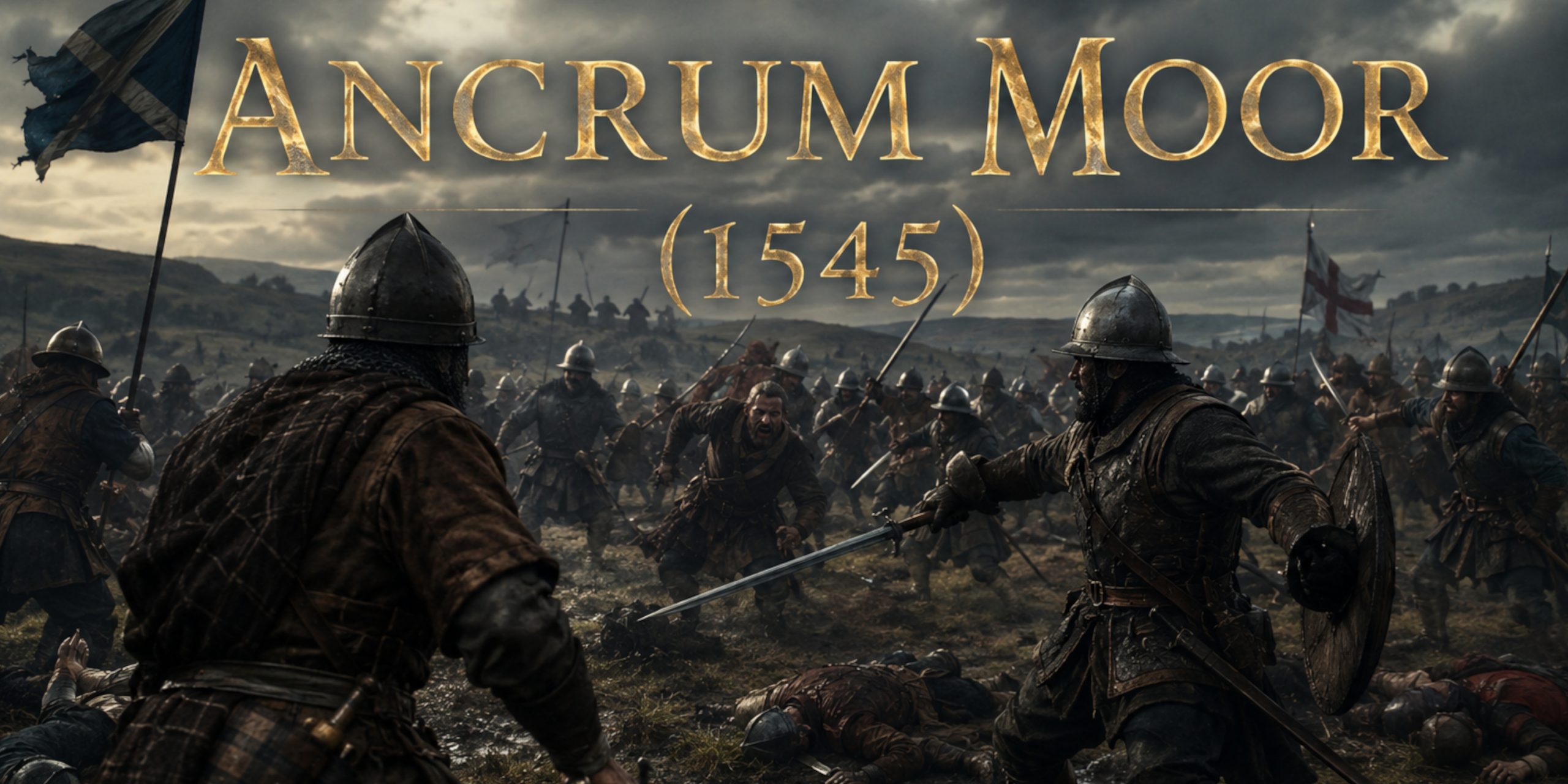
The Battle of Ancrum Moor, fought on 27 February 1545 near Jedburgh in the Scottish Borders, was one of the most dramatic Scottish victories during the conflict known as the Rough Wooing. It was not a battle decided by overwhelming numbers or expensive equipment. It was a lesson in terrain, timing and the dangerous assumption that a retreating enemy is a defeated one.
An English force under Sir Ralph Eure and Sir Brian Layton advanced through the Borders as part of Henry VIII’s attempt to force a marriage alliance between the young Mary, Queen of Scots, and his son Edward. After months of destruction across southern Scotland, the English believed they had broken local resistance.
The Scots had other ideas. Border families who spent generations perfecting the art of sudden violence in difficult countryside turned Ancrum Moor into a trap. The result was a short, brutal encounter that reversed English momentum and became one of the great examples of 16th century Scottish battlefield deception.
History occasionally reminds us that chasing an enemy uphill while wearing armour is rarely the genius move it feels like at the time.
Background: The Rough Wooing
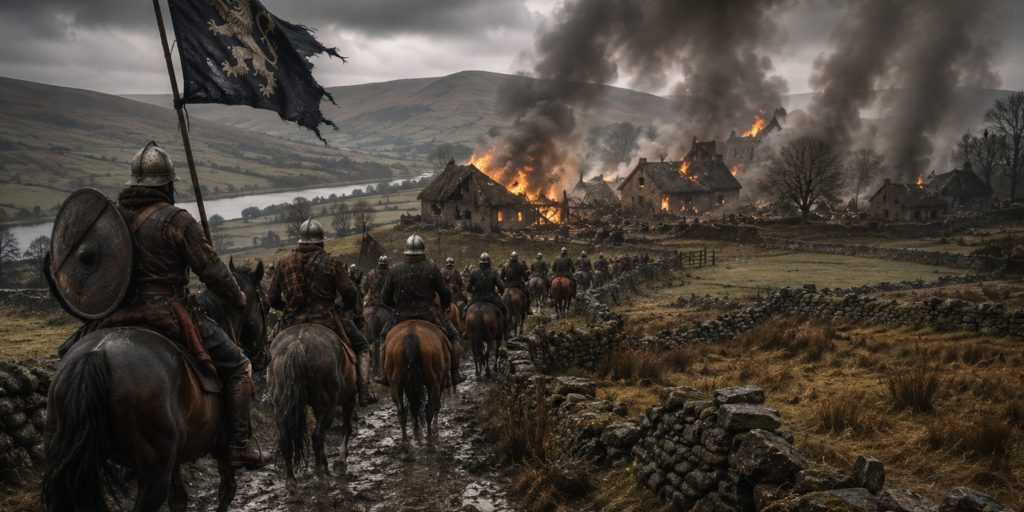
Following the Scottish defeat at Solway Moss in 1542, Henry VIII sought to secure influence over Scotland by arranging a marriage between Mary, Queen of Scots and Prince Edward.
When diplomacy failed, England turned to military pressure.
The campaign became known as the Rough Wooing, a rather polite name for years of burning, raiding and destruction.
English objectives:
- Force Scotland into an English political alliance
- Weaken French influence
- Destroy Scottish border resistance
- Pressure the Scottish nobility into accepting the marriage treaty
The strategy produced short-term devastation but strengthened anti-English feeling among many Scots.
Forces at Ancrum Moor
Numbers vary between sources, and 16th century battlefield figures should always be treated carefully. Chroniclers were not above adding a few thousand extra enemies when it made their own side look better.
| Army | Estimated Strength | Commanders | Composition |
|---|---|---|---|
| Kingdom of Scotland | Around 2,500 to 3,000 | Archibald Douglas, Earl of Angus; Norman Leslie; Scott and Kerr border leaders | Border cavalry, spearmen, infantry, local levies |
| Kingdom of England | Around 3,000 to 5,000 | Sir Ralph Eure; Sir Brian Layton | English cavalry, infantry, border allies, mercenaries |
Leaders and Troop Composition
Scottish Commanders

| Leader | Role |
| Archibald Douglas, 6th Earl of Angus | Senior Scottish commander and experienced noble leader |
| Norman Leslie | Military commander from the powerful Leslie family |
| Walter Scott of Buccleuch | Border leader whose followers played a major role |
| Kerr clan leaders | Provided experienced Border fighters |
Scottish troops included:
- Border horsemen skilled in fast raids and ambush warfare
- Pike and spear formations
- Highland and Lowland infantry elements
- Local fighters familiar with the terrain
The Scottish army was not a polished Renaissance force, but it contained men who understood Border warfare better than almost anyone.
English Commanders

| Leader | Role |
| Sir Ralph Eure | English commander and border official |
| Sir Brian Layton | Senior English officer |
| Border allies | Local forces supporting English interests |
English forces included:
- Heavy cavalry
- Light horsemen
- Infantry equipped with polearms and swords
- Missile troops
- Border auxiliaries
The English army had experience and confidence, perhaps slightly too much of the second.
Arms and Armour at Ancrum Moor
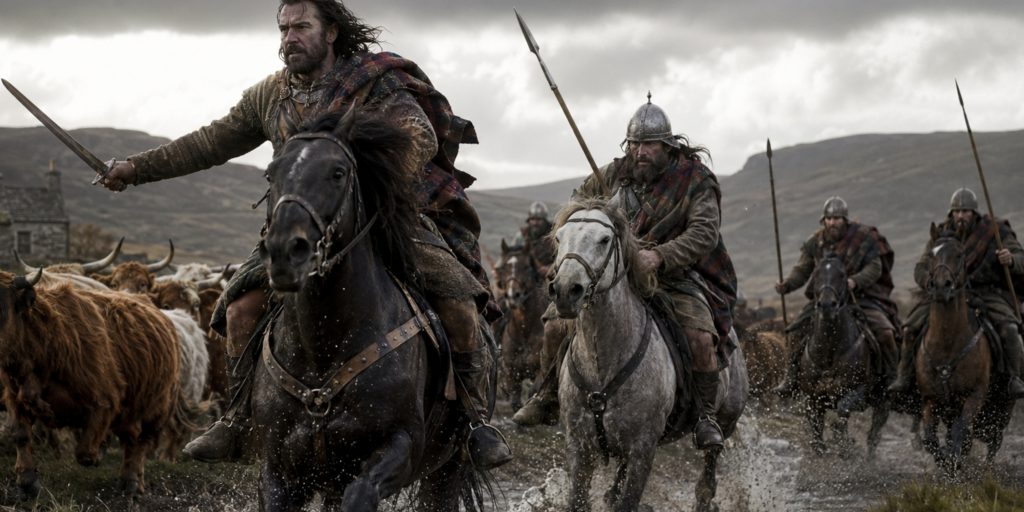
The mid-16th century battlefield was a transitional period. Medieval weapons remained common, but firearms and Renaissance equipment were changing warfare.
Scottish Weapons
| Weapon | Use |
| Basket-hilted sword predecessors | Early forms of Scottish single-handed swords used by Border fighters |
| Claidheamh dà làimh (Scottish two-handed sword) | Powerful cutting weapon associated with Highland and some Scottish warriors |
| Arming sword | Common sidearm among nobles and professional soldiers |
| Spears and pikes | Main infantry weapons against cavalry |
| Jedburgh staff | Border polearm combining features of an axe and spear |
| Dirk and knives | Close combat weapons |
English Weapons
| Weapon | Use |
| English arming sword | Standard knightly and soldier sidearm |
| Longsword | Used by some armoured fighters |
| Billhook | Classic English infantry weapon effective against cavalry |
| Halberd | Armour-breaking polearm |
| Longbow | Still present despite declining importance |
| Early firearms | Matchlocks and arquebuses beginning to appear |
Armour Used
Scottish Armour
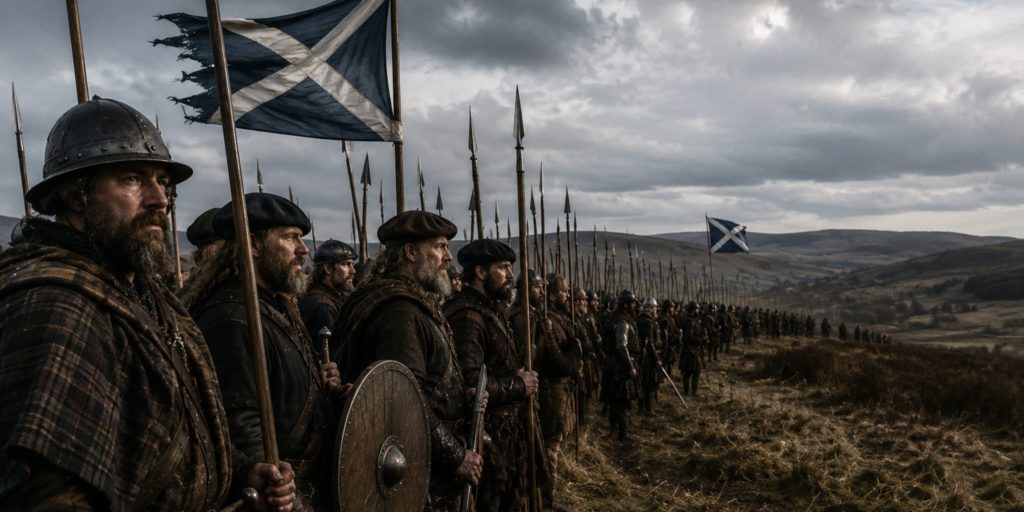
Common equipment included:
- Steel helmets including sallets and burgonets
- Mail shirts
- Jack of plates armour
- Brigandines
- Leather protection among lighter Border troops
English Armour
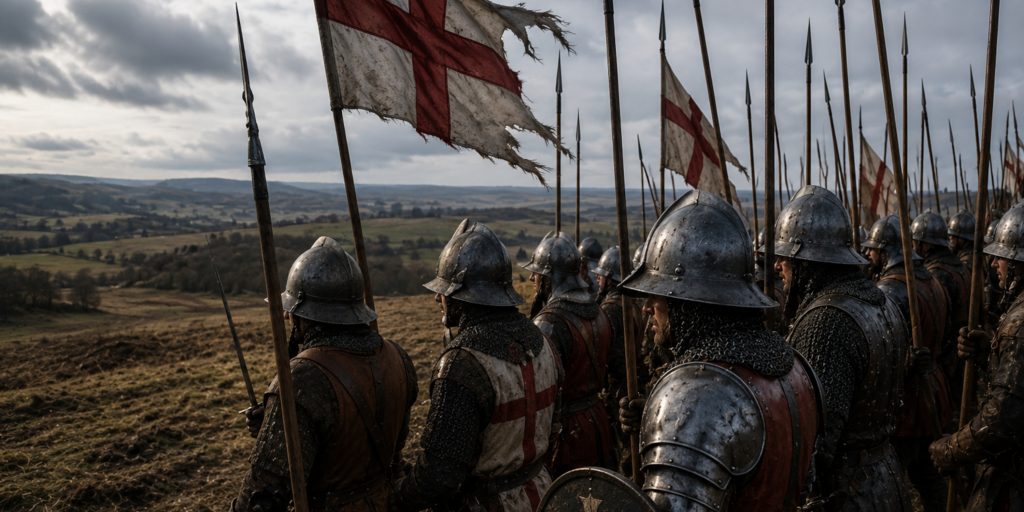
English professional troops were more likely to carry:
- Breastplates
- Full or partial plate harness
- Mail protection
- Morion-style helmets emerging in the period
- Armoured cavalry equipment
The irony of Ancrum Moor was that superior equipment became less useful once the English were drawn into unfavourable ground.
Battle Timeline
Morning, 27 February 1545
English forces advanced after previous raids in the Scottish Borders. They believed the Scottish army was weaker and unwilling to commit to a full battle.
Scottish Withdrawal
The Scots deliberately pulled back towards higher ground.
Rather than a collapse, it was a controlled movement designed to encourage pursuit.
English Advance
Sir Ralph Eure ordered his troops forward.
The English formation became stretched as they moved uphill across difficult terrain.
Scottish Counterattack
The Scottish force suddenly turned and attacked.
Fresh troops struck the English while local Border fighters attacked aggressively at close quarters.
Collapse of the English Army
English organisation broke down.
Sir Ralph Eure and Sir Brian Layton were killed, and many soldiers fled.
Battlefield Tactics: Why Scotland Won

Ancrum Moor was a victory built around discipline rather than brute force.
Key Scottish advantages:
- Better knowledge of local terrain
- Successful use of a false retreat
- High ground advantage
- Strong morale after English destruction of Border communities
- Experienced Border fighters
The English mistake was believing movement meant weakness.
The Scots created the appearance of fear, then punished their opponent for believing it.
Archaeology and the Battlefield Today
The exact battlefield landscape around Ancrum Moor remains a subject of historical investigation. Like many 16th century battle sites, archaeology is complicated by farming, changing land use and limited surviving material.
Findings and research focus on:
- Weapon fragments
- Metal detector surveys
- Battlefield landscape studies
- Possible troop movement routes
- Connections between historical accounts and terrain
Researchers continue examining how geography shaped the battle. The land itself remains one of the strongest pieces of evidence, with slopes and approaches matching descriptions of a pursuit turned disaster.
Contemporary Accounts and Quotes
George Buchanan later described the Scottish victory as a moment when English confidence turned against them:
“The English, thinking victory already obtained, followed without order.”
Scottish traditions remembered the battle as revenge for destruction during the Rough Wooing.
A commonly repeated Border sentiment captured the feeling behind resistance:
“They came to burn, but found the fire turned upon themselves.”
Later historians have treated Ancrum Moor as one of the clearest examples of Scottish tactical patience during the period.
Aftermath and Legacy
The defeat badly damaged English influence in the Borders.
Consequences included:
- Death of senior English commanders
- Temporary weakening of English operations
- Increased Scottish confidence
- Strengthening of the French alliance
- Continued resistance to Henry VIII’s marriage plans
The Rough Wooing continued, but Ancrum Moor proved Scotland could still deliver a serious military response.
Where to Visit
The battlefield area near Ancrum in the Scottish Borders remains accessible today.
Visitors interested in the conflict can also explore:
- Jedburgh and its medieval sites
- Border tower houses connected to local families
- Museums covering Scottish Border warfare
- Surviving landscapes linked to the Rough Wooing
Takeaway
Ancrum Moor was not the largest battle of the 16th century, but it was one of the most revealing.
It showed a Scottish force adapting older Border warfare methods to a changing military world. Against a confident invader, local knowledge and patience overcame numbers and equipment.
The battle’s lesson was simple enough: never assume the person running away has actually lost. Especially in the Scottish Borders, where retreating could just mean someone had found a better place to hit you from.