The Coldstream Guards entered the Napoleonic era with something most regiments could only acquire through considerable bloodshed: a reputation already more than a century old.
Raised in 1650 as George Monck’s Regiment, the unit had fought at Dunbar, served the restored monarchy, campaigned in Flanders and faced the Americans during the Revolutionary War. By the time Britain entered the long struggle against Revolutionary and Napoleonic France, the Coldstreamers were established members of the Household infantry and one of the most prestigious formations in the British Army.
Prestige, of course, does not stop musket balls.
Coldstream Guardsmen fought in Holland, Egypt, Denmark, the Iberian Peninsula and the Low Countries. They were present at battles including Talavera, Barrosa, Fuentes de Oñoro, Salamanca and San Sebastián before the regiment’s most famous Napoleonic action at Waterloo in 1815.
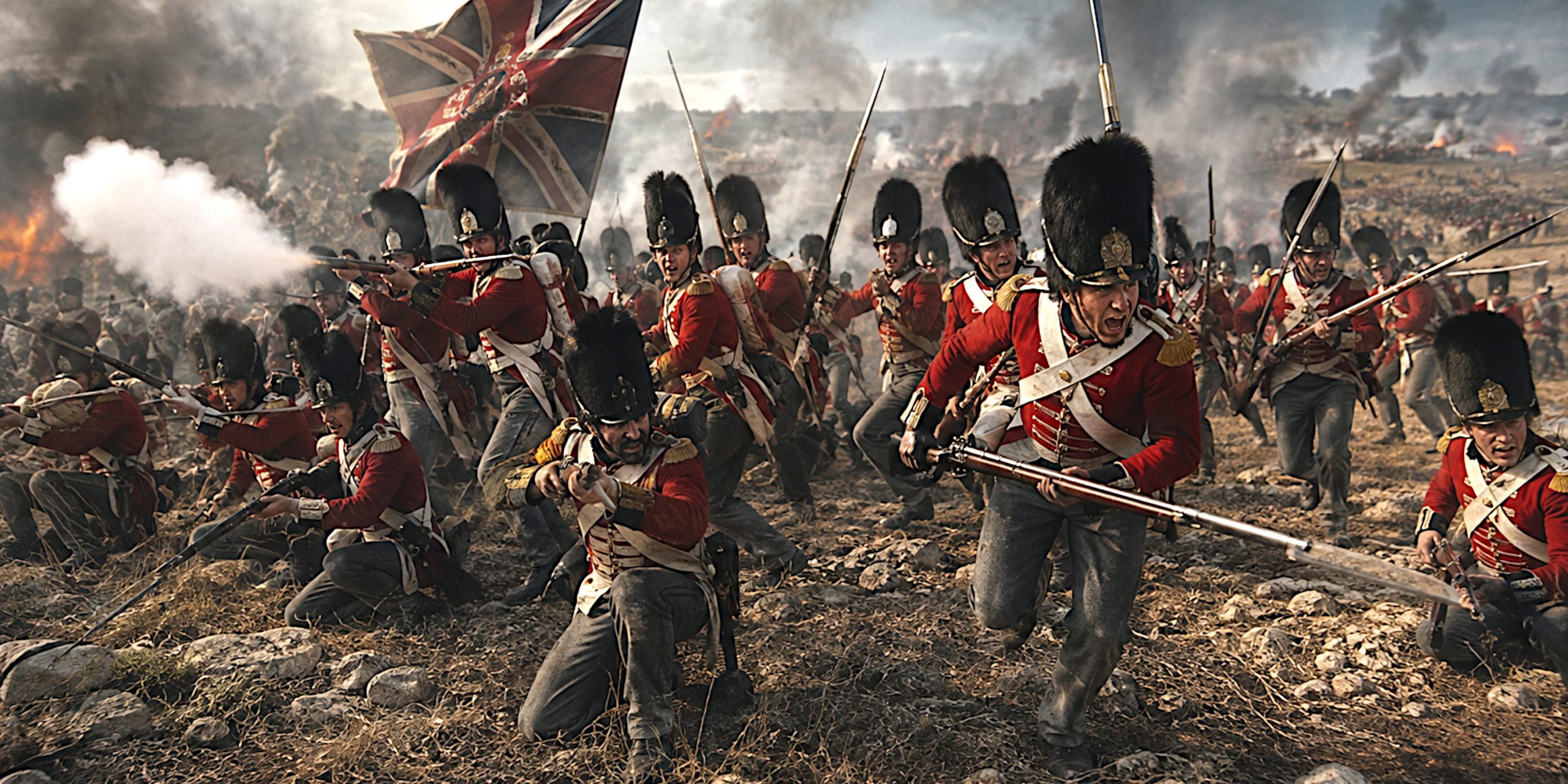
There, around the walls, gardens and burning buildings of Hougoumont, the Coldstream Guards helped defend one of the most fiercely contested positions of the entire battle.
Their Napoleonic story is therefore much larger than Waterloo, although Waterloo understandably casts a very long shadow.
Coldstream Guards: Napoleonic Overview
| Detail | Coldstream Guards |
|---|---|
| Founded | 1650 |
| Founder | George Monck |
| Napoleonic-era designation | 2nd Regiment of Foot Guards |
| Type | Household infantry |
| Principal role | Elite line infantry and ceremonial guard |
| Main weapon | Flintlock infantry musket and bayonet |
| Officers’ weapons | Infantry officer’s sword, commonly supplemented by pistol |
| Specialist swords | Hangers and short swords associated with some NCOs, musicians and specialist appointments |
| Major campaigns | Holland, Egypt, Copenhagen, Walcheren, Peninsular War, Waterloo Campaign |
| Famous actions | Talavera, Barrosa, Fuentes de Oñoro, Salamanca, San Sebastián, Quatre Bras, Waterloo |
| Most famous Napoleonic action | Defence of Hougoumont |
| Motto | Nulli Secundus, Second to None |
The regiment was officially styled the 2nd Regiment of Foot Guards during much of this period. The familiar shortened title “Coldstream Guards” was not formally adopted until 1855, although Coldstream Guards and Coldstreamers are perfectly sensible terms when discussing the earlier regiment.
Why Were the Coldstream Guards Considered Elite?
The Guards enjoyed higher social prestige than ordinary line infantry regiments, but their battlefield value came from rather more practical qualities.
Selection, discipline, institutional experience and strong regimental identity mattered greatly. Guards officers were often well connected, but the rank and file still had to march, drill, fire and endure exactly the same unpleasant realities as everyone else.
The Guards were expected to maintain:
- strict discipline
- high standards of drill
- reliable battlefield cohesion
- strong physical appearance and bearing
- proficiency with musket and bayonet
- the ability to manoeuvre under fire
- unusually high standards of turnout
It would be misleading to imagine every Guardsman as some enormous super-soldier towering over the rest of Wellington’s army. Recruiting preferences could produce an impressive body of men, but the decisive distinction was organisational.
A Guards battalion was valuable because Wellington could reasonably expect it to remain a battalion when things became unpleasant.
That quality is rather difficult to illustrate in a uniform plate, but considerably more important than shiny buttons.
The Coldstream Guards Before Napoleon
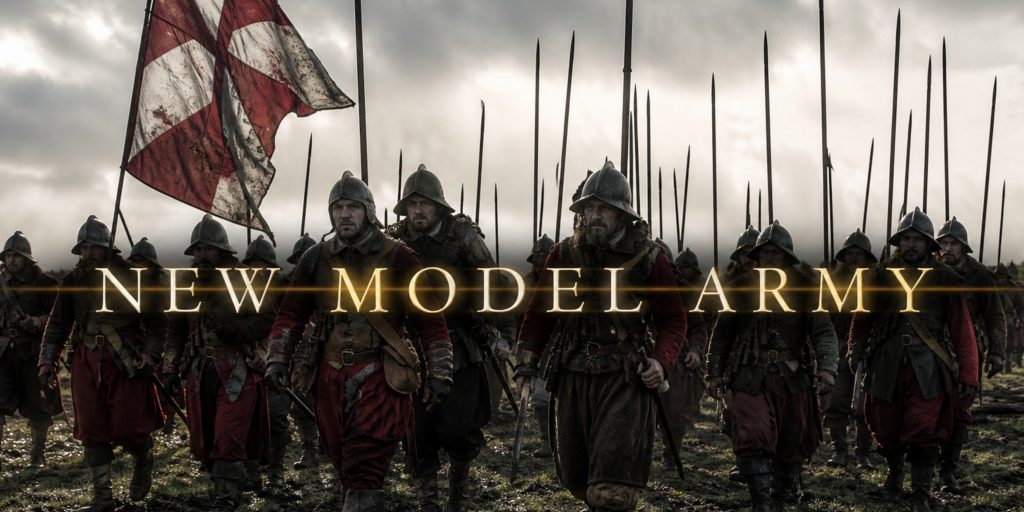
The regiment was raised in 1650 when Oliver Cromwell appointed George Monck to command a regiment of the New Model Army.
Monck’s soldiers subsequently became instrumental in the political events surrounding the Restoration of Charles II. Their association with the village of Coldstream on the Scottish border ultimately provided the regiment’s enduring name.
By the eighteenth century the Coldstreamers had accumulated considerable campaign experience, including service during the War of the League of Augsburg, the War of the Austrian Succession and the American Revolutionary War.
They therefore entered the wars against Revolutionary France as an old institution rather than a newly raised formation.
The French Revolutionary Wars
The regiment’s Napoleonic story really begins before Napoleon became emperor.
The 1st Battalion deployed to the Netherlands in 1793 during the French Revolutionary Wars. Coldstreamers fought at Lincelles and participated in operations associated with the Flanders campaign.
The expedition ultimately demonstrated many of the British Army’s weaknesses during the 1790s. Command arrangements were frequently cumbersome, coalition warfare was difficult and logistics could be miserable.
The Guards were not immune to any of this.
The campaign nevertheless gave officers and soldiers experience against Revolutionary French armies whose tactical aggression had surprised much of Europe.
Egypt, 1801
In 1800 the 1st Battalion was sent to Gibraltar before joining the British expedition against French forces in Egypt.
The Coldstream Guards landed at Aboukir Bay in March 1801.
The amphibious operation was difficult and conducted under French opposition. British troops had to come ashore from boats, organise themselves and attack while exposed to enemy fire.
The Coldstreamers subsequently fought at Alexandria.
The Egyptian campaign ended with the removal of the remaining French army from Egypt and represented an important improvement in British military performance after the frustrations of earlier campaigns.
The regiment returned to Britain in December 1801.
Copenhagen, 1807
In 1807 the 1st Battalion participated in the Copenhagen expedition.
Britain feared that Napoleon might gain control of the Danish fleet and dramatically alter the naval balance in northern Europe. A British expedition therefore attacked Copenhagen and seized much of Denmark’s fleet.
The operation remains politically controversial. Denmark was neutral, and the bombardment of Copenhagen caused substantial civilian suffering.
From a purely military perspective, however, the expedition achieved its strategic objective.
For the Coldstream Guards it was another example of the extraordinary geographical range demanded of British infantry during the Napoleonic Wars.
The Walcheren Expedition
The 2nd Battalion participated in the disastrous Walcheren Expedition of 1809.
Britain attempted to strike French-controlled territory in the Low Countries and destroy naval facilities around Antwerp.
The operation became notorious.
Disease devastated the British force. Thousands became ill with what was generally described as “Walcheren fever”, probably involving malaria and other diseases flourishing in the marshy environment.
The French were certainly dangerous. The mosquitoes may have been worse.
The campaign achieved little strategically and became a political embarrassment in Britain.
The Coldstream Guards in the Peninsular War
The Peninsular War provided the 1st Battalion with sustained campaigning experience.
It deployed to Portugal in 1809 and became part of the army commanded by Arthur Wellesley, later Duke of Wellington.
Coldstream Guardsmen subsequently participated in a remarkable sequence of operations as Wellington’s army drove French forces from Portugal and Spain and eventually crossed into France.
Principal Coldstream actions in the Peninsula
| Year | Action | Significance |
| 1809 | Oporto | Wellington drove Marshal Soult from northern Portugal |
| 1809 | Talavera | Major Anglo-Spanish battle against French forces |
| 1811 | Barrosa | Fierce British victory near Cádiz |
| 1811 | Fuentes de Oñoro | Wellington blocked Masséna’s attempt to relieve Almeida |
| 1812 | Salamanca | Major victory that badly damaged Marmont’s army |
| 1813 | San Sebastián | Brutal siege and storming operation |
| 1813 | Nive | Fighting during Wellington’s invasion of southern France |
Parts of the 2nd Battalion also served around Cádiz before joining later operations in the Peninsula.
Talavera
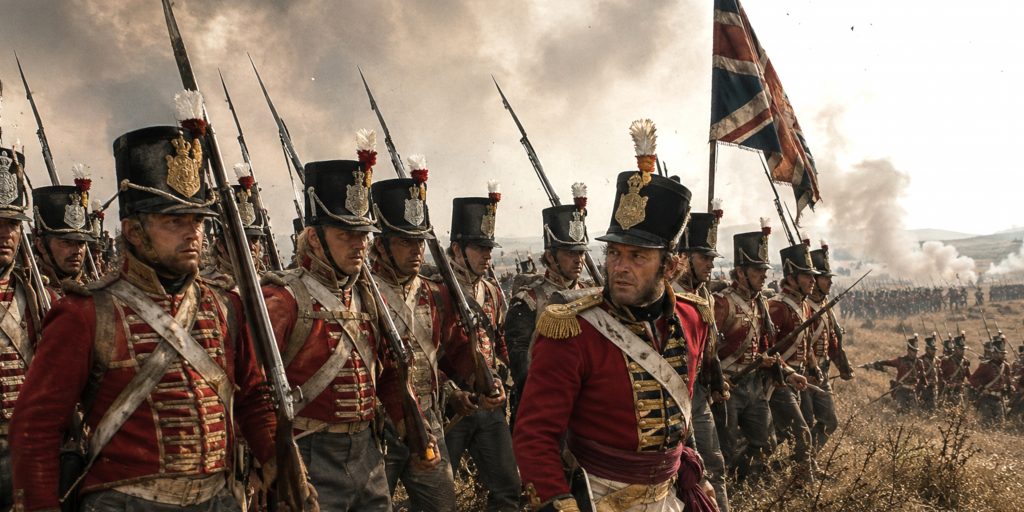
At Talavera in July 1809, Wellington’s British army fought alongside Spanish forces against a larger French army commanded by King Joseph Bonaparte and Marshal Jourdan.
The battle demonstrated the effectiveness of disciplined British infantry fire when deployed carefully against French attacks.
The Guards suffered in the hard fighting, and Talavera exposed one recurring truth of Napoleonic combat: elite status did not provide elite protection.
Musketry and artillery treated social prestige with complete indifference.
Barrosa
The Battle of Barrosa on 5 March 1811 was one of the fiercest actions involving British troops in southern Spain.
A British-Portuguese force under Lieutenant-General Thomas Graham fought Marshal Victor’s French army near Cádiz.
The engagement became a confused and extremely violent battle in which British infantry attacked aggressively.
Barrosa is sometimes overshadowed by Wellington’s better-known victories, partly because he was not commanding there. It deserves considerably more attention than it normally receives.
For the Guards it was another demonstration that their role was not restricted to standing elegantly outside royal residences.
Fuentes de Oñoro
At Fuentes de Oñoro in May 1811, Wellington attempted to prevent Marshal Masséna from relieving the besieged fortress of Almeida.
The battle included savage fighting through the village itself.
British infantry repeatedly contested streets, walls and buildings in conditions where carefully rehearsed parade-ground manoeuvres rapidly became rather theoretical.
The Allied position held.
Masséna withdrew, and French hopes of reversing Wellington’s position in Portugal diminished further.
Salamanca
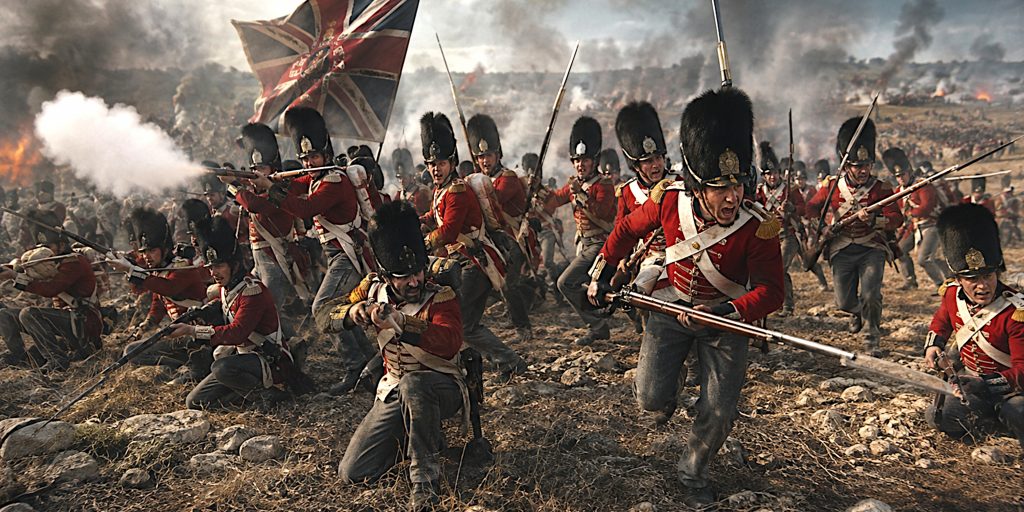
The Battle of Salamanca on 22 July 1812 was one of Wellington’s finest victories.
Marshal Marmont extended the French army while attempting to manoeuvre around Wellington’s position. Wellington recognised the mistake and attacked.
The resulting Allied offensive shattered large sections of the French army.
For soldiers who had spent years enduring marches, sieges and defensive operations, Salamanca showed what Wellington’s army could accomplish when given the opportunity to attack a vulnerable enemy.
It also opened the road towards Madrid.
San Sebastián
The siege of San Sebastián in 1813 was a very different form of warfare.
British and Portuguese forces assaulted powerful fortifications after artillery had opened breaches in the city’s defences.
Storming a breach was among the most dangerous tasks a Napoleonic infantryman could face. Attackers were channelled towards prepared positions while defenders used muskets, artillery and whatever other weapons were available at brutally short range.
The eventual capture of San Sebastián was followed by looting, violence and fire within the city.
This is an uncomfortable part of the Allied advance and should not be polished away simply because Wellington ultimately belonged to the victorious side.
The Waterloo Campaign
Napoleon’s return from Elba in 1815 transformed Europe almost overnight.
The 2nd Battalion Coldstream Guards joined Wellington’s army in the Low Countries.
Napoleon intended to strike quickly, separate Wellington’s Anglo-Allied army from Blücher’s Prussians and defeat them individually before overwhelming coalition forces could converge on France.
The strategy nearly worked.
Quatre Bras
On 16 June 1815 Wellington’s forces fought Marshal Ney around the crossroads at Quatre Bras.
The battle developed piecemeal as Allied reinforcements arrived.
The Coldstream Guards were among the units drawn into the fighting. Two days later, after the Prussian defeat at Ligny forced Wellington to withdraw northwards, the army established itself along the ridge at Mont-Saint-Jean.
The Coldstreamers were about to fight the action that would define their Napoleonic reputation.
Hougoumont
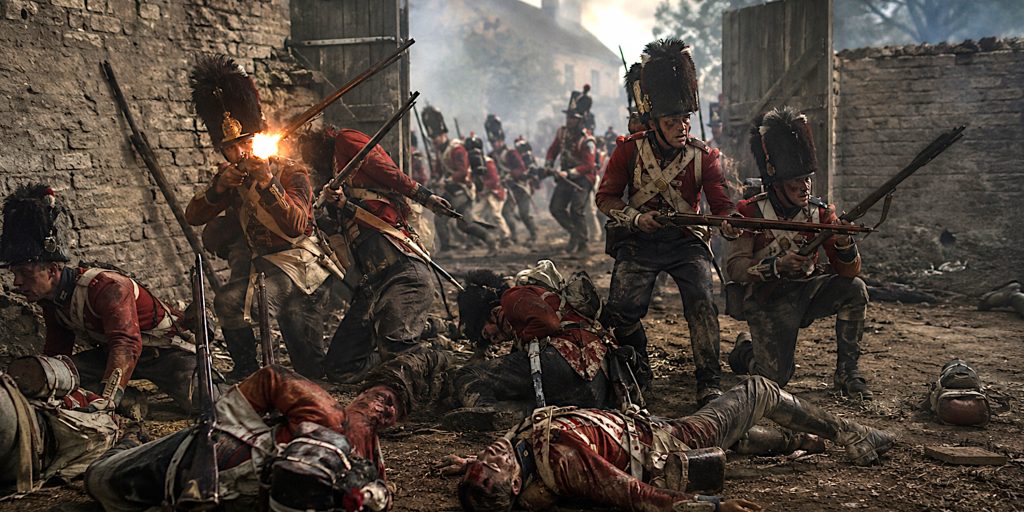
Hougoumont stood forward of Wellington’s right flank.
The complex consisted of a château, farm buildings, gardens, walls, orchards and woodland. Its substantial walls made it a natural defensive position.
Wellington placed Guards troops and German light infantry in and around the complex.
Napoleon intended the French attack against Hougoumont partly as a diversion designed to draw Wellington’s reserves towards his right.
Instead, Hougoumont became a battle inside the battle.
French troops repeatedly attacked the position throughout 18 June.
The fighting consumed men and ammunition on an extraordinary scale.
Closing the Gate at Hougoumont
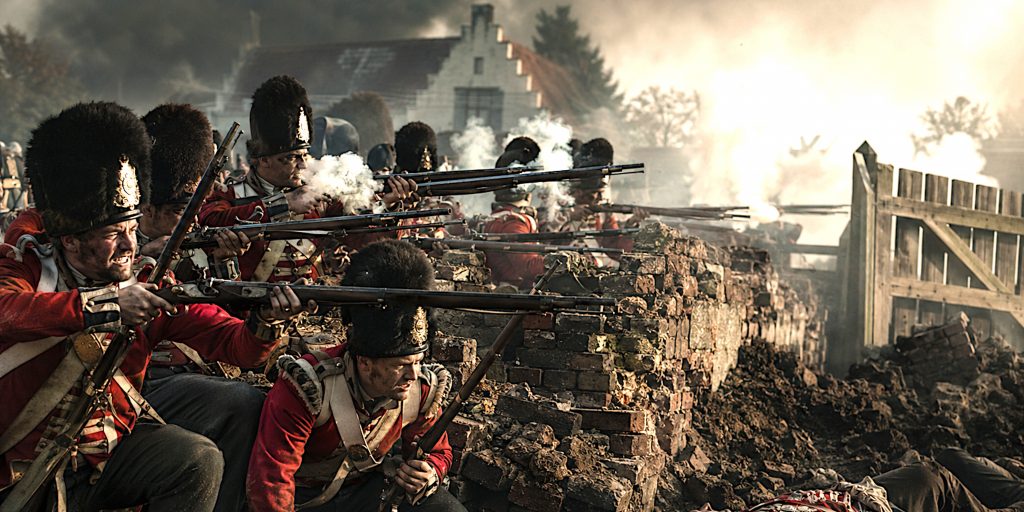
The most famous Coldstream episode occurred when French soldiers broke through Hougoumont’s northern gate.
Sous-Lieutenant Legros, reportedly carrying an axe, helped force an entrance.
A small group of French soldiers penetrated the courtyard.
Lieutenant-Colonel James Macdonell and other defenders managed to force the gate shut again.
The Frenchmen trapped inside were killed, with a young drummer traditionally said to have been spared.
The National Army Museum describes the gate episode as the closest the French came to capturing the château during almost nine hours of fighting.
It has become one of the defining stories of Waterloo.
There is some danger in allowing the drama of the gate to consume the wider story, however. Hougoumont survived because thousands of men fought around the position for hours, ammunition was continually supplied and reinforcements were committed when necessary.
Closing a gate makes a magnificent painting.
Keeping an entire defensive system functioning under repeated attack is less picturesque, but arguably more impressive.
Who Defended Hougoumont?
The defence was not exclusively a Coldstream Guards achievement.
That deserves emphasis.
Troops involved included elements of:
- Coldstream Guards
- 3rd Foot Guards
- 1st Foot Guards
- Nassau troops
- Hanoverian troops
- King’s German Legion personnel
Different units occupied or fought around different parts of the position during the battle.
The Coldstream Guards nevertheless played a central role, particularly through their light company and reinforcements committed to the defence.
Calling Hougoumont simply “the Coldstream Guards’ battle” makes good regimental mythology but rather untidy history.
Arms and Armour
The Napoleonic Coldstream Guards fought primarily as musket-armed infantry.
There was essentially no battlefield armour for ordinary Guardsmen. Their protection came from formation, terrain, discipline and the ability to persuade the enemy to stand somewhere else by firing lead at him.
Weapons of the Coldstream Guards
| Weapon | Users | Role |
| India Pattern “Brown Bess” musket | Rank and file | Principal infantry firearm |
| Socket bayonet | Rank and file | Close combat and defence against cavalry |
| Infantry officer’s sword | Officers | Personal defence, command symbol and close combat |
| Spadroon-type officer’s sword | Officers, particularly earlier in the period | Regulation and semi-regulation sidearm |
| 1803 Pattern Infantry Officer’s Sword | Flank-company and other officers | Curved fighting sword increasingly associated with active service |
| Hanger or short sword | Selected specialists/NCO traditions | Utility and close-combat sidearm |
| Flintlock pistol | Some officers | Personal sidearm |
The Brown Bess Musket
The principal weapon was the smoothbore flintlock musket generally known as the Brown Bess.
During the Napoleonic period the India Pattern was extensively issued throughout the British Army.
Typical characteristics included:
- smoothbore barrel
- approximately .75 calibre
- flintlock ignition
- socket bayonet
- effective battlefield use based on volley fire rather than individual precision shooting
The musket was not particularly accurate at long range.
That observation can sometimes be misleading. Napoleonic infantry tactics did not require hundreds of soldiers to behave as individual marksmen.
The real weapon was arguably the battalion.
Officers attempted to control when hundreds of muskets were loaded, presented and fired. A disciplined volley at relatively close range could be devastating.
The Bayonet
The socket bayonet transformed the musket into a thrusting weapon.
Bayonet fighting certainly occurred, particularly around fortifications and enclosed positions such as Hougoumont, although many battlefield charges were decided before opposing formations physically collided.
One side frequently lost cohesion or withdrew.
At Hougoumont, however, walls, gates, doors and courtyards created opportunities for genuinely close combat.
Here the distinction between musket and spear became rather academic.
Swords Used by Coldstream Guards Officers
Swords remained important among officers even though the musket dominated infantry combat.
1796 Pattern Infantry Officer’s Sword
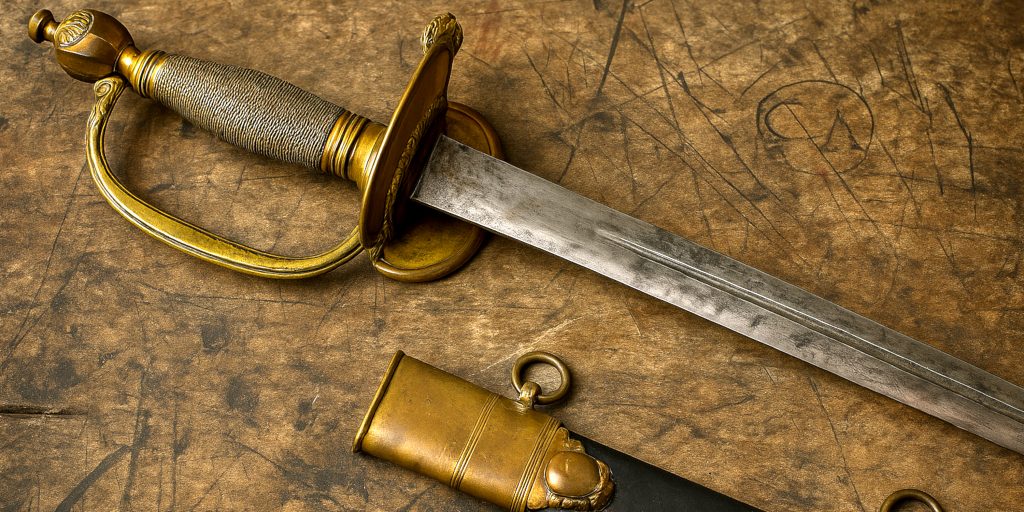
The 1796 Pattern Infantry Officer’s Sword is closely associated with British infantry officers during the Revolutionary and Napoleonic periods.
It was a straight, relatively light sword derived from the spadroon tradition.
It was elegant and suitable as a badge of rank, although opinions regarding its fighting qualities were decidedly mixed.
Its light blade could thrust effectively but lacked the authority of heavier cutting weapons.
1803 Pattern Infantry Officer’s Sword
The 1803 Pattern Infantry Officer’s Sword provided a more substantial alternative.
It typically featured a curved blade and elaborate gilt guard incorporating the royal cypher.
It was particularly associated with officers of grenadier and light companies, although variations and private purchases complicate any attempt to impose absolute uniformity.
For a Coldstream officer expecting serious close combat, an 1803-style sword was considerably more reassuring than some of the lighter spadroons.
Officers also purchased swords privately, meaning surviving examples vary considerably in blade dimensions, decoration and quality.
Uniform and Equipment
The Guards wore scarlet coats with regimental distinctions, white crossbelts and the tall infantry headgear associated with the period.
The enormous bearskins now inseparable from the public image of Guards regiments belong principally to later nineteenth-century development.
Napoleonic Guardsmen should not automatically be imagined in the modern ceremonial appearance.
Equipment carried by an infantryman could include:
- cartridge box and ammunition
- bayonet
- haversack
- canteen
- knapsack
- spare clothing
- personal possessions
- food when available
Campaigning soldiers could therefore carry substantial loads.
The immaculate Guardsman familiar from ceremonial London would have looked rather different after several days marching through Portuguese dust or Belgian rain.
Tactics
Coldstream Guards tactics broadly followed British infantry practice.
Battalions commonly fought in two-deep lines, allowing a high proportion of muskets to fire simultaneously.
Important tactical formations included:
Line: maximised firepower against infantry.
Column: useful for movement and manoeuvre.
Square: provided all-round defence against cavalry.
Skirmish order: used particularly by light infantry to screen formations and disrupt the enemy.
The Coldstream light company therefore had a somewhat different tactical role from the centre companies.
At Waterloo this light-infantry expertise was particularly useful around the broken terrain of Hougoumont.
Discipline and Battlefield Performance
The British Guards acquired an impressive reputation during the Peninsular War and Waterloo, but romantic descriptions need qualification.
They were not invincible.
Guards units suffered casualties, became disordered and could make mistakes like other troops.
Their strength lay in maintaining cohesion under circumstances in which lesser formations might deteriorate.
Years of campaigning also created experienced officers, NCOs and soldiers capable of functioning amid considerable confusion.
That institutional experience mattered enormously by 1815.
Archaeology of the Coldstream Guards and Waterloo
Battlefield archaeology has substantially enriched modern understanding of Waterloo.
The Waterloo Uncovered project has conducted extensive archaeological investigations across the battlefield, including the Hougoumont area.
Excavations have revealed material evidence connected with the fighting, including:
- musket balls
- military buttons
- uniform fittings
- coins
- fragments of equipment
- building remains
- evidence relating to destruction and reconstruction
- human and animal remains elsewhere across the battlefield landscape
The distribution of musket balls can be particularly informative.
Different armies used ammunition of differing calibres. When combined with archaeological context and documentary sources, concentrations of projectiles can help reconstruct firing positions and areas of especially intense combat.
This is one reason battlefield archaeology matters.
Memoirs tell us what people remembered.
Official reports tell us what commanders wished to record.
The ground occasionally has other opinions.
Modern archaeological work at Waterloo continues to investigate the physical landscape behind the famous narratives.
Contemporary Voices
Napoleonic military history is particularly rich in memoirs, letters and eyewitness accounts, although famous quotations should always be treated carefully. Waterloo acquired mythology almost immediately, and memorable lines were sometimes recorded years after the events concerned.
One of the most famous remarks attributed to Wellington concerning Hougoumont was that:
“The success of the battle turned upon the closing of the gates at Hougoumont.”
The sentiment has become inseparable from the Coldstream story, although versions of the wording vary in later accounts.
Wellington’s broader assessment of Waterloo is more famous still:
“It has been a damned nice thing.”
Here “nice” carried its older sense of something finely balanced or uncertain.
The popular modern version, “a close-run thing”, captures the meaning rather better for twenty-first-century ears.
Waterloo was indeed close. Anyone suggesting otherwise has probably spent rather more time looking at the final map than studying the battle hour by hour.
Casualties and the Cost of Service
Campaign statistics can make Napoleonic warfare appear rather tidy.
It was anything but.
Coldstream Guardsmen experienced wounds from:
- musket balls
- artillery round shot
- canister
- shell fragments
- bayonets
- swords
- disease
- exposure
- infection
Disease often killed more soldiers during campaigns than enemy action.
The Walcheren expedition provides the most dramatic example in the regiment’s Napoleonic experience, but illness remained a constant threat in Iberia and elsewhere.
Medical treatment had limitations, although Napoleonic military surgery was considerably more systematic than popular caricature sometimes suggests.
A severe limb wound could result in amputation. Infection remained a deadly danger afterwards.
Coldstream Guards Napoleonic Campaign Timeline
| Date | Campaign or Battle |
| 1793 | Flanders campaign |
| 1793 | Lincelles |
| 1793 | Tourcoing operations |
| 1801 | Landing at Aboukir |
| 1801 | Alexandria |
| 1807 | Copenhagen |
| 1809 | Oporto |
| 1809 | Talavera |
| 1809 | Walcheren Expedition |
| 1810 to 1812 | Coldstream detachment serves around Cádiz |
| 1811 | Barrosa |
| 1811 | Fuentes de Oñoro |
| 1812 | Salamanca |
| 1813 | San Sebastián |
| 1813 | Nive |
| 1815 | Quatre Bras |
| 1815 | Waterloo |
| 1815 to 1816 | Occupation of France |
The National Army Museum records Coldstream participation across this remarkable sequence of campaigns, from Egypt and Copenhagen through the Peninsula to Waterloo.
After Waterloo
The Coldstream Guards formed part of the Allied occupation force in France after Napoleon’s defeat.
The 2nd Battalion remained in Paris until 1816.
Waterloo became central to the regiment’s identity, particularly the defence of Hougoumont.
Yet the Coldstream experience of the Napoleonic Wars had lasted far longer than one Belgian afternoon.
Coldstreamers had fought French Revolutionary armies before Napoleon became emperor. They had landed under fire in Egypt, participated in the controversial attack on Copenhagen, endured the disease-ridden Walcheren expedition and campaigned through Portugal, Spain and southern France.
Waterloo was the conclusion rather than the whole story.
Coldstream Guards Battle Honours from the Era
The regiment’s wider Revolutionary and Napoleonic service contributed to battle honours associated with campaigns including:
- Egypt
- Talavera
- Barrosa
- Fuentes de Oñoro
- Salamanca
- San Sebastián
- Nive
- Peninsula
- Waterloo
The regiment today holds more than a hundred battle honours accumulated across its long history.
Where to See Coldstream Guards Napoleonic Artefacts
Several collections are particularly useful for anyone interested in the regiment.
National Army Museum, London
The National Army Museum holds extensive material relating to the Coldstream Guards and Waterloo.
Its collection includes Denis Dighton’s 1815 watercolour depicting the defence of Hougoumont by the Coldstream Guards.
The museum also holds the Coldstream Guards archive collection.
The National Archives, Kew
Muster rolls provide one of the most useful resources for tracing individual Guardsmen.
Coldstream muster rolls covering 1759 to 1877 survive within the WO 12 series. The regiment notes that the Waterloo muster rolls for the 2nd Battalion cover 29 December 1814 to 29 June 1815 and contain ten company musters.
Hougoumont, Belgium
The restored Hougoumont farm remains one of the essential locations on the Waterloo battlefield.
Standing inside the complex gives a much clearer impression of the fighting than maps alone can provide. Distances suddenly become very small.
The famous northern gate remains central to the site’s interpretation.
Waterloo Battlefield
The wider battlefield allows visitors to understand Hougoumont in relation to Wellington’s ridge, La Haye Sainte and the direction of the French attacks.
The Anglo-Allied army at Waterloo numbered roughly 68,000 men against Napoleon’s approximately 72,000, before the decisive intervention of the Prussians.
Coldstream Guards Versus Ordinary Line Infantry
| Feature | Coldstream Guards | Typical British Line Infantry |
| Status | Household troops | Line regiment |
| Battlefield role | Infantry | Infantry |
| Principal firearm | Brown Bess musket | Brown Bess musket |
| Bayonet | Yes | Yes |
| Tactical system | Broadly standard British infantry doctrine | Standard British infantry doctrine |
| Officer swords | 1796 and 1803 patterns/private variants | Similar patterns |
| Institutional prestige | Exceptionally high | Varied by regiment |
| Ceremonial duties | Major responsibility | Limited |
| Recruiting expectations | Generally high | Varied |
| Combat effectiveness | Highly regarded | Varied considerably by regiment and experience |
The important point is that Guardsmen did not possess some secret battlefield technology.
They fought with broadly the same weapons and tactical principles as the rest of Wellington’s infantry.
Their reputation depended upon how reliably they used them.
My View of the Napoleonic Coldstream Guards
The Coldstream Guards are an interesting regiment to study precisely because separating history from regimental mythology can be difficult.
Hougoumont deserves its fame.
Holding an enclosed position while buildings burned, ammunition diminished and French infantry repeatedly attacked was an extraordinary feat. The closing of the northern gate deserves to be remembered as one of the great small-unit episodes of the Napoleonic Wars.
But I find the longer Coldstream story more interesting.
These soldiers had been sent from damp Dutch fields to Egyptian beaches, from Copenhagen to Portuguese roads and Spanish fortresses. Some experienced years of campaigning before arriving in Belgium in 1815.
That accumulated experience helps explain what happened at Hougoumont.
The Guards did not suddenly become formidable on the morning of Waterloo because history required suitable heroes. They belonged to an army that had spent years learning, sometimes painfully, how to fight Napoleon’s forces.
Nor should Hougoumont be stripped of the Germans, Nassauers and other Guards units who defended it. Regimental histories naturally prefer neat ownership of famous moments. Battles rarely cooperate.
The Coldstream Guards’ Napoleonic reputation survives without exaggeration.
If anything, the reality is more interesting.
Legacy
Waterloo transformed the Coldstream Guards into one of the regiments most closely associated with Britain’s victory over Napoleon.
Hougoumont became part of regimental identity, military art and British popular memory.
The regiment itself continued serving through the Crimea, Egypt, the First and Second World Wars and numerous later conflicts. It remains the oldest continuously serving regiment in the British regular army, tracing its existence back to 1650.
Its Napoleonic reputation rests principally on Waterloo.
It deserves to rest on rather more.
The Coldstream Guards of 1815 were the product of decades of institutional tradition and more than twenty years of warfare against Revolutionary and Napoleonic France. Hougoumont was their most famous battle, but Egypt, Talavera, Barrosa, Salamanca and San Sebastián explain something of how they became the soldiers capable of holding it.
SEO Meta
SEO Title: Coldstream Guards in the Napoleonic Wars: Battles, Weapons & Waterloo
Meta Description: Explore the Coldstream Guards during the Napoleonic Wars, including their weapons, uniforms, Peninsular War battles, archaeology and famous defence of Hougoumont at Waterloo.
Suggested URL: /coldstream-guards-napoleonic-wars/
Primary Keyword: Coldstream Guards Napoleonic Wars
Secondary Keywords: Coldstream Guards Waterloo, Coldstream Guards Hougoumont, Napoleonic Guards, British Guards Waterloo, Coldstream Guards history, Coldstream Guards weapons, 2nd Regiment of Foot Guards
Suggested Article Title: Coldstream Guards in the Napoleonic Wars: From the Peninsula to Hougoumont
Alternative SEO Title: Coldstream Guards at Waterloo: History, Weapons and Napoleonic Battles