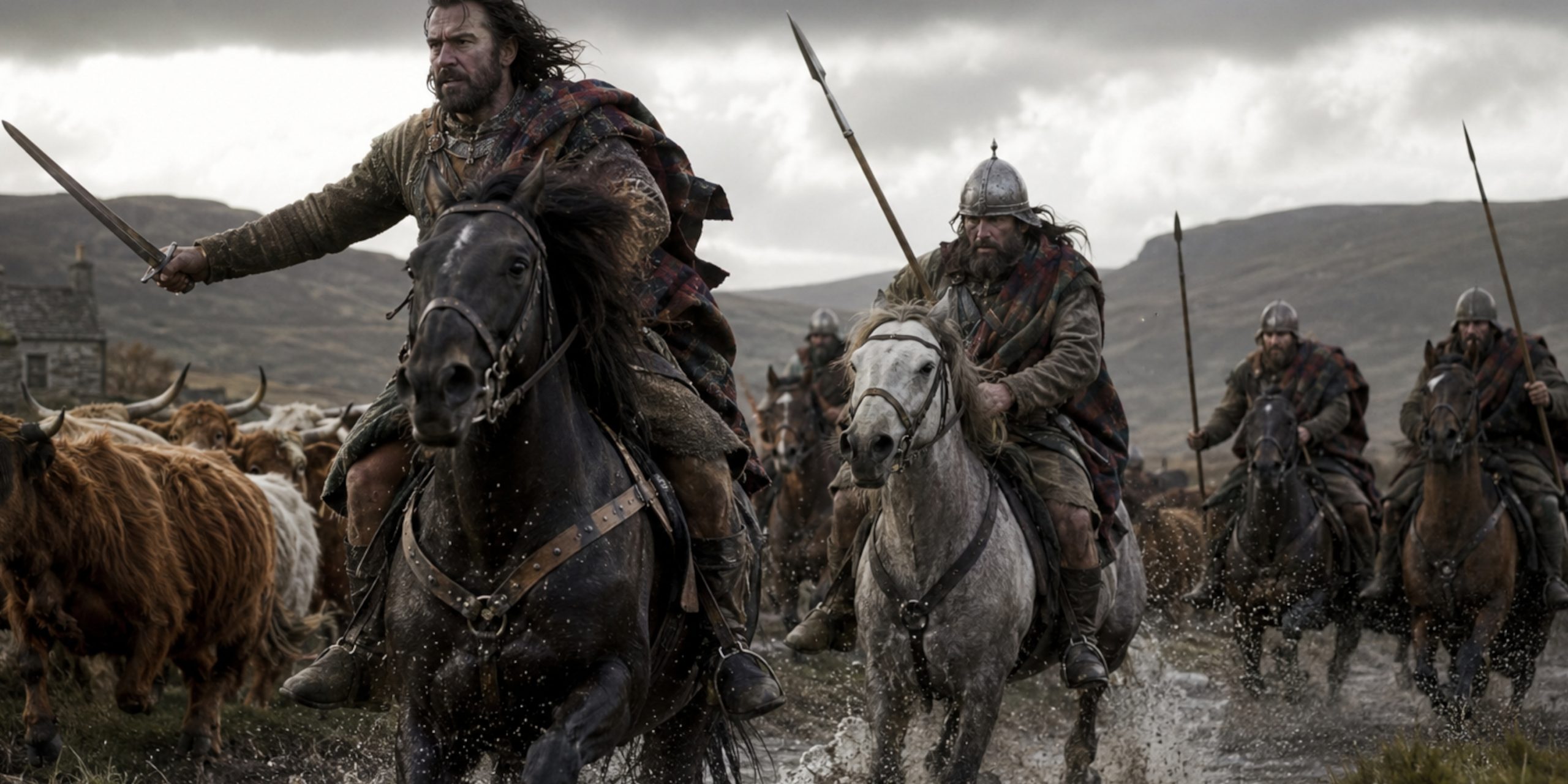
The Scottish Borders produced some of the finest light cavalry in northern Europe, though “fine” perhaps depends on whether they were riding alongside you or stealing your cattle in the rain at three in the morning.
Between the 15th and 16th centuries, the Anglo-Scottish frontier became a brutal military zone shaped by raids, clan feuds, dynastic wars, and outright survival. Out of this harsh environment emerged the Border horsemen, fast-moving cavalrymen who knew every ford, hill path, and ambush point between Berwick and Carlisle. They were not knights in the romantic sense. Most were hard riders, lightly armoured, and raised in communities where violence was not exceptional. It was seasonal.
The Border cavalry served Scottish kings during major campaigns against England, but they also fought private wars between rival families. Loyalty could shift quickly. A man might ride for the Crown one month and raid his neighbour the next. In many ways, the Borders operated under their own grim logic.
English observers both feared and admired them. Their speed, endurance, and ability to vanish into rough country made them deeply frustrating opponents. Tudor officials spent decades trying to suppress them, usually with mixed results and a considerable amount of paperwork.
The Borderlands and the Rise of Cavalry Warfare
The Scottish Borders were uniquely suited to mounted warfare. The landscape consisted of rolling hills, narrow valleys, moorland, forests, and poor roads. Infantry alone struggled to respond quickly to raids, especially when livestock theft could happen across vast distances in a single night.
Horses became essential.
The Border families developed a style of warfare centred around mobility rather than heavy shock combat. Their cavalry tactics focused on:
- Fast raids known as “reives”
- Ambushes and skirmishing
- Burning settlements
- Capturing livestock
- Pursuing enemy raiders
- Intelligence gathering
- Avoiding large pitched battles where possible
This created a militarised frontier society where almost every able-bodied man could ride and fight.
The famous Border surnames became synonymous with mounted warfare:
- Armstrong
- Elliot
- Graham
- Kerr
- Scott
- Douglas
- Maxwell
- Home
- Johnston
Some families maintained private forces that rivalled small armies. The Crown often struggled to control them, especially when Scottish kings needed their military support against England.
The Border Reivers
The Border cavalry are closely associated with the Border Reivers, mounted raiders who operated on both sides of the frontier.
The word “reiver” came from “reif”, meaning robbery or plunder. It was not considered especially shameful by local standards. In fact, successful raiding could improve a family’s reputation considerably. Morality on the Borders tended to become flexible once cattle were involved.
Reivers developed highly organised systems of mounted warfare. Raids could involve:
| Activity | Purpose |
|---|---|
| Night attacks | Surprise and intimidation |
| Livestock theft | Economic warfare |
| Hostage taking | Ransom or leverage |
| Blackmail payments | Protection arrangements |
| Tower house assaults | Clan feuding |
| Cross-border scouting | Military intelligence |
Many Scottish Border horsemen were experienced fighters long before serving in royal armies. Years of raiding made them highly adaptable cavalrymen.
Arms and Armour
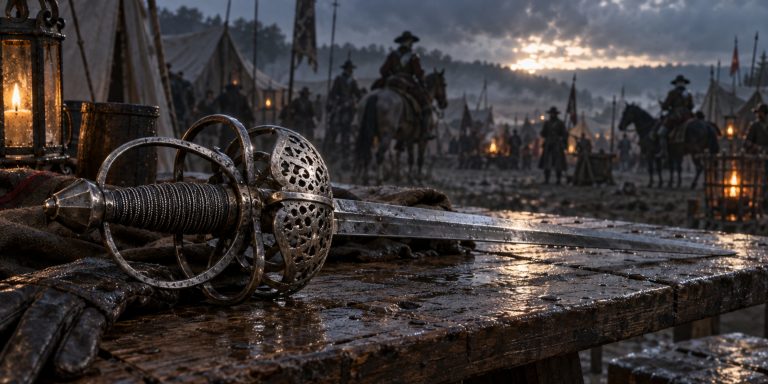
Scottish Border cavalry favoured practical equipment suited to speed and endurance rather than tournament display. Their arms reflected the realities of frontier warfare.
Swords Used by Border Cavalry
Several sword types appeared among Border riders during the 15th and 16th centuries.
| Sword Type | Description | Use |
|---|---|---|
| Arming sword | Straight double-edged blade | Common sidearm for mounted combat |
| Bastard sword | Hand-and-a-half sword | Used by wealthier riders and nobles |
| Early basket-hilt sword | Developing Scottish hilt styles | Increasingly common by late 16th century |
| Falchion or hanger | Single-edged cutting weapon | Effective in raids and close fighting |
| Dirk | Long thrusting dagger | Utility and backup weapon |
The development of the Scottish basket-hilt sword began to emerge during this period, though the classic Highland basket-hilt belonged more to the 17th century onward.
Many Border riders preferred lighter blades suited to mounted movement rather than the heavy swords associated with continental men-at-arms.
Other Weapons
Border cavalry used a wide variety of weapons depending on wealth and purpose.
Common Weapons
- Light lances
- Spears
- Javelins
- Bows
- Crossbows
- Jedburgh staves
- Axes
- Daggers
The Jedburgh staff deserves special mention. This long pole weapon combined a spear point with an axe blade and could be devastating in close fighting. It also looked exactly like the sort of thing invented by men who had completely lost patience with diplomacy.
Firearms gradually appeared during the 16th century, particularly pistols and arquebuses, though traditional weapons remained dominant for much of the period.
Armour and Equipment
Border cavalry generally wore lighter protection than English or continental heavy cavalry.
| Armour Element | Typical Use |
|---|---|
| Steel helmets | Common among wealthier riders |
| Jacks of plate | Padded coats reinforced with metal |
| Brigandines | Flexible torso protection |
| Mail shirts | Still used by some riders |
| Leather jerkins | Lightweight protection |
| Riding boots and spurs | Essential cavalry equipment |
Many poorer riders wore minimal armour due to cost and the need for speed.
Their horses were typically hardy Border nags rather than massive destriers. These smaller mounts were agile, resilient, and capable of travelling long distances over rough terrain.
Tactics and Battlefield Role
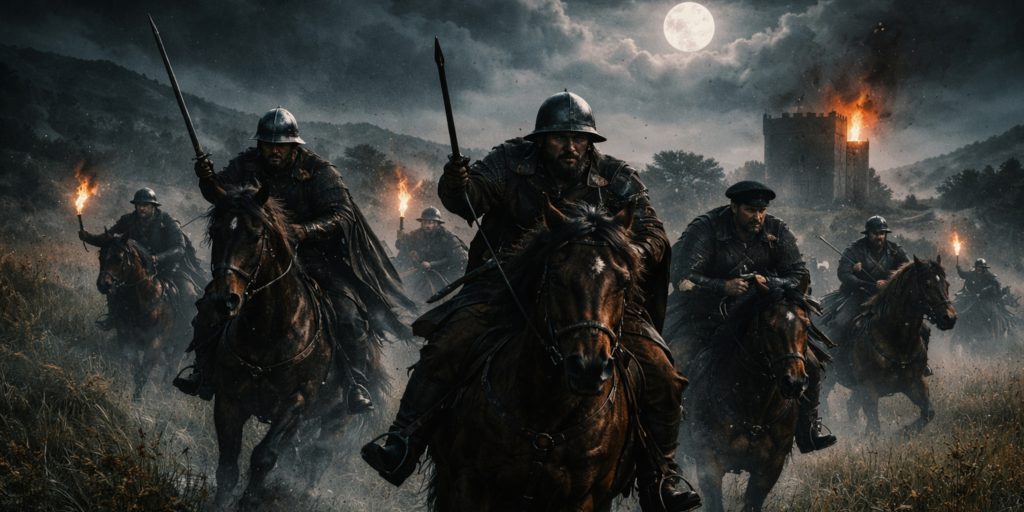
Scottish Border cavalry excelled in irregular warfare.
Unlike heavily armoured knights, they relied upon:
- Rapid manoeuvre
- Surprise attacks
- Terrain knowledge
- Feigned retreats
- Harassment tactics
- Pursuit operations
In major battles they often served as:
- Scouts
- Flank cavalry
- Pursuit forces
- Screening troops
- Raiding detachments
At the Battle of Flodden in 1513, Border riders formed part of the Scottish host under James IV. Although the battle ended catastrophically for Scotland, the mounted Borderers still demonstrated the aggressive style that defined frontier warfare.
English commanders frequently complained about their ability to evade capture. Pursuing Border horsemen into the hills usually ended badly for outsiders who lacked local knowledge. It was rather like chasing ghosts, except the ghosts stole sheep.
Relationship with the Scottish Crown
Scottish monarchs had a complicated relationship with the Borders.
The Crown needed Border cavalry during wars with England, yet the same families often undermined royal authority through private feuds and lawlessness.
James IV attempted to bring greater control to the frontier while still using Border lords militarily. James V pursued harsher measures against unruly clans, including executions and punitive expeditions.
Royal authority remained inconsistent.
The Borders operated through a system of March Wardens, officials responsible for maintaining order along the frontier. These wardens often came from the same noble families involved in local conflicts, which produced predictable complications.
Anglo-Scottish Warfare
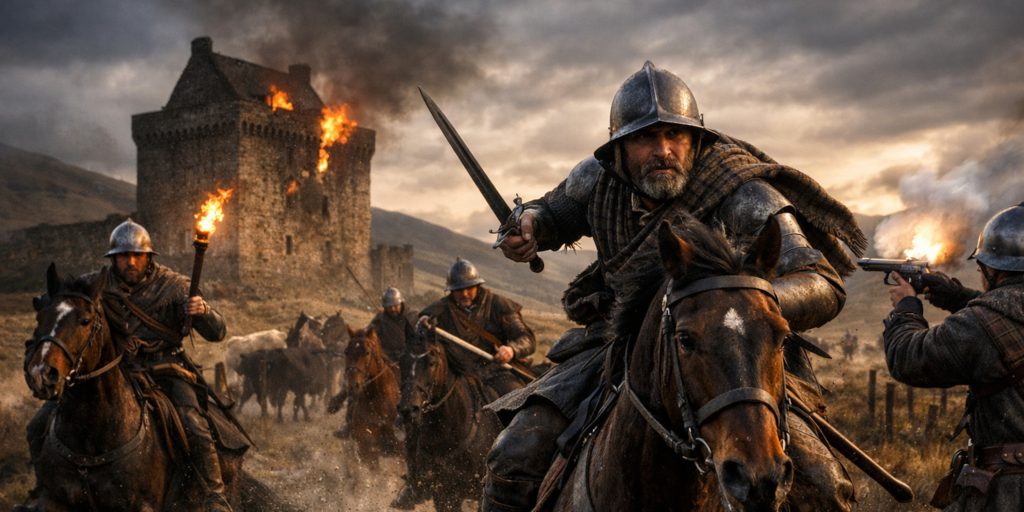
Border cavalry played important roles during:
- Anglo-Scottish border wars
- The Rough Wooing
- Feuds between noble houses
- Tudor invasions of Scotland
- Defensive operations against English raids
During the Rough Wooing in the 1540s, English armies repeatedly devastated southern Scotland. Border horsemen responded with raids and guerrilla-style resistance.
Their mobility became especially valuable during campaigns where large armies struggled to maintain supply lines.
English reports from the period frequently describe the frustration caused by Scottish mounted raiders who could strike quickly and disappear before organised retaliation arrived.
Archaeology and Material Evidence
Archaeological evidence from the Borders offers fascinating insight into cavalry life.
Tower Houses and Pele Towers
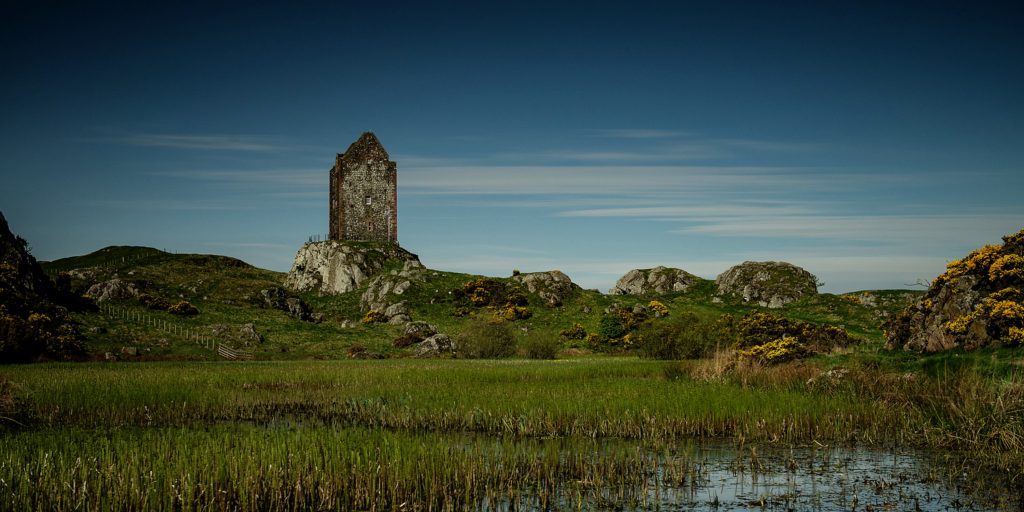
The frontier landscape still contains numerous fortified structures linked to Border families.
Important surviving sites include:
- Smailholm Tower
- Hermitage Castle
- Newark Castle
- Gilnockie Tower
These structures functioned as defensive residences against raids and feuds. Excavations have uncovered:
- Horse equipment
- Spurs
- Weapon fragments
- Arrowheads
- Domestic objects
- Armour fittings
The architecture itself reflects constant insecurity. Thick walls, narrow entrances, and elevated living quarters suggest communities expecting violence as a routine inconvenience.
Battlefield Archaeology
Archaeological work connected to Flodden and smaller Border engagements has revealed:
- Lead shot
- Blade fragments
- Harness fittings
- Horse remains
- Armour pieces
Many discoveries remain difficult to associate with specific individuals due to the chaotic nature of frontier warfare.
The Borders themselves still contain remnants of old riding routes known as “reiver paths”, used for cross-border raids and smuggling.
Contemporary Quotes
Contemporary observers left vivid descriptions of Border warfare.
The English bishop and diplomat Bishop Leslie wrote of the Borders:
“They live by theft and spoil.”
It was not intended as praise, though one suspects certain Border families framed the sentiment mentally and carried on regardless.
Sir Robert Bowes, an English warden, described the riders as:
“The boldest and most lawless people.”
English officials frequently complained that Border horsemen could assemble rapidly and vanish before pursuit forces reacted.
A later traditional saying from the Borders captured their reputation well:
“Ride, Rowley, ride.”
Short, direct, and probably shouted while somebody’s cattle disappeared into the fog.
Decline of the Border Cavalry Tradition
The union of the English and Scottish crowns under James VI and I in 1603 transformed the Borders.
The new king moved aggressively to pacify the frontier. Measures included:
- Executions of notorious raiders
- Deportations
- Destruction of strongholds
- Increased military patrols
- Legal reforms
The Borders became known officially as the “Middle Shires” in an effort to erase the old frontier identity.
Traditional reiving culture gradually declined. Firearms, centralised government, and changing military structures also reduced the importance of light Border cavalry.
Yet their legacy endured in folklore, ballads, and military memory.
Legacy
The Scottish Border cavalry left a lasting mark on British military culture.
Their influence can be seen in:
- Scottish cavalry traditions
- Frontier ballads
- Clan folklore
- Regional identity
- Romantic literature
- Modern historical reenactment
Writers such as Sir Walter Scott helped mythologise the Borders during the 19th century, though reality was often harsher than the romantic image.
Still, there is something undeniably compelling about these riders. They emerged from one of the most violent frontiers in Europe and developed a military culture based on endurance, mobility, and sheer stubbornness. They were not polished knights from illuminated manuscripts. They were practical horsemen forged by mud, raids, and generations of distrust.
History tends to remember kings and great battles. The Borders remind us that entire societies can become shaped by permanent insecurity, and that sometimes the most effective cavalryman is simply the fellow who knows the hills better than you do.
Where to See Artefacts and Sites Today
Several museums and historic sites preserve material connected to Border warfare.
| Site | Location | Notable Features |
|---|---|---|
| Hermitage Castle | Scottish Borders | Strong Border fortress |
| National Museum of Scotland | Edinburgh | Arms, armour, and frontier artefacts |
| Gilnockie Tower | Dumfriesshire | Armstrong clan stronghold |
| Flodden Battlefield | Northumberland | Battlefield interpretation |
| Smailholm Tower | Scottish Borders | Preserved tower house |
Many local museums across the Borders also contain smaller collections of cavalry equipment and frontier artefacts.
Seven Swords Takeaway
The Scottish Border cavalry occupied a strange position between soldier, outlaw, and survivor. They defended Scotland, raided England, feuded with neighbours, and occasionally ignored authority altogether. Frontier life rewarded toughness more than elegance.
What survives today is not merely the image of mounted raiders galloping through the mist, though admittedly historians are not entirely immune to that image either. It is the story of a militarised society shaped by centuries of conflict where horses, weapons, and local loyalty determined survival.
And if one lesson emerges clearly from the Borders, it is this: never trust a man who says he is “just borrowing” your cattle.