FX’s Shōgun arrived in 2024 carrying quite a burden. It was adapting a famous James Clavell novel, following an already celebrated 1980 television version, dealing with one of the most complicated periods in Japanese history and asking a mainstream Western audience to spend considerable time reading subtitles.
It could easily have become expensive historical wallpaper.
Instead, Shōgun became one of the finest historical dramas of recent television.
The series is set in Japan in 1600, during the final years of the Sengoku period and immediately before the political triumph of Tokugawa Ieyasu. Its characters are fictionalised, but many are closely based on real people.
Lord Yoshii Toranaga reflects Tokugawa Ieyasu. John Blackthorne is inspired by the English navigator William Adams. Toda Mariko draws principally upon Hosokawa Gracia.
What makes the series particularly effective is that it does not treat history as a queue of battles waiting to happen. Power is exercised through marriages, hostages, letters, alliances, religion, trade and carefully controlled appearances.
There are also swords.
Obviously, we are interested in those.
But Shōgun is smart enough to understand that the man who knows when not to draw his sword is frequently the most dangerous person in the room.
And the story is continuing.
Season 2 is moving forward with Hiroyuki Sanada and Cosmo Jarvis returning, taking the story beyond James Clavell’s original novel and into the increasingly fascinating problem of what happens after Toranaga wins.
Shōgun at a Glance
| Detail | Information |
|---|---|
| Series | Shōgun |
| First released | 2024 |
| Network | FX |
| International streaming | Disney+ in many territories |
| Source | Shōgun by James Clavell |
| Co-creators | Rachel Kondo and Justin Marks |
| Season 1 episodes | 10 |
| Main setting | Japan, 1600 |
| Historical period | Late Sengoku period |
| Hiroyuki Sanada | Yoshii Toranaga |
| Cosmo Jarvis | John Blackthorne |
| Anna Sawai | Toda Mariko |
| Season 2 | In development for production |
| Season 2 production | Scheduled to begin in January in Vancouver |
| Season 3 | Part of the original two-season development plan, but less firmly defined publicly |
What Is Shōgun About?
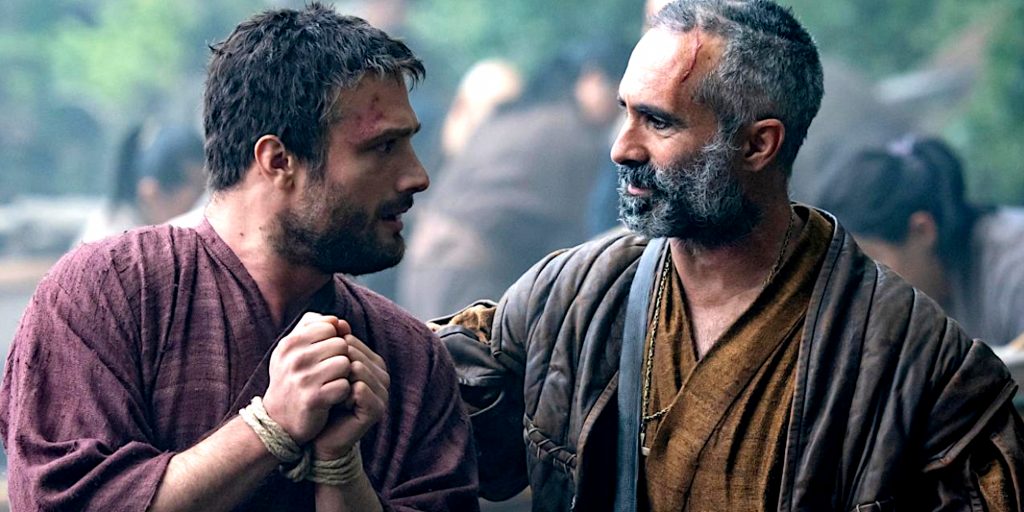
The story begins with the battered remains of a European expedition reaching Japan.
John Blackthorne is the English pilot of the Dutch ship Erasmus. He and the surviving crew arrive in a country they barely understand and immediately find themselves caught between Japanese political factions and competing European interests.
Japan’s Taikō has died, leaving a young heir.
Until that child comes of age, authority is shared among five Regents. The arrangement is unstable because Lord Yoshii Toranaga has accumulated enough power to frighten the other members of the council.
His principal opponent, Ishido Kazunari, attempts to build a coalition against him.
Into this extremely delicate situation wanders Blackthorne, who knows something Toranaga finds useful.
The Portuguese and their Jesuit allies have not been entirely forthcoming about European politics.
Blackthorne is English and Protestant. Portugal and Spain are Catholic powers. Europe is engaged in its own political and religious struggles, and those rivalries have travelled to Asia.
Blackthorne suddenly has value.
Toda Mariko becomes his translator, placing her between Blackthorne and Toranaga while confronting her own complicated history.
What follows is less a conventional adventure story than a long political chess match in which several players occasionally solve disagreements by removing someone’s head.
The Real History Behind Shōgun
Shōgun is historical fiction rather than a dramatisation using the real names of its participants.
The parallels are nevertheless clear.
| Shōgun character | Principal historical inspiration |
| Yoshii Toranaga | Tokugawa Ieyasu |
| John Blackthorne | William Adams |
| Toda Mariko | Hosokawa Gracia |
| Ishido Kazunari | Ishida Mitsunari |
| The Taikō | Toyotomi Hideyoshi |
| Ochiba no Kata | Primarily associated with Yodo-dono |
| Yaechiyo | Toyotomi Hideyori |
These should be understood as inspirations rather than exact one-for-one representations.
Clavell altered personalities, relationships, chronology and events for his novel, and the television adaptation makes further choices of its own.
The broad historical crisis is very real.
Toyotomi Hideyoshi died in 1598, leaving his young son Hideyori as heir. Tokugawa Ieyasu emerged as the dominant figure among the powerful lords governing during the succession.
Political tension eventually led to the Battle of Sekigahara in 1600.
Ieyasu’s Eastern Army defeated the Western coalition associated with Ishida Mitsunari.
Three years later, Ieyasu became shōgun.
The Tokugawa political order would survive until the nineteenth century.
Toranaga and the Real Tokugawa Ieyasu
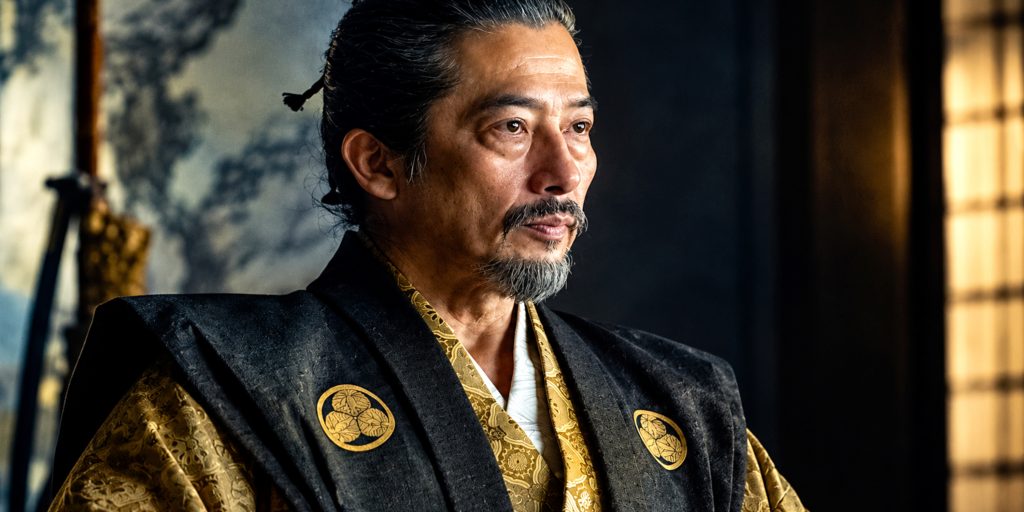
Hiroyuki Sanada’s Yoshii Toranaga is one of the great television schemers.
The fascinating part is that he rarely looks like one.
Toranaga spends much of the series retreating, surrendering, negotiating or appearing to accept situations his enemies believe they have imposed upon him.
His historical model had similarly formidable survival instincts.
Tokugawa Ieyasu was born Matsudaira Takechiyo in 1543 and survived one of the most violent periods of Japanese history.
He lived through the rise of Oda Nobunaga, the extraordinary career of Toyotomi Hideyoshi and the wars that eventually brought most of Japan under unified rule.
Ieyasu could be aggressive when required, but patience became one of the defining features of his historical reputation.
He understood that surviving could itself be a strategy.
That makes Sanada’s restrained performance particularly effective.
Toranaga is almost always thinking.
Unfortunately for everyone else, he is usually thinking several episodes ahead.
Blackthorne and the Real William Adams
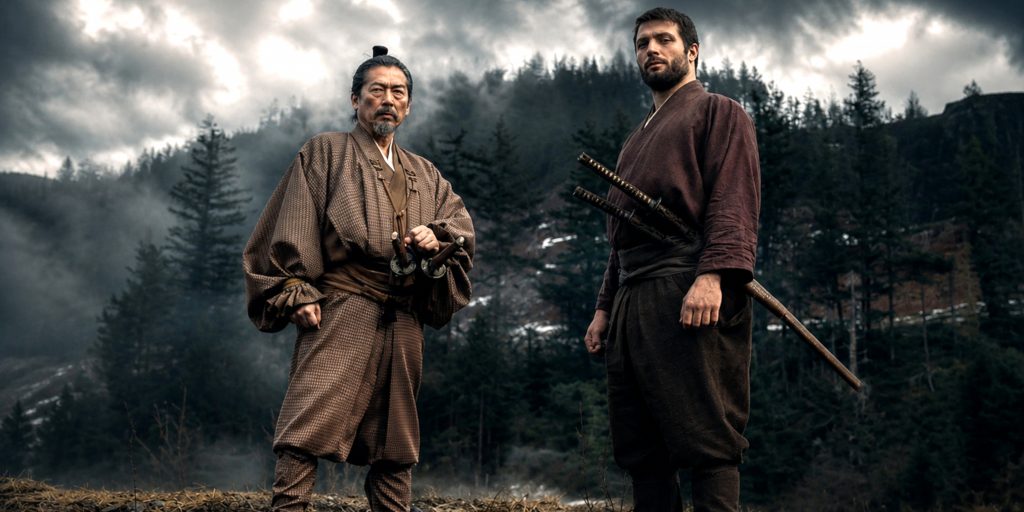
John Blackthorne is inspired by William Adams, an English navigator born in Kent around 1564.
Adams joined a Dutch expedition bound for Asia in 1598.
The voyage was disastrous.
Of the expedition’s original five ships, only the Liefde ultimately reached Japan. Its exhausted survivors arrived in 1600.
Adams eventually came to the attention of Tokugawa Ieyasu.
His knowledge of navigation, European politics, shipbuilding and international trade made him valuable. He later helped construct Western-style ships and became involved in commercial relations between Japan and European merchants.
Ieyasu granted Adams status and land.
He became known as Miura Anjin, with anjin meaning pilot.
Adams remained in Japan until his death in 1620.
Blackthorne’s story is heavily fictionalised, but the basic idea of an English Protestant sailor unexpectedly becoming associated with Japan’s most powerful lord is quite real.
History occasionally writes plots that television executives would reject as implausible.
Mariko and the Real Hosokawa Gracia
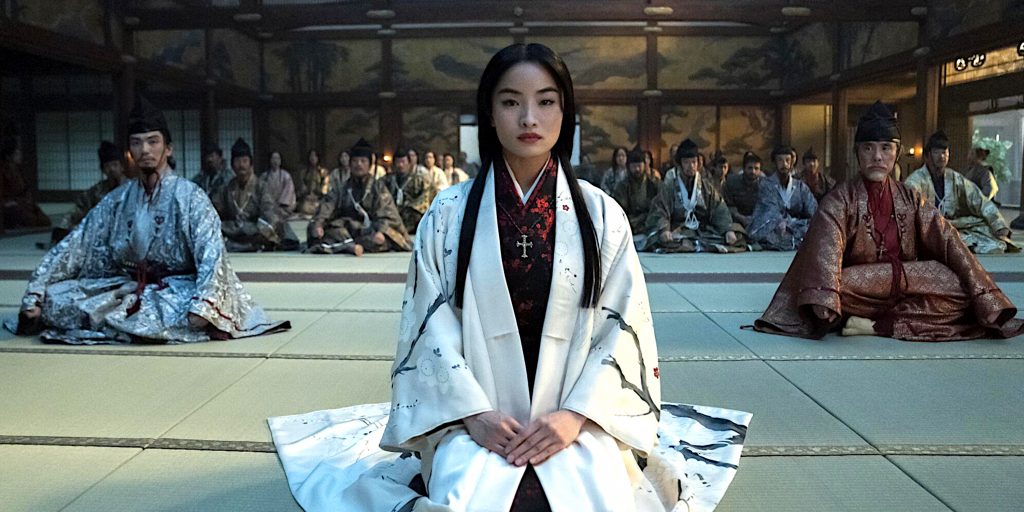
Toda Mariko is principally inspired by Hosokawa Gracia, born Akechi Tama.
Her father was Akechi Mitsuhide.
That name carried enormous political weight because Mitsuhide betrayed Oda Nobunaga in 1582, attacking him at Honnō-ji. Nobunaga died during the incident.
Mitsuhide’s triumph lasted only days before Toyotomi Hideyoshi defeated him.
Tama therefore became the daughter of one of the most notorious figures of the age.
She later converted to Christianity and took the name Gracia.
During the political crisis preceding Sekigahara, Ishida Mitsunari’s faction attempted to secure members of prominent families in Osaka as hostages.
Gracia refused to become one.
Her death in 1600 became politically significant and damaged Mitsunari’s efforts to control the families of rival daimyo.
The details of Mariko’s story are changed substantially, but the political function of her final stand in Osaka clearly echoes Gracia.
It is also one of the places where Shōgun understands the period particularly well.
A woman dying inside a residence could alter the political landscape as decisively as warriors dying in a field.
Why the Battle of Sekigahara Is Barely Shown
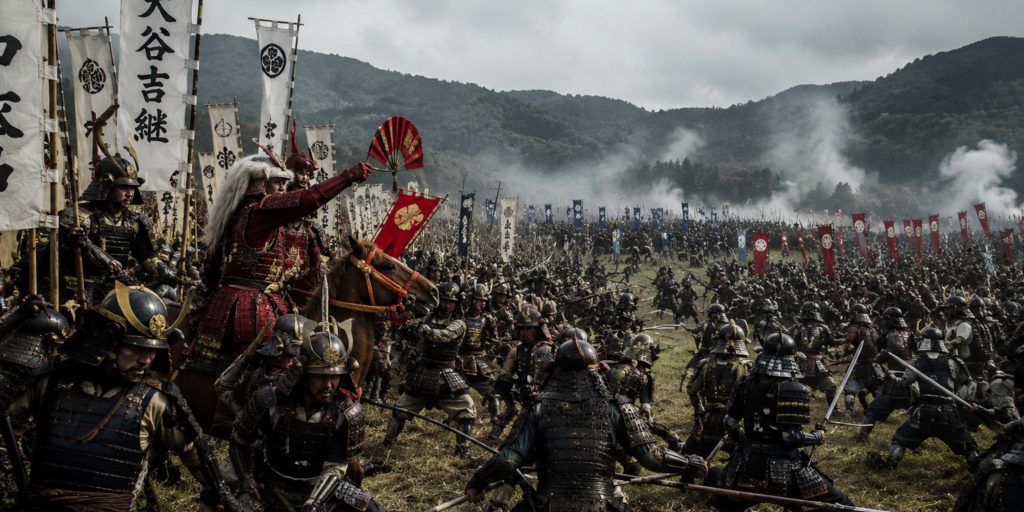
One of the boldest decisions in Season 1 is the treatment of Sekigahara.
For most historical dramas, the Battle of Sekigahara would be the finale.
Thousands of warriors. Cavalry. Spears. Matchlocks. Banners. Mud. Betrayal. Enormous production budget disappearing into a field somewhere.
Shōgun largely refuses.
Instead, Toranaga describes the political future that will produce his victory, while the audience receives only a limited vision of the battlefield.
I initially wanted more.
Then I thought about it.
The decision fits the entire series.
Toranaga’s real victory has already occurred. Mariko’s actions have weakened Ishido’s political position. Alliances are shifting. Ochiba’s support is no longer secure.
The battle is the consequence.
The strategy is the story.
Swords in Shōgun
For a programme populated by samurai, Shōgun shows admirable restraint with swords.
They are not magical objects capable of slicing through armour, trees and possibly small buildings.
They are weapons and status objects embedded within warrior society.
There is also an important terminology problem when discussing Japanese swords around 1600.
Modern audiences tend to call virtually every curved Japanese sword a katana.
The reality is considerably more complicated.
Katana
The katana was well established by the late Sengoku period.
It was normally worn thrust through the sash with the cutting edge upwards, allowing drawing and cutting movements different from those associated with the older suspended tachi.
Blade lengths varied considerably.
Individual blades could also be shortened, polished repeatedly and fitted with new mountings during their working lives.
This means identifying a sword purely through the shape of its surviving blade can be misleading.
Mounting and method of wear matter.
Wakizashi and Companion Swords
Shorter swords were common among warriors, but we should be careful about applying the fully regulated Edo-period concept of the daishō backwards too neatly.
The familiar pairing of long and short swords became a defining symbol of samurai status under the Tokugawa shogunate.
Around 1600, however, sword fashions and combinations were still evolving.
A warrior might carry a long sword accompanied by a shorter wakizashi, koshigatana or other short blade depending upon period, status and context.
The distinction sounds pedantic until you start studying historical swords, at which point pedantry becomes approximately 70 per cent of the hobby.
Tachi
The tachi predates the katana as the classic long sword of the mounted Japanese warrior.
It was normally suspended from the belt with the cutting edge downward.
By 1600, older tachi blades could be highly prestigious heirlooms. Some were remounted for use in later styles, and some were shortened.
High-ranking samurai families treasured famous blades because swords carried political and dynastic meaning as well as practical value.
A distinguished sword could be a gift, an heirloom, a reward or a visible statement of status.
Were Swords the Main Samurai Battlefield Weapon?
Not necessarily.
This is one of the biggest misconceptions created by modern samurai imagery.
The sword was enormously important culturally and practically, but Sengoku armies relied heavily upon spears, bows and firearms.
For battlefield fighting around 1600, the yari deserves far more attention than popular culture usually gives it.
Yari
The yari was one of the defining weapons of late Sengoku warfare.
Spears offered reach and could be employed by samurai and ashigaru alike.
Large infantry formations armed with yari were central to the mass armies of the sixteenth century.
Different forms existed, including straightforward spearheads and more specialised designs.
Against an organised formation of spearmen, drawing a sword and charging heroically forward would mostly demonstrate a strong personal commitment to dying first.
Yumi
Japanese warriors possessed a long tradition of archery.
The asymmetrical yumi had been associated with the warrior class centuries before the sword became the dominant popular symbol of samurai identity.
Mounted archery had particularly deep cultural roots.
By the Sengoku period, bows shared the battlefield with spears and increasingly large numbers of firearms.
Tanegashima Matchlocks
Firearms reached Japan through Portuguese contact in 1543.
Japanese craftsmen rapidly reproduced the matchlock arquebus, generally associated with the term tanegashima.
Within decades, guns had become an important component of Japanese warfare.
They were particularly useful when coordinated with defensive positions and other infantry weapons.
Oda Nobunaga became famously associated with firearm tactics, particularly at Nagashino in 1575.
The traditional story that Nobunaga used precisely organised rotating volleys at Nagashino has been challenged and debated by historians, so it should not be repeated as uncomplicated fact.
What is not seriously in doubt is the broader point.
Samurai armies embraced firearms.
There was no great moral crisis in which honourable swordsmen refused to use nasty modern guns.
A weapon capable of killing the chap trying to kill you tends to acquire supporters remarkably quickly.
Armour in Shōgun
The armour is one of the production’s visual triumphs.
Late Sengoku armour had evolved in response to increasingly large armies and changing battlefield threats.
Armour broadly described as tōsei gusoku, or modern armour, became characteristic of the period.
Common components included:
- kabuto helmet
- dō protecting the torso
- kote protecting the arms
- haidate protecting the thighs
- suneate protecting the lower legs
- sode protecting the shoulders
- various forms of facial armour
Armour construction varied enormously according to status, region, period and individual preference.
Plate construction became increasingly important during the sixteenth century.
Some Japanese armour was even influenced by European equipment.
So-called nanban-dō, or “southern barbarian” style cuirasses, incorporated European-inspired forms. Imported European armour could also be adapted for Japanese use.
The image of Japan in 1600 as culturally sealed from the outside world simply does not work.
How Accurate Is the Sword Fighting?
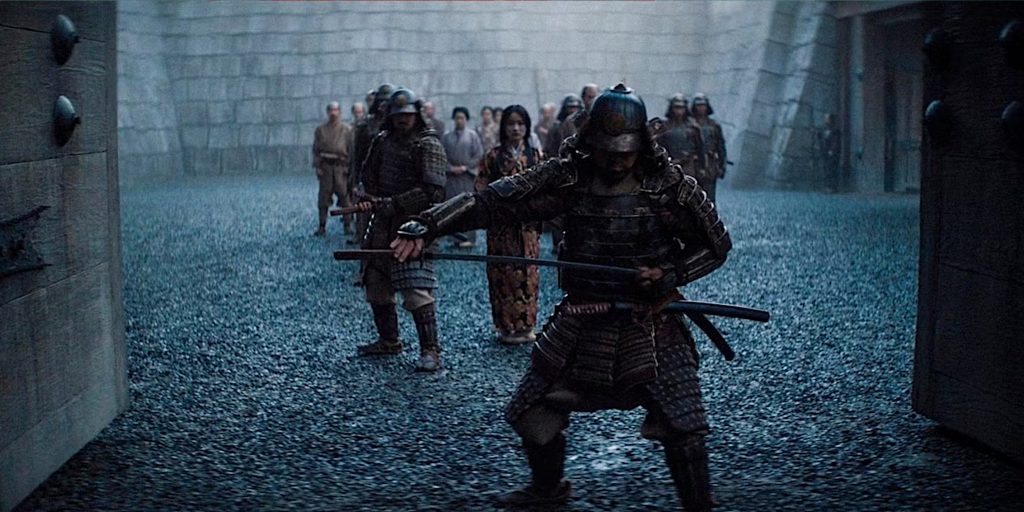
The best thing Shōgun does with sword fighting is refuse to turn every disagreement into a duel.
People carry weapons because they occupy particular positions within a militarised social hierarchy.
Drawing one has consequences.
When violence occurs, it is often quick and ugly.
That feels much more convincing than the familiar film convention in which two samurai politely find an empty courtyard and spend six minutes demonstrating choreography.
The series remains a drama, so individual fights should not be treated as instructional reconstructions of historical Japanese swordsmanship.
It is better understood as getting the atmosphere of armed violence right.
Weapons matter even when nobody draws them.
Seppuku and the Culture of Death
Shōgun repeatedly confronts its audience with ritual suicide, execution and willingness to die.
This is one area where historical context is essential.
Seppuku was real, but practices varied over time.
It could function as punishment, protest, demonstration of loyalty, means of avoiding capture or a method of preserving a degree of honour when death was unavoidable.
The highly codified ritual familiar from later Edo-period accounts should not simply be projected unchanged across all earlier samurai history.
Nor should we assume every samurai was perpetually delighted by the prospect.
People in 1600 were still people.
One of the strengths of Shōgun is that characters respond differently to the expectations placed upon them.
Christianity in Japan
Christianity had already been present in Japan for decades when William Adams arrived.
Francis Xavier reached Japan in 1549.
Jesuit missionaries subsequently established communities and developed relationships with several daimyo.
Some Japanese lords converted to Christianity, although their motives could combine sincere religious conviction with political and commercial considerations.
Portuguese merchants were deeply involved in the profitable trade linking Japan with other parts of Asia.
Nagasaki became particularly important.
This explains why Blackthorne’s Protestant identity matters.
He does not arrive in a Japan unfamiliar with Europeans.
He arrives in a Japan where Portuguese Catholics have already established influence.
Blackthorne brings news that the Europeans themselves are divided.
For Toranaga, this is useful information.
For the Portuguese, it is somewhat less welcome.
What Shōgun Gets Right About Samurai
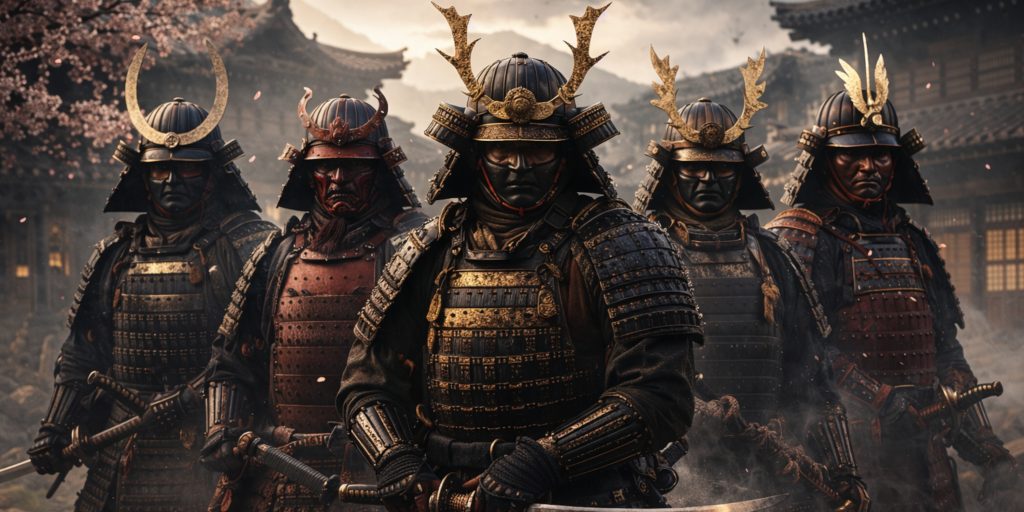
The programme’s greatest achievement may be showing that samurai were more than swordsmen.
The warrior elite included:
- military commanders
- landholders
- administrators
- political negotiators
- castle governors
- diplomats
- retainers
- patrons of religion and culture
Family relationships could determine military alliances.
Marriage was political.
Adoption was political.
Hostages were political.
Inheritance was extremely political.
The popular image of the samurai as a wandering swordsman obsessed exclusively with personal honour represents only a tiny fragment of a much larger history.
Toranaga rarely needs to demonstrate that he is the best swordsman.
He needs people to obey him.
That is a much more useful skill for someone planning to govern Japan.
Bushidō and a Common Historical Trap
It is tempting to explain every decision in Shōgun through “bushidō”.
That needs caution.
Ideas surrounding warrior loyalty, reputation, duty and honour certainly existed before 1600.
But the concept of bushidō familiar to modern audiences developed through a much longer historical process.
Later Edo-period writings, nineteenth-century nationalism and Western interpretations all influenced the modern image of a single timeless “samurai code”.
There was no universal handbook carried around by every Sengoku warrior explaining exactly how an honourable samurai must behave.
If there had been, the Sengoku period would probably have involved considerably less betrayal.
Language and Authenticity
The 2024 adaptation differs significantly from the 1980 television version in how it distributes perspective.
Large portions of the drama unfold in Japanese and focus upon Japanese characters independently of Blackthorne.
This is crucial.
Japan does not exist merely as an exotic environment through which an Englishman travels.
Toranaga, Mariko, Yabushige, Ishido, Ochiba, Fuji and the other Japanese characters have their own political objectives and relationships.
Hiroyuki Sanada also worked as a producer and was closely involved in the production’s efforts towards historical and cultural authenticity.
That involvement can be felt in the physical performances, costumes, etiquette and sense of hierarchy.
The production is not flawless history.
It does, however, take the history seriously.
There is a difference.
Shōgun Season 1 Episode Guide
| Episode | Title |
| 1 | Anjin |
| 2 | Servants of Two Masters |
| 3 | Tomorrow Is Tomorrow |
| 4 | The Eightfold Fence |
| 5 | Broken to the Fist |
| 6 | Ladies of the Willow World |
| 7 | A Stick of Time |
| 8 | The Abyss of Life |
| 9 | Crimson Sky |
| 10 | A Dream of a Dream |
The later episodes increasingly reveal that Shōgun has been telling a political story rather than building towards a conventional battlefield finale.
Episode 9, Crimson Sky, is particularly important because Mariko’s actions in Osaka effectively become Toranaga’s political offensive.
The name “Crimson Sky” initially sounds like the sort of operation that should involve cavalry, burning castles and an alarming number of extras.
Toranaga has something cleverer in mind.
The Ending of Shōgun Explained
Toranaga’s apparent weakness has been part genuine crisis and part political manipulation.
Mariko’s actions expose Ishido’s position in Osaka.
If Ishido allows the hostages to leave, he loses political leverage.
If he openly prevents them leaving, everyone can see that the supposedly honoured guests are actually prisoners.
Mariko forces that contradiction into the open.
Her death makes Ishido’s position worse.
Toranaga ultimately explains to Yabushige how events will unfold.
Ochiba will withhold the support Ishido needs.
The opposing coalition will weaken.
At Sekigahara, Toranaga expects to prevail.
His ultimate ambition also becomes considerably harder to deny.
He intends to become shōgun.
After ten episodes of watching him insist otherwise, one suspects he may not have been entirely candid.
Why Blackthorne Cannot Leave Japan
The finale also reveals the extent of Toranaga’s manipulation of Blackthorne.
Blackthorne wants to repair or replace his ship and eventually escape.
Toranaga has other ideas.
He recognises Blackthorne’s usefulness and intends to keep him.
This reflects the broad historical reality that William Adams remained in Japan and entered Ieyasu’s service, although the circumstances and relationships of the drama are fictionalised.
It also completes Blackthorne’s transformation.
He arrived believing Japan was somewhere he had accidentally landed.
By the end, it has become his life.
What We Know About Shōgun Season 2
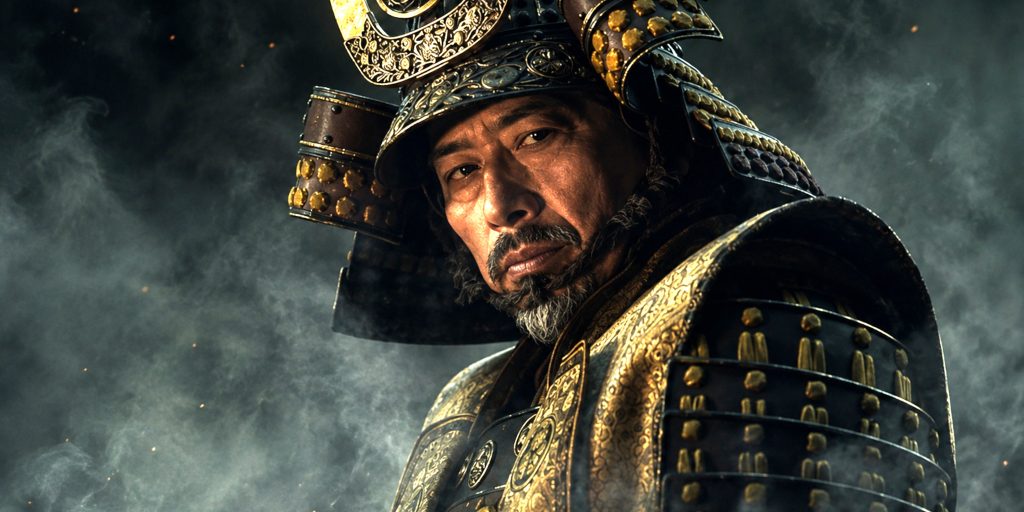
A second season is moving forward.
FX has announced that production is scheduled to begin in January in Vancouver.
Hiroyuki Sanada will return as Yoshii Toranaga.
Cosmo Jarvis will return as John Blackthorne.
The continuation is especially interesting because Season 1 essentially completes the story of Clavell’s original Shōgun novel.
Season 2 therefore cannot simply adapt “the next part” of the book.
There isn’t one.
The writers are moving into new narrative territory.
That makes historical events following 1600 particularly important.
When Could Season 2 Take Place?
The continuation has been described as moving significantly beyond the events of the first season, but viewers should distinguish between officially announced story details and historical speculation.
What happens after 1600 provides plenty of material.
Historically, Tokugawa Ieyasu won at Sekigahara in 1600.
He became shōgun in 1603.
In 1605, he transferred the title to his son Tokugawa Hidetada, helping establish hereditary Tokugawa succession.
Ieyasu nevertheless retained enormous political influence.
One major problem remained.
The Toyotomi family still existed.
And eventually Ieyasu dealt with it.
Very permanently.
Could Season 2 Feature the Siege of Osaka?
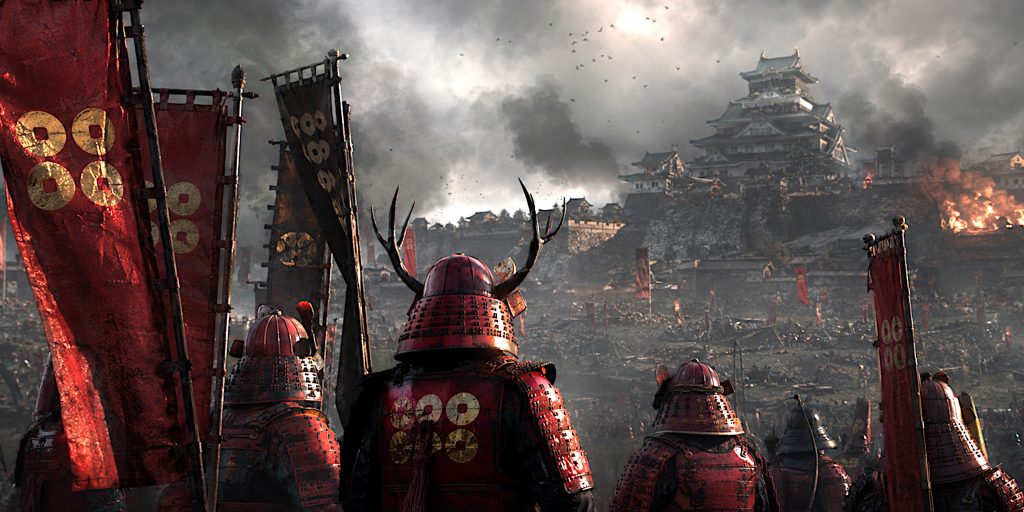
The Siege of Osaka is one of the obvious historical possibilities for the continuation, but it should not yet be presented as a confirmed Season 2 storyline.
Historically, tensions between the Tokugawa and Toyotomi eventually produced open war.
| Event | Date |
| Battle of Sekigahara | 1600 |
| Ieyasu appointed shōgun | 1603 |
| Hidetada becomes shōgun | 1605 |
| Winter Siege of Osaka | 1614 to 1615 |
| Summer Campaign | 1615 |
| Destruction of Toyotomi resistance | 1615 |
| Death of Tokugawa Ieyasu | 1616 |
Osaka would provide extraordinary television.
The castle was one of Japan’s great fortresses.
The campaigns involved enormous armies, firearms, artillery, defensive earthworks and famous warriors including Sanada Nobushige, better known to many later generations as Sanada Yukimura.
More importantly, Osaka would fit the themes of Shōgun.
Season 1 asks how Toranaga acquires supreme power.
Osaka offers the much darker question of what he is prepared to do to make that power permanent.
For now, though, that remains an informed possibility rather than confirmed plot information.
What Happened to William Adams After 1600?
The real William Adams gives Season 2’s writers plenty of material.
Adams remained associated with Ieyasu and became involved in shipbuilding and international commerce.
He helped establish connections with Dutch and English traders and received an estate at Hemi on the Miura Peninsula.
In 1613, the English East India Company established a trading post at Hirado under John Saris.
Adams became involved with English commercial activities, although his relationship with his countrymen was not always straightforward.
He also developed a Japanese family life.
Adams died at Hirado in 1620.
A later Blackthorne therefore does not need to remain the bewildered outsider of Season 1.
That character would become repetitive anyway.
A Blackthorne who understands Japan but can never completely belong to either of his worlds is potentially much more interesting.
Is There Going to Be a Shōgun Season 3?
This requires slightly careful wording.
In May 2024, FX, Hulu and the James Clavell estate announced that work was underway to extend Shōgun with two additional seasons.
That established the intention to develop Seasons 2 and 3.
Season 2 has subsequently moved into a much more concrete production phase.
Season 3 should therefore not yet be described as though a finished story, cast and production schedule are locked.
The safest description is that a third season formed part of the announced development plan for continuing Shōgun.
There is certainly historical material available.
A story moving beyond the destruction of the Toyotomi could explore the consolidation of Tokugawa rule, changing relations with European powers and the final years of Ieyasu.
Whether that is what the creators actually intend is another matter.
Toranaga would probably approve of us not revealing plans that have not actually been announced.
The Risk of Continuing Beyond Clavell
There is a genuine creative risk here.
Season 1 has an ending.
A very good one.
Clavell constructed his novel around Blackthorne’s arrival and Toranaga’s political ascent. Mariko’s story reaches its conclusion. Toranaga’s ultimate victory becomes clear.
Continuing because a programme was successful is not automatically a good idea.
Television has provided enough evidence on that subject to fill several databases.
But Shōgun has an unusual advantage.
The history after 1600 is genuinely compelling.
If Season 2 becomes an attempt to recreate the same character dynamics with different villains, it could feel unnecessary.
If it instead becomes a drama about the creation and consolidation of the Tokugawa order, there is an extraordinary story available.
The distinction matters.
How Shōgun Compares with the 1980 Adaptation
The 1980 Shōgun starring Richard Chamberlain was a major television event in its own right.
Its perspective, however, is much more closely tied to Blackthorne.
The 2024 adaptation distributes attention more widely.
Japanese characters have conversations, motivations and political lives that exist independently of the English protagonist.
That changes the entire texture of the story.
Blackthorne remains important.
He simply isn’t the centre of the universe.
This seems a modest improvement until you consider how many Western historical dramas have spent decades behaving as if history did not begin until an English-speaking character entered the room.
Awards and Critical Reception
Shōgun became a critical and awards phenomenon.
At the 76th Emmy Awards cycle, the series won 18 Emmys from 25 nominations.
Major awards included:
- Outstanding Drama Series
- Outstanding Lead Actor in a Drama Series for Hiroyuki Sanada
- Outstanding Lead Actress in a Drama Series for Anna Sawai
- Outstanding Directing for a Drama Series
- numerous production and technical awards
Its success was particularly significant because so much of the series is performed in Japanese.
The old assumption that large Western audiences simply will not watch subtitled drama took another well-deserved injury.
Is Shōgun Historically Accurate?
The answer depends upon what we mean by accurate.
It is not a literal reconstruction.
The characters have fictional names. Relationships are altered. Events are compressed. Individual scenes are invented. Clavell’s original novel already transformed history into fiction before FX adapted it.
Yet the series often captures the larger historical environment extremely well.
Particularly convincing elements include:
- the instability surrounding the Toyotomi succession
- daimyo politics
- the importance of hostages
- Portuguese commercial influence
- Catholic missionary activity
- European religious rivalry
- firearms in Japanese warfare
- warrior hierarchy
- political marriages
- the importance of reputation and obligation
- the complexity of samurai attitudes towards death
Its greatest strength is resisting simple explanations.
There is no single “samurai mindset”.
Characters disagree about duty, loyalty, religion, survival and death.
That is considerably closer to history than pretending an entire warrior class spent several centuries thinking exactly the same thing.
Why Shōgun Works
For me, Shōgun works because it is unusually comfortable with intelligent characters.
Toranaga does not explain every plan.
Mariko understands situations Blackthorne does not.
Blackthorne gradually learns that confidence and comprehension are not the same thing.
Yabushige spends most of the series trying to calculate which side will win, only to discover that Toranaga has been making calculations of his own.
The programme also understands restraint.
The costumes are beautiful without becoming the entire point.
The swords matter without becoming magical.
Battles shape events without consuming the story.
And death has consequences.
That last point is surprisingly rare.
The Future of Shōgun
The first season ends on the threshold of Tokugawa rule.
That leaves an enormous amount of history unexplored.
The challenge for Season 2 is not finding something that happened.
It is deciding which parts matter to these characters.
Toranaga as an embattled lord is fascinating.
Toranaga after victory could be even more interesting.
What happens when the man who has spent his life surviving finally becomes the most powerful figure in Japan?
Does he become more secure?
Or simply acquire larger things to fear?
Blackthorne presents a similar opportunity. The bewildered English pilot cannot remain bewildered forever. The historical William Adams spent twenty years in Japan. A more experienced Blackthorne could occupy an unusual position between European traders and the emerging Tokugawa regime.
Then there is Osaka.
If the series eventually reaches the destruction of the Toyotomi, the political manoeuvring of Season 1 may start to look almost gentle.
Almost.
The real achievement of Shōgun was never simply that it looked authentic.
It made the politics of 1600 feel dangerous, personal and understandable without flattening them into something modern.
If Season 2 can do the same with the world created by Toranaga’s victory, continuing the series may turn out to have been a very good decision indeed.
I was initially unconvinced.
History has persuaded me otherwise.