Fantasy writers have never been particularly interested in leaving swords alone.
A perfectly serviceable piece of sharpened steel is apparently insufficient. It must glow, drink souls, recognise the rightful king, burst into flame, kill supernatural creatures or carry several thousand years of dynastic baggage. Preferably more than one of these at once.
Yet the great fantasy swords are rarely strange simply for the sake of it. Many draw upon traditions that are considerably older than modern fantasy itself. Medieval literature gave us enchanted weapons, named blades and swords associated with legitimate kingship. Norse and Germanic heroic traditions produced weapons passed between generations, reforged after breaking, or carried by heroes against monsters. Japanese mythology has its own sacred swords and divine weapons.
Modern fantasy inherited all of this and enthusiastically added considerably larger blades.
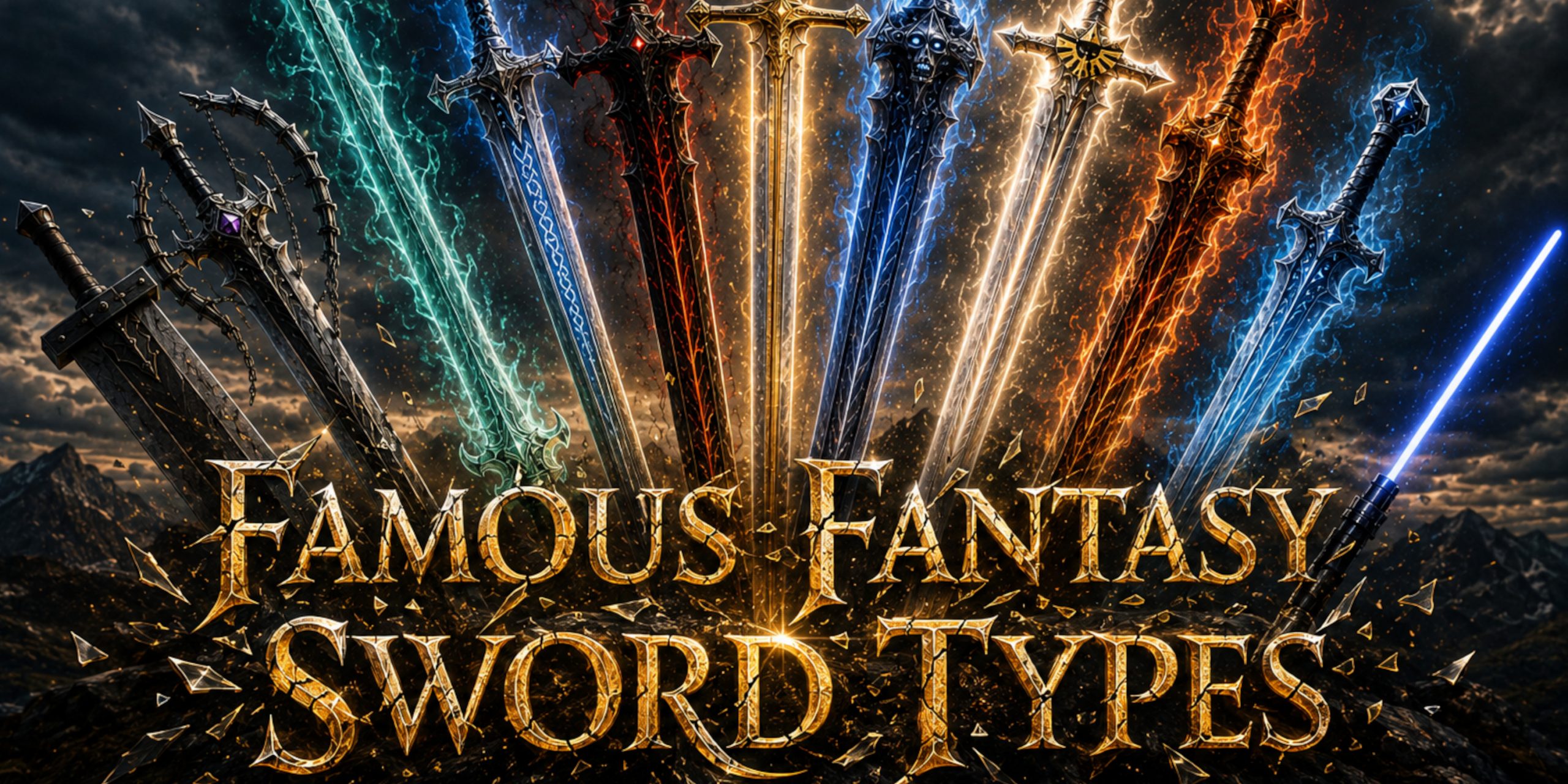
This guide looks at the major types of fantasy sword, the famous weapons that represent them, and the historical or mythological ideas hiding beneath the magic.
Fantasy Sword Types at a Glance
| Type | Famous examples | Usually represents |
|---|---|---|
| Heroic or royal sword | Excalibur, Andúril | Kingship, legitimacy, destiny |
| Cursed sword | Stormbringer, Ebony Blade | Power at a terrible cost |
| Sentient sword | Stormbringer, Nightblood | A weapon with its own will |
| Holy sword | Master Sword, Sword of Gryffindor | Purity, protection, resistance to evil |
| Elemental sword | Lightbringer, Icingdeath | Fire, ice or supernatural forces |
| Monster-slaying sword | Dragonslayer, Glamdring | A weapon created or renowned for killing exceptional enemies |
| Ancestral sword | Blackfyre, Andúril | Bloodline, inheritance and political authority |
| Prophecy sword | Sword of Shannara, Callandor | Destiny and the chosen hero |
| Runic sword | Various fantasy and gaming weapons | Ancient knowledge and magical craftsmanship |
| Oversized sword | Buster Sword, Dragonslayer | Exceptional strength and visual power |
| Transforming sword | Ivy’s Snake Sword | Mechanical or magical transformation |
| Energy sword | Lightsaber | Technology presented with the symbolism of the sword |
Heroic and Royal Swords
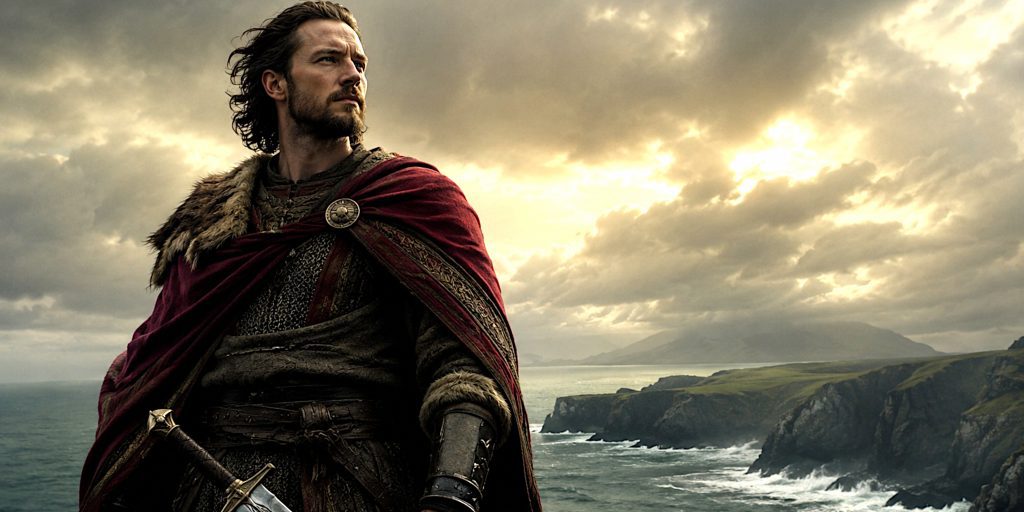
The sword of the rightful ruler is one of fantasy’s oldest ideas.
Excalibur
From: Arthurian legend
Wielder: King Arthur
Type: Enchanted royal sword
Excalibur is the obvious starting point because so much later fantasy stands somewhere in its shadow.
One important distinction is often lost in modern retellings. The Sword in the Stone and Excalibur are not necessarily the same weapon in the medieval tradition. In Sir Thomas Malory’s Le Morte Darthur, Arthur receives Excalibur from the Lady of the Lake after breaking his earlier sword.
Even more interestingly, when Arthur is asked whether he prefers the sword or its scabbard, Merlin tells him that the scabbard is more valuable. While wearing it, Arthur will not lose blood from his wounds.
That is wonderfully medieval. Give a king a magical sword and then inform him that the really useful bit is the carrying case.
Excalibur became the model for the fantasy weapon that confirms authority. The sword matters because of who is entitled to carry it.
Andúril

From: The Lord of the Rings
Wielder: Aragorn
Type: Reforged ancestral sword
Andúril is Tolkien’s variation on the same theme.
It is reforged from the fragments of Narsil, the sword used by Isildur to cut the One Ring from Sauron’s hand. Aragorn carrying the restored blade therefore announces considerably more than his ability to win a sword fight.
It connects him directly to his ancestors and his claim to kingship.
Tolkien understood something that medieval chroniclers understood very well: objects can legitimise people. Crowns, standards, seals and swords acquire political power because communities agree that they mean something.
Cursed Swords
The cursed sword reverses the heroic weapon.
Instead of proving that its wielder deserves power, it asks what the wielder is prepared to sacrifice for it.
Stormbringer
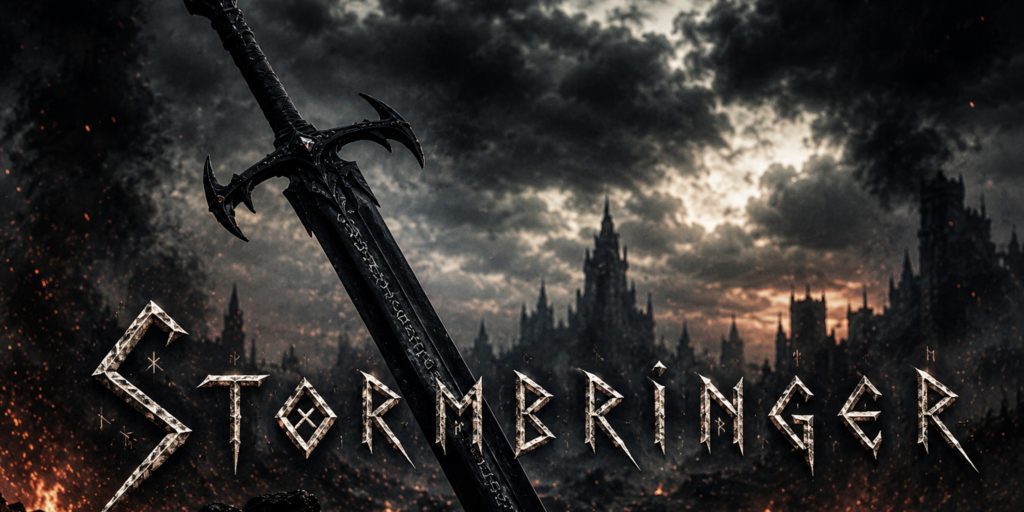
From: Michael Moorcock’s Elric stories
Wielder: Elric of Melniboné
Type: Cursed and sentient sword
Stormbringer remains one of fantasy literature’s great unpleasant weapons.
The black sword gives the physically weak Elric extraordinary strength, but feeds upon the souls of those it kills. Worse, Stormbringer possesses a will of its own and is quite capable of killing people Elric never intended to harm.
This is not a magical sword with an unfortunate side effect. The relationship between Elric and Stormbringer is closer to dependency.
Moorcock’s influence on later fantasy weapons is difficult to overstate. Countless RPGs now contain ominous black swords offering tremendous power in exchange for vaguely specified consequences.
One would think fantasy adventurers would have learned to stop picking these things up.
They have not.
The Ebony Blade
From: Marvel Comics
Wielder: Black Knight
Type: Cursed enchanted sword
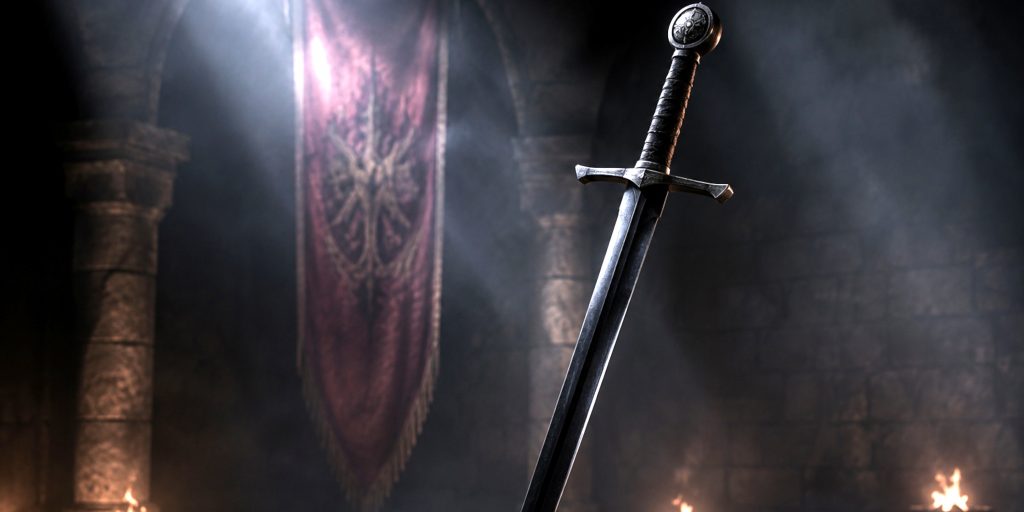
The Ebony Blade is another weapon built around the relationship between violence and corruption.
Forged from a meteorite and associated with Merlin in Marvel’s mythology, the sword grants formidable abilities but carries a blood curse that can increasingly influence its wielder.
The important element is familiar: power becomes easier to use precisely when it becomes more dangerous.
Sentient Swords
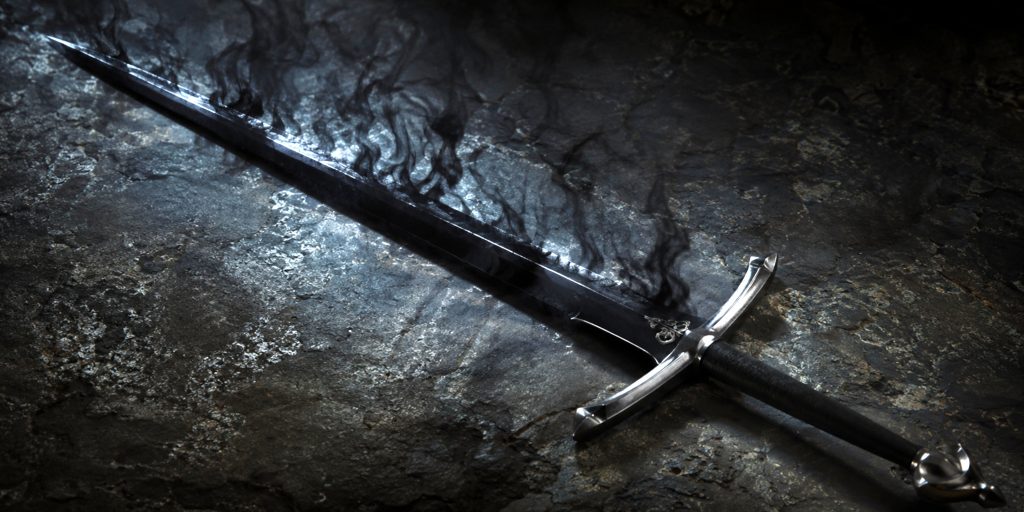
Some fantasy swords are not possessions at all.
They are characters.
A sentient sword may speak, manipulate its wielder, choose its owner or pursue goals entirely separate from whoever happens to be holding the hilt.
Stormbringer is perhaps the classic example, but Brandon Sanderson’s Nightblood takes the concept in another direction. Created with the command to “destroy evil”, Nightblood possesses enormous destructive power without having a particularly sophisticated understanding of what evil actually is.
This is, as specifications for magical superweapons go, quite a significant oversight.
Sentient swords work because they remove the assumption that the warrior controls the weapon. Once a blade has desires of its own, drawing it becomes a negotiation.
Holy Swords and Blades Against Evil
At the opposite end of the moral spectrum sits the holy or purified sword.
These weapons are usually effective against creatures that conventional steel cannot defeat.
The Master Sword
From: The Legend of Zelda
Wielder: Link
Type: Sacred sword
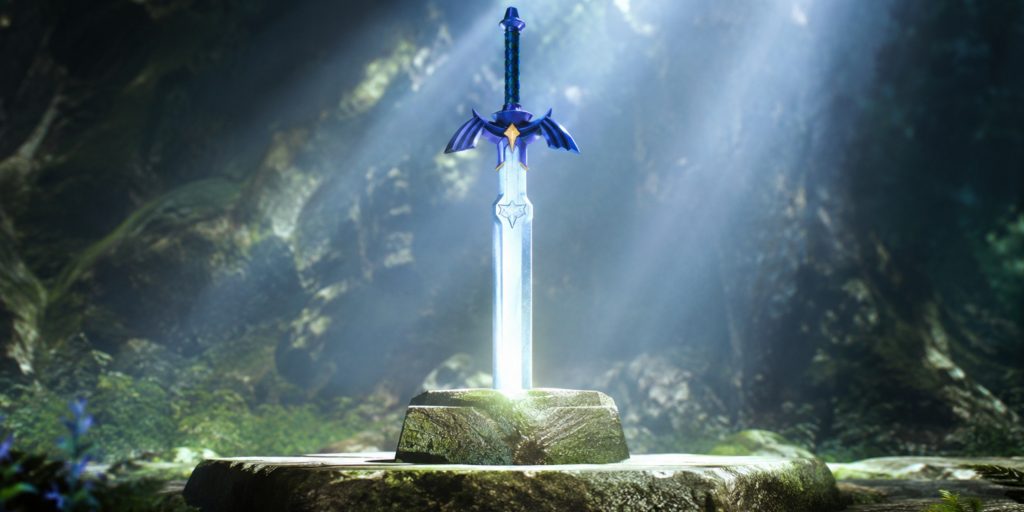
The Master Sword is one of gaming’s most recognisable weapons.
Across different Zelda titles its precise properties change, but its central identity remains remarkably consistent. It is the Blade of Evil’s Bane, associated with the chosen hero and capable of confronting supernatural evil.
Its design is fairly restrained by video game standards, which may explain why it has aged so well. Nobody appears to have attached an unnecessary chainsaw to it yet.
The Sword of Gryffindor
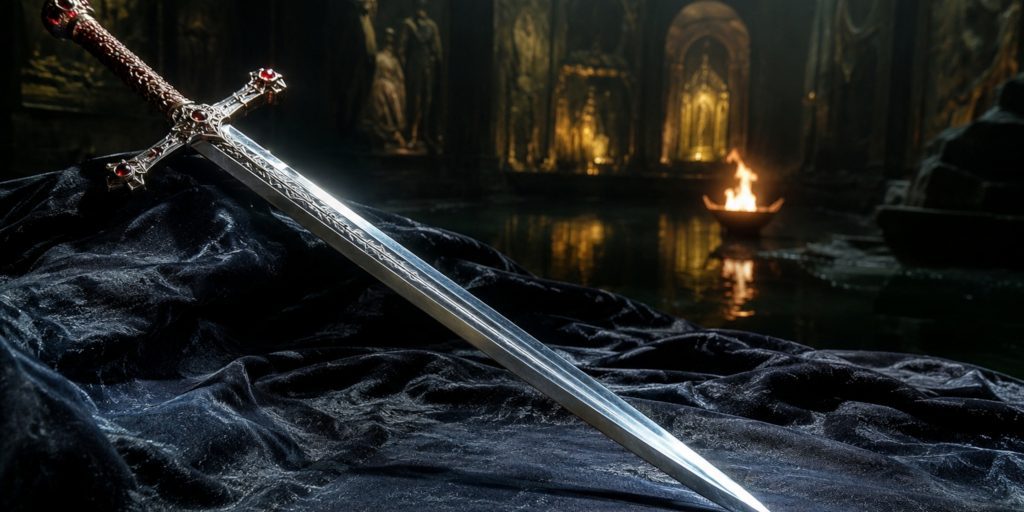
From: Harry Potter
Type: Goblin-made magical sword
The Sword of Gryffindor is unusual because its abilities develop through its history.
Goblin-made objects in the series absorb substances that strengthen them. After Harry uses the sword against the basilisk, it becomes imbued with basilisk venom, allowing it to destroy Horcruxes.
It is therefore a weapon whose history physically alters its capabilities, an interesting fantasy version of the real-world idea that old weapons accumulate meaning through provenance.
Elemental Swords
Fire and ice are irresistible to fantasy weapon designers.
Historical swords did occasionally receive elaborate decoration involving flames, suns, lightning and other natural forces. They did not, regrettably, actually set their opponents on fire.
Fantasy corrected this obvious deficiency.
Lightbringer
From: A Song of Ice and Fire
Associated with: Azor Ahai
Type: Prophesied burning sword
According to the legend within George R. R. Martin’s world, Azor Ahai forged Lightbringer by driving the sword through the heart of his wife Nissa Nissa.
The resulting weapon burned with supernatural heat.
The interesting question in the novels is whether the legendary weapon will literally return, whether another sword merely represents it, or whether the entire story is metaphorical.
That uncertainty makes Lightbringer considerably more interesting than a straightforward flaming sword.
Icingdeath
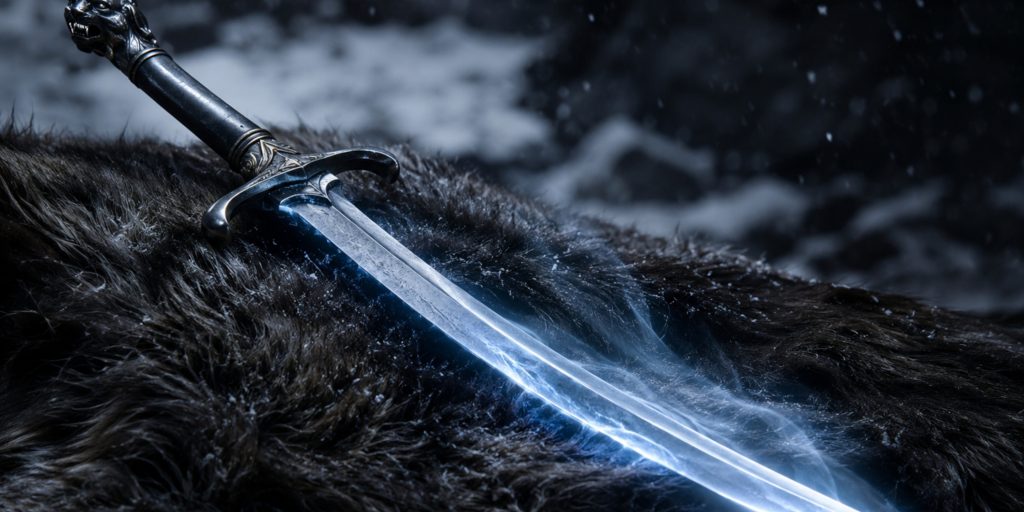
From: Forgotten Realms
Wielder: Drizzt Do’Urden
Type: Frost scimitar
Icingdeath is a magical scimitar particularly associated with protection against fire.
It illustrates another common fantasy tradition in which the physical appearance, name and magical properties of a weapon are organised around an elemental theme.
Subtle it is not. Effective branding, however, is clearly alive and well in the Forgotten Realms.
Dragon-Slaying and Monster-Slaying Swords
Heroes have been killing monsters with famous weapons since long before anyone invented the fantasy novel.
The dragon-slaying sword therefore has particularly deep roots.
Gram
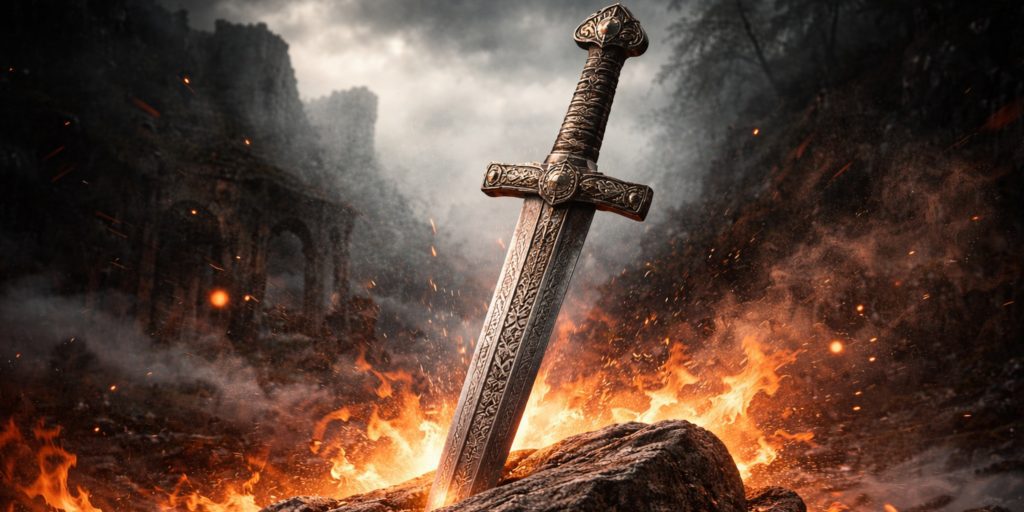
From: Norse heroic tradition
Wielder: Sigurd
Type: Legendary dragon-slaying sword
In the Völsunga saga, Sigurd uses Gram to kill the dragon Fafnir.
Gram is especially important because its story contains motifs that later fantasy writers repeatedly reused. It belongs to a heroic lineage, is broken, reforged and ultimately becomes the weapon of a dragon-slayer.
If that sounds suspiciously familiar after reading Tolkien, it should.
Dragonslayer
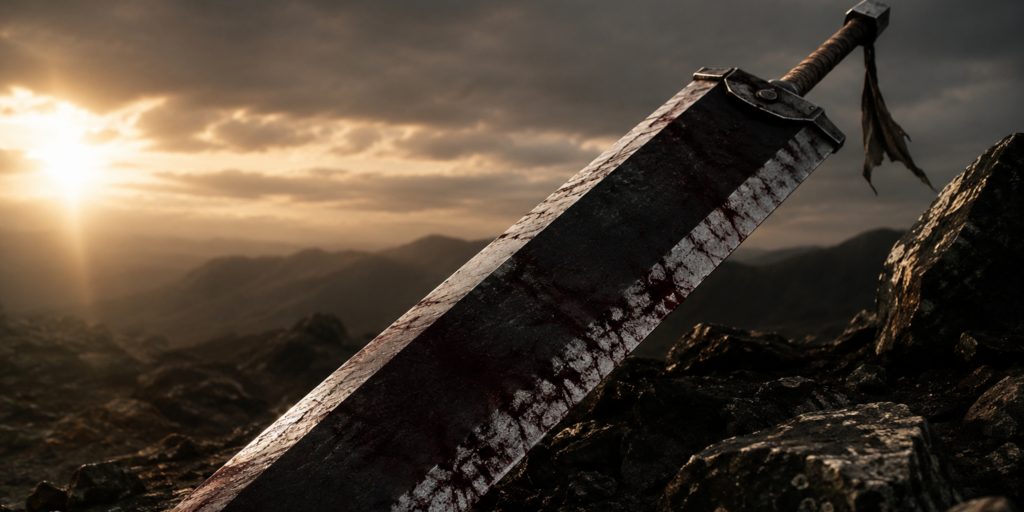
From: Berserk
Wielder: Guts
Type: Colossal greatsword
Kentaro Miura’s Dragonslayer takes the monster-killing sword to a wonderfully absurd extreme.
It is an enormous slab of iron, deliberately designed as something beyond the practical limits of an ordinary human weapon. After repeatedly being used against supernatural creatures, it becomes capable of affecting beings beyond the normal physical world.
Historically practical? No.
Visually unforgettable? Absolutely.
Fantasy sometimes earns the right to ignore the museum catalogue.
Ancestral Swords
Historically, swords could function as heirlooms, ceremonial objects and symbols of status. Fantasy magnifies that idea until possession of a particular sword can support a claim to an entire kingdom.
Blackfyre
From: A Song of Ice and Fire
Associated with: House Targaryen
Type: Ancestral Valyrian steel sword
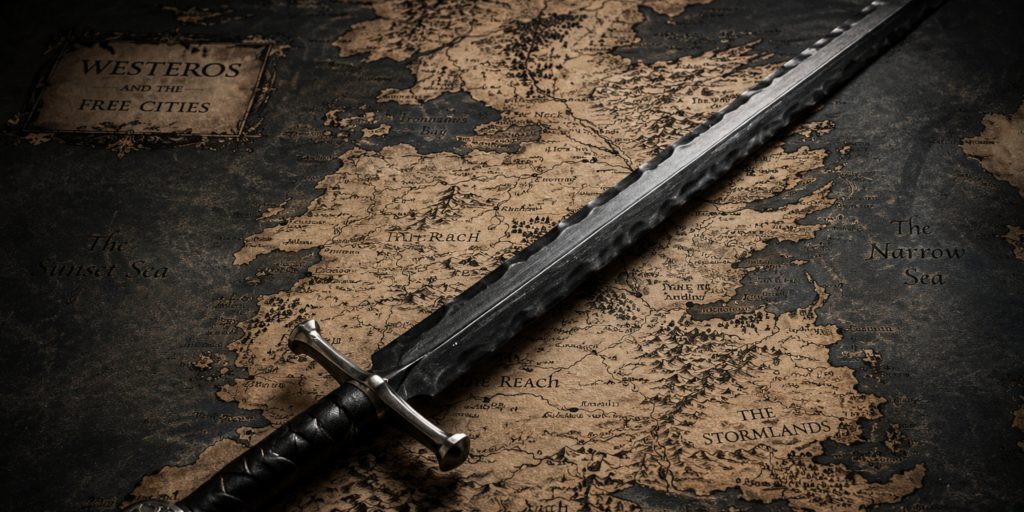
Blackfyre is politically powerful because generations of Targaryen kings carried it.
When Aegon IV gave the sword to his legitimised bastard Daemon Waters, later known as Daemon Blackfyre, the gesture acquired enormous significance. Possession of the sword helped support Daemon’s image as a legitimate royal contender.
This is one of George R. R. Martin’s more historically convincing uses of a famous weapon.
The sword does not need to fire lightning.
People believing that it matters is enough.
Swords of Prophecy and Destiny
Fantasy loves chosen heroes almost as much as fantasy heroes dislike discovering that they have been chosen.
Naturally, many receive a sword.
The Sword of Shannara
From: Terry Brooks’ The Sword of Shannara
Type: Magical truth-revealing sword
The Sword of Shannara is more unusual than the conventional enchanted weapon because its essential power concerns truth.
It allows its wielder to perceive reality and confront deception. Victory therefore depends less upon simply hitting something harder and more upon understanding what is actually being faced.
That gives the sword a thematic function as well as a martial one.
Callandor
From: The Wheel of Time
Associated with: Rand al’Thor
Type: Prophetic magical artefact
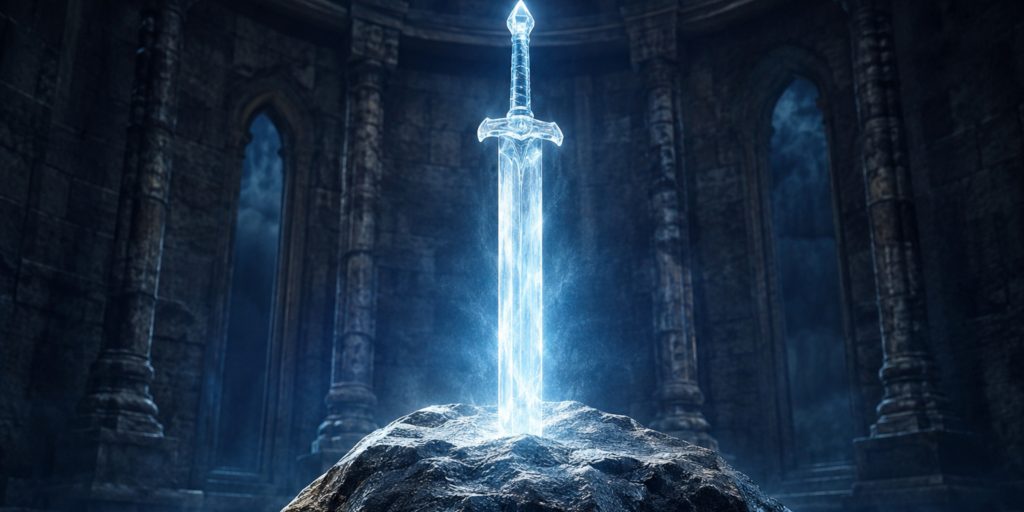
Callandor resembles a crystal sword but is actually a powerful sa’angreal, an object capable of greatly amplifying the One Power.
Its importance is also prophetic. Taking Callandor from the Stone of Tear is one of the signs identifying the Dragon Reborn.
Here the sword functions much like regalia in medieval kingship. Possessing it publicly demonstrates identity and authority.
Runic and Inscribed Swords
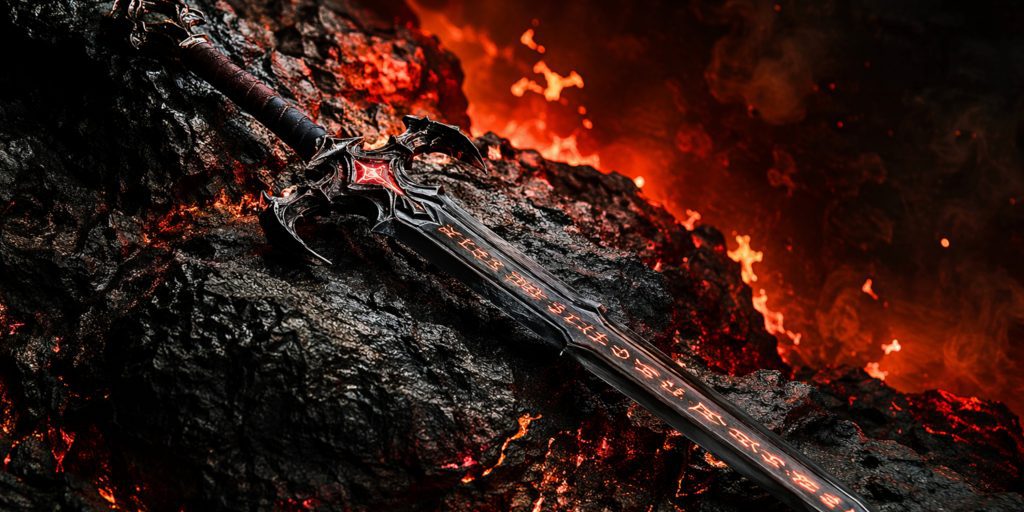
Runes appear everywhere in fantasy.
Sometimes this is grounded in history. Sometimes a designer simply appears to have concluded that an empty blade looked rather boring.
Real historical swords could indeed carry inscriptions.
Viking Age and medieval European blades include makers’ marks, religious formulae, decorative symbols and famous inscriptions such as +VLFBERH+T, found on a group of early medieval swords.
Fantasy takes the genuine mystique of writing upon weapons and makes the inscription itself magical.
Runes might:
- strengthen a blade
- protect its wielder
- release magical attacks
- identify its maker
- bind supernatural beings
- record an ancient language
- activate only for particular owners
The underlying concept is historically convincing even when the result starts firing blue lightning.
Oversized Fantasy Swords
Few things distinguish fantasy from historical swordsmanship more quickly than the enormous sword.
The Buster Sword
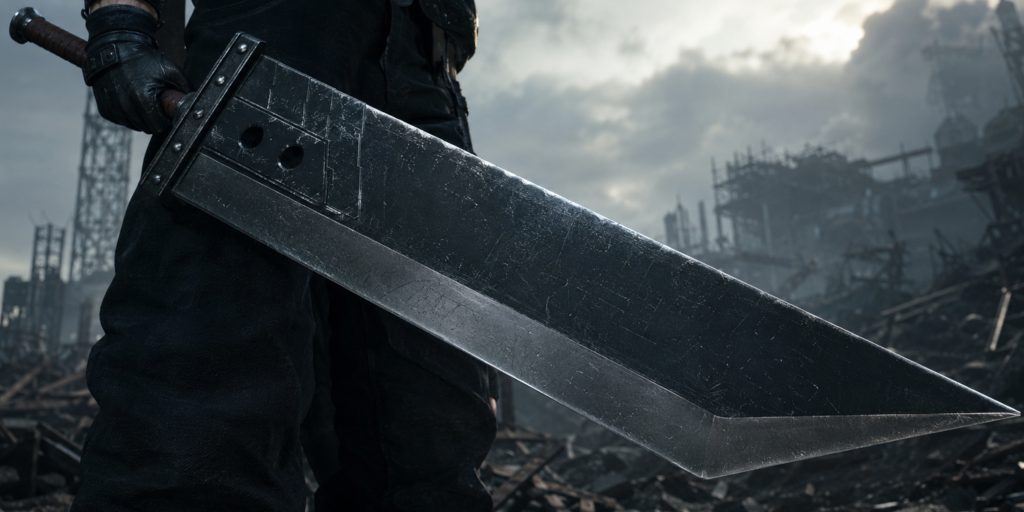
From: Final Fantasy VII
Wielder: Cloud Strife
Type: Oversized greatsword
Cloud’s Buster Sword is effectively a rectangular slab of metal with a hilt.
Its exaggerated proportions make little sense as a historical weapon, but that misses why the design works. The Buster Sword communicates Cloud’s exceptional nature before he says anything.
It also becomes an object of memory and inheritance through its connection with Zack Fair.
Could Giant Fantasy Swords Actually Work?
Usually, no.
Real two-handed swords could certainly be large. Renaissance Zweihänder and other greatswords could reach impressive dimensions while remaining functional because their blades were carefully proportioned and comparatively thin.
Simply scaling a sword upwards creates problems with mass, balance and rotational inertia.
Fantasy heroes solve this through supernatural strength, magical materials or the traditional method of refusing to discuss physics.
Curved Fantasy Swords
Curved blades in fantasy often borrow from real sabres, scimitars, shamshirs, katana and falchions.
This can work beautifully when designers understand the originals.
It can also produce the generic “desert sword”, a vaguely Middle Eastern curved blade assigned to anyone standing near some sand.
Historically, curved swords developed in many cultures and for many different purposes. Their forms cannot sensibly be reduced to a single fantasy archetype.
Drizzt Do’Urden’s paired scimitars are among the best-known fantasy examples, while katana-inspired weapons dominate enormous areas of games, anime and manga.
Transforming and Mechanical Swords
Fantasy games have produced swords that historical smiths would probably examine for several seconds before quietly leaving the workshop.
Ivy Valentine’s weapon from Soulcalibur can transform between a conventional sword and an articulated whip-like weapon.
The gunblade of Final Fantasy VIII combines elements of sword and firearm in a design intended more for distinctive gameplay and visual identity than historical plausibility.
Such weapons belong to a modern fantasy tradition where mechanical transformation itself communicates sophistication, rarity or technological superiority.
They are seldom practical.
They are very good at selling posters.
Energy Swords
The Lightsaber
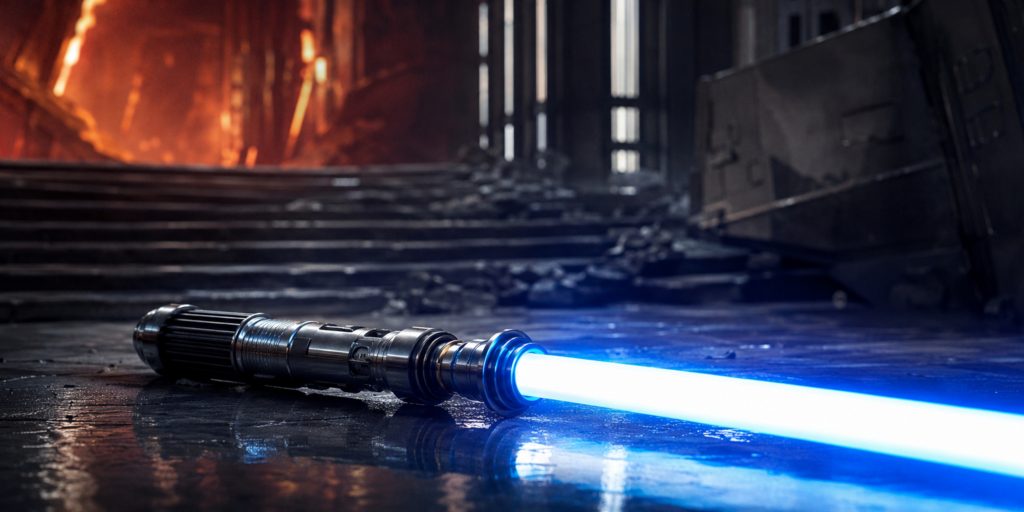
From: Star Wars
Type: Energy sword
Technically science fiction rather than traditional fantasy, the lightsaber nevertheless performs almost exactly the cultural role of a magical sword.
Its wielders belong to knightly orders. Construction has ritual significance. Individual weapons are closely associated with their owners. Blades are used in formalised duels, passed between generations and invested with moral symbolism.
Remove the technology and the structure underneath is remarkably medieval.
That is part of the reason the lightsaber works so well. Audiences immediately understand what it means because culturally we have been taught how to understand swords for centuries.
Why Are Swords So Common in Fantasy?
The obvious answer is that swords look good.
The more interesting answer is that the sword has accumulated an extraordinary amount of cultural baggage.
Spears were arguably more important across much of military history. Bows transformed battlefields. Polearms were brutally effective. Firearms eventually made the entire argument rather academic.
Yet the sword retained a special relationship with status.
A sword could be worn when a spear could not. It might signify military rank, aristocratic identity, legal privilege or personal honour. Ceremonial swords survived long after swords had ceased to dominate warfare.
Literature amplified these associations.
A sword could therefore represent:
- legitimate kingship
- inherited authority
- personal honour
- divine favour
- heroic identity
- sacrifice
- corruption
- revenge
- supernatural power
Fantasy writers inherited a weapon that already carried centuries of symbolism.
Frankly, most of the work had been done for them.
Fantasy Swords Compared with Historical Swords
| Fantasy feature | Historical basis | Reality |
| Named swords | Strong | Historical and legendary swords frequently had names |
| Family heirloom blades | Strong | Weapons could pass through families and dynasties |
| Blade inscriptions | Strong | Religious, decorative and maker’s inscriptions survive |
| Royal swords | Strong | Swords formed part of regalia and ceremony |
| Reforged blades | Plausible | Damaged blades could be repaired or repurposed |
| Enormous greatswords | Partial | Very large swords existed, but remained carefully balanced |
| Flaming blades | Virtually none | Fire and sharp steel are awkward companions |
| Whip swords | Extremely limited | Flexible weapons existed, but fantasy versions are generally impractical |
| Sentient swords | Mercifully none | Museums would be considerably more stressful |
| Soul-drinking swords | None known | Archaeology remains strangely disappointing on this matter |
What Makes a Fantasy Sword Memorable?
The best fantasy swords tend to possess three things: a distinctive appearance, a recognisable history and a meaningful relationship with their wielder.
Excalibur without Arthur loses much of its importance. Andúril without Aragorn becomes an attractive sword with an impressive pedigree. Stormbringer without Elric loses the tragedy that makes it frightening.
That is why simply making a sword enormous or covering it with glowing runes does not necessarily make it memorable.
A great fantasy weapon tells us something about the person carrying it.
Sometimes it tells us that they are the rightful king.
Sometimes it tells us that they are carrying the accumulated hopes of generations.
And sometimes it tells us that they have knowingly accepted a demonic sword that consumes human souls.
History contains plenty of questionable military decisions, but fantasy does occasionally manage to improve upon them.
The Historical Roots of Fantasy Swords
The boundary between mythical sword and fantasy sword is wonderfully untidy.
Excalibur belongs to medieval literature. Gram emerges from Norse heroic tradition. Kusanagi-no-Tsurugi belongs to Japanese imperial mythology. Later writers such as Tolkien and Moorcock created entirely fictional swords but drew upon older traditions in which weapons possessed names, genealogies and supernatural associations.
That continuity matters.
Modern fantasy did not invent our fascination with extraordinary swords. It inherited it.
People living a thousand years ago were already telling stories about blades forged by exceptional smiths, carried by legendary warriors and associated with supernatural events. Modern novels, films and games changed the worlds around those weapons, but the central idea survived remarkably well.
The sword remains one of our favourite ways of turning a character’s identity into a physical object.
And after several thousand years of storytelling, we still apparently have not found anything quite as satisfying as handing the hero a sword.