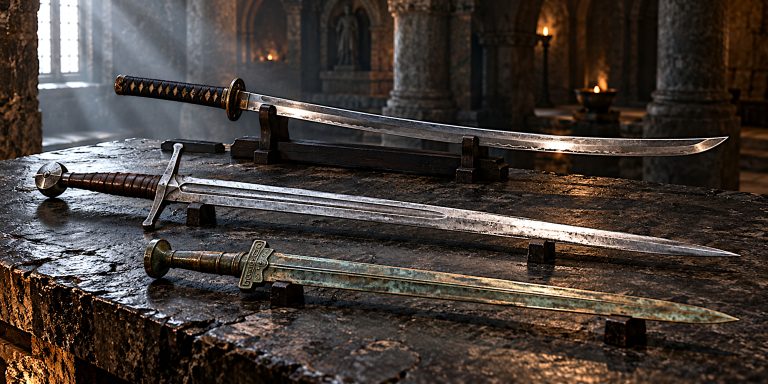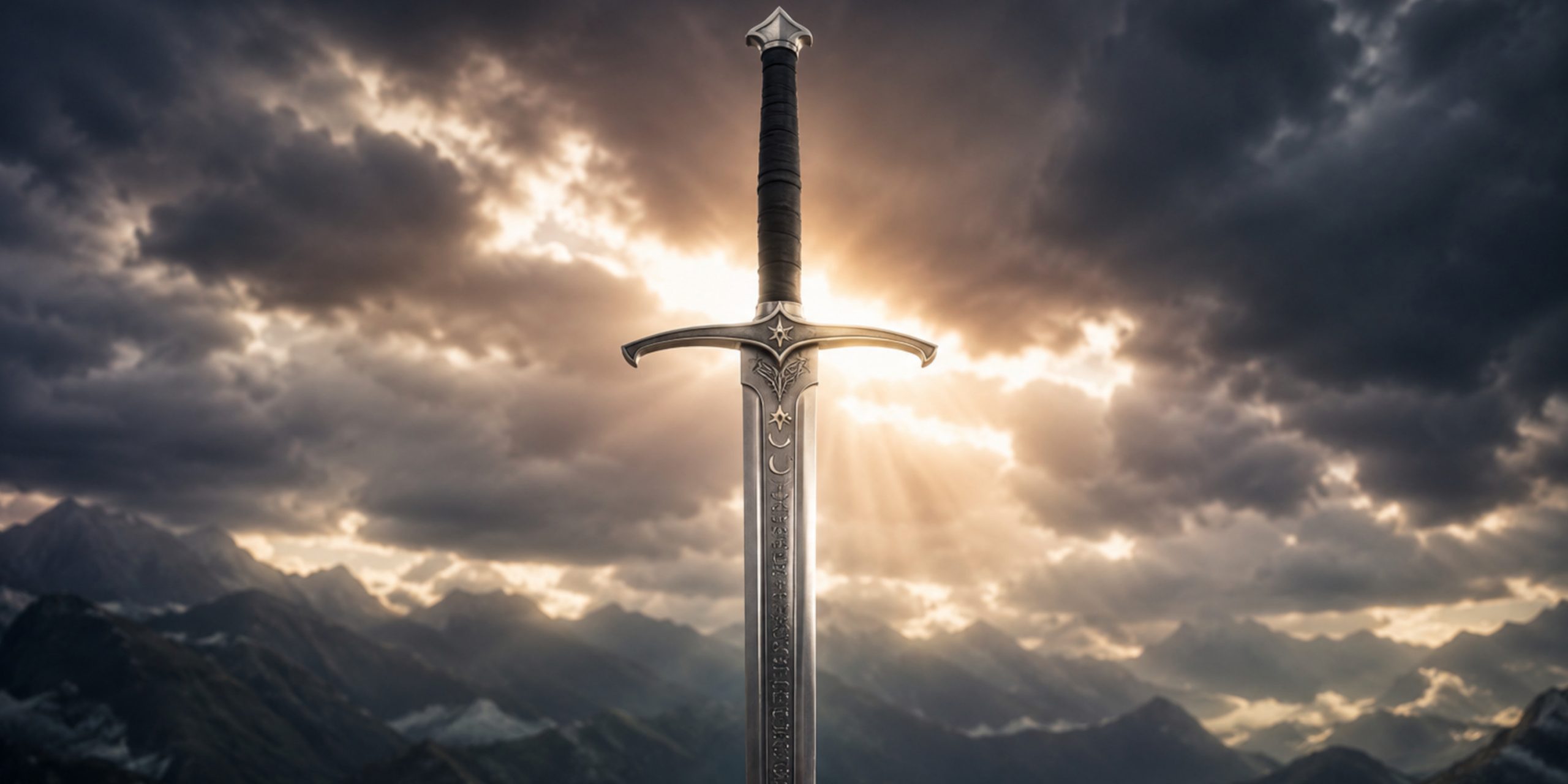
Few fantasy weapons arrive carrying as much emotional baggage as Andúril. Most legendary swords get a dramatic name, a sharp edge, and maybe a prophecy if they are lucky. Andúril turns up with thousands of years of history, a shattered dynasty, the fall of a Dark Lord, and the small issue of whether humanity still deserves another chance.
Known as the “Flame of the West”, Andúril is the reforged version of Narsil, the blade that cut the One Ring from Sauron’s hand. In J.R.R. Tolkien’s world, swords are rarely just tools. They are memories forged into metal, and Andúril is arguably the greatest example.
For Aragorn, it is not simply a weapon. It is proof of who he was, who he feared becoming, and who he finally chose to be.
Origins: Before Andúril There Was Narsil
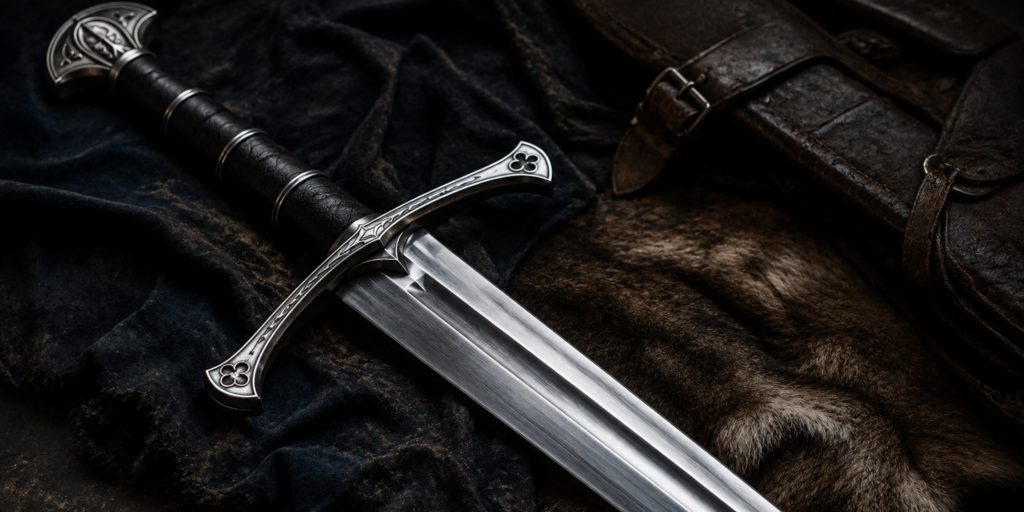
The story of Andúril begins long before Aragorn.
The original sword, Narsil, was forged during the First Age by Telchar of Nogrod, one of the greatest Dwarven smiths in Middle-earth. Telchar was also responsible for other legendary creations, including the knife Angrist used by Beren to remove a Silmaril from Morgoth’s crown.
The name Narsil is connected with the Sun and Moon, reflecting the blade’s shining brilliance.
The sword eventually passed into the hands of Elendil, High King of Arnor and Gondor. During the War of the Last Alliance, Elendil carried Narsil against Sauron himself.
That went about as well as fighting a giant immortal dark lord usually does.
Elendil was killed, and Narsil broke beneath him. Yet the broken blade achieved what armies had struggled to accomplish. His son Isildur used the remaining shard to cut the One Ring from Sauron’s hand, ending the Second Age.
For a broken sword, it had a surprisingly successful afternoon.
The Reforging Of Andúril
For centuries, the shards of Narsil became an heirloom of Elendil’s descendants. The broken sword represented both victory and failure.
Victory because Sauron was defeated.
Failure because Isildur refused to destroy the Ring.
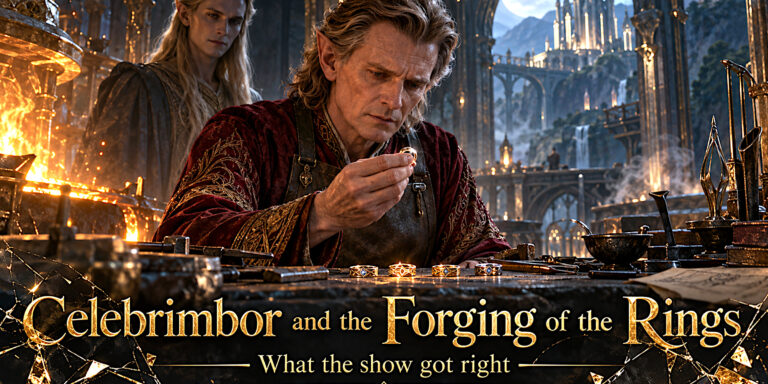
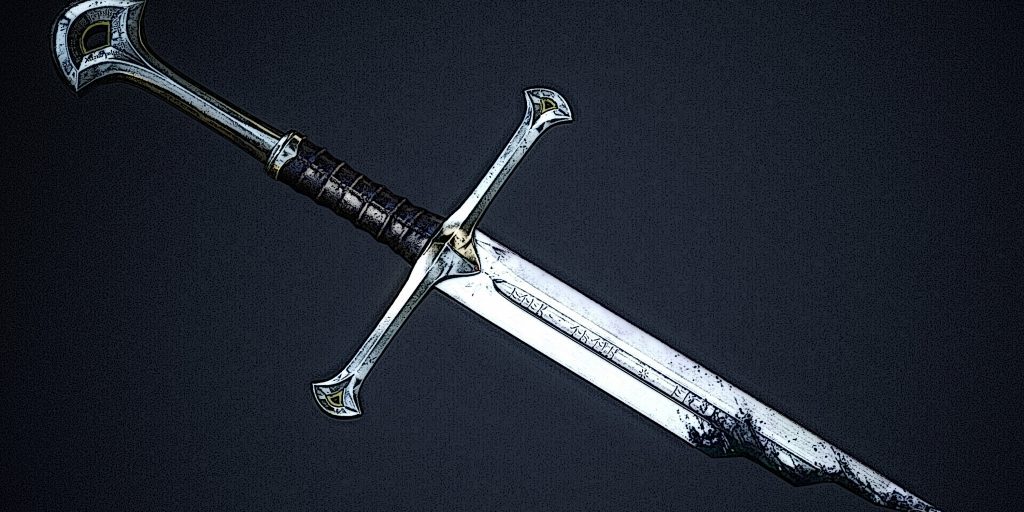
When the War of the Ring approached, the Elven smiths of Rivendell reforged the blade for Aragorn. Narsil was reborn as Andúril, meaning “Flame of the West”.
Tolkien wrote:
“The Sword of Elendil was forged anew by Elvish smiths, and on its blade was traced a device of seven stars set between the crescent Moon and the rayed Sun.”
The symbolism is powerful. The sword that witnessed mankind’s greatest mistake returns in the hands of someone determined to correct it.
No pressure, Aragorn.
Design And Appearance
Tolkien’s descriptions focus more on symbolism than technical specifications, but Andúril has several defining features:
| Feature | Description |
|---|---|
| Type | Long sword |
| Original name | Narsil |
| New name | Andúril, Flame of the West |
| Maker | Telchar of Nogrod |
| Reforged by | Elven smiths of Rivendell |
| Owner | Aragorn II Elessar |
| Era | First Age origins, reforged during the Third Age |
| Symbols | Sun, Moon, seven stars |
The seven stars represent Elendil, while the Sun and Moon reference the original meaning of Narsil.
In Peter Jackson’s film adaptation, Andúril is presented as a large hand-and-a-half sword with elegant but practical proportions. It avoids the oversized fantasy weapon style and feels closer to something a medieval knight might genuinely carry.
Considering Aragorn spends most of his life travelling through mud, forests, ruins, and battlefields, a sword the size of a small tree would have been a poor career choice.
How Powerful Was Andúril?
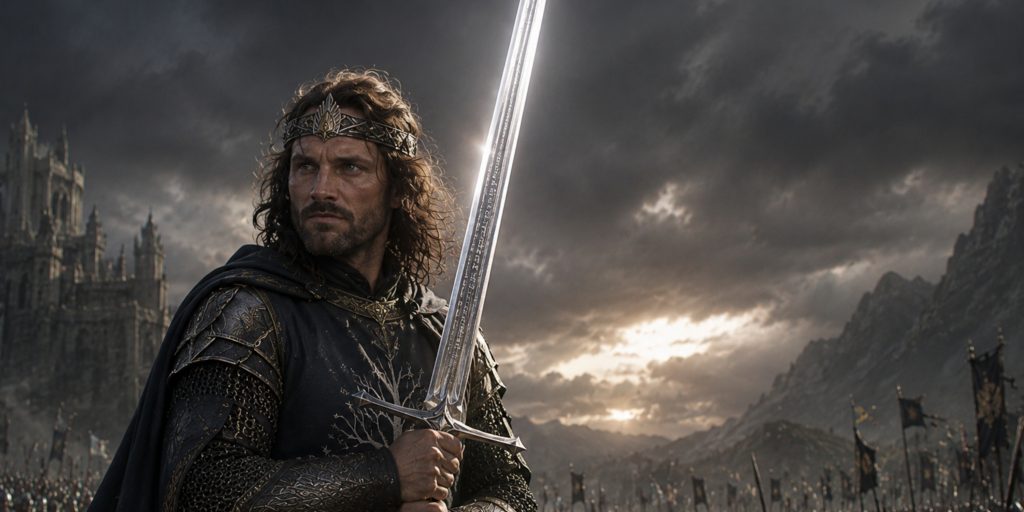
Andúril is not a magical weapon in the typical fantasy sense. It does not shoot fire, summon storms, or glow because someone nearby forgot to pay their Dark Lord subscription.
Its power comes from:
- Exceptional craftsmanship
- Symbolic authority
- Its connection to Elendil’s bloodline
- The fear it creates among enemies
Tolkien often treated objects as vessels of history rather than simple power upgrades. Andúril matters because of what people believe when they see it.
When Aragorn reveals the reforged sword, he is announcing:
The kings have returned.
The line of Elendil survived.
Sauron’s old defeat has come back to haunt him.
That psychological impact is probably worth more than a few extra points of damage.
Andúril In The Lord Of The Rings Books
The books and films handle Andúril differently.
In Tolkien’s novel, Aragorn carries Andúril from early in the Fellowship’s journey. The reforging happens before the Fellowship leaves Rivendell.
The sword becomes part of his identity throughout the quest. He carries the legacy of kings before he openly claims the throne.
Important moments include:
- Leaving Rivendell with the Fellowship
- Revealing the sword to Éomer of Rohan
- Using it as proof of his heritage
- Carrying it during the Battle of the Pelennor Fields
- Marching with it to the Black Gate
Andúril In The Films
Peter Jackson’s adaptation changes the timeline.
In the films, Aragorn receives Andúril later, during The Return of the King. This creates a clearer visual moment where Aragorn accepts his destiny.
It is less faithful to the book chronology but works dramatically. Cinema loves a good “hero finally gets the sword” moment, and admittedly, a legendary blade being delivered by Elrond is difficult to beat.
The film version also adds the famous inscription:
“I am Andúril who was Narsil, the sword of Elendil. Let the thralls of Mordor flee me.”
The wording captures the spirit of Tolkien’s creation, even if the presentation differs.
Andúril Compared With Other Famous Middle-earth Swords
| Sword | Owner | Importance |
| Andúril | Aragorn | Symbol of restored kingship |
| Glamdring | Gandalf | Ancient blade from Gondolin |
| Sting | Bilbo and Frodo | Elven blade famous for detecting Orcs |
| Orcrist | Thorin Oakenshield | Feared weapon among Orcs |
| Gurthang | Túrin Turambar | Dark and tragic legendary sword |
| Angrist | Beren | Used in the quest for the Silmarils |
Andúril is not necessarily the most dangerous sword ever created in Middle-earth. Weapons such as Gurthang have darker and stranger histories.
However, few blades influence the fate of the world as directly.
Legacy Of Andúril
Andúril has become one of fantasy’s most recognisable swords because it connects personal identity with epic history.
Many fantasy weapons are remembered because of what they can destroy. Andúril is remembered because of what it restores.
It carries the memory of Elendil, the failure of Isildur, the patience of the Dúnedain, and the rise of Aragorn.
A broken blade became the symbol of a reunited kingdom.
Not a bad comeback story for something that spent several thousand years sitting around in pieces.