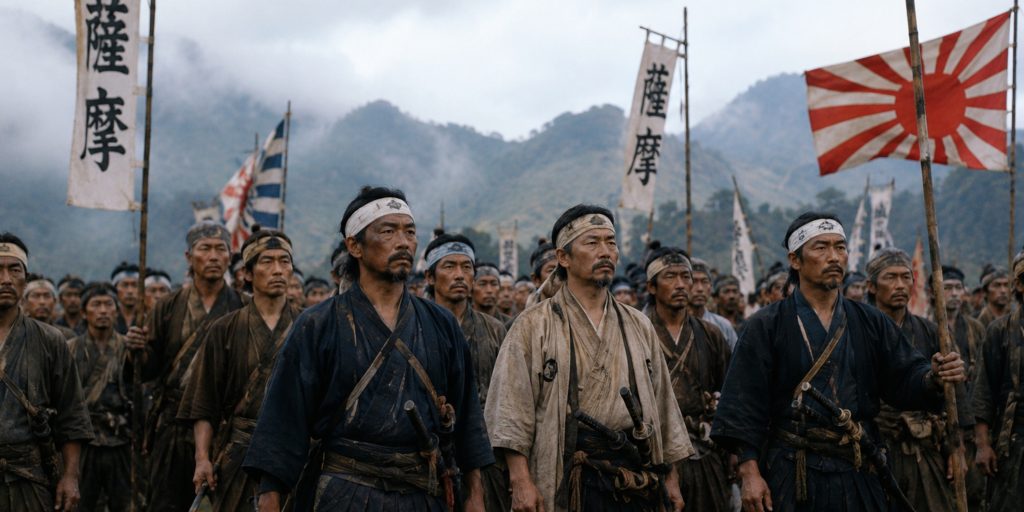
Edward Zwick’s The Last Samurai is a lavish historical drama about Nathan Algren, an American army officer hired to train Japan’s new Imperial Army. Captured during a campaign against samurai rebels, Algren is drawn into the world of their leader, Katsumoto, and begins to question the job he was sent to do.
The film has the scale of an old-fashioned epic: mountain villages, sweeping cavalry charges, glinting armour and a score that seems to arrive with its own weather system. It also has a familiar Hollywood habit of letting the visiting American become the audience’s guide to a country with its own complicated history. Both things can be true at once. The film is a compelling drama, and its version of Japan is heavily shaped for Western viewers.
The story and its cast
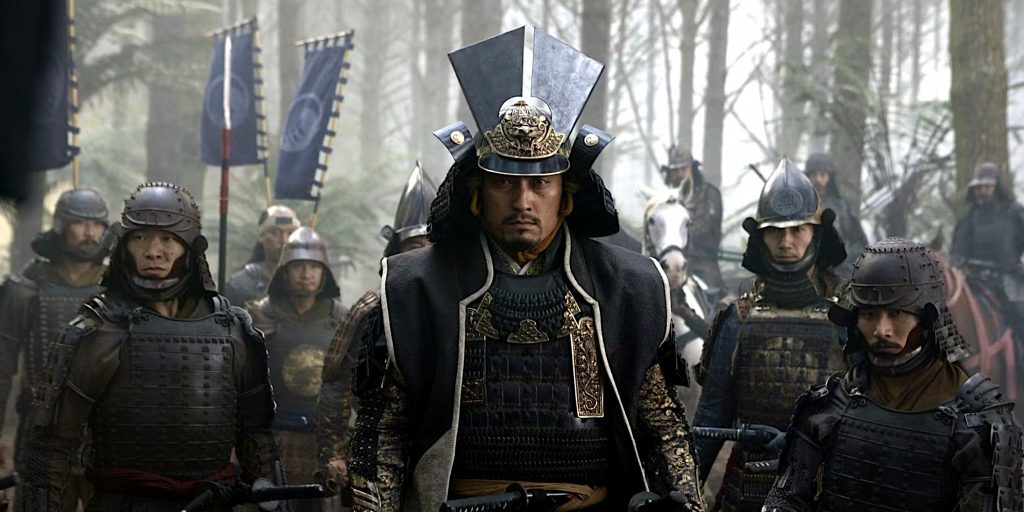
Tom Cruise plays Algren as a capable soldier whose experience has left him exhausted and haunted. He is not exactly short on flaws, which gives the character somewhere to go beyond learning sword forms and looking thoughtful in the rain.
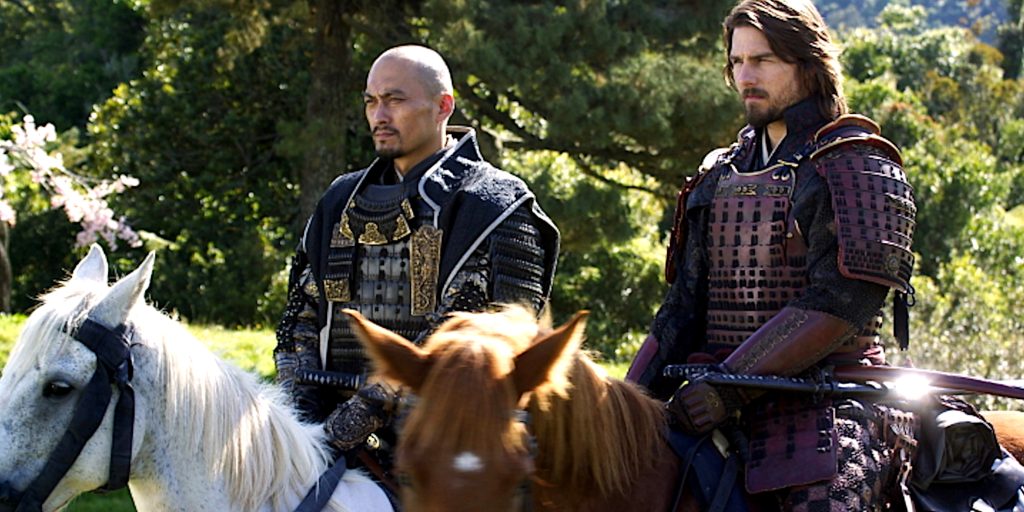
Ken Watanabe brings weight and restraint to Katsumoto, the samurai leader whose rebellion is driven by political and personal grievances. Their relationship gives the film its centre. Algren’s gradual shift from prisoner to ally is engaging, even if the story sometimes treats his acceptance by the samurai as the main measure of what their struggle means.
The supporting cast adds much of the film’s texture. Hiroyuki Sanada plays Ujio, a disciplined warrior who initially sees Algren as an intruder. Koyuki gives Taka, Katsumoto’s sister, a quiet emotional presence, while Tony Goldwyn and Timothy Spall help sketch the American and Japanese political worlds around Algren.
What makes the film work
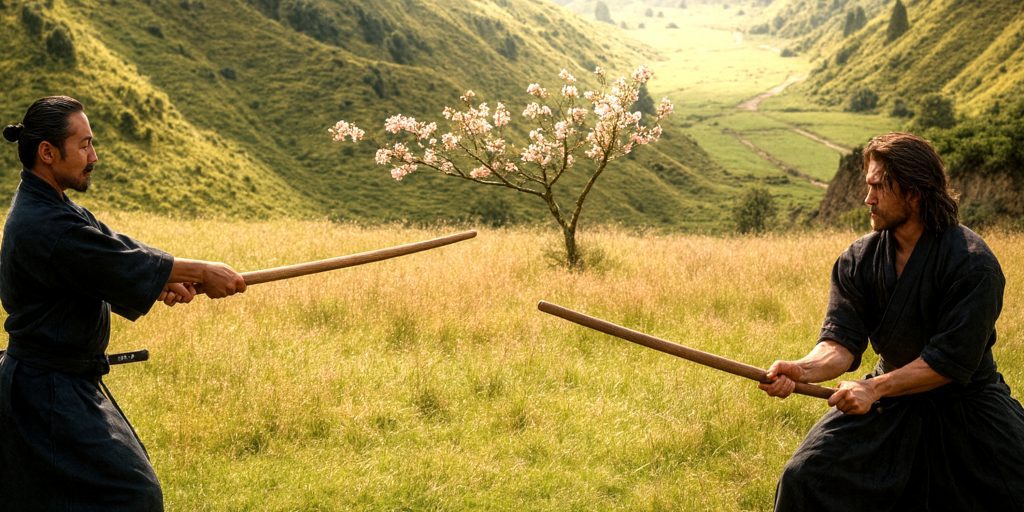
The action is carefully staged and easy to follow. The film gives its battles room to build, from the first uneasy encounters to the final stand. Its best sequences understand that combat is frightening, confusing and exhausting, rather than simply a parade of impressive sword work.
The quieter scenes are just as important. Algren’s time in Katsumoto’s village gives the story space to slow down and let his change of perspective feel gradual. There is humour in his early discomfort, too. Watching a battle-scarred officer discover that village life involves more than staring solemnly at a sword is one of the film’s lighter pleasures.
The visual design is striking without being hard to read. Armour, clothing and landscape give the film a strong sense of place, while Hans Zimmer’s score supplies the emotional lift. Sometimes it pushes hard, but this is a film about honour, memory and enormous hills. Subtlety was never going to win every scene.
How accurate is The Last Samurai?
The film takes inspiration from the Satsuma Rebellion of 1877, when Saigō Takamori and disaffected former samurai rose against the Meiji government. The real rebellion ended at Shiroyama, where government forces defeated Saigō’s army. The National Diet Library’s account of the rebellion traces the events and preserves a report on the final attack.
Katsumoto is partly modelled on Saigō, but the film reshapes both the man and the conflict. Saigō had helped build the new Meiji government before turning against it. His motives involved disputes over policy and power, including the question of whether Japan should invade Korea. This was not a simple last stand by traditionalists against modernisation. The historical overview from Education About Asia explains how the film’s romantic rebel differs from the political figure and his historical setting.
The film also exaggerates the divide between sword-wielding samurai and a modern army with guns. Samurai rebels used firearms and artillery. The Meiji government’s conscript army represented a major change, but Japan’s military modernisation had begun before the rebellion, and its leaders were Japanese. The transition from domain-based rule to a centralised state was a domestic struggle shaped by foreign pressure, political competition and social upheaval.
Algren and his role in the rebellion are fictional. So is the film’s neat division between a corrupt modernising faction and a morally pure samurai resistance. The actual conflict was more tangled, and the end of samurai privileges affected a diverse group whose members did not all respond in the same way.
Combat & Weapons
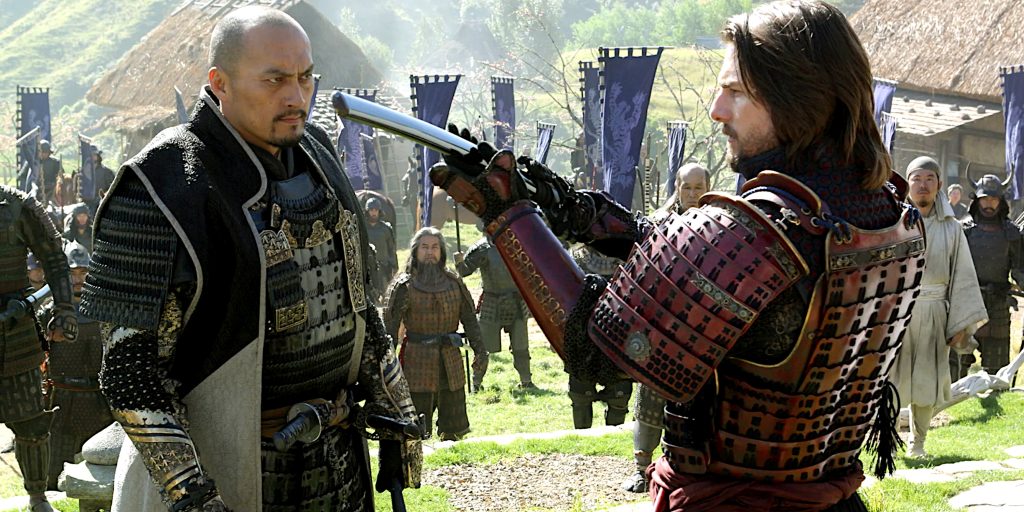
The film’s combat is built around a clash of styles. Katsumoto’s followers fight with katana, yari spears and bows, while the Imperial Army uses rifles and artillery. The contrast makes for vivid cinema: disciplined lines of gunfire against a charge of swords and spears. It also makes the final battle feel like a collision between two completely separate eras.
Historically, that divide was less clean. Samurai rebels in the 1877 Satsuma Rebellion used modern firearms and artillery as well as swords. They did not reject guns as a matter of principle. The National Diet Library’s account of the rebellion describes the government’s final assault at Shiroyama, while historical analysis notes that rebel forces sought access to modern weapons.
The film’s sword fights are dramatic, but they present a polished, choreographed version of combat. A katana could be lethal at close range, yet it was one weapon among several, not a practical answer to sustained rifle fire. The film knows this, which gives its final charge real pathos, even as the imagery leans into the romance of the sword.
The weapons help tell the film’s story, then, but they also simplify its history. The Last Samurai makes the sword a symbol of cultural memory and personal honour. In the real rebellion, swords mattered, but so did rifles, artillery, logistics and political choices.
The film’s point of view
The biggest limitation is also built into the premise: Algren becomes the route into Japanese history. He learns the language, absorbs the village’s customs and eventually speaks with authority about what Japan should preserve. That structure gives the film a clear character arc, but it leaves Japanese characters doing too much of the teaching and not enough of the interpreting.
There is also a useful tension in the film’s portrait of change. It makes the Meiji government look grasping and culturally destructive, while giving Katsumoto’s cause an almost timeless purity. The real Meiji transformation was more complex. The historical overview of the Meiji Restoration describes the government’s attempts to centralise Japan, build a modern state and reduce the privileges of the old warrior class.
That gap does not make the film worthless as a historical drama. It does mean viewers should treat it as an interpretation shaped by Hollywood storytelling, not as a reliable guide to the rebellion or samurai life.
Verdict
The Last Samurai remains an effective epic, carried by Watanabe’s performance, a strong central relationship and battle scenes that still have real force. Its most affecting moments are about grief, loyalty and the cost of political change. Its weakest are the ones that make a foreign soldier the key to understanding Japan.
Watch it for the performances, atmosphere and spectacle. For the history, start with Saigō Takamori and the Satsuma Rebellion itself. The film is a memorable doorway into that story, though it leaves out several rooms.