Ridley Scott’s Medieval Epic Revisited
When Kingdom of Heaven arrived in 2005, it felt like Ridley Scott was trying to capture lightning twice. After redefining the modern historical epic with Gladiator, he turned from Ancient Rome to the brutal politics and religious tensions of the Crusades.
The result was ambitious, visually stunning and surprisingly thoughtful, although its original theatrical release left many viewers feeling something important was missing. Years later, the Director’s Cut changed the conversation completely.
Today, Kingdom of Heaven stands as one of the most discussed medieval films ever made. It mixes genuine historical figures with fictional drama, huge battlefield spectacle and enough chainmail to keep armour enthusiasts arguing online forever.
Quick Facts
| Detail | Information |
|---|---|
| Film | Kingdom of Heaven |
| Released | 2005 |
| Director | Ridley Scott |
| Screenwriter | William Monahan |
| Genre | Historical epic, war drama |
| Setting | Crusader Kingdom of Jerusalem, late 12th century |
| Main Conflict | Events leading towards the fall of Jerusalem in 1187 |
| Runtime | 144 minutes theatrical cut, 194 minutes Director’s Cut |
| Main Star | Orlando Bloom as Balian of Ibelin |
| Music | Harry Gregson-Williams |
Plot Summary
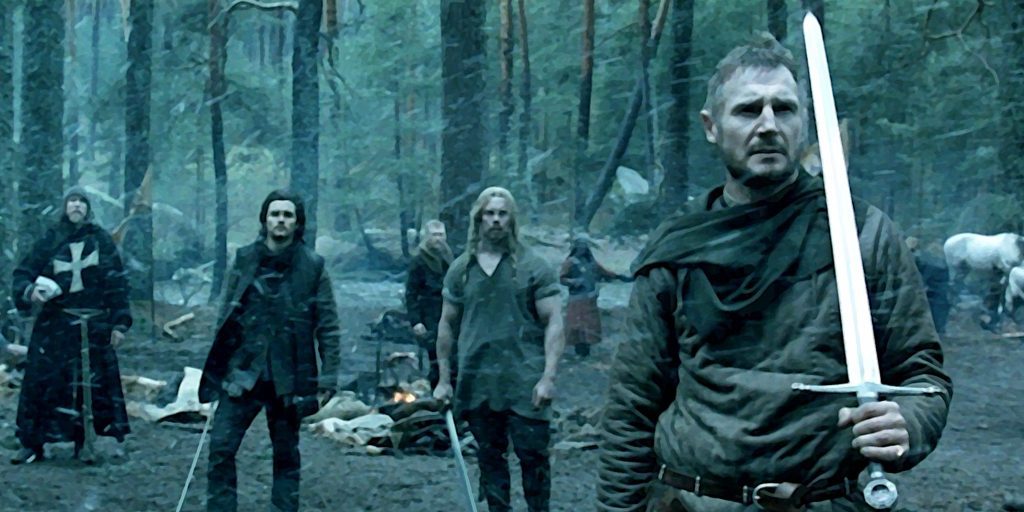
The story follows Balian, a grieving French blacksmith who discovers he is the illegitimate son of Crusader nobleman Godfrey of Ibelin.
After travelling to the Holy Land, Balian becomes involved in the fragile politics of Jerusalem. The city is ruled by King Baldwin IV, a young monarch suffering from leprosy who attempts to maintain peace between Christians and Muslims.
As extremists on both sides push towards war, Balian finds himself defending Jerusalem against the armies of Saladin.
The film explores:
- Religious conflict
- Honour and morality during war
- Political ambition
- The difference between faith and fanaticism
- Personal responsibility
It is less interested in simple heroes and villains than many medieval films, which is probably why it has aged better than some expected.
Main Cast and Characters
| Actor | Character | Historical Basis |
| Orlando Bloom | Balian of Ibelin | Real Crusader noble, heavily fictionalised |
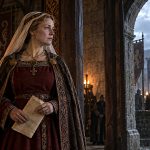
| Eva Green | Sibylla of Jerusalem | Historical Queen of Jerusalem |
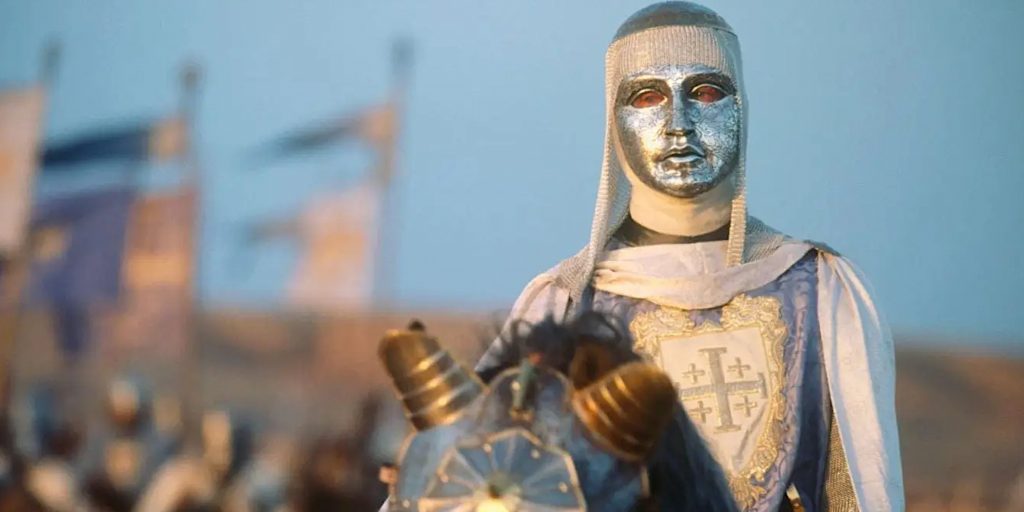
| Edward Norton | Baldwin IV | Historical King of Jerusalem |
| Ghassan Massoud | Saladin | Historical Ayyubid Sultan |
| Liam Neeson | Godfrey of Ibelin | Fictionalised character |
| Jeremy Irons | Tiberias | Inspired by Raymond III of Tripoli |
| Marton Csokas | Guy de Lusignan | Historical King of Jerusalem |
| Brendan Gleeson | Raynald de Châtillon | Historical Crusader lord |
The casting remains one of the film’s strongest elements. Edward Norton’s masked Baldwin IV is particularly memorable, somehow stealing scenes while his face is hidden for nearly the entire performance.
Not bad when your main acting tools are your voice, posture and a silver mask.
Production and Filming
Ridley Scott wanted Kingdom of Heaven to feel physically real. Instead of relying entirely on digital effects, the production used enormous sets, practical armour, large numbers of extras and carefully designed battle sequences.
Filming locations included:
- Morocco
- Spain
- Loarre Castle
- Seville
The production recreated medieval Jerusalem using massive constructed sets. Scott’s experience with large scale filmmaking is obvious, especially during the siege scenes where thousands of soldiers, siege towers and cavalry movements create a genuine sense of scale.
Arms and Armour in Kingdom of Heaven

The film features some impressive medieval weapon design, although historical accuracy varies.
Christian Crusader Equipment
Commonly shown weapons:
- Arming swords
- Long knives and daggers
- Spears
- Crossbows
- Maces
- Lances
Armour includes:
- Mail hauberks
- Nasal helmets
- Great helms
- Padded gambesons
- Surcoats
The iconic white surcoats and Templar imagery create a powerful visual identity, although the film occasionally exaggerates uniformity. Medieval armies were generally far less coordinated in appearance.
Ayyubid Forces
Weapons shown include:
- Curved swords inspired by Middle Eastern sabres
- Composite bows
- Spears
- Cavalry weapons
Armour includes:
- Lamellar armour
- Helmets with aventails
The film does a respectable job showing Saladin’s forces as organised and sophisticated rather than falling into the outdated idea of medieval Eastern armies as chaotic mobs.
Historical Accuracy: What Did Kingdom of Heaven Get Right?
The film captures several broad historical themes well.
Accurate Elements
- Baldwin IV was a respected ruler despite suffering from leprosy
- Saladin was known for political intelligence and diplomacy
- The Kingdom of Jerusalem contained competing factions
- Raynald de Châtillon’s aggression helped destabilise relations
- Jerusalem fell to Saladin in 1187
The atmosphere of a fragile kingdom surrounded by larger political forces is one of the film’s biggest successes.
What Did Kingdom of Heaven Change?

Some creative choices are much more dramatic.
Balian of Ibelin
The real Balian was not a French blacksmith who discovered noble blood. He was already an established aristocrat.
His real defence of Jerusalem, however, was remarkable. After the disastrous Crusader defeat at Hattin, Balian helped organise the city’s resistance before negotiating its surrender.
Sibylla
The film dramatically changes Sibylla’s story, especially her relationship with Balian and her decisions regarding her son.
Guy de Lusignan
Guy is portrayed almost entirely negatively. Historically, his leadership was heavily criticised, especially after Hattin, but the real political situation was more complicated.
The Battle Scenes
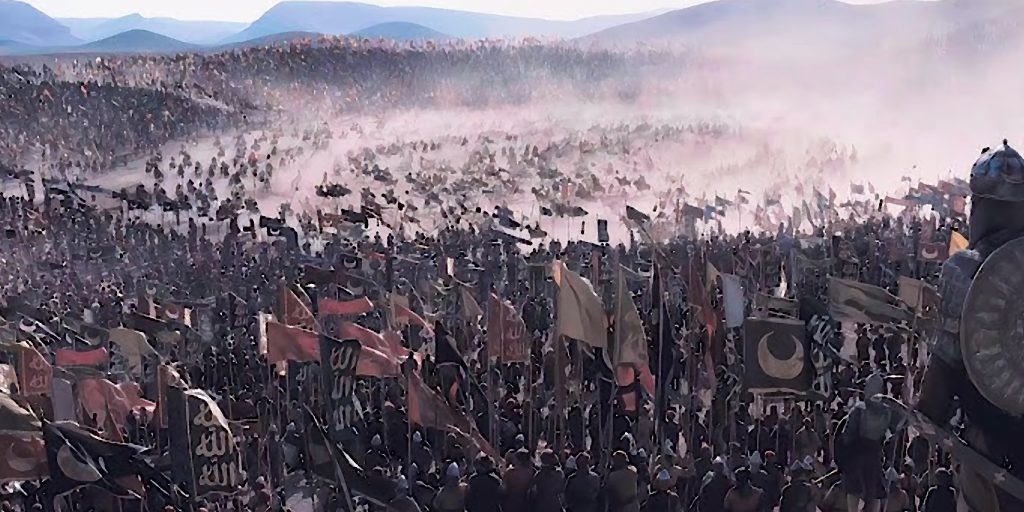
The strongest action sequences include:
Ambush of Godfrey’s Party
A smaller, brutal fight showing close combat rather than huge armies. It highlights Scott’s talent for making violence feel chaotic without losing visual clarity.
Siege of Jerusalem
The film’s centrepiece.
Features include:
- Siege towers
- Trebuchets
- Flaming projectiles
- Shield walls
- Breaching attempts
- Street fighting
It remains one of cinema’s most impressive medieval siege sequences.
The Director’s Cut Changed Everything
Few films have benefited from an extended version as much as Kingdom of Heaven.
The Director’s Cut restored:
- Character development
- Political subplots
- Sibylla’s expanded storyline
- Better pacing
- More explanation of motivations
Many critics who dismissed the theatrical version later reassessed the film after seeing Scott’s intended cut.
The difference is honestly a bit ridiculous. The theatrical version feels like someone removed every third chapter from a novel and expected nobody to notice.
Comparison With Other Medieval Films
| Film | Released | Comparison |
| Braveheart | 1995 | More emotional and heroic, but far less historically restrained |
| Gladiator | 2000 | Similar visual style with a stronger central character arc |
| The Last Duel | 2021 | Smaller scale but more focused on medieval society |
| Outlaw King | 2018 | More grounded military realism |
| The King | 2019 | Darker and more intimate |
Kingdom of Heaven sits somewhere between Hollywood spectacle and serious historical drama.
Reception and Legacy
Initial reviews were mixed. Many praised the visuals and ambition but criticised the storytelling and Orlando Bloom’s performance as too restrained.
Over time, opinions shifted.
The Director’s Cut helped transform the film into a cult favourite, especially among:
- Medieval history fans
- Film collectors
- Ridley Scott enthusiasts
- Historical warfare communities
Its influence can still be seen in later depictions of medieval battles, particularly siege warfare.
Is Kingdom of Heaven Worth Watching Today?
Yes, but watch the Director’s Cut.
The theatrical version is a beautiful but incomplete film. The longer edition gives characters room to breathe and turns a visually impressive medieval epic into something far more thoughtful.
It is not a documentary, and historians will always find things to challenge. That is part of the fun. Half the enjoyment of historical films comes from watching them, then spending two hours explaining to friends why that helmet is from the wrong century.
At its best, Kingdom of Heaven captures the tragedy of people trying to protect something meaningful while surrounded by ambition, fear and politics. Nearly 20 years later, that message has aged surprisingly well.
Frequently Asked Questions
Was Balian of Ibelin real?
Yes. Balian of Ibelin was a real Crusader nobleman who played an important role in defending Jerusalem in 1187, although the film changes much of his background.
Was King Baldwin IV really a leper?
Yes. Baldwin IV suffered from leprosy but remained an influential and respected ruler during his reign.
Did Balian fight Saladin?
Balian defended Jerusalem against Saladin’s forces. The siege ended through negotiation rather than the destruction of the city.
Which version of Kingdom of Heaven should I watch?
The Director’s Cut is widely considered the superior version because it restores important storylines and character moments.