Ask ten historians to name history’s deadliest sword and you may receive ten different answers, followed by an argument over lunch.
Popular culture has convinced many people that the Japanese katana stands alone at the top of the list. Others champion the Roman gladius, while medieval enthusiasts point to the longsword. Each has a strong case, yet the truth is rather more interesting than declaring a single winner.
As a historian, I have learned to distrust simple rankings. A sword does not become deadly through sharpness alone. It becomes deadly because it suits the people who wield it, the armour it faces and the battlefield for which it was designed.
History is full of magnificent swords. Some changed warfare. Others became legends. A few managed both.
What Makes a Sword Deadly?
A sword’s reputation is built on far more than its ability to cut.
Several qualities determine whether a blade succeeds in battle.
- Balance and handling
- Blade geometry
- Steel quality
- Durability
- Speed
- Effectiveness against armour
- Ease of manufacture
- The skill of the swordsman
The greatest swords achieved an ideal balance between these characteristics rather than excelling in only one.
The Deadliest Swords in History
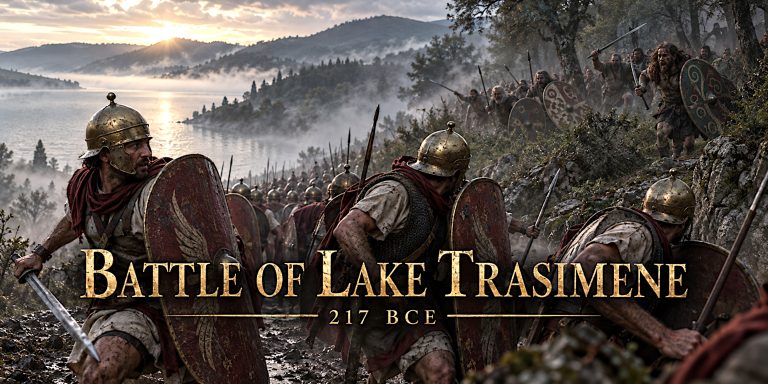
Roman Gladius
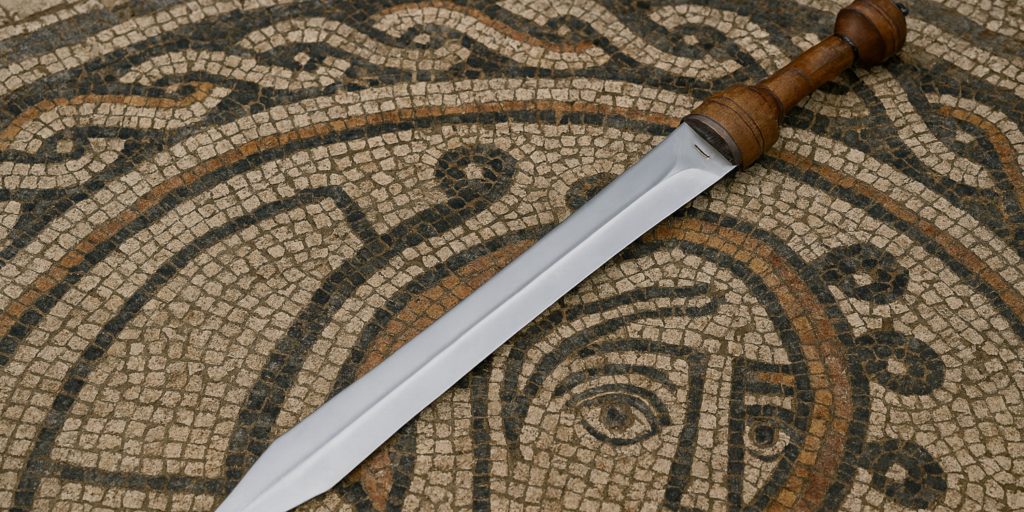
Perhaps no sword has claimed more lives than the Roman gladius.
Used for centuries by Roman legionaries, this relatively short weapon proved devastating in disciplined formations. Soldiers thrust from behind large shields, targeting the abdomen, groin and throat with ruthless efficiency.
Its design was remarkably simple.
| Specification | Details |
|---|---|
| Length | 60 to 70 cm |
| Weight | Around 1 kg |
| Edge | Double-edged |
| Best Use | Close formation combat |
The gladius conquered much of Europe, North Africa and the Near East. Few swords can claim such an extraordinary military record.
Medieval Longsword
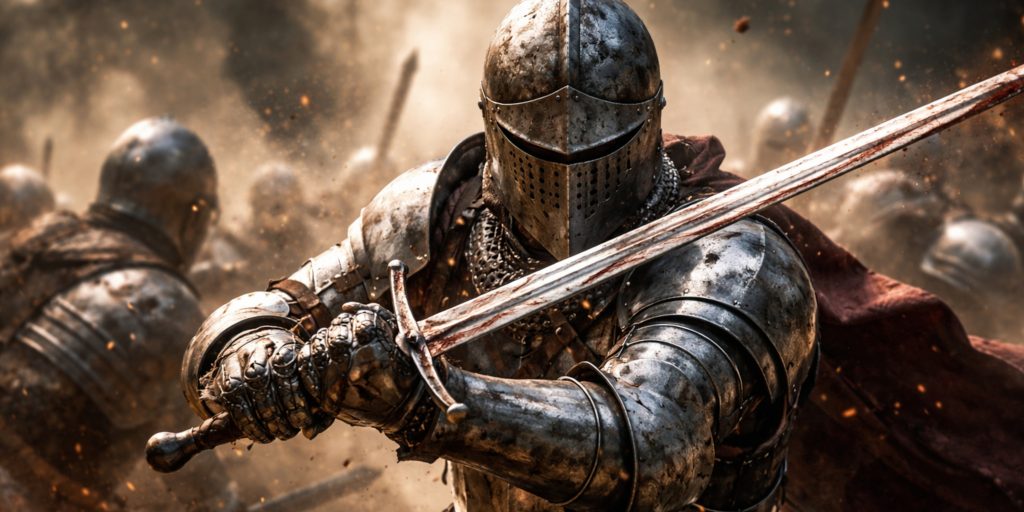
The longsword dominated European battlefields between the fourteenth and sixteenth centuries.
Contrary to modern fantasy, it was not an oversized lump of steel. Most examples weighed between 1.2 and 1.6 kilograms, making them surprisingly agile.
Its greatest strength was versatility.
A skilled knight could:
- Cut
- Thrust
- Half-sword against armour
- Grapple
- Strike with the pommel or crossguard
Few swords offered such a complete fighting system.
Japanese Katana
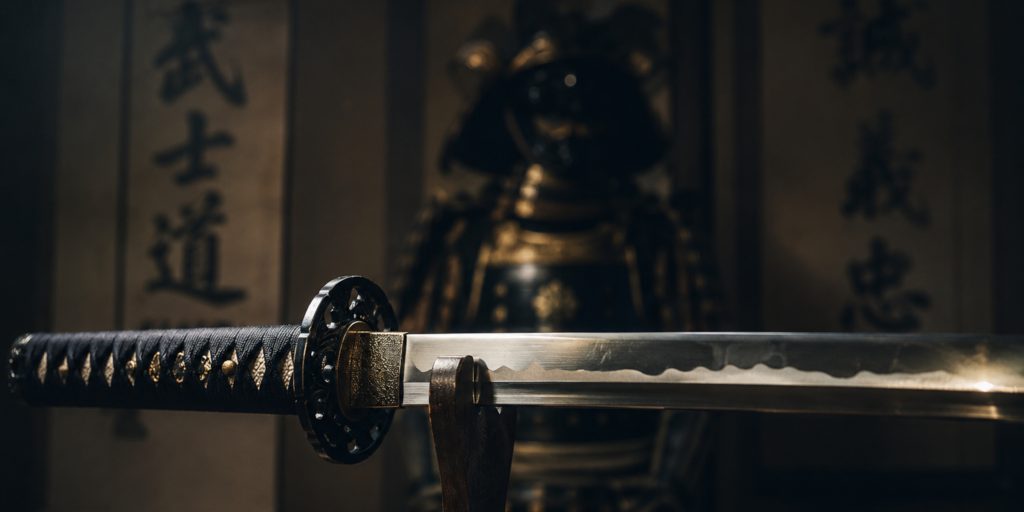
The katana remains the world’s most famous sword.
Forged using differential hardening and refined through centuries of craftsmanship, it excelled as a cutting weapon.
Its curved blade produced exceptionally efficient slicing cuts while maintaining remarkable balance.
Despite its reputation, the katana was generally a samurai’s secondary battlefield weapon after bows and spears.
Its enduring fame owes as much to Japanese culture as military history.
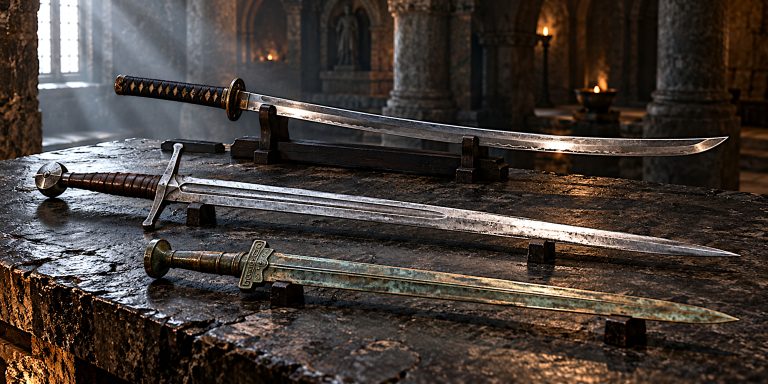
Viking Sword

During the Viking Age, owning a high-quality sword was a symbol of wealth and status.
Most warriors fought with axes or spears because swords were expensive.
The finest Viking blades featured:
- Pattern-welded construction
- Broad cutting edges
- Excellent balance
- Strong double-edged design
Their effectiveness in raids across Europe helped build an enduring reputation.
Persian Shamshir
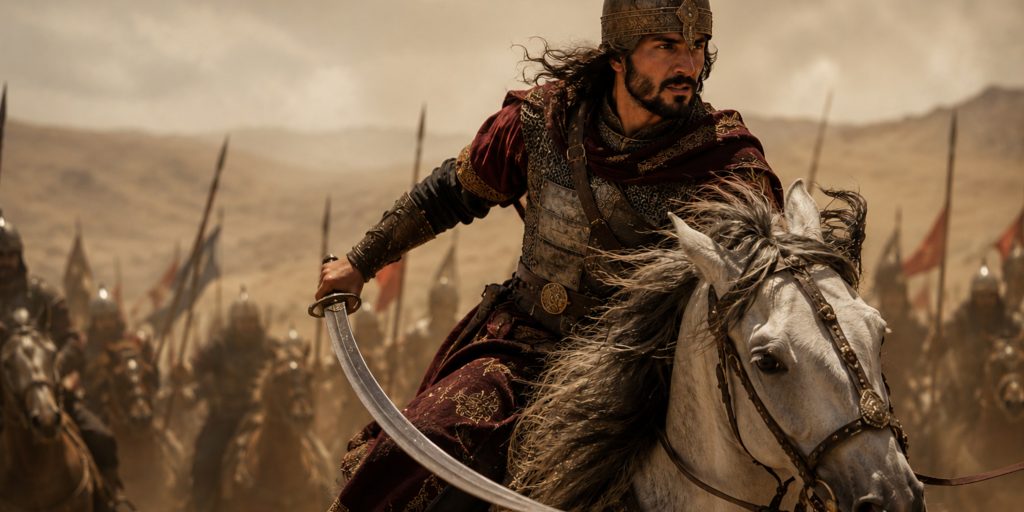
The elegant shamshir represented centuries of Middle Eastern sword development.
Its deeply curved blade produced devastating draw cuts from horseback.
Against lightly armoured opponents it was extraordinarily effective.
Persian cavalry became famous for lightning-fast attacks that made full use of its unique design.
Indian Tulwar

The tulwar combined a curved blade with a distinctive disc-shaped pommel.
Its grip encouraged powerful wrist-driven cuts while preventing the sword from slipping during combat.
Indian armourers produced countless regional variations, many featuring exceptional watered steel.
The finest examples rank among history’s most beautiful military swords.
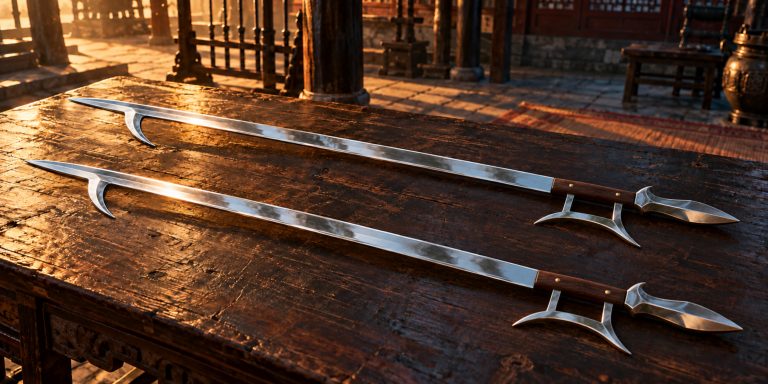
Chinese Dao
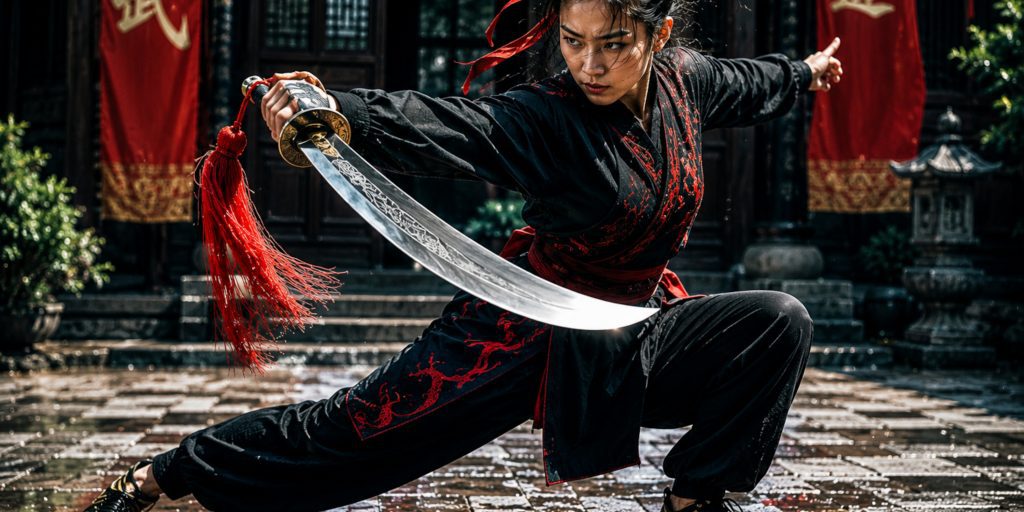
Often called the “General of Weapons,” the dao served Chinese armies for over two thousand years.
Numerous forms evolved, including cavalry sabres, infantry blades and broad chopping swords.
Its long military service demonstrates just how practical the design proved across changing dynasties.
Ottoman Kilij
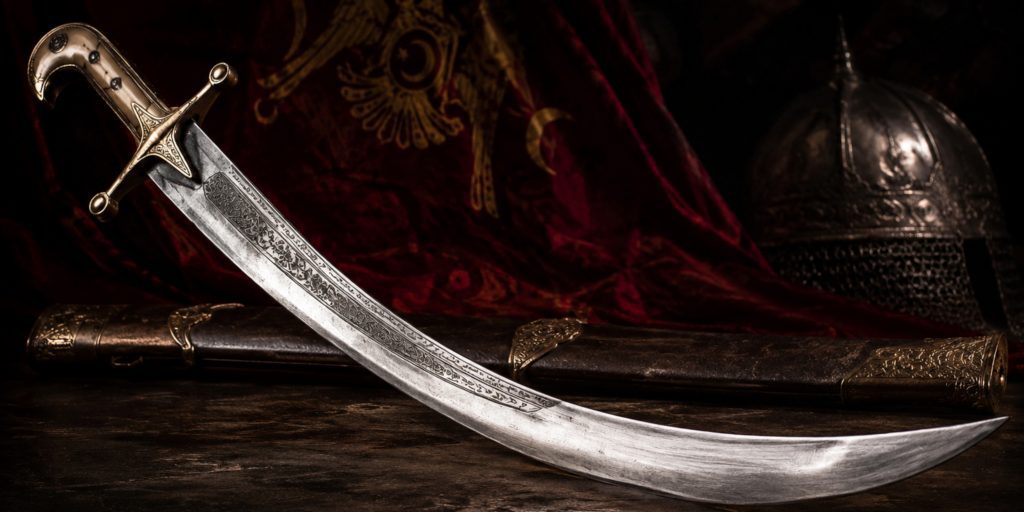
The kilij featured a widened tip known as the yelman.
This distinctive flare concentrated weight near the end of the blade, increasing cutting power without making the sword unwieldy.
Ottoman cavalry used the weapon to devastating effect during centuries of expansion across Europe and the Middle East.
Scottish Claymore
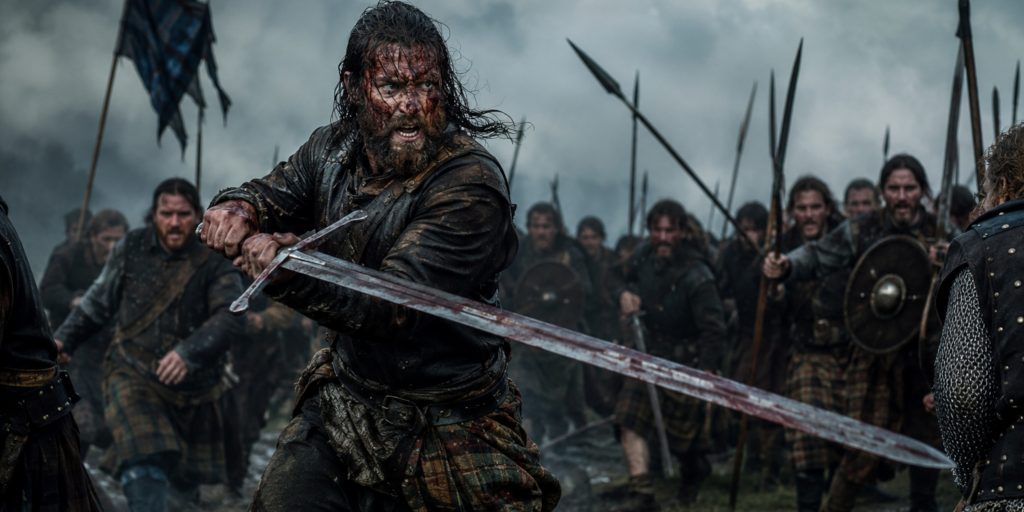
The two-handed claymore became one of Scotland’s defining weapons.
Its long blade and extended reach made it formidable in open combat.
Despite popular belief, it was not impossibly heavy.
Most surviving examples remain surprisingly manageable in experienced hands.
Its reputation was built as much on the fierce Highland warriors who wielded it as on the weapon itself.
Swiss Baselard
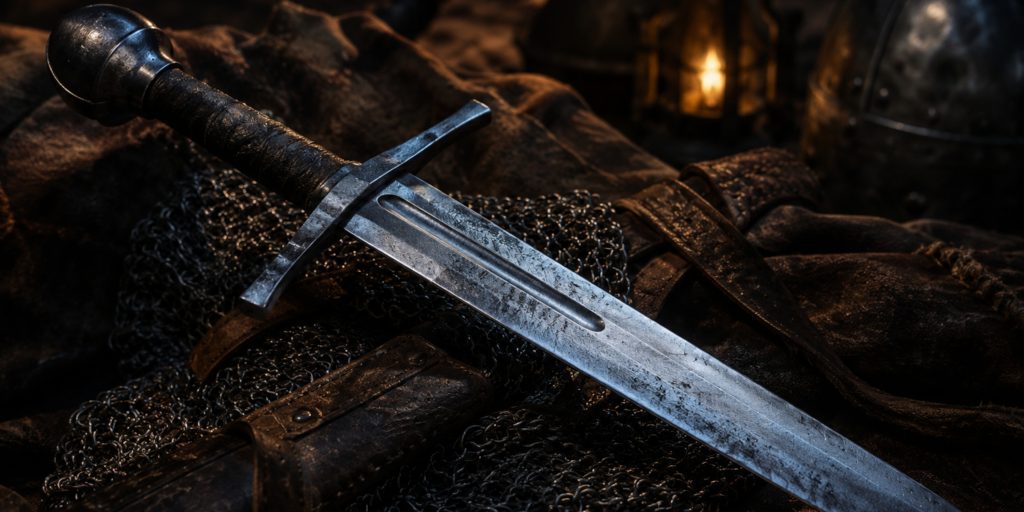
Often overlooked, the baselard became one of late medieval Europe’s most widespread sidearms.
Its stiff blade excelled at thrusting while remaining effective for cutting.
Thousands were carried by soldiers, merchants and travellers across the continent.
Sometimes history quietly rewards practicality over glamour.
Which Sword Killed the Most People?
This question is impossible to answer with certainty.
However, several candidates stand out.
| Sword | Why It Was So Deadly |
| Roman Gladius | Used by one of history’s greatest military empires |
| Chinese Dao | Centuries of continuous military service |
| Katana | Exceptional craftsmanship and widespread samurai use |
| Longsword | Dominated European warfare for generations |
| Shamshir | Highly effective cavalry weapon |
The Roman gladius is arguably the strongest candidate simply because of the enormous scale of Roman warfare.
The Role of Steel
Excellent swords depended on excellent metallurgy.
Different cultures developed remarkably sophisticated techniques.
- Pattern welding in northern Europe
- Differential hardening in Japan
- Crucible steel in Persia and India
- Advanced bloomery refinement throughout medieval Europe
Every civilisation solved similar engineering problems in different ways.
The result was not one perfect sword, but many outstanding ones.
Archaeology and Modern Research
Scientific analysis continues to reshape our understanding of historical weapons.
Researchers now employ:
- X-ray imaging
- CT scanning
- Electron microscopy
- Metallurgical testing
- Experimental archaeology
These methods reveal that many legendary swords genuinely were engineering masterpieces.
Interestingly, they also dismantle countless myths surrounding supposedly magical blades.
Reality remains impressive enough without embellishment.
Why Some Swords Became Legends
The greatest swords survived because stories kept them alive.
Weapons such as Excalibur, Joyeuse, Durandal and Kusanagi occupy a space somewhere between history and legend.
Real military swords gained legendary status for different reasons.
They represented honour, status, family identity and military success.
In many societies a sword became an extension of its owner rather than simply another piece of equipment.
So Which Sword Was the Deadliest?
If I were forced to choose only one, I would reluctantly give the title to the Roman gladius.
Not because it was technically superior to every other sword, but because no other blade combined such efficiency with the astonishing success of the Roman military machine.
The katana remains one of history’s finest cutting weapons.
The longsword may be the most versatile.
The shamshir was superb from horseback.
The claymore could dominate open ground.
Yet the gladius helped build an empire that shaped Western civilisation.
That is difficult to overlook.
Perhaps the better conclusion is this. History’s deadliest sword was never simply the sharpest blade. It was the weapon that perfectly matched its time, its tactics and the people who trusted it with their lives. Every great sword earned its reputation in blood, steel and the unforgiving mathematics of survival.
No blade won wars on its own. Fortunately for historians, that leaves us with plenty to debate.